October is unusually warm this year here where I live. The weather can be even hot around noon. It feels like summer with a bit of autumn early in the morning. The flora & fauna is thriving in these conditions. Insects are everywhere and many plants are in bloom. That's why I take a couple of hours each day to visit the area called Marlera and see what I can catch through my macro lens and bring to the audience here on Hive.

Marlera is a coastal area near the village of Liznjan, about five or six kilometers from where I live. The place appeared in many of my posts, and since there is always something new to discover in a place like that, especially if you have a macro lens to assist your search, I'm pretty sure that many of my future posts will also be set in Marlera. In each episode of this series, I'll present what I found and photographed in a few hours of one specific day.

This is the Helichrysum italicum, an aromatic plant that grows on dry, stony terrain, often near the sea.

Here you can see the mantis I found on the plant shown in the previous photograph. This relatively small mantis has some similarities with the European mantis nymphs but this is actually an adult of another species. This is a female of the Heldreich's Dwarf Mantis (Ameles heldreichi).

The tiny Helichrysum italicum flowers grow on small flowerheads and those flowerheads grow in clusters. In my experience, a single flowerhead like the one shown in this photograph is a rare find.

Here you can see the dry remains of a typical cluster made of quite a few lovely yellow flowerheads.

While photographing the single, still fresh flowerhead, I noticed a small spider on the stem underneath the flowers.
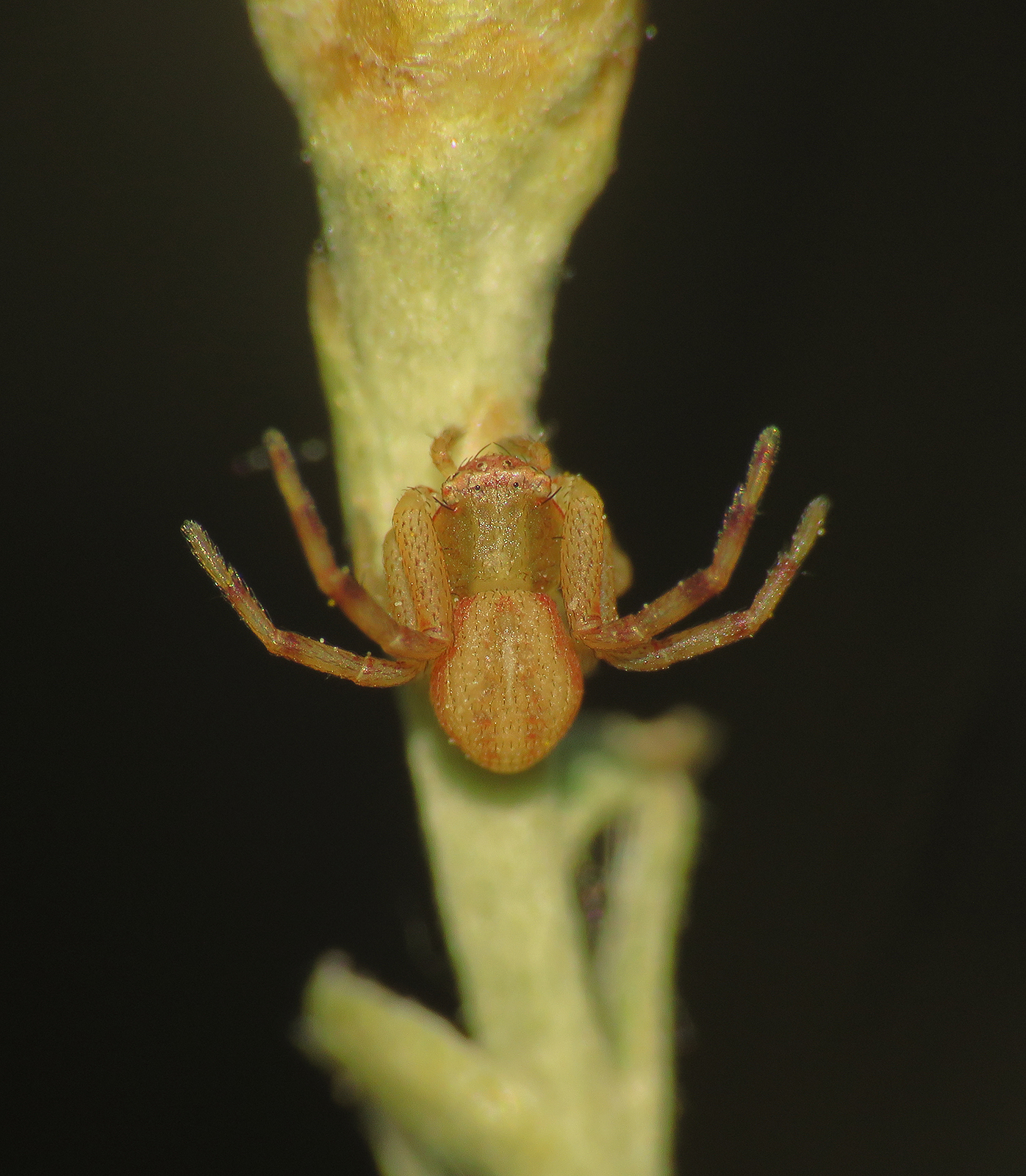
This is the Runcinia grammica, a crab spider from the Thomisidae family. I mean, all the species from that family are commonly known as crab spiders, but that common name is often applied to some spiders from other families as well.
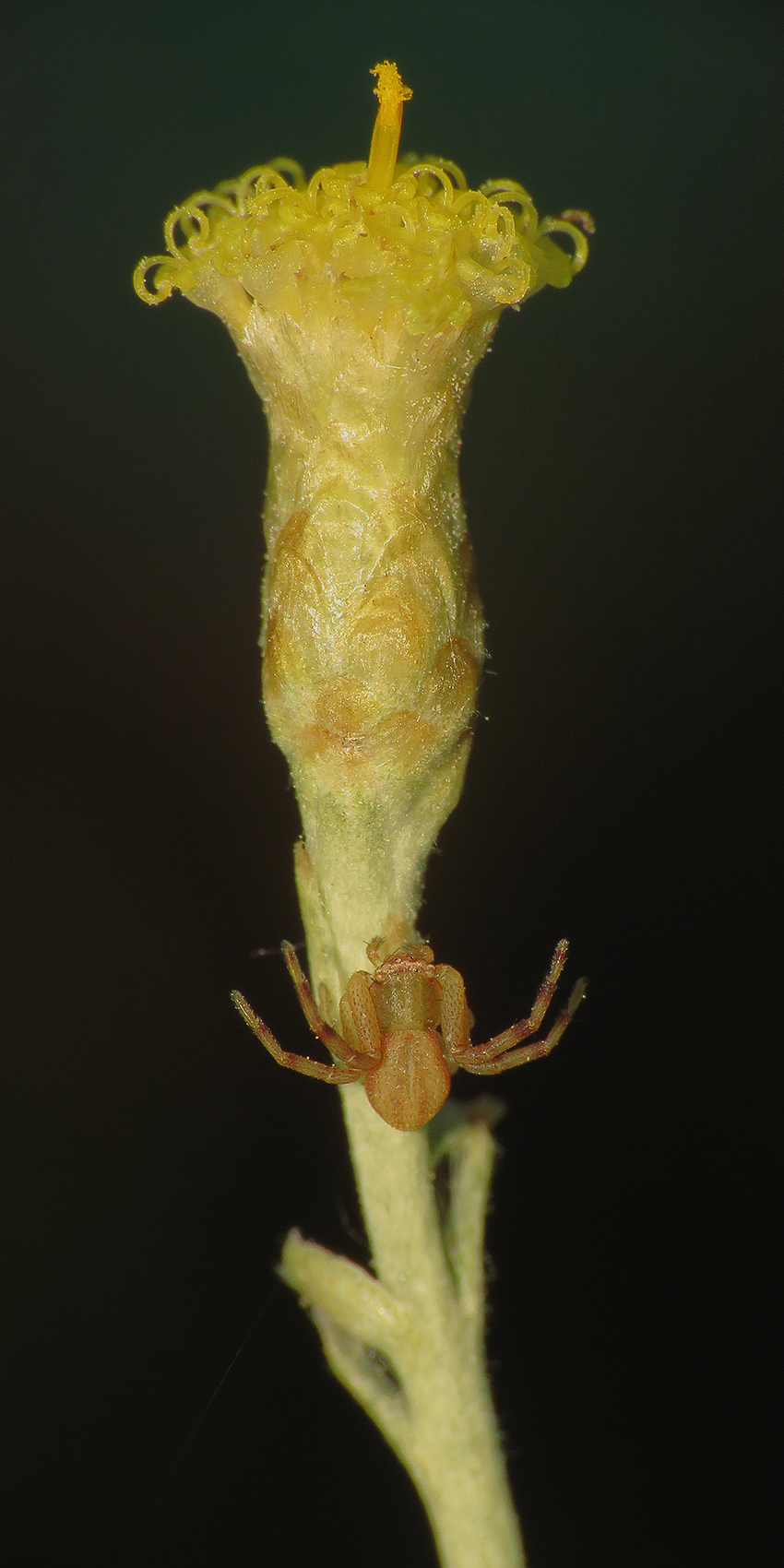
The Runcinia grammica shown in these photographs is a very small, juvenile Runcinia grammica female.

I was exceptionally lucky that day when it came to finding spiders on the Helichrysum italicum pant. You can see a jumping spider here. Can't tell you the name of this species from the Salticidae family. To me, it looks like the genus is probably Pellenes. But that could also be wrong, so ... it's safe to say that I don't know shit in this case and be better off not writing my speculations. In the following photograph ...

... you can exit the macro view for a moment and take a look at the entire plant, for a change.

When it comes to this grasshopper, the name of the species is Aiolopus strepens. In the following photograph ...

... the grasshopper can be seen in its entirety. I mean, almost. A small fragment is still hidden by a leaf.

This spider has built a horizontal web on the same Helichrysum italicum plant. The name of the species is Uloborus walckenaerius. The family- Uloboridae. Now, I could say a few things about Uloboridae being the only non-venomous spider family like I said in practically every post in which this species appeared, but I won't. Nope. I'm sick of repeating it.

Here you can see another dry Helichrysum italicum flowerhead that marks the end of the first half of this post. The second half will be dedicated to another plant and the insects around it.

The plant in question is Dittrichia viscosa. At the end of summer, this plant starts producing a large quantity of yellow flowers that will be present during the good chunk of autumn. In the following photograph ...
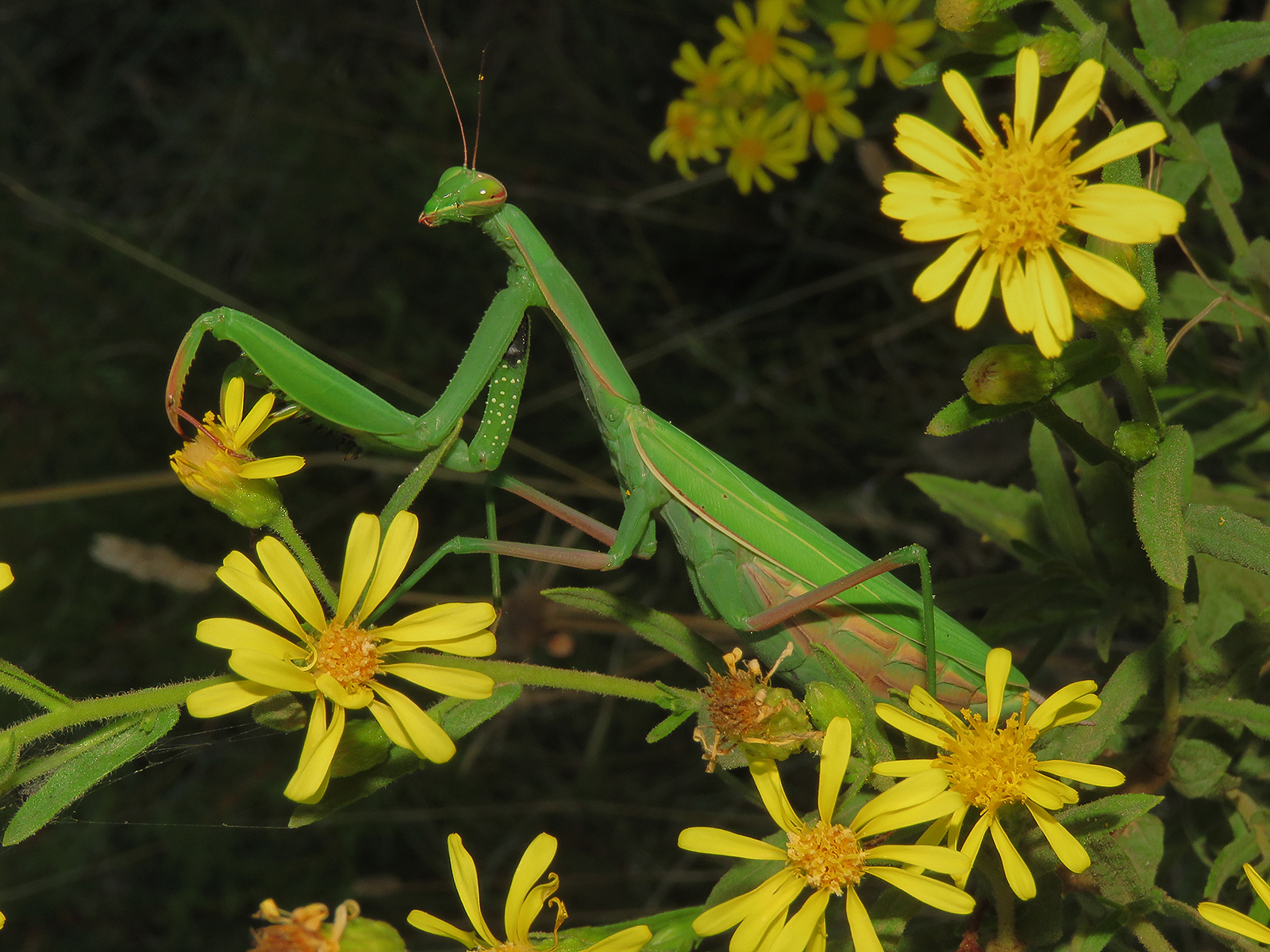
... you can see the European mantis (Mantis religiosa) posing on the top of the Dittrichia viscosa.

The pretty big insect looked great among the yellow flowers.

Here you can see the small moth I had never seen before the first of October.

Photographing something new is always very exciting. If an insect I regularly encounter flies or jumps away before I get a good clear shot - no big deal. But if that happens while I'm photographing a species or situation completely new to me ... well, I get pissed.

This moth belongs to the Choreutidae family. The name of the species is Tebenna micalis.

If you take a good look at all the details of this shot, you'll notice two bugs from the Rhopalidae family. In the following photograph ...

... I came closer to one of them. The name of the species is Liorhyssus hyalinus.

At one point it looked like the bugs were chasing each other across the plant.
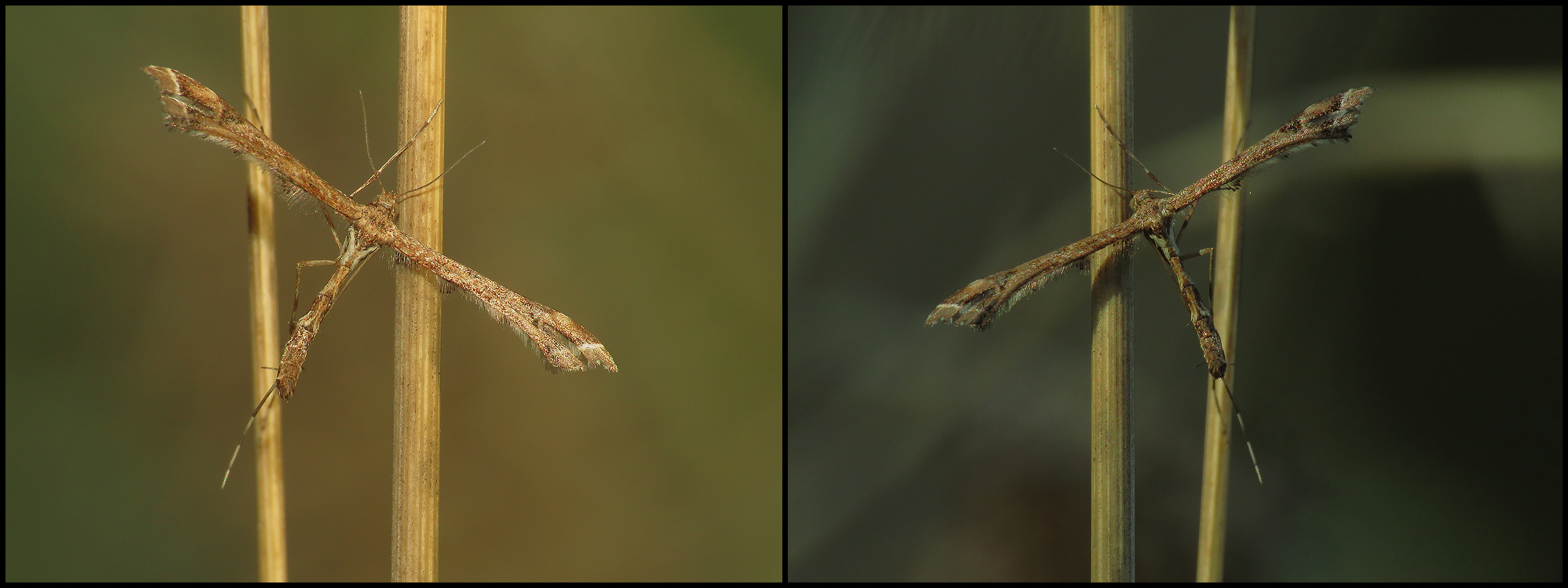
On the tall dry grass around Dittrichia viscosa, I found another interesting moth. I'm not sure about this species from the Pterophoridae family. Could be the Amblyptilia acanthadactyla. Or the Platyptilia gonodactyla. Or something else, perhaps. In the following photograph ...
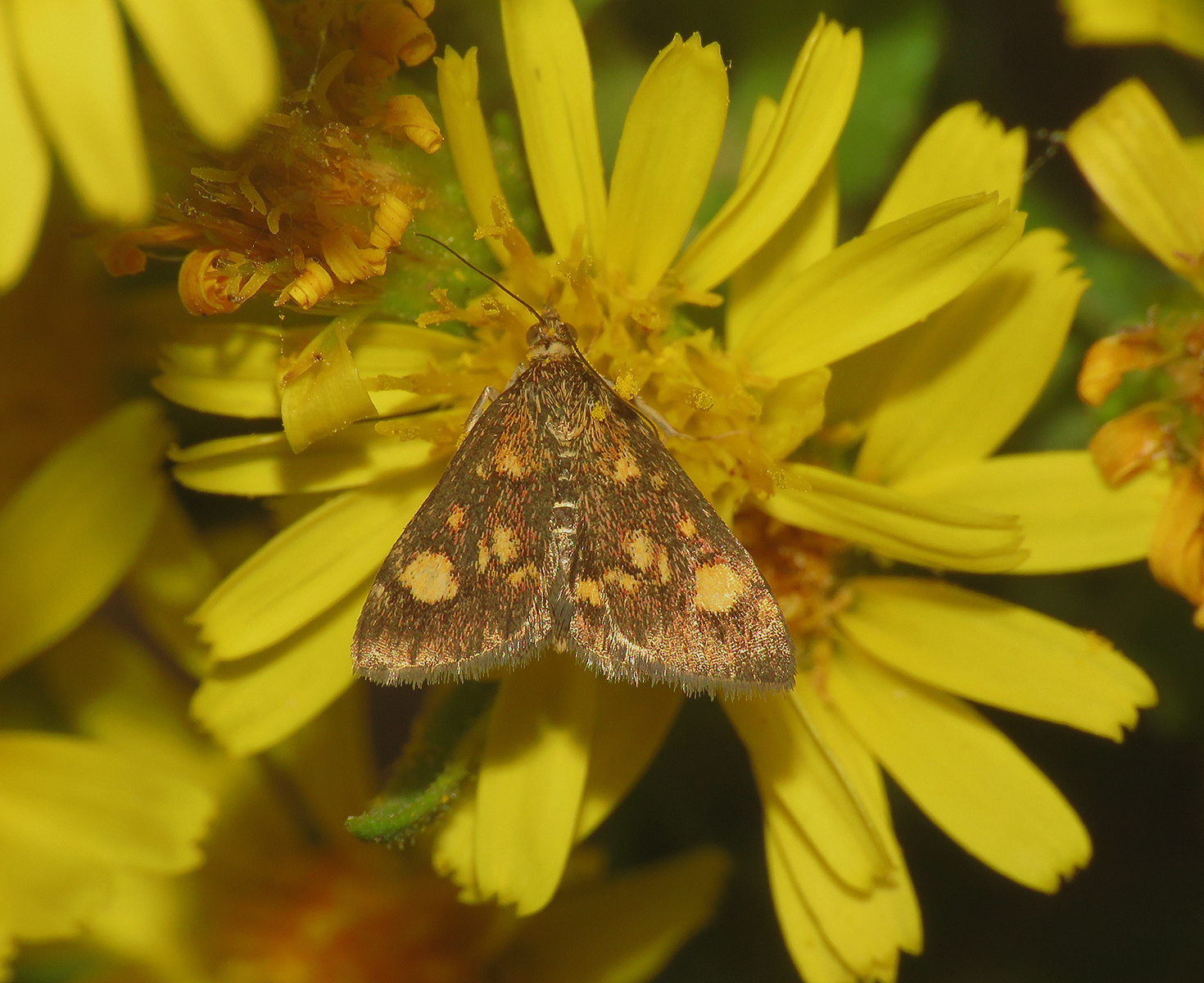
... the focus is on the Dittrichia viscosa flowers again. The flowers and the small moth from the Crambidae family. The name of the species is Pyrausta purpuralis.

Here you can see a type of caterpillar I regularly encounter but I'm still unable to identify the species. I'm pretty sure that is a moth larva, not a caterpillar that will turn into a butterfly one day. That's all I can tell you here. In the following photograph ...
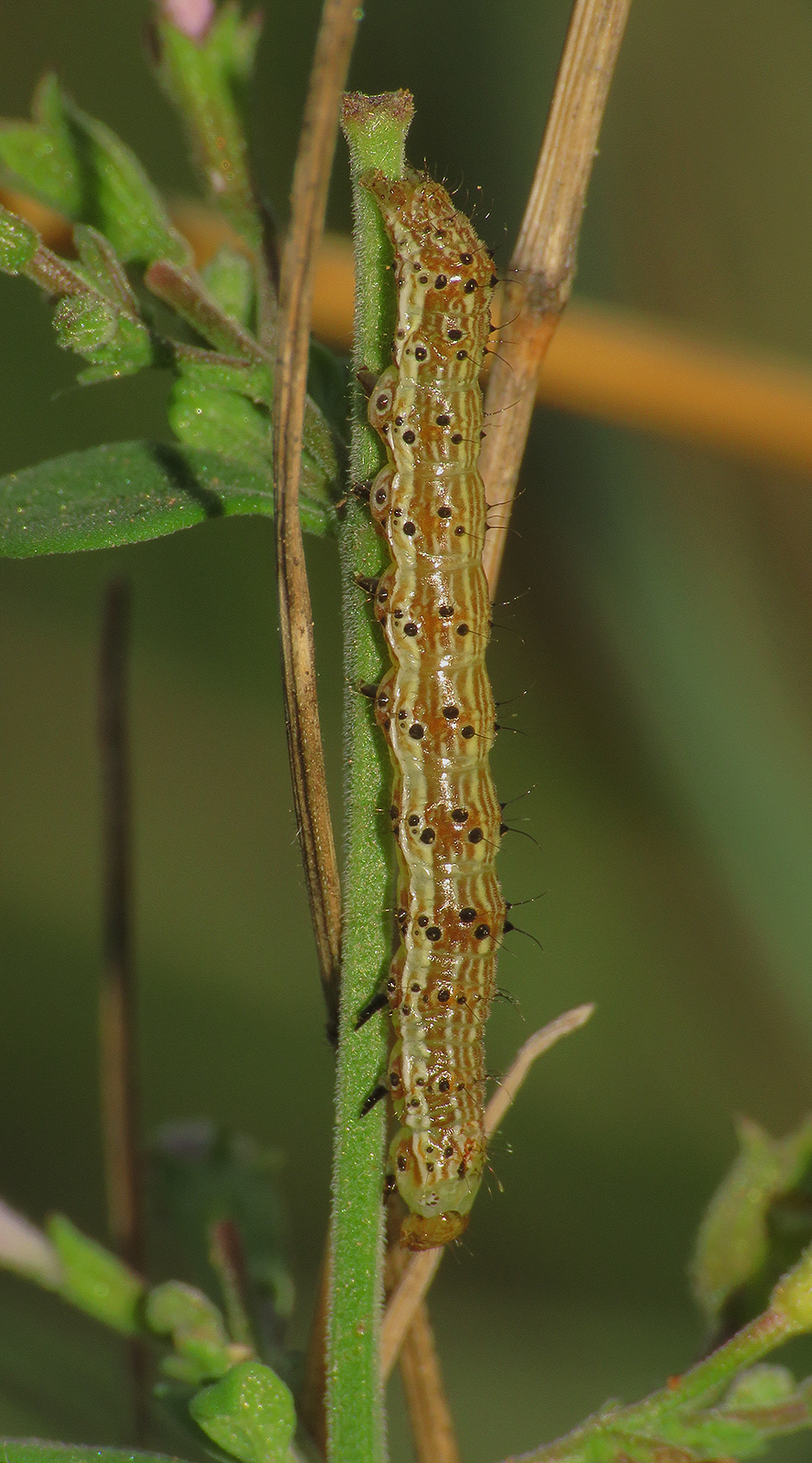
... you can see the entire caterpillar.
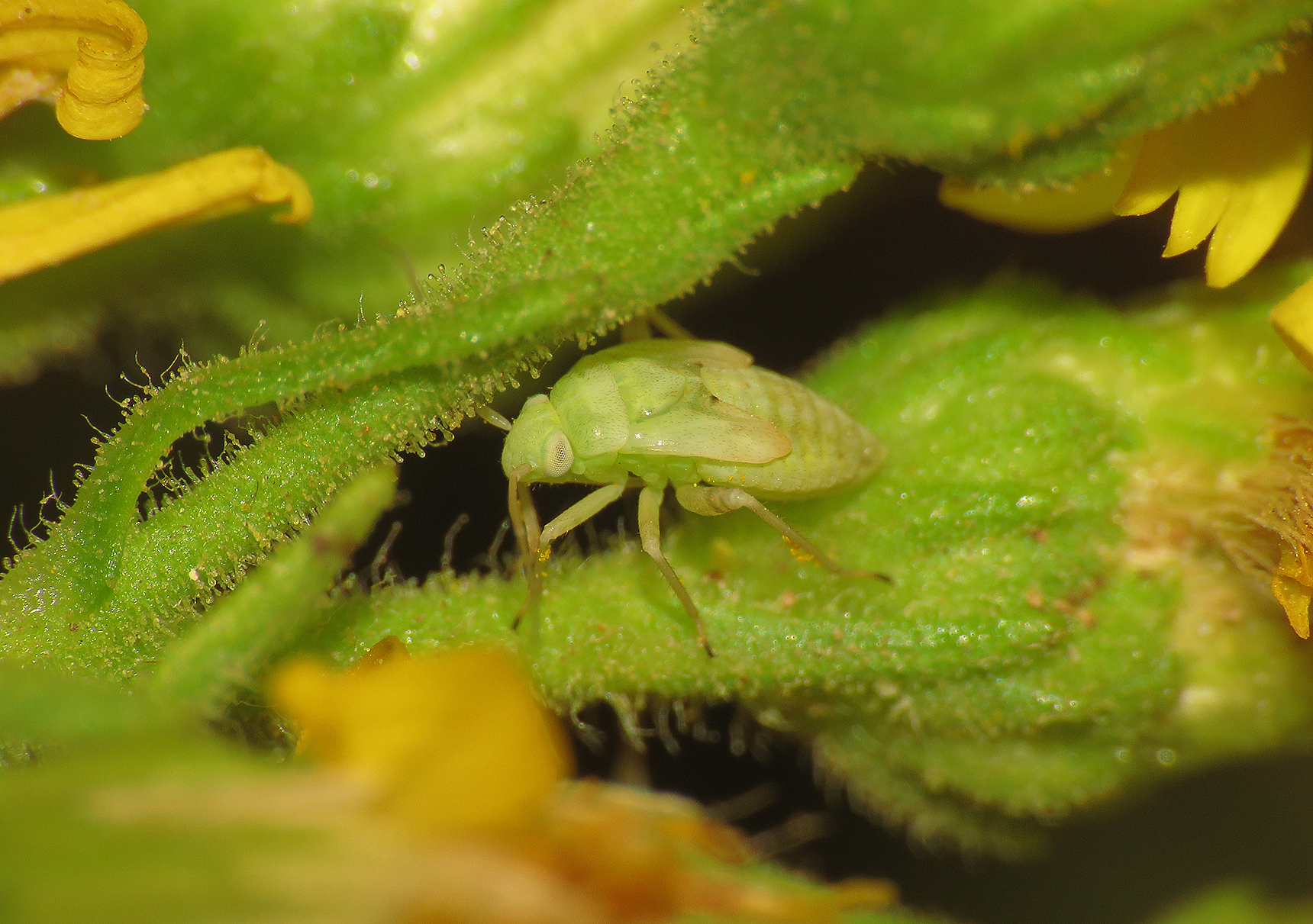
This is the nymph of the Taylorilygus apicalis, a bug from the Miridae family.

Here you can see another moth from the Crambidae family feeding on the flowers.

The name of this species is Hydriris ornatalis.

AND THAT'S IT. AS ALWAYS HERE ON HIVE, THE PHOTOGRAPHS ARE MY WORK - THE END.
The following links will take you to the sites with more information about the protagonists of this post. I found some stuff about them there. https://en.wikipedia.org/wiki/Ameles_heldreichi https://en.wikipedia.org/wiki/Helichrysum_italicum https://en.wikipedia.org/wiki/Runcinia_grammica https://en.wikipedia.org/wiki/Pellenes https://en.wikipedia.org/wiki/Aiolopus_strepens https://en.wikipedia.org/wiki/Uloborus_walckenaerius https://en.wikipedia.org/wiki/European_mantis https://en.wikipedia.org/wiki/Tebenna_micalis https://en.wikipedia.org/wiki/Liorhyssus_hyalinus https://en.wikipedia.org/wiki/Pterophoridae https://en.wikipedia.org/wiki/Pyrausta_purpuralis https://en.wikipedia.org/wiki/Taylorilygus_apicalis https://en.wikipedia.org/wiki/Hydriris_ornatalis


