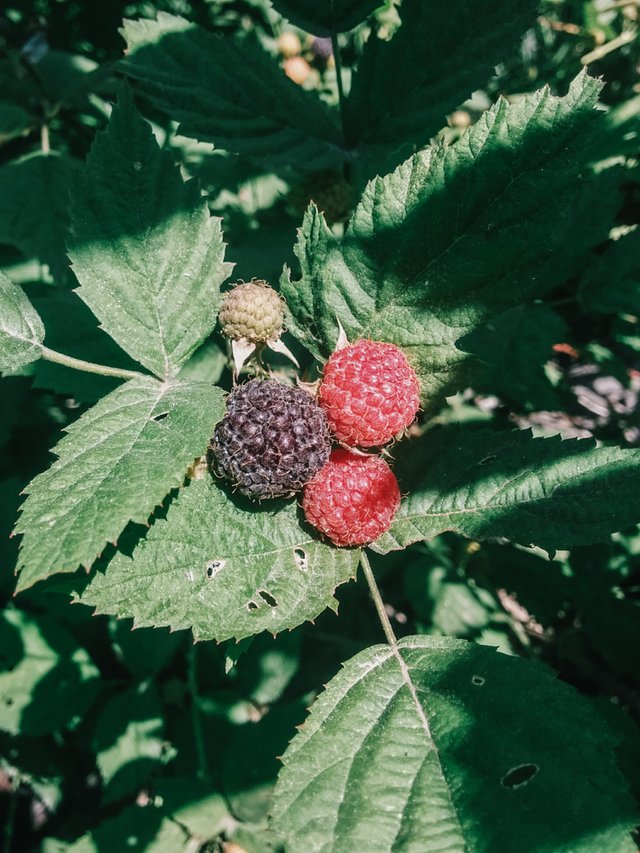
The Blackcap Raspberries are fresh in my mind for two reasons. We just finished one of our few precious pints of wildcrafted Blackcap Raspberry jam from last year! -- And now there are Blackcap Raspberry vines just sprouting in the greenhouse!
After fermenting, cleaning and drying the seeds I had put aside from last year's harvest I put a bunch out into a pot to sit out in the cold all winter -- Raspberry seeds require a few months cold stratification period to sprout (you can also stratify them in the fridge).
Since raspberries produce on second year canes, it will be two years before this year's grown-from-seed raspberries fruit. Then why am I growing raspberry canes from seed?
- I can start a lot more raspberry canes for a lot less money than buying from a nursery.
- Propagating from seed ensures genetic diversity.
- This particular variety is wild and therefore theoretically more resilient than cultivated varieties.
- Its fun and I am learning a lot about propagating plants from seeds.
These little babies just popped up and are complete with tiny fuzzy little raspberry thorns. Aren't they cute? @nateonsteemit was our first customer that purchased Blackcap Raspberry seeds from us earlier this winter. I wonder if his are coming up yet!

Blackcap Raspberry – Rubus leucodermis
Life cycle: Perennial / Ease of propagation: Difficult / Hardiness zone: 3-7 / Requires: Cold Stratification
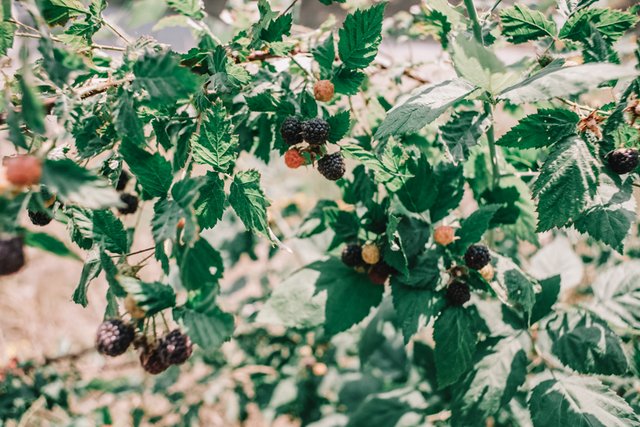
This Blackcap Raspberry is a treat to harvest. The berries are extremely sweet, soft and delicious. The dark reddish purple, almost black color is a fun twist on the red raspberry that I am used to. I discovered several patches of Blackcap raspberries in our local mountains and decided they were worth propagating based on flavor alone. It was also fun to see the wild raspberries thriving at the edge of the forest setting and producing berries in summer through late summer with no extra irrigation beyond the winter and spring rain that nature provided. That’s not to say Raspberries are drought tolerant because they enjoy soil moisture and soil acidity. Regardless these Blackcap raspberries are doing well in our hot dry summers and do just fine in heavy clay soil – a testament to the raspberry’s resiliency and the forest’s capacity to nurture.

I do quite enjoy these Blackcap Raspberries. I find their flavor more intense than cultivated raspberries. I wonder if it is their nature or the fact that they grew in the wild with less irrigation. They are so good eaten out of hand. I enjoy them fresh but they make wonderful jam, no sugar needed. They also make a delicious wine or vinegar. Eat them as you would eat any other raspberries.

Raspberry seeds need cold stratification so there is a little effort and attention to get them started. Once they are established in your garden they are quite resilient. Like other raspberries the Blackcap fruits on second year canes, so you can train and prune Blackcap canes the same way you would other raspberries.

However it should be noted that Black raspberries cane multiplying behavior is less vigorous than red raspberries. Black raspberries shoots are somewhat more sparse and will not stray as far from the root crown as red raspberries; Black raspberry shoots come from the crown, whereas red raspberry shoots come further out of the root system. So black raspberries may be of interest if less vigorous spreading is desired. However if you want to encourage more spread of your Blackcap raspberries you can let the fully grown canes bend down and tuck them into the soil, known as tip layering, where the shoots will sprout new roots. This is one way which the black raspberries propagate in the wild. You can call them walking raspberries.
Raspberry leaves are astringent and can be prepared in teas and infusions. Raspberry leaf infusion helps improve fertility in both men and women. Beyond that there are many reproductive benefits for women who drink raspberry leaf infusions.
“Brewed as a tea or as an infusion, raspberry is the best known, most widely used, and safest of all uterine and pregnancy tonic herbs. It contains fragrine, an alkaloid which gives tone to the muscles of the pelvic region, including the uterus itself […] The benefits of drinking a raspberry leaf brew before and throughout pregnancy include: Increasing fertility in both men and women […] Preventing miscarriage and hemorrhage […] Easing of morning sickness […] Reducing pain during labor and after birth […] Assisting in the production of plentiful breast milk […] Providing a safe and speedy pariuntion”
– Susun Weed, Herbal Allies for Pregnancy Problems
“A mild uterine astringent, reliable and safe both for excessive menstrual bleeding (a tablespoon of leaves in tea every three hours) and during pregnancy to prevent spotting in the first trimester and to increase muscle tone in the uterine walls (two to three cups a day for the duration). If drunk after childbirth, it will help decrease uterine swelling and cut down on postpartum bleeding.”
– Michael Moore, Medicinal Plants of the Mountain West

Sowing Instructions
Seeds require 3 months cold stratification. Sow in pots/trays and keep slightly moist but not sopping wet through the winter and watch for germination in spring/summer. Alternatively stratify the seeds in the refrigerator in moist but not sopping sphagnum moss or coconut coir for three months and then place in pots or trays. Once sprouts are large enough, prick out into their own pots. Transplant in the fall or the following spring.
References
- The Backyard Berry Book, Stella Otto
- Herbal Allies for Pregnancy Problems, Susun Weed
- Medicinal Plants of the Mountain West, Michael Moore
- https://pfaf.org/user/plant.aspx?latinname=Rubus+leucodermis
# [Blackcap Raspberry Seeds are available for STEEM, SBD and USD](https://homesteaderscoop.com/product/blackcap-raspberry-seeds/) #### [View our entire Seeds of Abundance seed catalog at Homesteaders Co-op](https://homesteaderscoop.com/store/seeds-of-abundance/)

Website | @homesteaderscoop | Discord Community
#naturalmedicine | Introducing @naturalmedicine | Discord Community
 #ghsc | Introducing @ghscollective | Discord Community

#tribesteemup | @tribesteemup | The 8 Pillars of TribeSteemUp


