
During last year ICO rush, a number of teams targeted the blockchain trilemma, a term coined by Vitalik Buterin. The trilemma encompasses a blockchain’s ability to fulfill only 2 of the 3 necessary factors for proper adoption: decentralization, security, and scalability.
Existing blockchains that adopt a limited access proof-of-stake system manage to boost scalability and possibly security, but fail to achieve proper decentralization. On the other hand, networks that pursue complete decentralization and optimal security succumb to throughput bottlenecks due to limited scalability. A few networks have attempted to pursue a decentralized network with rapid block processing, but this has come at the expense of security.
For the trilemma to be tackled, a novel consensus protocol must be created. Harmony, a new blockchain startup, aims to deliver consensus algorithms that create a network that cores around adaptive state sharding.
Tackling the Blockchain Trilemma

The problem is that blockchain technology can and should be used for more than just a decentralized money. Smart contracts and distributed networks have the ability to be the infrastructure for the smart cities of tomorrow, but this cannot be achieved on networks that face throughput congestion if a single dApp gets too popular.
The common solution proposed to network congestion, ergo scalability issues, is the proposal of sharding. Networks that have applied sharding have managed to surpass the transactional limits of the leading smart contract platform (Ethereum), but still lack the transactional capacity for handling major enterprise utilities, let alone the infrastructural demand of a single smart city.
The cause of this is that present use of sharding is limited to transaction sharding, but a blockchain involves more than transaction confirmations. Thus, it’s imperative to achieve state sharding for a network to truly achieve scalability, and that’s exactly what Harmony does.

Transaction Sharding: The propagation of network transactions such that groups of network nodes—shards—confirm transactions parallel to each other. State Sharding: The propagation of network data and storage cross shards.
A blockchain is comprised of transaction validation as-well-as storage and inter-node messaging. Thus, by combining transaction and state sharding, Harmony is able to properly distribute all forms of network burdens across participating groups of nodes (shards). The result is that all potential bottlenecks are thwarted.
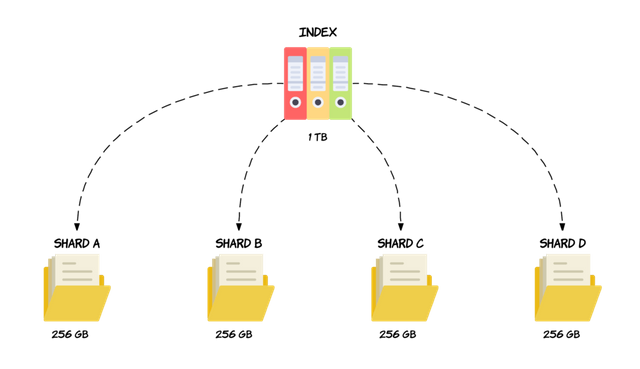 ***A simple visualization of what propagation would look like.***
Boosting Decentralization
The benefit of state sharding isn’t just greater scalability, but also greater decentralization. At present, the Ethereum network is nearly 2.4 Terabytes. Not only does this force node synchronization to take days, but it also mandates a high computational capacity to interact with the network as a direct node. The result is that most people engage with the Ethereum network with gateway nodes; consequently, the network’s decentralized state exists only in theory.

Through the use of state sharding, however, Harmony delivers the technological solution needed to enable the masses to become active nodes on a network. By propagating storage and communication requirements of nodes, even typical household computers can have the resource capacity to become active nodes; this is a necessity for true decentralization to be achieved.
Such ease of becoming an active network node delivers a key benefit: adaptability.
Adaptive Sharding
The smart cities of tomorrow can certainly exist without the presence of blockchain technology. The present web infrastructure is backboned on centralized cloud providers.
These networks have the data and computation power needed to power virtually infinite demand. However, their centralized state has proven to be a risk time and time again. A single attack on a centralized network debilitates all entities that rely on it; such a vulnerable state of computational resource sourcing cannot be leveraged in a smart economy.
This is where blockchain technology trumps centralized infrastructures as the decentralized state of the network becomes invulnerable to attacks. However, for a blockchain network to effectively compete against the incumbent centralized networks, it’s imperative that the technology can be adaptive.
Most modern cloud services and the SaaS that are built on it to power mass consumption applications and platforms are adaptive. The networks adjust to demand and relay the amount of resources needed to support the instantaneous network demand. While existing smart contract networks lack this capability, Harmony’s delivering an adaptable network due to its use of state sharding. Because of the network’s low entry barrier for active nodes, as throughput demands increase, more shards can be activated to provide the necessary resource supply. Subsequently, the network is able to achieve adaptability parallel to network demand.
The Infrastructure of Tomorrow?
The smart economy many of us envision is comprised of autonomous machines, powered by cutting-edge machine learning, managing virtually all day-to-day operations of enterprises, transportation, agriculture, and possibly even government.
 ***An autonomous machine-driven economy may no longer be a distant reality.***
Such a system will heavily rely on an integration of IoT and AI with a rapid and high demand for network messaging and transactional throughput. The securing of the network upon which all these autonomous machine interact will be of paramount importance and thus the need of a decentralized infrastructure is mandated for a machine-run smart economy.
While we are still bounds away from truly living in a smart city, all the technologies needed to deliver this reality are fast-improving. Higher quality data sources are improving ML algorithms at rapid pace, greater corporate focus on IoT is improving the spread of IoT sensors across virtually every industry, and now, Harmony is pursuing the decentralized network upon which the IoT-integrated and ML-powered autonomous entities can operate.


Essential Links: Website: https://harmony.one/ Whitepaper: https://harmony.one/whitepaper Social Media: https://twitter.com/harmonyprotocol | https://www.instagram.com/harmonyoneprotocol/
Connect with me:
Cryptocurrency News Cryptocurrency Airdrops Best ICO List Ripple XRP News Ethereum News Crypto Bounties Blockchain News Blockchain Lawyers Recover Lost or Stolen Crypto


