I checked the charts late today and one coin stood out from everything else. Not Bitcoin. Bitcoin barely moved. Sky — SKY, the token of Sky Protocol, the old MakerDAO — fell about 25% in a day, and this time there is a real reason behind it. A lending pool is full, the money is stuck, and one wallet is at the centre of it.
What Sky is
If you have been in crypto a while, you know MakerDAO. They built DAI, the biggest decentralised stablecoin for years. In 2024 Maker rebranded as Sky Protocol, DAI became USDS, and the governance token became SKY.
This is not a small memecoin. Sky holds about $3.9 billion in total value locked, its market cap is just under $0.9 billion, and it sits around rank 80. When I checked, SKY was at $0.0380, down 25.5% in 24 hours, with the day's high at $0.0518 and the low at $0.0367. Binance volume was about $11 million — that number matters, and I will come back to it. The fall did not start today either: SKY is down 21.8% over seven days and about 32% over thirty, and its all-time high of $0.1009 was set on October 5 this year. Today's price is about 62% below that high.
The pool that hit 100%
Here is the story. Sky runs a savings-linked lending pool called stUSDS. People deposit into it, others borrow against it. On November 18 that pool hit 100% utilisation. Liquidity: zero. Depositors cannot withdraw their money right now, because there is nothing left to withdraw until the borrower pays some of it back.
One wallet borrowed about 77 million USDS against roughly $185 million worth of SKY as collateral. That one wallet accounts for nearly half of all the loans in the pool. The pool itself holds about $162 million in total value.
And this wallet is not new to this. Reports say it owed more than $72 million by April this year and has made no repayments on its loans since then. Interest just kept piling up, so the balance kept growing. It even borrowed $1 million within a week of a firm called Raw Power going bankrupt.
Now, one thing I have to be honest about. An on-chain analyst has alleged that this wallet is linked to Rune Christensen, the founder of MakerDAO. That link is not confirmed. There is no public statement from him about it in any coverage I found. So I am telling you it as an allegation, not as a fact. In a story like this, the difference matters.
What is confirmed is the pool itself. Sky's own app shows the stUSDS pool at about $161.9 million total value, zero liquidity, 100% utilisation. Sky's own documentation says withdrawals depend on unutilised liquidity, and in the rare case of 100% utilisation, you may need to wait for borrower repayments. So depositors are waiting. That is the whole story in one sentence.
Why SKY fell harder than the rest
Bitcoin was down slightly today, about 0.1% when I checked, at $62,727. Ethereum was up about 0.8% at $1,767. So the market did not crash. SKY crashed on its own. Why did it fall so much harder?
First, thin liquidity. SKY's 24-hour volume of about $11 million against a market cap under $0.9 billion is tiny — roughly 1% turnover. When a coin trades that thinly, even normal selling pushes the price much further than it would on a big liquid coin. That is the same pattern every time a mid-size token has a bad day.
Second, the protocol's numbers have been sliding for weeks. Total value locked is down 31.6% in thirty days to $3.9 billion — the steepest fall among the top fifteen protocols. It fell about 15% in the week ending November 7 alone. The supply of Sky Dollar, USDS, has dropped 2.36% to $8.02 billion. And the protocol recently decided to scale back its token buyback programme, which takes away one source of steady buying.
Third, the rating. Moody's gave Sky Protocol a B3 rating with a stable outlook in early October, and SKY dropped 10.2% after that. A B3 rating is deep in junk territory, and for a protocol holding billions of dollars of other people's money, that sticks in people's minds.
The other side, because there is one
I do not want this to read like a hit piece, because the honest picture has two sides. Sky is still a real business with real revenue. Third-quarter net income was $37.19 million, up 11.8% from the quarter before, and the protocol has generated over $130 million in cumulative revenue this year. Galaxy Digital put $100 million of sUSDS in its treasury, and Standard Chartered has forecast that SKY could rise fivefold by 2028.
The chart, and the levels that matter overnight
The chart is not kind to SKY right now. The price has slipped below $0.0486, which was the floor of its whole 2026 trading range — roughly $0.0486 to $0.0899 all year. Now it is broken, and a broken floor becomes resistance. The 50-day moving average is near $0.0733 and the 200-day near $0.0668, both far above the current price.
So the levels I am watching are simple. Above: $0.0428 first — the low it just broke through, now resistance — then $0.0486, the old 2026 range floor, which would ease the panic if reclaimed, then $0.0573, roughly where it was a week ago, and $0.0605 after that. Below: the new low at $0.0367. That low broke tonight, and below it there is not much chart history underneath to catch it.
The question for tonight is really two questions. Does the borrower repay anything, or does the pool stay locked? And does Bitcoin hold the $62,000 line it has now defended three times? SKY tracks Bitcoin closely, so if Bitcoin breaks down, SKY will feel it twice over — once from the market, once from its own story. One more thing to watch: a governance proposal to upgrade Osero, Sky's liquidity layer, was targeted for today, November 19. There is no confirmed link to the price move, but if the upgrade changes how the pools work, it could matter over the next few days.
The rest of the market today
Bitcoin was at $62,727, down slightly, about 10.0 million yen at the current rate, with the day's low at $62,063 — just $57 above the $62,006 line I wrote about this morning. It has now held that line three days in a row. Ethereum was at $1,767, up about 0.8%. BNB was at $584, Solana at $73, XRP at $0.97. Nothing dramatic anywhere else. The Fear and Greed Index is at 10, Extreme Fear, for the sixth straight day at 13 or below.
Wednesday's Bitcoin ETF numbers were another outflow, $306.5 million net. Thursday's print lands tomorrow morning, after this post goes out, so that is one more thing to watch when the morning comes.
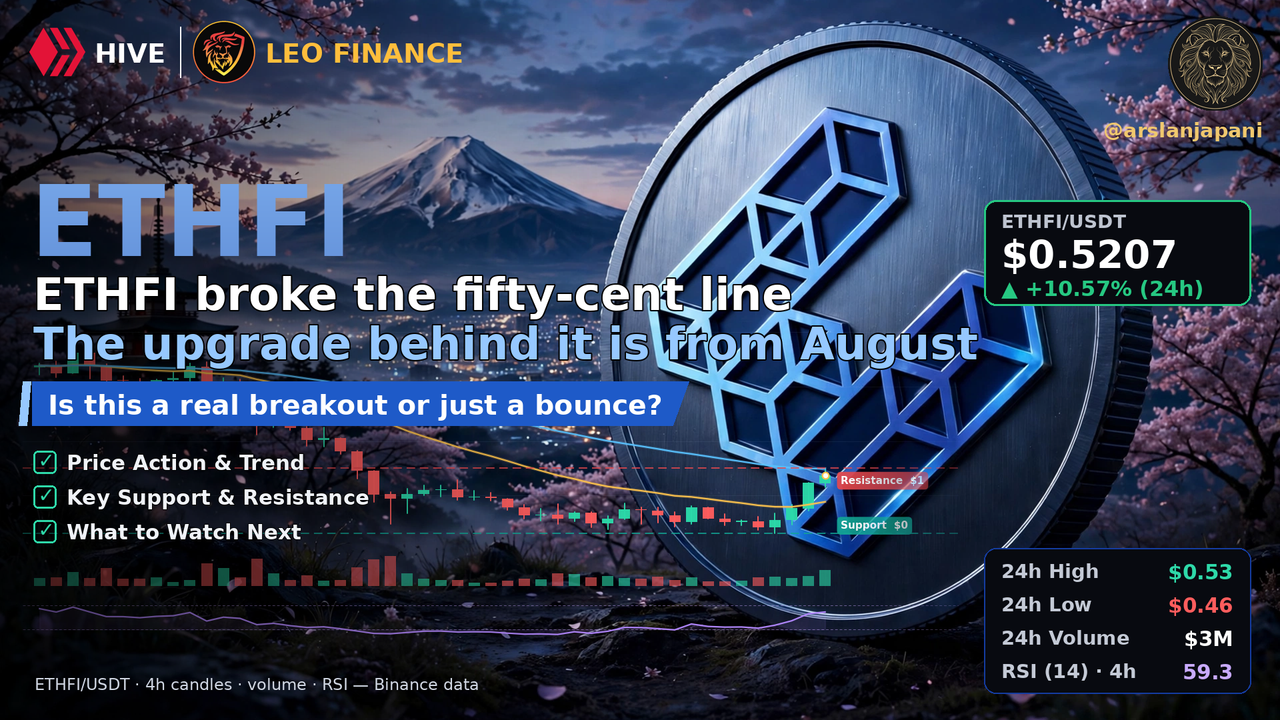
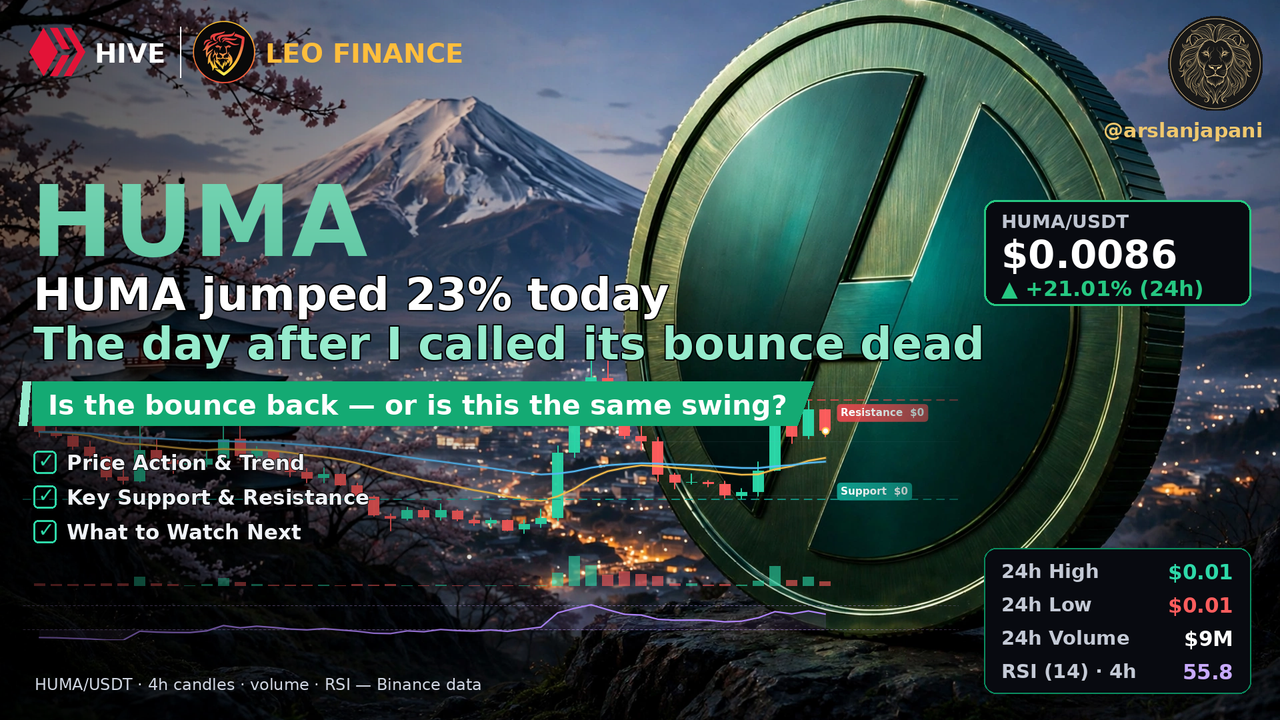
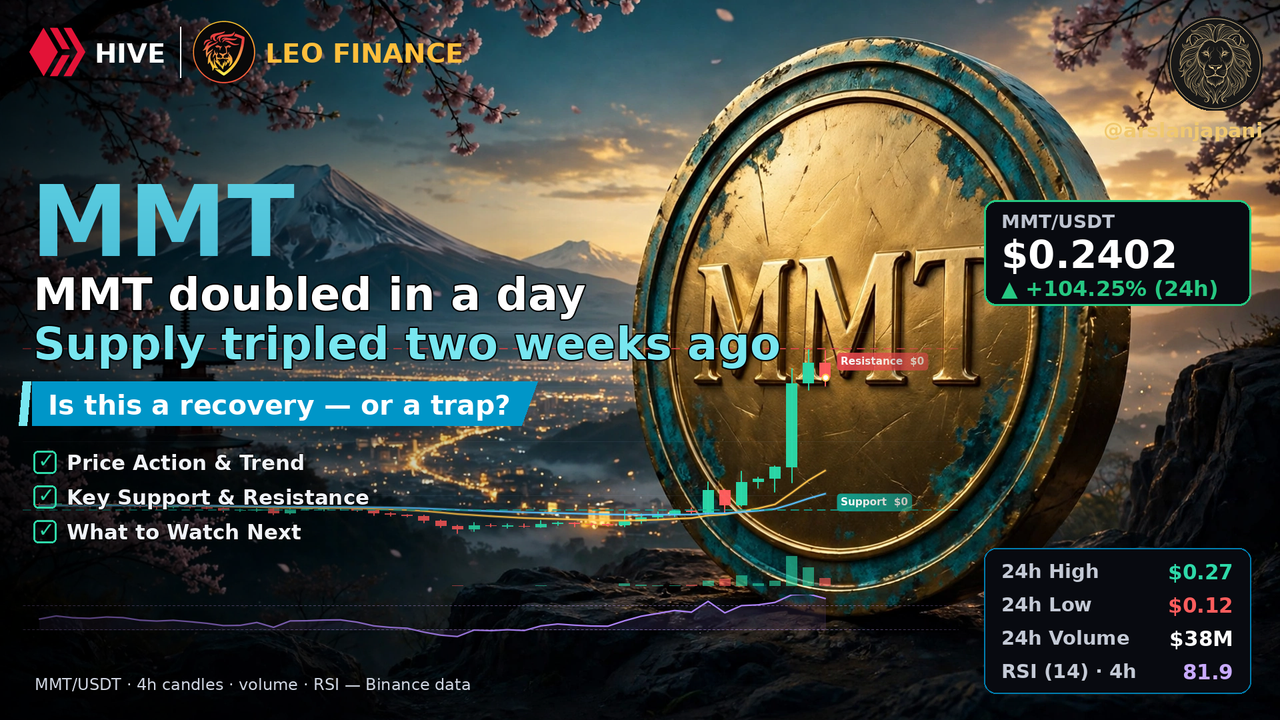
A few follow-ups from my last posts. HUMA, the coin from this afternoon's post, is still climbing — up 26% at $0.00909, with the day's high at $0.00937. MMT, from last night's post, has faded to $0.229, down about 6%. ZKC did the opposite of yesterday: it was up 26% this morning and is now down 17.6% at $0.0272, futures-led again with still no verified reason behind any of it. LUNC is up 21% with no catalyst I could verify, and ETHFI, from last night's extra post, is at $0.511, up 8.6% and still holding above $0.50.
What I take from today
I have watched crypto since 2011, back in Pakistan, and I am not a technical guru — I am still learning, same as most of us. But one thing I have learned over the years is that the scariest stories in DeFi are rarely about a hack. They are about liquidity. A pool with zero liquidity is not a theory. It is real people who deposited money and cannot take it out today.
Sky is a big, old, serious protocol, and its token is down 62% from its high six weeks ago. That does not mean it is finished. The revenue is real, the institutions are still there, and the upgrade today might help. But it does mean the next few days matter a lot more than usual for this coin.
This is not financial advice, just my own view after checking the charts and reading the reports tonight.
What do you think — when a lending pool hits 100% and depositors are locked out, is that a buying opportunity, or a reason to stay away until the borrower pays something back? I am genuinely curious how you read it.
Sources: CoinStats — Sky news today, 19 November 2026 · TokenPost — Sky falls 5.45% in an hour on Binance · BitScreener — top crypto losers · Binance public 24h ticker data (data-api.binance.vision) · Fear & Greed Index