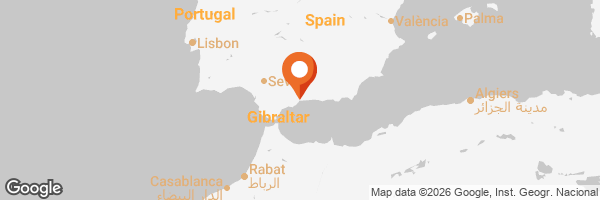
There are many places in the city, particularly in the centre, that bear witness to its past history and centuries of experiences, and which today stand as symbols of the city, visited by millions of tourists. These are places that stand imposingly, and when you look at them, you can feel their strength and power.

When I first arrived in the city and made it my home, the first thing I did was explore much of the historic centre, and even in those early days I wanted to climb the slope up to Gibralfaro Castle and reach as high as possible, to feel the wind on my face and enjoy the incredible views.
But that path I walked along in those early days, more than eight years ago now, isn’t the only way to enjoy these spectacular spots. Each side of the hillside that makes up Gibralfaro Forest Park, the castle, its gardens and much more, has its own access route, and each one is wonderful in its own way.
So far, I’ve explored two of these places, and I haven’t even finished exploring one of them yet. As I always say, it feels as though the city keeps expanding the more I explore it, and every day I’m more and more amazed.


A few years ago, my mum signed up for a tour at a museum I’ve never actually visited, that’s right, I haven’t been to the Municipal Heritage Museum yet, though I hope to do so soon. But whilst looking for things to do in the city, she signed up for a tour of the so-called Coracha. I never imagined there were such enormous staircases, as if leading up to the sky, situated next to that museum and nestled into the hillside. I didn’t realise this place had such a rich history and was so significant. If you’d like to read more about it, here’s a link I found.


At the time, she wasn’t able to climb all the way to the top. It was too much of a strain – there were so many steps. But she did enjoy all the history the museum guide was recounting, and when she got home and told me about her experience and everything she’d learnt from the guide, it inspired me to visit the place myself and have the experience. All the more so knowing the energy that place holds.
Today’s La Coracha, this zigzag of massive steps leading up to a certain part of Mount Gibralfaro, with its woodland park and little house, takes its name from a neighbourhood that was known by that name many years ago.


Near Gibralfaro Castle, at the foot of it, lies La Alcazaba; and when, at a certain point in history, it no longer served a military purpose, it was no longer maintained, and very poor settlers, fishermen, made their homes amongst the remains of the walls there, building their little white houses nestled into the hillside itself, using those very materials.


The neighbourhood, as I said, was very poor, with many shortages, such as electricity, and hygiene conditions were far from ideal; there was also a great deal of insecurity. The neighbourhood itself acted as a wall for the castles, shielding them from the sea. This is because, in ancient times, the sea actually reached as far as these areas. But as you can see in the photos, the harbour was built some time later and a great deal of land was reclaimed from the sea.


The truth is that the history is very interesting and dates back to the 18th century. Due to the conditions in this neighbourhood, which had been a problem for centuries, there were frequent calls to demolish and rebuild it, but it was not until the 1990s that the decision was taken to demolish the entire area, which was already in a state of severe neglect, and to build what you see here: endless flights of steps flanked by gardens.
But the architecture of this neighbourhood was typically Andalusian, with its little white houses, and there was a great deal of criticism of the decision to demolish it all, given that it was such an important part of the city. As early as the 19th century, there were plans to clear the neighbourhood, but as I said, it was not until 1931 that the Directorate General of Fine Arts managed to purchase the entire site, and work began thirty years later.


Of the old buildings, all that remains is the museum I mentioned at the start, which was completely refurbished and now operates as a museum. An lift was also installed, running from the Coracha to the very top of the Alcazaba Castle.
But what’s important, apart from the history, is the feeling you get as you walk up each step, climbing higher and higher, even though I already knew the story because my mother had told it to me with such enthusiasm. I climbed with a sense of the ground I was treading on, of what had happened there, and of the energy, as I always say, that places steeped in history possess: the energy of the people who once lived there, which they imbued into that place.


Now we see something fabulous and spectacular, whereas before it wasn’t, and I think it’s a good reminder of the wonder and history that it was and always will be. I enjoyed the climb, the gardens, the open spaces and, above all, the views of the harbour, the seafront promenade and the park walkway; I thought about how none of that had been there before and imagined what it must have been like.


A neighbourhood that once formed the ramparts of Mount Gibralfaro and is now an imposing and beautiful structure, with a fountain at its foot and gardens, flowers and trees, where every step speaks of the past.
Thank you very much for joining me today; I send you my warmest regards. See you soon. Amonet.
All photographs are my own. Separators created by me in Photoshop. Used translator Deepl.com free version. //:# (!worldmappin 36.721418 lat -4.414245 long La Coracha – An iconic, historic and cultural site dating back to the 18th century 📷 Málaga – Spain d3scr)