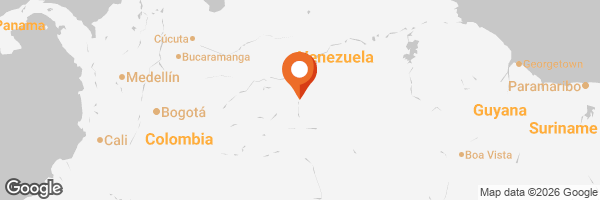
Several years ago—in fact, a decade ago—I passed through a rather remote place called Samariapo for the first time. The purpose of stopping there was simply to get off at the port and take a boat up the river, so I never had the chance to really get to know Samariapo itself. This time, our budget didn’t stretch far enough to travel up the river, but we still had the opportunity to explore this beautiful place.
Something that really impresses me about this place is that what I had known about Amazonas was that each indigenous group lived in its own separate area. There were Jivi, Piaroa, and Yekuana communities, but they were never in the same place, mainly because of their culture and way of life. However, something quite unique happens in Samariapo: there are different ethnic groups in the same area, including some I didn’t even know existed.
This is because, since it’s a port, there are actually more job opportunities there than in other places. In fact, I was really surprised to realize that 10 years ago there were almost no businesses or anything like that in the entire area, but this time, when I passed through again, there were plenty of shops and, roughly every 100 meters, a house where you could rent Wi-Fi. This allowed us to stay in touch, because the truth is that there’s no cell service at all.
Spanish version
Hace varios años ya, de hecho una década, pasé por primera vez por un lugar bastante lejano llamado Samariapo. El objetivo de pasar por ahí era simplemente bajarnos en el puerto y agarrar una embarcación para adentrarnos en el río, por lo que nunca tuve la oportunidad de conocer Samariapo como tal. Esta vez el presupuesto no nos alcanzó para viajar por el río, pero aun así tuvimos la oportunidad de conocer este lindo lugar.
Algo que me impresiona mucho de este sitio es que lo que había conocido de Amazonas era que las etnias indígenas vivían cada una en su área. Había comunidades de jivi, piaroa y yekuana, pero estas nunca estaban en el mismo lugar, principalmente por su cultura y su forma de vida. Sin embargo, en Samariapo pasa algo bastante particular, y es que en la misma zona hay diferentes tipos de etnias, incluso algunas que yo no conocía.
Esto es así porque, como es un puerto, la verdad es que hay más trabajo que en otros sitios. De hecho, me sorprendió mucho darme cuenta de que hace 10 años por toda esa zona no había casi negocios ni nada por el estilo, pero esta vez, cuando volví a pasar, había un montón de comercios y aproximadamente cada 100 metros una casa en la que alquilaban Wi-Fi. Esto permitió que nos mantuviéramos en comunicación, porque la verdad es que no hay ningún tipo de señal telefónica.


But my favorite thing about this place is that, even though there were plenty of places to buy what you needed and also places to connect to the internet, it still has a very natural atmosphere. Not only because you’re surrounded by nature on all sides, but also because the people—aside from being quite humble and kind—have this mindset of taking care of their land and not harming the environment. I really like that because it teaches you that you can thrive without damaging what keeps you alive.
Our trip began on a Monday, the day the bus to Samariapo departed from Puerto Ayacucho, Amazonas. You could say this bus only makes a one-way trip, and the return trip leaves every morning at 6:00 a.m. Therefore, if we decided to go to Puerto Samariapo, we would have to stay at least until that time the next day. That’s exactly what happened—except we didn’t stay until the next day, but several days longer.
I must say it was truly wonderful to see how people maintain such a positive attitude toward life despite everything, and to realize just how hospitable they are and how kindly they treated us. During the days we were there, they really treated us exceptionally well and were very attentive to our needs. Being in this place was a very happy time for me, because literally wherever I looked, I could see the mountains up close or just nature.
Spanish version
Pero mi parte favorita de este lugar es que, si bien tenía bastantes sitios donde comprar lo que necesitabas y también lugares para conectarte a internet, sigue siendo un ambiente muy natural. No solamente por el hecho de estar rodeado de naturaleza por todas partes, sino que las personas, aparte de ser bastante humildes y amables, tienen esta mentalidad de cuidar sus tierras y no dañar el entorno. Eso me gusta mucho porque es una lección de que se puede surgir sin necesidad de dañar lo que te mantiene con vida.
Nuestro viaje comenzó un lunes, el día en el que el autobús hacia Samariapo salía desde Puerto Ayacucho, Amazonas. Este autobús podría decirse que solo hace un viaje de ida y su regreso es todas las mañanas a las 6:00 a. m. Por lo tanto, si nos aventurábamos a ir a puerto Samariapo, tendríamos que quedarnos al menos hasta el día siguiente a esa hora. Así fue, solo que no nos quedamos hasta el día siguiente, sino varios días más.
Debo decir que fue algo muy bonito ver cómo las personas tienen esta buena actitud ante la vida pese a todo, además de darme cuenta de lo hospitalarias que son y de su trato tan amable. Los días que estuvimos ahí, la verdad es que nos trataron superbién y estuvieron muy atentos a lo que necesitábamos. Estar en este lugar fue para mí un momento muy feliz, porque literalmente hacia donde viera podía ver las montañas muy cerca o simplemente naturaleza.


The weather, as is quite typical in Amazonas, was extremely humid and hot. To be honest, for the time of year we were there, the heat was getting pretty intense, especially since there was a heat wave. However, sitting under a tree makes a huge difference. That’s what we did most of all in the afternoons when the sun was at its strongest—we’d sit in the shade to cool off, and even though the river wasn’t that close, we also went there to cope a little better with the weather.
The landscapes here are almost too beautiful to be true. The intense green, combined with the blue of a clear sky and a bright sun, made everything look ten times better. The best part is that people generally don’t visit places like this because they’re quite remote and don’t have any commercial attractions to speak of. However, I know that many people will agree with me that these are the best places to visit and explore—where everything is natural and you can’t help but appreciate your existence so much more.
Spanish version
El clima, como es bastante normal en Amazonas, era superhúmedo y caluroso. La verdad es que, para las fechas en las que fuimos, el calor se estaba volviendo bastante fuerte, especialmente porque había una ola de calor. Sin embargo, estar sentado debajo de un árbol hace una gran diferencia. Esto era lo que hacíamos más que todo en las tardes cuando el sol estaba más fuerte, nos sentábamos a refrescarnos a la sombra y, aunque el río no estaba tan cerca, también llegamos a ir para lidiar un poco mejor con el clima.
Los paisajes que hay en este lugar son algo que parece de mentira. El verde tan intenso combinado con el azul de un cielo despejado y un sol brillante hacía que todo se viera diez veces mejor. Lo mejor del caso es que por lo general las personas no visitan sitios como este porque están bastante retirados y no tienen atracciones comerciales como tal. Sin embargo, sé que muchísimas personas estarán de acuerdo conmigo en que estos son los mejores lugares para visitar y conocer, donde todo es natural y no puedes evitar apreciar tanto tu existencia.

-Content entirely of my authorship and inspiration. -Original text in Spanish, translated at DeepL. -Personal photographs, taken with my Huawei p30 Lite Phone. -Banners designed in Canva Pro.
-Contenido completamente de mi autoria e inspiración. -Texto original en español, traducido en DeepL. -Fotografías personales, tomadas con mi teléfono Huawei p30 Lite. -Banners diseñados en Canva Pro.
[//]:# ([//]:# (!worldmappin 5.20524 lat -67.78510 long d3scr))