Across the Baltic coast, East German enterprises based inland maintained holiday camps for their employees' children. Many of the dream destinations for entire generations have vanished. Yet one spot near the town of Bansin has transformed into a time machine.

On the left, a poster showed a girl playing the guitar; on the right, a young woman accompanied her on the accordion. A large banner hung between two trees, reading: "A warm welcome to the Philipp Müller holiday camp in Bansin on the Baltic Sea."

300 Meters from the Baltic Sea
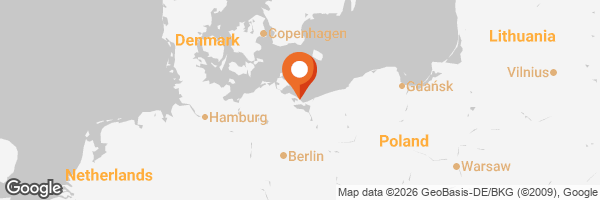
Tucked away in the midst of a green beech forest—less than 300 meters from the Baltic beach—the children's camp run by the Meiningen Railway Repair Works (RAW) on the island of Usedom was, until 30 years ago, a paradise for Young Pioneers from across the GDR.

It wasn't just the children of employees from the sponsoring company in Thuringia who spent their summer holidays here—GDR-style and at GDR prices ranging from 40 to 70 marks all-inclusive—but also the children of railway depot workers from Halle and Quedlinburg, as well as those from the chemical plants in Bitterfeld.

In large canvas tents
There were three sessions each year, with counselors and camp directors hailing from various railway repair works across the country. Initially, the children were housed in large canvas tents; later, rustic barracks were built, roughly cobbled together from wooden frames and sheeting.

A large masonry dining hall and an annex for sanitary facilities rounded out the complex—a place still associated with fond memories for former campers, as a man wandering curiously through the ruins recounts.

Slats, lampposts, wooden walls, asbestos-panel roofs, and concrete foundations—that is all that remains, three decades after its closure, of a camp that was perhaps not the most beautiful, but certainly one of the most idyllic within the nationwide system of company and Pioneer holiday camps that collapsed along with the GDR.

All is in ruins
Today, the ruins lie submerged in a forest right next to the coastal cycle path between Bansin and Ückeritz. The former lodgings remain, partially or completely crushed by storms and the weight of snow.
Graffiti artists have left their mark on the few walls still standing, fires have left their traces, and locals—seeing the refrigerators and furniture left behind during the facility’s hasty abandonment—took it as an invitation to dump their own household waste there.

The entire complex is overgrown with trees and shrubs slowly forcing their way through the dilapidated buildings. A massive plush armchair still sits in the dining hall, with a footstool conveniently placed in front of it. The windows are missing their glass, and a musty odor wafts from a cellar.
5,000 camps

Despite this—or perhaps precisely because of it—this spot near the current dog beach on the cliffs northwest of the three "Imperial Spas" serves as a kind of memory machine for many visitors. After all, something of the past remains here—certainly more than of the vast majority of the roughly 5,000 GDR children's holiday camps that once hosted a million vacationing children annually but have since vanished completely from the map.

Just nearby in Trassenheide, the huge "Raymonde Dien" Pioneer tent camp was razed to make way for a health resort. The "Alexej Maressjew" Central Pioneer Camp in Markgrafenheide was also demolished; today, a "Beach Resort" featuring modern dune villas stands on that site.
Named after a young communist
In contrast, on the grounds of the camp named after Philipp Müller—a young West German communist shot dead by a police officer during a 1952 demonstration in Essen—time itself has taken charge of the transformation.

The old paths are still there: overgrown, yet recognizable. Leaves lie ankle-deep in the clubhouse, yet the picturesque little cliff and the beach—which quickly becomes deserted in the evening as vacationers retreat to their hotels in Ückeritz and Bansin—have barely changed. For those who spent their childhood holidays here, the mind’s eye fills in what has vanished over the decades.

Though barely visible even from the nearby cycle path, the abandoned site of the former RAW holiday camp has become a place of pilgrimage—not only for former campers and fans of ruins, but also for beachgoers weary of the sand and for cyclists passing through.


View this post on TravelFeed for the best experience.