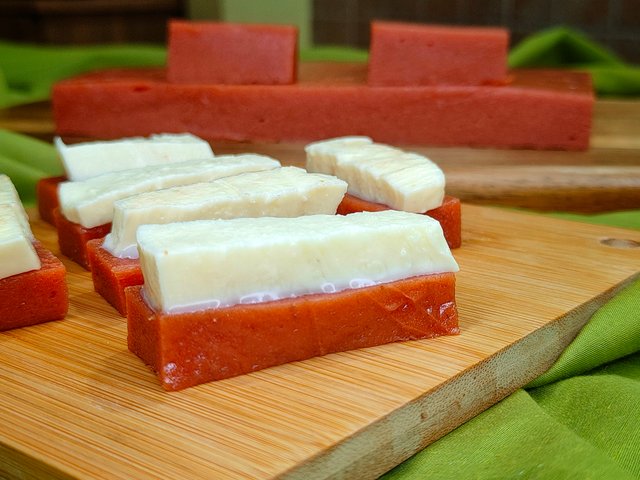
Desde niño siempre me ha encantado comer bocadillos de guayaba. En casa los solemos comer con algún queso que tenga un buen toque salado o algún queso amarillo. No voy a mentir, nos encanta comer ciertas frutas con queso. Estuve buscando bocadillos de guayaba sin la cubierta azucarada, pero no conseguí y, también para evitar el tema de conservantes y colorantes artificiales, opté por preparar mi propio bocadillo.
Ever since I was a kid, I've loved eating guava bocadillo. At home, we usually eat them with a salty cheese or a yellow cheese. I'm not going to lie—we love eating certain fruits with cheese. I looked for guava bocadillo without the sugary coating, but I couldn't find any, and—also to avoid preservatives and artificial colors—I decided to make my own.
Las frutas contienen pectina, una fibra que se encarga de lograr ese aspecto gelatinoso en mermeladas, confituras, brillos o en bocadillos. La guayaba contiene mayor cantidad de pectina en su piel y en las semillas; por eso verás en el paso a paso la técnica para lograr aprovechar esta fibra, que para mejores resultados se activa con algún acido como el jugo de limón.
Fruits contain pectin, a type of fiber that gives jams, preserves, glazes, and spreads their gel-like consistency. Guava contains the highest amount of pectin in its skin and seeds; that’s why you’ll see in the step-by-step instructions the technique for making the most of this fiber, which—for best results—is activated by an acid such as lemon juice.
Si quieres aprender a preparar bocadillo de guayaba, te comparto la fórmula por cada kg de fruta:
If you want to learn how to make guava bocadillo, here's the recipe per kilogram of fruit:

Ingredientes || Ingredients
|
|
Preparación || Preparation
- Se lavan bien las guayabas y se les cortan los extremos. Se cortan en trozos grandes y se colocan en una olla de acero inoxidable; se agrega agua hasta que cubra ligeramente la fruta y se lleva a cocción.
- Wash the guavas thoroughly and cut off the ends. Cut them into large pieces and place them in a stainless-steel pot; add water until it slightly covers the fruit, and bring to a boil.
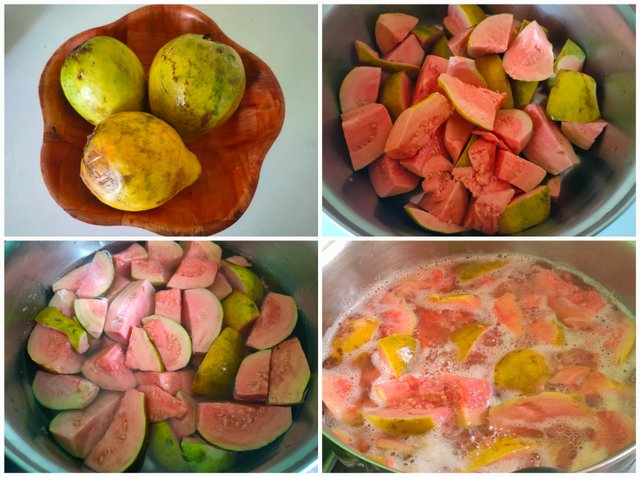
- La idea es cocinar hasta que se reduzca el agua a más de la mitad. Una vez cocinada la guayaba, se procesa y se cuela para retirar las semillas y cualquier resto de la piel que haya quedado sin procesar.
- The idea is to cook it until the liquid has reduced by more than half. Once the guava is cooked, it is processed and strained to remove the seeds and any remaining unprocessed skin.
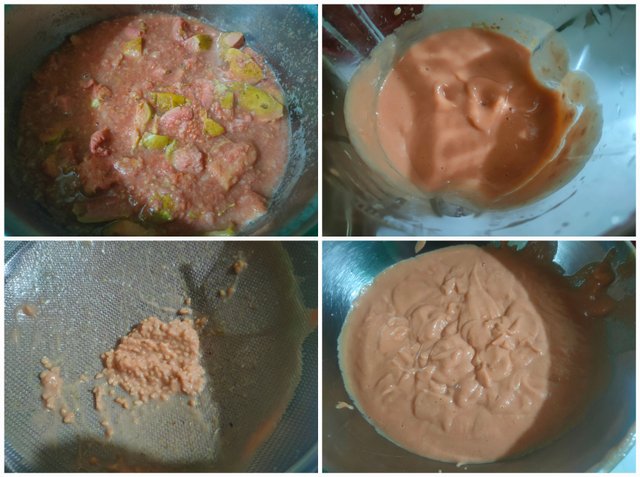
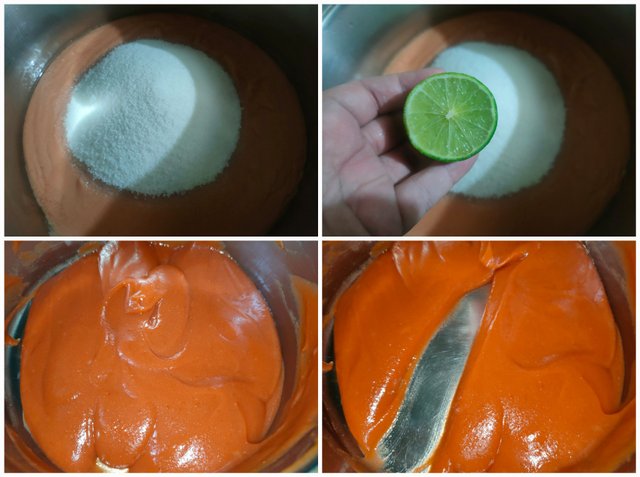
- Se coloca la guayaba procesada en la olla, se agrega el azúcar y el jugo de limón. Los primeros 30 minutos se cocina a fuego alto sin dejar de remover; luego se baja a fuego medio bajo y se sigue cocinando, sin dejar de remover, hasta que se despegue del fondo. La cocción es la clave para la consistencia del dulce.
- Place the processed guava in a pot, then add the sugar and lemon juice. Cook over high heat for the first 30 minutes, stirring constantly; then reduce the heat to medium-low and continue cooking, stirring constantly, until the mixture pulls away from the bottom of the pot. The cooking process is key to achieving the right consistency for the jam.
- Se cubre el refractario con papel resistente al calor o papel para horno, se agrega el dulce caliente y se cubre con el papel. Se deja reposar hasta que esté completamente frío o a temperatura ambiente.
- Line the ovenproof dish with heat-resistant paper or parchment paper, add the hot dessert, and cover it with the paper. Let it sit until it is completely cool or at room temperature.
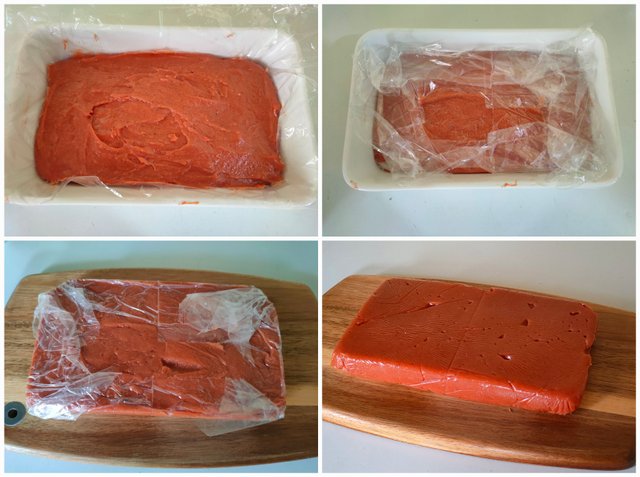

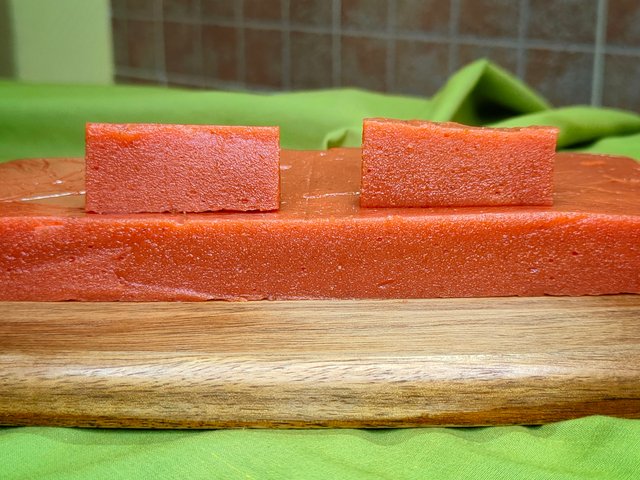
Ya el bocadillo de guayaba está listo. La textura va a depender del punto de cocción. Cuando, al pasar la cucharada, el dulce tarda en volver a unirse, ese punto quiere decir que le falta poco tiempo de cocción, pero es un buen punto para lograr una crema untable mejor que un punto mermelada. Este es un dulce de paciencia, pero que vale todo el tiempo.
The guava bocadillo is now ready. The texture will depend on how long you cook it. When you run a spoon through it and the mixture takes a while to come back together, that means it needs just a little more cooking time—but it’s a good point to stop at if you want a spreadable cream rather than a jam-like consistency. This is a spread that requires patience, but it’s well worth the time.

Déjame saber en los comentarios si has comido este dulce de guayaba con queso y cuál fue tu experiencia. ¡Hasta una próxima receta!
Let me know in the comments if you've tried this guava dessert with cheese and what you thought of it. See you next recipe!

Todas las fotografías fueron tomadas por mí con un Realme 7 pro. No autorizo a nadie reutilizarlas. Esta publicación fue escrita en español y luego traducida al inglés.
All photographs were taken by me with a Realme 7 pro. I do not authorize anyone to reuse them. This publication was written in Spanish and then translated into English.