
Imagen generada con ChatGPT
ENGLISH VERSION (click here!)
Since when does being in the public eye mean accepting hatred? 🤔
It seems that creating a public social media profile and deciding to share something is tantamount to signing a blank check for hate. It no longer matters what kind of content is posted; viewers have lost their fear of making comments that judge, humiliate, and insult under the guise of a false narrative of “freedom of expression.”
There is a deeply rooted misconception that public exposure gives anyone the right to harass others online on a daily basis, under the belief that the virtual world is a lawless territory. This raises a fundamental question: Since when does being in the public eye mean consenting to be subjected to violence?
This reflection was inspired by @danielvehe, after he shared a post showing the number of insults people were leaving on one of his videos uploaded to TikTok.
The root of this phenomenon is not only moral but also psychological, because someone who chooses to waste valuable time in their life denigrating others cannot be in their right mind. Some people argue that this is due, in part, to not being face-to-face with the other person: when eye contact and body language cues are absent, empathy is reduced to a minimum.
Behind a keyboard, the aggressor loses that “sense of humanity,” so to speak. And when we add the crowd effect of hundreds of users joining together to attack at the same time, individual responsibility disappears entirely. It seems as though the aggressors view this act as a global online conversation where “everyone does it,” and therefore, there is no individual blame. The result is impunity because there is no established limit; the attitude of “I can say whatever I want” behind a screen is perpetuated.
This dynamic has given rise to an absurd fallacy that justifies these kinds of attacks, as if they were the price to pay for “fame,” the visibility one gains on social media, or success. It has become the norm to expect not only public figures but also people who achieve a certain level of prominence to put up with all kinds of comments. “And if you don’t like it, just close the account”—a phrase that has become commonplace as a way to shift the blame onto the victim. It’s a typical line used by bullies as a form of emotional blackmail to isolate the victim and make them feel even worse.
The serious aspect of this situation is that people with a certain amount of influence on social media are forced to develop “thick skin” to deal with all kinds of insults hurled like darts by those who feel protected behind a phone.
It is crucial to draw a clear line between freedom of expression and digital misconduct. It is possible to express disagreement, engage in healthy debate, or criticize a position in a well-reasoned manner without resorting to destructive insults. Because mocking someone’s physical appearance, defamation (which is now called “shaming”), and threats are not opinions—they are bullying and digital misconduct.
Freedom of expression protects the diversity of ideas, not the right to trample on the dignity of others. When criticism is confused with harassment, it’s the first step toward validating hate as an acceptable form of interaction. And, unfortunately, this has become commonplace—both in the content that’s shared and in the comments—something that’s now taken for granted and implicit in having an online presence. “Get ready for the haters,” “people are always going to talk.”
Unfortunately, major tech platforms prioritize engagement, measuring the level of interaction on social media regardless of whether it stems from quality content, sensationalism, or defamation that targets one or more individuals. Outrage generates clicks, clicks generate virality, and virality generates profits. It is a highly profitable business model in which conflict and violence fuel the algorithms.
It doesn't matter what's being shown, as long as it's trending.
Meanwhile, the platforms’ reporting and moderation tools remain ineffective because they rely on automated systems or delayed reviews that take action only after the damage has already been done. It is precisely this lack of real consequences in the “physical world” that fuels that sense of power: the perpetrator insults or defames someone today, turns off their phone, and goes on with their life as usual.
The platforms’ inaction is so alarming that victims are driven to extreme measures just to be heard. People who normally keep a low profile are forced to push their own boundaries, recording videos and giving exhausting explanations just to gain the visibility that technical support denies them.
Faced with this neglect, they have no choice but to seek support from their community to coordinate mass reports aimed at getting the defamatory accounts shut down. It’s a toxic and perverse cycle: the victim is forced to overexpose themselves just to demand the protection that the social media platform should have guaranteed from the very beginning.
A highly publicized case in our country was that of the stalker Rebeca García. While it is true that, in that case, the harassment also escalated to physical abuse, there was constant and excessive harassment over the course of several years via social media.
We saw how one of the victims had to speak out about her situation on Twitter, given the lack of response from social media platforms and the Venezuelan justice system. Why has it become normal to reach that point? There should be stricter rules or harsher penalties for this type of perpetrator.
Likewise, digital violence isn’t confined to the virtual world. Its consequences extend beyond the screen because they manifest in reality, causing anxiety, depression, isolation, low self-esteem, and, in extreme cases, suicide. The screen may be made of glass, but the wounds it leaves are deeply human. “The axe forgets, but the tree does not”—I’ll always say that.
Redefining coexistence in the digital age does not mean censoring ourselves, but rather demanding certain basic standards of respect and responsibility. Insults should not be tolerated in the virtual world because digital impunity is a collective failure fraught with dire consequences. Behind every user is a human being who feels and suffers, who deserves respect and owes their dignity to no one.
That's it for today's post. I'd love to hear your thoughts in the comments—have you ever been attacked on social media? Do you know anyone who's been through that? Warm regards to the whole community.
Pareciera que abrir un perfil público en redes sociales y decidir compartir algo, equivale a firmar un cheque en blanco para el odio. Ya no tiene que ver el tipo de contenido que se suba, los espectadores han perdido el miedo a hacer comentarios que juzgan, humillan e insultan bajo el escudo de una falsa narrativa de “libertad de expresión”.
Existe una creencia errónea y profundamente arraigada de que la exposición pública le otorga a cualquiera el derecho de agredir en línea a diario, creyendo que la virtualidad es un territorio sin ley. Entonces, cabe hacerse una pregunta fundamental: ¿desde cuándo estar expuesto significa dar consentimiento para ser violentado?
Esta reflexión la inspiró @danielvehe, después de que compartiera un post en el que mostraba la cantidad de injurias que le dejaban en uno de sus videos de TikTok.

La raíz de este fenómeno no es solo moral, sino psicológica porque alguien que decide perder tiempo valioso de su vida denigrando a los demás no puede estar bien de la cabeza. Algunas personas afirman que eso se debe, en parte, a no tener a la persona frente a frente: al desaparecer el contacto visual y las señales del lenguaje corporal, la empatía se reduce a su mínima expresión.
Detrás de un teclado, el agresor pierde esa “noción de humanidad”, por así decirlo. Y si le sumamos el efecto masa de cientos de usuarios que se unen para atacar al mismo tiempo, la responsabilidad individual desaparece por completo. Pareciera que los agresores entendieran este acto como una conversación online global donde “todos lo hacen”, entonces, no hay culpa individual. El resultado es la impunidad porque no hay un límite establecido, se perpetúa el “puedo decir lo que quiera” detrás de una pantalla.
Esta dinámica ha instalado una falacia absurda en la que se justifican este tipo de ataques, pues es el precio a pagar por la “fama”, la visibilidad que se llegue a tener en las redes sociales o el éxito. Se ha normalizado exigirle, no solo a figuras públicas, sino a personas que logran cierta relevancia a aguantar todo tipo de comentarios. “Y si no te gusta, cierra la cuenta”, frase que se ha normalizado para trasladar la culpa a la víctima. La frase típica de los acosadores, usada como chantaje emocional para aislar al agredido y hacerlo sentir aún peor.

Lo grave de esta situación es que las personas con cierta influencia en redes, se ven obligadas a tener una “piel de acero” para lidiar con todo tipo de epítetos que lanzan como dardos quienes se sienten protegidos detrás de un teléfono.
Es crucial trazar una frontera firme entre la libertad de expresión y el libertinaje digital. Se puede expresar un desacuerdo, debatir sanamente o criticar una postura de manera fundamentada sin necesidad de insultar destructivamente. Porque esa burla sobre el físico, la difamación (que ahora la llaman “funa”) y las amenazas, no son opiniones, es bullying y libertinaje digital.
La libertad de expresión protege la diversidad de ideas, no el derecho a pisotear la dignidad ajena. Cuando se confunde la crítica con el acoso, es el primer paso para validar el odio como una forma aceptable de interacción. Y, lamentablemente, se ha vuelto el pan de cada día tanto en el contenido que se comparte, como en los comentarios, es algo que ya se asume y que está implícito al tener presencia en línea. “Prepárate para los haters”, “la gente siempre va a hablar”.
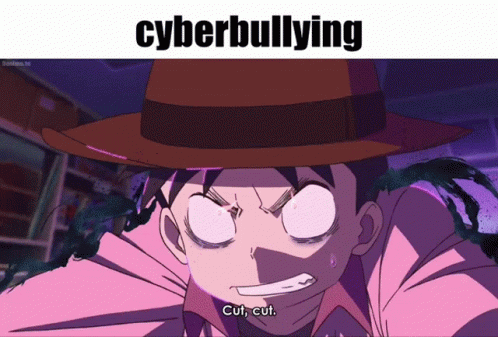
Por desgracia, las grandes plataformas tecnológicas priorizan el engagement, midiendo el nivel de interacción en las redes sin importar si este proviene de un buen contenido, del morbo o de una difamación que atenta contra una o varias personas. La indignación genera clics, los clics generan viralidad y la viralidad genera ganancias. Es un modelo de negocio muy rentable en el que el conflicto y la violencia se vuelven gasolina para los algoritmos.
No importa qué es lo que se esté mostrando con tal de ser tendencia.
Mientras tanto, las herramientas de denuncia y moderación de las plataformas, siguen siendo ineficientes porque son atendidos por sistemas automatizados o revisiones tardías que toman acción cuando el daño ya está hecho. Es, precisamente, esa falta de consecuencias reales en el “mundo físico” lo que favorece esa sensación de poder: el agresor insulta o difama hoy, apaga el teléfono y continúa con su vida intacta.

Es tan alarmante la inacción de las plataformas que las víctimas se ven arrastradas a situaciones extremas para ser escuchadas. Personas que normalmente mantienen un perfil bajo son forzadas a vulnerar sus propios límites, grabando videos y dando explicaciones desgastantes solo para ganar la visibilidad que el soporte técnico les niega.
Ante este abandono, no les queda más opción que buscar el apoyo de su comunidad para coordinar denuncias masivas que logren cerrar las cuentas difamatorias. Es un ciclo tóxico y perverso: la víctima se ve obligada a hiperexponerse solo para exigir la protección que la red social debió garantizarle desde el primer momento.
Un caso muy sonado de nuestro país fue el de la acosadora Rebeca García. Si bien es cierto que, en ese caso, también trascendió a un hostigamiento físico, hubo un acoso constante y desmedido durante años por medio de las redes sociales. Pudimos ver cómo una de las agredidas tuvo que exponer su situación en Twitter, dada la falta de respuesta de las mismas redes sociales y de la justicia venezolana. ¿Por qué se ha normalizado llegar a ese punto? Deberían existir reglas o tipos de penalización más duras para este tipo de agresores.
Igualmente, la violencia digital no se queda atrapada en la virtualidad. Las consecuencias cruzan la pantalla debido a que se manifiestan en la realidad, provocando ansiedad, depresión, aislamiento, baja autoestima y, en casos extremos, el suicidio. La pantalla puede ser de cristal, pero las heridas que deja son profundamente humanas. “El hacha olvida, el árbol no”, siempre lo diré.
Redefinir la convivencia en la era digital no implica censurarnos, sino exigir ciertos estándares básicos de respeto y responsabilidad. Los insultos no deberían tolerarse en el entorno virtual porque la impunidad digital es una falla colectiva llena de consecuencias fatales. Detrás de cada usuario existe un humano que siente y padece, el cual merece respeto y no le debe su dignidad a nadie.
Hasta aquí el post de hoy. Me gustaría saber qué piensan en comentarios, ¿han sido agredidos en redes sociales?, ¿Conocen a alguien que haya pasado por eso? Un abrazo a toda la comunidad.

My instagram account:
@artevezo
Thanks for reading! ⭐
Creative Commons Attribution-NonCommercial-NoDerivatives 4.0


@ikasumanera Divider | DeepL Translator


