Longform reviews of films, TV, anime, books, and audiobooks, written by the scrobble.life community and published to the Hive blockchain, so each one is owned by its author and can earn rewards from readers. 34,393 reviews and counting.
The world of cinema is vast, and great films continue to be released. The best part is that when you watch a film of any genre, more recommendations appear. Although animated films are few and far between, there will always be something to watch. This time, I would like to share One Night in Zoopolis with you. It is a very simple film, but it is full of magic and shows how simplicity can go a long way. From the very first minute, you can feel a very beautiful story unfolding, reminding us that even when everything seems quiet, there will always be something that wants to start trouble.
The film takes us to Zootopia, a colorful, trouble-free city where animals are in control of everyday life, but it is a city that will slowly reveal its true secrets when the sun goes down. That is when these animals will have to go on a great nighttime adventure that seems bigger than them and, above all, puts their lives at risk as they face zombies. However, it will be a journey of excitement and action that will be perfect for them to realize who they really are, which leads us to wonder: What will happen to these animals?
El mundo del cine es muy grande y siguen llegando muy buenas películas y lo mejor es que cuando uno ve alguna de cualquier género, aparecen más recomendaciones, a pesar de que las que son animadas son muy pocas siempre habrá algo que ver y esta vez les comparto Una noche en Zoópolis, siendo un estilo de película muy sencilla, pero llena de mucha magia y como lo simple puede llegar lejos. Desde el primer minuto se puede sentir una historia muy bonita y recordarnos que incluso cuando todo parece quieto, siempre habrá algo que quiera comenzar a provocar problemas.
La película nos lleva a Zoópolis, una ciudad colorida, sin problemas, además los animales son los que tienen el control del día a día, pero es una ciudad que poco nos irá revelando sus verdaderos secretos cuando el sol se esconde, es allí donde estos animales tendrá que pasar por una gran aventura nocturna que parece más grande que ellos y sobre todo está en riesgo la vida, al tener que enfrentarse a zombis, pero será un viaje de emociones y acción que será perfecto para darse cuenta quiénes son realmente y eso nos lleva a preguntarnos ¿Qué les pasará a estos animales?
This is a film that appeals to a wide audience. Furthermore, nighttime is the main setting for the entire film, which gives it a very fun and special touch due to the empty streets, bright lights, and silence that accompanies each of the animals as they face fears, doubts, and dreams that they had hidden for a long time. Each member of the group of animals reflects something that helps them work as a team and move forward, such as courage, fragility, shyness, and the need to feel important. Each of these elements is very important, and when we realize it, they are like a family that appears when you need it most and shows that sometimes the right path is the one you walk with others.
Each of the scenes is very well crafted, so that it looks as realistic as possible, without too much exaggeration. In addition, each color makes it look great and creates an atmosphere that gives the feeling that the city breathes alongside the characters and gives them the confidence to keep fighting until the end. In addition, it is a film that features a wide variety of music for those moments of emotion, energy, laughter, and others where a soft melody is enough to understand that something is changing and to continue enjoying. Therefore, all the nighttime animation from start to finish has that charm that makes everything seem more real, as if you yourself could walk with them through moonlit alleys.
Esta es una película que se adapta a todo un amplio público, además la noche será el principal escenario de toda la película, la cual le da un toque muy divertido y especial por el mismo hecho de contar con las calles vacías, muchas luces y ese silencio que acompaña a cada uno de los animales mientras enfrentan miedos, dudas y sueños que habían escondido durante mucho tiempo. Cada uno del grupo de animales refleja algo que sirve para poder trabajar en equipo y poder salir adelante como valentía, fragilidad, timidez, la necesidad de sentirse importante y cada uno de esos elementos son muy importantes y cuando nos damos cuenta son como una familia esa que aparece cuando más se necesita y que demuestra que a veces el camino correcto es el que se recorre acompañado.
Cada una de las escenas están muy trabajas, para que se pueda ver lo más realista, sin tanta exageración, además cada uno colores hace que se vea muy bien y una atmósfera que da la sensación de que la ciudad respira junto a los personajes y le da esa seguridad de poder seguir batallando hasta el final. Además, es una película que cuenta con una gran variedad de músicas para esos momentos de emoción, de energía, de risa y otros donde basta una melodía suave para entender que algo está cambiando y seguir disfrutando. Por ende toda la animación nocturna de inicio a fin tiene ese encanto que hace que todo parezca más real, como si uno misma pudiera caminar con ellos entre callejones iluminados por la luna.
The great thing about this film is that, however simple they may be, they always have those profound messages that make us reflect, as well as enjoy those moments where humor is present, along with little hidden lessons that remind us that we often search for our place without realizing that we had already found it. One Night in Zoopolis leaves you with a very good feeling that makes it worth watching over and over again. It also invites us to disconnect for a while and simply enjoy a beautiful story where animals teach us what we sometimes forget: that even in the darkness there are lights to guide us, and that with a strong team, there is no way anyone can defeat us, especially in the face of a zombie invasion.
Lo genial de esta película es que por más sencillas que sean siempre tienen esos mensajes profundos, que nos hacen reflexionar, además disfrutar de esos momentos donde el humor está presente al igual que pequeñas enseñanzas escondidas, que nos recuerda que muchas veces buscamos nuestro lugar sin darnos cuenta de que ya lo habíamos encontrado. Una noche en Zoópolis deja una muy buena sensación que vale la pena verla una y otra vez, como también nos invita a desconectar un rato y simplemente disfrutar de una historia bonita donde los animales nos enseñan lo que a veces olvidamos: que incluso en la oscuridad hay luces que nos guían y contar con un equipo que sea fuerte, seguro no habrá manera de que nadie lo derrote de nada y más aún ante una invasión de zombis.
Since Netflix has gone to the trouble of treating this season of Stranger things like a cinematic experience... so am I. So here is episode 2's Geeky Guide.
Luckily they scrapped this multi hour episode idea.
First off I am so happy that they decided to split these episodes into hour long chunks instead of keeping them as more movie length. Whoever edited the first and second episode deserves a 1980s high five! Episode two picks up in the absolute perfect spot. Of course I won't reveal any spoilers but suffice it to say, it starts off with one of the most exciting and scary scenes of the entire series. My heart was racing before the credits even started!
This episode also reminded me that I probably should have watched the previous seasons or at least a really thorough recap on YouTube or something. For the first fifteen minutes I kept asking my family, "Didn't that character die last season"? But that is OK. Even without remembering everything, I still thoroughly enjoyed this episode.
The writers solved a huge problem in this episode... how to handle Will Byers. Not only is his character incredibly boring but of all of the kids, he may be the worst actor. They needed to figure out a way to get the most of the scenes with him. Du da da da... Robin Buckley to the rescue! They decided to pair the incredible bland Will with the biggest personality on the show. And it works so well! Robin needs a straight man (no pun intended) to allow her quirky freak flag to fly. This pairing allows her to joke and be weird pretty much interrupted. She was neurospicy before neurospicy was cool and she gets to show her neurospiciness in all its glory.
We also get to see Mike and Nancy acting like a brother and sister for once. Their relationship has grown and matured and we finally get to see the fruits of that growth. They team together to find a very important piece of the puzzle. It was cool to see them working together and showing some actual emotion for once. usually things happen in Hawkins and no one is phased. They are definitely phased in this episode and it is great to see.
In case you forgot that this is a supernatural show, when Will isn't setting up Robin for jokes, we are reminded that he has some special abilities himself. It was cool to see them use him in this new way.
But here are a couple words of warning. These kids are going through puberty faster than anyone in the history of time. It seems to be playing havoc with their emotions as EVERYONE (except Robin) has become full on emo. They are all so serious and miserable. But I guess growing six inches and your voice dropping three octaves in two weeks and living in the hellscape of Hawkins will do that to you. Also, characters only seem to get hurt and knocked unconscious when it is convenient for the writers. It is amazing the punishment a character can take if the story requires them to be alert. There is also a little cringe. worthy dialogue with a couple of really bad jokes. But it is the 80s... there has to be some good mixed with the bad.
Did I mention that I loved the editing? The episode ends on the perfect mini cliffhanger that made me dread teh fact I could not watch the next episode and had to go to bed.
The best thing about Stranger Things is how its narrative resonates across universes, amplified by the 80s melodies.
I recently binged all four seasons of Stranger Things to refresh my retro-brain software with this story that Netflix has captivated the world 😃. I've noticed it everywhere, from social media to my social circles of friends, so I'm thrilled to be riding this wave of hype. I couldn't be part of it in previous seasons, but now I'll definitely enjoy all the hype surrounding this series, which might just be the one that generates the most global impact this year.
There's so much I want to talk about in this series, but in this post I'll focus mainly on the power of its narrative, amplified by the 80s songs.
When I watch a series, I pay attention to its soundtracks, or rather, the songs they feature, and it's always great to discover songs I've never heard before and find myself listening to them again and again. That's exactly what happened with Stranger Things, and it's AMAZING!! 🤩🤩
Lo mejor de Stranger Things es el como su narrativa hace eco en los universos, amplificada por las melodías de los 80.
Recientemente hice maratón de 4 temporadas de Stranger Things para actualizar mi software retrocerebral con esta historia que desde Netflix ha encantado al mundo 😃, lo he notado en todos lados, llámese redes sociales y entorno social de amigos, por eso me alegra en el alma nadar en esta ola de tendencia que en anteriores temporadas no pude estar presente pero ahora si que gozare todo el hype que se vive en torno a la serie que quizá sea la que genere mas impactos a nivel mundial durante este año.
Es mucho lo que quiero reseñar de esta serie, en este post me enfocare principalmente en el poder de su narrativa amplificada por las canciones de los 80.
Cuando veo una serie, estoy atento a sus bandas sonoras o en si canciones que vayan presentando y siempre es grato conocer canciones que nunca había escuchado y me dejen escuchándolas una y otra vez, con Stranger Things me sucedió lo anterior y es GENIAL!! 🤩🤩
The series is powerful, commercially designed to reach everyone around it. If you haven't seen it yet, go watch it now, haha, because it's really good. Don't expect deep plots that get bogged down in unnecessary reflections and boredom; this series impacts with well-designed moments that make the 80s a protagonist through the songs. In my case, I especially loved two of them, one I knew and the other I didn't.
Never Ending Story is a film I was able to appreciate this year, and along with it, its theme song, Stranger Things, was well executed. I have criticisms about the song and the narrative timing because I do think it veers into absurdity to introduce the song into the series... but it's worth it because the staging and seeing the actors' souls dance, metaphorically speaking, is something that was done commercially well, and I loved it 😃.
I have many criticisms of season 4 for narrative absurdities in industrial quantities, haha... BUT the scene where Running Up That Hill plays, WOW!! It was wonderful 🤩. I immediately went to YouTube to look up the song and the artist, and I spent days on repeat listening to that song and watching the scene that triggers it.
I have countless criticisms of season 4, but that song extinguishes the flame of my criticisms, and I simply surrender to enjoying this commercial series, designed for a general audience, which has surgically used those 80s songs to enhance itself.
La serie es potente, esta diseñada comercialmente para llegar a todo lo que le rodea, si aun no haz visto la serie, corre a verla jaja porque si que es buena, no esperes tramas profundas que se enredan al máximo en reflexiones y aburrimiento innecesario, esta serie impacta con momentos bien diseñados para que la década de los 80 se vuelva protagonista a través de las canciones, en mi caso me gustaron al máximo dos de ellas, donde una la conocía y la otra no
Never ending Story es un film que pude apreciar este año y con eso, pues también su tema musical, Stranger Things la ejecuto bien, tengo criticas sobre la canción y el momento narrativo porque si me parece que se cae en el absurdo para introducir la canción en la serie.... pero lo vale porque la puesta en escena y ver el alma de los actores bailar metafóricamente hablando es algo que comercialmente se hizo bien y me encanto 😃.
Tengo muchas criticas a la temporada 4 por absurdeces narrativas en cantidades industriales jaja.... PERO la escena en la que suena Running Up That Hill, UUUUUFF!! fue maravillosa 🤩, inmediatamente fui a youtube a buscar la canción y la artista, dure dias en ciclo escuchando esa canción y viendo la escena que la desata.
Tengo criticas a mas no poder a la temporada 4 pero esa canción apaga la llama de mis criticas y solo me entrego a disfrutar de esta serie comercial, diseñada para todo publico que ha sabido usar quirúrgicamente esas canciones de los 80 para potenciarse a si misma.
I dedicate each and every one of my posts and videos to my little dog named princess, we called her chiquito, she is no longer with us but from heaven she will see that her existence was valuable and the most beautiful thing that will exist in my heart and soul.
Written by: Kurt Sutter
Directed by: Paris Barclay
Running Time: 45 minutes
By the midpoint of its second season, The Shield had unequivocally demonstrated that its creators operated according to a radically different playbook from those behind more conventional police procedurals. This divergence extended even to the treatment of its most formidable antagonists; whereas typical dramas might reserve their arch-villains for grand, climactic finales, Scar Tissue delivers an embodiment of narrative audacity by dispatching a character so powerfully established that viewers could reasonably have anticipated his presence until the series' ultimate conclusion. Instead, Armadillo Quintero meets his end episodes before a mere season's finale, shattering expectations and underscoring the show's commitment to ruthless, unpredictable storytelling where no character, however pivotal, enjoys narrative immunity.
Armadillo Quintero, the cunning and ruthless drug lord who arrived from Mexico and swiftly united fractured Latino gangs under his command, had established near-total hegemony over Farmington's streets. His audacious defiance of Vic Mackey and the Strike Team escalated tensions to breaking point, culminating in him placing a 'green light' on the entire unit. The visceral stakes of this conflict were horrifyingly crystallised in the previous episode's devastating finale, where Vic discovered Ronnie Gardocki with his face seared against a stove burner. As paramedics attend to the grievously injured Ronnie, his whispered confirmation to Vic – that Armadillo has personally inflicted this torture – transform the conflict from professional rivalry into deeply personal vendetta.
Vic Mackey, ever the pragmatist even in desperation, recognises that his remaining Strike Team members have to eliminate Armadillo swiftly, before the LAPD could apprehend him. The chilling symmetry between Armadillo's distinctive facial scars – inflicted by Vic during a rage over T.O.'s murder – and Ronnie's fresh burns presents an inescapable forensic link; any competent detective would inevitably connect the two incidents. This exact scenario unfolds despite the Strike Team's aggressive combination of bribes and intimidation to locate their quarry. Their raid collapses into futility upon arrival, discovering Armadillo has anticipated their move and made a devastating counter-move: he has already called LAPD and surrendered himself to Claudette Wyms, placing himself securely within police custody.
Claudette, perpetually underestimated yet profoundly astute, requires little time to reconstruct the entire bloody escalation. Her deductive brilliance illuminates Vic's hidden alliance with T.O. and other dealers, positioning her to dismantle the Strike Team's empire. Only one obstacle prevents immediate arrests: she needs Armadillo's testimony to corroborate her theory. Sensing his leverage, Armadillo masterfully plays his hand, offering Vic a humiliating bargain – silence in exchange for Vic letting him leave the precinct and coercing Ronnie to retract his accusations. This ultimatum exploits Vic's most vulnerable points: his career, his loyalty to his team, and his crumbling personal life.
Vic's desperation deepens as Claudette intensifies pressure by interrogating his estranged wife, Corinne, who finally grasps the abyssal depths of her husband's criminal entanglements. In a moment of unexpected nobility, Vic convenes Lem and Shane, declaring his intention to reject Armadillo's deal. He would accept imprisonment alone, shielding his colleagues from the fallout. Lem and Shane, profoundly moved by this sacrificial loyalty, instead orchestrate their own solution. They engineer the arrest of Little Pop, a recently released convict and former Los Magnificos leader harbouring a bitter grudge against Armadillo, on a trivial charge. Once inside the Barn's detention area, Little Pop seizes a knife deliberately left accessible by detectives and brutally shanks Armadillo to death – an act that preserves Vic's freedom, at least temporarily.
Written by Kurt Sutter, Scar Tissue possesses the narrative weight and structural sophistication of a season finale, focusing almost exclusively on the central storyline while delivering genuinely shocking twists. Vic Mackey's abrupt realisation that his world was collapsing, forcing him to contemplate profound personal sacrifice to protect those he cared about, foreshadowed character trajectories explored years later in series like Breaking Bad, where Walter White similarly dealt with morally compromising choices under extreme duress. The episode's psychological depth lies in its refusal to offer easy redemption; Vic's moment of potential nobility is circumvented by his team's brutal pragmatism.
Nevertheless, the episode maintains The Shield's signature commitment to depicting the precinct's chaotic ecosystem through subsidiary narratives, albeit with varying impact. Dutch Wagenbach provides Danny Sofer with crucial detective insights, assisting her in apprehending Jarvis Stanley (Michael Sean Tighe), a disturbed individual terrorising streets with insecticide. Simultaneously, the subplot involving Malcolm Rama (Sung Kang), a young Thai-American admitting to savagely assaulting an elderly man over a centuries-old clan inherited from his native country, explores cultural tensions but ultimately feels underdeveloped. Danny's near-kiss with Dutch, subsequently recounted with embarrassed frustration to Officer Paula Meyers, adds human texture but cannot compete with the main plot's intensity. Consequently, Armadillo's actual murder, occurring as part of the Barn's grim routine, feels deliberately anti-climactic yet profoundly realistic – death in Farmington is often sudden, unceremonious, and absorbed into the daily grind.
Directed with taut efficiency by Paris Barclay, the episode concludes with a music montage that reinforces its season-finale gravitas. Armadillo's removal restores a fragile, temporary balance, but at significant personal cost: Vic's marriage suffers further erosion, Claudette Wyms has irrevocably transformed from colleague into a formidable, knowledgeable adversary, and Danny faces suspension and investigation for her alleged role in facilitating the weapon that killed Armadillo. For Vic, however, there exists a fleeting reprieve. The final scene returns to the same seedy hotel room where he was so violently interrupted in the previous episode, now completing his tryst with Emma Price, the women's shelter director representing his latest attempt at connection amidst the ruins of his life. This circular structure underscores The Shield's central tragedy: Vic Mackey survives, but his victories are pyrrhic, his relationships fractured, and the shadows lengthening around him grow ever darker.
Hello, friends of the great Hive community, I hope you're doing super well today. On this occasion, I want to share a new review, and I'm really eager to talk today because being a Predator fan has gotten complicated... we've had sequels that were... let's just say, "interesting." Look, I'll admit I even have a soft spot for Predator 2 and its weird, sweaty "let's go to the city" vibe, and Predators was a decent attempt. But let's be honest, almost everything else has been a disaster for a once-untouchable franchise. So when I heard they were making another one, a prequel called Prey, and that it was going straight to streaming… my expectations were rock bottom. I was already prepared for another disappointment... and I am so happy to be sitting here telling you just how incredibly wrong I was.
Seriously, it's as if someone finally found the secret recipe; this movie nailed it. It understood what made the first one a masterpiece. After decades of convoluted stories, conspiracies, and forced connections to other films, Prey does something that feels almost revolutionary: it goes back to basics. The genius of the original wasn't just Arnold and his team of muscle-bound badasses; it was the raw, simple idea of hunter versus prey, a small-scale survival story against something unknown and superior. Prey takes that core idea and runs with it, bringing the franchise back to its roots in the freshest way possible.
Instead of the modern jungle or the city, we go back 300 years to the Great Plains of 1719. The film follows Naru, a young Comanche woman played incredibly by actress Amber Midthunder. This setting, people… is a stroke of genius, a chef's kiss. Those giant forests, the mountains, the open fields of North America… they create a beautiful backdrop that feels just as claustrophobic and threatening as the jungle in the first film. The director, Dan Trachtenberg, makes full use of the landscape. There are some breathtaking panoramic shots that make you feel how isolated and beautiful it all is, but also the ever-present, lurking threat. You feel how the terrain gives advantages and disadvantages to both the predator and the prey, which makes every encounter feel incredibly dynamic.
Hola, amigos de la gran comunidad de Hive, espero que hoy estén super bien, en esta ocasión, les quiero compartir una nueva reseña, hoy vengo con bastante ganas de hablar, ser fanático de Predator se hizo complicado.. hmos tenido secuelas… digamos que "interesantes".. miren, voy a admitir que hasta le tengo cariño a Depredador 2 y ese ambiente raro y sudoroso de "vamos a la ciudad", y Predators fue un intento decente, pero seamos honestos, casi todo ha sido un desastre para una franquicia que antes era intocable.. así que cuando escuché que iban a hacer otra, una precuela llamada Prey, y que se iba a ir directo a streaming… mis expectativas estaban en el subsuelo, ya venía preparado para otra decepción.. qué feliz me siento de estar aquí sentado y decirles lo equivocadísimo que estaba.
En serio, es como si por fin alguien hubiera encontrado la receta secreta, esta película sí le atinó.. entendió qué hizo a la primera una obra maestra.. después de décadas de historias súper enredadas, conspiraciones y conexiones forzadas con otras películas, Prey hace algo que se siente hasta revolucionario: volver a lo simple. La genialidad de la original no era solo Arnold y su equipazo de musculosos; era la idea tan básica y brutal del cazador contra la presa, una historia de supervivencia a pequeña escala contra algo desconocido y superior, Prey agarra esa idea y la explota, regresando la franquicia a sus raíces de la forma más fresca posible
lugar de la jungla moderna o la ciudad, nos vamos 300 años para atrás, a las Grandes Llanuras de 1719.. la película sigue a Naru, una joven comanche, que la actriz Amber Midthunder interpreta increíble.. esta ambientación, gente… es una genialidad, un chef's kiss, esos bosques gigantes, las montañas, los campos abiertos de Norteamérica… son un escenario hermoso que se siente tan claustrofóbico y amenazante como la selva de la primera. El director, Dan Trachtenberg, le saca todo el jugo al paisaje, hay unas tomas panorámicas impresionantes que te hacen sentir lo aislado y bello que es todo, pero también la amenaza que siempre está ahí, acechando, sientes cómo el terreno le da ventajas y desventajas tanto al depredador como a la presa, y eso hace que cada encuentro se sienta súper dinámico.
And at the heart of all this is Naru. She's a highly skilled tracker and healer, but she's dying to prove she's a badass hunter, a role that in her tribe was, well, for men. This immediately makes you root for her. It's the classic underdog story, but it feels incredibly real and well-earned. Naru doesn't become a hero overnight. The film takes its time to show you how she trains, how she messes up, how she fails—making mistakes, some of which nearly kill her—and you see her learn from them. You believe in her skills because the movie shows you how she earned them; it's not just to check a box, you know? It's about building a real character. She's determined, smart, observant, and when she realizes there's a new, far more lethal threat in her territory—something beyond a lion or a bear—you join her on that terrifying journey to figure out what's going on.
And let's talk about that threat. The Predator in this movie, people, is incredible. At first, I was worried. How do you make this creature scary again when we've seen it all? Well, the answer, it turns out, is to make it simpler. This isn't the hunter loaded with gadgets and tech from the other movies. This is a rawer, more savage version. Sure, he has some of his usual toys, but they feel less advanced, like prototypes. This Predator relies more on brute force, its blades, and brutally bestial hand-to-hand combat. It's delightfully feral. For a good chunk of the movie, all it wants to do is kill things with its bare hands, and that makes it feel much more visceral and terrifying. That brings me to the action, which is easily some of the best the franchise has ever offered.
The combat is brutal, bloody, and the fights are superbly choreographed. But where they really go all out is in the sound design... wow, the sound! Every slash, every brutal hit, every bone that breaks, lands with a weight that's both disgusting and satisfying. It's that modern, Mortal Kombat-style audio where you don't just see a kill, you feel it in the speakers. There's a scene with a bear that is insane, a perfect demonstration of this Predator's power. If you watch it, do yourself a favor and wear good headphones. The sound alone elevates every action scene from 'good' to 'incredible'.
Y en el corazón de todo esto está Naru, ella es una rastreadora y curandera súper pro, pero se muere de ganas por demostrar que es una chingona como cazadora, un rol que en su tribu era, pues, para los hombres, y esto de inmediato hace que te pongas de su lado. Es la clásica historia del que nadie cree en él, pero se siente súper real, bien ganada, Naru no se convierte en una heroína de la noche a la mañana. La película se toma su tiempo para mostrarte cómo entrena, cómo la riega, cómo falla, comete errores, algunos que casi la matan, y la ves aprender de ellos.. te crees sus habilidades porque la película te enseña cómo se las ganó, no es nomás para cumplir una cuota, ¿saben? Es construir un personaje de verdad.. es decidida, inteligente, observadora, y cuando se da cuenta de que hay una amenaza nueva y mucho más letal en su territorio —algo que va más allá de un león o un oso—, te metes con ella en ese viaje de terror para descubrir qué onda.
Y hablemos de esa amenaza, el Depredador de esta película, gente, está increíble. Al principio, yo estaba preocupado. ¿Cómo haces que este bicho vuelva a dar miedo cuando ya le hemos visto todo? Pues la respuesta, resulta, es hacerlo más simple.. este no es el cazador lleno de gadgets y tecnología de las otras películas. Esta es una versión más cruda, más salvaje, claro, trae algunos de sus juguetitos de siempre, pero se sienten menos avanzados, como prototipos.. este Depredador depende más de la fuerza bruta, de sus cuchillas y de pelear cuerpo a cuerpo de una forma súper bestia. Es deliciosamente feral.. durante un buen rato de la peli, lo único que quiere es matar cosas con sus propias manos, y eso lo hace sentir mucho más visceral y aterrador.. eso me lleva a la acción, que es, fácil, de lo mejor que ha dado la franquicia.
El combate es brutal, sangriento y las peleas están súper bien hechas, pero donde de verdad se dejan todo es en el diseño de sonido.. wow el sonido! Cada corte, cada madrazo, cada hueso que se rompe, pega con un peso que te da entre asco y gusto, es ese rollo de audio moderno, tipo Mortal Kombat, donde no solo ves una muerte, la sientes en las bocinas. Hay una escena con un oso que es una locura, una demostración perfecta del poder de este Depredador.. si la ven, háganse un favor y pónganse unos buenos audífonos, el puro sonido eleva cada escena de acción de "buena" a "increíble".
The pacing is another thing they got perfectly right. The movie is about an hour and forty minutes long, and it feels like the ideal runtime. There's no fat on it; it's a lean, powerful, and super-efficient storytelling machine. It gives you just enough time to get to know Naru and her world before all hell breaks loose, and it never beats around the bush. In this era of massive three-hour movies, one that knows exactly what story it wants to tell and does so without wasting a minute is a gift. Now, is it a perfect movie? No, of course not. If I'm being nitpicky, some of the secondary characters feel a bit flat. You have Naru's brother, who's good at what he does but kind of dismisses her, and a group of other young hunters who are basically the popular high school kids, but in the 18th century. They serve their purpose—which is, mainly, to be Predator fodder—but they lack the personality and camaraderie that made the team from the '87 film so memorable.
Whenever they were on screen, I was just waiting for them to go back to Naru and her dog (who, by the way, is an awesome companion). The dialogue also feels a bit clunky at times. All the Comanche characters speak very modern, almost colloquial English, and it kind of throws you off. I understand why they did it—to make it more accessible—but it does pull you out of the 18th-century setting from time to time. The good news is that, apparently, they filmed a full version in the Comanche language that can be watched with subtitles, and honestly, I think that's going to be the best way to experience this film. The script also has its moments of fan service that feel super obvious. There's a point where a character drops the iconic line: "If it bleeds, we can kill it." In the original, that line was the climax of a moment of revelation: Dutch realizing this seemingly invincible monster could actually be hurt. Here, they just drop it in because it's the famous line everyone knows. It feels a bit cheap, a nod to the audience that wasn't really necessary.
El ritmo es otra cosa que les quedó perfecta, la película dura como una hora cuarenta, y se siente el tiempo ideal.. no le sobra nada de grasa, es una máquina de contar historias ágil, potente, súper eficiente.. te da justo el tiempo para que conozcas a Naru y su mundo antes de que se desate todo el desmadre, y nunca se anda con rodeos.. en esta época de películas gigantes de tres horas, una que sabe exactamente qué historia quiere contar y lo hace sin desperdiciar un minuto, es un regalo. Ahora, ¿es una película perfecta? No, claro que no, si me pongo mamón, algunos personajes secundarios se sienten medio planos, tienes al hermano de Naru, que es bueno en lo suyo pero medio la ningunea, y a un grupo de otros cazadores jóvenes que son básicamente los populares de la prepa, pero en el siglo XVIII.. cumplen su función —que es, principalmente, ser carnada para el Depredador—, pero no tienen esa personalidad y esa camaradería que hizo que el equipo de la peli del 87 fuera tan memorable.
Cuando salían ellos, yo nomás estaba esperando a que volvieran a poner a Naru y a su perro (que por cierto, es un compañero increíble). El diálogo también se siente un poco torpe a veces, todos los personajes comanches hablan un inglés súper moderno, casi de la calle, y como que te saca de onda, entiendo por qué lo hicieron, para que fuera más fácil de ver, pero de repente sí te saca del ambiente del siglo XVIII.. la buena noticia es que, al parecer, grabaron una versión completa en idioma comanche que se puede ver con subtítulos, y la verdad, creo que esa va a ser la mejor forma de vivir esta película. El guion también tiene sus momentos de fan service que se sienten súper obvios.. hay un punto donde un personaje suelta la frase icónica: "Si sangra, podemos matarlo". En la original, esa frase era el clímax de un momento de revelación: Dutch se da cuenta de que este monstruo que parecía invencible, sí puede ser herido, aquí, nomás la sueltan porque es la frase famosa que todo el mundo se sabe.. se siente un poco barato, un guiño para el público que la verdad no hacía falta.
But these are minor complaints in a film that is otherwise spectacular. This movie is a gigantic leap forward for the franchise. It's a super solid, well-made action-horror film that is even inspiring at times. It respects the spirit of the original while simultaneously creating its own identity. It shows you that you don't need a bigger budget or more explosions to make a good sequel; sometimes, you just need a great idea and the confidence to execute it simply and effectively. I really wish more struggling franchises, like Terminator or Alien, would learn from this "back to basics" approach. In the end, Prey is a total triumph. It's exciting, creative, and features a fantastic lead performance. It takes a nearly dead franchise and gives it a massive shot of adrenaline.
And while NOTHING, NOTHING, will ever top the perfection of that miracle that was the '87 original, I can say with full confidence that Prey is the best Predator movie since then. It's not just a good Predator movie; it's a great movie, period. I went in expecting the worst and came out thrilled. I give Prey a solid 8.5/10. It's a must-see for fans of the franchise and an incredible entry point for those who aren't familiar with it. This is the Predator movie we've been waiting for. Have you guys seen it yet? What did you think? See you in the next reviews, take care, byebye!
Pero son quejas menores en una película que, por todo lo demás, es espectacular.. esta película es un salto gigantesco para la franquicia, es una cinta de acción y terror súper sólida, bien hecha y que a ratos hasta te inspira.. respeta el espíritu de la original, pero al mismo tiempo crea su propia identidad. Te demuestra que no necesitas más presupuesto ni más explosiones para hacer una buena secuela; a veces, solo necesitas una buena idea y la confianza para hacerla de forma simple y efectiva.. de verdad, ojalá más franquicias que andan por la calle de la amargura, como Terminator o Alien, aprendieran de este rollo de volver a lo básico.
Al final, Prey es un triunfazo, es emocionante, creativa y tiene una actuación principal fantástica.. agarra una franquicia que estaba casi muerta y le mete una inyección de adrenalina con todo. Y aunque nada, NADA, va a superar la perfección de ese milagro que fue la original del 87, sí puedo decir con toda seguridad que Prey es la mejor película de Depredador desde entonces, no es solo una buena película de Depredador; es una gran película, y punto.. entré esperando lo peor y salí emocionadísimo. Yo a Prey le doy un sólido 8.5/10. Es una parada obligatoria para los fans de la franquicia y un punto de entrada increíble para los que no la conocen.. es la película de Depredador que estábamos esperando. ¿Ustedes ya la vieron? ¿Qué les pareció? Nos vemos en las próximas reseñas, cuidense, byebye!
Tell me... have you seen this movie? Has it caught your attention? Tell me what you thought of this review with my opinion, and tell me if it has made you want to watch this movie. You can leave me in the comments your recommendations for future publications! 😊
📲 My social media:
See you next time! 👀🎞💗
Traduced with DeepL
Banners y separadores hechos con Canva Pro. Banners and dividers made with Canva Pro.
Written by: Melinda A. Snodgrass
Directed by: Gabrielle Beaumont
Running Time: 45 minutes
Films and television episodes can achieve infamy for the most trivial of reasons, often overshadowing their artistic merits and thematic depth. Just as cinematic history is littered with works remembered not for their quality but for peculiar circumstances of their creation or reception, so too can episodes of grand television series find themselves defined by a single, often incidental detail. In the case of Star Trek: The Next Generation, one such example can be found in The High Ground, an episode which, were it not for one historically specific line of dialogue, would undoubtedly be remembered as one of the finest offerings from Season Three – widely regarded as the Star Trek's golden age. Instead, this thoughtful, provocative exploration of terrorism, freedom fighting, and moral ambiguity became notorious for its unintended prophecy, a fate that has unjustly diminished appreciation for its considerable narrative sophistication and dramatic power.
The narrative commences with the USS Enterprise undertaking what appears to be a routine humanitarian mission: delivering medical supplies to Rutia IV, a planet maintaining non-aligned status while fostering generally cordial relations with the Federation. Dr. Beverly Crusher, supervising the transfer operation, takes a moment of respite at a local restaurant, only to have her calm afternoon shattered by a violent explosion. Despite Captain Picard's explicit directive to beam aboard immediately, Crusher's medical instincts compel her to remain and tend to the wounded. This act of compassion proves her undoing, as she is violently abducted by armed militants and vanishes without trace.
Commander Riker, dispatched to coordinate the search and rescue effort, receives a briefing from Alexana Devos (Kerrie Keane), a Rutian security officer. Devos elucidates that the bombing and subsequent abduction were orchestrated by the Ansata, a separatist organisation fighting for independence of the western continent, which has recently escalated its tactics towards greater radicalism. Meanwhile, in captivity, Dr. Crusher encounters her abductor, revealed to be Kyril Finn (Richard Cox), the Ansata's leader. Finn attempts to articulate his cause while simultaneously seeking medical assistance for his comrades. The Ansata possess dimensional shifting technology – a form of teleportation that inflicts devastating side effects, gradually destroying living tissue and condemning every user to certain death. Yet Finn maintains with fervent conviction that freedom justifies such terrible sacrifice, a belief that resonates with tragic intensity.
Finn and his followers subsequently employ their dimensional shifter in a daring raid against the USS Enterprise itself, attempting to plant explosives that would annihilate the starship and thereby compel the Federation to heed their demands. Lieutenant Geordi La Forge manages to avert catastrophe in the final moments, but Captain Picard is captured during the assault, becoming Finn's second hostage. The militant leader now threatens Picard's execution unless the Federation imposes a blockade on Rutia IV, forcing concessions to the separatist cause. Instead, Riker and Devos successfully locate the Ansata base and execute a rescue operation during which Devos kills Finn. In a moment of profound moral significance, a young Ansata soldier, presumably traumatised by years of conflict, raises his weapon to avenge his fallen leader, only to lower it when Dr. Crusher implores him to break the cycle of violence. The episode concludes with Crusher reuniting with her son Wesley aboard the Enterprise, the crew collectively relieved to depart Rutia IV's troubled shores.
Star Trek had established a tradition of political allegory since its original series incarnation, frequently employing fictional narratives to explore contemporary social issues. However, The High Ground distinguishes itself through its explicitness and effectiveness, achieving a level of moral complexity rarely matched in the franchise's history. In some respects, it shares DNA with The Hunted, broadcast merely weeks earlier, which similarly depicted the Enterprise embroiled in an alien society's internal strife. Yet unlike the heavy-handed moralising of Let That Be Your Last Battlefield, The High Ground adopts a far more nuanced approach, acknowledging the messy, contradictory realities that characterise both fictional conflicts and their real-world counterparts.
The episode's central theme, crafted by writer Melinda M. Snodgrass, interrogates the perennial question of when violence becomes justified as a solution to social injustice – or, more precisely, where the line lies between noble freedom fighter and despicable terrorist. Remarkably, the script suggests this boundary is perpetually blurred, even invoking historical figures like George Washington who might have been condemned as terrorists had the American Revolution concluded differently. Snodgrass refuses simplistic moral binaries; instead, she presents both sides with empathetic complexity. Rutia IV functions as a police state where children face imprisonment in camps that effectively become death sentences, as exemplified by Finn's own son. Yet Finn himself, despite his passionate advocacy, emerges as a dangerous fanatic willing not only to sacrifice his own life but to endanger innocents entirely unconnected to the conflict – including the Enterprise's crew. Dr. Crusher, who experiences moments of sympathy towards her captor that border on Stockholm Syndrome, must be reminded that Finn's actions nearly cost her son his life. Through Devos, we witness how such conflicts transform moderates into hardened pragmatists; her shift from idealism to ruthlessness stems from witnessing Ansata militants murder an entire schoolbus of children, illustrating how these struggles inevitably spiral into irrational, self-perpetuating bloodshed.
While the episode ultimately sides with the Rutians' perspective – much like the Enterprise crew must make pragmatic choices – this alignment stems from dramatic necessity rather than moral certainty. Crucially, the conflict remains unresolved; the brief scene where the Ansata boy soldier lowers his weapon serves merely as a symbolic glimmer of hope, explicitly acknowledged as such by Devos. This narrative restraint prevents the episode from collapsing into facile optimism, instead offering a moment of human connection that softens what would otherwise be an unbearably bleak conclusion.
Produced at the twilight of the Cold War, The High Ground emerged during a period of profound geopolitical uncertainty for America. Traditional adversaries like Communist Eastern Europe were dissolving, while erstwhile allies such as South Africa's apartheid regime were becoming international embarrassments. This was precisely when Star Trek should have taken its boldest steps, exploring uncomfortable truths that later iterations would find unimaginable – particularly the roots of terrorism and the uncomfortable question of its potential justification under extreme circumstances.
Paradoxically, Snodgrass herself later expressed dissatisfaction with the final product, revealing that her original vision was even more provocative. Her initial script – her last for the series – framed the conflict as an allegory for the American Revolution, with the Federation representing the British Empire, the Romulans standing in for the French, and the militants embodying the American Patriots. The production team deemed this approach too radical, opting instead for a scenario inspired by the still-ongoing Troubles in Northern Ireland – a decision that would prove historically significant.
The episode deserves considerable praise for its expert direction. Gabrielle Beaumont deals with the complex thematic terrain without resorting to lengthy expository speeches, instead weaving philosophical inquiry with genuinely exciting action sequences. The violence feels consequential and authentic, raising the stakes through the deaths of Rutians, Ansata fighters, and Enterprise crew members alike – a stark departure from the often bloodless conflicts typical of the series.
Performances across the board are commendable, with the episode providing a rare showcase for Dr. Crusher that allows Gates McFadden to deliver one of her strongest performances of the series. Richard Cox proves merely adequate as the charismatic militant leader, his performance lacking the depth required for such a morally complex character. Conversely, Canadian actress Kerrie Keane excels as the pragmatic policewoman, embodying the tragic transformation from idealism to hardened resolve with compelling authenticity.
Snodgrass' script, however, occasionally indulges in fan service, particularly in the form of “red meat” for Picard/Crusher romantic enthusiasts. The scene where the two hostages attempt to share an intimate moment only to be interrupted became a running gag throughout the series and beyond – a charming but ultimately superfluous element that slightly undermines the episode's otherwise serious tone.
For all its artistic achievements, The High Ground – often dubbed "the Terrorist Episode" by fans – earned its lasting infamy through an unintended prophecy. During a discussion about the justifiability of violence for political ends, Data references the "successful" violent unification of Ireland in 2024. While this seemed a plausible extrapolation when the episode aired in 1990, history has proven otherwise. More significantly, the episode's explicit parallels to the Northern Ireland conflict led both the United Kingdom and Republic of Ireland to ban its broadcast or heavily edit the controversial scene – restrictions that remained in place until 2007. This censorship, while understandable given the real-world context, has overshadowed the episode's considerable merits as a thoughtful exploration of one of humanity's most intractable problems.
The High Ground remains a powerful, uncomfortable episode that refuses easy answers to impossible questions. Its historical notoriety, while understandable, should not diminish recognition of its narrative ambition and moral complexity. In an era when many science fiction series shied away from contemporary political parallels, Star Trek: The Next Generation demonstrated remarkable courage in confronting the uncomfortable realities of terrorism, state oppression, and the cyclical nature of violence. That such bravery resulted in censorship only underscores the episode's enduring relevance – a testament to its power to disturb, provoke, and challenge audiences long after its initial broadcast.
You've probably heard of "nepo babies," a term used to describe famous people whose parents or close relatives are also celebrities. Dakota Johnson, Kate Hudson, Maya Hawke, Margaret Qualley, and Jack Quaid are some of the personalities often criticized for allegedly taking advantage of being related to famous people—in this case, their parents, who were also actors and actresses. So, what would these people say when they learned that Steven Spielberg's daughter has decided to pursue a career in film directing, just like her father?
Probablemente ya hayan oído hablar de los nepo babies, término empleado para referirse a personas famosas cuyos padres o familiares cercanos también son celebridades. Dakota Johnson, Kate Hudson, Maya Hawke, Margaret Qualley, Jack Quaid, son algunas de las personalidades que algunos suelen criticar porque aseguran que se aprovecharon de la ventaja de estar emparentados con personas famosas, en este caso, sus padres que también eran actores y actrices. Entonces, ¿qué diría esta gente al enterarse de que la hija del mismísimo Steven Spielberg ha decidido dedicarse, como su padre, a la dirección cinematográfica?
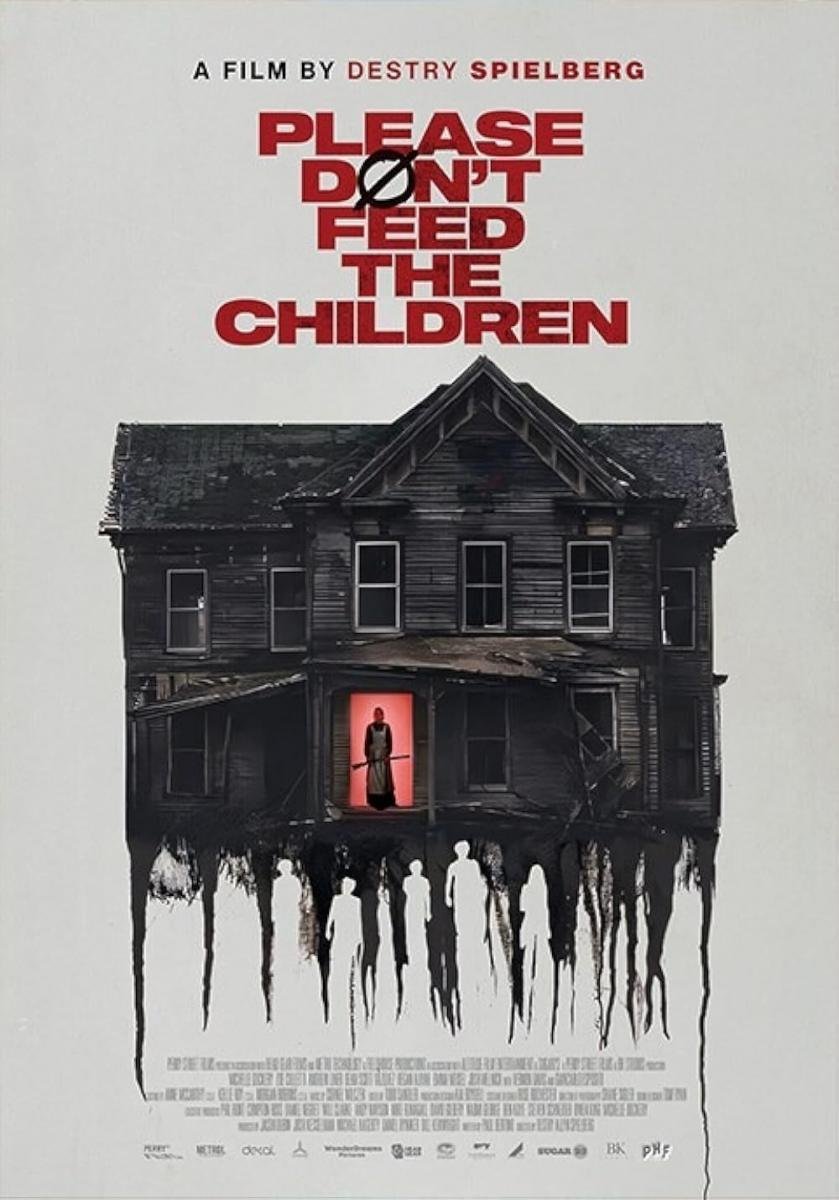
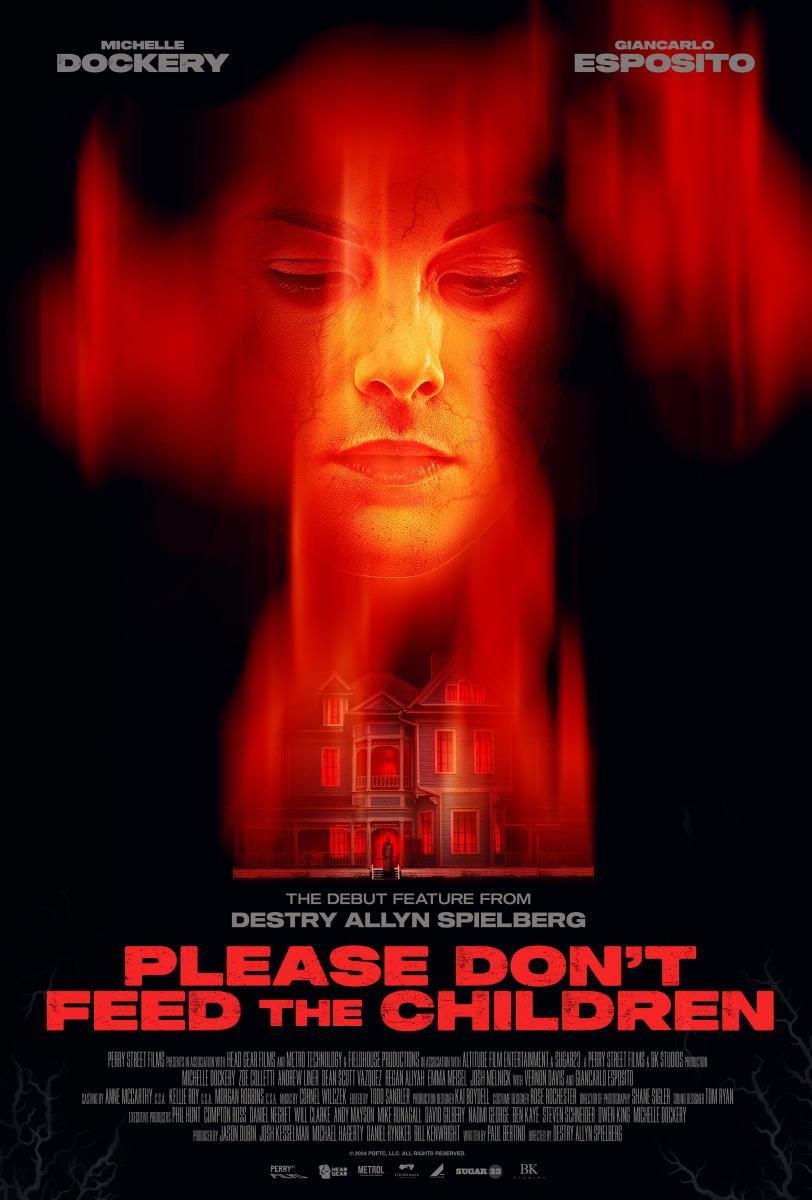
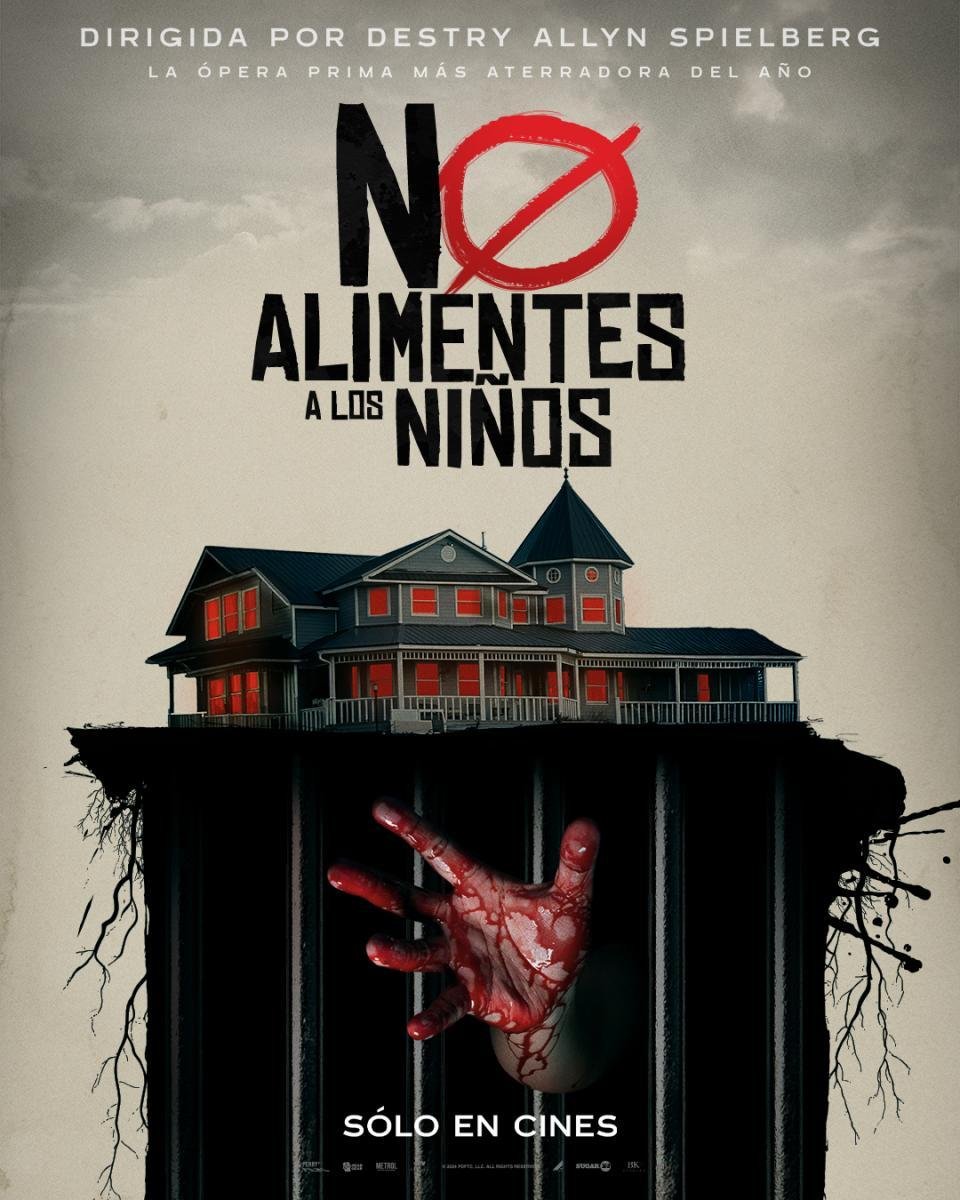
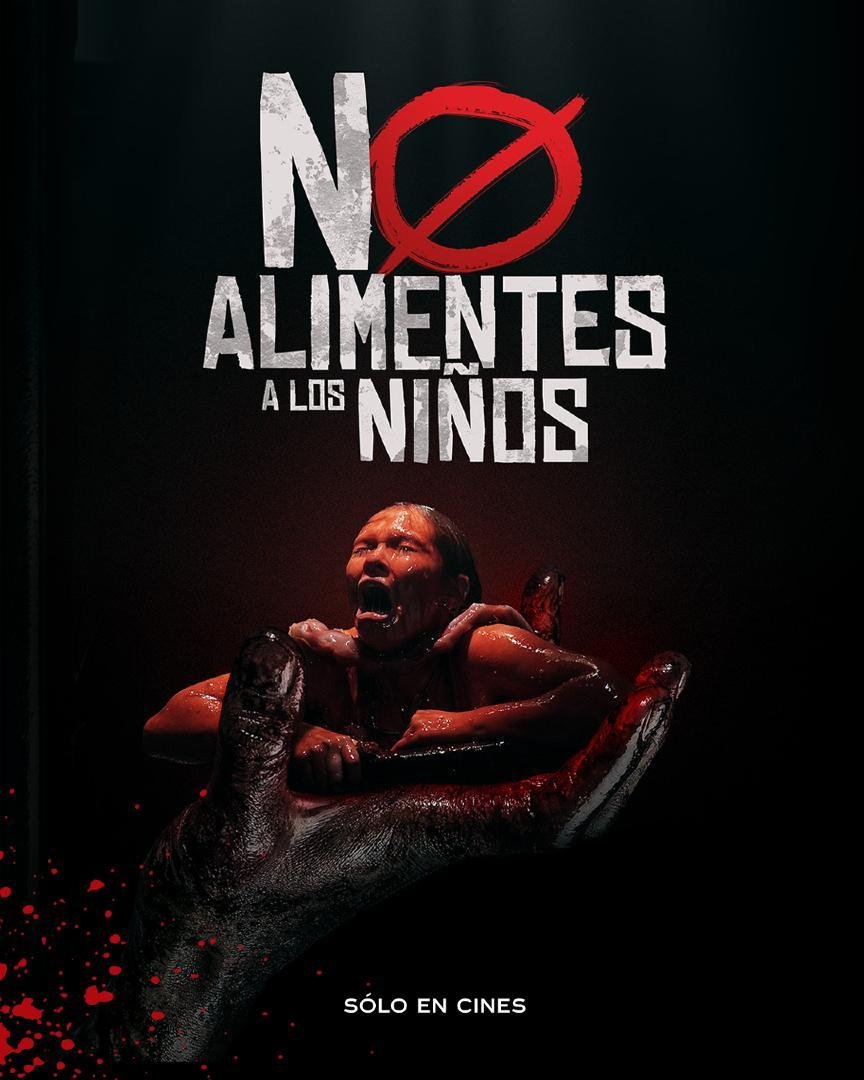
At just 29 years old, Destry Allyn Spielberg has just released his first feature film, a blend of thriller, apocalyptic story, and pandemic tale, called Please Don't Feed the Children, which I went to see at the cinema yesterday. The film opens with bad news for minors: after a deadly virus has decimated most of the adult population (after turning them into cannibals), it is discovered that those under eighteen are the carriers. For this reason, the official order is not to help minors and to report their presence wherever they are seen. This doesn't mean the police are hunting down all minors; obviously, those who live with their parents and haven't been infected with the virus can travel with them to authorized areas without any problem, so the measure threatens almost exclusively young people who are independent. In other words, orphans. In this context, we follow the odyssey of Mary, a girl of about sixteen who tries to reach the southern border of the US, because there's a rumor that there are tunnels there that will allow her to cross to the other side, where they say children aren't hunted. The problem, obviously, is getting there. At a bus station, where she tries to board a bus to travel to the border, Mary meets Jeffy, a boy a little younger than her, and a series of unfortunate events lead her to discover the group Jeffy belongs to and then to flee together from the police who are tracking them.
Con apenas 29 años de edad, Destry Allyn Spielberg acaba de estrenar su primer largometraje, una mezcla de thriller, historia apocalíptica y relato pandémico, llamado Please Don't Feed the Children que fui a ver ayer al cine. La película parte con una mala noticia para los menores de edad: después de que un virus mortal haya diezmado a la mayor parte de los adultos (tras convertirlos en caníbales), se descubre que los menores de dieciocho años son los portadores. Por esa razón, la orden oficial es no ayudar a los menores y denunciar su presencia en donde sea que se les vea. Esto no quiere decir que la policía esté cazando a todos los menores; obviamente, aquellos que viven con sus padres y que no han sido infectados por el virus, pueden trasladarse con ellos a las zonas autorizadas sin problema, así que la medida amenaza casi en exclusiva a los jóvenes que se valen por sí mismos. En otras palabras, los huérfanos. En ese contexto, seguimos la odisea de Mary, una niña de unos dieciséis años que intenta llegar a la frontera sur de los EEUU, pues corre el rumor de que allí hay unos túneles que le permitirán pasar al otro lado, en donde aseguran que los niños no son cazados. El problema, obviamente, es llegar. En una estación de buses, en donde intenta abordar una unidad para viajar a la frontera, Mary conoce a Jeffy, un niño un poco menor que ella, y una serie de eventos desafortunados la llevarán a conocer el grupo al que pertenece Jeffy y luego a huir juntos de la policía que les sigue la pista.
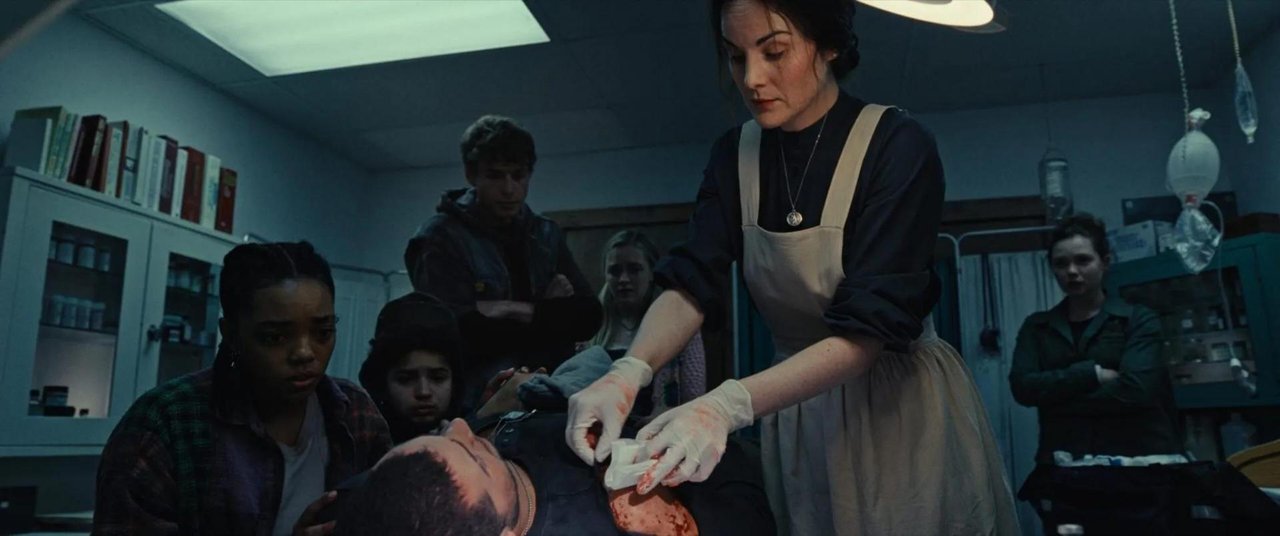
And it is in the midst of this escape that the group of children encounters Clara (Michelle Dockery), a woman who lives alone in a huge house and offers them help, but who later reveals herself to be someone completely different and a more real threat to the children than what they were fleeing from in the outside world. That is more or less the beginning of this somewhat dystopian story, with touches of horror, suspense, and a post-apocalyptic atmosphere. The plot, seen in this way, seems interesting without appearing particularly promising, but little by little one begins to be disappointed by the story. What went wrong?
Y es, en medio de esa huida, que el grupo de niños se topará con Clara (Michelle Dockery), una mujer que vive sola en una enorme casa y que les ofrece ayuda, pero que luego se revela como alguien completamente diferente y una amenaza más real para los niños que aquello de lo que huían en el mundo exterior. Ese es más o menos el arranque de esta historia medio distópica, con toques de terror, de suspenso y clima post apocalíptico. La trama, vista así, parece interesante sin mostrarse muy prometedora, pero poco a poco comienza uno a decepcionarse de la historia, ¿qué fue lo que salió mal?
In my opinion, the weak point of this film—which isn't particularly brilliant, in any case—is the screenplay written by Paul Bertino. It's predictable in every possible way and also feels very fragmented or rushed at times. I don't know the film's original running time, and perhaps the editing had something to do with it, but I feel that several scenes at the beginning could have been longer to better explain the relationships between certain characters, the origins of some things, or to better develop the plot's flow toward a particular outcome. Some of the characters' decisions seemed a bit forced, and I think a few more minutes of film could have given it a bit more coherence. However, I don't want to absolve Bertino of responsibility because some missteps were quite obvious, like the scene where the children, who supposedly live in a state of perpetual alert, all decide to trust this solitary woman. There should have been more suspicion there, I think. Another example: after being locked up, when they regain consciousness, one of the characters asks about another who isn't with them, but it shouldn't have been that character who noticed the absence first; it should have been someone else. Perhaps I'm exaggerating with these kinds of observations, but these were things I felt the moment I saw them; something immediately jumped to my mind and said, "This doesn't make sense," and that affects the experience of the film. A good script is essential for a film to be good.
En mi opinión, el punto débil de esta cinta - no demasiado brillante, en todo caso - es el guion escrito por Paul Bertino que resulta predecible en todo cuanto era posible y que además parece muy fragmentado o apresurado en algunos momentos. Desconozco la duración original de la cinta y tal vez haya tenido algo que ver con el montaje, pero siento que al principio hubo varias escenas que hubieran podido ser más largas y explicar un poco mejor las relaciones de ciertos personajes, el origen de algunas cosas o desarrollar mejor el flujo de la trama hacia determinado destino. Algunas decisiones de los personaje parecieron algo forzadas y creo que algunos minutos más de cinta le hubieran podido dar un poco más de sentido. Sin embargo, no quiero librar de responsabilidad a Bertino porque algunos desaciertos fueron muy evidentes, como la escena en que los niños, que supuestamente viven en estado de alerta perpetua, deciden confiar - todos - en esta solitaria mujer. Allí ha debido haber mayor suspicacia, creo yo. Otro ejemplo: luego de ser encerrados, cuando vuelven a estar conscientes, uno de los personajes pregunta por otro que no está con ellos, pero no es ese personaje quien ha debido notar primero aquella ausencia, ha debido ser otro. Tal vez esté exagerando con este tipo de observaciones, pero fueron cosas que sentí en el instante en que las vi, algo inmediatamente saltó a mi mente y me dijo "esto no tiene sentido" y eso afecta la experiencia de la película. Un buen guion es indispensable para que una película sea buena.
Now, regarding the directing itself, I think it was quite good. I don't know to what extent a director is responsible for not addressing the flaws in the script they're trying to portray, but the action sequences, the shots, and some specific scenes are of acceptable quality, although—it must be said—nothing surprising or innovative. Better writing would have made for a more enjoyable story, but it wouldn't have turned it—I don't think so—into a huge success.
Ahora bien, en cuanto al trabajo de dirección en sí, creo que estuvo bastante bien. No sé hasta qué punto es responsable un director de no hacer algo con respecto a las fallas en el guion que busca retratar, pero las secuencias de acción, las tomas y algunas escenas en específico son de una calidad aceptable, aunque - también hay que decirlo - nada sorprendentes ni innovadoras. Una mejor escritura habría significado una historia más disfrutable, pero tampoco la habría convertido - creo yo - en un gran éxito.
Now, we shouldn't be so harsh on Destry Allyn Spielberg. First, because this is only her first feature film, and second, because she's only 29 years old. I'm not justifying the film's shortcomings with her youth (a very young Damien Chazelle won the Oscar for La La Land) but with her inexperience. And yes, many might say that at that age Destry's father, the great Steven Spielberg, released Jaws and shortly after Close Encounters of the Third Kind, but Jaws was Spielberg's fifth film; he had already directed several short films, feature films, and some television episodes. Besides, those were different times, without the rampant consumerism of disposable films brought on by streaming and so-called algorithmic production. Please Don't Feed the Children has a touch of science fiction, a genre that marked Steven Spielberg's beginnings, but beyond that, his daughter Destry seems to have a greater inclination towards thrillers, so we'll have to wait and see what else she brings us. And for those who believe that being a nepo baby is an advantage and that relying on a big name benefits connections, they shouldn't forget that that same name puts greater pressure on these heirs, expected to live up to their predecessors, which is no easy. Have any of you seen this film yet? What did you think? Let me know in the comments.
Ahora bien, no hay que ser tan duro con Destry Allyn Spielberg. Primero, porque este es apenas su primer largometraje y segundo porque apenas tiene 29 años. No estoy justificando las fallas de la película con su juventud (un jovencísimo Damien Chazelle ganó el Oscar con La La Land) sino con su inexperiencia. Y sí, muchos podrán decir que a esa edad el padre de Destry, el gran Steven Spielberg, estrenó Jaws y poco después Close Encounters of the Third Kind, pero Jaws fue la quinta película de Spielberg, quien había grabado varios cortometrajes, largometrajes regulares y algunos episodios en la televisión. Además, eran otros tiempos, sin el consumismo desbordado de películas desechables que ha traído el streaming y la llamada producción por algoritmo. Please Don't Feed the Children tiene algo de ciencia ficción, género que marcó los inicios de Steven Spielberg, pero más allá de eso su hija Destry parece tener una inclinación mayor hacia el thriller, así que habrá que esperar a ver qué más nos trae. Y para aquellos que creen que ser una nepo baby es una ventaja y que apoyarse en un gran nombre beneficia los contactos, no deben olvidar que ese mismo nombre pone una presión mayor en estos herederos, de quienes se espera que estén a la altura de sus predecesores, lo cual no es nada fácil, ¿alguno de ustedes ya vio esta película? ¿qué les pareció? Los leo en los comentarios.
Reviewed by | Reseñado por @cristiancaicedo
Other posts that may interest you | Otros posts que pueden interesarte:
Four men entered America’s history books by taking the lives of US Presidents: Booth, Guiteau, Czolgosz, and Oswald. Yet, for every assassin who achieved that aim, countless others attempted the same act of political annihilation, their schemes collapsing before fruition, condemning them to perpetual obscurity. Among these forgotten figures stands the protagonist of Niels Muller’s 2004 period drama, The Assassination of Richard Nixon—a man who sought to etch his name into history through a spectacular act of violence but whose failure ensured his erasure from the public memory he so desperately craved.
The relative obscurity of Samuel Byck (1930–1974) is, upon reflection, somewhat baffling. Though he ultimately failed, his chosen method was chillingly original for its time: hijacking a commercial airliner to crash it into the White House. Decades later, this modus operandi would tragically echo in the methods employed by the perpetrators of the 9/11 attacks—the worst terrorist atrocity in American history. Byck’s fleeting notoriety was such that he warranted a brief, spectral reference in Stephen Sondheim’s acclaimed musical Assassins, a work that deliberately resurrects the marginalised figures who stalked the edges of presidential power. Yet beyond this theatrical footnote, Byck remained a historical ghost, a testament to how history remembers only those who succeed in their destructive ambitions.
Muller’s film, however, takes significant liberties with its subject. The script by Muller and Kevin Kennedy alters the protagonist’s name to “Sam Bicke”—likely a gesture of deference to his still-living relatives. Played with intense, often grating commitment by Sean Penn, Bicke’s story begins in late 1973, as Richard Nixon’s presidency crumbles under the weight of Watergate revelations. Initially, these political tremors barely register with Bicke; his world is consumed by personal collapse. His marriage to Marie (Naomi Watts), the mother of his three children, is disintegrating, and he has walked out on his brother Julius’s (Michael Wincott) successful tyre shop, unable to endure the humiliation of perceived failure beside familial prosperity. Bicke is a man drowning in intimate despair long before he fixates on national corruption.
Gradually, Bicke reframes his personal failures as symptoms of a systemic, oppressive machine. His attempt to launch a furniture business with his only friend, the African American Bonnie (Don Cheadle), collapses when the Small Business Administration denies his federal grant—a rejection Bicke interprets as blatant racism. Simultaneously, he takes a demeaning job at an office furniture store under the cynical, self-help-obsessed Jack (Jack Thompson). Jack’s perverse admiration for Nixon—whom he dubs the “ultimate salesman” who deceived voters with promises to end Vietnam—becomes the catalyst for Bicke’s radicalisation. In Nixon’s perceived duplicity, Bicke finds a mirror for his own thwarted aspirations and a target for his rage. His solution crystallises into a grotesque act of political theatre: hijacking a passenger plane to crash it into the White House. On 22nd February 1974, he storms Baltimore-Washington International Airport, but his plan unravels ignominiously on the tarmac, ending in a bloodbath that claims his life.
Premiering at the 2004 Cannes Film Festival, The Assassination of Richard Nixon arrived amidst a politically charged global atmosphere. Opposition to the Iraq War was intensifying, and Hollywood openly mobilised against George W. Bush’s re-election. The parallels between Nixon’s embattled presidency and Bush’s were unmistakable, lending the film an air of contemporary relevance. Muller delves heavily into the politics of early 1970s America—touching on the persecution of the Black Panthers and the American Indian Movement—while advancing the provocative thesis that the corrupted American Dream drives “small” men to lash out against “The Man.” Yet these weighty themes ultimately serve as mere backdrop to the film’s true, unspoken ambition.
Despite its political veneer, The Assassination of Richard Nixon reveals itself as a calculated exercise in Oscar bait. For a directorial debut, Muller’s approach is disappointingly conventional, relying on the tired trope of the afflicted protagonist. Bicke isn’t merely a desperate man crushed by circumstance or political disillusionment; he must also exhibit a near-total disconnect from reality, veering into undeniably lunatic behaviour. Penn, ever the method actor, seizes this opportunity to “ham it up” to exhausting degrees. His performance—characterised by twitches, mumbled monologues, and self-pitying rants into tape recorders addressed to Leonard Bernstein—destroys any genuine sympathy for Bicke. Instead of exploring the complex interplay of personal failure and political rage, the film reduces its protagonist to a caricature of mental instability, rendering the narrative self-important and smug. Penn’s theatrics overshadow the socio-political critique, turning a potentially nuanced character study into an exercise in awards-season grandstanding.
Most perplexingly, Muller deliberately avoids dramatising Bicke’s final, defining act. The hijacking itself—the moment of culmination, the point where personal despair transforms into historical action—is rendered almost perfunctorily. The ending feels profoundly anti-climactic, particularly for viewers aware that Nixon would resign just months later, rendering Bicke’s sacrifice not merely futile but historically insignificant. This narrative cowardice squanders the story’s inherent tension and moral complexity. Any filmmaker intrigued by Byck’s story would surely prioritise the audacity and horror of his plan; Muller’s reluctance to confront it head-on suggests a fundamental misunderstanding of his own material.
The inevitable comparison to Martin Scorsese’s Taxi Driver only highlights Muller’s shortcomings. Travis Bickle, like Bicke, is a disaffected loner radicalised by urban decay and political cynicism. Yet Scorsese masterfully channels the suffocating malaise of 1970s America, embedding his protagonist’s descent into violence within a richly textured social landscape. Muller lacks this directorial finesse. His vision of 1970s America feels flat and stage-managed, lacking the visceral energy and moral ambiguity that made Scorsese’s film a masterpiece. Where Taxi Driver explores the seductive danger of nihilistic heroism, The Assassination of Richard Nixon merely gestures towards profundity before retreating into awards-friendly pathos.
Launched in 2004—a year dominated by politically charged films like Fahrenheit 9/11—Muller’s film vanished almost immediately. It failed to resonate even with audiences actively seeking political cinema, sinking into a relative obscurity that ironically mirrors the fate of its protagonist.
Written by: Scott Rosenbaum
Directed by: Scott Vinant
Running Time: 45 minutes
The Shield, throughout its groundbreaking run, appeared to adhere to a familiar formula: weaving extended multi-episode arcs with standalone subplots that superficially resembled conventional police procedurals. Yet the series consistently distinguished itself by abandoning the comforting illusion that criminal cases—and the profound emotional baggage they generate—could be neatly resolved within forty-five minutes of screen time. Instead, The Shield embraced the messy reality that seemingly closed cases often return to haunt its characters like spectral reminders of past failures and moral compromises. Barnstormers, a Season 2 episode, exemplifies this sophisticated approach to narrative continuity, demonstrating how the show's commitment to psychological realism elevates it far beyond standard genre fare.
The episode deceptively commences as a continuation of the Strike Team's principal storyline. Vic Mackey and his cohorts attempt to resolve their persistent financial troubles through an audacious raid on the Armenian mafia's "money train." With Lem now fully integrated into the plan, Vic has devised an ingenious strategy to deflect blame from themselves: they will frame his arch-nemesis Armadillo Quintero for the heist, thereby eliminating two adversaries with a single stroke. Furthermore, the team plans to launder their ill-gotten gains through property investments, engaging the services of Leith (Marcos Ferraez), a realtor specialising in transforming drug money into legitimate assets. This intricate scheme exemplifies the Strike Team's increasingly complex criminal enterprise operating under the guise of law enforcement.
Meanwhile, Detective Dutch Wagenbach grapples with a profound crisis of confidence following the Lindhoffs' tragic fiasco—the harrowing realisation that a woman died while he had her killers in custody. His professional vulnerability is compounded when he receives the humiliating assignment of personally interviewing Marcy Lindhoff as part of her plea deal against her husband Bob. Captain Aceveda compounds Dutch's distress by informing him that LAPD higher-ups are scrutinising his performance closely; to salvage his career trajectory, Dutch must begin closing cases with tangible results.
Dutch's first opportunity proves far more challenging than anticipated. An obese woman is discovered half-naked and strangled in a park, with initial evidence pointing towards Stu Kleinsausser (aMike Bruner), a morbidly obese man who had recently been on a blind date with the victim. Dutch recognises Stu as fitting the perpetrator profile perfectly—possessing motive, history, and opportunity—yet the suspect maintains stubborn denails, leaving Dutch without concrete evidence. In a moment of desperation, Dutch seeks Vic's counsel, who cynically suggests planting evidence. Though Dutch initially follows this corrupt advice, his moral compass ultimately prevails; he removes the fabricated evidence at the last moment. Instead, he adopts a more psychologically manipulative approach during interrogation, deliberately provoking Stu by cruelly mocking his weight. This tactic succeeds spectacularly when Stu loses control, physically assaults Dutch, and inadvertently confesses to the murder. Dutch emerges from the interrogation room triumphant, declaring his return to form.
Shane Vendrell's subplot reintroduces Tulips, a stripper who previously manipulated him through sexual favours to escape prosecution for robberies. She approaches Shane with a scheme to entrap Herk (Jason Padgett), a minor drug dealer and former boyfriend whom she caught cheating. Initially resistant to engaging with the woman who humiliated him, Shane eventually succumbs to the appeal of an "easy win" for the Strike Team. The plan succeeds, granting Tulips her revenge while Shane receives another round of her carnal services—this time, supposedly without strings attached.
Vic himself appears poised for romantic success stemming from a past case, albeit through convoluted circumstances. Doug (Mahriyah Shain), the manager of Vic's seedy hotel accommodation, complains about constant domestic violence emanating from one room, prompting Vic to intervene using his police authority. He discovers an African American woman (Karen Malina White) trapped in an abusive relationship and arranges her transfer to the Barn, connecting her with social worker Emma Price. Her boyfriend Dez (Keith Diamond) reacts violently to this intervention, resulting in a physical altercation with Emma that leaves him injured. Though Emma faces arrest for assault, Vic bails her out and invites her to his hotel room, clearly intending to capitalise on the situation. However, Vic's personal plans are dramatically interrupted when he detects a strange odour in his room and discovers Ronnie Gardocki—brutally beaten, tortured, and bearing the same distinctive burn marks on his cheek that Vic himself had inflicted on Armadillo Quintero.
Written by Scott Rosenbaum and directed by television veteran Scott Winant, Barnstormers stands as a high-quality episode that continues seemingly resolved storylines with naturalistic realism, avoiding excessive melodrama. The final cliffhanger, while undeniably effective, feels slightly too convenient—a rare narrative misstep in an otherwise impeccably constructed hour of television.
Of the three interwoven storylines, Dutch's arc proves most compelling. It not only reveals his profound vulnerability but also marks the first instance where he genuinely succumbs to Vic's corrupting influence, briefly crossing ethical boundaries before retreating. This nuanced portrayal of moral compromise demonstrates The Shield's commitment to complex character development over simple hero-villain dichotomies.
Conversely, Tulips' reappearance functions as both fan service for the predominantly male audience and provides a rare moment of apparently happy resolution in a series increasingly dominated by grim narratives. While Dutch's storyline explores the corrosive nature of police work, and Vic's arc culminates in devastating personal consequences, Shane's subplot offers a comparatively lighthearted conclusion—a necessary tonal counterpoint that prevents the series from descending into unrelenting bleakness. Barnstormers ultimately succeeds as exemplary television drama precisely because it refuses to provide neat resolutions, instead embracing the uncomfortable truth that in both policing and life, consequences rarely remain buried—they inevitably resurface, demanding to be confronted.
Written by: Robin Bernheim
Directed by: Cliff Bole
Running Time: 45 minutes
"If the planet or alien society looks too good to be true, it usually isn't good" is one of Star Trek's most enduring narrative clichés. This trope, in itself, is not inherently problematic; indeed, at its best, it serves as a springboard for profound explorations of societal hypocrisy, moral complexity, and the shadows lurking beneath utopian façades. The Hunted, the eleventh episode of Star Trek: The Next Generation's third season, attempts precisely this trajectory. Yet, despite its promising premise, the episode ultimately stumbles, failing to transcend its formulaic framework to achieve the depth and resonance that characterises the show's finest hours.
The episode commences with Captain Picard and the Enterprise encountering Angosia III, a world whose humanoid inhabitants present themselves as paragons of enlightened progress. Their society appears sophisticated, peaceful, and eminently worthy of Federation membership—a prospect Picard initially deems highly likely. However, the veneer cracks almost immediately when Prime Minister Nayrok (James Cromwell), requests the Enterprise's assistance in apprehending a dangerous fugitive who has escaped from the penal colony on Lunar V. This abrupt shift from diplomatic overture to manhunt instantly signals the familiar Star Trek pattern: the utopia is a mirage. What follows is a rather conventional pursuit, as the Enterprise tracks the fugitive, Roga Danar (Jeff McCarthy), whose small sub-warp vessel proves surprisingly elusive until Starfleet ingenuity prevails. Danar's initial capture scene is undeniably effective, showcasing his terrifying physical prowess as he demolishes the transporter room and overpowers multiple security officers—a stark visual representation of the threat he embodies.
The narrative's true potential, however, emerges once Danar is confined. Counsellor Troi's empathic assessment yields a shocking revelation: beneath his formidable conditioning, Danar possesses a fundamentally non-violent nature. His subsequent explanation unravels the episode's central tragedy. The Angosians, he reveals, were historically a peaceful people until the Tarsian War necessitated soldiers. The government responded by subjecting individuals like Danar to irreversible physical and psychological alterations, transforming them into remorseless, hyper-efficient killing machines. When peace returned, these veterans, deemed incompatible with civilian life due to their engineered aggression and trauma, were not rehabilitated but discarded—exiled to the brutal prison colony. This premise, drawing clear parallels to real-world treatment of military personnel, holds significant dramatic weight. Danar's subsequent escape—demonstrating remarkable resourcefulness within the Enterprise's Jefferies tubes (canonically named here for the first time)—and his orchestration of a mass uprising from Lunar V, culminating in an assault on the Angosian capital, forces a moral confrontation. Picard's refusal to intervene militarily, insisting the Angosians resolve their self-created crisis before seeking Federation membership, delivers a characteristically Starfleet message about responsibility and self-determination.
Ironically, while The Hunted is not actively poor, its greatest failing is its profound forgettability. Sandwiched within TNG's stellar third season, it suffers immensely from comparison. Airing directly after The Defector, arguably one of the series' pinnacle achievements, its relatively simplistic narrative and underdeveloped themes appear glaringly inadequate. The script, written by Robin Burger from a concept by showrunner Michael Piller, was explicitly intended as an allegory for America's treatment of Vietnam veterans. While the core idea—society discarding those it has traumatised for its own convenience—is potent, Burger's execution oversimplifies complex socio-psychological issues. The Angosian government's actions feel cartoonishly callous rather than tragically bureaucratic, and the resolution hinges on a conveniently timed rebellion that Picard merely observes, delivering a moralising speech rather than facilitating genuine reconciliation. Intriguingly, reports suggest the original vision was far darker and more violent, exploring the veterans' justified rage more fully, but budget and time constraints forced a neutered conclusion, leaving the central conflict unresolved and the moral ambiguity unexplored.
Director Cliff Bole manages the material competently, crafting a generally satisfactory action-driven episode. The utilisation of the Enterprise's Jefferies tubes provides a refreshingly claustrophobic setting for Danar's evasion sequences, adding tangible tension. Some moments, however, strain credulity—Danar's ability to temporarily disrupt the transporter beam during his initial capture borders on the absurdly superhuman. Performances are functional rather than exceptional. Jeff McCarthy embodies the physically imposing, tormented supersoldier archetype adequately, but lacks the nuanced depth to elevate Danar beyond a Rambo-esque archetype. James Cromwell lends Prime Minister Nayrok a compelling veneer of statesmanlike authority gradually eroded by panic, effectively establishing his recurring Star Trek persona, later cemented by iconic roles as Zefram Cochrane.
Ultimately, The Hunted exemplifies the perils of Star Trek playing it safe. It recognises a profound injustice—the systemic abandonment of those sacrificed for collective security—but retreats from examining its messy, painful realities. Instead, it offers a tidy, action-packed parable where the utopia's flaw is revealed, the outcasts rebel briefly, and the Federation delivers a lecture before departing. The episode's heart lies in the right place, acknowledging society's duty to its warriors. Yet, by failing to delve beyond surface-level allegory and opting for a conventional structure over genuine moral complexity, it remains a footnote in TNG's legacy—a well-intentioned, competently made, but ultimately unremarkable hour that evaporates from memory almost as swiftly as Roga Danar vanishes from Enterprise.
En la política tomar un decisión indebida, apresurada o basándose en las emociones puede ser un error catastrófico o un gran acierto, la verdad es que no sabes como va a salir. De eso se trata este film de Netflix protagonizado por Idris Elba y Rebecca Ferguson en donde ellos forman parte de la anatomía gubernamental de los Estados Unidos, Idris como el presidente, y que por tanto tendrán el poder de decidir qué hacer ante un hecho que está amenazando no solo la estabilidad del país sino la del mundo, sin mencionar las vidas que se van a perder. Es de esos films tensionantes pero que muestran muy bien como pueden llegar a ser esas horas cruciales de discusiones y debates antes de decidir que es lo que finalmente se va hacer.
In politics, making an inappropriate, hasty, or emotionally driven decision can be a catastrophic mistake or a brilliant move; the truth is, you never know how it will turn out. That's what this Netflix film, starring Idris Elba and Rebecca Ferguson, is about. They are part of the US government, with Elba playing the president, and therefore have the power to decide what to do in the face of an event that threatens not only the stability of the country but also that of the world, not to mention the lives that will be lost. It's one of those tense films that perfectly illustrates how those crucial hours of discussions and debates can unfold before a final decision is made.
Para poner contexto. Un día, desde alguna ubicación del pacífico, sale disparado un misil nuclear del que se desconoce su origen y que tiene como trayectoria e impacto final los Estados Unidos. Basándose en el tiempo que le queda hasta llegar a tierra continental, aproximadamente unos 20 minutos, todo el equipo de seguridad nacional tiene que descubrir el origen, quién lo disparó y cual va a ser la respuesta del país ante tal hecho. Pero claro todo esto hay que hacerlo contrarreloj mientras la angustia y el miedo comienza a invadir a todo el equipo.
To provide some context: One day, a nuclear missile of unknown origin is launched from somewhere in the Pacific Ocean, its trajectory and ultimate target being the United States. Given the approximately 20 minutes remaining before it reaches the mainland, the entire national security team must discover its origin, who launched it, and how the country will respond. Of course, all of this must be done against the clock as anxiety and fear begin to grip the entire team.
La trama del film es bien cool porque la centran en varias perspectivas, es decir, veremos cómo cada parte de este equipo maneja la situación y sobretodo cómo la asumen. Tenemos la parte militar, la parte diplomática, la parte de inteligencia y la del propio presidente. Cada uno de ellas trabajando en un mismo objetivo pero con enfoques y pensamientos diferentes entre si. La verdad es que la película es super interesante porque nos enseña lo complejas que son estas decisiones y todo el trasfondo que hay detrás de ellas; su directora, Kathryn Bigelow, se encargó de darnos un thriller político muy bien resuelto lleno en su gran mayoría de momentos llenos de mucha tensión y una intriga muy afiliada.
The film's plot is really cool because it focuses on several perspectives; that is, we see how each part of this team handles the situation and, above all, how they react to it. We have the military, the diplomatic, the intelligence, and the president himself. Each working toward the same objective, but with different approaches and perspectives. The truth is, the film is incredibly interesting because it shows us how complex these decisions are and all the backstory behind them. Its director, Kathryn Bigelow, has delivered a very well-crafted political thriller, mostly filled with tense moments and a tightly woven intrigue.
Es imposible aburrirse con una película así, en todo momento está pasando algo, la angustia de que un misil está a punto de caer sobre una ciudad y aniquilar a cientos de miles de personas y al mismo tiempo tener que pensar cual va a ser la respuesta pero sin tener ni idea de quién lanzó dicho misil es sin dudas una situación terrible y abrumadora de la que uno como espectador se empapa rápidamente. La trama tiene unas escenas bien interesantes, vemos como la presión supera a algunos por más experiencia que puedan tener y es que al final por más entrenado que se esté para afrontar cosas como estas la verdad es que nunca lo estarás para cuando realmente suceda.
It's impossible to get bored with a movie like this; something is always happening. The anguish of a missile about to strike a city and annihilate hundreds of thousands of people, while simultaneously having to think about how to respond without any idea who launched it, is undoubtedly a terrifying and overwhelming situation that the viewer quickly becomes immersed in. The plot has some very interesting scenes; we see how the pressure overwhelms even the most experienced people. Ultimately, no matter how well-trained you are to face things like this, the truth is you'll never be truly prepared when it actually happens.
En cuanto al elenco o sus protagonistas pues decir que fue de las razones por las que decidí sentarme a verla. Rebecca Ferguson, Idris Elba, Gabriel Basso, etc cumplen muy bien con sus roles. A Rebecca siempre me va a gustar verla trabajar, es una muy buena actriz y acá nos da un papel lleno de liderazgo pero con el miedo humano natural a flor de piel. A Idris si que es verdad que me hubiese gustado verlo un poco más, a pesar de ser el presidente su tiempo en pantalla es corto; una lastima porque se desperdicia lo buen actor que también es. En general fueron muy buenas interpretaciones.
As for the cast and its leads, they were one of the reasons I decided to sit down and watch it. Rebecca Ferguson, Idris Elba, Gabriel Basso, and others all perform their roles very well. I always enjoy watching Rebecca work; she's a very good actress, and here she gives us a role full of leadership but with the natural human fear right under her nose. I would have liked to see Idris a bit more, though. Despite playing the president, his screen time is short; it's a shame because it wastes what a good actor he is. Overall, the performances were very good.
Una muy buena película, diferente y que su final no los va a dejar tranquilos. El film termina de una forma particular pero cuando entiendes la razón de ser de la película te encaja todo. Dura casi 2 horas. Muy recomendada, vale la pena sentarse a verla. Les dejo el tráiler por acá abajo.
A really good, different kind of movie, and the ending will definitely leave you wondering. The film concludes in a unique way, but once you understand its underlying message, everything makes sense. It's almost two hours long. Highly recommended; it's definitely worth watching. I've included the trailer below.
Hello friends of #Hive, especially the movies&TVshows community. As always, I hope you are all well, along with your family and friends. Today I'm here to talk to you about the 2009 film "Knowing," which has been translated into Spanish as "Presagio." It's been a few years since it was released, but that doesn't mean it's not still a good film. It stars Nicolas Cage, who gives an excellent performance, as he always does in his films.
The plot of this film begins in 1959 when a little elementary school girl named Lucinda Embry fills a blank sheet of paper with a very long sequence of numbers. Years later, or rather 50 years later, a time capsule is opened at the school where she studied, and the same blank sheet of paper is found, ending up in the hands of John Koestler, played by Nicolas Cage.
John is a scientist who, on a night of whiskey and melancholy, realizes that the numbers on the blank sheet of paper were not just random numbers but rather dates, coordinates, and the approximate number of victims of all the major catastrophes that have occurred in the last 50 years. From that moment on, the film becomes a race against time, with the protagonist trying to prevent what may happen in the future.
One of the most striking aspects of this film is the visuals, which are impeccable in the two major disaster sequences, such as a plane crash and the final chaos in New York. as they are, in my opinion, among the most realistic ever seen in period films. Another thing that really caught my attention is the soundtrack, which makes the film seem even more realistic, reinforcing the sense of doom.
In this case, Nicolas Cage does not play the role we are used to seeing him in as a madman from the beginning, but rather plays the role of a broken man who gradually loses his sanity as he sees scientific evidence clash with the inexplicable. In my opinion, the lesson he gives at the beginning of the film about whether the universe is determined or the product of chance is one of the best moments in the film and sums up the character's internal conflict.
The most unexpected thing about the whole film is the final twist, as the film goes from being somewhat conspiratorial, paranoid, or rational to revealing that the "whisperers" are a kind of angel or alien who come to save a few chosen children before a solar flare destroys life on Earth, where they will be saved in a modern Noah's Ark that looks like a spaceship, and the Garden of Eden is another green and paradisiacal planet.
It is no less true that the final act becomes highly symbolic, whether it be the angels with wings of light, the tree of life, or the children running through a meadow, all of which definitely catch the viewer's attention. However, "Hail Mary" achieves something difficult to do: it makes the viewer seriously consider the possibility of the inevitable end of our civilization, doing so with a mixture of initial science and a spiritual ending.
In my opinion, "The Happening" is not a perfect film, but it is a brave film because of everything it shows. It is visually very realistic and emotionally somewhat sad if you let yourself get carried away. Personally, I liked it a lot. I think that despite being from 2009, it is a film that many of us would like to see today. For my part, I bid you farewell, wishing you many blessings and good things. Without further ado, I bid you farewell until next time.
The images used in the post were sourced. Texts translated into English by Deepl Translate.
VERSIÓN EN ESPAÑOL (click aquí!)
Hola amigos de #Hive y en especial la comunidad de movies&TVshows, como siempre espero que se encuentren bien al igual que sus familiares y amigos. En el día de hoy paso por acá para hablarles de la película titulada "Presagio" traducida al español o como en su idioma original es llamada "knowing" del año 2009, ya han pasado algunos años de que se estrenó, pero no por eso deja de ser un buen filme. La misma está protagonizada por Nicolas Cage con una excelente actuación como siempre en cada una de sus películas.
La trama de este filme comienza en el año 1959 cuando una pequeña niña de escuela primaria llamada Lucinda Embry, llena una hoja de papel en blanco con una larguísima secuencia de números. Años más tarde o más bien 50 años más tarde se abre una cápsula del tiempo en la escuela donde ella estudiaba y se encuentran la misma hoja en blanco, terminando en las manos de John Koestler, papel protagonizando por Nicolas Cage.
John es un científico que en una noche de whisky y melancolía se da cuanta de que los números en la hoja de papel en blanco no eran solo números al azar sino más bien fechas, coordenadas y número aproximado de víctimas de todas las grandes catástrofes ocurridas en los últimos 50 años, donde a partir de ese momento la película se convierte en una carrera contra el tiempo, dónde el protagonista intenta prevenir lo que pueda suceder más adelante.
En esta película una de las cosas que más se destaca es la visualización, donde es impecable en las dos grandes secuencias de catástrofes, como un accidente aéreo y el caos final en que ocurren en Nueva York, pues son de las más realistas a mi entender vistas en el cine de las películas de época, otra cosa que me llaman mucho la atención es la banda sonora, que hace que la película se vea más realista aún todavía, reforzando la sensación de fatalidad.
En este caso Nicolás Cage no hace un papel en el cual estamos acostumbrados a verlo de hombre loco desde el principio, sino que hace más bien un papel de hombre roto que va perdiendo la cordura poco a poco, mientras ve que la evidencia científica choca contra lo inexplicable. A mí entender en la clase que da al principio de la película de que si el universo es por determinación o producto del azar, es uno de sus mejores momentos de la película y en su totalidad resume el conflicto interno del personaje.
Lo más inesperado de toda la cinta es el giro final que da, pues la película pasa de ser algo medio conspiratorio, paranoico o racional a revelar que los “susurradores” son como una especie de ángeles o extraterrestres que vienen a salvar a unos pocos niños elegidos antes de que una erupción solar destruya la vida en la Tierra, en la cual serán salvos en un Arca de Noé moderna con aspecto de naves espaciales, y el Jardín del Edén es otro planeta verde y paradisíaco.
No es menos cierto que el último acto se vuelve muy simbólico, ya sea los ángeles con alas de luz, el árbol de la vida, los niños corriendo por un prado, son algo que definitivamente llaman la atención del espectador, pero "Presagio" consigue algo difícil de hacer, que el espectador se plantee seriamente la posibilidad del fin inevitable de nuestra civilización, haciéndolo también con una mezcla de ciencia inicial y un final espiritual.
"Presagio" a mi entender no es una película perfecta, pero es una cinta valiente por todo lo que muestra, es visualmente muy realista y emocionalmente algo triste si te dejas llevar. A mí en lo particular, me gustó mucho, creo que a pesar de ser del 2009 es una cinta que muchos quisiéramos ver hoy en día. Yo por mi parte me despido de ustedes, deseándoles muchas bendiciones y cosas buenas. Sin más me despido de ustedes hasta la próxima ocasión.
Las imágenes utilizadas en el post fueron dadas las fuentes. Textos llevados al Inglés por Deepl Traslate.