Longform reviews of films, TV, anime, books, and audiobooks, written by the scrobble.life community and published to the Hive blockchain, so each one is owned by its author and can earn rewards from readers. 34,393 reviews and counting.
The last month of 2025 has begun, so I'll be talking about Christmas movies all month long. For this occasion, I wanted to start with one that has a typical cliché formula; however, it marked Lindsay Lohan's return to the screen (I don't say "big," because you could say it was more with Freakier Friday), and I'm glad to see her so recovered. Therefore, I think it's a movie worth watching during this holiday season.
Released in 2022 on Netflix, marking Lindsay's return to acting, this film was directed by Janeen Damian and is a comedy, romance, and Christmas-themed movie.
The story follows Sierra Belmont, the spoiled heiress of a vast and imperial hotel, who lives a carefree life and is engaged to a pretentious influencer named Tad, who is quite dim-witted. Her father realizes this when they meet, but, as he promised her mother he would make her happy, he accepts everything. Shortly before Christmas, while at a luxurious ski resort owned by her father, Sierra has an accident on the mountain, hitting a tree. She is found by Jake Russell, a humble and hardworking widower who owns a small, modest country hotel called "North Star Lodge" and is struggling financially.
He takes her to the hospital, and when she wakes up, she realizes she's suffering from amnesia. With nowhere else to go, and on the doctor's recommendation, Jake offers the amnesiac Sierra a place to stay at his inn, giving her the temporary name "Sarah." At first, "Sarah" struggles with the housework, considering she's never done it before. However, with a little patience and communication, she adapts to this small life in the modest hotel, having new experiences and spending time with Jake and his young daughter. Love blossoms between them, but when she regains her memory, will they be able to be together? You'll have to watch to find out how it ends.
Certainly, this movie has the typical predictable and characteristic script of Christmas movies: the rich girl who changes her lifestyle and so on. However, the most noteworthy thing here is Lindsay's return. As I mentioned before, seeing someone who was part of your childhood doing well and dazzling again is very heartwarming. Another weak point was the lack of chemistry between Sierra and Jake. Hmm, it didn't feel more like a friendly vibe than anything else; it didn't amount to much more than that.
Even with its shortcomings, it's genuinely entertaining, especially at this time of year when we're invited to reflect on everything we've experienced, to be grateful and have a better attitude, and to remember that doing good will always be rewarded in the end. That's why I feel the film played on nostalgia and affection for the actress, because it was even very well received on Netflix, reaching the platform's global Top 10 on its release day.
It's a film with a weak plot, but it's worth watching because it still has the ability to move the audience at certain moments in the story.
Images were captured from the IMDb website. Cover designed in Canva. Text translated using Google Translate.
Thank you for reading my post. I hope you enjoyed it. I'll be happy to answer your comments. You can visit my blog, follow my content, and connect with me on social media.
Ya inicio el ultimo mes del año 2025, por ende, todo el mes, estaré hablando de películas navideñas y, para esta ocasión, quise comenzar con una que, tiene como la típica formula cliché, sin embargo, fue el retorno de Lindsay Lohan a la pantalla (no digo grande, porque se podría decir que fue más con Freakier Friday) y me alegro verla mucho recuperada, por ende, creo que es una película que vale la pena ser vista en estas fechas decembrinas.
Estrenado en el año 2022 en las plataformas de Netflix, marcando el regreso de Lindsay al mundo de la actuación, este filme fue dirigido por Janeen Damian, es de genero comedia, romance y temática navideña.
La historia sigue a Sierra Belmont, la chica mimada y heredera de un vasto e imperial hotel, que vive sin ninguna preocupación y comprometida con un influencer pretencioso llamado Tad, el cual es bastante tonto, su padre se da cuenta de eso cuando se lo presenta, no obstante, como le prometió a su madre que la haría feliz, le acepta todo. Poco antes de Navidad, mientras está en un lujoso resort de esquí propiedad de su padre, Sierra sufre un accidente en la montaña, golpeando contra un árbol; en eso, la encuentra Jake Russell, un viudo humilde y trabajador, dueño de un pequeño y modesto hotel rural llamado "North Star Lodge" que atraviesa dificultades económicas.
Él la lleva al hospital y al despertar, se percata que sufre de amnesia, como al no tener a dónde ir y por recomendación de la doctora, Jake le ofrece a la amnésica Sierra quedarse en su posada, dándole el nombre temporal de "Sarah". Al principio, a “Sarah” le cuesta hacer las tareas domésticas, tomando en cuenta que nunca las hizo, sin embargo, con un poco de paciencia y comunicación, se va adaptando a esa pequeña vida en el modesto hotel, teniendo nuevas experiencias, conviviendo con Jake y su pequeña hija día a día, surgiendo el amor en ellos, aun así, cuando recobre la memoria ¿podrán estar juntos? Tendrá que verla para sabe como finaliza.
Ciertamente, esta película tiene el típico guion predecible y bien característico de las películas de navidad, la niña rica que cambia su estilo de vida y así sucesivamente, no obstante, aquí lo más destacable es el regreso de Lindsay, como ya había hecho mención, es que ver a alguien que formó parte de tu infancia, estar bien y volver a deslumbrar alegra mucho. Otro de los puntos débiles fue la poca química entre Sierra y Jake, mmm, no sé sentía más como una vibra de amistad y ya, no daba para algo más allá de eso.
Aun con las deficiencias que presenta, realmente se vuelve entretenido y más en estas fechas donde se nos invita a reflexionar sobre todo lo que hemos vivido este año, a agradecer y tener mejor actitud, además de recordarnos que, hacer el bien siempre tendrá su recompensa al final, por ello siento que la película aposto a la nostalgia y el cariño hacia la actriz, porque incluso tuvo una gran recepción en Netflix, estando en el Top 10 global de la plataforma en el día de su estreno.
6/10 Historia │ 8/10 Actuaciones │ 7.5/10 Sonido │ 8/10 Escenario │ 7.5/10 General
Es una película con un argumento débil, pero que vale la pena ser vista, porque aun así, tiene la capacidad de conmover al publico en ciertos momentos de la trama.
Las imágenes fueron capturadas de la página IMDb. Portada diseñada en CANVA. Texto traducido en Google Translated.
Gracias por leer mi post. Espero que les haya gustado. Estaré atenta a responder sus comentarios. Pueden visitar mi blog, seguir mis contenidos y redes sociales.
Before watching this miniseries, I had no idea who Tamara was, let alone that group of geeks who were (or are) quite famous in Spain. When I finished watching it, I had to look up some information and was surprised to discover that they are all real people, still alive, who were part of an era when trash TV reigned supreme.
Well, this Tamara, who had to legally change her name to Yurena, was a girl with dreams of singing and being famous. She managed to make some songs popular and became a celebrity that the public consumed on those shows that became so popular. Corincas Marcianas was the number one show at the time, although in the miniseries they changed the name of the show, I imagine for legal reasons and permissions they didn't receive.
I was surprised to see that it was true that Tamara's mother accompanied her everywhere and defended her, hitting people with her purse or her hands. All this sounds strange, and what is known as the Tamarism phenomenon makes me laugh. This was real! Total madness. El Paco Porras, El Arlekin, Loly, Tony Genil, and Leonardo Dantes. A group of characters that exist in reality, who were a bunch of complete geeks.
Tacky, kitsch, garish. Things that go beyond ridiculous and a television program where they even made up pregnancies. Apparently, all of that was popular and continues to be so on Spanish television. I don't know when those television programs became popular, with guests on talk shows who argue, shout, fight, cause a lot of scandal, and put on a big show for people to watch at home while they sleep. It's the same thing I see on many current programs in Spain, whether they're sports programs like El Chiringuito or even political opinion programs, a bunch of crazy people who become famous and it's all a fucking spectacle.
Antes de ver esta miniserie, no tenía ni idea de quién era Tamara, y mucho menos de ese grupo de frikis que eran (o son) bastante famosos en España. Cuando terminé de verla, tuve que buscar información y me sorprendió descubrir que todos ellos son personas reales, aún vivas, que formaron parte de una época en la que reinaba la televisión basura.
Bueno, esta Tamara, que tuvo que cambiarse legalmente el nombre por el de Yurena, era una chica con sueños de cantar y ser famosa. Consiguió que algunas canciones se hicieran populares y se convirtió en una celebridad que el público consumía en esos programas que se hicieron tan populares. Corincas Marcianas era el programa número uno en aquella época, aunque en la miniserie cambiaron el nombre del programa, imagino que por cuestiones legales y permisos que no recibieron.
Me sorprendió ver que era cierto que la madre de Tamara la acompañaba a todas partes y la defendía, golpeando a la gente con su bolso o con las manos. Todo esto suena extraño, y lo que se conoce como el fenómeno del tamarismo me hace mucha gracia. ¡Esto era real! Una locura total. El Paco Porras, El Arlekin, Loly, Tony Genil y Leonardo Dantes. Un grupo de personajes que existen en la realidad, que eran una banda de completos frikis.
Lo hortera, lo kitsch, lo chillón. Cosas que van más allá de lo ridículo y un programa de televisión en el que incluso se inventaban embarazos. Al parecer, todo eso era popular y sigue siéndolo en la televisión española. No sé cuándo se hicieron populares esos programas de televisión con invitados a programas de entrevistas que discuten, gritan, pelean, causan mucho escándalo y montan un gran espectáculo para que la gente lo vea en casa mientras duerme. Es lo mismo que veo en muchos programas actuales en España, ya sean programas deportivos como El Chiringuito o incluso programas de opinión política, un grupo de locos que se hacen famosos y todo es un puto espectáculo.
Watching the miniseries, whose story begins in the year 2000, I realize that this was a time when mediocrity and ridiculousness were the sedative for people. What is now TikTok and other social networks, where any crazy person doing something silly becomes famous, well, that's what happened with Tamara and many of those geeks. It was the era of trash TV, and they took advantage of it.
I loved the mini-series. It's incredible. I had so much fun, and its director, Nacho Vigalongo, deserves high praise. He takes risks in following a narrative that many might expect. He uses a lot of narrative resources that, for me, make each episode a visual delight. Each episode focuses on one of these characters and their relationship with Tamara, and there's a bit of everything. Nostalgia, reflection, madness, love, fighting, forgiveness, and yes, a lot of madness. The creator has even used inspiration from the master Lynch to create this universe, based on real characters.
I came across some negative opinions on Twitter. I'm sorry, maybe because I'm not Spanish and didn't know about all those geeks, but I was amazed. I even added Baile del Pañuelo to my favorite songs on YouTube. The performances of the entire cast are perfect in my opinion. I think those who are harshly critical are those who lived through that era and may feel some anger when remembering those moments that they surely devoured on television.
This story has moved me. I don't know why. I didn't know any of these characters. The one I liked the most is Leonardo Dante, whom I found in a podcast where he was interviewed, and I have it saved to watch soon. The creator addresses many issues in his mini-series, but the one I find most important is how trash TV creates its creatures, elevates them to the top, and then pushes them down to crush them, destroy them, tear them apart, and feed on the worst of human misery. It's the price many have paid for wanting to be superstars.
I recommend you watch it. It's a great mini-series. Watch it and let me know what you think. I'll read your comments.
Al ver la miniserie, cuya historia comienza en el año 2000, me doy cuenta de que era una época en la que la mediocridad y lo ridículo eran el sedante de la gente. Lo que ahora es TikTok y otras redes sociales, donde cualquier loco que haga una tontería se hace famoso, bueno, eso es lo que les pasó a Tamara y a muchos de esos frikis. Era la era de la televisión basura, y ellos se aprovecharon de ello.
Me encantó la miniserie. Es increíble. Me divertí mucho, y su director, Nacho Vigalongo, merece un gran elogio. Se arriesga al seguir una narrativa que muchos no esperan. Utiliza muchos recursos narrativos que, para mí, hacen que cada episodio sea un placer visual. Cada episodio se centra en uno de estos personajes y su relación con Tamara, y hay un poco de todo. Nostalgia, reflexión, locura, amor, peleas, perdón y, sí, mucha locura. El creador incluso se ha inspirado en el maestro Lynch para crear este universo, basado en personajes reales.
Encontré algunas opiniones negativas en Twitter. Lo siento, tal vez porque no soy español y no conocía a todos esos frikis, pero me quedé alucinando. Incluso he añadido Baile del Pañuelo a mis canciones favoritas en YouTube. Las interpretaciones de todo el reparto son perfectas en mi opinión. Creo que los que critican duramente son los que vivieron esa época y quizá sienten cierta ira al recordar esos momentos que seguramente devoraron en televisión.
Esta historia me ha emocionado. No sé por qué. No conocía a ninguno de estos personajes. El que más me ha gustado es Leonardo Dante, al que descubrí en un podcast en el que le entrevistaban, y ya lo tengo guardado para verlo pronto. El creador aborda muchos temas en su miniserie, pero el que me parece más importante es cómo la televisión basura crea a sus criaturas, las eleva a la cima y luego las empuja hacia abajo para aplastarlas, destruirlas, destrozarlas y alimentarse de lo peor de la miseria humana. Es el precio que muchos han pagado por querer ser superestrellas.
Te la recomiendo Es una miniserie estupenda. Véala y cuéntame qué te parece. Leeré tus comentarios.
Gifs and separators made by me in photoshop. Translation with Deepl
You've probably never heard of Haunted Hotel. You've probably never heard of Ghosts, either. I'll start with a brief synopsis of the latter anyway: Ghosts is a British (and American version released) television series in which a couple inherit a large remote home and turn it into a hotel, only to discover that the hotel holds various types of ghosts that have died within the general premises throughout the generations. It's a pretty good show, and one that holds quite a unique premise. Recently, Haunted Hotel was released, at the decline of the animation industry where the 'adult' side of things has found its fatigue, and pretty much every major studio has reduced its workforce massively. Animation hasn't been doing too well for a long time, so to see Netflix of all releasing a new animated series with the same style many of its other original series have had is quite a strange move from them.
Now, the comparisons between Haunted Hotel and Ghosts? Well, Haunted Hotel is quite similar: a hotel in which a mother runs it though ghosts of different eras lurk within its walls having died on its general premise. Some of those ghosts being friendly, some of them being more sinister. The house itself being this mansion of horrors that tends to result in few guests, or at least ones that are quick to check out. It has a really similar concept to Ghosts, but somewhere where animation actually can improve on the concept is through the types of stories alongside ghosts it can tell. The house riddled with various mythical beings and generic horror monsters. Where the characters each episode have to struggle with running the hotel side of things with the living, while handling the problems of the dead. Again, much like the television series Ghosts.
To no surprise it features the voice actor Will Forte, who recently came from The Great North. If you know of Will Forte then you already know what sort of animated series this is. You know of the types of humour it'll hold, as everything he lends his voice to tends to carry his style of comedy. That is to say it's generally a bit silly, a bit wholesome, while also a bit dark in moments. I was even surprised to see one episode take a different turn from the humour and chaos of the ghosts side of things and actually pursue some serious character development regarding one of the ghosts which is a relative of the mother that runs the hotel. I won't speak of who that character is and what that story is just to avoid discussing spoilers, it does come a bit later towards the first and only season. Though many of the other episodes tend to focus on something strange happening, something with the occult or the threats within the home.
The animation style of Haunted Hotel is nothing to write home about, and that's something that has come to be expected with the world of Netflix animation. They all tend to look the same and feature very similar styles of writing. Not that it's always a bad thing, but I will admit that upon the first episode and taking note of the style, I was a bit underwhelmed by it given how overdone it now is. It's hard to describe that style beyond the 'Netflix look', but you'll get what I mean if you've seen any of their supposed adult animated series. One thing I did enjoy here though is that despite it having that same look, and the stories often being a bit more darker, it didn't have the same annoying constant joke-after-joke reliance, nor the overdone style of humour that just reaches into being a bit vile that Netflix's other shows like Paradise PD.
In terms of its characters, the show didn't really expand too much on some of the ghosts. It didn't feature them all that much beyond the odd joke. I think that might be something that comes into question a bit later, where perhaps the character development side might take more focus. After all, this season saw a few others get some action despite being a bit more common characters. The development of Abaddon being a child stuck with a demon in control of its body, learning to be a child and human more than a malicious demon. That was something. As was the children and their attempts to revive a corpse to pretend to be their father in some strange Frankenstein's monster act.
It's nice to see something like this. Something that benefits from being animated with all the types of stories that can be told through it. Where it isn't constantly trying to be funny nor too serious. The show has been greenlit for a second season, though as Netflix is infamous for: it could be cancelled at any moment with no real ending to its story. If you're going to watch this, keep that in mind.
Written by: Reed Steiner
Directed by: Peter Horton
Running Time: 45 minutes
If The Shield established one exceptionally effective formula during its groundbreaking run, it was the seamless integration of sprawling, multi-episode narrative arcs with tightly constructed, standalone police procedural storylines. What elevated this approach beyond mere structural convenience was the series' unwavering commitment to strong continuity – a narrative discipline that not only bolstered the show's gritty realism but also possessed the uncanny ability to deliberately confound viewers in distinguishing between self-contained episodes and chapters within a larger saga. This sophisticated narrative sleight of hand is exemplified brilliantly in +Carte Blanche+, an episode that initially masquerades as a conventional criminal investigation while quietly advancing the show's most consequential character trajectories and moral descents. The brilliance lies in how the episode's procedural elements feel authentic and complete in their own right, whilst simultaneously serving as crucial stepping stones in Vic Mackey's inexorable journey towards professional and personal ruin.
The episode opens by immediately grounding itself within the show's established continuity: Vic Mackey's survival after being shot in the line of duty during the preceding episode becomes a public relations opportunity for Captain David Aceveda. With characteristic political calculation, Aceveda orchestrates a highly public ceremony where Vic receives a medal of valour, transforming personal trauma into departmental propaganda. This opening scene is masterful in its duality – celebrating Vic's heroism while subtly underscoring the transactional nature of their relationship and the performative aspects of police work. Vic's physical recovery becomes a stage for bureaucratic theatre, setting the tone for an episode deeply concerned with appearances versus reality, public triumph versus private agony.
The central narrative thrust emerges when the Strike Team investigates a violent jewellery store robbery and homicide where the perpetrator cunningly used an LAPD badge to gain access. To Vic's utter horror, Shane Vendrell sheepishly admits the badge belongs to him, having been stolen during their ill-fated trip to Mexico and subsequently sold back onto the streets of Los Angeles. During interviews with the store owner, Kolb (Vaz Andreas), Vic's predatory instincts immediately detect that Kolb possesses knowledge he's desperately concealing. Vic's morally compromised solution – offering to return the stolen diamonds for a substantial fee – exemplifies the Strike Team's operating methodology. This pragmatic corruption leads them to Hrach (Aron Kader), who, under interrogation at the Barn, reveals a more complex truth: he killed the store owner because the man had previously stolen diamonds from him. Crucially, Hrach exposes both men's connections to the Armenian Mafia and its ruthless Los Angeles boss, Alex Eznick (Shaun Duke).
Vic, ever the opportunist, conceives an elaborate sting operation to dismantle Eznick's empire by having the Strike Team pose as corrupt officers willing to sell their services. Aceveda, acutely aware of the operation's perilous nature and potential for catastrophic fallout, reluctantly grants authorisation, his political instincts warring with his duty. Eznick, naturally suspicious, tests Vic's criminal bona fides by demanding he eliminate Hrach. Vic stages a mock assassination with chilling efficiency, though a subsequent plan to entrap Hrach during a recorded conversation fails. Nevertheless, Eznick remains intrigued by Vic's apparent ruthlessness. The tension escalates dramatically when Eznick's lieutenant Hagop (David Carpita) accompanies Vic on a tour of protection rackets, only to spot Hrach – supposedly dead – at the Barn. Vic's lightning-fast response, knocking Hagop unconscious and initiating an immediate raid, showcases both his tactical brilliance and his capacity for decisive, brutal action. The operation rescues Shane, who had been held as hostage, unharmed and yields intelligence about the "Armenian money train" – a systematic operation transporting illicit funds for laundering. Yet, in a moment that crystallises Vic's moral decay, he chooses not to inform Aceveda. Instead, he resolves to let the operation continue, intending for the Strike Team to hijack it for their own financial gain, securing their futures through grand larceny.
Running parallel is the procedural "Toys for Guns" initiative, where children exchange their parents' firearms for toys. Vic, ever the pragmatist, subverts the programme's idealism by suggesting a raffle requiring winners to provide names and addresses – a database potentially trackable to crime guns. This seemingly minor suggestion yields significant results when young Patty Ann Hinkle (Kasha Kropinski) brings her father Lance's (Don Maloney) weapon. Claudette Wyms and Dutch Wagenbach's investigation reveals Lance's connection to the unsolved murder of restaurant owner Richard Cummings, both having been clients of loanshark Manny Sandoval. Dutch, still nursing professional wounds from previous failures, theorises about Cummings' widow Marissa's (Cheryl White) potential involvement, but Claudette – with her trademark directness – swiftly extracts a confession from the guilt-ridden Lance, who killed Cummings to clear his own gambling debts. When Sandoval attempts to intimidate Lance into recanting, he only incriminates himself further, his threats captured on a wire. This storyline functions perfectly as a self-contained procedural while reinforcing the episode's themes of moral compromise and the cyclical nature of violence.
Unusually for The Shield, two secondary storylines converge around Officer Danielle Sofer. The first involves a potential civil lawsuit regarding her shooting of Zayed al-Thani, spearheaded by the ruthlessly opportunistic attorney Aaron Hamad (Mario Prado) representing the victim's widow Yassirah (Veena Bidasha). The case collapses when Julien Lowe exposes Abu Ibish (Tariq Jalil), a key witness claiming to have heard Danny's alleged anti-Arab abuse during a prior incident, as a fabricated witness – a neat demonstration of how truth can undermine even the most aggressively prosecuted cases. The second storyline offers darkly comic relief: Danny encounters Charlie Foster (Chris Payne Gilbert), who is illegally burying a dead squirrel on public land. His explanation – that he did it as a kindness for heartbroken children – initially charms Danny, even prompting her to consider attending his youth football matches. However, her disillusionment is complete when she discovers Foster is actually paying children to procure dead animals for his macabre, self-styled cemetery. This subplot, while seemingly trivial, serves as a microcosm of the episode's exploration of deception and the often-disturbing reality beneath superficially benign appearances.
The episode's structural brilliance lies in its circular narrative. It begins with Vic's very public triumph – the medal ceremony celebrating his survival – but concludes with a devastating private defeat. Despite his physical recovery, Corinne refuses to allow him back into their family home, forcing him to rent a room in a run-down hotel populated by precisely the kinds of individuals he spent his career arresting. Alone in this shabby refuge, Vic is confronted not only by profound mental anguish over his fractured family but also by the throbbing physical pain he had stoically concealed during his public appearances. This final image – the once-powerful Vic Mackey isolated and broken in a seedy motel room – is a masterstroke of character study, stripping away all pretence to reveal the raw cost of his choices.
Written by Reed Steiner and directed with assured confidence by Peter Horton – an actor renowned for his role as Professor Gary Shepherd in Thirtysomething who successfully transitioned to directing acclaimed series like Grey's Anatomy – Carte Blanche exemplifies Horton's ability to manage complex narrative threads with propulsive energy. He navigates effortlessly between heavy drama, visceral action sequences, and moments of pitch-black humour, such as the chillingly pragmatic scene where Vic must shoot the face of a corpse to maintain his deception before Eznick. Horton also delivers unapologetic fan service through the explicit, scantily-clad female dancers performing in Eznick's club while Shane is held hostage – a reminder of the show's commitment to the morally ambiguous, testosterone-fuelled world it inhabits.
Ultimately, Carte Blanche is as a testament to The Shield's narrative sophistication. It perfectly embodies the series' unique formula, where procedural elements feel authentic and satisfying in their resolution while simultaneously serving the larger, darker character arcs that define the show's legacy. The episode's genius lies in how it fools viewers into believing they're watching a conventional police story, only to reveal itself as another crucial step in Vic Mackey's tragic descent – where every tactical victory exacts a deeper personal cost, and the line between hero and villain dissolves completely in the harsh fluorescent light of the Barn.
The now legendary quality standards established during Star Trek: The Next Generation’s transformative third season inevitably meant that some episodes would fall short of that lofty benchmark. While several disappointments emerged during this otherwise stellar run, they remained fundamentally watchable – even occasionally entertaining – not merely for devoted 'trekkies' but for casual viewers seeking straightforward science fiction drama. Among these relative missteps stands The Vengeance Factor, an episode which, rather ironically, avoids being a complete waste of time not through its deployment of quintessential Star Trek ideals or thoughtful futurism, but by leaning heavily on rather non-Star Trek solutions: the time-worn tropes of old-fashioned melodrama, vendetta-driven narratives, and romantic tragedy. It represents a curious anomaly within Season Three’s otherwise sophisticated tapestry, substituting nuanced exploration for primal emotional beats.
The narrative commences promisingly with the Enterprise-D’s away team investigating a ravaged Federation outpost, discovering two stunned scientists amidst chaotic pillage and traces of non-human blood. Dr. Crusher’s subsequent analysis identifies the blood as Acamarian, immediately pointing suspicion towards the Gatherers – a nomadic offshoot of Acamarian society that roams the galaxy, surviving through systematic raiding. Captain Picard travels to Acamar III to confer with Sovereign Marouk (Nancy Parsons). Marouk explains that the Gatherers departed her world a century prior, during an era when Acamarians were consumed by devastating, seemingly endless clan conflicts – conflicts her society has since resolved, ushering in an era of hard-won peace. Yet Marouk’s description of the Gatherers is laced with visceral contempt; she dismisses them as little more than 'animals' and barbarians, eagerly petitioning Starfleet’s assistance in their eradication. Picard, ever the diplomat, proposes mediation instead – a solution to which the reluctant Sovereign eventually acquiesces.
Marouk boards the Enterprise accompanied by her young servant and chef, Yuta (Lisa Wilcox). Commander Riker is immediately and visibly captivated by her quiet charm. The starship soon locates a Gatherer band near Gamma Hromi II, where an away team successfully captures its leader, Brull (Joey Aresco). Marouk and Yuta accompany the officers to facilitate negotiations, but during these tense discussions, Yuta seizes an opportunity to fatally poison Volnoth (Marc Lawrence), an elderly Gatherer belonging to the Lornok clan. With theatrical flair, Yuta declares her allegiance to the rival Telestra clan, claiming the Lornoks had nearly annihilated her people.
Dr. Crusher’s initial medical examination attributes Volnoth’s demise to a heart attack, though her professional instincts remain suspicious. Meanwhile, Brull insists that meaningful negotiations require the presence of the Gatherers’ paramount leader, Chorgan (Stephen Lee). After a delay necessitated by locating Chorgan’s vessel and lowering its shields, Picard, Marouk, and Yuta beam down to confront him. Their dialogue, fraught with historical grievances and the potential for reconciliation, is abruptly shattered when Crusher uncovers the horrifying truth: Volnoth was murdered by a genetically engineered microvirus designed to target Acamarians possessing specific Lornok DNA markers. Further investigation reveals Yuta’s presence at the death of another Lornok leader fifty-three years prior, exposing her as a woman who had somehow altered her own biology to halt her ageing process – all to sustain a vendetta spanning decades. Recognising Chorgan himself as a Lornok and therefore Yuta’s next target, Riker beams down in desperation. He finds Yuta attempting to administer the deadly virus; when his phaser stun proves ineffective against her enhanced physiology, he is forced to make the unthinkable choice: vaporising the woman he had begun to love. Marouk is left profoundly shaken, while Chorgan offers Riker solemn gratitude for preserving his life.
Written by television veteran Sam Rolfe and directed by Timothy Bond, The Vengeance Factor launches with one of the series’ most visually arresting cold opens: the away team exploring the outpost bathed entirely in an eerie, otherworldly green light. Unfortunately, what follows lacks comparable visual ambition or intrigue. The Gatherer planet Gamma Hromi II appears as a disappointingly cheap, quasi-industrial set, though Bond injects energy into the episode’s action sequences – notably a rare instance in TNG where Worf functions as a genuinely competent and valuable security officer, showcasing tactical prowess often underutilised in the series.
The episode’s core premise – a spacefaring civilisation grappling with a nomadic, culturally divergent offshoot – holds significant dramatic potential but is explored with clumsy allegory. The Gatherers’ plight feels less like nuanced world-building and more like a heavy-handed metaphor for the oppression of minorities and the cyclical nature of prejudice, lacking the subtlety that defined Star Trek’s finest social commentaries. This thematic weakness is compounded by the Gatherers themselves appearing largely bland and indistinguishable, failing to evoke either menace or sympathy. Nancy Parsons, best remembered for her raucous role in the Porky’s comedies, unfortunately overacts as Sovereign Marouk, her performance veering into melodramatic excess that undermines the character’s political authority.
Ironically, the episode’s salvation arrives in the form of Yuta. Though her true identity and motives are revealed prematurely, stripping the narrative of sustained mystery, Lisa Wilcox imbues the character with compelling depth and vulnerability. Wilcox, primarily known for her work in the Nightmare on Elm Street franchise, delivers a performance of surprising emotional range, her chemistry with Jonathan Frakes feeling authentic and tender. Their burgeoning romance provides genuine emotional stakes, making Riker’s final, terrible act resonate with tragic weight. The resolution – Riker forced to destroy the woman he loved to prevent further bloodshed – is genuinely shocking and effective, elevated further by the almost wordless, profoundly moving final scene in Ten Forward. Here Riker processes his grief and the burden of his choice under Picard’s quietly understanding gaze; it’s a masterclass in understated character drama.
Historically, The Vengeance Factor holds a unique distinction as the final piece of Star Trek to premiere in the 1980s. In a curious way, it functions as a symbolic farewell to that decade, its DNA infused with distinct 1980s pop culture signifiers: casting choices linking to raunchy teen comedies and popular horror franchises, a post-apocalyptic aesthetic in its action sequences, and Gatherers styled with the flamboyant hair and costumes reminiscent of heavy metal bands. While it fails to uphold the sophisticated storytelling standards that defined TNG’s golden era, its reliance on visceral emotion, romantic tragedy, and genre tropes ultimately renders it watchable.
After a long wait, the first part of Stranger Things' fifth season finally premiered, and although I haven't been the biggest fan of what's been done with this project since it decided to stop being a one-season show in 2016, I admit that FOMO always ends up drawing me in, for better or for worse.
And no one can deny the level of cultural relevance that each new installment of the Duffer brothers' series generates worldwide, comparable only to phenomena like Game of Thrones or the Marvel Cinematic Universe in the last decade, to the point where I even decided to pay for a Netflix subscription, something I hadn't done in several years.
Although the decision to release the fifth season in three parts (one at the end of November for Thanksgiving, another on December 25th, and the final episode on January 1st, 2026) seemed a bit jarring considering that the fourth season came out more than three years ago, it's perfectly understandable given that this is a perfect mechanism to keep the conversation going longer and respect each viewer's binge-watching pace. However, it's rather amusing that the platform is doing everything possible to avoid a more traditional weekly release schedule, something that has worked excellently for series on other platforms like The Last of Us or Succession. Anyway, that's not the point right now.
Stranger Things Season 1 was conceived at the perfect moment, serving as a strong homage to 70s and 80s cinema, and being full of references to directors and authors like Steven Spielberg, Stephen King, and Robert Zemeckis, at a time when general audiences were obsessed with nostalgia. It boasted a talented cast of unrecognizable kids and a plot that borrowed elements from many diverse sources to create something that, despite being "similar" to many things, felt refreshing in its execution. It was raw, brutal, and passionate, and despite a couple of flaws in the script and pacing, it compensated with an indescribable charm.
What no one expected was that what began as a modest success on the platform would end up (thanks to word of mouth) becoming one of the pillars of Netflix, while its young protagonists would go on to become top-tier Hollywood stars.
What's the problem with this? Stranger Things was too successful to maintain its original format, and what began as an innocent miniseries with the potential to be an anthology would become a whole saga dedicated to the same characters, creating a couple of brilliant stories along the way, and others that were rather forgettable.
I admit that even in its moments of questionable quality, I've always been able to enjoy this series, but It's impossible not to long for those days when everything felt much more tangible, when the actions of the protagonists seemed to carry more weight, and questions were left open to the audience, because in fiction, as in life, not everything needs an explanation.
Now, instead, we have a teen series with characters who barely retain the essential traits they were conceived with a decade ago, and a constant attempt by the script to make us believe that all this crap was planned from the beginning.
The first batch of episodes of the fifth season is entertaining, but it fails to sustain the brilliant cliffhanger from the fourth season finale, and, far from using all the cards on the table to give us a satisfying and emotional resolution, it keeps introducing new elements and plot twists that directly contradict what we've seen in the past. It's exhausting, and it will forever pain me that at some point the bar was set higher.
Nota de la autora: Esta reseña puede contener spoilers. Traducción al inglés elaborado con la ayuda de Deepl Translate.
Author's note: This review may contain spoilers. English translation made with the aid of Deepl Translate.
Banner elaborado con Canva. Fuente de la imagen / Banner made with Canva. Source of the image: FilmAffinity
Español (English below)
Brian Jennings, un contador forense demasiado cauto, es despedido de su trabajo luego de negarse a ayudar al hijo de su jefe y sus compañeros a maquillar cifras millonarias. Mientras su esposa Emily (interpretada por Sarah Chalke) regresa al campo laboral, Brian intenta conectar con su hijastro, Lucas, quien tenía más interés en el baile que en los deportes y lidia con el bullying que recibe de sus compañeros de escuela.
Una mañana, mientras intenta pasar tiempo de calidad con Lucas, Brian conoce a Jeff Eamon y a su hijo CJ; aunque reticente y desconfiado debido a la naturaleza impulsiva de Jeff, Brian cede al ruego de Lucas de ir a la casa de los Eamon a pasar la tarde... Sin saber que eso solo sería el inicio de una aventura que involucra a científicos locos, generales corruptos y grupos de madres que se creen rudas.
Juego de Niños (Playdate) es una película de 2025 dirigida por Luke Greenfield, y protagonizada por Kevin James (Brian) y Alan Ritchson (Jeff). Fue estrenada este mes de noviembre en Amazon Prime.
Ahora bien, debo decir que el guion en sí mismo está plagado de guiños a diversas películas noventeras, como Soldado Universal (1992), Thelma and Louise (1991) y la película francesa Taxi (1998), más que nada por la temática de la bioingeniería genética y las escenas de persecución a alta velocidad. Destaca además el humor absurdo; el vivo ejemplo de esto es la escena en donde Jeff, Brian, CJ y Lucas visitan al distante padre de Jeff, Gordon (interpretado por Stephen Root); en su departamento, Gordon le muestra a Brian y a Lucas cómo era Jeff de niño... Y resulta que el tipo era idéntico a CJ. Ahí se da la "revelación" de que CJ sí es el hijo de Jeff, y que parece confirmarse posteriormente en la escena donde en donde tanto Jeff como CJ hacen una serie de gestos espejos como abrir la boca y bailar.
¿Es una película para pasar el rato? En definitiva. No es un filme de grandes pretensiones; es solo un relato alocado sobre dos señores que apenas están experimentando la paternidad con sentimientos encontrados, sintiendo el peso de una responsabilidad para lo que ninguno de los dos está preparado, pero que al menos cada uno lo intenta a su manera.
English
Brian Jennings, a very cautious forensic accountant, is fired from his job after refusing to help his boss' son and his buddies to cover up millions in losses. While his wife Emily (played by Sarah Chalke) returns to work, Brian tries to connect with his stepson, Lucas, who is more interested in dance than sports and deals with bullying from his schoolmates.
A morning, while he tries to have a quality time with Lucas, Brian meets Jeff Eamon and his son CJ; although reluctant and suspicious due to Jeff's impulsive nature, Brian gives in to Lucas's plea to go to the Eamons' house to spend the afternoon... Unaware that this would only be the beginning of an adventure involving mad scientists, corrupt generals, and groups of mothers who think they're tough.
Playdate is a 2025 movie directed by Luke Greenfield and starred by Kevin James (Brian) and Alan Ritchson (Jeff). It premiered this month in Amazon Prime.
Now, I must say that the script itself is plagued of references to various films from the 1990s, such as Universal Soldier (1992), Thelma and Louise (1991), and the French film Taxi (1998), mainly due to the themes of genetic bioengineering and high-speed chase scenes. The absurd humor also stands out; a prime example of this is the scene where Jeff, Brian, CJ, and Lucas visit Jeff's estranged father, Gordon (played by Stephen Root); in his apartment, Gordon shows Brian and Lucas what Jeff was like as a child... And it turns out that the guy was identical to CJ. This is where the “revelation” occurs that CJ is indeed Jeff's son, which seems to be confirmed later in the scene where both Jeff and CJ make a series of mirror gestures such as opening their mouths and dancing.
Is it a film to pass the time? Definitely. It's not a film with grand pretensions; it's just a crazy story about two men who are just experiencing fatherhood with mixed feelings, feeling the weight of a responsibility for which neither of them is prepared, but at least each one tries in his own way.
Edward Gibbon famously suggested that all of world history might be divided into the period before and after Julius Caesar. Such a grandiose assertion is, to put it mildly, debatable – yet it speaks volumes about the colossal shadow cast by this particular Roman across the centuries. Few historical figures can genuinely claim comparable influence; his very name became synonymous with supreme power, adopted as an official title by rulers millennia after his death, while his life and deeds permeated literature, art, and political discourse like few others. Strangely, however, capturing the full sweep of Caesar’s extraordinary existence on screen has proven remarkably challenging. Few filmmakers have dared to encompass his entire tumultuous journey from ambitious youth to assassinated dictator. One of the rare, genuinely ambitious attempts at such a comprehensive portrait was the 2002 television miniseries Julius Caesar, directed by Uli Edel – a production that, despite its considerable virtues, ultimately stumbles under the weight of its own scope and narrative constraints.
The miniseries, scripted by Peter Pruce and Craig Warner, commences in 82 BC, introducing us to a young, relatively obscure Julius Caesar (Jeremy Sisto), scion of the aristocratic Julii clan who traced their lineage back to the goddess Venus. At this juncture, Caesar’s uncle Marius commands far greater renown, but his faction has just lost a brutal civil war to the formidable Cornelius Sulla (Richard Harris). Sulla, having marched his legions on Rome itself – an unprecedented and shocking act – inaugurates a reign of terror characterised by the infamous proscriptions. Young Caesar, deemed too insignificant for the death lists, nevertheless attracts Sulla’s lethal wrath when summoned and refusing to divorce his beloved wife Cornelia (Daniela Piazza). Ordered executed, Caesar is spared only by the intervention of Sulla’s own lieutenant, Pompey (Christopher Noth), who disobeys orders and allows the future dictator to flee into exile in Bithynia. This opening sequence establishes the brutal political landscape of the late Republic and introduces Caesar not as the inevitable titan, but as a vulnerable young man of principle tested against overwhelming power.
Following Sulla’s demise, Caesar returns to Rome and forges an unlikely but potent political alliance with Pompey, whose military triumphs have made him the Republic’s most celebrated figure. Their bond is cemented years later when Pompey falls passionately in love with Caesar’s daughter Julia (Nicole Grimaudo), whose hand in marriage is exchanged for the legions Caesar needs to embark on his Gallic campaigns. What unfolds over the next eight years is one of history’s most brutal and brilliant military conquests. The miniseries depicts Caesar’s grinding war against the Gauls, culminating in the dramatic siege of Alesia where Vercingetorix (Heino Ferch) is finally overcome. Yet this hard-won triumph in 52 BC coincides tragically with Julia’s death in childbirth. Her passing severs the personal bond holding the alliance together. Pompey, increasingly influenced by conservative senators led by Cato the Younger (Christopher Walken), turns against his former ally. Demanding Caesar disband his legions and face dubious charges, they push him to the ultimate gamble: crossing the Rubicon with his army, igniting civil war. The series follows Caesar’s lightning conquest of Italy, his decisive defeat of Pompey in Greece, and his subsequent entanglement in Egypt’s dynastic struggles. There, he champions the young Queen Cleopatra (Samuela Sardo), beginning the legendary, politically explosive romance that would follow him back to Rome. Returning as dictator, accompanied by Cleopatra, Caesar’s position seems unassailable, yet his magnanimous pardons of former enemies sow the seeds of his destruction. Among the conspirators led by the brooding Gaius Cassius (Tobias Moretti) is Marcus Brutus (Ian Duncan), once Caesar’s trusted protégé, whose betrayal would become synonymous with treachery.
As an international co-production between Germany’s ARD and America’s TNT, the miniseries benefited from a substantial budget, evident in its use of authentic locations in Bulgaria and Malta. The latter particularly shines, with an impressively constructed set standing in for the Roman Forum, lending tangible scale to the political machinations. One of the production’s most commendable aspects is its rare focus on Caesar’s formative years. The opening scene cleverly connects the young Caesar to his idol, Alexander the Great, through a street theatre performance – a subtle but effective way to establish ambition and historical precedent. The script ambitiously covers the major beats: his capture by pirates (featuring an uncredited Jerome Flynn in a brief but lively role), the Gallic wars, the Rubicon crossing, the Egyptian interlude with Cleopatra, and the climactic assassination. For viewers unfamiliar with Roman history, it provides a relatively accessible, if heavily condensed, narrative arc.
However, this very ambition becomes the miniseries’ Achilles heel. Constrained by runtime and the sheer scope of Caesar’s life, the script offers little room for nuance or deep character exploration. Historical context is often delivered through expository dialogue rather than shown organically. Major historical liberties are taken for dramatic effect, which is understandable, but the narrative suffers from a significant lack of focus. The most egregious flaw is the abrupt conclusion with Caesar’s murder in the Senate. The bloody, world-shattering consequences – the second civil war, the rise of Octavian, the final death of the Republic – are relegated to a few lines of text in the end credits. This truncation feels like a profound disservice to the story’s epic scale and diminishes the impact of Caesar’s death, rendering it an endpoint rather than the catalyst it truly was.
Furthermore, the miniseries inexplicably grafts on a subplot involving the Spartacus rebellion, featuring Appolonius (Christopher Etheridge), Julia’s slave tutor who joins the revolt. This addition, seemingly motivated by a desire for "political correctness" or to include the famous slave uprising, feels entirely extraneous. It distracts from the central narrative without adding meaningful depth to Julia’s character or the political themes. It’s a jarring digression that highlights the script’s struggle to balance comprehensiveness with coherence.
Director Uli Edel, previously known for gritty urban dramas like Christiane F., adapts surprisingly well to the demands of historical spectacle. His handling of the battle sequences, particularly Alesia, is competent, and he maintains a steady pace through the complex political manoeuvring. Yet the production’s potential grandeur is undermined by Carlo Siliotto’s uninspired, often cheap-sounding musical score, which fails to evoke the epic scale or emotional depth required. Moreover, as a US television production of its era, Julius Caesar adopts a noticeably cautious approach to content. Violence is relatively graphic (though tame by later standards), but sexuality is heavily sanitised. The passionate affair with Cleopatra lacks fire, and the production feels distinctly bowdlerised when viewed alongside HBO’s far more visceral and adult Rome, which would emerge just three years later. This timidity robs the narrative of some of its inherent human drama and political rawness.
Jeremy Sisto, one of the few actors of genuine Italian descent to portray Caesar in major international productions, tackles the formidable role with commendable bravery. He effectively conveys Caesar’s evolution from fiery youth to world-weary autocrat, capturing both his magnetic charisma and growing isolation. Yet Sisto is ultimately hampered by the script’s episodic structure and lack of deep psychological exploration. He is frequently overshadowed, most notably by the late Richard Harris in his final screen role as Sulla. Harris is electrifying, portraying the dictator not as a grand villain, but as a petty, bloodthirsty tyrant whose casual cruelty is all the more chilling for its banality. His departure from the narrative after the first act is a genuine loss; the miniseries is dedicated to his memory, a fitting tribute to a performance that lingers long after Sulla’s death.
The supporting cast presents a mixed picture. Christopher Noth seems underutilised and miscast as Pompey, lacking the gravitas and military bearing of Rome’s greatest general before Caesar. Christopher Walken’s Cato, while compelling in Walken’s unique style, is historically problematic – the real Cato was younger than Caesar, not the elderly, almost monkish figure presented here. Valeria Golino invests Calpurnia, Caesar’s loyal but ultimately sidelined wife, with quiet dignity and pathos, making the most of limited material. Nicole Grimaudo shines as Julia, bringing genuine warmth and vitality to a role that could easily have been mere narrative function. Unfortunately, Samuela Sardo’s Cleopatra makes little impression; reduced largely to a beautiful symbol of exotic temptation, the character lacks the formidable intelligence and political acumen that defined the historical queen.
In the end, the 2002 Julius Caesar miniseries is a production of considerable ambition and intermittent brilliance, ultimately constrained by the immense challenge of its subject matter. It is a flawed but fascinating artefact – a testament to the enduring fascination with Caesar’s life, and a reminder of just how difficult it remains to truly capture the scale and complexity of that life within the confines of the screen. Like Caesar himself, the miniseries reaches for greatness but falls short of immortality, remaining instead a worthy, if imperfect, contribution to the long cinematic shadow cast by Rome’s most famous son.
Después de una exitosa primera película y un musical en Broadway que que ha encantado todos, llega una segunda parte la cual en un principio se podría interpretar como algo forzada ya que la propia obra no dura tanto en comparación a las dos películas juntas Pero la verdad es que logran extender la historia de manera maravillosa la ya de juntar con la historia clásica del mago de Oz, Y si eres fan de todo este universo El mago de Oz has visto todas las películas incluso te vistes la primera esto te va a resultar magnífica.
After a successful first film and a Broadway musical that everyone loved, a sequel has arrived. At first glance, it might seem a little forced, since the play itself isn't as long as the two films combined. But the truth is that they manage to extend the story in a wonderful way, combining it with the classic story of The Wizard of Oz. And if you are a fan of the entire Wizard of Oz universe, have seen all the films, and even dressed up for the first one, you will find this magnificent.
Eso sí creo que las canciones de la primera película estaba mucho mejor logradas el ritmo es un poco más rápido en la primera pero igual desenlace esta segunda parte deja bastante satisfecho, sí si para nada te gustan los musicales no te la recomiendo porque sí el 70% de la película literalmente se la van a pasar cantando incluso en cualquier tramo de la historia que necesite desarrollo van a cantar por algo es un musical pero es más invasivo de lo normal y esto no lo digo como algo malo esto va a depender mucho de los gustos que tú tengas como espectador.
I do think that the songs in the first film were much better done. The pace is a little faster in the first one, but the ending of this second part is still quite satisfying. If you don't like musicals at all, I don't recommend it because 70% of the movie is literally spent singing, even in any part of the story that needs development. They sing for a reason—it's a musical—but it's more invasive than normal, and I don't mean that as a bad thing. It will depend a lot on your tastes as a viewer.
Creo que en general es una buena secuela los puntos que decidieron extender también están bastante buenos sin sentirse que lo están alargando de más El único detalle es que es la primera parte está mejor hecha tiene un ritmo un poco más acelerado se puede decir O se siente de esa manera y el otro detalle Que bueno si no has visto la primera parte dudo que te vayas a entender muy bien qué está pasando en esta segunda que así que hasta cierto punto es obligatorio ver la primera parte Eso sí te están contando tramos y pedazos a veces de la primera de vez en cuando más o menos te ponen en contexto pero sí recomiendo ver la primera parte para poder entender todo el contexto de lo que pasa esta segunda incluso me atrevería a decir que deberían ver El mago de los clásicos para más o menos entender todo el contexto de esta película como tal.
I think that overall it's a good sequel. The points they decided to expand on are also quite good without feeling like they're dragging it out too much. The only detail is that the first part is better made, it has a slightly faster pace, you could say, or it feels that way. And the other detail is that if you haven't seen the first part, I doubt you'll understand very well what's going on in this second one, so to a certain extent it's mandatory to watch the That said, they do tell you bits and pieces of the first part from time to time, more or less putting you in context, but I do recommend watching the first part in order to understand the whole context of what happens in this second one. I would even dare to say that you should watch The Wizard of Oz to more or less understand the whole context of this film as such.
If The Shield had maintained an exclusive focus on the saga of Vic Mackey and his Strike Team, it would undoubtedly have been a far shorter-running series. The show's longevity and depth stemmed from its ability to periodically shift focus away from its central antihero, allowing secondary characters and conventional police procedural elements to take centre stage. These narrative detours served a crucial purpose: they prevented the show from becoming claustrophobic while simultaneously enriching its complex moral universe. Season 2's Partners, written by Kurt Sutter, stands as an exemplary demonstration of this balancing act, weaving together two distinct storylines that explore different facets of corruption, justice, and the psychological toll of police work.
The episode opens with a stark reminder of continuity – Vic's brutal assault on Armadillo from the previous episode's conclusion – before launching into its dual narratives. The first storyline resurrects a ghost from Vic's past in the formidable form of Joe Clarke, portrayed with gravitas by Carl Weathers. Clarke, Vic's former mentor and a retired LAPD detective who taught him everything he knows, returns to the Barn bearing the scars of his own downfall. His career and family were destroyed after he beat small-time criminal Fleetwood Walker (Garland Whitt) during an arrest, after which Walker became wealthy through a civil suit against the city. Clarke's visit to Vic isn't merely nostalgic; it's a plea against what he perceives as a profound injustice. Their investigation reveals that despite his financial settlement, Walker has returned to criminal activities, specifically automatic weapons smuggling. With the help of reluctant informant Taylor Orrs (Ronreaco Lee), Vic and Clarke orchestrate a raid that ends with Vic being shot and hospitalised, while Walker is ultimately apprehended by the Strike Team. This storyline serves a deeper purpose than mere action – it provides invaluable insight into Vic's moral formation and hints at his potential future as a bitter, isolated man who consoles himself with the belief that he "did more good than bad."
Meanwhile, the second narrative thread tackles a case that begins with the chilling delivery of a severed arm to the Barn. Dutch Wagenbach, the intellectually rigorous but emotionally vulnerable detective, discovers that the fingerprints belong to Kayla LeSeur and, to his horror, learns the victim was alive during the amputation and might still be living. The investigation leads to neighbours Bob and Marcy Lindhoff, played respectively by Marc Vann and Melanie Lynskey. Director Guy Ferland takes an overtly exploitative approach here, lingering unnecessarily on glimpses of the nude victim in the bathroom – a choice that veers uncomfortably close to sensationalism. The narrative tension is further undermined by the premature revelation of the Lindhoffs as perpetrators; Lynskey's casting, given her iconic role as a murderous teenager in Heavenly Creatures, essentially telegraphs the twist to perceptive viewers. Dutch's initial failure to suspect the couple allows them to hide evidence and keep the still-living Kayla imprisoned in their car boot. Despite discovering Bob's prior charge for attempted abduction of a minor, Dutch is manipulated by Marcy's calculated denials and forced to release them. The tragic resolution comes too late – Kayla is found dead in their vehicle, with Marcy revealing she forced her husband to kill their victim out of jealousy. Dutch is left defeated, his intellectual confidence shattered by his inability to see through a female sociopath's manipulations.
Partners excels primarily through its exploration of Vic's relationship with Joe Clarke, which serves as a powerful framing device for understanding Mackey's character trajectory. Carl Weathers brings a regal dignity to Clarke, making his fall from grace all the more poignant. This storyline also effectively strains the already fragile bond between Vic and Shane Vendrell. When Shane dismisses Clarke as "old, stupid and sloppy," Vic reacts with uncharacteristic violence, interpreting the insult as a direct challenge to his own authority and legacy. The contrast between the two men becomes increasingly stark – while Vic maintains certain boundaries, Shane demonstrates a willingness to cross lines his mentor never would, exemplified by his threat to rape Walker's girlfriend Veronica (Susan Santiago) to extract information. This dynamic foreshadows the inevitable fracture that will define their relationship in later seasons.
The episode also efficiently advances ongoing subplots: Claudette begins her quiet investigation into Vic's activities, while Corinne and the children temporarily return home, providing Vic with a fleeting moment of domestic stability amidst the chaos. These continuity elements ground the episode within the series' broader narrative architecture.
However, the Dutch storyline ultimately proves the episode's weakest element. Beyond its sensationalist presentation, the mystery lacks genuine suspense due to the transparent villainy of the Lindhoffs. Marc Vann, familiar to crime drama fans as the adversarial Ecklie in CSI: Las Vegas, functions primarily as a red herring while Lynskey's performance as the manipulative Marcy dominates the narrative. The storyline's conclusion – a defeated Dutch realising his intellectual superiority was no match for calculated female manipulation – feels somewhat reductive, playing into tired tropes about male detectives being undone by cunning women.
Despite these flaws, Partners succeeds in demonstrating The Shield's capacity to balance character study with procedural elements. In its best moments, Partners reminds us that The Shield was never merely about Vic Mackey's corruption, but about the entire ecosystem of compromise, loyalty, and moral decay that surrounded him. The episode's true strength lies not in its action sequences or shocking reveals, but in its unflinching examination of how the past inevitably shapes – and sometimes destroys – the present.
HOLY SHIT what an ending was that? OH SHIT BURN. The final scene is absolutely badass. Overall I think the Duffer Brothers, especially this season, delivered their best work. First of all, if there is one thing the Duffer Brothers truly excel at, and you have to give them credit for it, it is character development. The way a character begins and the way they evolve in this story is brilliantly crafted and genuinely satisfying for the viewer. From Steve, who starts as a bully (whether he was justified or not is another conversation) and ends up becoming someone who cares deeply about others, fearless, likable, even a father figure to Dustin, to Will who begins as a low-profile, slightly whiny kid who constantly needs saving, who bottles up every hardship, always scared and fragile at the thought of losing his loved ones, only to later deliver the most badass scene we have seen in the series so far.
Moving on, the entire redemption arc of Dustin is amazing, a true broscar moment in honor of Eddie, whose memory he feels is being disrespected. Same with Lucas standing up for his best friend, showing that when you are friends, brothers, family, you stick together even in the worst moments. And then you think this is wrong, this shouldn’t happen. Incredible bromance scenes that highlight the power of friendship.
And I saved for last the sacrifice and the parent-child dynamic we constantly see in the first part, which is absolutely badass. The scenes with Mrs Wheeler stepping in front to defend her daughter against an overwhelmingly stronger Demogorgon, Joyce throwing herself in harm’s way terrified that Vecna will hurt her son, Hopper’s desperate attempt to save Eleven from Dr Key, all of it is badass. Add to that how the women (Robin-Joyce-NotNancy-Karen) and essentially the mothers are portrayed as strong, dynamic figures compared to how similar roles are depicted today. It is awesome and so wonderfully 80s. Everything tied to the parent-child bond is pure fire. On the downside, the show still drags on the Nancy-Steve-Jonathan love triangle that absolutely no one cares about, adds nothing and goes nowhere. The whole Max storyline both here and in the previous season is filled with convenient coincidences (the Walkman breaking from the basketball player, the song stopping right as she wakes up) which is a plot hole, though you accept it because the story has to move forward somehow.
All things considered, in my view the season was insanely good and absolutely lived up to the hype.
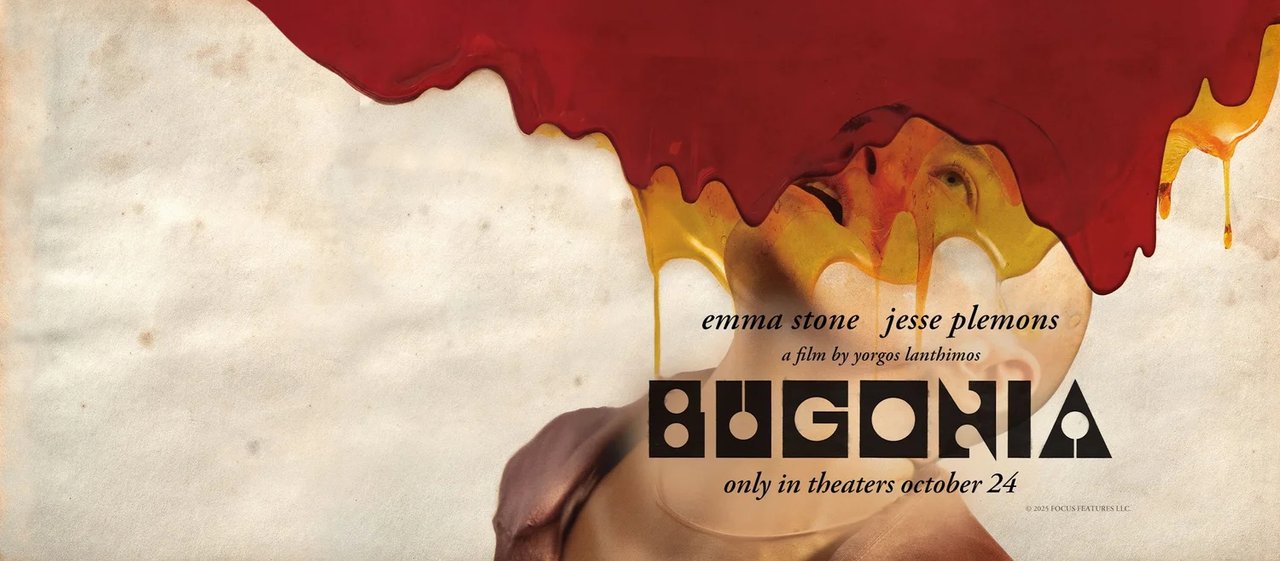
This is one of those films that had it not been for someone else talking about it I likely wouldn't have known that it existed until quite some time after its release. They just didn't market it very widely and I think I can related to why that is. These days marketing a film just doesn't seem to work all that well and I think they were banking on the star-power of Emma Stone and Jesse Plemons (who i've read is referred to as "Meth Damon") and unfortunately for Focus Pictures, it doesn't look like this lack of promotion gamble has paid off.
I'm sure it will break even or even make a slight profit after streaming.
As I always do, I make attempts to not include spoilers but sometimes I slip up and can accidentally do so anyway. This is one of those films that I think would be ruined if you know even a bit of the plot and especially the twists, so if you want to enjoy this film fully, just know that I thought it was excellent and and think you definitely should see it.
This is slated as a "dark comedy" but honestly, I think they are obligated to call it that because the film they based it on actually was a comedy. This film on the other hand, doesn't have any real comedy in it at face value. There are some subtle nods towards comedy that are picking on conspiracy theorists and flat-earthers, but outside of that there isn't really any humor in this.
What is going on here is that Meth Damon is "Teddy" a simple man who tends to beehives and works a working man job. He also is a big believer in conspiracy theories and one of them is that the world is actually sought to be ruled over by an alien race called "Andromedans." He gathered this opinion directly related to his beehives and how the aliens are intentionally killing off the bee population in order to eliminate a great deal of the earth's food supply and therefore the amount of people alive on it.
Teddy works alongside his mentally challenged cousin Don and they carefully plan out and execute the kidnapping of a CEO that Teddy believes is responsible for what is going on with the bees. He also believes, actually knows that she is an Andromedon. Don listens very carefully to his cousin who is clearly in charge, but he is more susceptible to cracking under pressure.
Michelle (Emma Stone) is the CEO in question and Teddy and Don attempt to force a meeting between Teddy and the leaders of the Andromedans to negotiate their withdrawal from Earth, leaving humans at peace.
Michelle is a very intelligent woman, that is how she got to be the CEO of a large company. At first she tries reason towards here kidnappers, telling them that the only way they avoid getting in huge trouble is to do what she says... Don is cracked a bit by this but not Teddy, who believes that it is of the utmost importance that he expose the Andromedans and get this meeting, even at the expense of his own, and Don's life.
Michelle does whatever she can to try to manipulate the situation including trying to pretend as though she actually is an alien and going through the motions that Teddy has established for her. All the while she is of course trying to escape.
I fear that if i delve into the plot any more than I have already that I will accidentally spoil the experience so instead I'll just focus on general themes.
I think that all of us have met someone that is intensely conspiratorial and how all consuming their obsession can be. I once met a flat earther in a bar one day and while I was being kind to him and not suggesting he is an idiot or even that he was wrong, he become aggressive in his words and eventually in his physicality because I didn't immediately pledge allegiance to his cause. This sort of obsession with knowing the truth because of their own independent research and believing that only they and a few select others are enlightened enough to know the "truth" can be a recipe for disaster.
no amount of calm discourse can convince such people that they might be incorrect and they are able to justify their thoughts with the information bubble that is so easy for people to find online these days. These people can become dangerous to others and this is something that we see in the character of Teddy in Bugonia.
The conspiracy minded people that I have met in my own life, for the most part I believe them to be very intelligent but it is their own obsession and insistence that they are correct and everyone else is wrong almost always leads to them not being taken seriously and they kind of become ostracized in a self-inflicted sort of way.
They do a good job of showing that "Teddy" is exactly like this. Jesse Plemons does a very good job of playing this role and Emma Stone does a very good job of being the corporate type that through many years of success and "winning" believe that she can reason her way out of any situation. She doesn't take these two backwoods people seriously enough and consistently believes that she is "better than them" and can logic and reason her way out of a very dangerous situation. Emma does a very good job of portraying this sort of arrogant professional the likes of which I think most of us have met at one point in our life or another.
Both of these types of people are very difficult to get along with, and I have met both... perhaps you have as well and therefore you will be able to identify with their performances as well.
Should I watch it?
This is one of the better films that I have seen this year but even though I feel this way I think that for many people that the eventual payoff that is the final 30 minutes of this film might require too much of a lead in to keep the entertained. This is a "dialogue-rich" film and for those that require immediate payout, it may drag on too long for them.
I'm not judging anyone, but I do think that because of the information age that we live in now that people have much shorter attention spans than they used to so it may seem a bit slow to a lot of people out there. I thought it was worth the wait but at nearly 2 hours long, some might have preferred if we had moved things along a bit more rapidly.
If you have the patience, I feel as though this is one of the better films of the year
at the moment the only LEGAL way to watch this film is a few theaters that are still showing it, and to rent it for something outrageous like $20 on AppleTV or Amazon. It is likely to hit streaming subscriptions soon, so I'd just wait for it if I were you