Longform reviews of films, TV, anime, books, and audiobooks, written by the scrobble.life community and published to the Hive blockchain, so each one is owned by its author and can earn rewards from readers. 34,395 reviews and counting.
SOURCE
Damn what a fkn long name for an episode, "The Great Swirling Apparatus of Our Planets Function", anyways, Episode 4 of IT Welcome To Derry finally decided to pump some gas into the series not only with Penny Wise data dump but also with some of the most gory scenes we have seen before and it really trick me out at first, look I get it slow burns are cool and all but three episodes deep and we are just now getting some real movement so yeah this one hit hard and shows how we yet dont need full clown mode to be a good show. The whole flashback thing with the entity crashing to Earth and Taniel showing Dick all that ancient shit about his ancestors fighting this thing was pretty wild and I love it, like part of me digs the lore dump becuase it explains why Pennywise or the Galloo cannot just pack up and leave Derry those star fragments acting like a prison perimeter is smart but at the same time sometimes less is more you know sometimes the monster is scarier when you do not know every single detail about where it came from and why it does what it does. The Marge scene though holy shit that was brutal watching her freak out thinking she has snail eyes popping out and then going full psycho with the band saw that is the kind of messed up horror I signed up for and then poor Lily trying to stop her and everyone walks in thinking she is the one who did it man that is rough I really need to see what happens next with that because leaving it hanging like that is killing me, but overall this episode finally feels like things are moving and it feels awesome, I just hope they keep this momentum going because I am ready for shit to really hit the fan.
Source
The kids finnaly got some photo evidence of this thing and they rush to the police station all excited thinking this is going to clear Hanks name and get the adults to actually pay attention but nope Chief Bowers looks at the pictures and sees nothing, like literally nothing just dead flowers and pigeon shit which is so frusturating because you know the entity is messing with everyones heads making the adults competently blind to whats happening right in front of them. The only thing that shows up in the photos is this clown figure in the background and even that Bowers just dismisses as a statue or whatever the hell he thinks it is, these kids cannot catch a break and its getting harder and harder for them to prove what they are seeing is real when the entity has this whole mind control thing going on with everyone in town. Will starts putting the pieces together about how the entity makes people scared on purpose because fear makes them taste better which is just gross when you think about it like this thing is literally seasoning its food by scaring the crap out of people before eating them, he explains it in this very scientific way talking about cortisol and adrenaline and how it changes the way humans taste which I thought was a cool touch becuase it makes sense in a twisted way. Lily comes up with the idea to use her moms Valium pills to stop themselves from feeling fear which is pretty smart honestly like if fear makes you tastier then maybe not feeling fear gives you some kind of protection, they call it mommys little helper and I had to laugh at that because yeah in the 60s everyone was popping pills for everything but hey if it keeps Pennywise away then why not.
Source
Now that whole Marge situation, that was hands down the most disturbing thing I have seen in this entire series so far and that includes all the creepy shit from the previous episodes, Marge is already feeling guilty about setting Lily up for this prank that the Patty Cakes are planning and shes nervous and sweating in the bathroom trying to psych herself up to go through with it. The biology teacher showed them this thing about parasites earlier in the episode how flatworms get inside snails and make their eyes bulge out so birds come eat them and spread the parasite and guess what Pennywise uses that exact fear against Marge, she looks in the mirror and sees her eyes growing huge like the snail eyes and she completely loses it starts freaking out thinking she has these parasite things coming out of her head and the only way to get rid of them is to cut them off. The sound effects in this scene were insane that distorted glug noise and then the way they showed her point of view through the bulging eyes looking at two different angles at the same time was just nasty, Marge grabs a wood chisel and tries to dig under her eye and then she runs her face across a band saw like what the actual fuck this is a kid doing this to herself because Pennywise made her think it was real. Lily hears her screaming and tries to help her but by the time the other kids run in Lily is covered in blood holding the chisel and everyone's thinking she did it, this is exactly the kind of thing that makes everyone think Lily is crazy and now shes probably going back to Juniper Hill wich sucks because she was actually trying to save Marge not hurt her but nobody is going to believe that, back then there was no cctv.
Source
The military side of things is getting more interesting because now Howerin is using his shining ability to dig around in Taniels memories and get the information Shaw wants about those pillars, the way they showed this whole sequence was pretty cool with Howerin stepping into Taniels mind and seeing all these doors that represent different memories and he finds the one he needs. Taniel remembers his aunt Rose telling him the story of the Galloo when he was a kid and we get this whole flashback about how the entity crashed to Earth inside a meteorite millions of years ago, the meteor breaks open and the dead lights come out and start terrorizing the area turning into whatever people are afraid of which back then was a moose with bloody antlers and later this creepy priest guy. The tribe from Taniels ancestors figures out they can use pieces from the meteor to trap the entity because if the meteor was its prison in the first place then pieces of it should still work as a cage, so they break off pieces and bury them around the western woods creating this barrier that the entity cannot cross and thats why its been stuck in Derry all this time. I thought this was a really smart way to explain why Pennywise never leaves town because in the movies and the book it never really made sense why this thing would just stay in one place when it could go anywhere, now we know its not because it wants to stay its because it has to stay trapped inside this circle of meteor pieces that the tribe buried hundreds of years ago. The fight scene between the tribe and the entity was pretty brutal you see this warrior woman Sesqui trying to protect her people and the entity takes the form of a priest and then a demon baby bursts out of his chest and stabs her mom which was just wild, eventually Necani uses the dagger made from the meteor to wound the entity and drive it back into the cave and then they bury the meteor pieces to keep it contained.
The episode ends with Howerin getting the information he needs from Taniel about where the pillars are buried under the old Neibolt house and you just know next episode we are going back into those sewers which is going to be intense, Leroy is also starting to believe something is up after he and Will both see a red balloon floating by the river and then again outside their house later that night which freaked me out because the entity is definitively messing with them now. Will almost gets pulled into the river by the entity taking the form of his dad all burned up which is creepy as hell and also foreshadowing what probably happens later in the season with the black spot fire, Howerin and his buddies are setting up this old shed to turn it into a hangout spot and you just know that place is going to burn down by the end of the season killing a bunch of people. Charlotte is trying to help Hank by acting as his lawyer and she finds out he was having an affair with a white woman which is why he cannot give his real alibi because in 1962 that would cause even more problems for him than being accused of murder, the racial stuff in this show is handled pretty well I think it shows how messed up things were back then without being preachy about it. Overall this episode was a huge step up from the first three because it actually moved the story forward instead of just teasing things, the lore dump about the meteor and the pillars was interesting even if some of the CGI looked rough and that Marge scene is going to stick with me for a while because that was disturbing in a way that most horror does not even come close to, I am definitely hooked now and I cannot wait to see what happens when they go into the Neibolt house next episode because you know its going to get real messy real fast.
I know some good Korean movies and TV shows that are not well-recognized but are perfectly made with creative storylines that take the mind into a fantasy world when watching. Two of such are Faith: The Great Doctor and Gu Family Book (Kang Chi). Anytime I’m asked to recommend Korean movies or series, they are always at the top of my list.
Faith: The Great Doctor:
It was many years ago that my younger one bought the DVD plate of the series. I watched only one season, and then a cousin borrowed it and refused to return it despite all my pleas. I wanted to continue watching it by all means because of how interesting the first season was. Funny enough, it was later, during the years when movies had become downloadable on the phone, that I downloaded all the seasons and finally gave it a shot.
The movie has a fictional storyline with a touch of fantasy, where time travel in its realness was used. It shows different and far-away centuries merged together.
Choi Young seeks the healing power needed to attend to Princess Nogoog. He has to use the link between their world and another world to travel and get a healer. Yeah, the “other world” he travels to is a modern city — a 21st-century city — while they are 700 years below. Surprisingly, the healer he finds and kidnaps is just a regular doctor, a female doctor whom he saw treating people. He drags her away, uses the same chamber, and returns to his world — a world completely strange to the kidnapped doctor, Eun-soo. Did you comprehend that? I found that idea in the storyline very creative.
In the movie, many dramas unfold, with Eun-soo trying to figure out the world she has found herself in, and other top political groups wanting to have Eun-soo to themselves because of the powers they think she possesses. And guess what? She doesn’t have any powers — it’s her medical skills that appear to them as supernatural! If you haven’t seen this series, you’ve been missing out on one of the biggest K-dramas in the world!
Here comes Gu Family Book,
A fantasy story with a storyline that will launch the mind into the fantasy realm. The best part of this series is the ending. It shows how people can be recreated identically from their first existence. Gosh! That part made me want to meet the scriptwriter and give him or her all the money in my wallet. Lol
Amigos como estan, por aqui estamos el dia de hoy con una ediciòn mas de esta revista digital creando un gran archivo de las mejores telenovelas de nuestro pais Venezuela. Espero les guste la ediciòn del dia de hoy, la cual es una novela que reune a una gran cantidad de actores increibles.
Portada realizada por mi.
INTRODUCCIÒN.
-
¿Qué pasó con Jacqueline? es una telenovela venezolana de 48 capítulos, creada por Alicia Barrios y Gustavo Michelena, dirigida por César Bolívar y transmitida por RCTV en 1982. Protagonizada por Doris Wells (en el doble papel de Ana / Jacqueline / Melissa Vidal) y Jean Carlo Simancas (Alejandro Ascanio), la producción mezcla melodrama, suspense y giro psicológico alrededor de la identidad y el engaño.
La historia sigue a dos gemelas huérfanas, Ana y Jacqueline (ambas interpretadas por Doris Wells). Ana padece una enfermedad cardíaca y, por complejas razones emocionales y de supervivencia, comienza a suplantar a su hermana Jacqueline hasta llegar a asumir su vida matrimonial con el arquitecto Alejandro Ascanio (Jean Carlo Simancas). En un giro dramático, Jacqueline sufre un accidente que desfigura su rostro; tras una reconstrucción facial reaparece bajo otra identidad —Melissa Vidal— con el propósito de recuperar a su esposo y desenmascarar a la hermana que le robó su vida. La trama despliega así un juego de identidades, engaños, lealtades rotas y la búsqueda de justicia personal.
La novela saca partido del virtuosismo actoral de Doris Wells, quien asume con creíble complejidad tres facetas de un mismo personaje: la vulnerable Ana, la ausente Jacqueline y la resuelta Melissa. Jean Carlo Simancas sostiene el contrapunto emocional como el marido confundido y dividido entre el deber y la pasión. El guion (Barrios & Michelena) y la dirección de César Bolívar construyen un ritmo de misterio que mezcla melodrama clásico con recursos de suspense psicológico; la reconstrucción facial y el intercambio de identidades funcionan como motores dramáticos que mantienen la intriga hasta el final. La pieza musical “Tú y yo” subraya el tono romántico-melancólico de la serie.
¿Qué pasó con Jacqueline? es una telenovela notable dentro del catálogo de RCTV por su audacia narrativa (el uso del doble papel, la suplantación y la reconstrucción de identidad) y por la calidad de sus protagonistas. Es una obra clave con personajes femeninos complejos y de cómo el melodrama televisivo puede incorporar recursos de suspenso psicológico sin perder su pulso emotivo.
Bueno amigos hasta aqui la ediciòn de hoy, espero que sea de mucho agrado y que rememoremos esta obra, que sin lugar a dudas vale la pena recordar por sus grandes actores y su trama que luego vendrias muchas obras con este mismo formato de historia. Bendiciones.
Recently, films have been released that bring back classic stories that were hugely successful in their day, and even though they are repeats, they always have something special about them, because they seek not only to entertain, but also to convey each of the messages that these stories can convey. This was the case with the grand premiere of Frankenstein (2025), yet another version of this production that reminds us that behind every monster there is a story that is more human than it seems, leading us to reflect on how every person has something to tell. Once again, the great director Guillermo del Toro takes on the responsibility of reviving this story, maintaining the essence of the original but with a more exciting and realistic touch, showing not only the science but also the pain and loneliness of the whole story.
Últimamente se han estrenado películas que traen de vuelta historias clásicas que en su tiempo fueron todo un éxito y por más que se repitan siempre tienen algo especial, porque no solo buscan entretener, sino mostrar cada uno de los mensajes que estas pueden llegar a tener. Esto pasó con el gran estreno de Frankenstein (2025), otra versión más de esta producción que llega para recordarnos que detrás de cada monstruo hay una historia más humana de lo que parece y nos lleva a reflexionar de cada persona tiene algo por contar. Nuevamente el gran director Guillermo del Toro es quien toma esa gran responsabilidad de revivir esta historia, manteniendo la esencia de la original, pero con toque más emocionante y realista, como también mostrando no solo la ciencia, sino también el dolor y soledad a toda esta historia.
Each version has something different, simply because there are several directors. Without a doubt, from the very first minute, it envelops us in that dark and gothic world that characterizes the entire production. Also, since we already know the story, everything becomes much easier to understand. But beyond the aesthetics, what really stands out is the weight of the protagonists. This time we see different actors, with Victor Frankenstein, played by Oscar Isaac. Although this is the first time I have seen him act, here he is a brilliant man with a very different mindset from the others, but inside he is a broken man who tries to challenge the impossible, science, and human life without weighing the consequences of his actions. On the other hand, there is Jacob Elordi, who becomes the heart of the story as the creature. He undoubtedly understands nothing about reality, but his appearance is what makes this story unique.
It tells a story that combines many things, such as experiments and studies, because to create something you need knowledge and to repeat the process as many times as necessary. It also shows the emotional side, moments of stress and tension that we can all go through at some point in our lives, and that is why there are several elements that make this film very good. At the same time, there is also a mixture of pain and disconnection that can be appreciated, since the real monster is not always the one who seems to be, but the one who avoids facing what he did, leading us to ask ourselves, “Was it all worth it?”
Cada versión tiene algo distinto, por el mismo hecho de ser varios directores, sin duda esta desde el primer minuto nos envuelve en ese mundo oscuro y gótico que caracteriza toda la producción, además al ya conocer la historia todo se vuelve mucho más fácil de ir entendiendo, pero más allá de la estética, lo que realmente destaca es esa carga de los protagonistas. Esta vez veremos actores distintos, donde Victor Frankenstein, interpretado por Oscar Isaac, siendo la primera vez que lo veo actuar aun así aquí es un hombre brillante, con una mentalidad muy distinta a la de los demás, pero por dentro un hombre roto, que intenta desafiar lo imposible, la ciencia, la vida humana sin medir el peso de sus acciones. Por otro lado, esta Jacob Elordi, quien se convierte en el corazón de la historia al ser dicha criatura, sin duda no entiende nada de la realidad, pero su apariencia es lo que hace que esta historia sea única.
Cuenta una trama que combina muchas cosas como experimentos, estudios, ya que para crear algo se necesita de conocimiento y repetir todas las veces que sea necesario. También enseña ese lado emocional, momentos de estrés y tensión que todos podemos pasar en algún momento de la vida y por eso son varios elementos que hacen que esta película sea muy buena. Mientras que también existe una mezcla de dolor y desconexión que se aprecia, ya que el verdadero monstruo no siempre es quien parece, sino quien evita enfrentar lo que hizo, siendo algo que nos lleva a preguntarnos ¿Valió la pena todo eso?
It is a production full of many tense moments that make it seem like everything will end very badly, and other calmer moments, which allows us to enjoy a wide variety of scenes that show that even in such a dark world, there can be light, giving the story a very different touch, one that is not just horror, but also a search for identity and acceptance that anyone can relate to. Another thing that makes this film so special is the director's style, with well-crafted scenes, without too much exaggeration, and a visual style that allows us to continue enjoying the entire production while highlighting responsibility, loneliness, rejection, and the desire to be seen beyond our flaws.
Es una producción que está llena de muchos momentos de tensión que parece que todo terminará muy mal, otros más calmados, por eso nos lleva a disfrutar de una gran variedad de escenas que incluso en un mundo tan oscuro puede existir una luz, la cual permite que la historia tenga un toque muy distinto, que no sea solo terror, sino en esa búsqueda de identidad y aceptación que cualquiera puede sentir. Otras de las cosas que hace que esta película sea tan especial es ese estilo que coloca este director, con escenas muy bien elaboradas, sin tanta exageración y con un estilo visual que nos lleva a seguir disfrutando de toda la producción y a la vez resaltando la responsabilidad, la soledad, el rechazo y ese deseo de ser visto más allá de nuestras fallas.
Frankenstein is a film worth watching because it retains the essence of the original but manages to convey a real, human, and profound message with this new version, allowing the story to continue to be talked about for much longer. It is also a film that can be perfect for everyone, and you don't need to be a horror fan, as it is enough to understand that all the weak, the strong, or the most feared are just looking for a place to fit in. It is a film that invites reflection, as it shows that monstrosity is not always in appearance, but in the decisions that are made, and that sometimes what hurts the most is not what you see, but what you feel.
Frankenstein es una película que vale la pena ver, porque conserva la esencia de la original pero logra transmitir un mensaje real, humano y profundo con esta nueva versión y eso permite que esa historia puede seguir dando de que hablar por mucho más tiempo. Además es una película que puede ser perfecta para todos y no necesitas ser fan del terror, ya que basta con entender que todos los débiles, los fuertes o más temidos, solo buscan un lugar donde encajar. Es una entrega que invita a reflexionar, puesto que muestra que la monstruosidad no siempre está en la apariencia, sino en las decisiones que se tomen y que a veces lo que más duele no es lo que se ve, sino lo que se siente.
Written by: Michael Wagner
Directed by: Les Landau
Running Time: 45 minutes
Star Trek has long cultivated its reputation as the pre-eminent "thinking person’s science fiction," a franchise where the exploration of strange new worlds is intrinsically linked to the examination of profound philosophical, ethical, and sociological questions. It is therefore unsurprising that The Next Generation (TNG) is frequently heralded as the pinnacle of this tradition. Central to this acclaim is Captain Jean-Luc Picard, a figure consistently portrayed as an intellectual par excellence; his zeal for spacefaring stems less from a thirst for adventure or glory, and far more from a deep-seated desire to decipher the universe’s enigmas and uphold principles of reason and diplomacy. One such profound mystery, serving as the chilling foundation for the third-season episode The Survivors, exemplifies this core Trek ethos, even as it remains curiously overshadowed within the series' canon.
The narrative commences with the USS Enterprise-D responding to a distress call from Rana IV, a Federation colony supporting approximately eleven thousand inhabitants. Upon arrival, the crew confronts a scene of utter devastation: the planet’s surface lies scorched and lifeless, a testament to catastrophic violence. The sole anomaly is a miraculously preserved, verdant patch of land housing a solitary, idyllic house. Picard dispatches an away team, led by Commander Riker, who encounters two seemingly elderly human botanists, Kevin and Rishon Uxbridge (portrayed by John Anderson and Anne Haney). Their presence is deeply incongruous. The couple offers no explanation for the planetary annihilation, displaying an unsettling calm. Kevin Uxbridge, in particular, insists the Enterprise depart immediately, asserting their perfect safety and dismissing any need for Federation intervention. Simultaneously, Counselor Deanna Troi begins experiencing a persistent, dissonant melody within her mind – an auditory intrusion so profoundly disturbing and invasive that Dr. Crusher is compelled to place her in a medically induced coma to alleviate the torment.
Frustrated by the Uxbridges’ secrecy and the inexplicable psychic assault on Troi, Picard prepares to withdraw. However, the Enterprise is violently attacked by an unknown vessel possessing technology impervious to all Federation weaponry. Forced into a tactical retreat, Picard remains troubled by the inconsistencies surrounding the colony’s destruction and the Uxbridges’ implacable composure. Honouring his duty, he orders the Enterprise to return. Confronting the couple, Picard delivers a pivotal ultimatum: the starship will remain in orbit for as long as Kevin and Rishon Uxbridge draw breath. Shortly thereafter, the mysterious vessel reappears, obliterating the Uxbridges’ home. The Enterprise then seemingly destroys the attacker with unexpected ease. Yet, Picard’s intuition proves correct; scans reveal the Uxbridges miraculously survived. Beaming them aboard, Kevin Uxbridge unveils the shattering truth: he is not human, but a member of the Douwd, an ancient, near-omnipotent alien species. He had adopted human form, fallen deeply in love with Rishon, and chosen a simple life amongst humanity. When the Husnock – a predatory alien race – attacked the colony, Kevin, bound by a profound pacifist philosophy, was unable to intervene. Witnessing Rishon’s death ignited an uncontrollable, all-consuming rage within him. In that moment of grief-stricken fury, he utilised his godlike powers to commit an act of genocide, annihilating every single Husnock across the galaxy – billions, perhaps trillions, of lives extinguished in an instant. The preserved house, the "surviving" Rishon, the entire pastoral illusion – all were fabrications conjured by Kevin to isolate himself and mourn. The melody tormenting Troi was a psychic barrier, designed to shield his unbearable secret from the empath’s perception. Confronted with this unimaginable atrocity born of love and loss, Picard, rendered momentarily speechless by the sheer scale of the horror, can only state, "We have no laws for your crime." Ultimately, recognising the depth of Kevin’s self-imposed penance, Picard grants him his exile, leaving him alone with his memories and his guilt on the desolate world he has chosen.
Written by Michael Wagner, a television veteran whose tenure on TNG was regrettably brief, The Survivors is frequently cited by discerning critics and fans as a "hidden gem" or an "underrated masterpiece" within the series. This relative obscurity likely stems from two factors: the sheer density of iconic episodes emerging from Season 3 onwards, which created fierce competition for attention, and the episode’s deliberate narrative simplicity and focus on an elderly romance. This aesthetic and thematic choice, while potent, inadvertently positioned it closer in spirit to the intimate, often melancholic parables of The Twilight Zone than the grander space operas typically associated with Star Trek.
Nevertheless, the concept executes with remarkable effectiveness. Picard’s journey stems from unwavering intellectual and moral determination to solve the puzzle. The resolution is devastatingly poignant – a testament to the fragility of love juxtaposed against the terrifying potential for cosmic-scale destruction inherent within even the most benevolent beings. Kevin, as the Douwd, embodies the quintessential Trek alien superbeing, yet his motivations are heartbreakingly human: profound love and overwhelming grief. His story serves as a stark, unforgettable reminder that the universe Trek portrays is not merely wondrous; it is also profoundly terrifying, where the line between guardian and destroyer can be obliterated by a single moment of anguish. Picard’s quiet acceptance of Kevin’s self-imposed sentence, rather than any legalistic condemnation, underscores the episode’s mature exploration of guilt, punishment, and the limits of justice when confronted with godlike power wielded in extremis.
The episode’s emotional resonance is significantly amplified by its guest performers. John Anderson, a seasoned television actor, delivers a masterclass in understated tragedy. His portrayal of Kevin’s quiet dignity, simmering grief, and ultimate despair is imbued with an authenticity that feels deeply personal; it is poignant context that Anderson himself had recently experienced the loss of his wife, lending an unspoken layer of raw vulnerability to his performance. He shares excellent, believable chemistry with Anne Haney (Rishon), whose ethereal presence perfectly embodies the constructed illusion. Haney would later reappear in the Deep Space Nine episode Dax, further cementing her connection to the Trek universe.
Furthermore, the episode benefits immensely from the assured direction of Les Landau. Landau seized the rare opportunity for location shooting, meticulously reconstructing the Uxbridges’ house and its idyllic surroundings on the shores of Malibu. This tangible sense of place, a stark contrast to the sterile confines of the Enterprise sets, provided a welcome visual and atmospheric shift for the regular cast and crew, who reportedly relished the production’s variety and the chance to work in a more naturalistic environment.
The Survivors ultimately transcends its initial Twilight Zone comparisons. It is a powerful distillation of Star Trek: The Next Generation’s core strength: using the vast canvas of space to explore the intimate, often contradictory, landscapes of the heart and mind. While perhaps less bombastic than its contemporaries, its quiet horror, profound emotional weight, exceptional performances, and unwavering commitment to Picard’s intellectual and moral compass solidify its status as a deeply affecting and enduringly relevant chapter in the Trek saga – a true, if too often overlooked, gem shimmering in the shadow of more famous neighbours.
To close the already overdue "Halloween month", here is the last review of a game with horror and terror theme, I still have some other games with this theme to review and maybe, maybe, I will do them, but for now I'll let this topic rest. This time today's game review is based on a very old movie, from 1989, which I haven't seen, I don't know anything about and I'm more than sure that 99% of the people who are going to read this review don't know what movie it is either. But we are facing a platform and action game which I found entertaining especially for its art style and atmosphere, which manages to reflect and adapt efficiently everything related to horror, darkness and dark fantasy.
Today's Retro Review is about: Warlock (Super Nintendo).
This video game came out several years after the release of the movie, exactly in 1995, Warlock for SNES tells the typical story of "good versus evil". Where we must stop an evil sorcerer who by means of magical runes of time, wants to invoke Satan and thus bring chaos, destruction and the end of the world as we know it. Sin embargo, en este punto en cuando nuestro protagonista, The Druid, who has been chosen as the savior of mankind, the hero of the forces of good, must go on an unparalleled journey through time to prevent the sorcerer Warlock from fulfilling his purpose. A simple story as well characterizes the games of the time, although I do not know if this game is a faithful adaptation of the movie on which it is based, after playing it made me want to watch it, because if a movie of 1989 had an adaptation to a video game several years later, it makes me believe that the movie is good. Warlock (Super Nintendo) is a game with a quite marked somber aesthetic, being this the central point of its graphic aspect.
With a dark atmosphere and gloomy colors, the setting of this game fits perfectly with the plot, this is a game that manages to represent very well the most characteristic elements of the gothic style and dark fantasy, from scenarios with medieval elements, satanic, dark temples and transmitting terror, without any doubt, this game stands out for its graphic aspect, at least with regard to the decor and atmosphere. At the level of animations, our character presents some stiffness and is not as fluid as you would expect from a platform game, but as for the design of enemies, it stands out quite a bit as it is a game whose creature designs are terrifying, demonic and worthy of the horror genre. Musically it is the aspect that I liked least about this game and although in general terms due to its soundtrack with melodies that manage to convey a gloomy and dark atmosphere, I feel that it lacked something more so that it could stand out and fit much better with its visual setting.
As I mentioned before, Warlock (Super Nintendo) is a platform and action game, but it also has exploration elements, which I think is a very good addition to this game. Our protagonist is able to perform spells and attacks with magic, he does not have any type of weapon, only magic, but logically these consume energy that we must manage properly to avoid being exposed to our enemies. The magics can be improved as we progress, so our character will become stronger in our adventure. We will find the classic moments of solving puzzles so characteristic of exploration games, they are not difficult, but add variety to the gameplay, also being a game of exploration we will be rewarded by being able to find special items or alternate routes in the scenarios. A negative aspect with respect to the gameplay and that goes hand in hand with respect to the rigidity that I mentioned before in the animations of our character, is that it is somewhat slow and because of that, certain movements in the jumps can become inaccurate. In short it is not a bad game, perhaps its worst aspect is the sound and some aspects of the gameplay, but it is a game with a pretty good aesthetics, art and atmosphere, although without being the best of the SNES in terms of graphics.
Para cerrar el ya atrasado por el “mes de Halloween”, he aquí la última review de un juego con temática de terror y horror, aun me quedaron algunos otros juegos con esta temática por reseñar y quizás, tal vez, los haga, pero por ahora dejaré este tema descansar. Esta vez la review del juego del día de hoy está basada en una película bastante antigua, del año 1989, de la cual no he visto, no conozco nada y estoy más que seguro que el 99% de las personas que van a leer esta review tampoco saben que película es. Pero estamos ante un juego de plataformas y acción el cual me resulto entretenido especialmente por su estilo artístico y ambientación, el cual logra reflejar y adaptar de forma eficiente todo lo relacionado con el terror, la oscuridad y la fantasía oscura.
La Retro Review de hoy es sobre: Warlock (Super Nintendo).
Este videojuego salió varios años después del estreno de la película, exactamente en el año 1995, Warlock para SNES nos cuenta la típica historia del “bien contra el mal”. Donde debemos detener a un malvado hechicero el cual por medio de unas runas mágicas del tiempo, quiere invocar a Satanás y de esta forma traer caos, destrucción y el fin al mundo como lo conocemos. Sin embargo, en este punto en cuando nuestro protagonista, El Druida, el cual ha sido elegido como el salvador de la humanidad, el héroe de las fuerzas del bien, deberá adentrarse en un viaje sin igual por a través del tiempo para impedir que el hechicero Warlock cumpla con su propósito. Una historia simple como bien caracteriza los juegos de la época, aunque desconozco si este videojuego es una fiel adaptación de la película en la que está basado, luego de haberlo jugado me dieron ganas de mirarla, ya que si una película del año 1989 tuviera una adaptación a un videojuego varios años después, me hace creer que la película es buena. Warlock (Super Nintendo) es un juego con una estética sombría bastante marcada, siendo este el punto central de su aspecto gráfico.
Con una atmosfera oscura y colores tétricos, la ambientación de este videojuego encaja a la perfección con el argumento, este es un juego que logra representar muy bien los elementos más característico del estilo gótico y de la fantasía oscura, desde escenarios con elementos medievales, satánicos, templos oscuros y que transmiten terror, sin ningún tipo de dudas, este videojuego destaca mucho por su aspecto gráfico, al menos en lo que respecta al decorado y ambientación. A nivel de animaciones, nuestro personaje presenta cierta rigidez y no es tan fluido como se puede esperar de un juego de plataformas, pero en cuanto al diseño de enemigos, destaca bastante al ser un juego cuyo diseños de los criaturas son terroríficas, demoniacas y dignas del género de terror. Musicalmente es el aspecto que menos me gustó de este juego y aunque en términos generales debido a su banda sonora con melodías que logran transmitir un ambiente lúgubre y de oscuridad, siento que le faltó algo más para que pudiera destacar y encajar mucho mejor con su ambientación visual.
Como mencioné anteriormente Warlock (Super Nintendo) es un juego de plataformas y acción, pero además también cuenta con elementos de exploración, lo cual me parece un añadido bastante acertado para este juego. Nuestro protagonista es capaz de realizar hechizos y ataques con magia, no cuenta con ningún tipo de arma, solo magia pero que lógicamente estas consumen energía que debemos de administrar adecuadamente para no quedar expuestos ante nuestros enemigos. Las magias pueden mejorarse a medida que vayamos avanzando, por lo que nuestro personaje se irá haciendo más fuerte en nuestra aventura. Encontraremos los clásicos momentos de resolución de acertijos tan característicos de los juegos de exploración, no son difíciles, pero añaden variedad a la jugabilidad, también al ser un juego de exploración se nos recompensaran al poder encontrar en los escenarios ítems especiales o rutas alternas. Un aspecto negativo con respecto a la jugabilidad y que va de la mano con respecto a la rigidez que mencione antes en las animaciones de nuestro personaje, es que es algo lento y debido a eso, ciertos movimientos en lo saltos pueden llegar a ser imprecisos. En definitiva no es un mal juego, quizás su peor aspecto es el sonido y algunos aspectos de la jugabilidad, pero es un juego con una estética, arte y atmosfera bastante buena, aunque sin llegar a ser lo mejor de la SNES en términos gráficos.
I've been craving some more Asian cinema lately, wanting to find some inspiration in their often colourful scenes and beautiful narratives that explore everyday people. The New Wave ere of Hong Kong, the Taiwan arthouse era that came around the same time. Even that brief few years of highly experimental and artistic Chinese cinema. Each of which have somewhat faded off into time and replaced in one way or another with something that doesn't quite land the same. Perhaps a result of changing times and techniques as well as ideas. As well as the film industry itself. That last one seemingly more important regarding this title: Goodbye, Dragon Inn. A film from a very visionary Tsai Ming-liang. Known for his lengthy films often with the same cast, which feature very real concepts on life and characters. Often with minimal editing done. In recent years the director has shifted his interests quite a bit with the way he directs and tells stories, though his past shows a stronger connection to his environments.
Goodbye, Dragon Inn is a film that displays a strong sadness for the ways in which cinema has changed. It directly reflects the changing times as it handles the concepts of cinemas dying. Their closures as art is cared for less and less. Tsai Ming-liang looks at the past in which films were cared for, where films were more experimental and visionary, trying to pursue meaningful ideas and tell stories to the world. Where those stories are now rarely given any attention. It speaks on the collapse of the storytelling medium, with the pursuit of cultural shifts as well as economical factors. Upon seeing the director's name attached to the title, I knew this was going to be an interesting ride.
Goodbye, Dragon Inn
Cinema can be more than mere entertainment for the masses. It can be a way to look back into our pasts and connect us with those before. To show us stories that portray our greatest challenges and achievements. To display the beauty of our cultures and keep us connected with them. Many don't quite realise this, nor the importance of preserving such concepts through the arts. When a society begins to forget the importance of the cinema, the very surroundings of the area begin to crumble. Goodbye, Dragon Inn displays the impacts a cinema's closure has on those who have spent so many years there spreading stories. As well as the few that hold the strong feels of nostalgia for the previous, more energetic times in which both films and the cinema was full of the vibrancy of life. The way the film starts off this concept is really beautiful, and is typical still to this day with how the director displays spaces.
Wide angle perspectives with leading lines that have us looking throughout the image to see the different actions of people as well as the changing of space. The film taking place on a dull and rainy night, with the constant ambience of rainfall to be heard. Tsai Ming-liang loves using simple ambience to connect the audience to the location. Where there's no music. No dialogue. Just raw sounds of people living and moving within the rooms. It gives us a more personal look into the characters, their motions and the speed of them, telling us much about their character and lifestyles with so little. Here it's really effective; near silence within the ticket hall of the cinema, where all that can be heard is the rain outdoors and the cluttering of metallic pans from food and drink for warmth. What adds to this is the cinematography. The look of an old and rundown Taipei. Where buildings are met with darker colours holding contrast with artificial light. It gives the environment that end of life feeling. That forgotten in time aesthetic in which places look very much lived-in and now abandoned. Where the care is now long gone.
For the most part the film is like being a silent observer watching ghosts roam around a place they once held a stronger connection to. Though we're watching life unfold as it is. Fixed camera perspectives in some more unique angles gives this feeling at times. As the final film continues to play to a small audience. As people roam around the cinema performing various actions. From using the toilets to roaming the corridors almost as if to imply a restless spirit that has been searching for something for generations. With a short runtime of 120 minutes you really feel each passing minute. There's a melancholy to each scene in one way or another.
This felt exactly like a film from this director would. The same style he holds to this day. The same slow pace of very photographic imagery with minimal movement. The scenes of life unfolding with little to no dialogue. This won't be a film for everyone, his films definitely don't manage to land with the majority of audiences. But if you're into the slower, more artistic style of filmmaking in which most is said through visuals, then this is definitely for you.
Muchas veces he dicho que las segundas partes o las secuelas no son tan necesarias como la gente podría pensar, creo que para que estas se den tendría que haber un trasfondo realmente grande que permita el desarrollo del film. Querer hacer una continuación solo por el hecho de que la primera parte fue un "éxito" siempre he considerado que es un error. ¿Con Black Phone 2 se cumple algo de esto que estoy comentando? - puede ser. Siento que aquella película del 2022 fue bastante buena y cuya historia pudo haber quedado con su final pero si vemos bien la trama de esta segunda parte puede que esté un poco justificada y es que la vida de la hermana de Finney junto con su don es bastante interesante y da mucho pie para seguir con el hilo.
I've often said that sequels aren't as necessary as people might think. I believe that for them to be worthwhile, there needs to be a really substantial backstory that allows the film to develop. Wanting to make a sequel just because the first one was a "success" has always seemed like a mistake to me. Does Black Phone 2 fit this description? - Perhaps. I feel that the 2022 film was quite good, and its story could have ended there, but if we look closely at the plot of this second part, it might be somewhat justified. The life of Finney's sister, along with her gift, is quite interesting and provides plenty of material to continue the storyline.
Esto ocurre uno tiempo después de los sucesos de la primera película (4 años aproximadamente). A Finney le quedaron unas secuelas o traumas después de lo que le tocó vivir con El Raptor que se manifiestan en su comportamiento. Gwen, la hermana con las visiones, comienza a ser acosada nuevamente por el famoso teléfono negro que de la nada volvió a sonar en sus sueños. Estas visiones que ella comienza a experimentar la van a llevar a un campamento el cual esconde un secreto que puede que esclarezca todo de una vez por todas. Hay que destacar que es el propio Raptor quién está detrás de todo esto; si, incluso después de muerto.
This takes place some time after the events of the first film (approximately four years). Finney is left with lingering trauma from his experience with the Raptor, which manifests in his behavior. Gwen, the sister with the visions, begins to be haunted again by the infamous black phone, which suddenly starts ringing in her dreams. These visions lead her to a camp that hides a secret that may finally reveal everything. It's important to note that the Raptor himself is behind it all; yes, even after his death.
Este film nunca lo he visto como algo paranormal, para mi es el típico terror un poco slasher del asesino que va detrás de todos. Pero claro, ahora que este tipo está muerto y aún así sigue atormentando a estos hermanos la cosa cambia. A pesar de esto la película no se inclina a ese genero sobrenatural, no da miedo por eso; todo sigue siendo un thriller psicológico en donde un ente que no está en el plano físico persigue a unas personas. Es una trama que con el pasar del tiempo se va entendiendo porque nos la presentan en forma de visiones o sueños que toca interpretar y que serán la clave para resolver todo. Personalmente no me aburrió, es entretenida pero para mi no le llega a lo que fue la primera película.
I've never seen this film as paranormal; for me, it's your typical slasher horror movie about a killer stalking everyone. But of course, now that this guy is dead and still haunting these siblings, things change. Despite this, the film doesn't lean into the supernatural genre, so it's not scary. It remains a psychological thriller where an entity that isn't in the physical realm pursues some people. The plot gradually becomes clearer as it's presented through visions or dreams that we have to interpret, and these will be the key to solving everything. Personally, I wasn't bored; it's entertaining, but for me, it doesn't reach the level of the first film.
Puedo entender porque hicieron este film, creo que usaron lo que había quedado sin explicar del primero y a raíz de allí explotaron la trama. Ahora de que si realmente era necesario, pues eso es otra cosa. Para mi no lo era pero no me molesta porque el film, vuelvo a repetir, está bien y eso ya es decir mucho. Eso si, la película en casi la primera hora es bastante lenta, cuesta un poco agarrarle cariño y ritmo pero después mejora mucho, no llega al punto de quitarla pero si hay que tener un poco de paciencia. Hay gore, hay violencia, siguen habiendo suspenso e intriga por lo que los ingredientes del terror están bien presentes.
I can understand why they made this film; I think they used what was left unexplained from the first one and then expanded the plot from there. Now, whether it was really necessary, well, that's another matter. For me, it wasn't, but it doesn't bother me because the film, I repeat, is good, and that's saying a lot. That said, the film is quite slow for almost the first hour; it takes a little while to get into it and find its rhythm, but it improves a lot afterward. It's not so bad that you should turn it off, but you do need a bit of patience. There's gore, there's violence, and there's still suspense and intrigue, so the elements of horror are definitely present.
En cuanto a todo lo que tiene que ver con la cinematografía pues que decir, está muy bien logrado todo. Las partes violentas y las que están llenas de sangre y gore son las que más se disfrutan porque son las que le dan vida a la película. La naturaleza del personaje es así, despiadado y solo con la intención de hacer sufrir. En este punto decir que Ethan Hawke volvió a estar muy bien, es de lo mejor de la película realmente. Pero ahora hay que añadir a Madeleine McGraw quien hace de Gwen quien también hizo un gran papel entregando buenos momentos llenos de terror, angustia, tristeza; todo lo que supongo se le pedía lo hizo sin problemas.
As for the cinematography, what can I say? It's all very well done. The violent scenes and those filled with blood and gore are the most enjoyable because they're what bring the film to life. The character's nature is like that: ruthless and solely intent on causing suffering. At this point, I have to say that Ethan Hawke was excellent once again; he's truly one of the best things about the film. But now we must add Madeleine McGraw, who plays Gwen, and she also gave a great performance, delivering powerful moments filled with terror, anguish, and sadness; everything that was asked of her, I suppose, she did flawlessly.
Es un film bueno y que se puede ver pero no es mejor que el primero. Creo que no hacía falta hacerlo pero lo menos quedó como una película bien decente y con grandes actuaciones y escenas de terror. Le doy un 6.5/10. Dura menos de dos horas. Les dejo el tráiler por acá abajo.
It's a good film, watchable, but not better than the first one. I don't think it needed to be remade, but at least it's a pretty decent movie with great acting and some scary scenes. I give it a 6.5/10. It's under two hours long. I've included the trailer below.
I finally have the time to talk to you about a series I resisted watching for a long time, since science fiction has never appealed to me much, but given that it was highly recommended to me and that when I was browsing the internet, the ads kept reminding me of it, I decided to give it a chance. Also, I remembered the Maze Runner book series which pleasantly surprised me (unlike the film version), but anyway, the point is that here I am to give you my most honest opinion.
Finalmente tengo el tiempo para hablarles de una serie a la cuál me resistí a ver por mucho tiempo, ya que nunca me ha atraído demasiado la ciencia ficción, pero en vista de que me la recomendaron mucho y que cuando navegaba en internet los algoritmos también me la recordaban a cada instante, decidí darle una oportunidad, además, recordé la serie de libros de Maze Runner que me sorprendió gratamente (no así la versión cinematográfica) pero en fin, el caso es que aquí estoy para darles mi más sincera opinión.
Overview/Resumen
I'll briefly give you some context about the four seasons the series has aired so far. It's set in a town called Hawkins where strange events begin to occur. The first of these is the disappearance of Will, a boy who was walking home after playing with his friends. His mother, with the help of the police chief and the boy's friends, didn't rest until they brought him back. But in the process, they discovered a laboratory experimenting with biological weapons, including a terrifying monster called the Demogorgon, which also inhabited an alternate dimension called "The Upside Down" or "The World to the Upside Down," but could move between dimensions.
Brevemente les daré un contexto sobre las cuatro temporadas que tiene la serie hasta ahora. Se trata de un pueblo llamado Hawkins en el cuál comienzan a haber sucesos extraños, el primero de ellos, la desaparición de Will, un niño que regresaba a casa después de haber estado jugando con sus amigos, sin embargo su madre, con ayuda del jefe de policía y los amigos del niño no descansaron hasta traerlo de vuelta, pero en el proceso descubrieron que había un laboratorio que experimentaba con armas biológicas como un terrible monstruo llamado Demogorgón, que además habitaba en una dimensión alternativa llamada “El otro lado” o “El mundo al revés” pero podía pasar de una dimensión a otra.
On the other hand, there is also a strange girl with powers who says her name is Eleven (a number she has tattooed on her wrist), which shows that she was one of the victims of the cruel experiments at Hawkins Laboratory.
Por otra parte también aparece una extraña niña con poderes que dice llamarse Once (un número que tiene tatuado en la muñeca) lo cuál evidencia que fue una de las victimas de los crueles experimentos del laboratorio Hawkins.
It is later discovered that the Russians have invaded the USA and that they had a base of operations where they were also conducting some dangerous experiments, especially trying to open the portal that led to the other side.
Posteriormente se descubre que los rusos han invadido USA y que tenían una base de operaciones en la cuál también estuvieron haciendo algunos peligrosos experimentos, en especial, tratar de abrir el portal que conducía al otro lado.
As time passes, the creatures from the other side evolve significantly, but so does the friendship of the Hawkins kids, who despite the distance that separates them (since Eleven, Will, Jonathan and Joyce have to move to California) continue to support each other and join forces to investigate what is happening and defeat evil.
Con el paso del tiempo las criaturas del otro lado evolucionan significativamente pero también lo hace la amistad de los chicos de Hawkins, que a pesar de la distancia que los separa (Ya que Once, Will, Jonathan y Joyce deben mudarse a California) continúan apoyándose mutuamente y uniendo fuerzas para investigar lo que sucede y derrotar el mal.
Trailer
My Opinion/Mi Opinión
There are so many things I loved about this series from the start, so giving it a chance was a great decision. Even though I didn't experience the eighties firsthand, since I was born in 1985, the nineties, which are the decades I remember most vividly, still had many of the elements and culture of that era, so it's very nostalgic. I'm watching the series with my sister and my mom, and she always tells us how impressed she is by the level of accuracy with which they recreated everything, from the setting to the costumes, makeup, and extravagant hairstyles.
Hay demasiadas cosas que me gustaron de esta serie desde el inicio, así que para mi fue un gran acierto haberle dado una oportunidad. A pesar de que yo no viví como tal la década de los ochenta, pues nací en 1985, en los años 90 que es los que recuerdo a plenitud, aún permanecían vigentes muchos de los elementos y cultura de esa época, así que esto resulta muy nostálgico, por otra parte estoy viendo la serie con mi hermana y mi mamá, y ella siempre nos dice que le impresiona el nivel de exactitud con el que recrearon cada cosa, desde la ambientación hasta el vestuario, el maquillaje y los peinados extravagantes.
But the most striking aspect of the series is its plot; it's fascinating, and the narrative pace is so dynamic that there's no room for boredom. Each episode ends in a way that leaves you wanting more. You always want to know everything, to learn the details and the origins of the creatures or certain characters. There are impressive plot twists that add even more spice to the story, and so far I'm very happy with how they've handled the character development, with the exception of Nancy, who I find irritating at times. Or rather, more than Nancy, what bothers me is the way the Duffer brothers (the creators of the series) have handled the characters of Steve, Nancy, Jonathan, and Robin. The story seems to be heading in one direction with them, and then suddenly it takes an unexpected but frankly unnecessary turn.
Pero lo más llamativo como tal de la serie es su trama, es fascinante y el ritmo de la narrativa es tan dinámico que no hay cabida al aburrimiento, cada episodio termina de una manera tal que te deja con ganas de ver el siguiente, siempre deseas estar al tanto de todo, conocer los detalles y el origen de las criaturas o ciertos personajes. Hay giros de trama impresionantes que le dan más sazón a la historia, y hasta ahora estoy muy feliz con la manera en que han manejado el desarrollo de personajes, a excepción de Nancy, la cuál me resulta irritante en algunas ocasiones, o mejor dicho, más que Nancy, lo que me molesta es la manera en que los hermanos Duffers (creadores de la serie) han manejado a los personajes de Steve, Nancy, Jonathan y Robin, porque la historia parece encaminarse hacia una dirección con ellos y de pronto da un giro inesperado pero francamente innecesario.
The series shows us how true friendship can be the key and the difference between life and death, as friends defend each other and are capable of breaking down any barrier and facing adversity for those they love. But it also shows us that family is a powerful force without limits, that family love can also save you because their unconditional love never rests. But family is not only limited to blood ties, but also to those members you adopt as part of that circle that is extremely important to you.
La serie nos muestra como la mistad verdadera puede ser la clave y la diferencia entre la vida y la muerte, pues los amigos se defienden entre sí y son capaces de romper cualquier barrera y enfrentar la adversidad por aquellos que aman, pero también nos muestra que la familia es una fuerza poderosa que no tiene límites, que el amor de la familia también puede salvarte porque su amor incondicional no descansa, pero la familia no solo se limita a lazos sanguíneos, sino a aquellos miembros que adoptas como parte de ese círculo que para ti es sumamente importante.
And something I definitely can't overlook is the sheer number of references to 80s cinema; it's both brutal and wonderful. The thing is, Stranger Things isn't purely a science fiction series, but rather incorporates many elements of horror, especially in its fourth season with the arrival of Vecna. With this, we see many scenes that are quite reminiscent of Freddy Krueger, and in fact, the same actor who played him makes a small appearance as Victor… (accused of murdering his family). There are also scenes that recall The Silence of the Lambs (when Robin and Nancy visit Victor Creel at the psychiatric hospital), and all of these scenes truly make an impact.
Y algo que definitivamente no puedo pasar por alto es la gran cantidad de referencias que hay en cuanto al cine de los años 80, es brutal y maravilloso, lo que sucede es que Stranger Things no es una serie netamente sobre ciencia ficción, sino que involucra muchos elementos propios del horror, en especial en su cuarta temporada con la llegada de Vecna, con esto vemos muchas escenas que recuerdan bastante a Fredy Krueger, y de hecho el mismo actor que lo interpretó hace un pequeño papel interpretando a Victor….. (acusado de haber asesinado a su familia) también hay escenas que recuerdan al Silencio de los inocentes (cuando Robin y Nancy van a visitar a Victor Creel al hospital Psiquiátrico) y todas estas son escenas que realmente generan impacto.
Similarly, the aesthetic used in The Other Side, for me, may contain references to two different universes (at least that's what I perceive). In the first seasons it reminds me of Silent Hill, even with the ash falling from the sky, and in the fourth season it reminds me more of the Freddy Krueger movies; it still has an oppressive but more terrifying aura, where red predominates as a striking visual element, while Vecna plays an important role as hunter, torturer and judge, as he punishes his victims by tormenting them with their own guilt.
De la misma manera la estética que se maneja en El otro lado, para mi puede contener referencias a dos universos diferentes (al menos es lo que percibo) En las primeras temporadas me recuerda a Silent Hill, incluso con la ceniza cayendo del cielo, y en la cuarta temporada más bien me recuerda a las películas de Freddy Krueger, sigue teniendo un aura opresiva pero más aterradora, donde predomina el rojo como un elemento visual impactante, mientras Vecna juega un papel importante como cazador, torturador y juez, pues castiga a sus víctimas atormentándolas con sus propias culpas.
In short, it's a series worth giving a chance because I assure you that it will at least captivate you with nostalgia, since yes, it is possible to feel nostalgia even for times we didn't live through, as all the elements such as the characterization of the characters, the objects and the soundtrack transport you to that time, and that is fascinating.
En síntesis, es una serie digna de darle una oportunidad pues te aseguro que al menos te atrapará por la nostalgia, ya que sí, es posible sentir nostalgia hasta de épocas que no vivimos, ya que todos los elementos como la caracterización de los personajes,, los objetos y el soundtrack te trasladan a esa época, y eso resulta fascinante.
Hello everyone, fans of good stories, I hope you're all doing great today. This time I want to share a new review with you. I'll tell you a little about a pretty interesting series. I just finished marathoning 1923 and I'm still in shock... I went in with my doubts, okay? I'll admit it, I'd already seen Yellowstone, I saw 1883, and although they're good, I already felt that Taylor Sheridan's universe was kind of... burning out... I mean, another prequel? Really? But suddenly I see the names: Harrison Ford and Helen Mirren... and I said, "Okay, I'll shut up. You have my full attention." I swear I wasn't prepared for the gem of a series that was coming my way. This isn't just another spin-off, not at all... this is a top-notch drama that stands up to the best series out there right now. And let's see, first things first: let's talk about those two monsters on the screen, Harrison Ford and Helen Mirren... and no, this isn't a casting call to pull people in, this is an acting class, Ford isn't Indiana Jones in a cowboy hat, the guy is Jacob Dutton, with a rudeness and seriousness that feel super, real, you see on his face all the decades of struggle, the scars from defending his ranch.
He's the patriarch, the tough guy, but inside he has that vulnerability, that deep love for his family that is the driving force behind everything he does... then... uff, then there's Helen Mirren as Cara Dutton, what a performance... she is the heart and soul of the entire story in Montana. She is the matriarch, yes, but the word falls short, she is the strategist, the one who keeps her pants on tight, the one who keeps everything afloat when it seems like it's going to sink... there are scenes where he dominates an entire room with a single gaze, with an intensity that any scream would envy. The series makes it crystal clear: Jacob may be the face of the ranch, but Cara is its backbone. Their chemistry is incredible; you completely believe they're a couple who's endured everything for fifty years.
And of course, this level of quality is Taylor Sheridan's trademark... the guy's on a roll that, truly, isn't normal... from Yellowstone to Tulsa King, everything he touches turns to gold, creating worlds that feel raw, real, and very American. And with 1923, he's expanded the Dutton family's world in a way that feels both necessary and fresh. He's not rehashing the same formula, not at all... he's building on it, showing us where the arguments come from and the values that define the family generations later. The script, people, is simply a gem.
Hola a todos, fanáticos de las buenas historias, espero que estén super bien hoy, en esta ocasión les quiero compartir una nueva reseña, les hablaré un poco sobre u a serie bastante interesante, acabo de echarme el maratón de 1923 y todavía estoy en shock..yo entré con mis dudas, ¿eh?, se los admito, ya había visto Yellowstone, vi 1883, y aunque están buenas, ya sentía que el universo de Taylor Sheridan como que... se estaba quemando un poco.. o sea, ¿otra precuela? ¿De verdad? Pero de repente veo los nombres: Harrison Ford y Helen Mirren.. ahí dije: «Ok, ya, me callo. Tienen toda mi atención». Les juro que no estaba preparado para la joya de serie que se me venía encima, esto no es un spin-off más, para nada.. esto es un dramón de primer nivel, que se para de tú a tú con las mejores series que hay ahorita. Y a ver, primero lo primero: hablemos de esos dos monstruos en la pantalla, Harrison Ford y Helen Mirren... y no, no es un casting para jalar gente, esto es una cátedra de actuación, Ford no es Indiana Jones con sombrero de vaquero, el tipo es Jacob Dutton, con una rudeza y una seriedad que se sienten súper, reales, le ves en la cara todas las décadas de lucha, las cicatrices de defender su rancho.
Es el patriarca, el tipo duro, pero por dentro tiene esa vulnerabilidad, ese amor profundo por su familia que es el motor de todo lo que hace.. luego... uff, luego está Helen Mirren como Cara Dutton, qué actuación.. ella es el corazón y el alma de toda la historia en Montana. Es la matriarca, sí, pero la palabra se le queda corta, es la estratega, la que tiene los pantalones bien puestos, la que mantiene todo a flote cuando parece que se va a hundir.. hay escenas donde te domina un cuarto entero con una sola mirada, con una intensidad que ya quisiera cualquier grito. La serie te lo deja clarísimo: Jacob será la cara del rancho, pero Cara es la columna vertebral, la química que tienen es brutal, te crees por completo que son una pareja que ha aguantado de todo por cincuenta años.
Y claro, este nivel de calidad ya es marca de la casa de Taylor Sheridan.. el tipo está en una racha que, de verdad, no es normal.. desde Yellowstone a Tulsa King, todo lo que toca lo convierte en oro, creando mundos que se sienten crudos, reales, muy gringos. Y con 1923 expandió el mundo de los Dutton de una forma que se siente necesaria y fresca al mismo tiempo, no está repitiendo la misma fórmula, para nada.. está construyendo sobre ella, mostrándonos de dónde vienen los pleitos y los valores que marcan a la familia generaciones después. El guion, gente, es simplemente una joya.
And the production... what can I say, it's clear they put all the money into it, all of it! They didn't mess around with anything here... the photography is insane, the kind that leaves you speechless, you have these giant views of Montana that look like paintings, and suddenly, boom!, they contrast with the African landscapes, super vibrant, full of sun... and dangerous... yes, you read that right: Africa. The design, the clothes, everything... I swear it transports you back to that time, but what really blew my mind was the era. Forget the typical old western movie... setting the story in the 1920s is a genius idea, it's a super unique time, of pure change. The Old West is dying, but it's still kicking, you know? Then you see the cowboys on horseback passing by the first cars, those Model Ts that made a noise... you hear people talking about electricity, as if it were magic or a threat. The series nails that tension perfectly, that clash between "I don't want to let go of my traditions" and the modernity that comes at you by force, pushing you... it gives the genre a twist that feels fresh, really. Now, Montana's story with Harrison Ford and Helen Mirren is like the anchor for everything, right?
But there are two other stories, and one of them... ugh, for me, it's the best of the entire series. I'm talking about Spencer and Alexandra. Spencer is Jacob's nephew, a World War I veteran who's up to his neck in trauma, in all the horrible things he saw. He escapes to Africa to become a hunter, but in reality he's fleeing from his own ghosts. He's the typical quiet, tough, all melancholic character... one of those who hooks you immediately... suddenly, he meets Alexandra, a very lively, sparky British high-society girl who's about to get married out of commitment, without love or anything. And when they meet... boom! That's where one of the most epic and addictive love and adventure stories I've seen in a long, long time begins.
What they experience together is straight out of a classic Hollywood movie; they face dangers they'd never imagine, from ships sinking in the middle of the sea to run-ins with lions that make your hair stand on end... but with every problem, with every scare, their connection grows stronger and stronger. The chemistry between the actors is insane, it's pure electricity. It's one of those romances that feels real, that feels hard-earned, built by surviving together. You believe everything they tell you... their story is a gigantic adventure that takes them halfway around the world, and every blow they take, every moment of suffering, only makes you more and more hooked on them. It's a brutal, beautiful, and completely captivating story. I'm serious: just watching their story is worth the entire series.
Y la producción... qué les digo, se nota que le metieron toda la plata, ¡toda! Aquí no se anduvieron con cosas chiquitas.. la fotografía es una locura, de esas que te dejan con la boca abierta, tienes esas vistas gigantes de Montana que parecen pinturas, y de repente, ¡pum!, te contrastan con los paisajes de África, súper vibrantes, llenos de sol... y peligrosos.. sí, leyeron bien: África. El diseño, la ropa, todo... te juro que te transporta a esa época, pero lo que de verdad me voló la cabeza es la época. Olvídense del típico western de película vieja.. poner la historia en los años 20 es una idea de genios, es un momento súper único, de puro cambio. El Viejo Oeste se está muriendo, pero todavía patalea, ¿saben? Entonces ves a los vaqueros a caballo pasando al lado de los primeros carros, de esos Ford T que hacían un ruido.. escuchas a la gente hablando de la electricidad, como si fuera magia o una amenaza, la serie clava perfecto esa tensión, ese choque entre «no quiero soltar mis tradiciones» y la modernidad que te llega a la fuerza, a empujones.. le da una vuelta al género que se siente fresca, de verdad. Ahora, la historia de Montana con Harrison Ford y Helen Mirren es como el ancla de todo, ¿no?
Pero hay otras dos historias, y una de ellas... uff, para mí, es lo mejor de toda la serie, les hablo de Spencer y Alexandra, Spencer es el sobrino de Jacob, un veterano de la Primera Guerra Mundial que está hasta el cuello de traumas, de todo lo horrible que vio. Se escapa a África para ser cazador, pero en realidad está huyendo de sus propios fantasmas, es el típico personaje callado, duro, todo melancólico... de esos que te enganchan al toque.. de repente, conoce a Alexandra, una chica británica de la alta sociedad, súper viva, con chispa, que está a punto de casarse por compromiso, sin amor ni nada. Y cuando se conocen... ¡pum! Ahí arranca una de las historias de amor y aventura más épicas y adictivas que he visto en mucho, mucho tiempo.
Lo que viven juntos es de película clásica de Hollywood, pasan por unos peligros que ni se imaginan, desde barcos que se hunden en medio del mar hasta encontronazos con leones que te ponen los pelos de punta.. pero con cada problema, con cada susto, su conexión se hace más y más fuerte. La química entre los actores es una cosa de locos, es pura electricidad, es de esos romances que se sienten reales, que se sienten ganados a pulso, construidos a base de sobrevivir juntos. Les crees todo.. su historia es una aventura gigantesca que los lleva por medio mundo, y cada golpe que reciben, cada momento de sufrimiento, solo hace que te enganches más y más con ellos, es una historia brutal, preciosa y que te atrapa por completo. Se los digo en serio: solo por ver la historia de ellos dos, ya vale la pena toda la serie.
But wait, it doesn't stop there. The third story is perhaps the strongest and most affecting of all. It follows an indigenous girl, Teonna, who is trapped in one of those horrible boarding schools, the kind paid for by the government and run by the church, designed to strip Native children of their culture, their identity, everything... I'll tell you right now: it's not an easy story to watch. It's raw, it's direct, unfiltered, and at times, it turns your stomach. The series pulls no punches in showing you the cruelty and abuse these children endured. But be careful, Teonna's story isn't just one of suffering... it's a story of strength and rebellion that have no name. She's a warrior; her fight to survive and escape is incredibly moving. It breaks your heart, and, honestly, it's something that needs to be told. It's an unadulterated look at the dark side of "progress" in the United States.
The actress, Amina Nieves, gives a killer performance that stays with you, I swear, long after the credits roll... something I really loved is how the series puts its female characters on a pedestal, but in a good way. This isn't your typical Toby's club where the women are just window dressing. Cara Dutton, Alexandra, and Teonna are three of the most complex, well-written, and most... fierce! characters in the series; they're not defined by the men at their sides, not at all. They're forces of nature in their own right, each driving their own story with impressive drive and conviction. Their stories are told with a care and depth that avoids all the cheap clichés and presents us with intelligent, capable women who don't let anyone down.
The pace of the series is another of its strongest points; it's addictive, really addictive. The episodes last about an hour, but they fly by because you're so caught up in the three stories... in fact, the creators said that the last episode of this "first part" is almost a movie, and wow, it feels like it! You sit down to watch an episode and before you know it, three hours have passed. I finished it in a weekend. It's one of those series you finish and text your friends: "You have to watch it now so we can discuss it!"
Pero esperen, que la cosa no para ahí, la tercera historia es, quizá, la más fuerte y la que más te pega de todas, sigue a una chica indígena, Teonna, que está atrapada en uno de esos internados horribles, de esos que pagaba el gobierno y manejaba la iglesia, hechos para arrancarles a los niños nativos su cultura, su identidad, todo.. se los digo de una vez: no es una historia fácil de ver. Es cruda, es directa, sin filtros, y a ratos, te revuelve el estómago, la serie no se anda con rodeos para mostrarte la crueldad y el abuso que vivieron estos chicos, pero ojo, la historia de Teonna no es solo de sufrimiento.. es una historia de una fuerza y una rebeldía que no tienen nombre. La tipa es una guerrera, su lucha por sobrevivir y por escapar es súper conmovedora, te parte el corazón y, la verdad, es algo que se tiene que contar, es una mirada sin anestesia a ese lado oscuro del "progreso" de Estados Unidos.
La actriz, Amina Nieves, se rifa una actuación que se te queda grabada, se los juro, mucho después de que se acaban los créditos.. algo que de verdad me encantó es cómo la serie pone a sus personajes femeninos en un pedestal, pero bien. Esto no es el típico club de Toby donde las mujeres están de adorno, Cara Dutton, Alexandra y Teonna son tres de los personajes más complejos, mejor escritos y más... ¡bravas! de la serie, no las definen los hombres que tienen al lado, para nada. Ellas son unas fuerzas de la naturaleza por sí mismas, cada una moviendo su propia historia con una garra y una convicción impresionantes. Sus historias están contadas con un cuidado y una profundidad que evitan todos los clichés baratos y te presentan mujeres inteligentes, capaces y que no se dejan de nadie.
El ritmo de la serie es otro de sus puntos más fuertes, es que es adictiva, pero adictiva de verdad, los capítulos duran como una hora, pero se te pasan volando porque estás metidísimo en las tres historias.. de hecho, los creadores dijeron que el último capítulo de esta "primera parte" es casi una película, y ¡vaya que se siente así! Te sientas a ver un capítulo y cuando te das cuenta, ya pasaron tres horas, yo me la acabé en un fin de semana, es de esas series que terminas y le escribes a tus amigos: «¡Tienes que verla ya para que la comentemos!».
So, what's my final verdict on 1923? Well, it blew all my expectations away. It's a gigantic, super-ambitious epic that truly tugs at your heartstrings. It addresses themes that never go out of style: survival, justice, love, and that brutal clash between the old and the new. It's a series on the scale of a Hollywood film, but with the closeness and intimacy of the best dramas. It has it all: it's violent, it's romantic, it breaks your heart, and it's beautiful at the same time. I told you, I went in with my doubts and came out a total believer. If I have to give it a rating, I'll give it a 9/10, without hesitation. And you might ask, "Why not a perfect 10?"
And there are parts of the violence, especially in Teonna's story, that are so, so strong, that it's really hard to watch them, but at the same time, it shows you how brave and honest the series is to tell you things as they were... because of how ambitious it is, how well done it is, because of the performances that you will never forget and because of how they tell you the story... this is the closest that television can get to perfection, if you are looking for a series that really grabs you, one of those that are an event, that makes you feel things, stop what you are doing and start watching 1923... And well, that's it for today's review, I hope you liked it, see you in the next reviews! Take care! Bye bye!
Entonces, ¿cuál es mi veredicto final sobre 1923? Pues que le rompió la boca a todas mis expectativas, es una épica gigantesca, súper ambiciosa y que de verdad te llega al corazón.. te habla de temas que nunca pasan de moda: sobrevivir, la justicia, el amor y ese choque brutal entre lo viejo y lo nuevo. Es una serie con la escala de una película de Hollywood, pero con la cercanía y la intimidad de los mejores dramas, tiene de todo: es violenta, es romántica, te rompe el corazón y al mismo tiempo es hermosa.. se los dije, yo entré con mis dudas, y salí convertido en un creyente total.. si tengo que ponerle una calificación, le doy un 9/10, así, sin dudarlo. Y se preguntarán, "¿por qué no el 10 perfecto?".
Y es que hay partes de la violencia, sobre todo en la historia de Teonna, que son tan pero tan fuertes, que de verdad cuesta verlas, pero al mismo tiempo, eso te demuestra lo valiente y lo honesta que es la serie al contarte las cosas como fueron.. por lo ambiciosa que es, por lo bien hecha que está, por las actuaciones que nunca vas a olvidar y por cómo te cuentan la historia... esto es lo más cerca que la tele puede estar de la perfección, si andan buscando una serie que los atrape de verdad, una de esas que son un evento, que los haga sentir cosas, dejen lo que están haciendo y pónganse a ver 1923.. Y bueno, hasta aquí la reseña de hoy, espero que les haya gustado, nos vemos en las próximas reseñas! Cuidense! Byebye!
Tell me... have you seen this series? Has it caught your attention? Tell me what you thought of this review with my opinion, and tell me if it has made you want to watch this series. You can leave me in the comments your recommendations for future publications! 😊
Cuéntame.. ¿Has visto esta serie? Te ha llamado un poquito la atención? Dime que te pareció esta reseña con mi opinión, y dime si te han dado ganas de ver esta series. Puedes dejarme en los comentarios tus recomendaciones para las próximas publicaciones!! 😊
📲 My social media:
See you next time! 👀🎞💗
Traduced with DeepL
Banners y separadores hechos con Canva Pro. Banners and dividers made with Canva Pro.
Hollywood has never lacked ideas, but of late they have become increasingly unoriginal or unsuccessful. Such an impression could be gleaned from a trend that appears to be a sort of reprise of what happened some thirty years ago, when police films set in Los Angeles gained a certain 'spice' through the use of fantastical characters, be it cartoon protagonists in Who Framed Roger Rabbit, or extraterrestrial beings in Alien Nation. In 2017, Goyer’s Bright employed a similar formula, in which Will Smith, as a Los Angeles police officer, is partnered with an orc and must uphold law and order in a city where orcs, elves, and other Tolkien-esque fantasy creatures coexist with humans. A year later, meanwhile, the crime comedy The Happytime Murders, directed by Brian Henson, son of the legendary Jim Henson—creator of what is arguably the most popular puppet TV series, The Muppet Show—has arrived in cinemas, showing the City of Angels inhabited by puppets alongside humans.
The film opens with a narration stating that the city embodies all noble ideals of interracial, interfaith, and every other form of tolerance—but only where humans are concerned. Puppets, on the other hand, are universally despised and treated as second-class citizens, a fact most keenly felt by the protagonist, puppet Phil Phillips (voiced by Bill Barretta), who was kicked off the police force due to a mistake and forced to earn a living as a private detective. His new client, puppet Sandra White (voiced by Dorien Davis), hires him to track down a blackmailer, leading Phil to a pornographic den in a troubled part of the city. There, during his investigation, his acquaintance, rabbit puppet Mr. Bumblypants (voiced by Kevin Clash), who was once a star of the popular puppet TV series The Happytime Gang, is murdered. The police believe it was a robbery, but Phil suspects his acquaintance was the actual target—a suspicion confirmed when Phil’s brother, former puppet actor Larry (voiced by Victor Yerrid), also a series star, becomes the next victim. Phil resolves to find the killer but is forced to work with human detective Connie Edwards (played by Melissa McCarthy), his former partner who dislikes him. However, they must overcome their differences to uncover and stop the murderer before Jenny (played by Elizabeth Banks), the human star of the series whom Phil once loved, becomes the next victim.
Happytime Murders shares similarities with Bright in that critics have torn it to shreds with a unanimity not seen since Soviet party congresses in Stalin’s era. Such consensus should generally be viewed with scepticism, and it is reasonable to assume that Happytime Murders has drawn ire not due to poor quality but because of its content, which superficially appears as a parody of 'political correctness' and everything perennial SJW do-gooders hold sacred. Henson, however, has not meddled much with political engagement or 'deeper' themes, instead employing a relatively simple plot to deliver a typical Hollywood comedy built on a high-concept idea. This concept posits that puppets from popular family-oriented TV series, akin to those from the elder Henson’s works, lead just as dysfunctional lives off-camera as humans—indulging in drugs, crime, and the most depraved forms of sex. Henson correctly calculated that such content—including explicit sex and violence—would more easily pass through the censor’s scissors if the participants were puppets rather than humans. The result closely resembles Meet the Feebles, Peter Jackson’s relatively obscure 1989 cult film, offering audiences not only a blend of explicit content and black humour but also occasionally testing the boundaries of good taste.
Critics are thus somewhat justified, and it is highly likely that, like Jackson’s earlier film, this one will soon be forgotten. The reason lies in the inconsistent quality of humour, with some gags and lines repeated unnecessarily, and certain scenes—like the 'romantic' encounter in Phil’s office—feeling entirely superfluous, included solely to stretch the film to a minimum runtime of an hour and a half. On the other hand, Happytime Murders is sufficiently short enough that these flaws do not overly grate, and the script—despite its lack of originality and reliance on clichés—keeps the film afloat with a coherent plot, engaging characters, and even a few well-crafted, competently directed scenes. What makes Happytime Murders watchable is primarily its excellent casting, particularly the consistently reliable Melissa McCarthy, who excels in the ungrateful role of the grumpy partner in this police buddy cop film, as well as her longtime collaborator Maya Rudolph in the equally thankless role of Phil’s human secretary. Happytime Murders is a film better than its critics suggest, though audience enjoyment will largely depend on whether viewers arrive at the cinema in a good or bad mood.
RATING: 5/10 (++)
(Note: The text in the original Croatian version was posted here.)
Before I was even fully aware that this film was being released there were already people that were tearing it apart. I think that a lot of this might come from general hatred towards Disney that has been going on because of various semi-political reasons, and also because Disney pissed off basically all Star Wars fans and continues to do so.
Because it was such a huge-budget production, quite a ballsy one at that, I was always going to watch it anyway though and I am glad I did.
I wouldn't say that plot understanding is really all that necessary to enjoy Tron films but in a shell there are two existences, the real human world, and the digital world. The digital world is filled with a bunch of things that aren't possible in the real world, but two competing companies have figured out how to transfer the things from the digital world and 3D print them in the real world. There is just one very big problem and that is that everything that they print can only exist in the real world for 29 minutes.
There are two competing companies, ENCOM and Dillinger Systems. The former is more interested in printing out things that can benefit humanity such as food, energy, and medicine, whereas the latter wants to print unstoppable weapons of war for profit.
I think it is pretty easy to determine which one of these companies is considered the evil one and therefore the ones that will end up glowing red, just like in the original 80s film.
The story is kind of stupid to be honest with you and not just because since it is a Disney film you automatically know before the movie even tells you the details which side is going to win. It's just kind of a nonsensical plot and of course it is absolutely addled with ongoing plotholes that only get larger the longer the film goes on. But still, you can enjoy it simply because it is a visual marvel and it also has some fan-service with some throwbacks to the original film. I know that made me happy when I saw it.
Jared Leto is getting a lot of flack for his involvement in this film and I think much of this is because of his role in Morbius which is a film that the internet and meme community was able to trick the distributors into believing there was enough interest in the film to re-release it and they did so only to have no one go see it an 4-chan and Reddit were just laughing their asses off.
Leto actually does a decent job in this movie as he plays a program in the digital world. He is a Master Control Program and is a leader of the evil red team. He is called "Ares" and he doesn't actually know that he is on the evil side. He figures this out after visiting the human real world a couple of times (for 29 minutes each time) and starts to understand the concept of empathy and "feelings." This results in an overall momentum shift for the two warring companies and while many critics thought this shift was hokey, I kind of enjoyed it.
Ares is emotionless and exacting as well as quite robotic in his movements... you know, similar to Keanu Reeves in every single role that he plays.
His role is rather critical as he is the only member of the digital world that develops an almost human-like consciousness whereas all the other individuals (who are actually programs) remain restricted by their programming and can't disregard orders even if it to their own detriment.
I thought they did a good job at hinting at the dangers of introducing too much computer-controlled aspects into human life as things quickly get out of hand as it is showcased how much more powerful the digital versions of things are compared to the real-life counterparts. I suppose this was a nod of sorts towards AI taking over the world, but in a subtle way. Mostly it's just raw, loud, and sometimes kind of stupid entertainment.
Even if you aren't all that familiar with Tron at all, you probably recognize this silly thing. It is a vehicle that has appeared in all the Tron movies and it is called a "Recognizer." I thought is was an absurd vehicle but I'll tell you want, they made it extremely bad-ass in Ares although they still make no attempt to explain how its shape is at all beneficial.
The real star of this film is not the plot or the actors, but the CGI and well, this was always going to end up being the case. They spent a fortune on making this film and it wasn't just money getting paid to Jared Leto and Jeff Bridges.
The man-on-man fights are unfortunately kind of lame but there are some decent effects in them. In my mind the choreography was pretty toned down and maybe because it is Disney or maybe for the sake of scoring a kid-friendly rating, nobody really dies in this either, which in my mind is kind of lame but understandable from a sales perspective.
The soundtrack includes songs from Nine Inch Nails and for the youngsters of today, maybe you don't even know what that is. It was really popular when I was in college and it was nice to hear them on the scene again. They fit right in with the cyberpunk soundtrack and the music and sound is another high point of this film.
Should I watch it?
Well, despite the fact that I say almost entirely positive things above I know that this is because I am a die-hard sci-fi fan and have been my entire life. I realize that not everyone is like that and for many, especially if they are not sci-fi fans, might end up thinking not only is this not entertaining, but aside from the visual spectacle on a big screen, they may actually find it boring.
The story is nothing special and some of the actors are actually, dare i say, annoying. I thoroughly enjoyed it and don't really understand all the hate it is getting or how it ended up with a 54% rating on RT and a bit higher on IMDB. But again, I am a sci-fi nerd and that is probably affecting my objectivity.
If you are a fan of sci-fi or if you just have a really great home theater, I think this being the visual spectacle that it is will be enough.
This movie is slated to lose Disney over $130 million and I don't really understand why. Maybe the days of making $200 million films are coming to a close.
The only way you can legally watch this film at the moment is in cinemas. Once it goes to streaming it will likely be available to rent and buy on most platforms and as far as free streaming is concerned that will definitely be on Disney+

-S01E04-RECAP-000-04.gif) SOURCE
SOURCE
 Damn what a fkn long name for an episode, "The Great Swirling Apparatus of Our Planets Function", anyways, Episode 4 of IT Welcome To Derry finally decided to pump some gas into the series not only with Penny Wise data dump but also with some of the most gory scenes we have seen before and it really trick me out at first, look I get it slow burns are cool and all but three episodes deep and we are just now getting some real movement so yeah this one hit hard and shows how we yet dont need full clown mode to be a good show. The whole flashback thing with the entity crashing to Earth and Taniel showing Dick all that ancient shit about his ancestors fighting this thing was pretty wild and I love it, like part of me digs the lore dump becuase it explains why Pennywise or the Galloo cannot just pack up and leave Derry those star fragments acting like a prison perimeter is smart but at the same time sometimes less is more you know sometimes the monster is scarier when you do not know every single detail about where it came from and why it does what it does. The Marge scene though holy shit that was brutal watching her freak out thinking she has snail eyes popping out and then going full psycho with the band saw that is the kind of messed up horror I signed up for and then poor Lily trying to stop her and everyone walks in thinking she is the one who did it man that is rough I really need to see what happens next with that because leaving it hanging like that is killing me, but overall this episode finally feels like things are moving and it feels awesome, I just hope they keep this momentum going because I am ready for shit to really hit the fan.


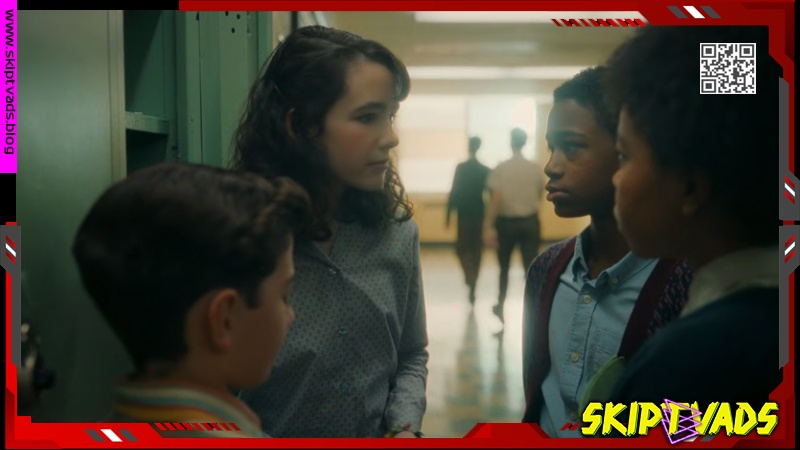
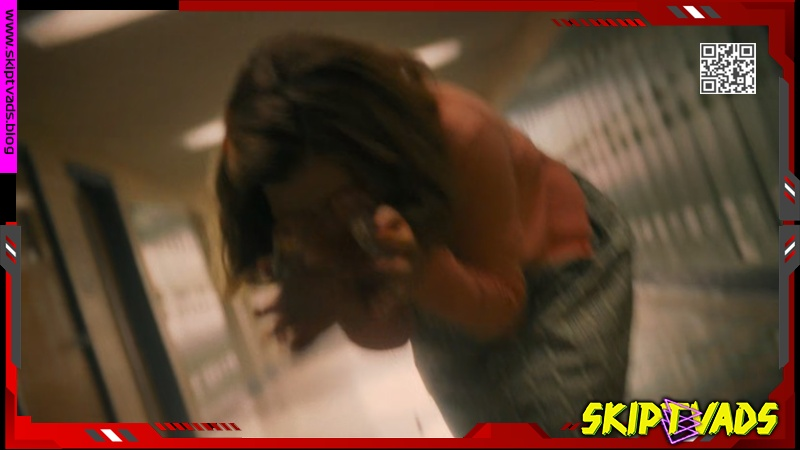
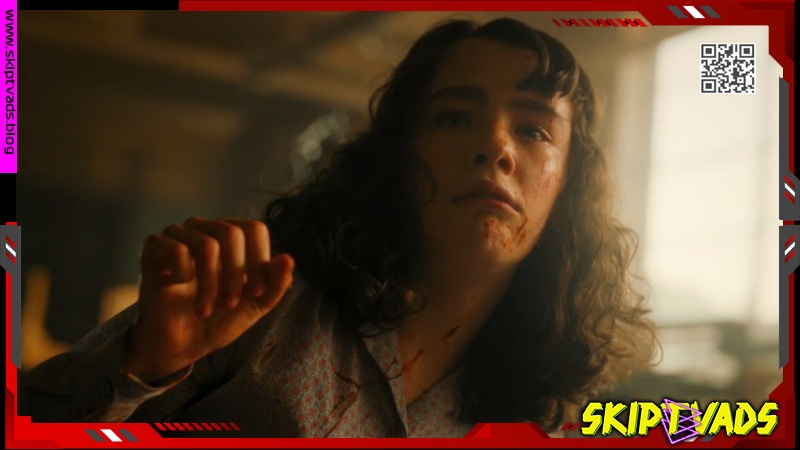
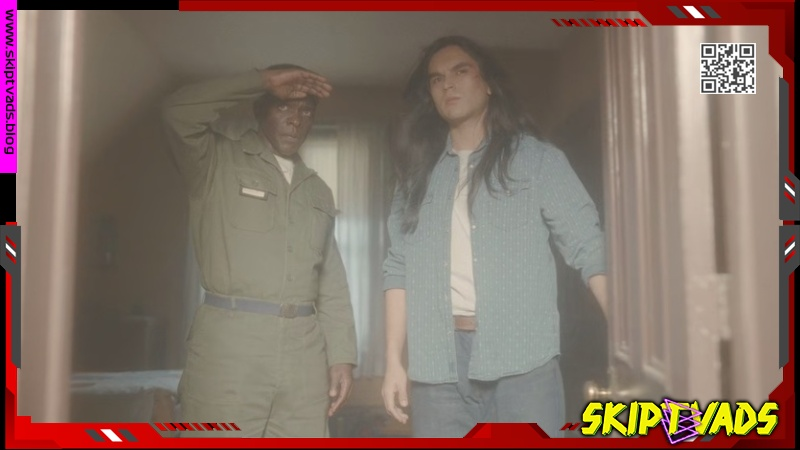
 The episode ends with Howerin getting the information he needs from Taniel about where the pillars are buried under the old Neibolt house and you just know next episode we are going back into those sewers which is going to be intense, Leroy is also starting to believe something is up after he and Will both see a red balloon floating by the river and then again outside their house later that night which freaked me out because the entity is definitively messing with them now. Will almost gets pulled into the river by the entity taking the form of his dad all burned up which is creepy as hell and also foreshadowing what probably happens later in the season with the black spot fire, Howerin and his buddies are setting up this old shed to turn it into a hangout spot and you just know that place is going to burn down by the end of the season killing a bunch of people. Charlotte is trying to help Hank by acting as his lawyer and she finds out he was having an affair with a white woman which is why he cannot give his real alibi because in 1962 that would cause even more problems for him than being accused of murder, the racial stuff in this show is handled pretty well I think it shows how messed up things were back then without being preachy about it. Overall this episode was a huge step up from the first three because it actually moved the story forward instead of just teasing things, the lore dump about the meteor and the pillars was interesting even if some of the CGI looked rough and that Marge scene is going to stick with me for a while because that was disturbing in a way that most horror does not even come close to, I am definitely hooked now and I cannot wait to see what happens when they go into the Neibolt house next episode because you know its going to get real messy real fast.




















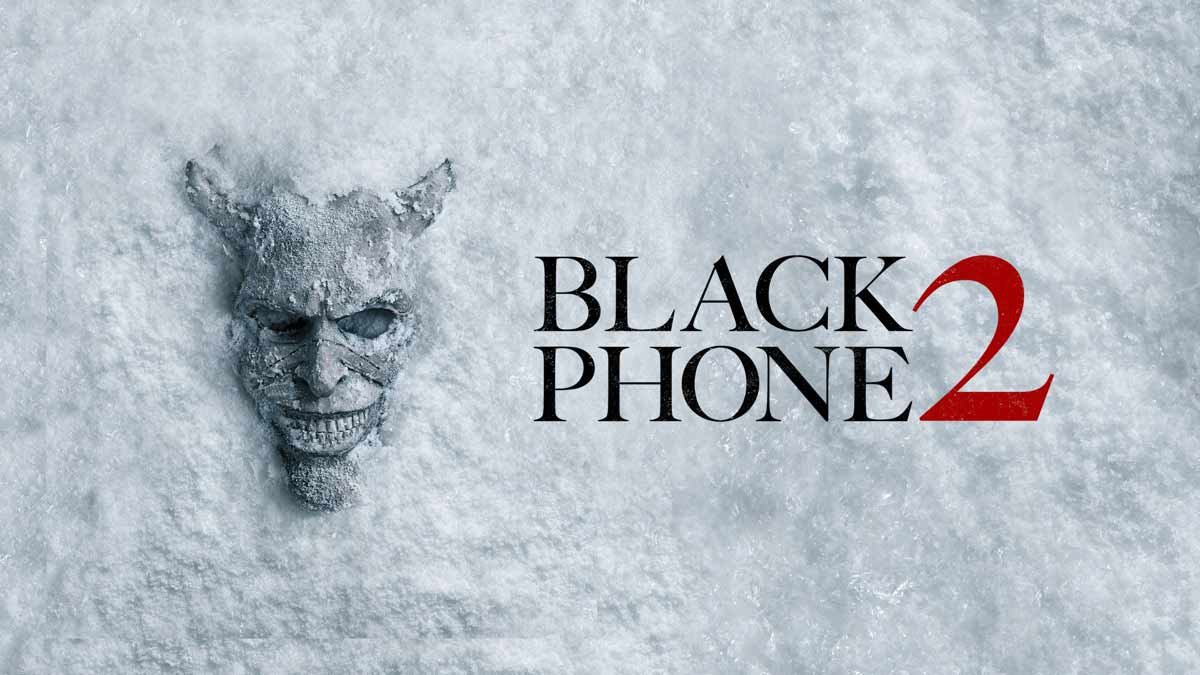











 The only way you can legally watch this film at the moment is in cinemas. Once it goes to streaming it will likely be available to rent and buy on most platforms and as far as free streaming is concerned that will definitely be on Disney+