Imagen generada por AI ChatGPT
ENGLISH VERSION (click here!)
The aftermath of an environment that paralyzes the body and mind 🧠
There are days that feel as heavy as if we were carrying a 100-kilo rock on our backs. Even when we walk, that feeling of heaviness doesn't go away; on the contrary, it seems to grow heavier and heavier.
We try to stick to our routine: we get up, make coffee, check our phones, get through the workday, and go home. Everything seems to be going “well,” but it isn’t; though it isn’t completely “bad,” either. How could you describe that? Being neither good nor bad.
If someone were to ask us, the most honest answer would be a heavy silence. It’s simply a state of being for the sake of being, an absence, a disconnection. It’s a sensation similar to being on autopilot, but significantly more pronounced; we aren’t entirely living as spectators, we’re just functioning out of sheer inertia.
The only “term” I found that adequately defines this state is “emotional hangover”: basically, it’s the psychological imprint left on us by the experience of collective trauma. This feeling is invisible to the eye, but very palpable in our minds and bodies.
When our environment becomes uncertain, tense, or threatening, the human body automatically activates its survival mechanisms. Adrenaline and cortisol keep us in a constant state of alert, anticipating a danger for which we must be prepared. When that uncertainty drags on, our nervous system breaks down and shuts down.
That disconnection occurs when the mind reaches the limit of what it can handle; that overload is what drains our energy. It’s like being anesthetized to prevent us from registering further stimuli that could further affect our emotional processing. The result is feeling absolutely nothing.
And that “feeling nothing” is the result of the deep exhaustion I mentioned at the beginning: there’s no restful sleep, there’s accumulated muscle tension, and keeping up with the daily routine becomes tedious because we do everything more slowly than usual.
It’s as if our minds were kilometers away, trying to process the weight of an atmosphere filled with anxiety. The most complex aspect of this process is the external pressure to maintain a supposed “normality”: after the crisis, people are expected to immediately resume their routine. How can one survive an unsafe environment without dying in the process?
Perhaps the answer isn’t to carry on “as if nothing had happened.” Maybe surviving means accepting that we’re still processing what happened—that there are days when our bodies still remember what our minds are trying to numb, and that this apparent lack of energy isn’t always laziness, but rather a silent way of protecting ourselves.
Ever since what happened, I've felt that—a kind of emotional “hangover.” I'm not sad all the time, but I'm not the same person I used to be either. Guilt still overwhelms me at times when I think about the number of victims and the people who lost their homes.
It’s a feeling that’s hard to explain because, from the outside, it seems like we’re carrying on with our lives, while on the inside we’re still trying to regain some sense of calm and sanity. It’s impossible not to wonder how much more a country that has been facing one challenge after another for years can endure.
Many of us are going through this feeling right now, although each of us experiences it differently. Perhaps that’s why I wanted to write these lines: to put a name to “neither feeling good nor bad,” to keep moving forward while everything remains frozen. I’m sure this feeling will be part of the process of feeling safe again, and until that moment arrives, all we can do is accept it and trust that we’ll bounce back from this setback as well.
Healing doesn't always mean stopping feeling, but rather stopping fighting against what we feel.
That's it for today's post. Warm regards to the whole community.
Hay días que pesan como si estuviésemos cargando una piedra de 100 kilos en la espalda. Aunque caminemos, esa sensación de pesadez no se va, al contrario, pareciera aumentar cada vez más.
Intentamos seguir con la rutina: nos levantamos, preparamos un café, miramos el teléfono, cumplimos con la jornada laboral y regresamos a nuestros hogares. Todo parece ir “bien”, pero no es así; aunque tampoco va “mal” completamente. ¿Cómo se podría definir eso? El no estar ni bien ni mal.
Si alguien nos pregunta, la respuesta más honesta sería un silencio denso. Simplemente es un estar por estar, una ausencia, una desconexión. Es una sensación parecida al piloto automático, pero notablemente más acentuada; no vivimos del todo en modo espectador, solo funcionamos por pura inercia.
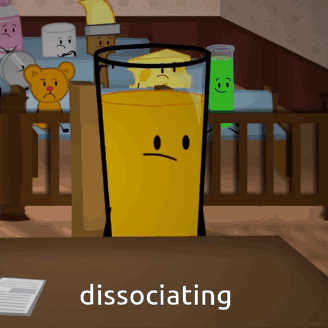
El único “término” que encontré válido para definir este estado es “Resaca Emocional”: básicamente, es la huella psicológica que nos dejó la vivencia de un trauma colectivo. Este sentir es invisible a la vista, pero muy palpable en nuestra mente y cuerpo.
Cuando nuestro entorno se vuelve incierto, tenso o amenazante, el cuerpo humano activa automáticamente sus mecanismos de supervivencia. La adrenalina y el cortisol nos mantienen en alerta permanente, anticipando un peligro para el que debemos estar preparados. Cuando esa incertidumbre se prolonga en el tiempo, nuestro sistema nervioso colapsa y se desconecta.
Esa desconexión sucede cuando la mente llega al límite de lo que puede soportar, esa sobrecarga es lo que nos apaga la energía. Es como estar anestesiado para evitar registrar mayores estímulos que puedan afectar aún más nuestro procesamiento emocional. El resultado es no sentir absolutamente nada.

Y ese no “sentir nada” es la consecuencia del cansancio pesado que mencioné al principio: no hay un sueño reparador, hay tensión muscular acumulada y seguir el ritmo diario, se vuelve tedioso porque todo lo hacemos más lento de lo habitual.
Es como si nuestra mente estuviera a kilómetros de distancia, intentando procesar la carga de un ambiente lleno de zozobra. Lo más complejo de este proceso es la exigencia externa de una supuesta “normalidad”: tras la crisis, las personas deben retomar de inmediato su rutina. ¿Cómo se puede sobrevivir a un ambiente inseguro sin morir en el intento?
Quizá la respuesta no sea sobrevivir “como si nada hubiera pasado”. Tal vez sobrevivir consista en aceptar que todavía estamos procesando lo ocurrido. Que hay días en los que el cuerpo sigue recordando aquello que la mente intenta anestesiar y que esa aparente falta de energía no siempre es flojera, sino una forma silenciosa de protegernos.

Desde lo sucedido he sentido eso, una especie de “resaca” emocional. No estoy triste todo el tiempo, pero tampoco soy la misma de antes. La culpa me sigue invadiendo por momentos al recordar la cantidad de víctimas y personas que perdieron su hogar.
Es una sensación difícil de explicar porque desde afuera pareciera que seguimos con nuestra vida, cuando por dentro todavía estamos intentando recuperar algo de calma y cordura. Resulta inevitable preguntarse cuánto más puede soportar un país que lleva años enfrentando una dificultad tras otra.
Este sentimiento lo estamos atravesando muchos, aunque cada quien lo vive de manera distinta. Tal vez por eso quise escribir estas líneas: para ponerle nombre a “no estar ni bien ni mal”, de seguir caminando mientras todo continúa congelado.
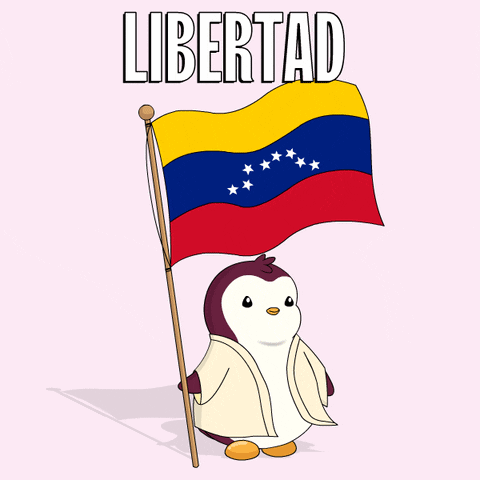
Estoy segura de que esta sensación formará parte del proceso de volver a sentirnos seguros y mientras ese momento llega, lo único que podemos hacer es aceptarlo y confiar en que de este golpe también nos levantaremos.
Sanar no siempre significa dejar de sentir, sino dejar de luchar contra lo que sentimos.
Hasta aquí el post de hoy. Me gustaría saber qué piensan en los comentarios y cómo se han sentido al respecto. Un abrazo a toda la comunidad de Holos&Lotus 🤗.

My instagram account:
@artevezo
Thanks for reading! ⭐
Creative Commons Attribution-NonCommercial-NoDerivatives 4.0


@ikasumanera Divider | DeepL Translator