Playing God (S20E17)
Airdate: 27 February 1994
Written by: Jim Trombetta & Michael Piller Directed by: David Livingstone
Running Time: 46 minutes
Matthew Piller’s decision to fundamentally reshape the format of the series by implementing three storylines per episode rather than the traditional two was a bold gamble that promised a richer, more complex narrative tapestry. While this structural experiment has predictably produced mixed results throughout the run of the show, one such example can be found in the Season 2 episode Playing God. This instalment stands as a textbook example of the structural ambition of the series colliding with the practical difficulties of execution, resulting in a story that is ambitious yet ultimately uneven.
The primary narrative begins with the arrival of Trill initiate Arjin (Geoffrey Blake), to Deep Space Nine. His purpose is to be mentored and evaluated by Jadzia Dax prior to his eventual joining. Arjin is palpably apprehensive and tense throughout his early scenes; he is well aware of Jadzia’s reputation for flunking a significant number of initiates. However, he is pleasantly surprised to discover Jadzia is strikingly laid back and free-spirited. Her lifestyle is a sharp contrast to the rigidity one might expect of a Starfleet officer, evidenced by her frequenting Quark’s bar to play tongo, singing Klingon operas, and engaging in casual sexual encounter with Trajok (Chris Nelson Norris), a humanoid wrestler. Arjin personally witnesses this hedonistic side of Jadzia when he visits her quarters. The tension peaks when Arjin confesses to Jadzia that he is not entirely certain he wants to be joined. He admits he was talked into it by his father on his deathbed rather than making the decision for himself. This revelation leads Jadzia to express doubt as to whether Arjin possesses the necessary gravitas to be joined, a crucial moment that recontextualises his struggle from simple nerves to a deeper existential crisis.
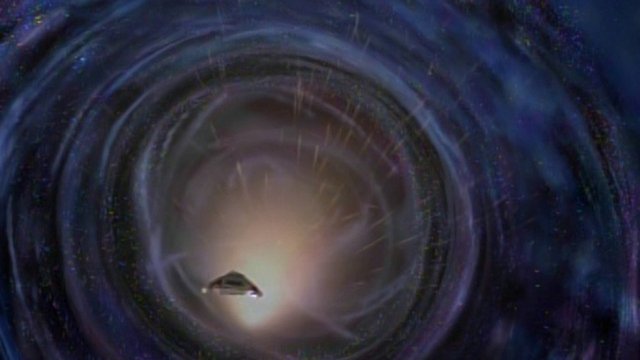
The episode’s second storyline introduces the station being infested by Cardassian voles—vermin notorious for chewing through electrical wiring and causing extensive damage. Kira Nerys and Miles O’Brien attempt to eradicate the infestation using phasers on stun. At the same time, Jadzia takes Arjin on a training run through the wormhole. On their return journey, they notice "subspace seaweed" caught in the runabout’s nacelle. O’Brien places the organic matter in a containment field, only to discover it is actually a miniature proto-universe. The situation escalates rapidly when the voles destroy the containment field; the proto-universe then begins to grow rapidly, threatening the destruction of the station. Kira pragmatically suggests the proto-universe be destroyed, but traces of life are detected within it. Commander Sisko ultimately decides to take the proto-universe through the wormhole to a safe location. During this perilous mission, contact between the proto-universe and the wormhole vertirons must be avoided. Arjin demonstrates exceptional piloting skills during this manoeuvre, impressing Jadzia and prompting her to finally state that she would consider recommending him for joining in the future.
The third storyline, arguably the least consequential of the three, revolves around Jake Sisko informing his father that he has a girlfriend named Mardan, who happens to work as a dabo girl. This revelation is met with immediate disapproval by Benjamin Sisko, setting the stage for future conflicts and highlighting the generational gap even within a father-son relationship.
Written by Jim Trombetta and Michael Piller, Playing God is a typical example of the uneven quality that plagued the series at this stage in its run. The episode juggles three distinct narratives of varying quality, and it is difficult to escape the impression that any one of them would have been significantly stronger had it been the sole focus of the instalment rather than sharing time with the others. This fragmentation prevents any single story from reaching its full potential, leaving the viewer feeling that the episode is merely a collection of scenes rather than a cohesive whole.
Of the three threads, Jadzia and Arjin’s storyline is undoubtedly the most successful. It serves to flesh out Jadzia Dax’s character, moving her beyond the one-dimensional role she struggled with in Season 1. Terry Farrell, who had previously found herself labouring under a restrictive role definition, showcases her full potential here, making the character both fascinating and undeniably likable. The episode would have been marginally more memorable had guest star Geoffrey Blake possessed more screen time to develop a stronger chemistry with Farrell, but as it stands, it remains a solid character study that adds necessary depth to the main cast.
Conversely, the proto-universe storyline is far more fascinating, driven by a compelling concept and rich ethical dilemmas. The episode places the fate of an entire universe in jeopardy, forcing the characters—and the audience—to grapple with the morality of destroying a cosmos and all life within it. This arc leaves Odo with one of the stronger lines in the episode; when the notion of destroying the proto-universe is discussed, he counters that "he doesn’t step on ants." While the subplot is ultimately resolved through technobabble, it leaves a number of questions unanswered regarding the mechanics of the wormhole and the proto-universe. It attempts to connect the two primary storylines through Arjin, yet the resolution feels somewhat rushed and relies on convenient plot devices.
The episode benefits from decent direction by David Livingston, with special effects that were quite impressive for early 1990s broadcast television, particularly the visualization of the growing proto-universe. In the end, Playing God is a middle-of-the-road instalment of Star Trek: Deep Space Nine. It is not particularly memorable in the grand scheme of the series, but it generally serves its purpose by delivering essential character exposition and providing solid entertainment to the fans. It stands as a reminder of the experimental nature of the show's early years, where the drive to innovate occasionally compromised the cohesion of the narrative.
RATING: 5/10 (++)
Blog in Croatian https://draxblog.com Blog in English https://draxreview.wordpress.com/ InLeo blog https://inleo.io/@drax.leo Substack https://draxster.substack.com
LeoDex: https://leodex.io/?ref=drax InLeo: https://inleo.io/signup?referral=drax.leo Hiveonboard: https://hiveonboard.com?ref=drax 1Inch: https://1inch.exchange/#/r/0x83823d8CCB74F828148258BB4457642124b1328e
BTC donations: 1EWxiMiP6iiG9rger3NuUSd6HByaxQWafG ETH donations: 0xB305F144323b99e6f8b1d66f5D7DE78B498C32A7 BCH donations: qpvxw0jax79lhmvlgcldkzpqanf03r9cjv8y6gtmk9


