Click here to read this post in English

Hola querido hiver.
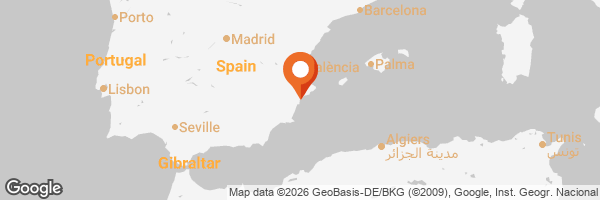
En la mañana del último día de los Hive Open Days visitamos el Museo de Arte Contemporáneo de Alicante. Lo hicimos de forma libre y nos dispersamos como un enjambre recorriendo las salas como a cada uno nos resultó más cómodo. La única restricción era el tiempo, pues si queríamos hacer todo lo que la organización había planeado había que estar en la puerta de entrada a un hora concreta. A pesar de eso logré visitar todas las salas que había abiertas a disposición del público, deteniéndome en las obras que más me llamaron la atención para traerlas al blog.


Pese a no ser una entendida en arte y menos del contemporáneo, comprobé que soy menos ignorante de lo que pensaba, pues identifiqué a unos cuantos autores solo con ver las obras. Aunque te confieso que leí el cartel en el que aparece el nombre de todos los que se incluyen en la colección permanente, así que sabía de antemano cuáles conocía. Me alegró ver que estaban ahí mis paisanos Pablo Gargallo y Pablo Serrano acompañados por Antonio Saura y José Manuel Viola.


En la primera planta encontramos la Colección Arte Siglo XX. En ella se exponen las obras donadas por Eusebio Sempere, quien puso la semilla de este museo que se considera uno de los primeros de este tipo en España.
La mayoría de las obras que se exponen son cuadros pero también hay esculturas. En algunos casos la mezcla de materiales te hace dudar si estás frente a lo uno o lo otro.


Entre las obras se encuentra espacio para el hiperrealismo, la mezcla de elementos clásicos con otros modernos, o la crítica social.


Una parte que también me gustó especialmente fue la que contenía obras gráficas en las que la geometría crea esquemas cromáticos y patrones infinitos.


La colección que más me llamó la atención estéticamente fue la Colección Fundación Mediterráneo que se ubica en la segunda planta. Las piezas que mezclan conceptos clásicos como las Meninas con la modernidad de Picasso me gustaron mucho. También destacaría las obras del Equipo Crónica que convierten en arte objetos cotidianos como una caja de lápices de colores o logotipos de marcas comerciales y que tienen identidad propia.


Si tuviera que elegir una sola obra de todo el museo creo que mi elección sería el dibujo de Albert Porta. Me recordó a los que hacía Santiago Ramón y Cajal de las neuronas y sus conexiones sinápticas.


La planta más elevada alberga la Colección Eusebio Sempere. En una sala tenían una pequeña exposición sobre su trabajo en la serigrafía y allí cacé a @alessandrawhite en una pose que recuerda a una bailarina. 😄


Lo que allí se expone me dio juego para hacer fotografías buscando patrones geométricos y ampliando las obras más allá de lo material con las sombras que proyectan o el brillo que surgen con las luces.


Son obras tridimensionales que cambian por completo según tu punto de vista. Cada paso que das a su alrededor es una imagen diferente del mismo objeto.


Como final te dejo esta pieza que cuelga del techo y en la que hice tres perspectivas. Casi me tumbo en el suelo para lograr la última pero la vigilante de la sala me miraba raro y tuve que abortar la operación, jaja.
Diremos como excusa que el tiempo de visita se agotó...
Hasta la próxima publicación. Mientras tanto, ¡cuídate!

Herramientas: Cámara iPhone 13 Pro, editor de fotos Mac. Mis publicaciones en Worldmappin pinchando aquí Si te gusta lo que publico, únete a mi Fanbase pinchando aquí

©️Copyright 2026 Paloma Peña Pérez. Todos los derechos reservados.

Hi, dear hiver.
On the morning of the final day of the Hive Open Days, we visited the Alicante Museum of Contemporary Art. We explored at our own pace, spreading out like a swarm and wandering through the galleries as each of us saw fit. The only restriction was time, as if we wanted to see everything the organisers had planned, we had to be at the entrance at a specific time. Despite this, I managed to visit all the galleries that were open to the public, pausing at the works that caught my eye the most so I could feature them on the blog.
Although I’m no art expert – and certainly not when it comes to contemporary art – I realised I’m less clueless than I thought, as I recognised a few artists just by looking at their works. I must admit, though, that I did read the sign listing the names of everyone included in the permanent collection, so I knew beforehand which ones I recognised. I was delighted to see that my fellow countrymen Pablo Gargallo and Pablo Serrano were there, alongside Antonio Saura and José Manuel Viola.
On the first floor is the 20th-Century Art Collection. It features works donated by Eusebio Sempere, who laid the foundations for this museum, which is considered one of the first of its kind in Spain.
Most of the works on display are paintings, but there are also sculptures. In some cases, the mix of materials makes you wonder whether you are looking at one or the other.
The works include examples of hyperrealism, the blending of classical and modern elements, and social commentary.
Another section I particularly liked was the one featuring graphic works in which geometry creates colour schemes and infinite patterns.
The collection that most caught my eye aesthetically was the Fundación Mediterráneo Collection, which is on the second floor. I really liked the pieces that blend classical concepts, such as Las Meninas, with the modernity of Picasso. I would also highlight the works by Equipo Crónica, which transform everyday objects – such as a box of coloured pencils or commercial brand logos – into art, giving them their own distinct identity.
If I had to choose just one piece from the whole museum, I think my choice would be Albert Porta’s drawing. It reminded me of the drawings Santiago Ramón y Cajal used to make of neurons and their synaptic connections.
The top floor houses the Eusebio Sempere Collection. In one room there was a small exhibition of his screen-printing work, and there I caught @alessandrawhite in a pose reminiscent of a ballerina. 😄
What was on display there gave me the opportunity to take photographs, looking for geometric patterns and extending the works beyond the physical through the shadows they cast or the glow created by the lights.
These are three-dimensional works that look completely different depending on your viewpoint. Every step you take around them reveals a different image of the same object.
To finish off, here’s this piece hanging from the ceiling, which I photographed from three different angles. I almost lay down on the floor to get the last shot, but the gallery attendant was giving me a strange look so I had to call off the operation, haha.
We’ll just say that our visiting time ran out...
Until the next post. In the meantime, take care!
Tools: iPhone 13 Pro camera, Mac photo editor. Translated with DeepL My publications in Worldmappin by clicking here If you like my content, join my Fanbase clicking here
©️Copyright 2026 Paloma Peña Pérez. All rights reserved.