Longform reviews of films, TV, anime, books, and audiobooks, written by the scrobble.life community and published to the Hive blockchain, so each one is owned by its author and can earn rewards from readers. 51,234 reviews and counting.
Amo mi casa maestra psicopedagoga vendedora reparadora acuariana madre de tres. Y que la vida los trate amablemente a todos.that life treats them kindly to all
Esta semana no he tenido una película o serie que me deje una buena impresión, de esas especiales, de las que terminan bien. Hasta ahora la única que me llamo la atención tuvo unos excelentes artistas y por eso volvieron la historia muy llamativa y de comportamiento muy humano.
Nos han dejado un final que cada quien le pondrá su punto final. Para algunos será un buen final pero para otros les quedará la duda si lo encuentran.
Es una película estadounidense de mucho suspenso del 2013. Las escenas fuertes se insinúan pero no se muestran algunas tan directamente, pero si nos dejan en mucho suspenso.
This week I haven't seen a movie or series that really stood out, one of those special ones that have a satisfying ending. So far, the only one that caught my attention had excellent actors, which made the story very compelling and portrayed very human characters.
They left us with an ending that everyone will interpret in their own way. For some, it will be a satisfying conclusion, but for others, it will leave them wondering if they can find the right ending.
It's a 2013 American thriller. The intense scenes are hinted at, but some aren't shown explicitly, leaving us in suspense.
La película nos cuenta el secuestro de dos niñas en Pensilvania en el día de acción de gracias donde dos familias se reúnen para celebrarlo. Comienza una búsqueda del culpable por parte de la policía. Un vehículo visto por el hermano de una de las niñas cerca de la casa, lleva a la policía a la detención de un sospechoso.
El sospechoso en liberado ya que no hay nada que indique que las niñas estuvieron allí. El detective a cargo del caso, se da cuenta que el coeficiente intelectual del sospechoso le impide ser el autor del secuestro. Llega el momento que el padre de una de las niñas decide tomar la justicia por su mano torturándolo hasta que confiese. Se van descubriendo o enlazando con otros casos que tampoco han sido resueltos. Hay muchos niños desaparecidos en años atrás.
Yo particularmente observo las diferentes reacciones que puede tener un padre y la familia, ante el secuestro o la desaparición de un hijo, algunos no quieren saber nada, otros se sienten culpables y otros se presionan mucho para encontrarlo. La verdad es que nadie sabe cual va a ser su reacción en estas circunstancias.
La película narra el secuestro de dos niñas en Pensilvania y la posterior búsqueda del culpable por parte de la policía. Tras la detención y posterior liberación de un joven sospechoso, el padre de una de las niñas decide tomar la justicia por su mano.
The film tells the story of the kidnapping of two girls in Pennsylvania on Thanksgiving Day, where two families are gathered to celebrate. A police search for the culprit begins. A vehicle seen by the brother of one of the girls near the house leads the police to the arrest of a suspect.
The suspect is released since there is no evidence that the girls were there. The detective in charge of the case realizes that the suspect's IQ makes him unlikely to be the perpetrator of the kidnapping. The moment arrives when the father of one of the girls decides to take justice into his own hands, torturing him until he confesses. The case is uncovered or linked to other unsolved cases. There are many missing children from years past.
I personally observe the different reactions that a parent and family can have to the kidnapping or disappearance of a child; some want nothing to do with it, others feel guilty, and still others put immense pressure on themselves to find them. The truth is, no one knows how they will react in these circumstances.
The film tells the story of the kidnapping of two girls in Pennsylvania and the subsequent police search for the culprit. After the arrest and later release of a young suspect, the father of one of the girls decides to take justice into his own hands.
Un padre Keller Dover se enfrenta a la peor de las pesadillas: Anna, su hija de seis años, ha desaparecido con su amiga Joy. Las horas y los días van pasando, ha leído que las probabilidades de encontrarlas con vida se van acortando.
Es un padre que reacciona desesperado y decide ocuparse personalmente de encontrar a su hija y su amiga. Pero, ¿hasta dónde está dispuesto una persona, en este caso un padre para averiguar quien se llevo a su hija y donde la tiene?
La película un poco lenta al principio comienza a ir tomando ritmo mientras te va acumulando varias historias anteriores, que al final se enlazan perfectamente. No te lo dice simplemente te lo va mostrando. Tienes que estar atento a los detalles que te va ensartando en la historia.
Y como te dije al principio y si eres como yo que siempre quiero saber de que trata la película y si termina bien, no sabría que tanto decirte.
La película con su suspenso y saltos de tiempo; me gusto. Nos dejaron el último capítulo con alguna duda, para que el espectador pensara a su gusto, si lo encontraron o no.
A father, Keller Dover, faces his worst nightmare: his six-year-old daughter, Anna, has disappeared along with her friend Joy. As the hours and days pass, he's read that the chances of finding them alive are dwindling.
As a desperate father, he decides to personally take matters into his own hands and find his daughter and her friend. But how far is a person, in this case a father, willing to go to find out who took his daughter and where she is?
The film, a bit slow at first, gradually picks up pace as it weaves together several previous storylines, which ultimately intertwine perfectly. It doesn't tell you everything; it simply shows you. You have to pay attention to the details it subtly weaves into the narrative.
And as I said at the beginning, if you're like me and always want to know what the movie is about and if it has a happy ending, I'm not sure what to tell you.
I enjoyed the film, with its suspense and time jumps. They left us with a cliffhanger at the end, allowing the viewer to decide for themselves whether they found them or not.
Fotos con fuente identificadas
Traducido con google (versión gratuita)
Photos with source identified
Translated with google (free version)
Written by: Dennis Lehane
Directed by: Anthony Hemingway
Running Time: 58 minutes
Throughout its five-season odyssey through the decaying arteries of Baltimore, The Wire masterfully presented audiences with a rogues' gallery of flamboyant, larger-than-life characters whose audacious schemes often seemed to defy the very laws of physics. From Stringer Bell’s coldly analytical drug empire to Proposition Joe’s velvet-gloved diplomacy, David Simon and his writers crafted narratives where ingenuity, however morally bankrupt, frequently appeared to triumph over systemic inertia. Yet, crucially, Simon’s work was never escapist fantasy; it was a grimly anchored chronicle of urban reality, where the immutable laws of gravity – societal, institutional, and ultimately mortal – inevitably asserted themselves. Schemes unravelled, empires crumbled, and even the most charismatic figures were reduced to the cold calculus of cause and effect, their downfalls often bathed not in glory, but in ignominy and bureaucratic indifference. It is precisely within this unforgiving framework that the series’ most iconic and arguably beloved character meets his end in Season 5’s episode, Clarifications, a moment that crystallises the show’s central, devastating thesis: no legend, however potent, transcends the brutal reality of the street.
Written by the crime novelist Dennis Lehane, a key recruit to Simon’s stable of literary heavyweights, Clarifications achieves a rare and profound memorability through the meticulously unglamorous demise of Omar Little. Omar, the stick-up artist who haunted the corners with his whistle and shotgun, had evolved far beyond a mere criminal archetype. He became a street legend, a near-mythical figure whose selective targeting of the drug trade’s perpetrators fostered a potent fantasy among viewers: the hope that this masked avenger, operating outside the law’s impotent grasp, could deliver the karmic justice the Baltimore Police Department consistently failed to provide. Lehane, steeped in the traditions of noir where myth meets harsh reality, was the perfect architect for dismantling this carefully constructed icon.
Omar’s legendary status, meticulously built over four seasons, rested not only on his audacious stick-ups against seemingly untouchable drug lords like the Barksdales and Stanfield, but equally on his seemingly supernatural ability to cheat death. The episode opens with him physically diminished – limping from the recent, brutal ambush orchestrated by Marlo Stanfield’s crew – and mentally frayed, his obsessive quest for a street duel with Marlo bordering on self-destructive folly. Yet, even in this compromised state, his residual authority and charisma remain potent. He effortlessly intimidates Marlo’s corner boys into surrendering their stashes, which he then hurls into the sewers, a final, futile act of symbolic defiance. This moment underscores the lingering power of the Omar myth; the fear he instils is palpable, a testament to the legend he forged. But it is also the prelude to the inevitable. The laws of gravity, which Omar had danced with for so long, are finally ready to reclaim him.
His end, when it comes, is profoundly anti-climactic, stripping away every vestige of cinematic heroism. There is no dramatic showdown, no final stand against Marlo’s elite enforcers. Instead, Omar is cut off mid-sentence during a mundane purchase of cigarettes in a corner store, felled by a single, surprise shot to the back of the head. The revelation of the shooter delivers the episode’s most devastating blow to the audience’s expectations and Omar’s legend. It is not the cold precision of Brother Mouzone, nor the disciplined lethality of Snoop or Chris Partlow. It is Kenard, the pre-teen corner kid Omar had repeatedly dismissed as insignificant, a mere child not worthy of his notice. Kenard’s wide-eyed, terrified expression in the aftermath speaks volumes – this was not a calculated hit ordered by Marlo, but a panicked, impulsive grab for street cred, a desperate attempt by the smallest fish to claim a piece of the largest legend. Marlo’s subsequent smile confirms the ultimate irony: Omar’s death is not a strategic victory for the Stanfield organisation, but an absurd accident that nonetheless serves their purpose. Snoop and Chris’s palpable shame at being outmanoeuvred by a child highlights the brutal hierarchy of the street, where even perceived weakness invites annihilation. Crucially, Omar’s death exposes the hollowness of his legend beyond the immediate corners. Beyond his grieving friend Bunk Moreland, the police barely register his passing. The Baltimore Sun news desk ignores it entirely, a stark commentary on whose lives matter in the city’s narrative. The final, chilling image – Omar’s body mistakenly tagged and stored alongside that of an unidentified white man in the morgue – is Simon’s most potent visual metaphor for institutional indifference. The system erases Omar, reducing his complex life and legend to a bureaucratic error, a misfiled corpse. His myth dies not with a bang, but with a shrug and a misplaced tag.
This inexorable pull of gravity is felt even by those operating within the system, as McNulty’s arc poignantly demonstrates. His initial elation at the runaway success of his fake serial killer scheme curdles rapidly into entrapment. Detective Barlow, sensing McNulty’s vulnerability, ruthlessly blackmails him into diverting resources for personal gain. Trapped and desperate, McNulty is forced to confess his monstrous fabrication to an expanding circle: Carver, whose reluctant aid in Lester Freamon’s surveillance of Marlo is tinged with disgust; Kima Greggs, whose professional integrity and personal respect for McNulty are shattered by his betrayal of everything they stood for; and finally Beadie Russell, whose fear extends beyond McNulty’s potential imprisonment to the ruin of her own life and family. Each confession chips away at McNulty’s remaining credibility and isolates him further, proving that even within the flawed machinery of the police department, crossing certain lines carries devastating, cascading consequences. His "success" is the prelude to his utter downfall.
Amidst this pervasive descent, glimmers of procedural competence and quiet resilience offer fleeting, hard-won hope. Lester Freamon, the show’s moral and intellectual anchor, inches closer to cracking Marlo’s empire. This breakthrough comes through the meticulous work of Detective Snydor, who deciphers Marlo’s coded communication – the analogue clock images in text messages corresponding to map locations. Simultaneously, Freamon doggedly pursues the corruption case against the slippery State Senator Clay Davis, despite Davis’s state court acquittal. Freamon’s bluff to Davis – suggesting federal charges remain possible and dangling cooperation against higher-ups – is a masterclass in leveraging bureaucratic ambiguity, a testament to the quiet, persistent power of doing the job properly, even when the system seems rigged. It’s a stark contrast to McNulty’s reckless shortcuts.
The episode also charts the final corrosion of political idealism through Mayor Tommy Carcetti. Faced with an unexpected primary challenge in Prince George’s County, Carcetti is forced into cynical concessions: promising favours to Congressman Upsham (Robert M. McKay) at Baltimore’s expense, accepting Nareese Campbell as his mayoral successor, and pandering to Clay Davis. His initial, genuine rhetoric about reform evaporates under the pressure of the political machine. Carcetti actively embraces the very patronage and backroom deals he once decried, transforming from a potential reformer into a creature wholly shaped by the system he sought to transcend.
While Clarifications deepens Baltimore’s encroaching darkness, moments of dark humour provide necessary, if jarring, respite. McNulty’s horrified realisation, while listening to FBI profilers at Quantico dissect the fictional killer’s psyche, that they are describing him – the narcissistic, rule-breaking cop with a god complex – is pitch-perfect satire, highlighting the terrifying ease with which fiction can mirror dangerous reality. Lehane’s attempt at satirising the publicity-hungry FBI Deputy Director Arthur Tolan (John Inscoe), however, feels somewhat forced and tonally dissonant within the episode’s otherwise grounded tragedy, a minor misstep in an otherwise masterful script.
The Baltimore Sun storyline, involving Scott Templeton’s embelishment of Iraq War veteran's story and Haynes’s confrontation, remains, as noted, largely extraneous. It feels disconnected from the visceral street-level and police narratives, its stakes seeming abstract compared to the life-and-death struggles elsewhere. It serves primarily as another example of institutional decay, but lacks the emotional weight or narrative integration of the other threads.
Yet, it is the quiet moments of characters simply doing the right thing, and finding fleeting reward, that truly illuminate the episode’s profound humanity. Bunk Moreland, adhering strictly to old-school, by-the-book police work, finally connects Chris Partlow to the murder of Devar. It’s a small, professional victory, but a crucial one, affirming the value of integrity even in a broken system. More powerfully, we see Dukie, one of the most tragic victim of the school system’s neglect, finding an honest job as an araber’s assistant. His encounter with Poot Carr, another survivor who has traded the corner’s false glamour for the quiet dignity of a low-wage job at a sporting goods store, is profoundly moving. Their brief, unspoken understanding – a shared history acknowledged without judgment – offers a fragile, realistic hope. It’s not a grand redemption, but a testament to resilience, a quiet assertion of life persisting against overwhelming odds. In the shadow of Omar’s ignominious end and McNulty’s unraveling, these moments are the essential counterpoint, proving that while the system may grind individuals down, the human spirit, in its quiet, persistent way, can still find a foothold, however small, on the edge of the abyss.
[Source](https://screenrant.com)
The Conjuring 2 is one of those rare things where the sequel does not suck ass, which honestly surprised the hell out because most horror sequels just fall flat and become cash grabs. After that Annabelle disaster I was not expecting much from this whole universe thing but James Wan came back and reminded everyone how to actually do a proper scary movie, the man knows what he is doing behind the camera and it shows in every single scene, yesterday I put out the review for "The Devil Made Me Do It" that is not directed by Wan and you can notice the difference. This time Ed and Lorraine Warren head to England to deal with the Enfield case which involves a family getting terrorized by some spirit that latches onto this little girl Janet, just as the first one its a similar concept and even though it still works great, it goes straight into building tension from the start, just nonstop anxiety, one creepy moment after another without giving you much time to breathe. The scares here are not just cheap jump scares where something pops out of nowhere, the movie shows the ghost face right in front giving it body and character from the start not just an invisible entity opening doors, this gives the brain a second to process what is happening before it actually hits, that is what makes it feel organic and way more effective. The young actress playing Janet did a damn good job carrying a lot of the weight, if she had been bad the whole thing would have fallen apart but she nailed it, the second part gets into the investigation stuff where the movie plays with the idea of whether this is all a show or not, kids lie all the time so that doubt adds another layer to it. James Wan uses sounds from the time where the movie develops like the TV or the squeaky couch, its so immersive that even familiar situations scary again, he makes the whole thing work when it could have easily been another forgettable horror movie because again its the same concept as the first one just told different under different conditions, work out better than I expected, many sequels just sux because they cant do better than the first one.
[Source](https://tinyurl.com/5n8nb2fw)
The Hodgson family situation is what makes this work way better than most possession movies, because you actually give a shit about these people, Peggy is a single mom who hasnt received child support in three months and she is barely holding things together with four kids in a house that is literally falling apart around them. The movie does such a good job showing how broke they are without making it feel preachy or over done, Billy always asking for cookies but mom cant afford them and you can see how much that eats at her, she wants to spoil her kids but she cant even keep the lights on half the time. This isnt some perfect happy family getting torn apart by evil like in the first movie, these people are already struggling before any of this supernatural crap even starts happening, which makes it feel so much worse when things go sideways and when that old man spirit Bill Wilkins starts possessing Janet and throwing furniture around the family cant just pack up and leave because they got nowhere else to go. The neighbors see whats happening, the cops show up and actually witness the paranormal activity which never happens in these movies, usually the ghost hides when authority figures arrive but not this time, Bill Wilkins does not give a damn who shows up, he is making his presence known to everybody. Peggy is doing her best to protect her kids while also dealing with people thinking she is crazy or that her daughter is faking everything for attention, Madison Wolfe who plays Janet really sells the exhaustion, the pain and fear of being terrorized night after night by the end of the movie she looks like she has aged many years from all the stress and trauma, and its one of the best child performances I have seen in the franchise.
[Source](https://tinyurl.com/5n8nb2fw)
[Source](https://tinyurl.com/5n8nb2fw)
On this sequel you can tell James Wan had access to way more money to work with compared to the first movie, I would assume this based on the camera work that is insane with all these long takes that glide through rooms and hallways building up tension without needing to cut away every two seconds. The way he uses shadows and lighting to hide things in plain sight is brilliant, just like when Bill appears on the couch in plain day light, there are moments where you swear you see something in the background but when you look closer its just a shadow, then other times its actually the demon and it messes with your head. The opening sequence with the Amityville case is intense as hell even though it has nothing to do with the main story, Lorraine gets pulled into a vision where she experiences the murders, and sees this demonic nun Valak who threatens to kill Ed if they dont stop investigating paranormal cases and finding out that was the vision that messed Lorraine up so bad in the first movie was a nice touch. The chemistry between Patrick Wilson and Vera Farmiga is still incredible, you believe they are a couple who love each other and the scene where ed plays guitar and sings an Elvis song for the Hodgson family is probably the most emotional moment in any of these movies, its such a small quiet moment but it shows who Ed really is as a person and why Lorraine needs him so much. They could have easily just made the Warrens these ghost hunting badasses without any real meaning but instead they feel like real people with real emotions and real fears about losing each other, although I have also complain in the past how this turns into a weakness for the franchise as most cases get solve by the love they have for each other or their families, then transfers to the victims in their cases too, which is what separates these movies from all the other generic horror movies but then again this is entertainment, everybody has a different taste.
[Source](https://tinyurl.com/5n8nb2fw)
[Source](https://tinyurl.com/5n8nb2fw)
The demon nun Valak is creepy as hell even if I wish they had stuck with the original demon design that looked way cooler but I get why they went with the nun, because it works as a mockery of Lorraines faith and religion which makes the scares more complex at the same as it ties together with the Nun movies within the Conjuring Universe. Valak knows exactly how to mess with Lorraine by taking the form of something holy and twisting it into something evil, the painting scene where ed unknowingly paints the nuns face is very creepy because it shows the demon can get inside his head too without even letting him realize it and the name reveal thing where Valak hides its name throughout their house in random places is clever. Bill Wilkins himself is an interesting character because for most of the movie you think he is the main threat, he is the one possessing Janet and scaring the family, but then you find out he is just a pawn being used by Valak to keep the Warrens away and the old man just wants to see his family but he is trapped and cant move on. When Janet starts speaking in that deep voice as Bill it sounds nothing like an eleven year old girl could produce, even the skeptics in the movie cant explain how she is pulling that off without some kind of supernatural force being involved and the movie does a great job keeping that doubt alive, there are moments where it looks like Janet might be faking, but they keep questioning how it can be proof she is faking it because if they cant prove its real then the church wont help them.
The scares in this movie work because James Wan understands timing and atmosphere better than most horror directors that have work on the franchise, he doesnt rely on loud noises and things jumping at the camera every five minutes, the buildup is where the real fear comes from, getting to now better the characters specially those affected and tormented by the demon, there is something really special this time and is that you end up caring for Bill too even though the old man is a bastard when ever he wants to. That scene where Janet is home sick and the tv keeps changing channels by itself feels heaving within the atmosphere with rain outside and the house feeling empty and isolating, you know something bad is about to happen, but Wan takes his time letting the tension build until Bill Wilkins finally shows himself in the reflection of the tv screen. The crooked man stuff is the only part that feels unnecessary and out of place but still works so good mainly because of the lighting and the isolation of the place, it shows up twice to scare the little brother Billy, but it has nothing to do with the actual story, does feels like it was added just because they had the budget for it, that weird effect where the dog transforms into the crooked man looks cool too even though the movie is not focus on it. The climax gets a little too over the top with all the special effects, after spending two hours building this slow burn horror atmosphere it suddenly turns into this big action scene with Valak roaring and Ed almost getting him fall on a giant spike, a vision Lorraine had but its a classic cliche that the worst vision usually never end up happening, good vs evil at the end of the day. It was still intense and well done but it does feel like a downshift from the rest of the movie. Lorraine figuring out Valaks name and using it to banish the demon back to hell is satisfying even if the execution is a bit corny, the way she yells the name while Ed is dangling out a window is pure exorcist energy without having to just copy paste it, I mean we have seen almost everything about a possession from Hollywood movies so I doubt now days there is anything they can come up with that surprise anyone, as I mention its a about the build up and getting to know the characters that does the heavy lifting. The movie wraps up with everything being fine which feels a little too clean considering how brutal the haunting was, overall this is a solid 8 out of 10 for me, its not quite as tight as the first Conjuring but it does more with character development and emotional connection, which makes up for the slightly weaker pacing in the middle section and I would definitely recommend it to anyone who enjoyed the first one or just wants to see a well made horror movie that actually tries to first make you care about the characters and then try to be scary.
If I had to pick one movie that just feels sweet from the beginning to end, I have varieties I can choose from but today it would be Paddington 2. Honestly, this movie makes me feel like I’m getting a warm hug every time I watch it and I never get tired of watching it over and over again. It’s one of those rare films that’s not only funny and beautifully made, but also genuinely kind. That’s not something I can say about many movies these days.
I chose Paddington 2 because it’s impossible not to smile when you watch it, I almost cracked my rib from laughing while watching it. The main character, Paddington Bear, is this polite little bear from Peru who now lives with the Brown family in London. He loves marmalade sandwiches and tries his absolute best to be good to everyone. He wants to buy a special pop-up book for his Aunt Lucy’s birthday, but he gets framed for stealing it and ends up in prison. And this is where i think it would get dark, but somehow, the movie stays bright, hopeful, and hilarious. Paddington doesn’t let anger or fear change him. Instead, he brings joy to the people around him and even the grumpy prisoners finally changed and he eventually start baking and decorating thanks to Paddington. It’s adorable and honestly inspiring.
What makes this movie so sweet to me is, you know when something is not fake or overly sentimental or trying to manipulate your emotions. It’s just genuinely good. Paddington believes in seeing the best in everyone, and it makes you think about how powerful that kind of attitude can be. I admire that about him so much, the kindness he shows feels so real, like the kind of thing the world could use more of. If I could have one thing from this movie happen in real life, it would be for people to act more like Paddington. Imagine how much nicer everyday life would be if everyone took a little extra time to be patient, polite and caring.
I usually enjoy a good action or thriller movie now and then, but some times, I honestly prefer sweet movies like this. They just make me feel good instead of stressed out. When I watch Paddington 2, I don’t have to brace myself for violence or heartbreak I can just relax and enjoy something wholesome. It’s the kind of movie that reminds me it’s okay to be soft, to be kind, and to believe that goodness can still win. Paddington 2 might seem like a “kids’ movie,” but to me, it’s one of the sweetest and most hopeful films ever made.
Welcome to my blog. Here you will find a little bit of everything. From tutorials, recycling and recipes to poems and personal experiences. Life is just one 🥰.
I want to start this review with this thought💭: Sometimes, life disguises itself as comedy to speak to us about the deepest pain.
There are movies that you don't just watch, but feel. A Man Called Otto was one of those for me. When I was looking for something to watch on Netflix, this movie starring Tom Hanks, an actor I deeply admire in every way, appeared in the program guide, so I said, “I'm going to watch it, it must be good.”
And yes, it's a light comedy, but it's also a kind of tragicomedy. This movie fascinated me, made me laugh, and made me cry. Above all, it made me think.
📅 Release year: 2022
🎬 Main cast:
Tom Hanks: Otto Anderson.
Truman Hanks: Otto Anderson, young.
Mariana Treviño: Marisol.
Rachel Keller: Sonya.
Espanish version
Quiero comenzar esta reseña, con este pensamiento💭: A veces, la vida se disfraza de comedia para hablarnos del dolor más profundo.
Hay películas que no solo se ven, sino que se sienten. Un Hombre Llamado Otto fue una de esas para mí. Cuando estaba buscando qué ver en Netflix y me apareció en la grilla de programación esta película protagonizada por Tom Hanks, actor al que admiro profundamente desde todo punto de vista, así que dije "voy a verla, debe ser buena".
Y sí, es una comedia ligera, pero como una especie de tragicomedia. Esta película me fascinó, me hizo reír y me hizo llorar. Sobre todo, me hizo reflexionar.
This story achieves something very special: it makes us laugh while talking about grief, loneliness, and the need to reconnect with life.
Otto Anderson is a widower, meticulous, structured, grumpy, and seemingly incapable of feeling joy. In short, he is bitter. From the outset, his obsession with enforcing neighborhood rules and his sharp attitude provoke laughter. But behind that bitterness lies a deep pain, a sadness that leads him to attempt to end his life. And although it sounds harsh, those failed attempts are narrated with such well-crafted irony that they made me laugh. Life, with its cruel but wise sense of humor, interrupts him again and again.
The arrival of Marisol, a pregnant Mexican neighbor, played by the sweet and funny Mariana Treviño from 100 Days to Fall in Love, marks an important change in Otto's life. She is not intimidated by Otto's character. She confronts him, challenges him, invites him, includes him. And she does so with a mixture of tenderness, humor, and disarming energy. Her relationship with Otto becomes the soul of the film. I laughed at their dialogues, their gestures, the way she gradually brings color back into the life of this sad and gray man.
Espanish version
Esta historia logra algo muy especial: nos hace reír mientras nos habla del duelo, la soledad y la necesidad de volver a conectar con la vida.
Otto Anderson es un hombre viudo, meticuloso, estructurado, malhumorado y aparentemente incapaz de sentir alegría. En pocas palabras, un amargado. Desde el primer momento, su obsesión por hacer que las reglas se cumplan en el vecindario y su actitud cortante provocan risas. Pero detrás de esa amargura hay un dolor profundo, una tristeza que lo lleva a intentar acabar con su vida. Y aunque suene duro, esos intentos fallidos están narrados con una ironía tan bien lograda que me hicieron reír. La vida, con su sentido del humor cruel, pero sabio, se encarga de interrumpirlo una y otra vez.
La llegada de Marisol, una vecina mexicana embarazada, interpretada por la dulce y divertida Mariana Treviño, de 100 Días Para Enamorarnos, marca un cambio importante en la vida de Otto. Ella no se intimida por el carácter de Otto. Lo enfrenta, lo reta, lo invita, lo incluye. Y lo hace con una mezcla de ternura, humor y una energía que desarma. Su relación con Otto se convierte en el alma de la película. Me reí con sus diálogos, con sus gestos, con la forma en que poco a poco le devuelve el color a la vida de este hombre triste y gris.
But I also cried. Several times. Over Otto's memories, over the love story he shared with his wife Sonya, over the moments when silence speaks louder than words. The film doesn't need big twists to move us. It does so with simple gestures, with glances, with unexpected acts of kindness. It reminds us that we all carry wounds, that sometimes all it takes is for someone to knock on our door for us to begin to heal.
A Man Called Otto is a film about second chances, about the value of community, and about how love—in all its forms—can save us. It's a story that made me reflect on the legacy we leave behind, on the impact we have on those around us, even when we think we are no longer important.
I recommend it wholeheartedly. Because sometimes what we need is not a perfect story, but one that embraces us while saying, “Not yet. You still have something to give.”
Espanish version
Pero también lloré. Varias veces. Con los recuerdos de Otto, con la historia de amor que tuvo con su esposa Sonya, con los momentos en que el silencio pesa más que las palabras. La película no necesita grandes giros para conmover. Lo hace con gestos simples, con miradas, con actos de bondad inesperados. Nos recuerda que todos llevamos heridas, que a veces basta con que alguien nos toque la puerta para que empecemos a sanar.
Un Hombre Llamado Otto es una película sobre segundas oportunidades, sobre el valor de la comunidad y sobre cómo el amor —en todas sus formas— puede salvarnos. Es una historia que me hizo reflexionar sobre el legado que dejamos, sobre el impacto que tenemos en quienes nos rodean, incluso cuando creemos que ya no somos importantes.
La recomiendo con el corazón. Porque, a veces, lo que necesitamos no es una historia perfecta, sino una que nos abrace mientras nos dice: “Todavía no. Aún tienes algo que dar.”
Créditos
Credits
Las fotos son capturas de la pantalla de mi cuenta de Netflix.
The photos are screenshots from my Netflix account.
Written by: Richard Manning & Hans Beimler
Directed by: Cliff Bole
Running Time: 45 minutes
It is scarcely conceivable that Star Trek: The Next Generation would have sustained its remarkable seven-season trajectory without the strategic, albeit gradual, embrace of genre diversity by its creators. While firmly rooted in science fiction, the series’ longevity hinged upon its ability to weave specific sci-fi ingredients seamlessly into broader, more universally resonant forms of storytelling: high-stakes action, intricate political drama, pulse-pounding adventure, unsettling horror, and, perhaps most unexpectedly, genuine romance. This deliberate expansion beyond pure technobabble proved essential for engaging a wider audience beyond the core "trekkie" demographic, offering varied entry points into the Enterprise-D’s universe. The Emissary, arriving near the close of the second season, stands as a pivotal exemplar of this strategy. Its significance lies not merely in employing romance as a vehicle for entertainment – a novelty within Star Trek’s traditionally cerebral framework – but in utilising this intimate narrative to perform the vital dual function of profound character exposition and intricate world-building, specifically concerning the Klingons and its complex relationship with the Federation.
The episode commences with a moment of rare camaraderie among the senior officers, engaged in a tense poker game, abruptly shattered by an emergency transmission from Starfleet Command. Captain Picard is tasked with retrieving a special emissary for a mission of utmost delicacy: intercepting the IKS T’Ong, a Klingon battlecruiser launched on a long-range mission a staggering seventy-five years prior. Its crew, placed in cryogenic stasis, will awaken believing the Federation remains the Klingon Empire’s bitter enemy, posing an imminent, catastrophic threat to vulnerable Federation colonies. The emissary is revealed to be K’Ehleyr (Suzie Plakson), a striking half-Klingon, half-human diplomat whose very existence embodies the cultural tensions at the episode’s core. K’Ehleyr presents a stark assessment: the Enterprise must either intercept the T’Ong before the crew awakens or, failing that, destroy the vessel outright, as its commanders would be utterly incapable of accepting the reality of peace. This pragmatic, even ruthless, stance immediately generates friction with Picard’s principles. Yet, K’Ehleyr’s presence proves far more personally disruptive for Lieutenant Worf. Buried history resurfaces; six years prior, the two had engaged in a passionate, though unconsummated, affair, a separation that left Worf deeply wounded and harbouring unresolved pain.
This rekindled proximity forces both characters into profound internal conflict. K’Ehleyr, acutely aware of her divided heritage, seeks solace in the holodeck, engaging in intense Klingon martial arts. Worf joins her, and the shared physical exertion reignites their suppressed passion, culminating in their participation in the Klingon mating ritual. However, the fleeting unity dissolves immediately afterwards. Worf, bound by his unwavering commitment to Klingon tradition, insists the ritual necessitates marriage. K’Ehleyr, asserting her human identity and autonomy, rejects this lifelong obligation, declaring she cannot abide by such strictures. Her departure, repeating the heartbreak she caused years before, leaves Worf devastated once more. Despite this personal rupture, professional necessity forces cooperation. When the T’Ong awakens, K’Ehleyr and Worf execute a daring ruse, posing as Klingon officers to convince the bewildered commander of the ship’s obsolescence and the futility of continuing a war long ended. Their gambit succeeds, securing a peaceful resolution. K’Ehleyr departs the Enterprise, leaving only a fragile, ambiguous promise of a possible future meeting.
Superficially, the script by Richard Manning and Hans Beimler appears structurally weak. The central plot – averting a potential conflict sparked by an anachronistic warship – is undeniably straightforward, occupies relatively little screen time amidst the character drama, and resolves in a manner bordering on the predictable. One could argue the T’Ong scenario serves primarily as a convenient narrative catalyst. Yet, this perceived simplicity is precisely where the episode’s true strength lies. Manning and Beimler astutely utilise this ostensibly thin plot as a flawless vessel for deeper exploration. It provides the essential pressure cooker within which Worf’s internal struggle – his identity as a full-blooded Klingon raised by humans, his fierce loyalty to tradition clashing with life within a human-dominated Starfleet – can be examined with unprecedented intensity. Furthermore, the episode significantly enriches Star Trek’s foundational world-building. It continues the vital work of establishing Klingonsas the franchise’s most compelling and culturally rich alien race, offering nuanced insights into their societal norms, warrior ethos, and crucially, their physiology and reproductive compatibility with humans – a biological detail previously reserved for Vulcans, now firmly established for Klingons.
The script’s intelligence shines in its exploration of the consequences of this hybridity. Worf’s anguish stems from his absolute adherence to Klingon ways, a stance that feels authentic given his backstory. Conversely, K’Ehleyr’s torment arises from her inability to fully reconcile her dual heritage; her human side, inherited from her mother, rebels against the perceived rigidity of Klingon tradition, particularly its demands on personal freedom and relationships. This dynamic creates a fascinating parallel with Counselor Deanna Troi, another prominent half-human character, though their struggles manifest differently. The episode subtly suggests potential for understanding between these two women, though this thread remains tantalisingly underdeveloped.
While the narrative foundation is strong, The Emissary is elevated by significant production merits. Ron Jones’ musical score underscores the emotional and cultural stakes without overwhelming the scenes. Cliff Bole’s direction is notably assured, handling the shift between the tense bridge sequences, the intimate holodeck encounters, and the high-stakes deception aboard the T’Ong with consistent competence and a clear sense of pacing.
However, the episode’s most undeniable triumph is Suzie Plakson’s performance as K’Ehleyr. Having debuted earlier in the season, in the episode The Schizoid Man, as the Vulcan Dr. Selar – a character ironically rumoured as a potential romantic foil for Worf – Plakson now delivers a performance of remarkable depth and physicality. She carries the emotional weight of the episode with compelling authority, masterfully conveying K’Ehleyr’s internal conflict, intelligence, vulnerability, and Klingon fire. Her considerable height is not merely incidental; it creates a physically convincing presence alongside Michael Dorn’s Worf, crucial for selling the intensity of their connection and the plausibility of their shared combat sequences. This physical parity, combined with Plakson’s raw talent and undeniable chemistry with Dorn, transforms K’Ehleyr from a plot device into a fully realised, tragically conflicted individual. Her portrayal makes the heartbreak palpable and the cultural dilemma profoundly human.
In the end, The Emissary transcends its seemingly modest plot through its masterful integration of romance as a narrative engine for character and cultural exploration. It exemplifies TNG’s crucial evolution beyond pure sci-fi tropes, demonstrating how genre blending could serve the series’ core strengths: examining identity, ethics, and the complexities of coexistence.
Compared to other great names in film history, Stanley Kubrick's filmography is brief, little more than a dozen films; however, his impact and talent are undeniable. We owe him such diverse gems as Spartacus, A Clockwork Orange, Barry Lyndon, The Shining, and the iconic 2001: A Space Odyssey. Had he made just one of these films, he would have gone down in history, but he made them all. All of these and more, including the one I'm bringing you today.
En comparación con otros grandes nombres de la historia del cine, la filmografía de Stanley Kubrick es breve, poco más de una decena de películas; sin embargo, su impacto y talento no tienen discusión alguna. A él debemos joyas tan diversas como Spartacus, A Clockwork Orange, Barry Lyndon, The Shining o la icónica 2001: A Space Odyssey. Con que hubiera hecho una sola de estas películas, habría pasado a la historia, pero él las hizo todas. Todas estas y otras más, incluyendo la que les traigo hoy.
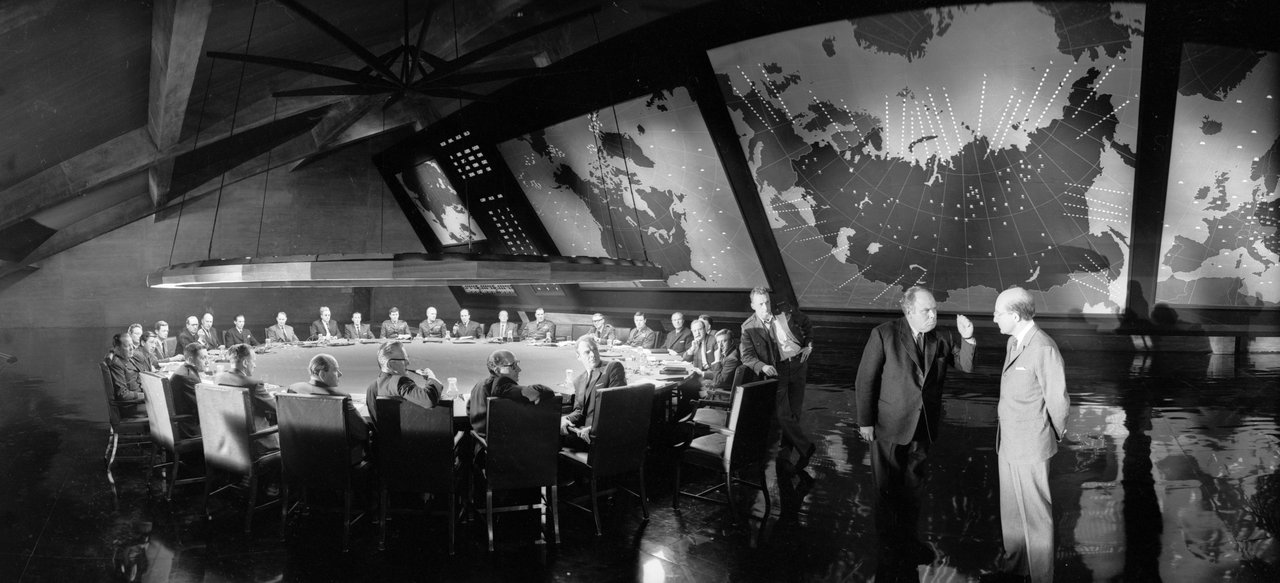
In 1964, two years after his adaptation of Lolita with a screenplay by Vladimir Nabokov himself, Kubrick bequeathed us a critical, incisive, and beautifully filmed cinematic gem about the Cold War. From its long, ironic, and humorous title, Dr. Strangelove, or How I Learned to Stop Worrying and Love the Bomb is a prime example of satire brought to the big screen. The film begins twenty years after World War II with an American general ordering the deployment of the so-called Wing Attack Plan R, which involves sending B-52 bombers to drop nuclear warheads on various strategic points in the Soviet Union. This plan existed as a contingency plan in the event of a Russian attack on American soil, but has an attack actually occurred? Due to the plan's own protocols, both the base and the planes heading to the USSR are isolated and without any means of communication. Then, in Washington, the President of the United States meets with his top officials in a roundtable discussion that also includes the Russian ambassador to inform him of a situation that sounds like this: American planes are currently en route to drop atomic bombs on Russian soil, but neither the President nor his cabinet has given the order; moreover, they want to abort the plan, but there's no way to bring them back. So, the only alternative for the Americans to avoid a third world war—nuclear this time—is to help their ideological enemies—the Soviets—shoot down their own planes.
En 1964, dos años después de su adaptación de Lolita con guion del propio Vladimir Nabokov, Kubrick nos legó una joya cinematográfica crítica, incisiva, bellamente filmada, sobre la guerra fría. Desde ese largo, irónico y gracioso título, Dr. Strangelove, or How I Learned to Stop Worrying and Love the Bomb es una muestra de la mejor sátira llevada a la gran pantalla. La película inicia veinte años después de la segunda guerra mundial con la orden de un general norteamericano de desplegar el llamado Plan de Ataque R que implica enviar aviones B-52's a bombardear con cargas nucleares diferentes puntos estratégicos en suelo soviético. Este plan existía como alternativa de respuesta ante un eventual ataque ruso sobre suelo norteamericano, pero ¿realmente ha ocurrido un ataque? Debido a los protocolos del plan en sí mismo, tanto el cuartel base como los aviones que se dirigen a la U.R.S.S. quedan aislados y sin posibilidad de comunicación. Entonces, en Washington, el presidente de los Estados Unidos se reúne con su altos mandos en una mesa redonda que además incluye al embajador ruso para que esté al tanto de una situación que suena más o menos así: aviones norteamericanos se dirigen en este momento a dejar caer bombas atómicas en suelo ruso, pero ni el presidente ni sus ministros han dado la orden; es más, quieren abortar el plan, pero no hay forma de hacerlos volver, así que la única alternativa de los yankees para evitar una tercera guerra mundial - nuclear esta vez - es ayudar a sus enemigos ideológicos - los soviéticos - a derribar sus propios aviones.
However, what further aggravates this situation is that the Russian ambassador reveals the existence on Soviet soil of the Doomsday Machine, an enormous machine with the nuclear capacity to destroy the entire world, which activates automatically in the event of any attack on the Russians. Until then, it had been conceived as a deterrent, to discourage anyone from launching an attack against them that could also destroy the entire planet. But since its existence had not been made public, now there is only one solution: either all the planes on a mission to attack the USSR are shot down, or life on planet Earth will disappear.
Ahora bien, lo que agrava más esta situación es que el embajador ruso revela la existencia en suelo soviético de la Doomsday Machine, una máquina enorme con la capacidad nuclear de hacer explotar el mundo entero y que se activa automáticamente ante cualquier ataque que sufran los rusos. Hasta entonces había sido concebida como una medida disuasoria, para que nadie se atreviera a enviar contra ellos un ataque que pudiera además acabar con el planeta entero, pero como no se había publicado su existencia, ahora la única salida es una: o se derriban todos los aviones que van con la misión de atacar la U.R.S.S. o la vida en el planeta tierra desaparecerá.
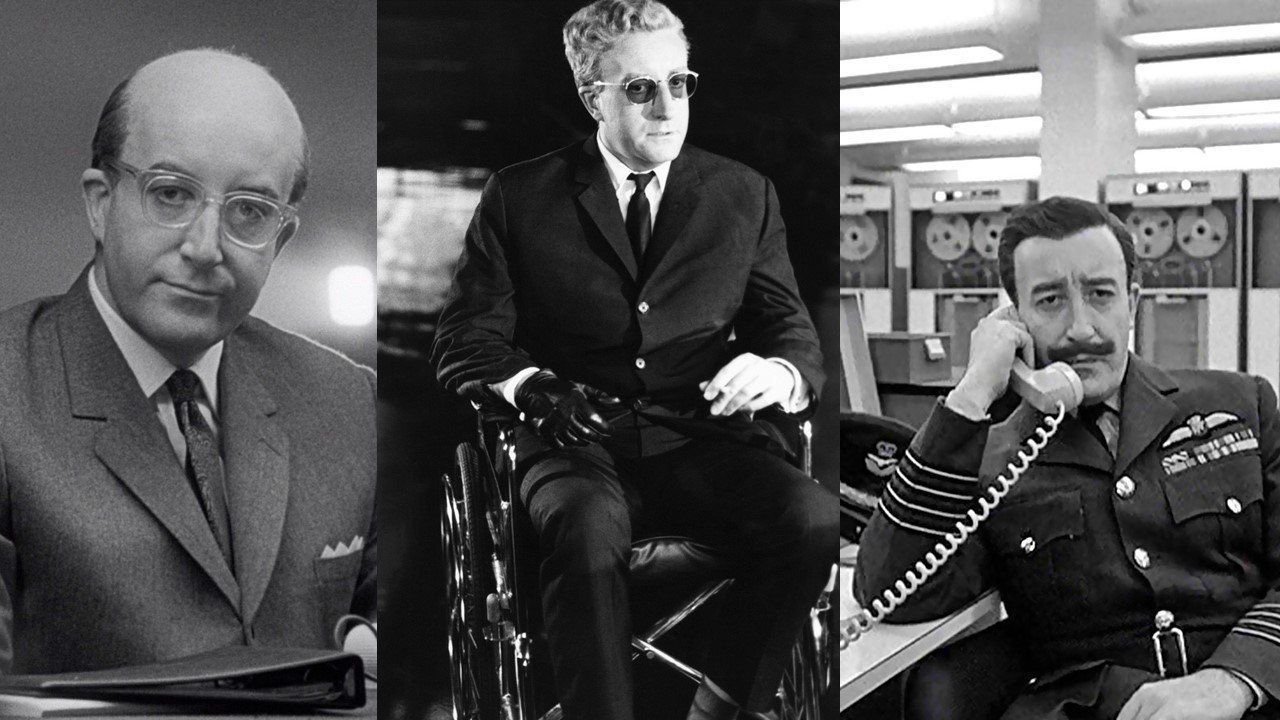
In broad strokes, that's the plot of Dr. Strangelove, which would make for a gripping thriller, but Kubrick had something else in mind when adapting Peter George's novel Red Alert: a hilarious black comedy. Despite the seriousness of the situation, Kubrick highlights the absurd and humorous elements of the plot, such as the sheer number of security protocols (and their vulnerability), the ideological struggle (and the stark differences between those ideologies), the absurdity of the logic of war, and offers critical (yet truthful) portrayals of ideas like patriotism, sexism, power, and authority. Furthermore, it plays with the names of things; characters named Jack D. Ripper or T.J. "King" Kong, or places with funny names, are another element of the comedy. But if this film manages to be a great work, it's not only thanks to these details but above all to the technical resources employed by Kubrick and the performances of a great cast that includes names like the experienced George C. Scott playing General Buck Turgidson and a debuting James Earl Jones. Yes, Darth Vader himself made his first appearance on the big screen in Dr. Strangelove as a B-52 bomber pilot. And leading all the performances is the great Peter Sellers, in charge of not one, not two, but three of the characters in the story. When was the last time you saw an actor play three different roles in the same film?
A grandes rasgos, ese es el argumento de Dr. Strangelove..., lo que daría para un trepidante thriller, pero Kubrick tenía otra cosa en mente a la hora de adaptar la novela Red Alert de Peter George: una hilarante comedia negra. A pesar de lo seria de la situación, Kubrick realza los elementos absurdos y graciosos de la trama como la cantidad de protocolos de seguridad (y su vulnerabilidad), la lucha ideológica (y las marcadas diferencias de esas ideologías), lo estúpido de la lógica bélica y hace retratos críticos (pero con mucha verdad) sobre ideas como patriotismo, machismo, poder y autoridad. Además, juega con los nombres de las cosas; personajes llamados Jack D. Ripper o T. J. "King" Kong; o lugares con nombres graciosos, son un elemento más de la comedia. Pero si esta película logra ser una gran obra, no es sólo gracias a esos detalles sino sobre todo a los recursos técnicos empleados por Kubrick y a las actuaciones de un gran elenco que incluye nombres como el del experimentado George C. Scott interpretando al General Buck Turgidson, personaje clave en la película; y al de un debutante James Earl Jones. Sí, el mismísimo Darth Vader hizo su primera aparición en la gran pantalla en Dr. Strangelove como bombardero de uno de los B-52's. Y al frente de todas las actuaciones tenemos al gran Peter Sellers, a cargo no de uno, ni de dos, sino de tres de los personajes de la historia, ¿cuándo fue la última vez que vieron a un actor interpretar tres papeles distintos en una misma película?
Sellers plays Captain Mandrake, a British officer and second-in-command at the base from which the attack is ordered; the President of the United States, Merkin Muffley; and the eccentric Dr. Strangelove, a former Nazi scientist now working for the Americans. These are very different characters, physically, in their acting styles, and in their personalities, and Sellers shines in all of them, carrying a great deal of the plot and the success of this film on his shoulders—a film I can't forgive myself for not having seen sooner. It is truly one of the best black comedies I've ever seen and one of the best critiques of war, power, and excessive patriotism there is.
Sellers interpreta al capitán Mandrake, británico y segundo al mando en la base desde la que se ordena el ataque; al Presidente de los EEUU, Merkin Muffley; y al excéntrico Dr. Strangelove, un antiguo científico nazi ahora al servicio de los norteamericanos. Son personajes muy diferentes, en lo físico, lo interpretativo y en la personalidad y Sellers brilla en todos ellos llevando sobre sus hombros gran peso de la trama y del éxito de esta película que no me perdono no haber visto antes. En verdad es una de las mejores comedias negras que he visto en mi vida y una de las mejores críticas que existen contra la guerra, el poder y el exceso de patriotismo.
Dr. Strangelove received four Oscar nominations (picture, director, actor and screenplay) but went home empty-handed after a gala that brought together iconic works such as Mary Poppins, Zorba the Greek, Beckett, James Bond's Goldfinger and Les Parapluies de Cherbourg, and where the big winner of the night was George Cukor's My Fair Lady, which took home eight statuettes. But time has established Kubrick's dark comedy as one of the greatest comedies in history, one of the most influential films of all time, and it has been deemed "culturally, historically, and aesthetically significant" by the Library of Congress, which selected it for preservation in the National Film Registry. There are iconic moments and scenes in the film, such as the general in a hat riding a nuclear bomb as if it were a horse, or that impeccable and legendary round table sequence at the war council (copied by the band Muse in their video for "Time Is Running Out"), conversations that are funny because of their absurdity and realism, jokes like the one about the renowned Dr. Strangelove's former surname, Merkwürdigliebe (which literally means "Strange Love"), and details like the fact that only one female character appears in the entire film. One. Dr. Strangelove, or How I Learned to Stop Worrying and Love the Bomb is a prime example of cinema at its best, Kubrick at his best, and best humor at its best. It's worth watching, recommending, rewatching, and enjoying as the gem it is. Who among you has already seen it? Let me know in the comments.
Dr. Strangelove obtuvo cuatro nominaciones al Oscar (película, director, actor y guion) pero se fue a casa con las manos vacías tras una gala que reunió obras icónicas como Mary Poppins, Zorba the Greek, Becket, la Goldfinger de James Bond y Les Parapluies de Cherbourg y en donde la gran ganadora de la noche fue My Fair Lady de George Cukor que se llevó ocho estatuillas. Pero el tiempo se ha encargado de situar la comedia negra de Kubrick como una de las mejores comedias de la historia, una de las películas más influyentes de todos los tiempos y ha sido considerada "cultural, histórica y estéticamente significativa" por la Biblioteca del Congreso de los EEUU quienes la seleccionaron para su preservación en el National Film Registry. Hay momentos y escenas muy icónicas en la cinta, como la de un general con sombrero montando una bomba nuclear como si fuese un caballo, o esa impecable y mítica secuencia de la mesa redonda del concilio de guerra (copiada por la banda Muse en su video de Time is Running Out), conversaciones graciosas por lo absurdas y realistas que son, chistes como el del antiguo apellido del renombrado Dr. Strangelove, Merkwürdigliebe (que en español significa literalmente Amor extraño) y detalles como el hecho de que aparezca un único personaje femenino en toda la cinta. Uno. Dr. Strangelove, or How I Learned to Stop Worrying and Love the Bomb es una muestra del mejor cine, del mejor Kubrick, del mejor humor y vale la pena verla, recomendarla, volver a verla y disfrutarla como la joya que es, ¿quiénes de ustedes ya la han visto? Los leo en los comentarios.
Reviewed by | Reseñado por @cristiancaicedo
Other posts that may interest you | Otros posts que pueden interesarte:
Yes, Halloween is over, but as I mentioned in my previous post about this special curation I decided to do in October (about horror and suspense movies), today is the day to publish one last text related to this contest. I wanted to be able to help more people, but I have to focus on what I can do alone, and that's exactly what I decided to focus on when restricting this new round of awards only to those who have already been selected.
The idea here was very simple (just like this post... which was written only to close with a high note, what I intend to repeat next year, or whenever there is a special date that can be related to movies), and what I did to select the last winners of this contest was to go back a few weeks, reread all the content that I had chosen and that was published by each of them. Arriving then, at a new result and distributing the prizes.
In summary, considering the relevance of the content (text structures, coherence of ideas, immersion in the themes were some of my evaluation criteria along the way) and all the consistency in participation in the contest (in general), I chose @nattosenpai, @erigm, @thomashnblum, @nameless16 and @naath to receive 2,000 ECENCY POINTS (each) as an extra prize, and the choice was not easy, considering that all those chosen did a very interesting and well-structured job.
New ideas (for other contests) are already popping into my mind, and I think that in December I might do something related to Christmas. For now, that's it, folks. I would like to thank everyone who was part of this contest, and I hope to see you all in the next ones that will certainly happen. Cinema has an infinite form of content, and that is precisely what I want to do with these contests: spread this content around the world.
¿Truco o trato? | ROUND ESPECIAL.
Sí, Halloween ya pasó, pero como mencioné en mi publicación anterior sobre esta selección especial que decidí hacer en octubre (sobre películas de terror y suspenso), hoy es el día para publicar un último texto relacionado con este concurso. Quería poder ayudar a más personas, pero tengo que concentrarme en lo que puedo hacer solo, y eso es precisamente en lo que decidí centrarme al limitar esta nueva ronda de premios solo a quienes ya han sido seleccionados.
La idea era muy simple (igual que esta publicación... que escribí solo para cerrar con broche de oro, lo que pretendo repetir el próximo año, o cuando haya una fecha especial relacionada con el cine), y lo que hice para seleccionar a los últimos ganadores de este concurso fue revisar varias semanas atrás, releer todo el contenido que había elegido y que cada uno de ellos había publicado. Así llegué a un nuevo resultado y distribuí los premios.
En resumen, considerando la relevancia del contenido (la estructura del texto, la coherencia de las ideas y la inmersión en los temas fueron algunos de mis criterios de evaluación) y la constancia en la participación en el concurso (en general), elegí a @nattosenpai, @erigm, @thomashnblum, @nameless16 y @naath para recibir 2.000 PUNTOS ECENCY (cada) como premio adicional. La elección no fue fácil, ya que todos los seleccionados realizaron un trabajo muy interesante y bien estructurado.
Ya se me ocurren nuevas ideas (para otros concursos), y creo que en diciembre podría organizar algo relacionado con la Navidad. Por ahora, eso es todo. Me gustaría agradecer a todos los que participaron en este concurso y espero verlos en los próximos, que sin duda se celebrarán. El cine tiene un contenido infinito, y eso es precisamente lo que quiero hacer con estos concursos: difundirlo por todo el mundo.
Doces ou Travessuras? | ROUND ESPECIAL.
Sim, o Halloween já acabou, mas como eu havia dito no meu post anterior sobre essa curadoria especial que eu decidi fazer no mês de outubro (sobre filmes de horror e suspense), hoje é dia de publicar um último texto relacionado a este concurso. Eu queria poder ajudar mais pessoas, mas tenho que focar no que eu posso fazer sozinho, e foi exatamente nisso que eu decidi focar ao restringir esta nova rodada de premiações apenas para aqueles que já foram selecionados.
A ideia aqui foi muito simples (assim como esse post... que foi escrito apenas para fechar com chave de ouro, o que eu pretendo repetir no próximo ano, ou quando houver alguma data especial que possa ser relacionada com filmes), e o que eu fiz para selecionar os últimos vencedores desse concurso foi voltar algumas semanas, reler todo conteúdo que eu havia escolhido e que foi publicado por cada um deles. Chegando então, a um novo resultado e distribuir os prêmios.
Em síntese, considerando a relevância de conteúdo (estruturas de textos, coerência de ideias, imersão nos temas foram alguns dos meus critérios de avaliação aqui) e a constância na participação do concurso (de um modo geral), eu escolhi @nattosenpai, @erigm, @thomashnblum, @nameless16 e @naath para receber 2.000 PONTOS ECENCY (cada) como premiação extra e a escolha não foi fácil, considerando que todos os escolhidos fizeram um trabalho muito interessante e bem estrutural.
Novas ideias (para fazer outros concursos) já estão pipocando na minha mente, e eu acho que em dezembro talvez eu faça algo relacionado ao Natal. Por enquanto é isso pessoal. Eu gostaria de agradecer a todos que fizeram parte deste concurso, e espero poder encontrar todos vocês nos próximos que certamente irão acontecer. Cinema tem uma forma de conteúdo infinita, e é justamente isso que desejo fazer com esses concursos: espalhar esse conteúdo mundo à fora.
Nothing screams safety more than being stopped by armed guards when you attempt to enter a location. This is exactly how Safe and Sound opens. A girl and her mother are coming into the city, and it abundantly clear she doesn't fit in. First, there's the juxtaposition of fashion, and the complete lack of any access.
Foster (Annalise Basso) is our protoganist. She's new... to everything. Her first day at school is filled with learning experiences, limited by the fact that she does not have a Dex. The Dex is something worn around the wrist, a computer interface that people can interact with, use as a computer, and is linked to education and almost everything else.
It doesn't take her long to get a Dex, even though her mother does not want her to get one. There's another layer of story there, with high school being a troubled time for youth like Foster. She also, at first, doesn't know how to use the Dex. She contacts customer service, and we see her falling rapidly enamoured the voice of Ethan, a customer service rep who is there to help.
But it isn't long before he needs help, and the megacorp wants someting in return. Meanwhile, Foster just wants to fit in. When people start to fit in (or don't fit in), themes of coercion and control tend to emerge in the plot.
They persist through the entire story. Then at the credits, I learn that this is based on the short story :"Foster, You're Dead", and this is very different in terms of plot lines. It isn't bad - and that's a good thing. What was a story about capitalism pushed to the extreme and more and more devices needed to protect against enemy threats is taken to a different place.
A place where information itself is the enemy, as opposed to bombs, or guns, or the threat of existential elimination. This is another incredibly sophisticated story, well told, and it shows that Philip K Dick was an enormous visionary, and I'm so pleased that the production team were able to take his hints to another level.
I know that I am watching these things out of sequence. That's fine as far as I am concerned, they're not meant to be interconnected stories, but the repeated use of Runciter as a name for things, which I encountered first in Ubik - is an interesting sort of persistence throughout Philip K Dick's many worlds.
This one was a world full of terror, not of the "oh look, a. building exploded", but the terror that is insidious and layered, in the processes of society. Bus tickets, credit cards, or a mobile phone - or in the universe painted by the Safe and Sound film, a device worn around the wrist, and a little gel placed into the hear to let you hear.
I only have a few of these films left to watch, and I am going to be sad when I'm through all of them. The good thing (for me) is that there is so much more material from Philip K Dick with which to engage. He had a long career, and wrote a lot of stuff, and I am looking very much forward to absorbing it all.
I like stories about the despicable terrorists of ETA. I think it's important that there always be something to remind us of the atrocities committed by those who seek to impose their ideas by killing innocent people. It's something that must not be forgotten. Perhaps many people are tired of seeing this recurring theme. I think the same thing happens with the Spanish Civil War, because in film forums I always saw Spaniards complaining that their cinema was full of films about that war and the subsequent Franco dictatorship.
I remember the first thing I saw by this director was a long time ago, when I was a young man attending the film club in my city. Baton Rouge and No One Will Speak of Us When We Are Dead were those films. He is not so well known on this side of the pond, although he also directed the film adaptation of Alatriste. By the way, take note that he is the co-writer of J. A. Bayona's next film, an adaptation about the Civil War.
When I started watching the film, I couldn't help but make comparisons with The Infiltrator (if you want to know my opinion on that film, here's the link https://peakd.com/hive-166847/@jcrodriguez/the-infiltrator-or-film-review ). Both have some similarities, but also differences. If you haven't seen The Infiltrator, you can watch it after this one and you'll notice those similarities. The most obvious one is a sequence that takes place inside the apartment where the protagonist lives and has to shelter an important member of ETA for a while. Although The Infiltrator is inspired by a real agent, whose identity is protected, who spent eight years infiltrating ETA, the one in this film is a representation of different agents.
I don't want to say which one is better; that's not the point. On the contrary, I would recommend watching both films, which have very different forms and styles. I liked both of them. If I had to choose, I would probably go for Un fantasma en la batalla. What I am sure of is that both the film and the lead actress will be nominated at the next Goya Awards ceremony. Make a note of it.
Me gustan las historias que tratan sobre los despreciables terroristas de ETA. Creo que es importante que siempre haya algo que nos recuerde las atrocidades cometidas por aquellos que buscan imponer sus ideas matando a personas inocentes. Es algo que no debe olvidarse. Quizás mucha gente esté cansada de ver este tema recurrente. Creo que ocurre lo mismo con la Guerra Civil Española, porque en los foros de cine siempre veía a españoles quejarse de que su cine estaba lleno de películas sobre esa guerra y la posterior dictadura de Franco.
Recuerdo que lo primero que vi de este director fue hace mucho tiempo, cuando yo era un joven que asisita al cine club de mi ciudad. Baton Rouge y Nadie hablarán de nosotras cuando estemos muertas fueron esas peliculas. El no es tan conocido a este lado del charco, aunque también dirigió la adaptación cinematográfica de Alatriste. Por cierto, tomen nota de que es el coguionista de la próxima película de J. A. Bayona, una adaptación que trata sobre la Guerra Civil.
Cuando empecé a ver la película, no pude evitar hacer comparaciones con La Infiltrada (si quieres saber mi opinión sobre esa película, aquí tienes el enlace https://peakd.com/hive-166847/@jcrodriguez/the-infiltrator-or-film-review ). Ambas tienen algunas similitudes, pero también diferencias. Si no has visto La Infiltrada, puedes verla después de esta y notarás esas similitudes. La más evidente es una secuencia que tiene lugar dentro del apartamento donde vive el protagonista y tiene que dar refugio a un miembro importante de ETA durante un tiempo. Aunque La Infiltrada está inspirada en un agente real, cuya identidad está protegida, que pasó ocho años infiltrado en ETA, el de esta película es una representación de diferentes agentes.
No quiero decir cuál es mejor; esa no es la cuestión. Al contrario, recomendaría ver ambas películas, que tienen formas y estilos muy diferentes. Me gustaron las dos. Si tuviera que elegir, probablemente me decantaría por Un fantasma en la batalla. De lo que estoy seguro es de que tanto la película como la actriz protagonista serán nominadas en la próxima ceremonia de los premios Goya. Apuntenlo.
The protagonist of the story is Amaia, a young civil guard who has the mission of infiltrating ETA, where she will spend several years gaining the trust of those bastards. She will be a key player in the major operation that located important places where ETA had stored weapons, a blow that completely weakened the terrorists.
It is important to note that these parasites are not glorified or portrayed as heroes. Of course, there are scenes in which the protagonist has conflicts, because she can become attached to one of those dogs, but it is not about sugarcoating the terrorists. They were and continue to be a bunch of human scum. Without being from that country, I am outraged to see that some former members of that terrorist group, which supported the killing of innocent people, are now free and even hold political office. A while ago, I saw one of those sons of bitches demanding respect, rights, etc. in a session. They are shameless, when they have many deaths on their conscience. Unfortunately, they are governed by scum who support those sons of bitches. How horrible!
The undercover agent cliché always follows the same pattern, but the movie is worth watching. Also, if you want to see more productions of this style, such as the already recommended La Infiltrada, I suggest you watch El Lobo, which was the first movie I saw about an undercover agent in ETA, based on a real person. It's quite old, from 2004, but if you want something more recent, I recommend the miniseries La línea invisible, which is about the rise of ETA and the moment they crossed that line, committing their first murder. None of these sugarcoat these scourges, because we must never forget, we must always remember, that these terrorists are murderers, they are scum, no matter how much they say they are repentant. They are a disgrace!
I hope you like the movie, it's on Netflix. Watch it and leave me your opinion in the comments.
La protagonista de la historia es Amaia, una joven guardia civil que tiene la misión de infiltrarse en ETA, donde pasará varios años ganándose la confianza de esos cabrones. Ella será una pieza clave en la gran operación que localizó importantes lugares donde ETA tenía almacenadas armas, un golpe que debilitó por completo a los terroristas.
Es importante destacar que estos parásitos no son glorificados ni retratados como héroes. Por supuesto, hay escenas en las que la protagonista tiene conflictos, porque puede llegar a encariñarse con uno de esos perros, pero no se trata de edulcorar a los terroristas. Eran y siguen siendo un puñado de mierdas humanas. Sin ser de ese país, me indigna ver que algunos antiguos miembros de ese grupo terrorista, que respaldó la muerte de personas inocentes, ahora están libres e incluso ocupan cargos políticos. Hace un tiempo, vi a una de esas hijas de puta exigiendo respeto, derechos, etc. en una sesión. Son caraduras, cuando tienen muchas muertes en su conciencia. Por desgracia, están gobernados por escoria que apoya a esos hijos de puta. ¡Qué horror!
El cliché del infiltrado siempre sigue el mismo patrón, pero la película merece la pena. Además, si quieres ver más producciones de este estilo, como la ya recomendada La Infiltrada, te sugiero que veas El Lobo, que fue la primera película que vi sobre un infiltrado en ETA, basada en una persona real. Es bastante antigua, de 2004, pero si quieres algo más reciente, te recomiendo la miniserie La línea invisible, que trata sobre el surgimiento de ETA y el momento en que cruzaron esa línea, cometiendo su primer asesinato. Ninguna de estas endulza esas lacras, porque nunca hay que olvidar, siempre hay que recordar, que esos terroristas son asesinos, son escoria, por mucho que digan estar arrepentidos. ¡Son unas lacras!
Espero que te guste la película, está en Netflix. Mírala y déjame tu opinión en los comentarios.
Gifs and separators made by me in photoshop. Translation with Deepl
Hello everyone, I hope you're all doing great, this time I want to bring a new review to this great community, I want to talk a little about a movie that I originally wanted to see, but I had mixed feelings about, it's: Trap. I always go in with that mix of excitement and nerves, because with this director you never know if you're going to leave with your mind blown or, well... scratching your head without understanding anything... look, I've always been a fan of Shyamalan, I'm not ashamed to say it, so chances are my opinion isn't the most objective, but I swear I went in with a super open mind, especially since I'd already seen that the reviews were divided, well... the experience was... quite a roller coaster, to start with, let's talk about the main idea, which is brutal and the best thing is that it's not even a spoiler, the trailer itself gives you everything! The thing goes like this: a dad, who is Josh Hartnett, takes his teenage daughter to a concert of a very famous pop star, a certain Lady Raven... the perfect father-daughter plan, right?
But suddenly, he realizes that the place is packed with police everywhere, here comes the good part, people: the entire concert, with thousands and thousands of people, is actually a giant trap by the FBI to catch a serial killer they haven't been able to catch, the twist, which I insist, the trailer throws in your face, is that the cool dad... he is the killer they're looking for. From that moment on, the film grabs you and doesn't let go, it's a super risky move, I mean, putting you in the villain's shoes from the very first minute... here we're not seeing the detective who solves the case, no! We’re inside the killer’s head as everything comes crashing down on him, it’s a pressure cooker that’s about to explode from the start… this is where I have to stand up and applaud Josh Hartnett… he’s incredible, the guy has so much charisma, he’s so nice, that he puts you in an uncomfortable place, because suddenly you realize that… you want him to get away!
Seriously, you end up caring about this psychopath, it’s like what Jake Gyllenhaal did in Nightcrawler or Tom Cruise in Collateral, they seduce you into rooting for the character you shouldn’t be rooting for, Hartnett nails that “cool dad” façade perfectly; on the outside he’s all smiles and kindness while he gets information out of everyone, but you can see in his eyes that inside his brain is going a mile a minute, calculating every step… literally, it’s a performance that takes the entire movie on its shoulders.
Hola a todos, espero que estén genial, en esta ocasión les quiero traer a esta genial comunidad una nueva reseña, les quiero hablar un poco de una película que quise ver en un principio, y obtuve sentimientos encontrados, se trata de: Trap. Siempre voy con esa mezcla de emoción y nervios, porque con este director uno nunca sabe si va a salir con la mente explotada o, pues... rascándose la cabeza sin entender nada.. miren, yo soy fan de Shyamalan desde siempre, no me da pena decirlo, así que chance y mi opinión no es la más objetiva, pero les juro que entré con la mente súper abierta, sobre todo porque ya había visto por ahí que las críticas estaban divididas, bueno... la experiencia fue... toda una montaña rusa, para empezar, hablemos de la idea principal, que es brutal y lo mejor es que ni siquiera es spoiler, ¡el mismo tráiler te lo suelta todo! La cosa va así: un papá, que es Josh Hartnett, lleva a su hija adolescente a un concierto de una estrella pop famosísima, una tal Lady Raven.. el plan perfecto de padre e hija, ¿no?
Pero de repente, se da cuenta de que el lugar está repleto de policías por todos lados, aquí viene lo bueno, gente: todo el concierto, con miles y miles de personas, es en realidad una trampa gigante del FBI para atrapar a un asesino en serie que no han podido agarrar, el giro, que insisto, el tráiler te lo tira en la cara, es que el papá buena onda... él es el asesino que están buscando. Desde ese momento, la película te atrapa y no te suelta, es que es una movida súper arriesgada, o sea, ponerte desde el minuto uno en los zapatos del villano.. aquí no estamos viendo al detective que resuelve el caso, ¡no! Estamos metidos en la cabeza del asesino mientras todo se le viene encima, es una olla a presión que está a punto de explotar desde que empieza.. aquí, aquí es donde me tengo que poner de pie y aplaudirle a Josh Hartnett.. está increíble, el tipo tiene tanto carisma, es tan agradable, que te pone en un lugar incómodo, porque de repente te das cuenta de que... ¡quieres que se escape!
En serio, terminas preocupándote por este psicópata, es como lo que hizo Jake Gyllenhaal en Nightcrawler o Tom Cruise en Collateral, que te seducen para que apoyes al personaje que no deberías apoyar, Hartnett clava perfecto esa fachada del "papá buena onda"; por fuera es pura sonrisa y amabilidad mientras le saca información a todo el mundo, pero tú ves en su mirada que por dentro su cerebro va a mil por hora, calculando cada paso.. literal, es una actuación que se echa toda la película al hombro.
And about the dialogue... which, let's face it, is sometimes Shyamalan's weak point, but here it works perfectly. A lot of people complain that the characters in his films speak in a weird way, like it's unnatural, you know? But for me, it's 100% on purpose here... I mean, think about it: it's a psychopath trying to act like a normal person while the world is falling apart around him, of course it's going to sound weird... even his own daughter tells him at one point: "Dad, you're acting really weird." That's what makes it so tense and fascinating to watch. Now, let's talk about the concert itself. It feels super real, everyone! Shyamalan immerses you in the experience, the cameras put you in the shoes of the people there... if Hartnett gets close to the stage, the camera goes with him, the sound envelops you... you hear the people, the music that blows your ears out... pay attention to this: the pop star, Lady Raven, isn't just acting, no!
She wrote and sang an entire album for the film, which is why the concert feels so real, that part is brutal, it completely immerses you, and if anyone out there is thinking "oh, how exaggerated, how could the FBI put on a whole concert to catch a guy", well... let me tell you, it's based on a true story. It’s called “Operation Flagship,” where a bunch of fugitives were tricked into giving away free Super Bowl tickets… so, it’s not that crazy, in the end, Trap feels like a 90s thriller, but in the best way possible, it’s fast-paced, it’s tense, and it gets straight to the point with its main idea… it reminded me a lot of those movies like The Negotiator, remember? And one detail that I loved: it was shot on tape, real film, and they used thousands of real extras, real people, you hardly ever see that anymore… it gives it a texture, a feeling that you’re there, which modern movies with so much green background have lost, you really feel the madness of being in the middle of all that crowd.
Y sobre los diálogos... que, a ver, seamos sinceros, a veces son el punto débil de Shyamalan, aquí funcionan perfecto, mucha gente se queja de que los personajes de sus pelis hablan como raro, como que no es natural, ¿saben? Pero para mí, aquí es 100% a propósito.. o sea, piénsenlo: es un psicópata tratando de actuar como una persona normal mientras el mundo se le cae encima, pues claro que va a sonar raro.. hasta su propia hija se lo dice en un momento: "Papá, estás actuando súper extraño".. eso es lo que lo hace tan tenso y fascinante de ver. Ahora, hablemos del concierto en sí. ¡Se siente súper real, gente! Shyamalan te mete de cabeza en la experiencia, las cámaras te ponen en los zapatos de la gente que está ahí.. si Hartnett se acerca al escenario, la cámara va con él, el sonido te envuelve... escuchas a la gente, la música que te revienta los oídos... ojo a este dato: la estrella pop, Lady Raven, no es que solo actúa, ¡no!
La chica se escribió y se cantó un álbum entero para la película, por eso el concierto se siente tan de verdad, esa parte está brutal, te sumerge por completo, y si por ahí alguno está pensando "ay, qué exagerado, cómo el FBI va a montar todo un concierto para atrapar a un tipo", pues... déjenme decirles que está basado en una historia real. Se llama "Operación Flagship", donde engañaron a un montón de fugitivos con entradas gratis para el Super Bowl.. así que, tan loco no es, al final, Trap se siente como un thriller de los 90, pero en el mejor de los sentidos, es rápida, es tensa, y va directo al grano con su idea principal.. me recordó un montón a esas pelis como El Negociador, ¿se acuerdan? Y un detalle que a mí me encantó: está grabada en cinta, en película de verdad, y usaron miles de extras reales, gente de carne y hueso, eso ya casi no se ve.. le da una textura, una sensación de que estás ahí, que las pelis de ahora con tanto fondo verde ya perdieron, de verdad sientes la locura de estar en medio de toda esa multitud.
Look, the first half... ugh, I was completely hooked on the movie. It's just that this cat-and-mouse game, where the protagonist is both the cat and the mouse at the same time... is brilliant. Buuuut... and here comes the huge "but," people... this is where things started to get a little complicated for me, and I think that's why the reviews are so divided. The second half of the movie... let's see, how do I tell you this without spoilers... let's just say it starts to take some paths that make you say, "Oh, really?" The plot gets off track, and for me, that took away all the power, all the tension that had been built so well at the beginning. It gets a little... unbelievable, but in a bad way, even for a thriller... there are decisions the characters make, especially at the end, that feel forced, like they don't make much sense.
Suddenly, you already imagine what's going to happen, and that feeling at the beginning, that one mistake and everything will go to hell, starts to fade, it dissolves. The film lasts about an hour and forty-five, and I couldn't stop thinking that if they had cut about 15 minutes, if they had made it more condensed, more confined to the stadium, ugh!, this would have been a masterpiece of suspense. It's that at times it feels as if the idea was perfect for an hour-long episode of, I don't know, Law & Order or Dexter, but in trying to stretch it out to last the length of a full movie, they added things that weren't necessary and that make it stumble a bit at the end.
Miren, la primera mitad... uff, yo estaba adentro de la película, enganchadísimo, es que este juego del gato y el ratón, donde el protagonista es el gato y el ratón al mismo tiempo... es una genialidad. Peeeeero... y aquí viene el "pero" gigante, gente.. aquí es donde la cosa se me empezó a complicar un poquito, y creo que por esto las críticas están tan divididas, la segunda mitad de la peli... a ver, cómo se los digo sin spoilers... digamos que empieza a tomar unos caminos que te hacen decir "¿a ver, a ver, en serio?". La trama se sale del concierto y, para mí, eso le quitó toda la fuerza, toda la tensión que había construido tan bien al principio, se pone un poco... increíble, pero en el mal sentido, incluso para una película de suspenso.. hay decisiones que toman los personajes, sobre todo al final, que se sienten forzadas, como que no tienen mucho sentido.
De repente, ya te imaginas lo que va a pasar, y esa sensación del principio, esa de que un solo error y todo se va al diablo, se empieza a perder, se diluye, la película dura como una hora cuarenta y cinco, y yo no podía dejar de pensar que si le hubieran cortado unos 15 minutitos, si la hubieran dejado más apretada, más encerrada en el estadio, ¡uf!, esto habría sido una obra maestra del suspenso. Es que a ratos se siente como si la idea fuera perfecta para un capítulo de una hora de, no sé, La Ley y el Orden o de Dexter, pero al querer estirarla para que dure como una película completa, le metieron cosas que no hacían falta y que la hacen tropezar un poco al final.
And in the end, what am I left with? Well, a broken heart, people. The typical feeling after seeing a Shyamalan film is that, on the one hand, you have this idea that's a bomb, a first half that has you on the edge of your seat, and a performance by Josh Hartnett that is, quite easily, one of the best of his career. The concert experience grabs you, pulls you in, but, on the other hand, the second half kind of falls flat, you know? It makes some rather strange decisions and twists that, to be honest, took me a bit out of the story... so... my final rating is 7.5/10. Do I recommend it? Yes, of course, go see it, but know that it's a roller coaster: the rush at the beginning is brutal, but the descent at the end is kind of... bumpy... the film entertains, makes you tense, and leaves you talking about it, which at the end of the day is what we want, right? The idea was original; there were simply better ways to develop it and exploit its full potential... and well, that's it for today's review. See you in the next one! Take care! Bye!
Y al final, ¿con qué me quedo? pues con el corazón partido, gente, la típica sensación después de ver una de Shyamalan.. es que por un lado, tienes esta idea que es una bomba, una primera mitad que te tiene al borde del asiento y una actuación de Josh Hartnett que es, fácil, de lo mejor de su carrera, la experiencia del concierto te atrapa, te mete de lleno, pero, por el otro, la segunda mitad como que se desinfla, ¿saben? Toma unas decisiones y unos giros medio raros que a mí, la verdad, me sacaron un poco de la historia.. así que... mi calificación final es un 7.5/10, se las recomiendo? Sí, claro que sí, vayan a verla, pero vayan sabiendo que es una montaña rusa: el subidón del principio es brutal, pero la bajada al final es medio... accidentada.. la peli entretiene, te pone tenso y te deja hablando de ella, que al final del día es lo que queremos, ¿no? La idea era original, simplemente habían mejores maneras de desarrollarla y explotar todo su potencial.. y bueno, hasta aquí la reseña de hoy, nos veremos en las próximas! Cuidense! Byebye!
Tell me... have you seen this series? Has it caught your attention? Tell me what you thought of this review with my opinion, and tell me if it has made you want to watch this series. You can leave me in the comments your recommendations for future publications! 😊
Cuéntame.. ¿Has visto esta serie? Te ha llamado un poquito la atención? Dime que te pareció esta reseña con mi opinión, y dime si te han dado ganas de ver esta series. Puedes dejarme en los comentarios tus recomendaciones para las próximas publicaciones!! 😊
📲 My social media:
See you next time! 👀🎞💗
Traduced with DeepL
Banners y separadores hechos con Canva Pro. Banners and dividers made with Canva Pro.
Esta película es un homenaje desgarrado a la vida que se aferra, tal vez, al artificio para sobrevivir. "Todo sobre mi madre" (1999), la obra quizá más redonda y profundamente humana de Pedro Almodóvar, trasciende, digamos que, su propia estética colorista y se convierte en un drama de una pureza emocional yo diría que inigualable.
Se sabe que esta película es una especie de tributo a "Un tranvía llamado Deseo" del gran e inolvidable Tennessee Williams. Pero va más allá incluso, el manchego teje su propio melodrama, y va, desde la construcción de la identidad a la familia elegida.
Manuela tras la trágica muerte de su hijo es la cuerda de la que tira el caballo de esta trama. Creo entender que una especie de viaje circular, algo así como el regreso a los orígenes, una búsqueda que es, en realidad, una huida.
Para mí que he estudiado el guión como ese artístico pero además trabajo con guiones todos los días de la vida puedo decirte que el que esta película es un guión es intrincado, lo que pasa es que está tan bien ensamblado que cada encuentro, cada personaje, es como una pieza de un puzzle.
La aparente casualidad del melodrama (reencuentros, secretos revelados) se vuelve en esta puesta, una herramienta de una lógica narrativa superior. Es destino y es edención.
Almodóvar dota su historia de una carga simbólica y emocional que se reinterpreta como fortalezas en ese juego inaudito y atractivo.
Podrás encontrar almas rotas magnéticas que se rehacen en una estructura que podría aparecer caótica, digamos que abarrotada de sucesos.
En esta película el dolor y la alegría son caras de una misma moneda.
Cecilia Roth, como Manuela, se explaya en una actuación monumental en su contención.
Hay dolor en su mirada en sus pequeños gestos de madre convertida al servicio o digamos mejor a la servidumbre de los demás.
Marisa Paredes, en Huma Rojo, es tragedia y carne, diva y fuerza en el escenario pero frágil como una rosa, frágil.
Penélope Cruz, consagrada ya dramáticamente, encarna a la hermana Rosa, y anuncia, una ternura y una fe a toda prueba, me parece que esta chica llega a convertirse sin lugar a dudas en el corazón incorruptible de la historia.
El monólogo de Antonia San Juan, puede que resulte algo así como, un manifiesto, y no creo equivocarme cuando digo que tal vez sea una de las escenas más memorables del cine español.
Técnicamente, Todo sobre mi madre es una obra maestra del estilo Almodóvar en su cenit. La fotografía de Affonso Beato baña Barcelona con una paleta de rojos passionarios, azules melancólicos y verdes esperanzados, regala una atmósfera tan artificial como veraz.
La dirección de arte es meticulosa, es significativa: cada escenario, desde el hospital hasta el piso de Rosa, cuenta una historia. Y la cuenta bien sí señor, La edición, digamos que es fluida, elegante...
Es una película que, aunque se mueve en los territorios del melodrama clásico, no cae en lo sensiblero. Es honesta en su planteamiento. Y alcanza a ser a la vez un homenaje al arte de actuar.
This film is a poignant homage to life that clings, perhaps, to artifice in order to survive. "All About My Mother" (1999), perhaps Pedro Almodóvar's most complete and profoundly human work, transcends, let's say, its own colorful aesthetic and becomes a drama of an emotional purity that I would say is unparalleled.
It is known that this film is a kind of tribute to "A Streetcar Named Desire" by the great and unforgettable Tennessee Williams. But it goes even further; the filmmaker from La Mancha weaves his own melodrama, exploring themes ranging from the construction of identity to the chosen family.
Manuela, after the tragic death of her son, is the driving force of this plot. I believe I understand it as a kind of circular journey, something like a return to origins, a quest that is, in reality, an escape.
As someone who has studied screenwriting as an artistic discipline, and who also works with screenplays every day, I can tell you that this film is an intricate screenplay, but it's so well-assembled that each encounter, each character, is like a piece of a puzzle.
The apparent coincidence of the melodrama (reunions, revealed secrets) becomes, in this production, a tool of superior narrative logic. It is destiny and it is redemption.
Almodóvar imbues his story with a symbolic and emotional weight that is reinterpreted as strengths in this unprecedented and captivating game.
You will find magnetic broken souls that are rebuilt within a structure that might appear chaotic, let's say, overflowing with events.
In this film, pain and joy are two sides of the same coin.
Cecilia Roth, as Manuela, delivers a monumental performance of restraint.
There is pain in her gaze, in her small gestures, like a mother turned into a servant, or rather, a servant, of others.
Marisa Paredes, in Huma Rojo, is tragedy and flesh, a diva and a force on stage, yet fragile as a rose, fragile.
Penélope Cruz, already a dramatic icon, embodies Sister Rosa, and her unwavering tenderness and faith seem to me to undoubtedly become the incorruptible heart of the story.
Antonia San Juan's monologue might be considered something of a manifesto, and I don't think I'm wrong in saying that it is perhaps one of the most memorable scenes in Spanish cinema.
Technically, All About My Mother is a masterpiece of Almodóvar's style at its peak. Affonso Beato's cinematography bathes Barcelona in a palette of passionate reds, melancholic blues, and hopeful greens, creating an atmosphere as artificial as it is truthful.
The art direction is meticulous and meaningful: every setting, from the hospital to Rosa's apartment, tells a story. And it tells it well, indeed. The editing is fluid and elegant.
It's a film that, while venturing into the realm of classic melodrama, avoids sentimentality. It's honest in its approach and manages to be, at the same time, a tribute to the art of acting.
É uma homenagem vibrante e crua a uma vida que se agarra ao artifício para sobreviver. "Tudo Sobre Minha Mãe" (1999), talvez a obra mais completa e profundamente humana de Pedro Almodóvar, transcende sua própria estética colorida para se tornar um drama de pureza emocional avassaladora.
Com este filme, Almodóvar não apenas presta homenagem a "Um Bonde Chamado Desejo", de Tennessee Williams, mas também tece seu próprio melodrama essencial sobre a construção da identidade e a família escolhida.
A trama gira em torno de Manuela após a trágica morte de seu filho. É uma jornada circular de volta às origens, uma busca que, na realidade, é um voo para frente.
Almodóvar constrói um roteiro intrincado e perfeitamente montado, onde cada encontro, cada personagem, é uma peça essencial de um quebra-cabeça. A aparente casualidade do melodrama (reencontros, segredos revelados) é uma ferramenta de uma lógica narrativa superior, que dita o destino e a redenção da humanidade.
Embora a trama possa ser acusada de depender excessivamente de coincidências, Almodóvar as reveste de um peso simbólico e emocional tão grande que elas são reinterpretadas como pontos fortes.
O mundo que ele apresenta é um mundo onde almas quebradas se atraem mutuamente para se curarem. A estrutura, por vezes densa, é na verdade um reflexo da própria trama caótica e sobreposta da vida, onde dor e alegria são duas faces da mesma moeda.
Cecilia Roth, como Manuela, oferece uma atuação monumental em sua contenção. Sua dor transparece em seu olhar, nos pequenos gestos de uma mãe que transformou sua vida em um ato de serviço. Ela é o eixo moral e emocional em torno do qual gira o universo almodovariano.
Marisa Paredes, como Huma Rojo, é a tragédia encarnada, a diva cuja força no palco contrasta com sua fragilidade na vida privada.
Penélope Cruz, no papel que a consagrou como atriz dramática, personifica a Irmã Rosa com uma ternura e fé comoventes, sendo o coração incorruptível da história. E Antonia San Juan, como La Agrado, é o motor da vitalidade e da honestidade mais crua. Seu monólogo sobre "autenticidade" é um manifesto em si e uma das cenas mais memoráveis do cinema espanhol. A química entre elas não é de uma amizade convencional, mas de uma irmandade forjada na adversidade, uma sinergia que sustenta todo o filme.
Tecnicamente, Tudo Sobre Minha Mãe é uma obra-prima do estilo de Almodóvar em seu auge. A fotografia de Affonso Beato banha Barcelona em uma paleta de vermelhos apaixonados, azuis melancólicos e verdes esperançosos, criando uma atmosfera tão artificial quanto verdadeira.
A direção de arte é meticulosa e significativa: cada cenário, do hospital ao apartamento de Rosa, conta uma história. A montagem, por sua vez, é fluida e elegante, permitindo que os momentos dramáticos respirem sem cair no sensacionalismo.
A trilha sonora, com o uso magistral de "Tajabone", de Ismael Lo, e a comovente partitura de Alberto Iglesias, envolve o filme em um manto de melancolia e esperança. Almodóvar demonstra aqui um domínio completo de sua arte, onde cada elemento técnico está a serviço da emoção e da ideia.
"Tudo Sobre Minha Mãe" é o ápice das obsessões de seu autor: maternidade, o teatro como vida, a fluidez da identidade, a resiliência feminina.
É um filme que, embora se movimente pelo território do melodrama mais clássico, jamais cai no sentimentalismo graças à sua honestidade intelectual e emocional. Consegue ser, ao mesmo tempo, uma homenagem à arte da atuação e um drama comovente sobre luto e reconstrução.
Este filme não é apenas para os amantes do cinema de Almodóvar, mas para qualquer pessoa que acredite no poder do cinema de abordar as grandes questões humanas com beleza, inteligência e um coração tão grande quanto o de seus protagonistas.
Uma obra-prima que não envelhece, porque seu tema é, simplesmente, eterno.
Traducciones al inglés y portugués en Google Translation
Escribo ficciones. Algunos de mis libros publicados son: Convite de Cenizas (2002), Tras la piel (2004), En este lado de la muerte (2014), El orden natural de las cosas (2015), La Sangre del Marabú (2020), La Sexta Caballería de Kansas (2024) y La Nada Infinita (2024)







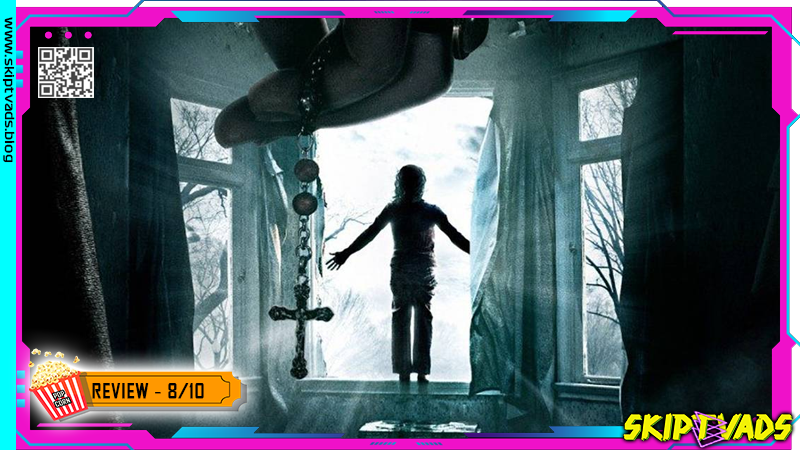

 The Conjuring 2 is one of those rare things where the sequel does not suck ass, which honestly surprised the hell out because most horror sequels just fall flat and become cash grabs. After that Annabelle disaster I was not expecting much from this whole universe thing but James Wan came back and reminded everyone how to actually do a proper scary movie, the man knows what he is doing behind the camera and it shows in every single scene, yesterday I put out the review for "The Devil Made Me Do It" that is not directed by Wan and you can notice the difference. This time Ed and Lorraine Warren head to England to deal with the Enfield case which involves a family getting terrorized by some spirit that latches onto this little girl Janet, just as the first one its a similar concept and even though it still works great, it goes straight into building tension from the start, just nonstop anxiety, one creepy moment after another without giving you much time to breathe. The scares here are not just cheap jump scares where something pops out of nowhere, the movie shows the ghost face right in front giving it body and character from the start not just an invisible entity opening doors, this gives the brain a second to process what is happening before it actually hits, that is what makes it feel organic and way more effective. The young actress playing Janet did a damn good job carrying a lot of the weight, if she had been bad the whole thing would have fallen apart but she nailed it, the second part gets into the investigation stuff where the movie plays with the idea of whether this is all a show or not, kids lie all the time so that doubt adds another layer to it. James Wan uses sounds from the time where the movie develops like the TV or the squeaky couch, its so immersive that even familiar situations scary again, he makes the whole thing work when it could have easily been another forgettable horror movie because again its the same concept as the first one just told different under different conditions, work out better than I expected, many sequels just sux because they cant do better than the first one.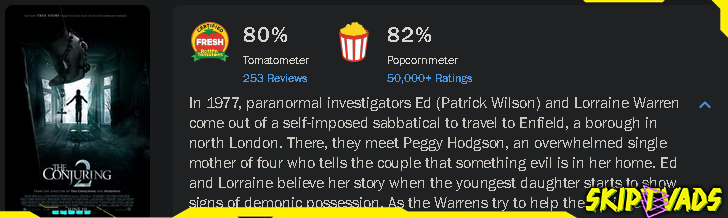

 [Source](https://tinyurl.com/5n8nb2fw)
The Hodgson family situation is what makes this work way better than most possession movies, because you actually give a shit about these people, Peggy is a single mom who hasnt received child support in three months and she is barely holding things together with four kids in a house that is literally falling apart around them. The movie does such a good job showing how broke they are without making it feel preachy or over done, Billy always asking for cookies but mom cant afford them and you can see how much that eats at her, she wants to spoil her kids but she cant even keep the lights on half the time. This isnt some perfect happy family getting torn apart by evil like in the first movie, these people are already struggling before any of this supernatural crap even starts happening, which makes it feel so much worse when things go sideways and when that old man spirit Bill Wilkins starts possessing Janet and throwing furniture around the family cant just pack up and leave because they got nowhere else to go. The neighbors see whats happening, the cops show up and actually witness the paranormal activity which never happens in these movies, usually the ghost hides when authority figures arrive but not this time, Bill Wilkins does not give a damn who shows up, he is making his presence known to everybody. Peggy is doing her best to protect her kids while also dealing with people thinking she is crazy or that her daughter is faking everything for attention, Madison Wolfe who plays Janet really sells the exhaustion, the pain and fear of being terrorized night after night by the end of the movie she looks like she has aged many years from all the stress and trauma, and its one of the best child performances I have seen in the franchise.
[Source](https://tinyurl.com/5n8nb2fw)
The Hodgson family situation is what makes this work way better than most possession movies, because you actually give a shit about these people, Peggy is a single mom who hasnt received child support in three months and she is barely holding things together with four kids in a house that is literally falling apart around them. The movie does such a good job showing how broke they are without making it feel preachy or over done, Billy always asking for cookies but mom cant afford them and you can see how much that eats at her, she wants to spoil her kids but she cant even keep the lights on half the time. This isnt some perfect happy family getting torn apart by evil like in the first movie, these people are already struggling before any of this supernatural crap even starts happening, which makes it feel so much worse when things go sideways and when that old man spirit Bill Wilkins starts possessing Janet and throwing furniture around the family cant just pack up and leave because they got nowhere else to go. The neighbors see whats happening, the cops show up and actually witness the paranormal activity which never happens in these movies, usually the ghost hides when authority figures arrive but not this time, Bill Wilkins does not give a damn who shows up, he is making his presence known to everybody. Peggy is doing her best to protect her kids while also dealing with people thinking she is crazy or that her daughter is faking everything for attention, Madison Wolfe who plays Janet really sells the exhaustion, the pain and fear of being terrorized night after night by the end of the movie she looks like she has aged many years from all the stress and trauma, and its one of the best child performances I have seen in the franchise. [Source](https://tinyurl.com/5n8nb2fw)
 [Source](https://tinyurl.com/5n8nb2fw)
On this sequel you can tell James Wan had access to way more money to work with compared to the first movie, I would assume this based on the camera work that is insane with all these long takes that glide through rooms and hallways building up tension without needing to cut away every two seconds. The way he uses shadows and lighting to hide things in plain sight is brilliant, just like when Bill appears on the couch in plain day light, there are moments where you swear you see something in the background but when you look closer its just a shadow, then other times its actually the demon and it messes with your head. The opening sequence with the Amityville case is intense as hell even though it has nothing to do with the main story, Lorraine gets pulled into a vision where she experiences the murders, and sees this demonic nun Valak who threatens to kill Ed if they dont stop investigating paranormal cases and finding out that was the vision that messed Lorraine up so bad in the first movie was a nice touch. The chemistry between Patrick Wilson and Vera Farmiga is still incredible, you believe they are a couple who love each other and the scene where ed plays guitar and sings an Elvis song for the Hodgson family is probably the most emotional moment in any of these movies, its such a small quiet moment but it shows who Ed really is as a person and why Lorraine needs him so much. They could have easily just made the Warrens these ghost hunting badasses without any real meaning but instead they feel like real people with real emotions and real fears about losing each other, although I have also complain in the past how this turns into a weakness for the franchise as most cases get solve by the love they have for each other or their families, then transfers to the victims in their cases too, which is what separates these movies from all the other generic horror movies but then again this is entertainment, everybody has a different taste.
[Source](https://tinyurl.com/5n8nb2fw)
On this sequel you can tell James Wan had access to way more money to work with compared to the first movie, I would assume this based on the camera work that is insane with all these long takes that glide through rooms and hallways building up tension without needing to cut away every two seconds. The way he uses shadows and lighting to hide things in plain sight is brilliant, just like when Bill appears on the couch in plain day light, there are moments where you swear you see something in the background but when you look closer its just a shadow, then other times its actually the demon and it messes with your head. The opening sequence with the Amityville case is intense as hell even though it has nothing to do with the main story, Lorraine gets pulled into a vision where she experiences the murders, and sees this demonic nun Valak who threatens to kill Ed if they dont stop investigating paranormal cases and finding out that was the vision that messed Lorraine up so bad in the first movie was a nice touch. The chemistry between Patrick Wilson and Vera Farmiga is still incredible, you believe they are a couple who love each other and the scene where ed plays guitar and sings an Elvis song for the Hodgson family is probably the most emotional moment in any of these movies, its such a small quiet moment but it shows who Ed really is as a person and why Lorraine needs him so much. They could have easily just made the Warrens these ghost hunting badasses without any real meaning but instead they feel like real people with real emotions and real fears about losing each other, although I have also complain in the past how this turns into a weakness for the franchise as most cases get solve by the love they have for each other or their families, then transfers to the victims in their cases too, which is what separates these movies from all the other generic horror movies but then again this is entertainment, everybody has a different taste. [Source](https://tinyurl.com/5n8nb2fw)
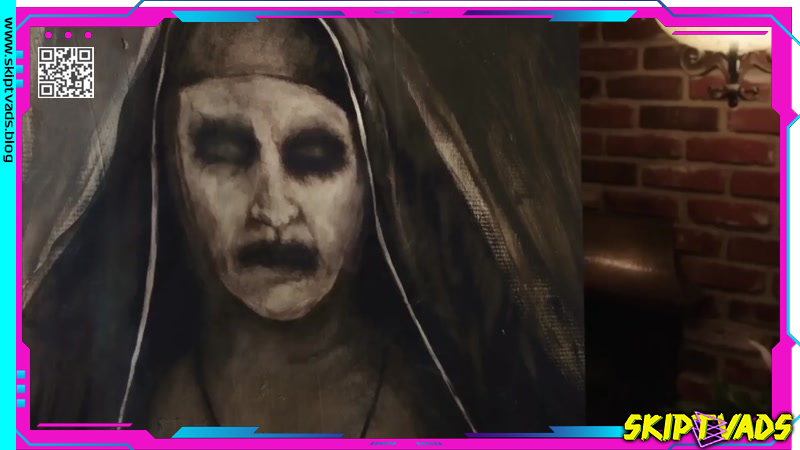 [Source](https://tinyurl.com/5n8nb2fw)
The demon nun Valak is creepy as hell even if I wish they had stuck with the original demon design that looked way cooler but I get why they went with the nun, because it works as a mockery of Lorraines faith and religion which makes the scares more complex at the same as it ties together with the Nun movies within the Conjuring Universe. Valak knows exactly how to mess with Lorraine by taking the form of something holy and twisting it into something evil, the painting scene where ed unknowingly paints the nuns face is very creepy because it shows the demon can get inside his head too without even letting him realize it and the name reveal thing where Valak hides its name throughout their house in random places is clever. Bill Wilkins himself is an interesting character because for most of the movie you think he is the main threat, he is the one possessing Janet and scaring the family, but then you find out he is just a pawn being used by Valak to keep the Warrens away and the old man just wants to see his family but he is trapped and cant move on. When Janet starts speaking in that deep voice as Bill it sounds nothing like an eleven year old girl could produce, even the skeptics in the movie cant explain how she is pulling that off without some kind of supernatural force being involved and the movie does a great job keeping that doubt alive, there are moments where it looks like Janet might be faking, but they keep questioning how it can be proof she is faking it because if they cant prove its real then the church wont help them.
[Source](https://tinyurl.com/5n8nb2fw)
The demon nun Valak is creepy as hell even if I wish they had stuck with the original demon design that looked way cooler but I get why they went with the nun, because it works as a mockery of Lorraines faith and religion which makes the scares more complex at the same as it ties together with the Nun movies within the Conjuring Universe. Valak knows exactly how to mess with Lorraine by taking the form of something holy and twisting it into something evil, the painting scene where ed unknowingly paints the nuns face is very creepy because it shows the demon can get inside his head too without even letting him realize it and the name reveal thing where Valak hides its name throughout their house in random places is clever. Bill Wilkins himself is an interesting character because for most of the movie you think he is the main threat, he is the one possessing Janet and scaring the family, but then you find out he is just a pawn being used by Valak to keep the Warrens away and the old man just wants to see his family but he is trapped and cant move on. When Janet starts speaking in that deep voice as Bill it sounds nothing like an eleven year old girl could produce, even the skeptics in the movie cant explain how she is pulling that off without some kind of supernatural force being involved and the movie does a great job keeping that doubt alive, there are moments where it looks like Janet might be faking, but they keep questioning how it can be proof she is faking it because if they cant prove its real then the church wont help them. The scares in this movie work because James Wan understands timing and atmosphere better than most horror directors that have work on the franchise, he doesnt rely on loud noises and things jumping at the camera every five minutes, the buildup is where the real fear comes from, getting to now better the characters specially those affected and tormented by the demon, there is something really special this time and is that you end up caring for Bill too even though the old man is a bastard when ever he wants to. That scene where Janet is home sick and the tv keeps changing channels by itself feels heaving within the atmosphere with rain outside and the house feeling empty and isolating, you know something bad is about to happen, but Wan takes his time letting the tension build until Bill Wilkins finally shows himself in the reflection of the tv screen. The crooked man stuff is the only part that feels unnecessary and out of place but still works so good mainly because of the lighting and the isolation of the place, it shows up twice to scare the little brother Billy, but it has nothing to do with the actual story, does feels like it was added just because they had the budget for it, that weird effect where the dog transforms into the crooked man looks cool too even though the movie is not focus on it. The climax gets a little too over the top with all the special effects, after spending two hours building this slow burn horror atmosphere it suddenly turns into this big action scene with Valak roaring and Ed almost getting him fall on a giant spike, a vision Lorraine had but its a classic cliche that the worst vision usually never end up happening, good vs evil at the end of the day. It was still intense and well done but it does feel like a downshift from the rest of the movie. Lorraine figuring out Valaks name and using it to banish the demon back to hell is satisfying even if the execution is a bit corny, the way she yells the name while Ed is dangling out a window is pure exorcist energy without having to just copy paste it, I mean we have seen almost everything about a possession from Hollywood movies so I doubt now days there is anything they can come up with that surprise anyone, as I mention its a about the build up and getting to know the characters that does the heavy lifting. The movie wraps up with everything being fine which feels a little too clean considering how brutal the haunting was, overall this is a solid 8 out of 10 for me, its not quite as tight as the first Conjuring but it does more with character development and emotional connection, which makes up for the slightly weaker pacing in the middle section and I would definitely recommend it to anyone who enjoyed the first one or just wants to see a well made horror movie that actually tries to first make you care about the characters and then try to be scary.




.png)
.gif)