Longform reviews of films, TV, anime, books, and audiobooks, written by the scrobble.life community and published to the Hive blockchain, so each one is owned by its author and can earn rewards from readers. 51,240 reviews and counting.
A Mystery-Filled, Mind-Blowing Crime Thriller. Within the first 30 minutes, you’ll think, “Wow, this guy is insanely brilliant!” But as the story unfolds, a storm of questions will swirl in your mind! Who’s the killer? Why did this happen? And the ending—completely unpredictable.
🎬 Movie: Atharva (2023) ⭐ IMDb Rating: 6.6/10 🎭 Genre: Crime | Drama | Thriller 🌐 Language: Hindi Dub Available
Story
Deva Atharva Karna has dreamed of becoming a police officer since childhood, but his asthma prevents him from achieving it. One day, someone suggests, “Bro, join the Clues Team, your future will shine!” So, Atharva joins the team that solves big cases by picking up small clues from crime scenes.
With his sharp intellect, Atharva cracks case after case. But one day, while investigating a murder, he crosses paths with his old college flame, Nithya. From there, the real game begins—love, betrayal, and murder intertwine in a terrifying puzzle.
What You’ll Love
The first half is pure edge-of-the-seat thrill.
Karthik Raju’s acting is spot on.
The investigation backdrop feels quite realistic.
What Might Disappoint
The second half gets a bit messy.
Some songs and heroism feel forced.
Final Words
If you love crime dramas and investigative thrillers, this movie is worth a watch. You’ll enjoy the first half, and with a bit of patience for the second, you’ll be fine.
Written by: David Mills
Directed by: Christine Moore
Running Time: 58 minutes
By the fourth season of The Wire, devotees of David Simon’s Baltimore epic had long since acclimatised to its deliberate, almost glacial narrative pacing, particularly within the early episodes where intricate systems are meticulously mapped before the inevitable tensions erupt. Season 4, pivoting its gaze towards the failing public school system, initially seemed poised to test even the most ardent viewer’s forbearance with its measured establishment of new characters and settings. Yet, seemingly cognisant that patience has its limits, David Mills – the episode’s writer and a close collaborator of Simon since their Homicide days – strategically reserved the episode’s most indelible, darkly comedic scene for the cold open.
Mills’ deep understanding of Simon’s worldview, forged through years of collaboration and notably informed by Simon’s seminal 1991 non-fiction work Homicide: A Year on the Killing Streets, is evident throughout. That book’s enduring mantra – “It’s better to be lucky than good” – isn’t merely quoted within Soft Eyes; it functions as the episode’s thematic bedrock. The plot hinges on precisely those unpredictable, chaotic moments of fortune or misfortune that disrupt seemingly immovable institutional inertia. The most potent example arrives when Herc, languishing on the cushy, low-stakes detail protecting Mayor Clarence Royce, commits a banal error: knocking on the wrong door. What he stumbles upon – Mayor Royce receiving oral service from his secretary – is profoundly awkward, a private indiscretion laid bare. The discomfort intensifies exponentially for Herc, as Royce now possesses knowledge of a policeman witnessing his transgression. Fearing immediate removal from this career-boosting assignment, Herc, advised by the pragmatic Carver, makes a fateful decision: he confides in Major Stan Valchek, his former, perpetually aggrieved superior. Valchek, a master of bureaucratic warfare, instantly recognises the mayor’s secret as a devastating political weapon. Herc’s accidental discovery, a moment of pure, mortifying bad luck for him, becomes Valchek’s unexpected leverage in the city’s relentless internal power struggles.
This precarious situation is further amplified by the looming mayoral primary. Conventional wisdom, shared even by Royce’s main challenger Tommy Carcetti, dictates an inevitable victory for the incumbent in Baltimore’s black-majority electorate. Royce’s colour, it seems, guarantees his position. Yet, this very political certainty creates a unique vulnerability. Lester Freamon, ever the patient strategist within the Major Case Unit, astutely exploits this moment. Knowing Royce cannot afford public retaliation against his investigations while the primary rages – such action would invite damaging scrutiny – Freamon seizes the opportunity to launch subpoenas targeting the corrupt state senator Clay Davis and his associate Thomas Krawczyk. The election becomes the essential shield allowing the investigation to advance.
The episode masterfully demonstrates how seemingly insignificant, random street violence can cascade into seismic political shifts. Detective Norris (played by the real-life former Baltimore Police Commissioner Ed Norris) dismisses a routine street killing as unsolvable, mere background noise. However, this victim proves to be a crucial witness in an ongoing case. For Carcetti, whose entire campaign is meticulously constructed around the promise of improved public safety, this murder is a godsend. It provides the concrete, visceral ammunition he needs to devastatingly assail Royce’s record during a pivotal televised debate – a moment that genuinely threatens to upend the assumed electoral trajectory. The seemingly random killing, initially dismissed by the weary Norris, becomes the catalyst for potential seismic shift in city's politics.
Simultaneously, a more profound contest for the future of West Baltimore’s youth unfolds. Marlo Stanfield, the chillingly efficient drug lord, consolidates his hegemony not just through violence but through calculated displays of apparent benevolence. His underlings distribute 200 US$ to boys for school clothes, a bid for community goodwill. Michael Lee, the group’s de facto leader, stands defiantly apart, refusing the money despite direct confrontation with Marlo himself. Crucially, Marlo doesn’t punish this insolence; he recognises its value. Michael’s fearless independence marks him as potential future talent, a cold assessment revealing Marlo’s long-term strategic vision for his organisation. This stands in stark, heartbreaking contrast to the efforts within Edward Tilghman Middle School. Assistant Principal Marcia Donnelly (Tootsie Duvall), aware of the systemic failures, personally tasks reliable student Crystal Adkins (Destiny Jackson-Evans) with delivering new clothes to the neglected Dukie Weems, bypassing his drug-addicted family entirely. Her quiet act of care is a fragile counterpoint to Marlo’s transactional outreach.
While Season 4 ostensibly centres on education, "Soft Eyes" initially appears dominated by political machinations. Yet, the theme of learning permeates from unexpected angles. Bubbles’ discovery that his nephew and street partner Sherrod (Rashad Orange) cannot perform basic arithmetic – a deficit crippling their small-scale business operations – forces a painful realisation: Sherrod abandoned school years ago. Bubbles’ subsequent, almost desperate decision to enrol the visibly older Sherrod in middle school maths classes underscores the brutal reality: functional numeracy isn’t academic; it’s fundamental survival on the streets. Conversely, Marlo provides his own brutal form of "education," with Snoop and Chris Partlow conducting meticulous handgun training sessions to Marlo's troops. This paramilitary instruction aims to transform his crew into a disciplined, efficient killing force, a chilling inversion of the classroom, preparing boys not for citizenship but for the ruthless calculus of the corners.
At the end of the day, Soft Eyes may unfold with the characteristic, deliberate pace that defines The Wire, offering few conventional thrills in its immediate plot progression. Its power lies not in explosive action, but in the meticulous laying of narrative and thematic groundwork. Mills expertly weaves the threads of random chance, political opportunism, and institutional inertia, demonstrating how a single awkward moment or a seemingly random murder can trigger chain reactions through the city’s interconnected systems. The episode’s brilliance resides in its quiet observation: the cold open’s farce, Freamon’s strategic patience, Bubbles’ heartbreak, Marlo’s cold assessment, Donnelly’s quiet compassion. It reaffirms that in Baltimore, as in life, being "lucky" often means being in the right place when the inevitable collision of systems occurs – and recognising it for what it is. This episode delivers precisely what the series demands: profound insight earned through patience, proving that the most consequential moments often arrive softly, almost unnoticed, before reshaping everything.
Hola comunidad cinéfila , por aquí les traigo un nuevo post con una recomendación de esta serie que ha pasado algo desapercibida, es de Seth Rogen quien ha estado rompiéndola con su serie The studio , y sacó la segunda temporada de este serie "platónico" que cómparte con Rose Byrne una actriz que de seguro has visto en algunos de sus otros proyectos como "malos vecinos".Estoy aprovechando mi suscripción a appletv mientras veo la cuarta temporada de The Morning Show, y encontré esta serie un poco más ligera y de comedia para ver , y la verdad me está gustando bastante, es muy al estilo de Seth Rogen ,con su humor característico, así que sí eres fan de él, seguro está te va a gustar , la primera temporada, tiene 10 capitulo y pasa bastante rápida, y la segunda temporada también cuenta con 10 capitulos y ya está disponible.
English Version
Hello film community, here I bring you a new post with a recommendation of this series that has gone somewhat unnoticed, it is from Seth Rogen who has been breaking it with his series The studio, and released the second season of this "platonic" series that he shares with Rose Byrne, an actress that you have surely seen in some of his other projects like "bad neighbors". I am taking advantage of my subscription to appletv while I watch the fourth season of The Morning Show, and I found this series a little more lighter and comedic to watch, and the truth is I am liking it a lot, it is very much in the style of Seth Rogen, with his characteristic humor, so if you are a fan of his, you will surely like this, the first season has 10 chapters and goes by quite quickly, and the second season also has 10 chapters and is now available.
#Sinopsis
Sylvia es una mujer casada y madre de tres niños que atraviesa por sus 40's, un poco agobiada de la cotidianidad, intenta encargarse de la compra de una nueva casa para la familia, mientras navega en internet,se entera que él qué fue su mejor amigo Will,por muchos años se está divorciando, y toma la impulsiva decisión de quedar con él para ver cómo le va después de tantos años de distanciarse.Este encuentro los junta de formas extrañas ,recordándoles los viejos tiempos y una amistad olvidada bastante tóxica pero divertida que rememora sus años de juventud y les trae algo de problemas a las vidas que ahora llevan cada uno.
English Version
Sylvia is a married woman and mother of three children who Crosses her 40's, a little overwhelmed by everyday life, tries to take charge of the purchase of a new house for the family, while browsing the internet, she finds out that the one who was her best friend Will, for many years is getting divorced, and makes the impulsive decision to meet with him to see how he is doing after so many years of distancing themselves. This meeting brings them together in strange ways, reminding them of old times and a forgotten friendship quite toxic but fun that recalls their younger years and brings some problems to the lives they now lead each.
**#opinion si spoilers**
Platónico es una comedia bastante ligera enfocada en como se desarrolla la vida,relaciones de amistad y pareja en medio de los 40's,dandonos una visión de dos amigos con dos puntos de vistas diferentes y con estilos de vida muy contrarios, pero que se encuentran en el medio para ser de alguna forma un apoyo para el otro,pero por supuesto primero provocando muchos problemas en la vida de ambos.Me gustó mucho el humor que manejó, es algo que no esta al nivel de The estudio por supuesto, pero igualmente se siente entretenido y divertido, Seth y Rose tienen mucha química y es genial verlos divertirse en pantalla , 😅 también porqué es divertido ver a historias de gente en sus 40's divirtiéndose y haciendo tonterías , mostrando dudas sobre su vida, a veces parece que las series se saturaran con las historias de adolescentes que no tiene nada de malo ,pero también es genial ver historias de vidas más adultas teniendo que lidiar con la maternidad, el trabajo, las aspiraciones la laborales y los problemas de pareja😅 las cuentas y todo eso ,a veces necesito ver algo más aterrizado a la realidad.
English Version
#opinion no spoilers
Platonic is a pretty light comedy focused on how life develops, friendships and relationships in the middle of the 40's, giving us a vision of two friends with two different points of view and with very opposite lifestyles, but who meet in the middle to be a support for each other in some way, but of course first causing many problems in the lives of both. I really liked the humor that was used, it is something that is not at the level of The studio of course, but it still feels entertaining and fun, Seth and Rose have a lot of chemistry and it is great to see them having fun on screen, 😅 also because it is fun to see stories of people in their 40's having fun and doing silly things, showing doubts about their lives, sometimes it seems that the series are saturated with stories of teenagers which is not wrong at all, but it is also great to see stories of more adult lives having to deal with motherhood, work, career aspirations and problems of couple😅 the accounts and all that, sometimes I need to see something more grounded in reality.
#opinion con spoilers
La verdad por las imágenes pensé que se iba a tratar sobre una serie de como dos mejores amigos reconectan mientras pasan por momentos de crisis y terminan en una relación romántica, un poco cliché pero lo hemos visto en varias comedias románticas, sin embargo este no es el caso, Sylvia tiene un matrimonio bastante genial ,con sus altos y bajos como todo, y Will está pasando por un divorcio ( que fue totalmente su culpa ) , pero ambos no reconectando una forma que se siente romántica o algo así, y aunque la serie juega bastante con ese tema ,de hacer las preguntas incómodas , de que está pasando entre estos dos ,de su están siendo infieles, o si ella le sabotea las relaciones, la verdad realmente no se siente como si fuera algo más que una buena amistad entre dos personas que se conocen por muchos años y saben todas las estupideces que son capaces de hacer , así que por eso lado me gustó y me pareció muy tierno, también me gustó mucho como retratan la lucha de Sylvia para lidiar con la maternidad y la crianza pero también con la perdida de su carrera ,y como eso la hace sentir, y lo que implica en su matrimonio, estando casada con un esposo que logró progresar mucho más en su carrera y un poco de culpa por parte de ella por sentirse algo estresada con una vida que ella realmente ama, aparte de eso me gustó el esposo , es encantador pero también tiene sus puntos débiles y hace que toda su relación se sienta muy realista.
English Version
#opinion with spoilers
Honestly, from the images I thought it was going to be about a series about how two best friends reconnect while going through moments of crisis and end up in a romantic relationship, a bit cliché but we've seen it in several romantic comedies, however this is not the case, Sylvia has a pretty great marriage, with its ups and downs like everything else, and Will is going through a divorce (which was totally his fault), but both of them don't reconnect in a way that feels romantic or anything like that, and although the series plays a lot with that theme, of asking uncomfortable questions, about what is happening between these two, if they are being unfaithful, or if she sabotages his relationships, the truth really does not feel like it is anything more than a good friendship between two people who have known each other for many years and know all the stupid things they are capable of doing, so for that reason I liked it and I found it very sweet, I also really liked how they portrayed Sylvia's struggle to deal with motherhood and upbringing but also with the loss of her career, and how that makes her feel, and what it means for her marriage, being married to a husband who managed to progress much more in his career and a little bit of guilt on her part for feeling somewhat stressed with a life that she truly loves, other than that I liked the husband, he is charming but also has his weaknesses and it makes their whole relationship feel very realistic.
#opinion con spoilersPor otro lado tenemos a Will, Will tiene mucho de la energía que le da Seth Rogen a sus personajes ,un tipo gracioso ,medio relajado que puede ser un idiota, y aquí es una especie de hipster en sus cuarentas que intenta no madurar y sentirse siempre joven, así que termina saboteando una relación muy buena que tenía con su esposa, y ahora le cuesta ver cómo está sigue adelante, mientras el intenta repetir el patrón de salir con chicas mucho más jóvenes ,y aquí no se si entra en lo gracioso del personaje y está performance que ha sonado mucho en las redes sociales últimamente "el hombre performativo" que es un tipo de hombre que usa a su favor cosas muy del feminismo o que les llame la atención a la mujeres como una herramienta para gustarles, pero no porque le interesan , aunque aquí Will no llega a ser tan idiota , pero si mucho de sus looks con ondas hippies y aestherhic jeje me lo recordaron y creo que eso le da mucho más gracia al personaje.
English Version
#opinion with spoilersOn the other hand we have Will, Will has a lot of the energy that Seth Rogen gives to his characters, a funny, somewhat relaxed guy who can be an idiot, and here he is a kind of hipster in his forties who tries not to mature and always feel young, so he ends up sabotaging a very good relationship he had with his wife, and now he has a hard time seeing how he is moving forward, while he tries to repeat the pattern of dating much younger girls, and here I don't know if it enters into the funny part of the character and this performance that has been heard a lot on social networks lately "the performative man" which is a type of man who uses very feminist things to his advantage or that catches women's attention as a tool to like them, but not because he is interested in them, although here Will does not become that idiotic, but many of his looks with hippie and aesthetic waves hehe reminded me of him and I think that makes the character much funnier.
También es muy graciosa está amistad que es bastante tóxica, pero divertida y que parece sacar lo mejor (pero también lo peor de ambos ), que ambos estén presentes en la vida del otro , muestra como termina siendo un empujoncito para ir a una mejor dirección o para tomar una decisión correcta, y eso fue lo que me gustó de la serie, no es la mejor serie de comedia de todos los tiempos, pero es entretenido y divertida ,y la relación de amistad termina siendo bastante adorable, si estás buscando algo de comedia para ver en appletv ,te la recomiendo ,le doy un 4/5⭐, y dime cinefilo, cuál ha Sido tu trabajo favorito de Seth Rogen ? , porque The estudio se convirtió en mi favorito.
Muchas gracias por leerme ! 🤭💜✨ Espero que les haya gustado el post!
Also very funny is this friendship that is quite toxic, but fun and seems to bring out the best (but also the worst in both of them), that both are present in each other's lives, shows how it ends up being a little push to go in a better direction or to make a right decision, and that was what I liked about the series, it is not the best comedy series of all time, but it is entertaining and funny, and the friendship relationship ends up being quite adorable, if you are looking for some comedy to watch on appletv, I recommend it, I give it a 4/5⭐, and tell me cinephile, what has been your favorite Seth Rogen's work? because The studio became my favorite.
Thank you very much for reading me! 🤭💜✨ I hope you liked the post!
Photos edited in Pics art and gif made in the GIF creator app, text translated in Google translator.
We saw this film almost as soon as it came out, but decided to watch it again when we noticed it was on TV.
We enjoy films about mythology.
This American-Spanish film lasts 1 hour 39 minutes and is classified as fantasy.
It is the sequel to the film Clash of the Titans, released in 2010.
Nous avions vu ce film quasi à sa sortie, mais avons décidé de le revoir quand nous avons remarqué qu'il passait à la tv.
Nous apprécions les films qui parlent des mythologies.
Ce film américano-espagnol dure 1h39 et se classe dans la catégorie fantastique.
Il est la suite du film Le Choc des Titans, sorti en 2010.
It is 10 years after the events involving Hades and the Kraken.
Perseus (Sam Worthington), demigod and son of Zeus (Liam Neeson) and Danaë, has returned to being a simple fisherman. His wife Io has died and their son Heleos (John Bell) is now 10 years old. Perseus is raising him alone.
Nous sommes 10 ans après les événements avec Hadès et le kraken.
Persée (Sam Worthington), demi-dieu, fils de Zeus (Liam Neeson) et de Danaé, est redevenu un simple pêcheur. Son épouse Io est décédée et leur fils Héléos (John Bell) a déjà 10 ans. Persée l'élève seul.
The gods of Olympus are growing weaker because humans no longer pray to them enough; they are not as devout as they once were.
Hades (Ralph Fiennes), god of the Underworld, takes advantage of this to seek revenge, allying himself with Ares (Edgar Ramirez) and the titan Cronos.
Ares will take Zeus to Hades in Tartarus, where Cronos was imprisoned. Zeus will be locked up in the Underworld.
Les Dieux de l'Olympe s'affaiblissent parce que les humains ne les prient plus suffisamment, ils ne sont plus aussi dévots que par le passé.
Hadès (Ralph Fiennes), dieu des Enfers, en profitera pour se venger, en s'alliant à Arès (Edgar Ramirez) et au titan Cronos.
Arès amènera Zeus à Hadès dans le Tartare où était emprisonné Cronos. Zeus sera enfermé dans les Enfers.
To save humanity from the ravages caused by the Titans, Perseus will be forced to abandon his quiet life as a fisherman. He teams up with his friend Andromeda (Rosamund Pike) and Agenor (Toby Kebbell), a demigod and son of Poseidon (Danny Huston). Together, they seek out Hephaestus (Bill Nighy), who leads them to the Gates of Hell to rescue Zeus.
Pour sauver l'humanité des ravages provoqués par les Titans, Persée sera obligé de sortir de son statut de pêcheur tranquille. Il s'alliera à son amie Andromède (Rosamund Pike) et à Agénor (Toby Kebell), demi-dieu, fils de Poséidon (Danny Huston). Ils iront à la recherche de Héphaïstos (Bill Nighy) qui les mènera aux Portes de l'Enfer, pour aller sauver Zeus.
My opinion and useful information /Mon avis et petites infos :
We see the same actors as in the previous instalment, even though it's not the same director.
It's a good film that gives us a little refresher on the genealogy of Greek mythology, which never hurts.
It dates back to 2012, but the special effects were already very well done.
Nous retrouvons les mêmes acteurs que dans le volet précédent, même si ce n'est pas le même réalisateur.
C'est un bon film qui nous fait un peu revoir la généalogie de la mythologie grecque, ce qui ne fait jamais de mal.
Cela date de 2012, mais les effets spéciaux étaient déjà très bien réalisés.
There has been no sequel to these two films about the Titans.
Please feel free to recommend any films or series about Greek mythology that you have enjoyed, as I may not have seen them all.
Enjoy your evenings watching television, and see you soon.
Il n'y a pas eu de suite à ces 2 volets qui parlent des Titans.
N'hésitez pas à me citer des films/séries qui parlent de la mythologie grecque et que vous avez appréciés, car je ne les ai peut-être pas tous vus.
Bonnes soirées-tv, à bientôt,
Florence
Source photo : image Qwant autorisée
I used Deepl Translator to help me out to translate French -> English.
Philip K Dick's Electric Dreams maintains surprisingly good production values throughout - even if "The Commuter" starts with a great snapshot of contemporary, budget British life, with Tesco kitchen stuff all over the place, and a renewed tea-bag, fresh from the bin. In fact, this opening is a great snapshot of the parts of British life I remember - even if I was only there for a week - and only stayed in a hotel, where I kept burning my knee on the heated towel rack every time I sat on the shitter.
The mention of a week is a pretty good one, because this story goes exactly where I thought it was going to go based on its title. A woman asks to buy a train ticket to a station that doesn't exist. Is she perhaps not commuting through space, but both space and time? And so begins my hypothesis of what this little movie is about.
And so it continues to unfold. Bitter-sweet and interesting. Beautiful shots and sets. Magnificent colour theory and costumes in every scene. This episode is a real sophisticated visual spectacle as we follow Ed the character who is our guide through this strange little story. He works at the railway - and the woman keeps coming back. He investigates and finds himself in a new place.
"Am I ill, or are you a symptom of my illness?"
What a line, too. The dialogue in this episode is full of impact. I don't want to spoil, and I won't, because this is a heart touching, human story, woven beautifully into the science fiction genre where everything isn't entirely what it seems.
What starts as a simple story gets deeper and sadly, sadder as common elements repeat day after day. It isn't a Groundhog day, but it is more than the sum of its parts.
The performances are incredible. Timothy Spall as Ed is fantastic. Hayley Squires, while playing a minor character a waitress, delivers a chilling scene that belongs on theatrical stages, not the small screen I watched this on.
Memorable. The fact that Spall's character, Ed, worked at the railway adds more layers of meaning to this story - trains are great metaphor for determinism, and it seems that this story almost (but vaguely) paints determinism as some sort of unseen monster, lurking in the shadows. I like that. A lot. It is something that is not easily done in fiction - and it isn't said at face value - but it is there, in the layered narrative.
I am gushing at the dramatisation of this story, and I haven't even read the story. But I have watched this movie adaptation, and I definitely will be tracking down the story. The Commuter made me feel genuinely hopeless for the future, something that really, literature, Art, and cinema can do.
Well, there are other things that make me feel genuinely hopeless for the future - but this is not the place to discuss them.
Philip K Dick is a masterful storyteller, and the screenwriters, actors, and entire cast and crew behind The Commuter have left an excellent legacy and told a powerful story in a powerful new way. This is a poignant, layered narrative, and well. Stop reading here. Go and experience for yourself.
The length at which people go just to trend on social media is crazy, they do this to the extent that it consumes them and would stop at nothing to ensure that they get those likes and engagement to seek validation from strangers.
No doubt social media has affected many people especially ladies who can do anything for social media media. One time someone said you better lose your dignity and home training so that you can make good money because social media money is the new oil money for jobless Nigerian youth.
Then I begin to wonder, must we expose our bodies and partake in demeaning activities just to make money online I mean there are influencers who do not lie or expose their bodies and are making it online.
Take for instance, there is a Nigerian lady called hair tutorial on Facebook who post lifestyle content, one concerning her family I.e her husband and two kids, people respect her because of how she carries herself and she has grown overtime to over 10million followers.
There is also another married lady who wears only a slacked pant and bra on Facebook, claiming to be creating content with her body and it's no one's business, even with all the exposure she is still below 2million followers.
I watched a movie on YouTube titled "clout" by the actress Bolaji Ogunmola and Femi Jacob's, the movie is all about a couple who had made it big on social media but we're losing momentum, brands began dropping deals with them and could no longer afford the expensive lifestyle. The man was calm with the whole situation but the wife was so intense with how to get them back on track and be the latest trending couple.
She told various lies just to show to the public, fake crying, fake kidnap, fake family issue, fake divorce and all. This became too much and in the end they had issues with the marriage and all the wahala and got divorced in reality.
As we can see from the movie, the lady was too obsessed with seeking social media validation that she forgot that it could affect her marital relationship. Social media influencers become so addicted to gaining likes, followers that they forget to be real and drop their morals, creating a brand built on lies would never end well espec3on social media where your business is everyone else's business.
The digital age has greatly affected people that they lose their morality and discipline, people go to extreme lengths to find relevance in the digital world. Just like one lady on social media posting pictures she took in front of a mansion and claiming it was hers, at first people were happy for her but later the truth came out that she was not the owner, she claimed she only exploited that to gain popularity on social media.
In conclusion, when one gains the visibility on social media, they also lose a part of themselves and with their loved ones. Too much lies can bring about distrust and disability in a ones personal life.
Hello, people of the Internet. Today we are going to talk about Jeffrey Dahmer, a series that portrays the life of one of the most famous serial killers in the United States and I really liked it a lot.
Hola, gente de Internet. Hoy hablaremos de Jeffrey Dahmer una serie que retrata la vida de uno de los asesinos seriales más famosos de Estados Unidos y la verdad me gustóbastante
The truth is that unlike The Act, I feel that although this series is from the killer's point of view, it doesn't idealise him and that's something that is very important when it comes to portraying stories of killers. Even though what Didy did to his daughter in The Act was atrocious, it didn't justify the murder, I feel that the way it was portrayed was very soft on the protagonist, which Jeffrey Dahmer doesn't do in his series.
La verdad es que contrario a The Act esta serie siento que aunque está desde el punto de vista del asesino, no lo idealiza y es algo que al momento de retratar historias de asesinos es muy importante. Si bien lo que hizo Didy a su hija en The Act fue atroz, eo no justificaba el asesinato, sientoquelaforma de retratar todo fue muy suave tratandose delaprotagonista, lo que Jeffrey Dahmer no hace en su serie
Although we initially empathised with this man because of his traumas and shortcomings, we also felt that something was wrong with Jeff. Certain behaviours, such as his isolationism and his excessive interest in taxidermy, left us wondering whether he was doing anything wrong.
Aunque en un principio sentimos empatía por este hombre debido a sus traumas y sus carencias, sin embargo también evidenciamos que algo no va bien en Jeff. Ciertos comportamientos como el hecho de aislarse o su desmedido interés por la taxidermia dejaban bastante que pensar
Another thing I noticed is that the series (reflecting reality) gives us a critique of racial segregation because, although on several occasions Jeff's neighbour called the police to let them know that there were strange things going on in her apartment, they never paid any attention to her just because it was a woman of colour accusing a Caucasian man. The event that made me most impotent was the teenager who was drugged by Jeff and who managed to get out and was rescued by the neighbour who once again called the police and when they arrived Jeff said that this was his drunken boyfriend even though the boy was clearly a minor, the police played it down and this resulted in the boy's death.
Otra de las cosas que noté es que la serie (reflejando la realidad) nos da una crítica a la segregación racial ya que, aunque en diversas ocasiones la vecina de Jeff llamó a la policia para haceles saber que en su apartamenteo había cosas extrañas, ellos nunca le prestaron atención solo por tratarse de una mujer de color acusando a un hombre caucásico. El evento que más me causo impotencia fue el adolescente que fue drogado por Jeff y que logró salir y fue restacado por la vecina que una vez más llamó a la policía y cuando estos llegaron Jeff dijo que ese era su novio borracho pese a que claramente el chico era un menor, lospolicias le quitaron importancia y esto resultó en la muerte del chico
The death that hurt me the most was that of Tony, a very lovable and charismatic deaf mute aspiring model who had a brief love affair with Dahmer and who ended up being killed by Dahmer when he could not control his urges to be ‘dumped’.
La muerte que más me dolió fue la de Tony, un aspirante a modelo sordo mudo muy adorable y carismático quien tuvo una breve relación amorosa con Dahmer y que terminó siendo asesinado por ete al no poder controlar sus impulsos de ser "abandonado"
The death that hurt me the most was that of Tony, a very lovable and charismatic deaf mute aspiring model who had a brief love affair with Dahmer and who ended up being killed by Dahmer when he could not control his urges to be ‘dumped’.
La composición y el com fue contada la historia esta muy bien desarrollada, el paralelismo entre Dahmer y Glenda (la vecina) ayuda a retratar los hehos sin idealizar al asesino, debido a que el espectador se siente identificado con Glenda y su frustración e impotencia al no poder hacer más por cada victima. Se evidencia la injusticia y la preferencia, fue un recurso rel y muy inteligente
And well, people, that's all for today's post, I hope you liked it. Thank you very much as always for supporting my work, I welcome new readers, I love you all very much, I send you a hug and I'll see you in another post.
Y bueno, gente, esto ha sido todo por el post de hoy, espero que les haya gustado. Muchas gracias como siempre por apoyar mi trabajo, le doy la bienvenida a los nuevos lectores, les quiero mucho a todos, les envío un abrazo y ya nos encontraremos en otro post
The Invisible Man is a Universal film I don't think I've ever seen before until now. I've of course seen the Kevin Bacon title Hollow Man which I believe holds a similar narrative to which a man creates a way to turn invisible, leading to a chaotic and evil life as he takes advantage of his newly discovered power. I had no doubt that The Invisible Man from 1933 would be a more impactful experience though. One that holds more atmosphere and attention to its story. I suspected that the story would be something similar to Hollow Man though, a similar setup. Though I was surprised to see that 1933's The Invisible Man would start immediately with our protagonist already invisible. A much more engaging introduction that has us thrown into the mystery of what had happened.
I really liked the start of the film, with him arriving at a pub and inn in search of a place to stay. Already covered in bandages and covered up, with nothing of his body to be seen. People of course immediately starting to question the oddity of his appearance. His speech relatively polite, but concise. Displaying a character that isn't necessarily evil, but one that could easily be pushed over the edge. One with great mystery to him. It's only after this that we get a glimpse of his body being invisible, followed by the inevitable context that explains he was some sort of chemist that would experiment in secret, only to have disappeared without a trace. This is a film with a short runtime, so it certainly doesn't waste any time getting into things.
The Invisible Man
The Invisible Man quickly dives into a story of desperation. One in which a man has reached a near point of insanity in attempt to return his state back to normal. Stressed and fuelled by the fear of never knowing whether he can remove what has been done. The panic sending him off into secrecy, trying to find a place in which he can work alone and devote his attention purely to the chemistry that led to this event in the first place. Though his general angered demeanor only draws in more attention. Though he finds some humour in the fact that he is invisible still. Tormenting those who try to disrupt him, coming to the realisation of his power, and that he as an invisible man can do anything he pleases, free of any consequence.
The way the invisible man adds comedy to the scenes in pretty fun. For a film that starts off with so much mystery, it quickly dives into one of idiocy. As he roams the streets invisible and mocking everyone he comes across. This is the first time I've seen such sort of humour mocking people in a film from this era, and it was done so still with some elegance to it, from the time period it comes from. The ways of speech and the general standard of its society. Though it quickly moves forward into the story of what the invisible man has done. One interesting note is how the news reports on this act, and how it assumes a disease has spread that causes the delusion of an invisible threat. I really liked this little addition, showing the world and how it would interact to such stories, making the story seem far bigger within the world it is taking place within.
Some of the descent into madness for the invisible man comes from the chemistry itself. The plant that was used to turn him invisible having displayed characteristics of madness in previous studies in the past, based on the results in other research papers. Something the scientist didn't really know of prior to his own studies. This produces the thirst for power, the lack of patience and the intensity of his belief that he is above all else. To which it worsens as time progresses. It's a nice addition that pushes the story forward, giving our protagonist more justification for becoming evil. And this gives us a reason to feel some sympathy for the character, knowing his more delirious acts were not of his original character.
With the practical and special effects within the film, it's quite an impressive production for 1933. It's shot in a really creative manner that holds some beautiful directing and cinematography to it. I think this is a perfect story to display that creativity. The movements of the camera, the movement of objects with nothing attached to them. The use of miniatures to display certain environments and events. Even the costume design to portray the invisible man. I can understand why this film had the impact it did. Even as far as to see a new comic based on the story being released this month.
Hello everyone, I hope you're all doing super well, my movie-loving friends. Today I'm here to share a new review with all of you. Can you believe I hadn't seen the one for: Mufasa: The Lion King and, well, I'm quite sleepy to say... The original from '94 is, for me, untouchable, sacred... the 2019 remake... let's see, it looked spectacular, yes, but it left me kind of so-so, so with this prequel I was going with that "let's see how it goes" vibe, with hope but, if I'm honest, also with my fair share of skepticism... first, what's it about? Well, it's the origin story of Mufasa, Simba's dad, and his super complicated relationship with his brother, which we all already know. The movie goes in depth into how they met, their beginnings, and how that legendary rivalry that is key to all of The Lion King began to brew.
And look, I’ll tell you something: the parts with Taka, seeing how he transforms into Scar, were the most captivating… there’s a complexity there that hooked me a lot, sometimes even more than Mzufasa’s story, it’s just that it’s always more interesting to see how a villain is born than just seeing the hero being a hero, right? Now, visually… wow, it’s an incredible improvement, it’s great, seriously! If you thought the 2019 version looked brutal, this one raises the bar, every tree, every drop of water… you’re left with your mouth open, the level of detail in that photorealistic animation is totally crazy… here, a point for Disney!: the animals’ expressions! Do you remember that in 2019 they sometimes seemed kind of… stiff?
Like beautiful statues, yes, but they didn't convey even a hint of emotion... well, it seems Disney got their act together and listened to the complaints. The animals here are much more expressive... you see the joy, the fear, the sadness in their eyes, in those small gestures. That, people, makes ALL the difference in connecting; they feel more real, more alive, less like... I don't know, soulless dolls. It still makes me laugh when people call them "live-action" because, come on, it's pure, state-of-the-art CGI, but hey, call it what you want, it looks spectacular!
Hola a todos, espero que estén super bien amigos amantes del cine, hoy les vengo a compartir una nueva reseña a todos ustedes, pueden creer que no me había visto la de: Mufasa: El Rey León y, bueno, tengo bastante sueño decir.. La original del 94 es, para mí, intocable, sagrada.. el remake de 2019… a ver, se veía espectacular, sí, pero me dejó medio meh, así que con esta precuela iba con esa onda de "a ver qué tal", con esperanza pero, si les soy honesto, también con mi buena dosis de escepticismo.. primero, ¿de qué va la cosa? Pues es la historia de origen de Mufasa, el papá de Simba, y su relación súper complicada con su hermano, que ya todos ubicamos, la peli se mete a fondo en cómo se conocieron, sus inicios, y cómo empezó a cocinarse esa rivalidad legendaria que es clave en todo El Rey León.
Y miren, les digo algo: las partes de Taka, viendo cómo se va transformando en Scar, fueron de lo más atrapante.. ahí hay una complejidad que me enganchó un montón, a veces incluso más que la historia de Mufasa, es que siempre es más interesante ver cómo nace un villano que solo ver al héroe siendo héroe, ¿o no? Ahora, visualmente… wow, es una mejora increíble, es genial, en serio! Si creían que la de 2019 se veía brutal, esta le sube el nivel, cada árbol, cada gota de agua… te quedas con la boca abierta, el nivel de detalle en esa animación fotorrealista es una locura total.. acá, ¡puntazo para Disney!: ¡las expresiones de los animales! ¿Se acuerdan que en la de 2019 a veces parecían medio… tiesos?
Como estatuas hermosas, sí, pero que no te transmitían ni media emoción.. bueno, parece que Disney se puso las pilas y escuchó las quejas, acá los animales son muchísimo más expresivos.. les ves la alegría, el miedo, la tristeza en los ojos, en esos pequeños gestos, eso, gente, hace TODA la diferencia para conectar; se sienten más reales, más vivos, menos como… no sé, muñecos sin alma. Todavía me da risa cuando la gente le dice "live-action" porque, vamos, es puro CGI del más avanzado, pero bueno, llámenle como quieran, ¡se ve espectacular!
But let's see, here comes the million-dollar question, the one that's been on my mind: did we need this movie? That's the big discussion, because yes, visually it's a gem, and I appreciate the improved animation, but the story itself... a lot of times it felt like... it was unnecessary, a lot of the problems and lessons that Mufasa learns – about being a leader, responsibility, overcoming loss, finding your place – felt like an echo of what Simba went through in the original... it was like, "Oh, so being a leader isn't just about having power but also making difficult decisions? I know that one!" "The past doesn't define your future? I know that one!" "Friendship and loyalty are key? You don't say that!" Rafiki could almost tell you the entire story of Mufasa in a 30-second speech in the original and you’d still get the hang of it...
That feeling of “I’ve seen this before” made the film, while enjoyable, kind of lacking... that touch, that special spark that made the original, and even other Disney classics from the 90s like Aladdin or Beauty and the Beast, so unforgettable and so touched your heart... it’s not a bad film by any means, but it’s just not on the level of those monsters, the plot itself is like a journey, a quest. We follow a small group of five animals, including Mufasa and Taka as teenagers, who all, in some way, lost their homes or their families... they embark on this adventure to find a legendary promised land called Milele... it has that “road trip” vibe, which is interesting, and allows for some cool dynamics to develop between them as they face arguments together, you see how they bond, and that part is sweet. And speaking of the journey, it's directed by Barry Jenkins, the genius behind Moonlight... that's a heavy name, you go in expecting something really deep, with substance... yes, really, there are moments where you feel his hand, his way of understanding complex emotions (even if they're animal-like here).
He tries to give depth to the themes of destiny, of what it means to be born a king versus forging your own path, and there's even a subtle critique of tyrants and xenophobia, which I appreciated... it's not like they throw it in your face, but there's that idea of judging others instead of understanding them. Buuuut, and this is just my impression, at times I felt like his artistic vision clashed a little with the Disney machinery... you know, that need to meet certain points, to keep it light, to make sure that as many people as possible like it, it felt like a film that wanted to be denser, more complex, but it seemed like they put the handbrake on it, and in the end it didn't manage to exploit its full potential... it was caught between wanting to be a really serious character study and being the typical family blockbuster.
Pero a ver, aquí viene la pregunta del millón, lo que me estuvo dando vueltas en la cabeza: necesitábamos esta película? Esa es la gran discusión, porque sí, visualmente es una joya, y se agradece que mejoraran la animación, pero la historia en sí.. muchas veces se sintió como que... sobraba, un montón de los problemas y las lecciones que Mufasa aprende –sobre ser líder, la responsabilidad, superar las pérdidas, encontrar tu lugar– se sintieron como un eco de lo que ya vivió Simba en la original.. era como, "Ah, ¿que ser líder no es solo tener poder sino tomar decisiones difíciles? ¡Ya me la sé!". "¿Que el pasado no define tu futuro? ¡Ya lo sé!". "¿Que la amistad y la lealtad son clave? ¡No me digas!". Casi casi que Rafiki te podía contar toda la historia de Mufasa en un discursito de 30 segundos en la original y le agarrábamos la onda igual..
Esa sensación de "esto ya lo vi", hizo que la película, aunque se disfruta, le faltara como que... ese toque, esa chispa especial que hizo que la original, e incluso otros clásicos de Disney de los 90 como Aladdín o La Bella y la Bestia, fueran tan inolvidables y te llegaran al corazón.. no es una mala película, para nada, pero simplemente no está al nivel de esos monstruos, la trama en sí es como un viaje, una búsqueda. Seguimos a un grupito de cinco animales, incluyendo a Mufasa y Taka de jóvenes, que todos, de alguna forma, perdieron su hogar o su familia.. se lanzan a esta aventura para encontrar una tierra prometida legendaria llamada Milele.. tiene esa vibra de "road trip", que está interesante, y permite que se desarrollen algunas dinámicas chidas entre ellos mientras enfrentan broncas juntos, ves cómo se van uniendo, y esa parte está tierna. Y hablando del viaje, la dirige Barry Jenkins, el genio detrás de Moonlight.. ese es un nombre pesado, uno entra esperando algo bien profundo, con sustancia.. sí, la verdad, hay momentos donde sientes su mano, su forma de entender las emociones complejas (aunque sean de animales aquí).
Intenta meterle profundidad a los temas del destino, de qué significa nacer rey contra forjar tu propio camino, y hasta hay una crítica sutil a los tiranos y a la xenofobia, cosa que agradecí.. no es que te lo avienten a la cara, pero ahí está esa idea de juzgar a otros en lugar de entenderlos. Peeero, y esto es solo mi impresión, a veces sentí como que su visión artística chocó un poquito con la maquinaria de Disney.. ya saben, esa necesidad de cumplir con ciertos puntos, de mantenerla ligerita, de asegurarse que le guste a la mayor cantidad de gente posible, se sintió como una película que quería ser más densa, más compleja, pero como que le metieron freno de mano, y al final no llega a explotar todo su potencial.. queda como atrapada entre querer ser un estudio de personajes bien serio y ser el típico blockbuster familiar.
And of course, as expected, there's a dose of Disney nostalgia to be had. There's Timon, Pumbaa, Simba, and Nala, all hanging around... Rafiki, obviously, telling the story to Kiara, Simba's daughter... and, well, watch out! Don't get me wrong, I LOVE these characters. Who doesn't, right? Timon and Pumbaa continue to get their good laughs... buuuut and here comes the big BUT for me... putting them in felt kind of forced, like pure fan service because yes, the story jumps from Mufasa's past to the "present" with Rafiki spreading the gossip, and Timon and Pumbaa putting in their two cents with their usual antics... I mean, I understand why they do it –to lighten the perhaps denser moments of Mufasa's story, to add humor and so the kids don't get bored, it's a family movie, I get it... but at times I felt like the movie didn't have faith in its own main story, as if it needed to constantly remind us of the original.
I was left wishing they would get fully into Mufasa's timeline and let it be, let it breathe on its own, then, the music. Lin-Manuel Miranda wrote the songs and... well, they're good... they deliver. Some of them stick with you right away, but if I'm honest, I can't remember a single new melody, like they didn't feel memorable or sparky, especially when compared to the music from the original, which is legendary! It's like the music is a reflection of the film: well done, enjoyable, but not very impactful... I'm actually kind of in the middle. I enjoyed it more than I thought I would, though! Despite my objections about whether it was necessary and the overuse of nostalgia, it had me hooked from start to finish... there are some really nice moments, especially when you see how the five characters get along on their journey. When the film focuses on them, their struggles, and how they become friends, that's where it really shines!
Y claro, como era de esperarse, no podía faltar la dosis de nostalgia marca Disney, ahí están Timón, Pumba, Simba y Nala echándose una aparecida.. Rafiki, obvio, contándole el cuento a Kiara, la hija de Simba.. y a ver, ¡ojo! No me malentiendan, yo AMO a estos personajes. ¿Quién no, verdad? Timón y Pumba siguen sacando sus buenas carcajadas.. peeero y aquí viene el gran PERO para mí... meterlos se sintió medio a la fuerza, como puro fan service porque sí, la historia va brincando del pasado de Mufasa al "presente" con Rafiki echando el chisme, y Timón y Pumba metiendo su cuchara con sus payasadas de siempre.. a ver, entiendo por qué lo hacen –pa' alivianar los momentos quizás más densos de la historia de Mufasa, meterle humor y que los niños no se aburran, es una peli familiar, lo capto.. pero a veces sentí que la película no le tenía fe a su propia historia principal, como si necesitara recordarnos a cada rato la original.
Me quedé con ganas de que se clavaran de lleno en la línea temporal de Mufasa y la dejaran ser, que respirara solita, luego, la música. Lin-Manuel Miranda hizo las canciones y… pues, están bien.. cumplen. Algunas se te pegan en el momento, pero si les soy sincero, no me acordaba ni de una sola melodía nueva, como que no se sintieron memorables o con esa chispa, ¡especialmente si las comparas con la musica de la original, que es legendario! Es como si la música fuera un reflejo de la peli: bien hecha, agradable, pero que no te marca.. yo la verdad, me quedo como en medio. La disfruté más de lo que pensaba, ¡eso sí! A pesar de mis peros sobre si era necesaria y el abuso de la nostalgia, me tuvo enganchado de principio a fin.. hay momentos que sí están bien bonitos, especialmente cuando ves cómo se llevan los cinco personajes en su viaje. Cuando la película se enfoca en ellos, en sus problemas y en cómo se van haciendo amigos, ¡ahí es donde realmente brilla!
Okay, my people, so what are we getting at with all this? Look, Mufasa: The Lion King, visually, is brilliant, there's no debating that! Animation has taken a huge leap forward, and the world draws you in, pulls you right in... it's an enjoyable adventure, and if you're one of those die-hard Lion King fans, you're sure to find cool things in it, but it also feels like one of those well-made, expensive spin-offs that complements, but not something we really needed to see. It's entertaining, yes, but it lacks that emotional punch, that heart that made the original a masterpiece.
It's one of those movies that's good, but you're left thinking it could have been brutal! Surely many people will see it, enjoy it, and then... well, they'll more or less forget about it. If I had to give it a rating, I'd give it a 7.5/10. It's not that I hated it; in fact, I did like several things individually. But did it make me see Mufasa differently? Honestly, no... it filled in some blanks, yes, but I don't know if they were blanks that needed filling... what's up with you? If you've seen it, what did you think? Did it live up to your expectations? Do you think it was necessary? Well... that's it for today's review. I hope you're all well, see you! Bye!
Bueno, mi gente, ¿y entonces a qué llegamos con todo esto? Miren, Mufasa: El Rey León, visualmente, es genial, ¡eso ni se discute! La animación dio un salto enorme, y el mundo te atrapa, te mete de lleno.. es una aventura que se disfruta, y si eres de esos fans a morir de El Rey León, seguro le vas a encontrar cosas chidas, pero también se siente como un "spin-off" de esos bien hechos, bien caros, que complementa, pero no como algo que de verdad necesitábamos ver, entretiene, sí, pero le falta ese dardo emocional, ese corazón que hizo de la original una obra maestra.
Es de esas pelis que están buenas, pero te quedas pensando que pudo haber sido ¡brutal! Seguramente mucha gente la va a ver, la va a disfrutar y luego… pues, se les va a olvidar más o menos, si le tuviera que poner calificación, yo le daría un 7.5/10, no es que la odiara, de hecho, varias cositas por separado sí me gustaron. Pero, me hizo ver a Mufasa de otra forma? La verdad, no.. rellenó algunos huecos, sí, pero no sé si eran huecos que urgía rellenar.. ustedes, ¿qué onda? Si ya la vieron, ¿qué les pareció? ¿Les cumplió las expectativas? ¿Creen que hacía falta? Y bueno.. hasta aquí la reseña de hoy, espero que estén bien, nos vemos! Byebye!
Tell me... have you seen this series? Has it caught your attention? Tell me what you thought of this review with my opinion, and tell me if it has made you want to watch this series. You can leave me in the comments your recommendations for future publications! 😊
Cuéntame.. ¿Has visto esta serie? Te ha llamado un poquito la atención? Dime que te pareció esta reseña con mi opinión, y dime si te han dado ganas de ver esta series. Puedes dejarme en los comentarios tus recomendaciones para las próximas publicaciones!! 😊
📲 My social media:
See you next time! 👀🎞💗
Traduced with DeepL
Banners y separadores hechos con Canva Pro. Banners and dividers made with Canva Pro.
Within the sprawling chronicles of Star Trek, numerous episodes have stumbled under the weight of derivative premises, only to be salvaged by the alchemy of superior execution, compelling performances, or thematic depth. The Schizoid Man, the sixth episode of Star Trek: The Next Generation's second season, stands firmly within this category. While its central narrative device – the transference of a human consciousness into another being – traverses well-worn Trek territory, the episode ultimately transcends its predictable scaffolding through exceptional acting and a focused, if imperfect, exploration of identity and mortality, making it a respectable, if not revolutionary, entry in the franchise’s canon.
The plot initiates with the USS Enterprise-D responding to a distress signal emanating from the remote laboratory of Dr. Ira Graves, portrayed by W. Morgan Sheppard, lauded as the Federation’s pre-eminent cybernetics expert. The call originates from his personal assistant, Kareen Briannon (Barbara Alyn Woods), who expresses profound concern over Graves’ rapidly deteriorating physical condition and increasingly volatile mood swings. The away team dispatched to investigate comprises the Vulcan physician Dr. Selar (Suzan Plakson), temporarily filling the role of Chief Medical Officer during Dr. Pulaski’s absence due to a concurrent medical crisis, alongside Lieutenant Commander Data. Upon arrival, Graves presents as a terminally ill, profoundly arrogant, and misanthropic figure, yet exhibits an immediate, intense fascination with Data. This fixation intensifies dramatically upon learning Data was constructed by Dr. Noonien Soongb, whom Graves labels as merely his "pupil," leading him to audaciously declare himself "Data’s grandfather." Dr. Selar subsequently delivers the grim diagnosis: Graves suffers from Darnay’s disease, a fatal and incurable neurological degeneration. Shortly thereafter, Data solemnly reports that Graves expired within his arms.
The true narrative engine ignites upon the crew’s return to the Enterprise. Data begins exhibiting profoundly uncharacteristic behaviour: his speech patterns grow abrasive and condescending, he displays inappropriate rudeness towards colleagues, and develops a sudden, unsettling preoccupation with female crew members, particularly Kareen. Counselor Troi’s empathic abilities soon detect a disturbing anomaly – two distinct personalities cohabiting Data’s positronic matrix. The revelation follows swiftly: Graves, exploiting Data’s temporary deactivation during the away mission, had utilised his unparalleled expertise to execute a complete neural upload, transferring his own consciousness and personality into the android’s body. In Ten Forward, the Graves-possessed Data confesses this act to a horrified Kareen, simultaneously revealing his lifelong, possessive obsession with her and callously offering to transfer her consciousness into a gynoid body once he locates a suitable one. Her visceral rejection sets the stage for Captain Picard’s direct confrontation, escalating into physical violence as Graves abuses Data’s superior strength. The resolution arrives when Graves, confronted by Picard’s unwavering moral stance and perhaps glimpsing the monstrous reflection of his own actions within Data’s stolen form, experiences a moment of profound remorse. He elects to transfer his consciousness into the ship’s computer core, sacrificing his human sentience and emotional capacity for existence as mere data, thereby restoring Data to his original state.
It is impossible to discuss The Schizoid Man without acknowledging the significant precedent it follows. The concept of alien entities or human consciousnesses usurping the bodies of main characters is a foundational Trek trope, explicitly established in The Original Series’s The Enemy Within and revisited relatively recently in TNG’s own Conspiracy. What lends Tracy Tormé’s script a degree of freshness is its specific application to Data, forcing a direct confrontation between human mortality and artificial longevity. The episode probes provocative questions: What constitutes true humanity? Is the preservation of a single, deeply flawed human life ethically justifiable if it necessitates the erasure of a unique, sentient artificial being? While utilising Data as the vessel for this dilemma is inherently fascinating, the narrative squanders some potent thematic potential. Crucially, Graves is rendered as an almost uniformly repellent character – defined by colossal ego, uncontrollable lust, and the bitter desperation of a man facing the end of a long, privileged life. This portrayal significantly skews the ethical quandary. The moral weight would shift dramatically, and the central conflict become far more complex and disturbing, had the consciousness attempting to supplant Data belonged to a young, idealistic individual or even a child facing premature death. Graves’ inherent unpleasantness makes his ultimate defeat feel less like a profound ethical victory and more like the removal of a nuisance.
Where the episode undeniably excels is in its acting. W. Morgan Sheppard imbues the ailing Graves with a captivating blend of intellectual arrogance, physical frailty, and a flickering, almost pitiable, awareness of his own mortality. His initial scenes possess a raw, uncomfortable power. However, the true masterclass arrives with Brent Spiner’s dual performance. He meticulously constructs the Graves-possessed Data, initially signalling the intrusion through subtle vocal inflections and minute shifts in posture – details observant viewers can detect before the Enterprise crew, creating effective dramatic irony. As Graves’ control solidifies, Spiner transforms the beloved android into a chillingly plausible threat: arrogant, sexually predatory, and wielding Data’s physical prowess with dangerous intent. This ability to dismantle Data’s core identity so convincingly remains one of Spiner’s finest achievements.
Nevertheless, the episode falters in execution at critical junctures. The most glaring misstep is the funeral scene for Graves. Data/Graves delivers a eulogy so extravagantly self-aggrandising and floridly inappropriate that even the usually stoic Captain Picard visibly squirms, compelled to abruptly terminate the proceedings – a moment that rings false and undermines the solemnity expected aboard Starfleet’s flagship. Furthermore, the climax suffers from a distinct lack of tension and narrative satisfaction. Graves’ sudden, almost instantaneous realisation of his wrongdoing and subsequent self-sacrifice feels profoundly unearned. After establishing him as a man consumed by narcissism and a desperate will to survive at any cost, his swift moral epiphany lacks sufficient psychological groundwork, rendering the resolution anticlimactic and emotionally hollow. The villain simply sees the light and vanishes, robbing the conflict of its necessary weight.
Historically, the episode holds significance for introducing Dr. Selar, the first prominent Vulcan character to grace The Next Generation. Although Plakson’s Selar departed after this single appearance, her presence formally shattered Gene Roddenberry’s initial, often-cited embargo against featuring Vulcans in the new series. Subsequent references to Selar within the show’s lore cemented her place in TNG’s expanded universe, paving the way for later Vulcan characters like Tuvok in Voyager. Additionally, The Schizoid Man delights fans with subtle cultural nods. Its title directly references the eponymous episode of the 1960s British cult series The Prisoner; intriguingly, Prisoner star Patrick McGoohan was originally slated to portray Graves before scheduling conflicts intervened. The haunting use of the song "If I Had a Heart" from The Wizard of Oz first sung by the dying Graves and later grotesquely echoed by his Data incarnation adds a layer of poignant, unsettling irony.
At the end, *The Schizoid Man? is a competently crafted episode that demonstrates TNG’s ability to elevate familiar concepts through strong character work and focused performances, particularly the outstanding dual turn by Brent Spiner.While it offers substantial rewards for dedicated Trekkies appreciating its acting nuances and historical footnotes, its derivative core plot and execution flaws prevent it from ascending to the ranks of The Next Generation’s most memorable or thematically profound episodes, particularly within the stronger latter half of its second season.
Amo mi casa maestra psicopedagoga vendedora reparadora acuariana madre de tres. Y que la vida los trate amablemente a todos.that life treats them kindly to all
This movie left me with more questions than answers, and that's when my son told me about the power of the script, Mom. You simply won't find the answers anywhere, but I was left with many.
We have mysterious predators that humans have called Reapers. They emerged from underground sinkholes and exterminated almost all of humanity. Only those at an altitude greater than 2,439 meters survive. Reapers have that limit; humans don't know why. Humans don't know what they are, but it was the only way to survive in communes at that altitude.
Esta película me dejo más preguntas que respuestas y es allí cuando mi hijo me dice el poder del guion mamá, las respuestas simplemente no las encontraras en ningún lado, pero a mi me quedaron muchas.
Tenemos unos misteriosos depredadores que los humanos los han llamado Segadores, ellos emergieron de sumideros subterráneos y exterminaron a la casi toda la humanidad. Solo sobreviven los que están a una altura mayor de 2.439 metros. Los segadores tienen ese limite, lo humanos no saben porque. Los humanos no saben lo que son, pero fue la única forma de sobrevivir en comunas a esa altura.
Three years have passed since they gathered at the Lost Gulch Shelter in Colorado's Front Range. We found the home of Will, the father of Hunter, who suffers from a lung disease. Will lost his wife Tara to one of these monsters. They were accompanying scientist Nina to discover how to kill them, as guns didn't seem to do anything to them.
Will realizes he's running out of oxygen filters and medicine for Hunter. Eventually, three people set out on the journey to get more filters, and Nina, one of them, wants to go to her old lab. She's sure she'll find a way to eliminate the Reapers there. She needs the chemical combination that makes bullets penetrate the Reapers' skin.
As a scientist, Nina invented a compass that can detect a Reaper approaching thanks to its strong bioelectromagnetic pulses. Along the way, they collect supplies and weapons.
Han pasado tres años desde que se agruparon en el Refugio Lost Gulch en Front Range, Colorado, encontramos el hogar de Will que es el padre del niño Hunter, quien padece una enfermedad pulmonar. Will perdió a su esposa Tara por uno de estos monstruos, acompañaban a la científica Nina para descubrir como matarlos, porque las armas no parecen hacerle nada.
Will se da cuenta de que se está quedando sin filtros de oxígeno y medicinas para Hunter. Al final tres personas emprenden el viaje, bajar por más filtros y Nina que es una de ellas quiere ir a su antiguo laboratorio, ella esta segura de encontrar allí la manera de eliminar a los Segadores. Necesita la combinación química que haga que las balas penetren la piel de los segadores.
Nina como científica inventó una brújula que puede detectar a un Segador cuando se acerca a ellos gracias a sus fuertes pulsos bioelectromagnéticos. En el camino van recolectando provisiones y armas.
Of course, along the way, they have a close encounter with the Reapers, who will have them running for their lives. To get there, they'll have to enter a mine below ground level, where one of the companions will be killed by a Reaper's tentacle. Nina and Will manage to escape and return to the surface, above the safety line.
They gather medical supplies and have to confront a Reaper in the facility. Nina wants to go to the lab to look for magnesium oxide. She hypothesizes that the Reaper's impenetrable scales produce magnetic defense mechanisms, and a bullet mixed with magnesium mineral will penetrate and cause the Reaper to explode.
As I always say, I like movies that end well, but they leave us with many questions about how these monsters came to Earth, how humans realized the limits of height and saved their lives. It's quite entertaining, with few characters.
Por supuesto en el camino tienen encuentro cercano con los segadores que los pondrán a correr por su vida. Para acostar el camino tendrán que entrar a una mina que esta por debajo del nivel y allí una de las acompañantes perderá la vida atravesada por un tentáculo de un segador. Nina y Will logran escapar y regresar a la superficie, por encima de la línea de seguridad.
Recojen las provisiones médicas y tienen que enfrentarse a un segador en las instalaciones. Nina quiere ir al laboratorio para buscar óxido de magnesio, ella tiene la hipótesis de que las escamas impenetrables del Segador producen mecanismos de defensa de tipo magnéticos y una bala mezclada con un mineral de magnesio, penetrará y hará explotar al segador.
Como siempre les digo me gustan las películas que terminan bien, pero nos dejan mucha preguntas sobre como llegaron estos monstruos a la tierra, como los humanos se dieron cuenta de los limites de la altura y salvaron sus vidas. Es bastante entretenida y con pocos personajes.
🎥 🎬
Fotos con fuente identificadas
Traducido con google (versión gratuita)
Photos with source identified
Translated with google (free version)
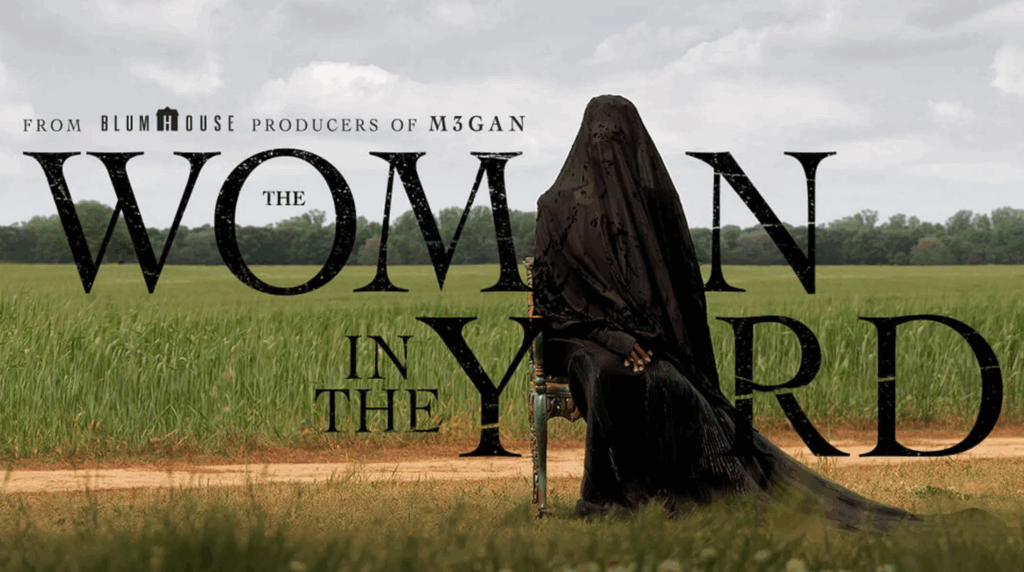
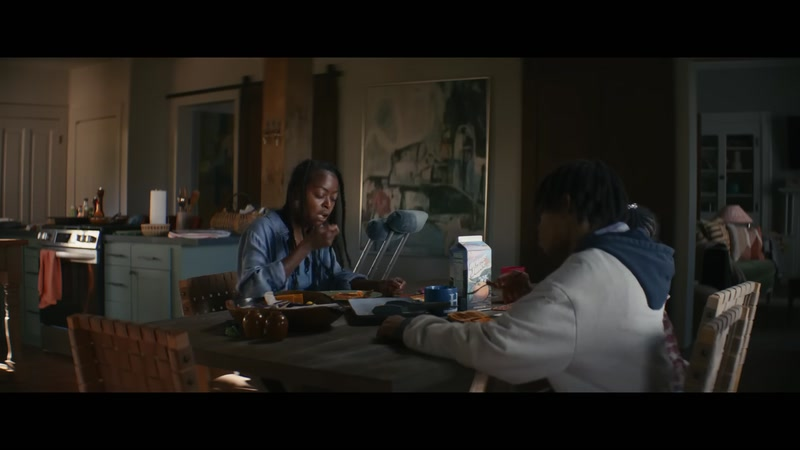
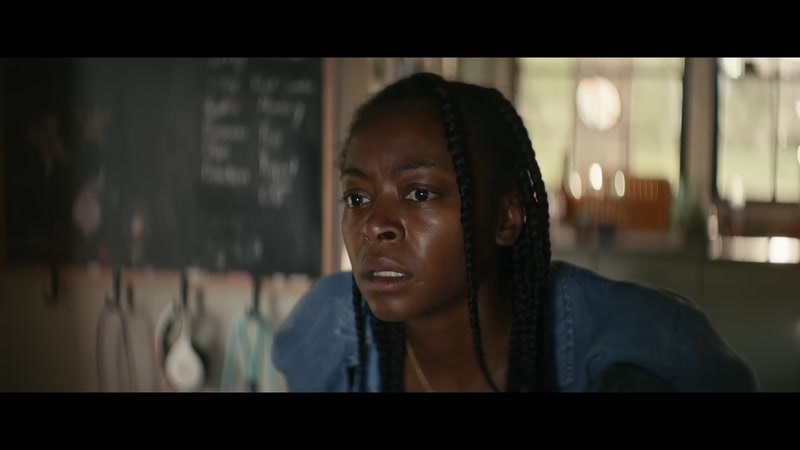
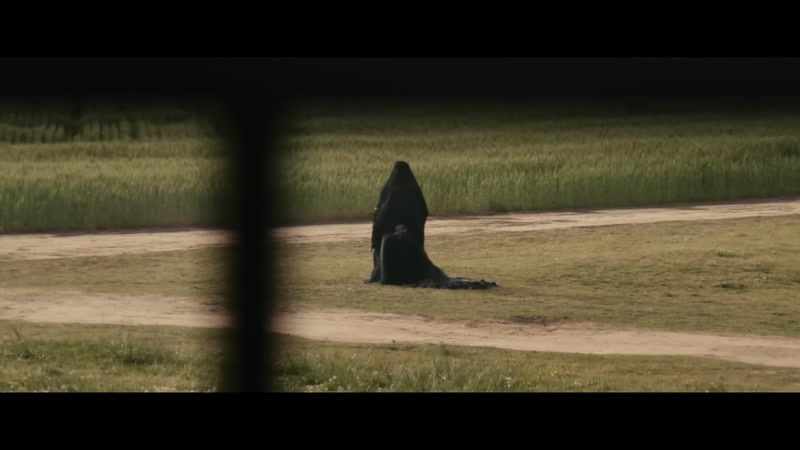
When I sat down to watch The Woman in the Yard I was expecting some supernatural horror thing because you see that photo of the woman covered with the black veil sitting in the yard and you expect it to be pure terror. Although the movie has its moments and Danielle Deadwyler does a pretty good job with the main character, this isn't the type of horror you expect when you see it's a Blumhouse production but these people don't want to climb out of the hole with movies like Imaginary and Night Swim that were pretty mediocre and now this. Director Jaume Collet Serra presents a story about Ramona, a widowed mother living with her two kids on a farm away from everything, she has to carry the death of her husband which was a car accident where she also got hurt, the kids are almost taking care of themselves because mom is so deep in her depression that everything is a total disaster but she doesn't do anything to fix it because she's in her pain. One day this mysterious woman appears sitting in the house's yard, dressed completely in black with a veil covering her face, and she stays there sitting without moving looking towards the house all day, Ramona goes out to talk to her but the woman knows too much about her life and tells her things that scare her a lot, then she goes back to the house and tells the kids not to worry that the lady will leave at some point but the truth is the woman starts getting closer and closer to the house as the hours pass.
Cuando me senté a ver The Woman in the Yard yo esperaba una vaina de terror sobrenatural porque uno ve esa foto de la mujer cubierta con el velo negro sentada en el patio y uno se espera que sea terror puro. Aunque la película tiene sus momentos y Danielle Deadwyler hace un trabajo bastante bueno con el personaje principal, este no es el tipo de terror que uno espera cuando ve que es una produccion de Blumhouse pero es que esta gente no quiere salir del foso con pelis como Imaginary y Night Swim que fueron bastante mediocres y ahora esto. El director Jaume Collet Serra presenta una historia sobre Ramona, una madre viuda que vive con sus dos hijos en una granja alejada de todo, ella tiene uqe cargar con la muerte de su esposo que fue un accidente de carro donde ella también salió herida, los niños casi que se están cuidando solos porque la mamá anfa tan metida en su depresión que todo es un desastre total pero ella no hace nada para arreglarlo porque está en su dolor. Un dia aparece esta mujer misteriosa sentada en el patio de la casa, vestida completamente de negro con un velo cubriendo su cara, y se queda ahi sentada sin moverse mirando hacia la casa todo el dia, Ramona sale a hablar con ella pero la mujer sabe demasiado sobre su vida y le dice cosas que la asustan muchisimo, entonces regresa a la casa y les dice a los niños que no se preocupen que la tipa en algún momento se va a ir pero la verdad es que la mujer empieza a acercarse cada vez más a la casa conforme pasan las horas.
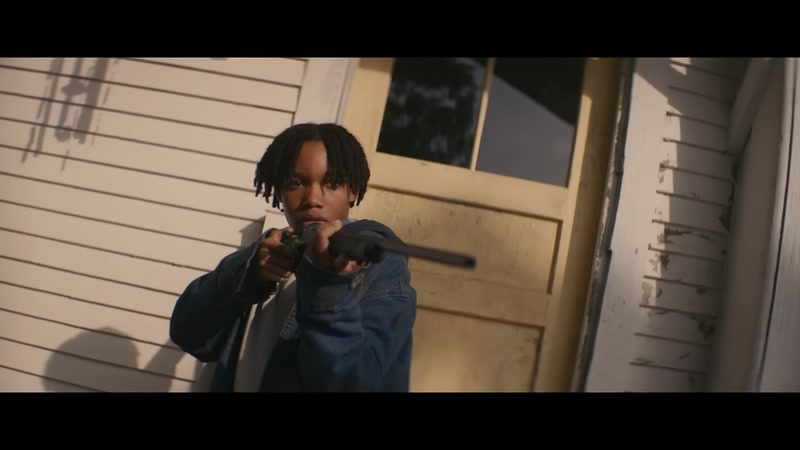
The older son Taylor is a typical horror movie teenager, he's mad at mom all the time although here I understand him because his mom is being total shit to them, the truth is he tries to take care of his little sister Annie and do everything mom should be doing but she's upstairs in her room watching videos of her dead husband over and over without paying attention to her kids. The movie is super slow for like an hour where it's just watching that lady sitting outside moving a little bit closer to the house and the family inside looking through the windows wondering what the hell this woman wants. At some point Taylor grabs his dad's rifle and goes out to confront the woman in the yard because he's fed up and the woman tells him his mom is lying to him about the night his father died and when he tells Ramona about this she finally admits the truth and that's where a flashback of that fatal night appears, turns out Ramona and her husband fought because she wasn't happy with her life on the farm, she tells him she moved there but didn't want to, that she's not happy taking care of the kids and the animals and all that stuff he wanted for the family, the husband tries to talk but the woman keeps fighting and she's the one driving and she sees the veiled woman in the rearview mirror and gets distracted and that's when the accident happens.
El hijo mayor Taylor es un adolescente tipico de peliculas de terror, está molesto con la mampá todo el tiempo aunque aquí lo entiendo porque su mama está siendo una mierda total con ellos, lo cierto es que el trata de cuidar a su hermanita pequeña Annie y de hacer todo lo que la mamá tiene que hacer pero ella está arriba en su cuarto viendo videos de su esposo muerto una y otra vez sin prestarle atención a sus hijos. La pelicula es super lenta psa como una hora donde solo es ver a la tipa esa sentada afuera moviendose un poquito mas cerca de la casa y a la familia adentro mirando por las ventanas preguntandose que carajo quiere esta señora. En algun punto Taylor agarra el rifle de su papa y sale a enfrentar a la mujer en el patio porque ya está harto y la mujer le dice que su mamá le está mintiendo sobre la noche que murió su padre y cuando el le dice a Ramona sobre esto ella finalmente admite la verdad y ahí es donde aparece un flashback de esa noche fatal, resulta que Ramona y su esposo pelearon porque ella no era feliz con su vida en la granja, ella le dice que se mudó allí pero no queria hacerlo, que no es feliz cuidando a los niños y los animales y todo eso que el queria para la familia, el esposo trata de hablar pero la caraja sigue peleando y ella es la que va manejando y ella ve a la mujer del velo en el espejo retrovisor y se distrae y allí ocurre el accidente.
Here the movie starts revealing what's happening and that veiled woman isn't any ghost or anything supernatural, she's a physical manifestation of Ramona's depression and her suicidal thoughts, the woman is there because Ramona called her, she prays every day asking for strength but it's not strength to move forward but strength to end her life and leave her kids completely orphaned, what a crazy woman. After that everything gets very messy with dreams, flashbacks and changes where you don't know what's real and what isn't, you see Ramona in the yard woman's place, you see shadows attacking the family inside the house, there's a scene where it looks like Ramona stabs her daughter but it turns out to be just a pillow, everything is confusing and hard to follow because they're throwing too much information at you in too little time without giving you a chance to catch anything. The part that screwed me up was when the yard woman confronts Ramona and tells her today is the day, that she asked for help to end everything and she's there to give her that help, Ramona asks if her kids will be okay without her and the woman lights a lighter and passes it in front of some photographs on the wall that magically change showing the kids as adults being successful, happy, graduating from college, having good careers, all because their mother killed herself and left them alone, here the movie is telling you things will be better if she commits suicide and that seemed super irresponsible and in bad taste as a message for a movie.
Aqui la película empieza a revelar lo que está pasando y la mujer esa del velo no es ningún fantasma ni nada sobrenatural, es una manifestación física de la depresión de Ramona y sus pensamientos suicidas, la mujer esta ahi porque Ramona la llamo, ella reza todos los dias pidiendo fuerza pero no es fuerza para seguir adelante sino fuerza para terminar con su vida y dejar a sus hijos huérfanos completamente, que mujer tan loca. Ya después todo es muy enredado con sueños, flashbacks y cambios que uno no sabe que es real y que no lo es, ves a Ramona en el lugar de la mujer del patio, ves sombras atacando a la familia dentro de la casa, hay una escena donde parece que Ramona apuñala a su hija pero resulta ser solo una almohada, todo es confuso y dificil de seguir porque te estan tirando demasiada informacion en muy poco tiempo sin dar chance de agarrar nada. La parte que me jodió fue cuando la mujer del patio confronta a Ramona y le dice que hoy es el dia, que ella pidió ayuda para terminar con todo y ahi esta para darle esa ayuda, Ramona pregunta si sus hijos van a estar bien sin ella y la mujer prende un encendedor y lo pasa frente a unas fotografias en la pared que magicamente cambian mostrando a los niños de adultos siendo exitosos, felices, graduandose de la universidad, teniendo buenas carreras, todo porque su madre se mató y los dejo solos, aquí la película te está diciendo que las cosas van a ser mejores si ella se suicida y eso me pareció super irresponsable y de mal gusto como mensaje para una pelicula.
The scene cuts and everything looks normal and you think the lady decided not to kill herself and that she beat her demons and for a moment I was thinking how good not to see that depressing ending they seemed to be heading for but then it seems like it's a dream and the happy ending isn't real, she did kill herself, the kids are orphaned and all that embrace with the electricity and the dog coming back was just her last thought before dying or some twisted version of purgatory. When it ended I sat there thinking seriously, they're going to do this to me after almost redeeming the movie for a second, they're going to give me hope that this mother chose to stay with her kids who need her and then tell me no actually she shot herself and left them alone on a farm in the middle of nowhere where they were already having a hard time with her alive imagine now without any parent, that seemed super fucked up to me and not in the good horror sense that makes you uncomfortable, but in the sense that it made me genuinely angry at the movie for sending that kind of dark message without any type of redemption or fight against those thoughts. At least the performances are good in this movie, Danielle Deadwyler does an incredible job with a super difficult character to play because she has to show pain, guilt, anger, fear, depression all at the same time and she does it very well even though the character is so unpleasant it's hard to feel empathy for her.
La escena corta y todo se ve normal y uno cree que la tipa decidió no suicidarse y que venció a sus demonios y por un momento yo estaba pensando que bueno no ver ese final deprimente que parecía que iban a hacer pero entonces parece que es un sueños y el final feliz no es real, ella si se mató, los niños estan huerfanos y todo ese abrazo con la electricidad y el perro regresando fue solo su ultimo pensamiento antes de morir o alguna versión retorcida del purgatorio. Cuando terminó yo me quede ahi sentada pensando en serio, me van a hacer esto después de casi redimir la película por un segundo, me van a dar esperanza de que esta madre eligió quedarse con sus hijos que la necesitan y luego me van a decir no en realidad se pegó un tiro y los dejo solos en una granja en medio de la nada donde ya estaban pasándola mal con ella viva imagínate ahora sin ningún padre, eso me pareció super jodido y no en el buen sentido de terror que te hace sentir incomodo, sino en el sentido de que me hizo enojar de verdad con la película por mandar ese tipo de mensaje tan oscuro sin ningún tipo de redención o lucha contra esos pensamientos. Por lo menos las actuaciones son buenas en esta película, Danielle Deadwyler hace un trabajo increible con un personaje super dificil de interpretar porque tiene que mostrar dolor, culpa, enojo, miedo, depresion todo al mismo tiempo y ella lo hace muy bien aunque el personaje sea tan desagradable que es dificil sentir empatia por ella.
I think this movie works better when you watch it as a psychological drama about mental health than as a horror movie, the real horror here isn't the yard woman but that suicidal idea and how depression can convince you everyone would be better off without you when that's completely false, the message could have been powerful if they had handled it differently, if they had shown Ramona fighting against those thoughts and choosing to stay for her kids it would have been something inspiring. I really didn't like this movie it's unpleasant and it's not that I'm too sensitive or can't handle dark content, I've watched super depressing and disturbing movies that I've loved because they have something to say or make you reflect but this felt like exploiting a super serious subject without giving it the respect it deserves. My score for The Woman in the Yard is 5/10 and that's being nice because of Danielle Deadwyler's performance, the message is irresponsible, the pace is too slow, the ending is confusing and depressing without giving any positive message about overcoming your inner demons, I don't recommend this movie at all for me it was crap. Blumhouse needs to do better things because they keep putting out mediocre movies with questionable messages and it's not working for them at all and The Woman in the Yard is another example of this.
Creo que esta peli funciona mejor cuando uno la ve como un drama psicológico sobre salud mental que como una película de terror, el terror real aqui no es la mujer del patio sino esa idea suicida y como la depresión puede convencerte de que todos estarían mejor sin ti cuando eso es completamente falso, el mensaje pudo haber sido poderoso si lo hubieran manejado de otra manera, si hubieran mostrado a Ramona luchando contra esos pensamientos y eligiendo quedarse por sus hijos habria sido algo inspirador. Esta peli de verdad no me gustó es desagradable y no es que yo sea demasiado sensible o que no pueda manejar contenido oscuro, he visto pelis super deprimentes y perturbadoras que me han encantado porque tienen algo que decir o te hacen reflexionar pero esto se sintio como explotar un tema super serio sin darle el respeto que merece. Mi puntuación para The Woman in the Yard es 5/10 y eso siendo buena gente por la actuacion de Danielle Deadwyler, el mensaje es irresponsable, el ritmo es demasiado lento, el final es confuso y deprimente sin dar ningun mensaje positivo sobre superar tus demonios internos, no la recomiendo para nada esta peli para mi fue una cagada. Blumhouse necesita hacer mejores cosas porque seguir sacando peliculas mediocres con mensajes cuestionables no les esta funcionando para nada y The Woman in the Yard es otro ejemplo de esto.