


Longform reviews of films, TV, anime, books, and audiobooks, written by the scrobble.life community and published to the Hive blockchain, so each one is owned by its author and can earn rewards from readers. 51,246 reviews and counting.

Madre, amante y estudiante del arte y la reposterÃÂÃÂa. AdemÃÂás, una eterna aprendiz y con un lado salvaje pero reservado...


Blogger, film critic, columnist (writes in Croatian and English)
All Prologue (S02E06)
Airdate: July 6th 2003
Written by: David Simon Directed by: Steve Shill
Running Time: 56 minutes
For much of its second season, The Wire deliberately navigates treacherous waters of narrative stagnation. The intricate machinery of the Baltimore docks, the simmering tensions within the stevedores’ union, and the slow-burn investigation by the Major Crimes Unit often feel mired in procedural minutiae, yielding frustratingly little tangible progress. Plotlines meander like the polluted currents of the Patapsco River, with weeks seeming to pass within the narrative without significant advancement. Yet, precisely at the season’s midpoint, All Prologue masterfully subverts this perceived inertia. It functions as a deceptive clearing of decks, where several seemingly disparate strands of unfinished business are abruptly, sometimes violently, concluded. Characters tie loose ends with a finality that feels less like resolution and more like the tightening of a noose, culminating in a closing scene of such profound, chilling brutality that it instantly ascends to the pantheon of the series’ most unforgettable and devastating moments.
One such thread being forcibly closed belongs to Jimmy McNulty, the series’ nominal protagonist, whose professional nadir defines this season. Haunted by his promise to Assistant State’s Attorney Ilene Nathan to deliver Omar Little as a witness against Bird for the murder of William Gant, McNulty’s efforts finally bear fruit. Omar, characteristically defiant and disdainful of courtroom formalities – mocking the requirement for a tie, his own criminal pedigree, and the sheer improbability of his presence at Gant’s murder – ultimately perjures himself with brazen confidence. When the slick, morally bankrupt defence attorney Maury Levy attempts to eviscerate Omar’s testimony, the stick-up man’s raw street intelligence and magnetic charisma prove devastatingly effective. He doesn’t just survive cross-examination; he dismantles Levy’s smug authority, winning over the jury through an undeniable, almost theatrical authenticity that exposes Levy’s artifice. The resulting guilty verdict against Bird would undoubtedly delight Judge Phelan, for whom Gant’s murder – a witness killed after testifying in his court – was a deeply personal affront to the law’s sanctity. McNulty, therefore, secures a rare, tangible victory, a flicker of competence in an otherwise bleak professional landscape.
Yet this courtroom triumph is rendered bitterly ironic against the backdrop of McNulty’s simultaneous, crushing failures. His inability to identify one of the Jane Doe victims pulled from the harbour represents a profound personal defeat. When Medical Examiner Frazier coldly informs him that her body will be dissected in medical anatomy classes, McNulty’s visceral reaction – tearing up the photograph he’d clung to as a potential link to her family – speaks volumes. This moment crystallises his utter professional despair. Trapped in the Marine Unit he despises, his career lies in ruins, pushing him seriously towards resignation. This desperation fuels his clumsy attempt to reconcile with his estranged wife, Elena. A date and fleeting intimacy offer a glimmer of hope, but Elena’s subsequent rejection – declaring it a "one-time thing" and forbidding him from staying – underscores the totality of his isolation.
Elsewhere, the Sobotka clan grapples with its own toxic loose ends. Ziggy’s crippling drug debt to Cheese, Proposition Joe’s volatile nephew, threatens to spiral into violence. Nick Sobotka, attempting a more diplomatic path, seeks intervention from The Greek’s organisation, now bolstered by the chillingly efficient Israeli enforcer, Eton Ben-Eleazer (Lev Gorn). Vondas, displaying a surprising pragmatism, commends Nick for refusing his initial offer to simply "take out" Cheese, valuing the less violent solution. Shielded by Vondas’s men, Nick brokers a deal directly with Proposition Joe. The agreement not only settles Ziggy’s debt but includes restitution for the car Cheese wrecked. Ziggy’s response, however, is pure, self-destructive folly: he literally sets the cash alight inside the bar. This reckless flaunting of unexplained wealth ignites Frank Sobotka’s justified fury, highlighting the precariousness of their entire operation – the illicit funds cannot be displayed without inviting scrutiny. Nick, meanwhile, takes a significant step deeper into the criminal world, accepting part of his future payment for the stolen chemicals in drugs, setting the stage for future trafficking.
Frank’s anger at Ziggy’s stupidity is profoundly justified, for unbeknownst to the union, the investigative net is tightening. While Herc and Carver continue their futile, drug-market-focused blundering – largely irrelevant to the docks conspiracy – Prez and Kima Greggs pursue a more fruitful avenue, leveraging contacts among strippers to identify trafficked Eastern European women who might connect to the bodies. It is Beadie Russell, however, whose meticulous, often overlooked work proves pivotal. Recognising the systemic nature of the smuggling, she steers the investigation towards cargo checkers and computerised shipping records, advocating for the painstaking analysis of specific vessels, cargo lines, and dockworkers. Her methodical approach represents the first genuine, systemic understanding of how the smuggling operates, moving beyond random hunches towards concrete evidence – a stark contrast to the Major Crimes Unit’s earlier scattergun tactics.
Amidst this gathering storm, D'Angelo Barksdale appears to be the sole character genuinely striving for redemption. Determined to sever ties with his criminal past, he makes the painful decision to tell his mother, Brianna, that he must face his prison sentence alone, cutting off all family contact and former associates. He actively pursues a new path: flushing drugs, securing a library job, and participating in literary classes led by the writer Richard Price (in a meta-touch, a future Wire staff member). His insightful analysis of The Great Gatsby, particularly his grasp of Jay Gatsby’s doomed yearning, reveals a mind awakening to its own trapped circumstances and the elusive nature of the American Dream he once chased. D'Angelo seems poised for a genuine transformation, a rare glimmer of hope within the show’s relentless pessimism.
This fragile hope, however, is meaningless to the cold calculus of Stringer Bell. Viewing D'Angelo’s potential for future cooperation with law enforcement an intolerable "loose end" threatening the Barksdale organisation, Stringer activates his Washington connections. He commissions Mugs (Dakota Anderson), a prison inmate, to eliminate D'Angelo. The murder is executed with chilling efficiency: D'Angelo is lured into a false sense of security, strangled, and his death meticulously staged to resemble suicide. This act isn't impulsive violence; it’s corporate restructuring, a brutal application of Stringer’s "business" philosophy where sentimentality is a fatal liability. The life D'Angelo fought to salvage is extinguished not by street chaos, but by the deliberate, detached order of the organisation he sought to leave.
All Prologue isn't devoid of fleeting, almost jarring moments of levity that feel like brief respites, perhaps even fan service. Bunk Moreland’s hangover-induced misery during a debrief provides dark comedy, a reminder of the detectives’ human frailty. McNulty’s absurd attempt to seduce Elena by stripping a mannequin in her real estate office, followed by their brief, ultimately futile sex encounter, offers a glimpse of his desperate, misguided charm. Yet, the episode’s undeniable comedic and narrative highlight is Omar’s courtroom takedown of Maury Levy. Despite his lack of conventional polish, Omar, armed only with street wisdom and unflinching honesty, dismantles the series’ most despicable character – Levy, the epitome of amoral legal cunning who treats justice as a commodity. Omar’s victory, achieved through sheer force of personality and truth-telling against Levy’s manipulative artifice, cemented his status not just as iconic, but as the show’s most beloved figure, a folk hero who outwitted the system from within.
This carefully cultivated, almost deceptive lightness makes the episode’s conclusion utterly shattering. While The Wire had dispatched major characters before (like Wallace in Season One), those deaths often felt like inevitable conclusions to established arcs. D'Angelo’s murder, however, strikes with the force of a lightning bolt from a clear sky. It occurs precisely when he seems on the cusp of redemption, making it profoundly more tragic and shocking. Director Steve Shill renders the assassination with cold, documentary-like precision: the assassin’s clinical manipulation of D'Angelo’s trust, the flawless execution, the seamless cover-up, and the mundane return to the prison population. There’s no dramatic music, no lingering shot; just the horrifying banality of institutionalised murder. The episode ends not with discovery, but with unbearable suspense – D'Angelo’s body lies undiscovered, the audience left to ponder the devastating ripple effects through the Barksdale organisation, his grieving family, and the indifferent streets of Baltimore. This stark, unresolved finality is one of the series’ most powerful and haunting scenes.
The resonance of this scene deepened chillingly years later. The meticulous staging of D'Angelo’s death as suicide – the positioning, the lack of struggle, the official narrative quickly accepted – became an unnervingly apt template referenced in public discourse surrounding the death of financier Jeffrey Epstein in a supposedly secure federal facility. While Epstein’s case involved vastly different contexts, the methodology depicted in All Prologue – the quiet, professional elimination disguised as self-harm within a controlled environment – provided a sinister, readily understandable framework for public suspicion. It became a stark, real-world example of life imitating art, underscoring The Wire’s unnerving prescience about how power operates in the shadows to eliminate inconvenient truths, making D'Angelo’s fictional demise feel tragically, disturbingly prophetic.
RATING: 8/10 (+++)
Blog in Croatian https://draxblog.com Blog in English https://draxreview.wordpress.com/ InLeo blog https://inleo.io/@drax.leo
InLeo: https://inleo.io/signup?referral=drax.leo Leodex: https://leodex.io/?ref=drax Hiveonboard: https://hiveonboard.com?ref=drax Rising Star game: https://www.risingstargame.com?referrer=drax 1Inch: https://1inch.exchange/#/r/0x83823d8CCB74F828148258BB4457642124b1328e
BTC donations: 1EWxiMiP6iiG9rger3NuUSd6HByaxQWafG ETH donations: 0xB305F144323b99e6f8b1d66f5D7DE78B498C32A7 BCH donations: qpvxw0jax79lhmvlgcldkzpqanf03r9cjv8y6gtmk9


Diseñador Gráfico-Fotógrafo-Productor Visual- Artista-Poesía y Literatura-entretenimiento.
Muy buenas mi gente bella de la plataforma, espero que tengan un gran dia, seguimos con la revista rememorando las histrias inolvidables de la tv Venezolana, vamos al articulo.
Portada Realizada por mi.
INTRODUCCIÒN.
Mariana de la noche fue una telenovela venezolana producida por Venevisión, escrita por Delia Fiallo, y transmitida alrededor de 1975-1976. Dirigida por Grazzio D’Angelo y producida por Tabaré Pérez. Protagonizada por Lupita Ferrer y José Bardina, con los antagonismos a cargo de Martín Lantigua e Ivonne Attas.

FICHA TECNICA.
-Título: Mariana De La Noche. -Canal: Venevisión. -Año de transmisión: 1975-1976. -Guionista Original: Delia Fiallo. -Director: Grazzio D’Angelo. -Productor: Tabaré Pérez. -Protagonistas: Lupita Ferrer (como Mariana Montenegro), José Bardina (Ignacio Lugo Navarro). -Antagonistas Martín Lantigua (Atilio Montenegro), Ivonne Attas (Marcia Montenegro). -Tema musical: Instrumental “Emmanuelle” de Fausto Papetti.

SINOPSIS.
Mariana Montenegro es joven, romántica y vive en un pueblo minero del sur de Venezuela. Tiene fama de estar maldita: dicen que todos los hombres que se enamoran de ella terminan sufriendo accidentes fatales.
Es huérfana de madre, vive con quien cree es su padre, Atilio Montenegro, un hombre poderoso dueño de minas; sin embargo, existen secretos sobre su origen y la verdadera relación paterna con Mariana.
Atilio tiene otra hija, Caridad (“Chachi”), que sufre de celos y envidia hacia Mariana. También están sus hermanas: Isabel, amable, y Marcia, vanidosa y despiadada.
Aparece Ignacio Lugo, un periodista que asume una identidad falsa (“Nacho Luna”) para acercarse a la mina, entra en conflicto con la reputación, los secretos familiares, y desarrolla una relación amorosa con Mariana. Las intrigas giran en torno al secreto del linaje, los engaños, la maldición autocreída, el embarazo, el robo del niño, falsas pretensiones, y la huida de Mariana ante la sospecha de la maldición.

RESEÑA BREVE.
Mariana de la noche combina melodrama clásico con toques de superstición, leyenda y misterio: la “maldición”, el rumor, lo sobrenatural bordea lo emocional. Eso le da una atmósfera distinta a muchas novelas de la época que se quedaban sólo en romances o familia.
Lupita Ferrer demostró gran capacidad interpretativa en este papel de mujer atormentada, idealista, vacilante entre temor y amor. José Bardina brinda el contraste como galán fuerte y justo, pero atrapado por el secreto y el engaño.
Los antagonistas: Marcia y Atilio aportan tensión intensa, el primero por su ambición, el segundo por su doble papel como protector-tiranizador y guardián de secretos. La ambientación en pueblo minero aporta un entorno opresivo, que sirve para aumentar el dramatismo.

CONCLUSIÒN.
Mariana de la noche es una de esas telenovelas que dejan huella por su mezcla de romance, mito y tragedia personal. No solo entretiene, sino que logra provocar emociones fuertes con sus giros dramáticos: el pecado del engaño, la culpa, el deseo de escapar del destino, el amor que sana y también hiere.
Considero que esta novela representa bien un punto medio entre los melodramas más tradicionales y los que ya querían experimentar con elementos más oscuros, misteriosos y simbólicos.

Bueno mi gente espero les guste y sea de su agrado este articulo donde rememoramos un poco de lo que fue esta telenovela. No se pierdan las siguientes ediciones para mas contenido de este tipo y seguir recordando nuestras historias dramaticas. Mil bendiciones para todos.


This publication was also writen in SPANISH and PORTUGUESE.
Synopsis: Marvin Gabe makes his living as a real estate agent, a job for which he's well-known in his hometown. However, when his criminal past comes back to haunt him with an unresolved story, he must decide whether to remain in the shadows or emerge from them.
You know that feeling when a movie tries to be everything at once, but ultimately fails to be anything substantially good? Well, that's exactly how I'd describe this one in a few words, but I need to write a long text to demonstrate my dissatisfaction with this project, which I thought would pleasantly surprise me (and it didn't even come close to doing that). I don't even know where to begin, but I can tell you that this is a waste of time where even the effusive entertainment is completely forgettable before the end credits.


Amidst completely absurd situations in the daily life of a real estate agent, the script attempts to imbue a sense of urgency with events meant to be interpreted as obstacles in the protagonist's life. Pursued by supposedly professional killers (who sound more like two clumsy and unlikely criminals), Marvin must return to the past to try to secure his future. When he is drawn into the world of crime once again after his brother claims stolen money, he must also deal with Rose, his great love from the past.
Set on Valentine's Day, the only peculiar thing (that attempts to create some identity) within this bittersweet mix is to "center" each of the situations precisely around that specific date (this attempts to justify the supposedly "comic" tone in which the plot unfolds, as if that atmosphere were almost an extra "character" within the story). However, the narrative is so implausible and tedious that practically nothing in it makes any real sense. The running time doesn't help here either, as it's less than 80 minutes in total.


All the arguments presented to try to keep the movie afloat are furtive, and they are diluted within a development where the editing work is simply chaotic (negatively speaking). Basically, if this project had been conceived as a short movie, it probably would have been much better, because at its core, the idea is too simple to have been so drawn out (even though it's a relatively short movie). There's also the "surprise factor," which in these movies should be a "must," and here, there isn't one at all.
There's a nearly invisible investigative atmosphere here, which makes the characters wander back and forth, but without any meaningful interaction to pave the way for the narrative itself. There's no success in any of the cinematic genres it set out to construct (with an obvious emphasis on the mix of comedy and physical violence, with somewhat gory touches... which, by the way, have no impact whatsoever because everything is seen as one big, poorly executed joke). The movie itself doesn't recognize itself in the narrative.


This is, without a doubt, one of the most disorganized and unsympathetic scripts I've seen in recent American cinema. Even with such a charismatic actor as Ke Huy Quan, nothing about this project works. The cast is incredibly disconnected (especially all the supporting characters), the partnership between Quan and Ariana DeBose is far too artificial, and they definitely don't work as a couple (especially as a pair of dangerous assassins). The "development" of all the characters is quite poor, and all of this only contributes to the audience's lack of empathy for any of them.
The movie’s dramatic foundation is ridiculous, limited to a cartoonish villain (who happens to be the protagonist's brother) amidst chaotic events that "inflate" the plot to create a convincing narrative foundation (and fail miserably). Technically, there is also a pile of mistakes: the editing of scenes is very choppy and fails to make the events dynamic (the action scenes, which are even “watered” with good fight choreography, but nothing relevant is done because the “plasticity” of movements is clear) and both the scenography and the photography are precarious and poorly explored.


Love Hurts was directed by Jonathan Eusebio, featuring a combination of confusing elements (the editing of the scenes proves this) and a direction that borders on amateurish in terms of narrative depth. Incredibly, I still can't believe this movie's script was written by three different people, who didn't create anything interesting overall. The movie tried to be a "cool" project, even much bigger than it actually is (especially in a very pretentious way in terms of action), and the result is nothing but a highly problematic product.
[ OFFICIAL TRAILER ]
CRÍTICA DE PELÍCULA: “Este amor sí que duele” (2025)
Sinopsis: Marvin Gabe se gana la vida como agente inmobiliario, un trabajo por el que es muy conocido en su ciudad natal. Sin embargo, cuando su pasado criminal regresa para atormentarlo con una historia sin resolver, debe decidir si permanecer en la sombra o emerger de ella.
¿Conocen esa sensación cuando una película intenta serlo todo a la vez, pero al final no logra nada sustancialmente bueno? Bueno, así es exactamente como describiría esta en pocas palabras, pero necesito escribir un texto largo para demostrar mi insatisfacción con este proyecto, que pensé que me sorprendería gratamente (y ni siquiera estuvo cerca de lograrlo). No sé ni por dónde empezar, pero puedo decirles que es una pérdida de tiempo donde incluso el entretenimiento efusivo es completamente olvidable antes de los créditos finales.
En medio de situaciones completamente absurdas en la vida cotidiana de un agente inmobiliario, el guion intenta infundir urgencia con eventos que se supone deben interpretarse como obstáculos en la vida del protagonista. Perseguido por supuestos asesinos profesionales (que parecen más bien dos criminales torpes e improbables), Marvin debe regresar al pasado para intentar asegurar su futuro. Cuando se ve arrastrado de nuevo al mundo del crimen después de que su hermano le reclamara dinero robado, también debe lidiar con Rose, su gran amor del pasado.
Ambientada en el Día de San Valentín, lo único peculiar (que intenta crear cierta identidad) en esta mezcla agridulce es "centrar" cada una de las situaciones precisamente en esa fecha específica (esto intenta justificar el tono supuestamente "cómico" en el que se desarrolla la trama, como si esa atmósfera fuera casi un "personaje" más dentro de la historia). Sin embargo, la narrativa es tan inverosímil y tediosa que prácticamente nada en ella tiene sentido real. La duración tampoco ayuda, ya que dura menos de 80 minutos en total.
Todos los argumentos presentados para intentar mantener la película a flote son furtivos y se diluyen en un desarrollo donde el trabajo de edición es simplemente caótico (negativamente hablando). En resumen, si este proyecto se hubiera concebido como un cortometraje, probablemente habría sido mucho mejor, porque en esencia, la idea es demasiado simple como para haber sido tan extensa (a pesar de ser un cortometraje relativamente corto). También está el "factor sorpresa", que en estas películas debería ser imprescindible, y aquí no lo hay en absoluto.
Hay una atmósfera de investigación casi invisible, que hace que los personajes divaguen de un lado a otro, pero sin ninguna interacción significativa que abra camino a la narrativa. No hay éxito en ninguno de los géneros cinematográficos que se propuso construir (con un énfasis evidente en la mezcla de comedia y violencia física, con toques algo sangrientos... que, por cierto, no tienen ningún impacto porque todo se ve como una gran broma mal ejecutada). La película en sí misma no se reconoce en la narrativa.
Este es, sin duda, uno de los guiones más desorganizados y antipáticos que he visto en el cine estadounidense reciente. Incluso con un actor tan carismático como Ke Huy Quan, nada en este proyecto funciona. El reparto está increíblemente desconectado (sobre todo los personajes secundarios), la colaboración entre Quan y Ariana DeBose es demasiado artificial, y definitivamente no funcionan como pareja (sobre todo como dos peligrosos asesinos). El desarrollo de todos los personajes es bastante pobre, y todo esto solo contribuye a la falta de empatía del público hacia ninguno de ellos.
La base dramática de la película es ridícula, limitada a un villano caricaturesco (que resulta ser el hermano del protagonista) en medio de eventos caóticos que inflan la trama para crear una narrativa convincente (y fracasan estrepitosamente). Técnicamente, también hay un cúmulo de errores: el montaje de las escenas es muy entrecortado y no consigue dinamizar los acontecimientos (las escenas de acción, que incluso están “riegadas” con buenas coreografías de lucha, pero no se hace nada relevante porque la “plasticidad” de los movimientos es evidente) y tanto la escenografía como la fotografía son precarias y están poco exploradas.
Este amor sí que duele fue dirigida por Jonathan Eusebio, con una combinación de elementos confusos (la edición de las escenas lo demuestra) y una dirección que roza lo amateur en cuanto a profundidad narrativa. Increíblemente, todavía no puedo creer que el guion de esta película fuera escrito por tres personas diferentes, quienes en general no crearon nada interesante. La película intentó ser un proyecto "genial", incluso mucho más grande de lo que realmente es (sobre todo por su pretenciosidad en cuanto a la acción), y el resultado es un producto sumamente problemático.
CRÍTICA DE FILME: “Amor Bandido” (2025)
Sinopse: Marvin Gabe ganha à vida como corretor de imóveis, trabalho pelo qual ele é bem conhecido na cidade onde vive. No entanto, quando o seu passado criminoso volta para a assombrá-lo com uma história mal resolvida, ele precisa decidir se vai continuar nas sombras, ou sair dela.
Sabe aquela sensação quando um filme tenta ser tudo ao mesmo tempo, mas na verdade, acaba não conseguindo ser nada substancialmente bom? Então, é exatamente assim que eu descreveria este aqui em poucas palavras, mas preciso escrever um texto longo para demonstrar à minha insatisfação com este projeto, que eu achei que iria me surpreender positivamente (e nem de longe chegou a fazer isso). Eu nem exatamente por onde começar, mas posso te dizer que eis aqui uma perda de tempo onde até mesmo o entretenimento efusivo é totalmente esquecível antes dos créditos finais.
Em meio a situações completamente absurdas na rotina de um corretor de imóveis, o roteiro tenta imprimir um senso de urgência nos eventos que devem ser interpretados como obstáculos na vida do protagonista. Sendo perseguido por assassinos supostamente profissionais (que soam mais como dois bandidos atrapalhados e inverossímeis), Marvin deve voltar ao passado para tentar garantir o seu futuro quando, e quando ele tragado para o mundo do crime uma vez mais após o seu irmão reivindicar um dinheiro roubado, ele também precisará lidar com Rose, seu grande amor do passado.
Ambientado no dia dos namorados, a única coisa peculiar (que tenta criar alguma identidade) dentro dessa mistura de gosto amargo é “centralizar” cada uma das situações justamente em volta dessa data específica (isso tenta justificar o tom supostamente “cômico” no qual a trama acontece, como se aquela atmosfera fosse quase um “personagem” extra dentro da estória). No entanto, a narrativa é demasiadamente inverossímil e entediante, a ponto de praticamente nada nela fazer algum sentido real. Aqui o tempo de duração também não ajuda, porque são menos de 80 minutos no total.
Todos os argumentos que são apresentados para tentar manter o filme de pé são furtivos, e vão sendo diluídos dentro de um desenvolvimento onde o trabalho de edição é simplesmente caótico (negativamente falando). Basicamente, se esse projeto tivesse sido pensado como um curta-metragem ele provavelmente teria sido algo bem melhor, porque na sua essência, a ideia é simples demais para ter sido tão alongada (mesmo sendo um filme relativamente pequeno). Há também a questão “fator surpresa”, que dentro desses filmes deve ser uma “obrigação”, e aqui, não há nenhum sequer.
Há uma atmosfera investigativa quase invisível aqui, que faz com que os personagens andem de um lado para o outro, mas sem fazer nenhum tipo de interação mais relevante para pavimentar o desenvolvimento da própria narrativa. Não havendo acerto em nenhum dos gêneros cinematográficos que se propôs a construir (com um destaque óbvio para as misturas entre comédia e violência física, com toques um tanto quanto sanguinolentos... que aliás, não trazem impacto algum porque tudo é encarado como uma grande piada mal executada).O próprio filme não se reconhece na narrativa.
Esse é, com certeza, um dos roteiros mais bagunçados e antipáticos que eu já vi no cinema estadunidense mais recente. Mesmo trazendo um ator tão carismático quanto Ke Huy Quan, nada funciona dentro desse projeto. O elenco é muito desconectado (principalmente todos os coadjuvantes), a parceria entre Quan e Ariana DeBose é artificial demais e eles definitivamente não funcionam como um casal (em especial, um casal de assassinos perigosos). O “desenvolvimento” de todos os personagens é bem pífio e tudo isso só corrobora para que o público não tenha empatia por nenhum deles.
A base dramática do filme é ridícula, resumindo-se a um vilão cartunesco (que é o irmão do protagonista) em meio aos eventos caóticos que vão “inflando” a trama para criar algum alicerce narrativo convincente (e falha miseravelmente). Tecnicamente, há também um amontoado de equívocos: a edição de cenas é muito picotada e não consegue dinamizar os eventos (as cenas de ação, que são até “regadas” com boas coreografias de lutas, mas nada relevante é feito porque a “plasticidade” de movimentos é uma nítida) e tanto a cenografia quanto a fotografia são precárias e mal exploradas.
Amor Bandido foi dirigido por Jonathan Eusebio, trazendo uma combinação de elementos confusos (a edição das cenas prova isso) e um direcionamento que beira o amadorismo em termos de profundidade narrativa. Incrivelmente, ainda não acredito que o roteiro deste filme foi escrito por três pessoas diferentes, que não criaram nada de interessante em linhas gerais. O filme tentou ser um projeto “descolado” e até muito maior do que ele realmente é (principalmente de maneira muito pretenciosa em termos de ação), e o resultado não é nada além de um produto altamente problemático.
Posted Using INLEO
Blogger, film critic, columnist (writes in Croatian and English)
Free for All (S01E04)
Airdate: October 20th 1967
Written by: Paddy Fitz Directed by: Patrick McGoohan
Running Time: 50 minutes
Patrick McGoohan’s The Prisoner arrived on 1960s television screens not merely as a programme, but as a defiant rupture in the established order of broadcast entertainment. Its very existence represented a bold refusal to be corralled by the easily defined genre conventions that dominated the era – the first three episodes alone pivoted dizzyingly from intense psychological drama through Cold War spy thriller tropes into outright science fiction. With the fourth instalment, Free for All, McGoohan, serving as star, executive producer, writer (under pen name „Paddy Fitz”), and director, sought to broaden the Village’s conceptual scope yet further, venturing headlong into the treacherous terrain of political satire. It was, undoubtedly, his most ambitious narrative leap to that point in the series. Yet, for all its audacity, Free for All stands as the first significant misstep, a complex, often bewildering episode whose potent central idea is ultimately undermined by its own execution, failing to land with the precision and power of its predecessors.
The episode commences with the introduction of a new Number Two, portrayed by Eric Portman. He informs Number Six that, in its perverse mimicry of the outside world, the Village holds elections, and suggests Six should stand as a candidate. Should he win, Number Two coyly implies, Six might even succeed him. Reluctantly, seeing a potential chink in the Village’s armour – perhaps a platform for escape or leverage – Six agrees. He is then assigned an assistant, the enigmatic Number Fifty-Eight (Rachel Herbert), an eccentric woman who either cannot or pointedly refuses to speak English, communicating only in a stream of Slavic-sounding gibberish while shadowing his every move with unnerving, cheerful devotion. The campaign unfolds with Six positioning himself as the champion of freedom, railing against the Village’s inherent tyranny. Yet, his message falls on deaf ears; prospective voters remain indifferent, seemingly oblivious to the very concept of liberty he espouses. After another predictably thwarted escape attempt, Six undergoes a grotesque scene where the Labour Exchange manager (George Benson) subjects him to a crude form of brainwashing, compelling him to parrot meaningless, vacuous promises. Later, discovering Number Two illicitly imbibing in a hidden cave, Six hears his rival’s whispered confession of hatred for the Village – a fleeting moment of apparent kinship. But this proves another trap. Drugged once more, Six is coerced into participating in the election he subsequently wins with suspicious ease. As he ascends to assume the role of Number Two, poised to incite rebellion among the villagers, Number Fifty-Eight delivers a stinging slap and reveals herself as the true Number Two. Six is then viciously beaten by her underlings, the brutal lesson delivered: the entire electoral charade was an elaborate, sadistic psychological operation designed solely to break his spirit and extract the elusive secret he guards.
McGoohan’s intention here is clear and potent. He seizes upon the election premise, a detail established in the very first episode (Arrival, not as mere plot device, but as a scalpel to dissect the real-world political systems the Village satirically reflects. His view of Western-style democracy, as modelled by the Village’s regime, is scathingly unflattering. The election is presented as an absolute sham, its result preordained and easily manipulated. More damningly, it is revealed not even as a hollow ritual, but as a deliberate instrument of psychological torture – a means to degrade and control. The fundamental differences between candidates are rendered utterly meaningless. Six’s genuine appeals to freedom and individual liberty are ignored; the villagers only endorse him when, brainwashed, he repeats the same empty platitudes as his opponent, behaving like a herd of compliant sheep. McGoohan reserves particular contempt for the media apparatus sustaining this illusion. The Village’s newspaper, Tally Ho, features reporters who brazenly and deliberately misquote Number Six, twisting his truth into propaganda that serves the regime – a stark commentary on media complicity in manufactured consent.
This cynical vision was likely forged in the specific political climate of post-WW2 Britain. McGoohan appears to critique the era’s stifling "Butskellite" consensus, where the Labour and Conservative parties pursued largely indistinguishable economic and social policies, rendering electoral choices between them feel increasingly hollow and meaningless for the average citizen. While Free for All would have resonated powerfully with 1960s British viewers familiar with this political stagnation, its core anxieties feel startlingly prescient today. In an age marked by extreme public cynicism towards electoral processes, where blatant media manipulation, the weaponisation of social media algorithms, the banning of candidates, the annulment of results under dubious pretexts, and the revolving door of ostensibly opposing parties relentlessly pursuing near-identical destructive policies have become commonplace, McGoohan’s vision of democracy as a controlled spectacle for psychological management feels less like dated satire and more like an uncomfortably accurate prophecy.
Regrettably, McGoohan’s ambitious political thesis founders on the rocks of his own stylistic choices. His writing and direction for this episode lack the taut control evident in earlier instalments. Instead of sharp political allegory, the style veers into the excessively grotesque and surreal, firmly embedding The Prisoner within the psychedelic excesses of the late 1960s – a move that ultimately dilutes the political message. The dialogue often feels stilted and unnatural, failing to carry the weight of the ideas. Key plot points, particularly the middle-section escape attempt, feel contrived and predictable, seemingly inserted merely to inject artificial action into proceedings that would otherwise rely solely on dialogue and psychological tension. This stylistic overreach makes the episode confusing where it should be clarifying, obscuring the sharp political critique beneath a layer of bewildering imagery and illogical sequences. The very elements meant to heighten the satire – the absurdity, the surrealism – end up muddying the waters, making the episode feel more like a psychedelic head-trip than a focused political dissection.
Amidst this uneven execution, Rachel Herbert’s performance as Number Fifty-Eight stands out as a masterclass in unsettling ambiguity. Her portrayal of the excessively cheerful, gibberish-speaking assistant is brilliantly sinister. The constant, unnerving smile and incomprehensible chatter create profound disquiet; her very presence feels like a violation. While her eventual unmasking as the true Number Two delivers the episode’s most shocking moment, few viewers are likely to be genuinely surprised. Herbert imbues the character with such palpable, underlying menace from the outset that the revelation feels inevitable, a testament to her skill in conveying threat beneath a facade of absurdity. It is perhaps the episode’s strongest element, a flicker of genuine brilliance in an otherwise muddled endeavour.
At the end of the day, Free for All remains a fascinating, deeply flawed artifact. McGoohan’s ambition to dissect the machinery of democratic illusion was bold and, in retrospect, remarkably foresighted. The core concept – elections as psychological manipulation rather than genuine choice – is arguably The Prisoner’s most enduringly relevant political insight. Yet, the episode’s failure lies in its execution. Overwhelmed by its own psychedelic tendencies, hampered by weak dialogue, and burdened by confusing, contrived sequences, it stumbles where it should stride. It lacks the crystalline focus and visceral impact of previous episodes. While its thematic resonance with contemporary democratic crises is undeniable and chilling, Free for All ultimately serves as a cautionary tale about ambition outpacing artistry. It is a vital, if deeply imperfect, chapter in The Prisoner’s legacy – a reminder that even the most potent ideas can be lost when drowned in surreal excess. McGoohan aimed for the jugular of political complacency but, in this instance, landed a glancing, confusing blow. The Village’s election was indeed a sham; unfortunately, the episode itself risks becoming one too – a hollow spectacle of missed potential.
RATING: 5/10 (++)
Blog in Croatian https://draxblog.com Blog in English https://draxreview.wordpress.com/ InLeo blog https://inleo.io/@drax.leo
InLeo: https://inleo.io/signup?referral=drax.leo Leodex: https://leodex.io/?ref=drax Hiveonboard: https://hiveonboard.com?ref=drax Rising Star game: https://www.risingstargame.com?referrer=drax 1Inch: https://1inch.exchange/#/r/0x83823d8CCB74F828148258BB4457642124b1328e
BTC donations: 1EWxiMiP6iiG9rger3NuUSd6HByaxQWafG ETH donations: 0xB305F144323b99e6f8b1d66f5D7DE78B498C32A7 BCH donations: qpvxw0jax79lhmvlgcldkzpqanf03r9cjv8y6gtmk9


Overview
A master thief is wooed by his ex-girlfriend and the FBI to pull off an impossible heist with his international crew on a 777 passenger flight from London to Zurich.
My review
When I saw Kelvin Hart, It caught my attention but I had to read what the story line was about and observed that this movie wasn't one of those movies, where he is featured to be the comedian. He really delivered and played his role as expected. Few funny scenes here and there but Kelvin delivered. I guess his face was used to sell the movie. But, excluding the marketing techniques employed, Kelvin blew my mind. I never knew this side of him even existed.
The movie "Lift" starring Kevin Hart begins with a thrilling scene where Hart's character, Cyrus Whitaker, leads a team of skilled thieves in stealing a one-of-a-kind NFT (non-fungible token) at an art auction in Venice. The NFT, created by the anonymous digital artist N8, is secured by Cyrus for $20 million, triggering a complex plot to kidnap the artist and boost the NFT's value.
Cyrus and his team use their skills to steal the NFT and later kidnap the artist, manipulating the market to increase the NFT's value to $89 million.
The movie follows Cyrus and his team as they take on a new challenge: stealing $500 million in gold from a passenger plane at 40,000 feet. With the help of Interpol agent Abby Gladwell, played by Gugu Mbatha-Raw, Cyrus must navigate the complexities of the heist while dealing with the consequences of his actions.
Vote
I vote this movie 98.5 percent. It is a must watch. If you haven't seen the movie you can check it out on @netflix and other movie uploading platforms. You won't regret it, I infact don't consider it as a waste of time


If its on Tv I'll write about it || If its on Tv they already doing it
[Source](https://screenrant.com) Well with movies been dry a bit Im starting to kick the old bucket list of movies to watch, as you can tell I have been mostly writing about TV serieis but during the weekend decided to finally watch "Evil Dead Rise (2023)", during the day; I once started watching it some time ago and had to pause it because this thing is a whole experience in a good and no so good way, if you can find some sort of joy and excitement on a very gory movie like this you will enjoy it as much as I did but I for a fact know this is something my wife wouldnt have the stomach to watch. Considering that close to 8 years have passed since the first Evil Dead movie I can tell that this one is not disappointing, the director Lee Cronin decided to throw us straight into chaos without any of that typical horror movie buildup that usually takes forever to get going, we get this creepy opening scene at some lake cabin with a girl named Jessica who's clearly not feeling well and within minutes she gets possessed by a Deadite attacking Teresa then scalps her by yanking on her hair, this run off the cabin but Jessica is following her until the lake where is Teresa boyfriend playing with a drone suddenly Jessica take the drone hurting herself and falling into the lake in the process but that is not all then she is floating out of the lake like she is crucified and after that the name of the movie appear, thats the fkn start of this movie and I thought "In a Violent Nature (2024)" was an insane movie but this one is right there too, you know that the tone of the movie is gore, horror and pure evil.
Rottentomatoes Rating

 [Source](https://tinyurl.com/5n9536sw)
As every movie we need at least a minimum story to connect all the pieces and this one posses that same structure and at lets present something about the characters, first we meet is Beth a guitar technician who discovered is pregnant and for that reason she decide to visit her sister Ellie and her three nephews, yes Ellie is a single mom who is struggle to give a good life to her children with her work as tattoo artist. This family live in a old and creepy building with other few neighbors because is a building that will be demolished soon but that is not so important. When Beth arrived to Ellie´s house, her sister have a complicated relationship and more from the side of Ellie because she felt that her sister hasn´t be there when she needed her most while they are talking an earthquake hits LA and damages the building, Ellie´s children where in the parking garage returning from buying pizza and with the earthquake a big hole opens in the ground, this is the part that at first got me confuse, let me get something straight Im not the biggest fan of the franchise so I just happen to watch the movie out of curiousity but I also watched the 2013 one, there are other 3 movies within the franchise. I really don´t know why in horror movies more with kids they always instead of run from some unknown shit they decided to take the adventure card and play like boy scouts making something stupid and bringing the evil to the house, you are watching like please stop it!!!, inside the fucking hole Danny, Ellie eldest son; find some shit that you know he should not grab including a creepy book with rear teeth, the book is called Naturom emonto and what he doe?, take it to his house, so smart. Obvious should exist a way why the evil arrived to the house but how precisely is than a earthquake open a hole and theres some idiots kids who decided that get inside that hole was the most exciting thing to do, well I don´t buy it but I don´t have to because that is part of the story now and it won´t change so that truth is that is not something critical because after all its exciting what comes up next.
 [Source](https://tinyurl.com/5n9536sw)
 [Source](https://tinyurl.com/5n9536sw)
Considering that this is a stablished franchise I do appreciated that this movie handle the whole Evil Dead mythology without making it feel like a retread of what we have seen before. If you have seen the previous movies or not I will tell you that the book used before was the Necronomicon but in this one is one of the three books called the Naturum Demento, at first I was asking myself why the book was different and is because is another book, with creepy teeth and cover of human skink and that is the book Danny took to his house, when he try to open it he couldn´t but he cut his finger with one of the books teeth making a few drops of his blood fall into the book, after that happen the book open to him but couldn´t read because was in some sort of ancient script but he saw creepy drawing on it, he also took three old vinyl records and decided to play the first one, the person talking was the father Littleton, he was the person who passed most of his life studying the book and documenting his research so into his mission was this father that also read the incantation of the book and recorded them, when those incantations played in Danny´s house everything went to hell, the evil force was unleashed and went straight for Ellie in the elevator and possessed her in this really uncomfortable scene where cables wrap around her neck and she is basically getting strangled while floating in the air, when she comes back she is not mom anymore she was something else entirely and that was when the movie really starts to get nasty.
 [Source](https://tinyurl.com/5n9536sw)
 [Source](https://tinyurl.com/5n9536sw)
At first I didnt recognize very well who was playing Ellie, with all the destress around the scene but then remember her, fkn Queen Aslaug from Vikings, this is one of my favorite tv series of all time, just pure gold and most of the actors did a great job, Aslaugh on Vikings in fact at first was consider a witch and also a bit extremist on their religion so this possessed role fits her very well. I was hooked once I recognize Alyssa, she trully kill it, similar to Vikings, a lonly mother with three kids, her husband left them but she is a fighter here too, she has a family that depends on her but in this story the one possessed had no chance against the evil, she is the most evil creature of all, scaring you with those screams, her look is so creepy, the way she look at you like trying to eat your soul, it was hard seen how that lovely woman in a reincarnated demon that only wants to kill even her kids, here you know that the director doesn´t hold back when it comes to violence, murdered, blood and horror. Theres is a scene when Ellie´s bites out a guys eyeball called Gabriel and then spits it across the fkn hallway into Jake's mouth, his son. It was a reference to the Evil Dead 2 but in this movie feels different because the tone was more serious here and felt nasty. Im also glad that they went with ton of practical effects and not all CGI, from what I read online they used over 1700 gallons of fake blood with the elevator scene alone using close to 1500 gallons, practical effects always make things look more real even though you know its all fantasy.
 Theres a lot of blood, gore, a little bit of drama but theres something that was missing in this movie and it was air, literately the movie never let you breathe in any aspect because since the first moment all it shows is death and I know the movie is called Evil Dead but man never give the opportunity to know anything about this family very little context, its all gore gore gore death death death and a possessed woman, you see Beth and the little girl that at this point I don´t even remember her name but I know that is the only daughter alive of Ellie, so Beth and her nice are running for her life because now they have merged mass of all the dead people called The Marauder hunting them and they almost win but the kid was trapped and her auntie decided that she will fight for her and she is not going to die and suddenly she has an electric chainsaw a full reference to the whole Evil Dead franchise, obviously she saved the kid cover in blood but happy that all the shit is over, I´m not saying this is the worst horror movie because its not, I think this movie was more about the shocking moments and trying to raise the bar after every 10 minutes making you feel more and more unconfortable but sometimes knowing a little bit about the characters give you feelings and the you can feel sad when they die but here wasn´t the case because theres no time to cry for anybody. At the end if you decided to see this movie you are more than warned that Evil Dead is going full throtle with the gore, evil and horror theme, there is no in between for this movie, do not expect anything else, for the shocking aspect I think the movie is great but as I mention there are other aspects that I felt were missing and its mostly build up, time, context and then if you want have half of the movie with the same amount and pace of horror, for me its a cool one time watch 7/10.

#skiptvads, #inleo, #hive, #evildead, #horror, #deadites, #gore, #blood, #chainsaw, #necronomicon, #possession, #motherhood, #apartment, #family, #sisters, #deadite, #cronin, #sutherland, #sullivan, #elevator, #earthquake, #cheese, #grater, #violence, #claustrophobic, #demonic, #carnage, #survival
Posted Using INLEO

Fate Continues Even After Death. What would you do if after death you found out that all souls who betrayed will be punished and sent to hell. But you need to pass so many trials to be reincarnated...
Honestly, this movie shook me in ways I didn’t expect. The movie kicks off in a way that already makes your chest heavy: a firefighter, Kim Ja-hong, dies in the line of duty. Normally, you’d think, “Ah, sad but straightforward.” But no—this film spins death into this whole afterlife adventure that feels like a courtroom drama mixed with an epic fantasy. The moment Ja-hong is taken by these three guardians into the afterlife, I already knew I wasn’t just watching a movie, I was about to be taken on an emotional journey.

Gang-rim, Haewonmak and Deok-choon are all guardians who possess their own strength. Gang-rim is stern and unemotional, the type of leader who will have you sitting to attention. Haewonmak? He has a feel of the witty, sarcastic that breaks tension, yet conceals a dimension. And Deok-choon, you see, dear me, she is the center of the three, tender but strong, loving yet willful. They lead Ja-hong through the seven hells that are symbolized by sins as betrayal, indolence, injustice, violence, murder, deceit and filial impiety.

Now, this is where it gets wild. Every hell is a kind of a trial in a courtroom and the life of Ja-hong is being torn apart bit by bit. It is not simply you sinned, you did not sin--no, no, it is a messy business, has a lot of layers, all of our human contradictions. To illustrate, in the Hell of Violence, he is tried on the killing of individuals that happened when he was a firefighter. However, the next moment you can guess how much he gave up, how he literally placed other people in the forefront and then suddenly the boundaries between guilt and innocence become indistinct. It was like watching the soul of a person being dissected, when I watched those scenes, and I found myself thinking, “Had I been naked in front of the world like that, what dark secrets would come to the light?

The images, how about God, are something different. Imagine massive, scary scenery, rivers of fire, high-pitched judges and monsters that appeared to be right out of a nightmare. Despite all that messiness, there has to have been some beauty in the telling of that tale, the afterlife is not portrayed as a realm of unescaped retribution but rather more as a kind of reckoning, a realm where truth just cannot be kept in the shadows.

But not even those grand trials are the punch of it--it is in the little human details. Similar to how the mother and brother of Ja-hong are introduced to the story. You would imagine this is his life journey all by himself but then you are wrong, his life and decisions extend to theirs. My chest tightened the moment I noticed the amount he presented without telling anybody; the sacrifices, the shame he was carrying, the things that he never told anybody. One scene broke me, it is when his mother's problems are shown, and all the miseries she had to go through only to not break the family. That is when I needed to put the movie on pause, breath, and cry sincerely. It struck me because on occasions our parents experience storms that we cannot exactly see until it is too late.

And then there’s this twist. I will not even tell you it struck me in the face. At the moment when I believed Ja-hong to be the pure soul who will be reborn, you make me realize that he has darker secrets than the guardians think. It is then that the movie ceases to be simply a story of his experience but is now also about the guardians. Particularly Gang-rim--you feel this hard cold surface begin to fissure. He is not an accidental case, a random escort and he has his goals, his losses. It is then that the film ceases to be merely one about Ja-hong, but humanity in general.

A connection between the guardians and Ja-hong turns out to be one of my favorites. It begins as they treat him as another victim that has to be driven somewhere like a case, but it gradually becomes evident that the relationships are developing, feelings flowing, and even the beliefs that they hold are being challenged. As with Haewonmak, initially he is merely making sarcastic remarks, but his empathy comes out. And Deok-choon, every time she defends Ja-hong with her whole heart, I couldn’t help but feel protective of her. It reminded me of those friends who always see the good in you even when you can’t see it yourself.

But this is where my weakness really lies: the theme of filial impiety which is in other words the way you treat your parents. That part stabbed me deep. The relationship of Ja-hong with his mother grounds out to be the test in the trial. And when all this happens, I had to reflect on myself, and ask myself, do I truly value my parents enough? Do they realize how much I love them, or will it break out only after I am gone? It is the type of question this movie compels you to sit down and ask.

My feelings were mixed by the time it came to the climax of anger, sadness, relief, even gratitude. The finale did not simply serve to set Ja-hong into place, but also opened a window into the backstories of the guardians and alerted me that this was not merely another film, but rather the establishment of a bigger one upon which I was going to rest. The spectacle to the raw human emotion ratio was so high that when the credits ended, I simply sat there and stare processing all that.

Honestly speaking, it was not only the spectacular images of hell or the courtroom drama that I was particularly impressed with. It was how the film was able to reduce the human imperfections and still find a way to say: You are more than you do wrong. You’re more than your sins.” It is that message and is packaged in such a spectacular story that made this movie memorable to me.
I did not walk away, After the Gods: The Two Worlds, without more than being entertained, but this book not only opened its pages in spots to which I had not thought any light to be necessary. It gave me the idea about my regrets in life, my family, the unuttered sacrifices, and what is actually important when everything is taken away. That is why, in the event I should gist anyone about this film, I would say that it is not about gods, or the afterlife, or trials. It is about us--us and our decisions, our secret wounds, and that question always: if you were judged for your life today, what story would be told?
#movie #cinetv #animerealm #moviereview #disney #hiveposh #hiveengine #reviews #dailyblog #otaku #magic #action #entertainment #nakedgun #season2 #whattowatch #movierecommendation #film #cinema #netflix #crunchroll #primevideo #niche #tylerperry


Welcome 💖 Bienvenidos
I find horror films featuring children interesting, even though they are not my favourite genre. This week I saw Weapons, and both the poster and the title caught my attention. It shows children in a pose that reminded me of when I used to play aeroplanes as a child; today, in the most violent sense, they look like weapons.
Plot
A group of 17 children from the same classroom have disappeared in the middle of the night. They all left their homes without being seen, only recorded on surveillance cameras as they escaped. Apart from studying together, the only thing the missing children have in common is their teacher and one classmate, who are investigated but found to be above suspicion.
Las películas de terror que tienen actuaciones con niños me parecen interesantes, aun no siendo mi género favorito. Esta semana pude ver Weapons y tanto su póster como su título me engancharon. En él se ven niños con una posición que me hizo recordar cuando pequeña jugaba a los aviones; hoy, en el sentido más violento, parecen armas.
Argumento Un grupo de 17 niños de un mismo salón de clases ha desaparecido en medio de la noche. Todos salieron de sus casas sin ser vistos, únicamente quedaron grabados en las cámaras de vigilancia, escapando de sus hogares. Los niños desaparecidos, aparte de estudiar juntos, solo tienen en común a su profesora y a un compañero, quienes son investigados saliendo ilesos de sospechas.


Opinion
At first, I thought that the teacher, being the adult, had something to do with it, but after seeing her concern and, on the contrary, the child's calmness, all my suspicions pointed to him. The evidence suggested that the child had done something because he was a victim of bullying and, as they all disappeared of their own accord, something paranormal or dark forces would come to light.
The story was told through acts, each one recounting the perspective of an important character. It was like looking through the eyes of the teacher, the child, the school principal, the police, the homeless man, and so on, all of whom ultimately reached the same climax.
The suspense grew as the minutes passed, which kept me motivated, and the nonsensical things became clearer. I liked that there was a bit of romance, sarcasm, dark humour, and in the end, a lot of gore that made me close my eyes and look away several times.
These types of films do not seek to leave any thoughtful message because they were made to entertain and satisfy strong emotions. However, I couldn't help but wonder what the purpose of the ending was. I felt that the director and the author wanted to drain all the anger and frustration of children towards adults, dealing with emotions such as grief caused by disappearance or even death, unleashing that fury with vengeance.
It is aimed at adults, giving their inner child the opportunity to heal emotions that were repressed in their childhood. This film also reminded me of the fairy tale Hansel and Gretel. It is a good horror film that I recommend.
Opinión
En un principio pensé que la maestra, por ser la adulta, tenía algo que ver, pero luego de ver su preocupación y, por el contrario, la tranquilidad del niño, todas mis sospechas apuntaron a él. Los indicios hacían creer que el niño había hecho algo porque era víctima de acoso escolar y, como todos desaparecieron por voluntad propia, algo paranormal o fuerzas oscuras saldría a relucir.
La historia fue contada a través de actos; cada uno contaba la perspectiva de algún personaje importante. Fue como mirar por los ojos de la maestra, del niño, del director de la escuela, de la policía y del vagabundo y así sucesivamente, todos al final llegaban al mismo momento cumbre.
El suspenso fue creciendo con el pasar de los minutos y eso me mantuvo motivada, y las cosas sin sentido se fueron aclarando. Me gustó que hubo un poco de romance, sarcasmo, humor negro y al final mucho gore que me hizo cerrar los ojos y voltear la mirada varias veces.
Este tipo de películas no busca dejar ningún mensaje reflexivo porque fueron hechas para entretener y satisfacer emociones fuerte, sin embargo, no pude dejar de pensar en cuál fue el propósito de su final, sentí que la dirección y el autor quisieron drenar toda la ira y las frustraciones de los niños con los adultos, lidiar con emociones como el luto causado por la desaparición o incluso la muerte, descargando con venganza esa furia.
Está orientada para adultos dándole oportunidad a su niño interior de sanar emociones que quedaron reprimidas en su infancia. Esta película también me hizo recordar el cuento de hadas Hansel y Gretel. Es una buena película de terror que recomiendo.


Cover image created by me with canva Source with resources from imdb
Translated and formatted with Deepl Translate

Posted Using INLEO
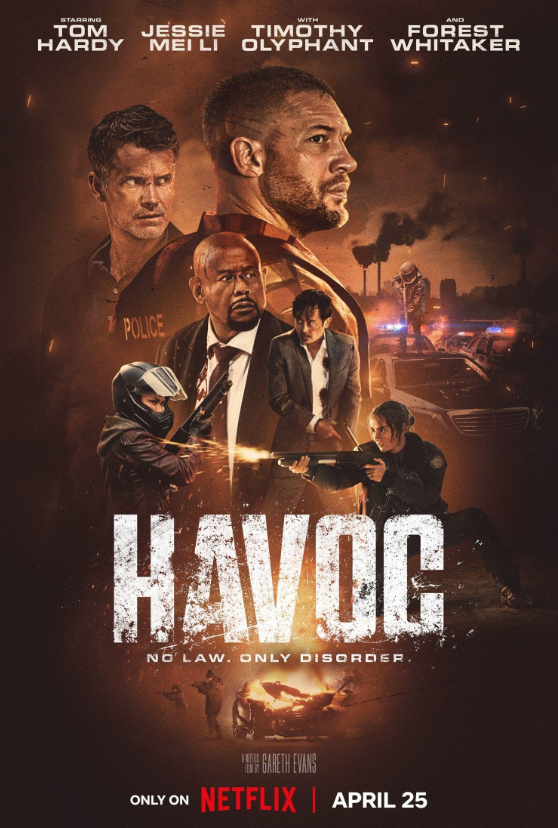

Cuando vi que Evans iba a dirigir otra película de acción después de The Raid y The Raid 2, me dieron muchas ganas de ver Havoc y obviamente mis expectativas estaban por las nubes, pero la realidad es que esta cosa no llegó ni cerca de lo que esperaba y eso que sabía que no iba a ser una película centrada en la historia sino más en la acción pura. Tom Hardy hace lo suyo como siempre, el tipo tiene presencia y carisma para hacer una película solo, pero aquí me pareció que estaba haciendo lo mismo de siempre, esa voz rasposa y esos gestos que ya conocemos de memoria y no es nada nuevo realmente. La trama de la peli es muy básica y predecible que ya en los primeros minutos sabía como iba a terminar todo, es todo sobre un detective corrupto que tiene que rescatar al hijo de un político a la vez de que está tratando de desmontar toda una red de corrupción, pero te digo que la historia no tiene ni una sorpresa no hay ningún cambio interesante que te mantengan pegado a la pantalla. Lo que más me molestó fue que nunca sientes que los personajes principales están en peligro real, siempre sabes que van a salir bien librados de cada situación por más imposible que parezca y eso es algo que mata toda la tensión que una película de acción necesita para funcionar, cuando los protagonistas son casi que invencibles ya no hay una emoción verdadera.
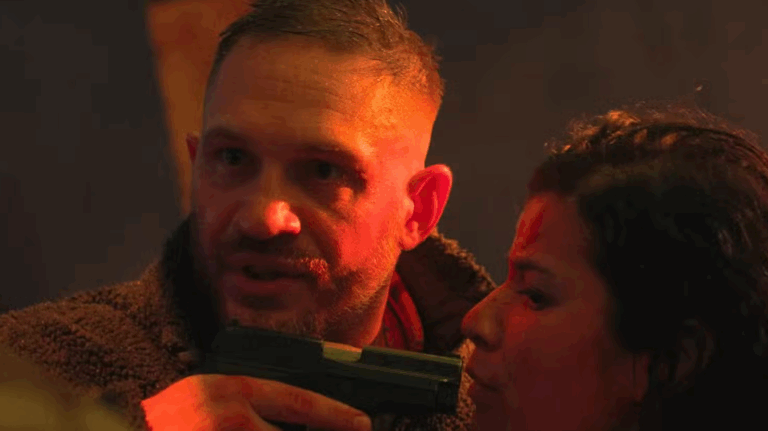
Las escenas de acción tienen momentos decentes no voy a negarlo, me gustó esa persecución en carro del inicio que está bastante bien hecha, algo que me chocó es que la cámara se mueve demasiado y esto hizo que fuera difícil seguir lo que está pasando de hecho a veces sentá que me mareaba un poco. Evans demostró con The Raid que sabe hacer acción de una manera limpia y brutal, pero aquí parece que quiso hacer algo diferente y el resultado no funciona igual de bien, tal vez es por la presión de trabajar con nombres más grandes o por las limitaciones de Netflix, pero definitivamente no está al nivel de sus trabajos anteriores. Los efectos especiales de Netflix siempre me han parecido raros, tienen esa calidad digital que no se ve para nada real y en Havoc se nota bastante en algunas escenas donde se supone que deberías sentir el impacto pero terminas riéndote de lo falso que se ve todo. Quelin Sepulveda hace lo que puede con su personaje pero está limitada por un guión que no le da mucho con qué trabajar, Forest Whitaker aparece poco pero es el que se ve más comprometido con lo que está haciendo de todos los actores. La parte visual tiene sus momentos, se ve como el amibiente sucio y de callejero y eso es algo que le queda bien a este tipo de historias pero no alcanza a crear esa atmósfera opresiva que es característica de las películas anteriores de Evans.
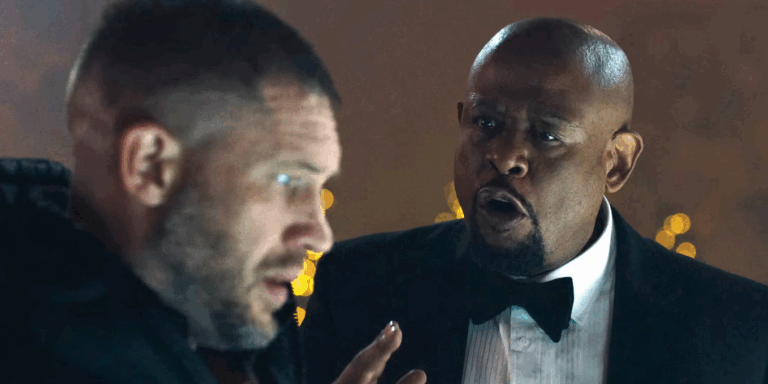
Yo creo que Havoc tenía potencial porque y quedó enterrasdo bajo decisiones de producción mediocres y un guión que parece escrito por un novato. La premisa básica podría haber funcionado si hubieran desarrollado mejor a los personajes y si hubieran tomado más riesgos, pero en lugar de eso es una simple película de acción como cualquier otra que se olvida cinco minutos después de terminarla, una de esas que pones en segundo plano mientras haces otras cosas. Evans sabe dirigir acción, pero aquí es como si estuviera dirigiendo con las manos atadas, sin la libertad creativa que tenía en sus proyectos independientes anteriores y eso es algo que se nota en cada escena porque nunca alcanza esa intensidad visceral que yo por lo menos esperaba de él. Los diálogos están llenos de clichés con cosas que ya se han escuchado mil veces antes en otras películas similares, y los personajes toman decisiones estúpidas solo para crear situaciones de peligro que se siente demasiado artificial. Justin Cornwell hace un trabajo decente pero su personaje está tan mal desarrollado que nunca llegas a importarte realmente si vive o muere, lo mismo pasa con el resto.
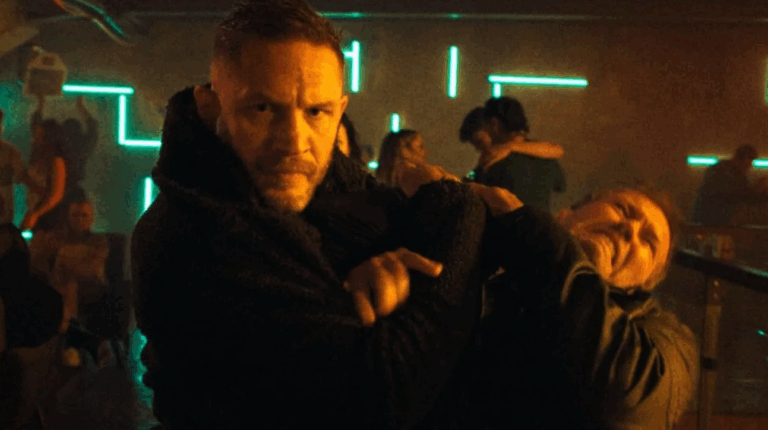
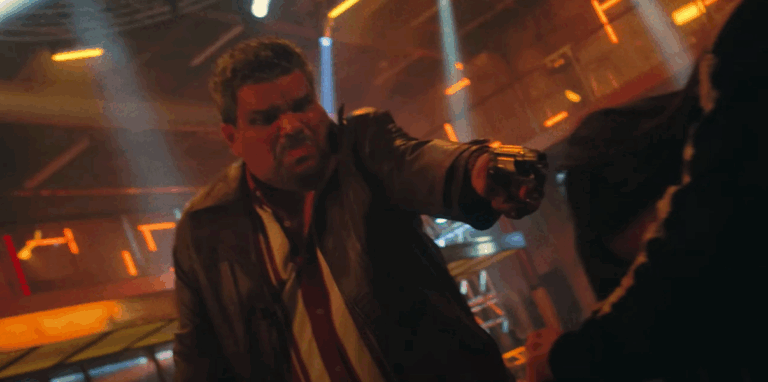
El ritmo de la película está bien durante la primera hora porque mantiene un buen balance entre el desarrollo de personajes y partes de acción, pero después como en la segunda parte todo se acelera demasiado y termina siendo apresurado, como si tuvieran que resolver todo rápidamente para no exceder el tiempo de duración. Las peleas en los lugares cerrados funcionan mejor que las persecuciones en carro, me gustó esa escena en el nightclub que recuerda un poco a los mejores momentos de The Raid, pero lo chimbo es que esas escenas sufren del problema de la cámara que se mueve mucho y es difícil apreciar bien. Evans siempre ha sido increíble dirigiendo peleas mano a mano pero aquí parece se enfocó más en los tiroteos y la acción con armas, y yo creo que no es su fuerte, le queda mejor la brutalidad física y visceral. Tom Hardy se defiende bien en las escenas de pelea pero me pareció que no se exigía mcuho fue como si estuviera cumpliendo un contrato más y eso se nota sobre todo cuando lo comparas con actores como Iko Uwais en The Raid que parecía que se estaba jugando la vida en cada escena. Los malos de la película son demasiado equis, unos tipos cualquiera que existen solo para darle a Hardy alguien con quien pelear, nada interesante ni sus motivaciones ni la personalidad.
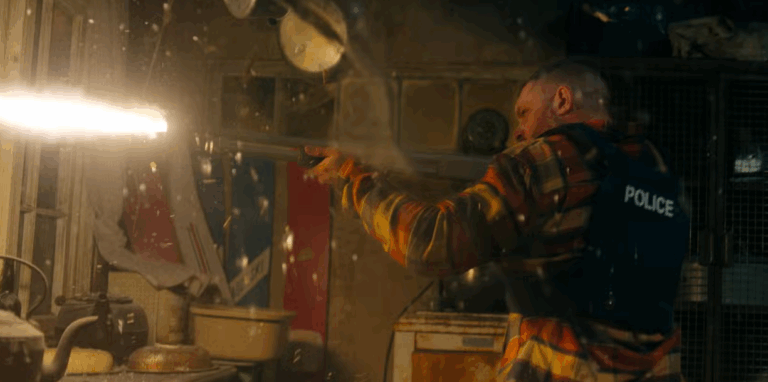
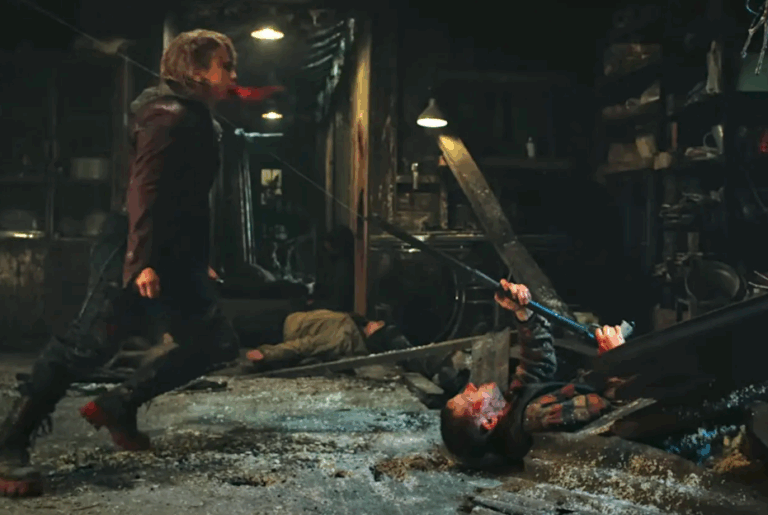
Bueno al final Havoc es una película más de Netflix de esas que están para llenar el catalogo, si la quieres ver te digo que solo sea un domingo aburrido porque después nunca te vas a acordar de ella. No es que sea terrible pero tampoco es buena se queda como en ese limbo de la mediocridad donde la mayoría de las pelis de streaming terminan, me parece que no tiene mucha chispa de creatividad ni nada original que la haga destacar. Evans demostró con sus películas anteriores que puede ser uno de los mejores directores de acción pero aquí parece que se conformó con hacer algo seguro y comercial, perdiendo toda esa energía salvaje que mostró en sus trabajos independientes. Esperaba mucho más de Havoc pero supongo que no todas las apuestas salen bien y a veces los directores que admiramos tienen que hacen cosas que no nos gustan, yo le doy un 5.5/10, Havoc cumple su función básica pero no es lo que yo esperaba ni está al nivel de The Raid, creo que es exactamente lo que no quería que fuera una película de Gareth Evans después de tanto tiempo esperando su regreso al género de acción.

[ENGLISH VERSION]
When I saw that Evans was going to direct another action movie after The Raid and The Raid 2, I really wanted to see Havoc and obviously my expectations were sky high, but the reality is that this thing didn't even come close to what I expected and I knew it wasn't going to be a movie focused on the story but more on pure action. Tom Hardy does his thing as usual, the guy has the presence and charisma to make a movie on his own, but here it seemed to me that he was doing the same as always, that raspy voice and those gestures that we already know by heart and it's nothing new really. The plot of the movie is very basic and predictable that already in the first minutes I knew how everything was going to end, it's all about a corrupt detective who has to rescue the son of a politician at the same time he is trying to dismantle a whole network of corruption, but I tell you the story doesn't have a single surprise there is no interesting twist that keep you glued to the screen. What bothered me the most was that you never feel that the main characters are in real danger, you always know that they are going to get out of every situation no matter how impossible it seems and that is something that kills all the tension that an action movie needs to work, when the main characters are almost invincible there is no real thrill anymore.
The action scenes have decent moments I won't deny it, I liked that car chase at the beginning that is quite well done, something that shocked me is that the camera moves too much and this made it difficult to follow what is happening in fact sometimes I felt that it made me a little dizzy. Evans proved with The Raid that he knows how to do action in a clean and brutal way, but here it seems like he wanted to do something different and the result doesn't work as well, maybe it's because of the pressure of working with bigger names or the limitations of Netflix, but it's definitely not up to the level of his previous works. Netflix's special effects have always seemed weird to me, they have this digital quality that doesn't look real at all and in Havoc it's quite noticeable in some scenes where you're supposed to feel the impact but you end up laughing at how fake everything looks. Michelle Dockery does what she can with her character but is limited by a script that doesn't give her much to work with, Forest Whitaker appears little but is the one who looks the most committed to what he's doing of all the actors. The visuals have their moments, it looks like the dirty, streetwise amibient and that's something that suits this kind of story but it doesn't manage to create that oppressive atmosphere that is characteristic of Evans' previous films.
I think Havoc had potential because it was buried under mediocre production decisions and a script that feels like it was written by a rookie. The basic premise could have worked if they had developed the characters better and taken more risks, but instead it's just a simple action movie like any other that you forget about five minutes after you finish it, one of those that you put on the back burner while you do other things. Evans knows how to direct action, but here it's like he's directing with his hands tied, without the creative freedom he had in his previous independent projects and that's something that shows in every scene because he never reaches that visceral intensity that I at least expected from him. The dialogues are full of clichés with things that have been heard a thousand times before in other similar movies, and the characters make stupid decisions just to create situations of danger that feels too artificial. Justin Cornwell does a decent job but his character is so poorly developed that you never really get to care if he lives or dies, same goes for the rest.
The pacing of the movie is okay for the first hour because it keeps a good balance between character development and action parts, but then as in the second part everything speeds up too much and ends up being rushed, as if they had to solve everything quickly to not exceed the running time. The fights in the closed places work better than the car chases, I liked that scene in the nightclub that reminds a little bit of the best moments of The Raid, but the bad thing is that those scenes suffer from the problem of the camera that moves a lot and it's difficult to appreciate well. Evans has always been amazing at directing hand-to-hand fights but here he seems to focus more on gunfights and gun action, and I don't think that's his forte, he's better at physical and visceral brutality. Tom Hardy does well in the fight scenes but it seemed to me that he didn't demand much of himself, it was as if he was just fulfilling another contract and that shows especially when you compare him with actors like Iko Uwais in The Raid who looked like he was playing for his life in every scene. The bad guys in the movie are just too X-rated, just some random guys who exist just to give Hardy someone to fight, nothing interesting about their motivations or personality.
Well in the end Havoc is just another Netflix movie that is there to fill the catalog, if you want to watch it I say just a boring Sunday because after you will never remember it. It's not that it's terrible but it's not good either it stays like in that limbo of mediocrity where most streaming movies end up, it seems to me that it doesn't have much spark of creativity or anything original that makes it stand out. Evans proved with his previous films that he can be one of the best action directors but here it seems like he settled for making something safe and commercial, losing all that wild energy he showed in his independent works. I expected a lot more from Havoc but I guess not all bets turn out well and sometimes directors we admire have to do things we don't like, I give it a 5.5/10, Havoc fulfills its basic function but it's not what I expected nor is it on the level of The Raid, I think it's exactly what I didn't want a Gareth Evans movie to be after so long waiting for his return to the action genre.
Posted Using INLEO
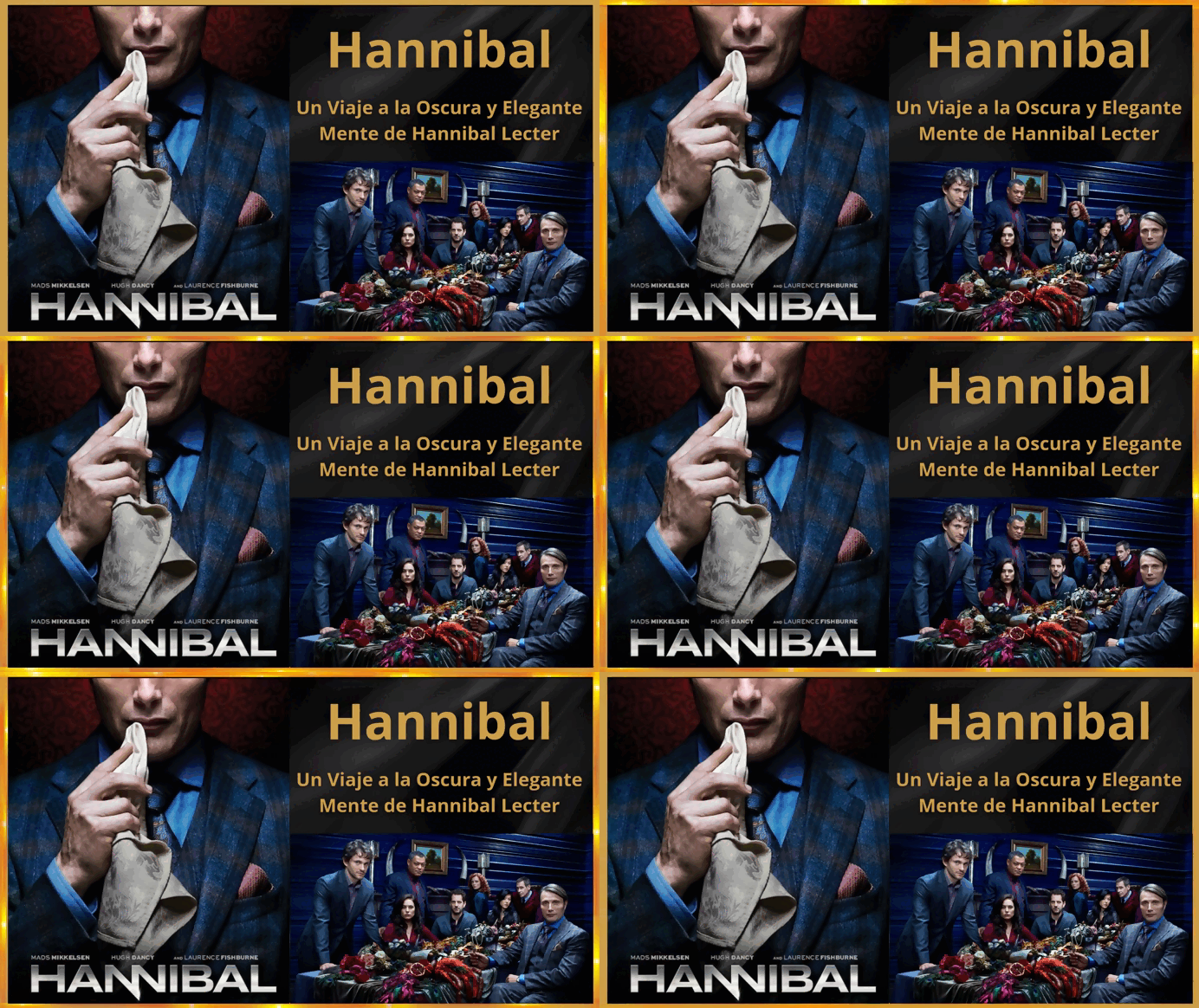

DIY de Manualidades y Moda- PelÃculas
| HANNIBAL | |
|---|---|
| Genre: Crime Series - Psychological Thriller - Serial Killers - Prequel | |
| Year: 2013 - 2015 | |
| Running Time: 3 Seasons - 39 Episodes | |
| Country: United States | |
| Director: Bryan Fuller | |
| Platform: Prime Video |
HANNIBAL Género: Serie de Crimen - Thiller psicológico - Asesinos en serie - Precuela Año: 2013 - 2015 Duración: 3 Temporadas - 39 Capítulos País: Estados Unidos Dirección: Bryan Fuller Plataforma: Prime Video
Indeed, this series, "Hannibal," is NOT new. I came to it because I finished the series "Dexter Resurrection," which I loved. My brother, who knows me very well, repeatedly recommended "Hannibal" to me because they're more or less in the same genre. Although they are really very different in many ways, to my surprise, I loved "Hannibal," and today I'm telling you about it.
It's not a simple police thriller; "Hannibal" is a cinematic work of art. It's impressive how each scene is a painting, each dialogue is poetry, and the way director Bryan Fuller transforms horror into something almost sublime is simply masterful. From the very first moment, it was something that captivated me, a very marked difference from so many other police series.
Efectivamente ésta serie "Hannibal" NO es reciente, llegué a ella porque terminé la serie "Dexter Resurrection" la cual amé, y mi hermano que me conoce muy bien, me recomendó una y otra vez "Hannibal" por ser más o menos del mismo género, y aunque realmente son muy diferentes en muchos aspectos, para mi sorpresa, "Hannibal" me ha encantado, y hoy les cuento sobre ella.
No es un simple thriller policial, "Hannibal" es una obra de arte cinematográfica, es impresionante cómo cada escena es un cuadro, cada diálogo es poesía, y la forma en que el director Bryan Fuller convierte el horror en algo casi sublime es simplemente magistral, desde el primer momento es algo que me atrapó, una diferencia muy marcada con tantas otras series policiales.

We begin by meeting Will Graham (Hugh Dancy), who has a brilliant mind for interpreting crime scenes and profiling killers, working for the FBI as a Crime Analyst. Dr. Hannibal Lecter (Mads Mikkelsen), one of the most refined and prestigious psychiatrists, joins the team on a complex case.
Over three seasons, we'll learn about the atrocities committed by several serial killers, and we'll see this FBI team follow the clues to solve each case, with Hannibal Lecter's perverse, dark, and elegant manipulation.
Comenzamos conociendo a Will Graham (Hugh Dancy) quien tiene una mente brillante para interpretar escenas de crimen y perfil de asesinos, trabajando para el FBI como Analista de Crímenes. En un complejo caso se incorpora al equipo el Dr. Hannibal Lecter (Mads Mikkelsen) quien es uno de los más refinados y prestigiosos psiquiatras.
Durante 3 Temporadas, conoceremos atrocidades realizadas por varios criminales en serie, y veremos a este equipo del FBI tras las pistas para resolver cada caso; con la perversa, oscura y elegante manipulación de Hannibal Lecter.

It may be a little confusing to understand the film saga about the fictional character of Hannibal Lecter, and this is because the films have been released somewhat out of order in relation to the story of the character we met in The Silence of the Lambs, played by Anthony Hopkins. They came to us in this order:
The "Hannibal" series, of which this post is based, is much, much more than a prequel to those films, not including the last one, since that one is about his childhood, as I already mentioned. Even if you haven't seen any of the films, you might enjoy this series as it slowly uncovers Hannibal Lecter's intentions and behavior within the context of everything happening in that "present day."
Tal vez es un poco confuso entender la Saga de películas sobre el personaje ficticio de Hannibal Lecter, y se debe a que las películas han salido un poco desordenadas en relación a la historia del personaje que conocimos en El Silencio de los Inocentes con la interpretación de Anthony Hopkins, que nos llegaron en este orden:
- El Silencio de los Inocentes (1991)
- Hannibal (2001)
- El Dragón Rojo (2002)
- Hannibal El Origen del Mal (2007) En ésta última es que nos cuentan de la niñez de Hannibal, su familia y cómo empezó su gusto por el canibalismo.
La serie "Hannibal" de la cual es ésta publicación, es mucho, mucho más que una Precuela de esas películas, sin incluir la última ya que esa es de su niñez como ya les dije. Aunque no hayas visto ninguna de las películas, podrías disfrutar de ésta serie descubriendo poco a poco las intenciones y el comportamiento de Hannibal Lecter, dentro del contexto de todo lo que ocurre en esa "actualidad".

One of Hannibal Lecter's hallmarks in all the films of his saga has always been his taste for a luxurious life, classical music, and an exquisite palate. All of these aspects are reflected in the Hannibal series, but one of the most disturbing and brilliant details is the gourmet and sophisticated approach to how he prepares his "Human Proteins," so to speak; treating each scene as if it were a segment on a haute cuisine show.
For Hannibal, savagely eating his victims isn't his thing; what he's passionate about is cooking them as an act of artistic expression. He sees it as the purest form of his superiority and contempt for others, whom he sees as a simple ingredient that he transforms into a perfect cut of meat, invaluable for his international dishes, plated like a professional chef, accompanied by wine and good music. For me, it was dazzling and grotesque to watch all these scenes where he enjoys himself with total elegance while many other characters enjoy an invitation to his table, without knowing what they were really eating.
Su Exigente y Refinado Paladar
Una de las características de Hannibal Lecter en todas las películas de su Saga siempre ha sido su gusto por la vida de lujos, la música clásica y un exquisito paladar; en la serie Hannibal se reflejan todos esos aspectos, pero uno de los detalles más inquietantes y brillantes es el enfoque gourmet y sofisticado sobre cómo prepara sus "Proteínas Humanas" por decirlo de alguna forma; tratando cada escena como si se tratase de un segmento de un programa de alta gastronomía.
Para Hannibal, comer a sus víctimas de forma salvaje no es lo que le gusta, lo que le apasiona es cocinar a sus víctimas como un acto de expresión artística, lo ve como la forma más pura de su superioridad y desprecio hacia los demás, a quienes ve como un simple ingrediente que convierte en un corte perfecto de carne muy valioso para sus recetas de platos internacionales, emplatados como todo un chef profesional, acompañado de vino y buena música. Para mí fue deslumbrante y grotesco ver todas estas escenas donde él disfruta con total elegancia y muchos otros personajes disfrutaron una invitación a su mesa, sin saber lo que realmente estaban comiendo.

The crime scenes of both the serial killers pursued by the FBI and those of Hannibal Lecter were absolutely stunning. The scenes aren't just displays of violence, but meticulously planned scenery, full of symbolism and meaning. I'd say it's somewhat subrealistic for my taste, because I'd like to think such cases don't exist in real life. But it's very much in keeping with all the films in the Saga: Red Dragon, Hannibal, and The Silence of the Lambs.
El diseño de los crímenes:
Las escenas de los crímenes tanto de los asesinos seriales que perseguía el FBI como los de Hannibal Lecter, fueron absolutamente impresionantes, las escenas no son solo una muestra de violencia, sino una escenografía meticulosamente planeada, llena de simbolismo y significado, algo sub realista para mi gusto diría yo, porque quiero pensar que en la vida real no existen tales casos. Pero muy casado con todas las películas de la Saga: El Dragón Rojo, Hannibal y El Silencio de los Inocentes.

The dialogue is as good as the plot itself. It doesn't underestimate the viewer, but its script is complex in its depth yet simple enough to understand and immerse us in every sentence and every philosophical reference, without being pretentious, and I loved that. Just like the "Thriller" with its powerful scenes, the script is another gift from this series for those of us who like to delve into the elegant and dark minds of its protagonists.
It explores themes such as empathy, trauma, and manipulation in all the characters, not just its protagonists. It took the time to give importance to each one, and we managed to understand them, even those who are swimming in the absurdity of their madness.
Un guion inteligente y elegante
Los diálogos son tan buenos como la propia trama, no subestima al espectador sino que su guion es complejo en su profundidad y suficientemente simple para entenderlo y adentrarnos en cada frase y en cada referencia filosófica, sin ser pretencioso y eso me encantó. Así como el "Thiller" de sus escenas tan fuertes, el guion es otro regalo de esta serie para quienes nos gusta sumergirnos en la elegante y oscura mente de sus protagonistas.
Explora temas como la empatía, el trauma y la manipulación de todos los personajes, no solo de sus protagonistas. Se tomó el tiempo para darle importancia a todos, y logramos entenderlos incluso a los que nadan en lo absurdo de su locura.

Each scene is a visual gift and I'm not referring to the crimes I talked about before, I'm referring to the beauty of the photography, each scene and frame was a painting in itself, they could make advertising posters with each scene, with a beautiful neatness and color palette, both interiors and exteriors, it's impressive how the director achieved that, I don't know if it's his equipment
La Fotografía o Estética Visual
Es un regalo visual cada escena y no me refiero a los crímenes de los que ya hablé anteriormente, me refiero a lo hermoso de su fotografía, cada escena y encuadre era por sí mismo un cuadro, podrían hacer afiches publicitarios con cada escena, con un pulcritud y paleta de colores hermosas, tanto los interiores como los exteriores, es impresionante cómo el director logró eso, no se si se trate de sus equipos.

The series is completely consistent with the character of Hannibal, played by Anthony Hopkins, and with the young Gaspard Ulliel. Throughout the three seasons and 39 episodes, the series gives us references to Hannibal's past, his sister's possible traumas, but there are also scenes and characters that were incorporated to incorporate those films into the narrative that this series was going to have.
So, we'll see, for example, the "Red Dragon" himself, with his tattoo, the scene where he eats the museum's artwork, the blind couple in love, etc. All these aspects or stories were included in the series, so it not only functions as a prequel, but its director had a more comprehensive idea with it.
The references I loved were, for example, seeing the same prison cell where Hannibal is held, with the characteristic security glass we saw in "The Silence of the Lambs," the mask covering his mouth, the straitjacket, the wheelbarrow used to transport him—all those elements were present.
La serie tiene total coherencia con el personaje de Hannibal interpretado por Anthony Hopkins y con el joven Gaspard Ulliel. Durante las tres temporadas y 39 capítulos, la serie nos da referencias del pasado de Hannibal, sobre su hermana y sus posibles traumas, pero también hay escenas y personajes que se incorporaron a manera de incluir esas películas dentro de la narrativa que iba a tener ésta serie.
Entonces, veremos por ejemplo al mismísimo "Dragon Rojo", con su tatuaje, la escena comiéndose la obra de arte del museo, la pareja amorosa que era ciega, etc. Todos estos aspectos o historias fueron incluidas en la serie, así que no solo funciona como un Precuela, sino que su Director tuvo una idea más global con ella.
Las referencias que amé fueron por ejemplo, ver la misma celda en la cárcel donde está Hannibal, con el característico vidrio de seguridad que conocimos en "El Silencio de los Inocentes", la máscara que cubría su boca, la camisa de fuerza, la carretilla para trasladarlo, todos esos elementos estuvieron presentes.

The performances were excellent, and with actors of the caliber of Mads Mikkelsen and Laurence Fishburne, you'd expect nothing less. But even the supporting characters were excellent.
When there's good energy or good teamwork, it comes across, and I think this series must have had it, because the scenes were of a very high standard. You couldn't tell one actor was trying to stand out more than another, even if they had more or fewer lines in the script. Hugh Dancy, who played Will Graham, was impressive, as demonstrated by his expressions of suffering, helplessness, and pain. It was a masterful piece of acting.
Las actuaciones fueron excelentes, y es que con actores de la talla de Mads Mikkelsen y Laurence Fishburne no se esperaría menos. Pero incluso los personajes secundarios estuvieron excelentes.
Cuando hay una buena energía o un buen trabajo de equipo eso se transmite, y creo que ésta serie tuvo que haberla tenido, porque las escenas fueron de mucho nivel, no se notaba a un actor queriendo destacar más que otro, incluso si tenían mas líneas en el guion o menos líneas. Hugh Dancy que interpretó a Will Graham, fue impresionante como demostró con sus expresiones tanto sufrimiento, impotencia, dolor, fue un trabajo de actuación magistral.

As I mentioned before, this series ended its third season in 2015. I don't know the reasons for canceling it, because it's truly very good, excellent for everything I've already explained, and for many other reasons. Perhaps at that time, this type of crime series with such explicit and cold images wasn't valued as much, but I think audiences have matured a lot in that sense, and are consuming this type of content in a more mature and less sensitive way.
I really would have liked to enjoy more seasons of "Hannibal," since successful series like "Breaking Bad" gave me so much more.
Como les comenté anteriormente, esta serie terminó en el 2015 con su tercera temporada, no se cuales fueron las razones para cancelarla porque realmente es muy buena, es excelente por todo lo que ya les detalle y por muchas otras razones. Tal vez en esa época no se valoró tanto este tipo de series de crímenes con imágenes tan explícitas y frías, pero creo que el público ha madurado mucho en ese sentido, y consume de forma más madura y menos susceptible este tipo de contenido.
Realmente me hubiese gustado disfrutar de más temporadas de "Hannibal" ya que series exitosas como Breaking Bad si me dieron mucho más.

I 100% recommend this series, "Hannibal." It's very exciting, with great acting, impressive crimes, beautiful photography, etc.
The third season doesn't end to continue in any of the films; as I mentioned, it even absorbed some of the stories within it. It had an ending that, although it seems conclusive, we've already seen that when the director wanted to revive or bring a character back to life, no matter how absurd it was, he did. So I can't take that ending as the end of the character (I CAN'T GIVE YOU SPOILERS FOR THAT ENDING).
I eagerly await the eventual announcement that they'll pick it up for a fourth season and many more, just as we've seen with the series "Dexter," which refuses to end. Even if that doesn't happen, I still recommend it.
Recomiendo al 100% esta serie "Hannibal" es muy emocionante, buenas actuaciones, impresionantes crímenes, hermosas fotografías, etc.
La tercera temporada no termina para continuar en ninguna de las películas, como mencioné hasta absorbió algunas historias dentro de ella. Tuvo un final que aunque parece concluyente, ya vimos que cuando el Director quiso revivir o volver a la vida un personaje, por absurdo que fuese, lo hizo. Así que no puedo tomar ese final como el final del personaje (NO PUEDO DARLES SPOILER DE ESE FINAL).
Espero con ansias que eventualmente se diga que retomaran para darnos su cuarta temporada y muchas más, tal como lo hemos visto con la serie "Dexter" que se niega a terminar. Aún si esto no pasara, igual la recomiendo.
I really appreciate having made it this far. See you in the next post.
Te agradezco altamente haber llegado hasta aquí, nos leemos en la próxima publicación.


I used Deepl Translator Sources were indicated in a timely manner Canva Pro Separators
My social networks:
Discord: YennysYaneth#0189
Twitter: @yennysferm
Instagram: @yennysyaneth

Utilicé el Traductor Deepl Las fuentes fueron señaladas oportunamente Separadores Canva Pro
Mis redes sociales:
Discord: YennysYaneth#0189
Twitter: @yennysferm
Instagram: @yennysyaneth


Venezolana, Creativa, soñadora, amante del cine, y del arte
🎥 Thunderbolts or The New Avengers 🎥
The era of the Avengers has returned, with new characters, but will they be able to achieve their goal? To be better than their predecessors, this story seems to be just beginning... or continuing.🤔
My friends who love the world of cinema, it's a pleasure to greet you. Once again, we find ourselves here with another review. This time, I want to share my opinion on this saga, the era of the Marvel Avengers, because this weekend I finally got around to seeing their latest film, called Thunderbolts, or as they have classified it, New Avengers.
La era de los vengadores ha vuelto, con nuevos personajes, pero ¿podrán cumplir con su objetivo?, ser mejores que los antiguos, esta historia parece que apenas empieza...o continúa.🤔
Mis amigos amantes del mundo cinematográfico, un gustos saludarlos, una vez más nos encontramos aquí con otra reseña, en esta oportunidad quiero compartir mi opinión sobre está saga, la era de los Vengadores de Marvel, y es que este fin de semana me animé a ver por fin su más reciente film, llamado los Thunderbolts o según ellos lo catalogaron cómo los Nuevos Vengadores.
The story centers on a group of outcasts who were recruited to carry out clandestine operations, led by Valentina Allegra de Fontaine. But when she decides to get rid of them, they must band together to survive and find themselves embroiled in a dangerous mission that will force them to confront their dark pasts and torments.

La historia se centra en un grupo de marginados, que fueron reclutados para realizar operaciones clandestinas, guiados por Valentina Allegra de Fontaine, pero cuando esta mujer decide deshacerse de ellos, les toca unirse, para sobrevivir y a su vez, verse envueltos en una peligrosa misión, que los llevara a enfrentarse a sus oscuros pasados, y tormentos.
To be honest, it didn't really appeal to me at first, as these latest films have declined considerably in quality. However, as a true fan, I had to see it; I couldn't pass it up, so I decided to watch it.
La verdad al principio no me llamaba la atención, estos últimos films han decaído mucho; sin embargo, cómo buena fan, tenía que verlo, no podía dejarlo pasar; así que me dispuse a mirarla.

The beginning is somewhat slow, starting with the presence of the sister of one of the avengers. Both were trained as professional assassins and reached a point where their lives no longer had meaning, so many deaths, so many changes and damage, to stay and feel alone. On the one hand, we understand them; they did not choose those lives; as we well know, they were recruited, or so history shows us, and of course, once inside, it is difficult to get out.
Nathalia was lucky, in a way, to join the Avengers, to change her destiny and become a heroine, a public figure, admired and respected by all.
However, her sister was not so lucky, and worked in the shadows, unnoticed, something she thought did not bother her, but deep down she felt the opposite, that her life had no meaning. This is where we will see the resurgence of the Avengers, or so she intends.
El comienzo es algo lento, empezando con la presencia de la hermana de uno de los vengadores, ambas fueron entrenadas cómo asesinas profesionales, y llegaron a un punto en el que ya sus vidas no tenían sentido, tantas muertes, tantos cambios y daño, para quedarse y sentirse solas, por una parte, se les entiende, ella no escogieron esas vidas, cómo bien sabemos fueron reclutadas, o así nos muestra la historia, y por supuesto una vez adentro, es difícil salir.
Nathalia tuvo la suerte por decirlo, de alguna manera, de unirse con los Vengadores, de cambiar su destino y convertirse en una heroína, en un personaje público, admirada y respetada por todos.
Sin embargo, su hermana no corrió con esa suerte, y trabajaba desde la oscuridad, sin ser notada., algo que ella pensaba no le molestaba, pero en el fondo sentía lo contrario, que su vida no tenía sentido, es aquí dónde veremos el resurgimiento de los vengadores, o eso es lo que pretende.

Loneliness and depression can become our worst enemy if we don't know how to control them, and you may wonder why I am making this comment. Well, to my surprise, and surely to yours when you see or if you've seen the movie, in this new saga, we'll see how all those emotions can affect a person so much mentally that they bring out the worst in you, transforming you into something you're not, hurting yourself and others, something that unfortunately resembles our reality.
La soledad y depresión pueden llegar a convertirse en nuestro peor enemigo si no sabemos controlarlo, y se preguntarán, porque hago este comentario; pues bien, para sorpresa mía, y seguramente de ustedes cuando vean o si llegaron a ver la película, en esta nueva saga, veremos cómo todas esas emociones pueden afectar tanto mentalmente a una persona, que sacan lo peor de ti, transformándote en algo que no eres, dañándote y dañando a los demás, algo que lamentablemente se asemeja a nuestra realidad.

Anyway, I won't go into detail on that subject, but what I can say is that despite this new approach, I found it quite entertaining, with its epic moments and scenes, with these new characters, a peculiar group of Avengers, although none of them like my beloved Captain America, ha ha ha.
Marvel did it again, bringing together new and old characters, a different approach, a different story. Will we continue to see more of them? Well, we'll have to wait and see.
En fin, no entraré en detalles con ese tema, lo que si puedo decir, es que a pesar de este nuevo enfoque, me resultó bastante entretenida, con sus momentos y escenas épicas, con estos nuevos personajes, unos Vengadores peculiares, eso sí, ninguno cómo mi amado Capitán América jajajaja.
Marvel lo volvió hacer, reunir nuevos y viejos personajes, otro enfoque, otra historieta, será que seguiremos viendo más de ellos, bueno tocará esperar.

Imágenes obtenidas de filmaffinity / Images obtained from filmaffinity Edición Banner y Portada con CANVA/ Banner and Cover Edition with CANVA

Posted Using INLEO


