

That's Got His Own (S04E12)
Airdate: December 3rd 2006
Written by: George Pelecanos Directed by: Joe Chappelle
Running Time: 58 minutes
The Wire has long conditioned its audience to anticipate that the penultimate episode of each season would deliver the narrative’s most devastating crescendo—a moment where the fragile veneer of hope is shattered. When George Pelecanos, the novelist-turned-screenwriter renowned for his unflinching portrayal of urban decay, crafts such an episode, the fallout is invariably catastrophic, targeting those characters who embody innocence, iconicity, or sheer likability. Season 4’s That’s Got Its Own epitomises this pattern, plunging the viewer into a maelstrom of despair as the quartet of young protagonists introduced in the season’s premiere are systematically broken by the very systems meant to protect them. This episode is not merely a turning point; it is a surgical dissection of how institutions—familial, educational, political, and criminal—conspire to extinguish the futures of Baltimore’s most vulnerable, leaving in their wake a trail of irreversible trauma.
The episode opens with Michael Lee, the quartet’s most perceptive and strategically astute member, being hunted through a derelict building by Chris Partlow and Snoop Pearson. What initially appears to be a life-or-death chase is revealed as a paintball exercise—a chilling simulation designed by Chris to mould Michael into a remorseless enforcer for Marlo Stanfield’s organisation. Michael, having already orchestrated his stepfather’s murder through Marlo’s crew, now embodies the cold efficiency of his new role, brutally assaulting Kenard (Thuliso Dingwall), a prepubescent boy who stole Namond’s drug stash. The violence is a demonstration of Michael’s psychological transformation. As Namond later laments, “Michael isn’t Michael anymore”—a line that resonates with tragic precision. The boy who once shielded his brother and negotiated with corner boys has been replaced by a weaponised shell, his intelligence now harnessed for destruction rather than survival.
Namond Brice, meanwhile, confronts the harshest truth of his lineage: he lacks the “gangsta” spirit his incarcerated father, Wee-Bay, embodies. This perceived weakness is unforgivable to his mother, De’Londa, whose ambition for status on the streetr leads her to eject Namond from their home. His subsequent confrontation with Michael at Cutty Wise’s gym—a sanctuary of discipline and redemption—ends with Michael savagely beating him, prompting Cutty to expel Michael. In a poignant act of contrition, Cutty ventures to the corners to reconcile with the boys, only to be shot in the leg by Marlo’s lieutenant, Monk Metcalf (Kwame Patterson). Michael’s fleeting redemption—intervening to prevent Cutty’s execution—feels hollow against the backdrop of his moral erosion. Cutty’s resigned instruction to “go with his people” as he awaits the ambulance underscores the inevitability of Michael’s path.
Dukie Weems’ final day at Tilghman Middle School epitomises institutional abandonment. Prez’s exceptional mentorship has secured Dukie’s advancement to high school, yet this “success” is a death sentence. Without Prez’s protective presence, Dukie faces a hostile new environment where his poverty, hygiene, and vulnerability will render him prey. Prez’s hollow reassurance—that Dukie may return for help—is undercut by Principal Donnelly’s admonishment: Prez and his wife should have their own children rather than using Dukie as a surrogate. Donnelly’s remark exposes the education system’s cruel pragmatism; Dukie is one of “many more” children that need people like Prez, his individuality erased by bureaucratic indifference.
Randy Wagstaff’s storyline delivers the episode’s most harrowing blow. Shunned as a snitch and terrorised for his half-hearted co-operation with police, Randy is confined to his home, his foster mother Miss Anna (Denise Hart) shielding him as best she can. Carver’s assurances that the “heat will blow over,” coupled with a police stakeout, prove tragically naive. The street code’s brutality manifests when attackers lure the police away, hurling Molotov cocktails into the house. Miss Anna suffers third-degree burns, and Randy, awaiting her fate in the hospital, knows he will be returned to the group home he hated—a cycle of neglect now cemented by trauma. Carver’s futile attempt to comfort him rings with devastating irony: his promise of safety, once a cornerstone of his redemption arc, is exposed as empty rhetoric. The scene lays bare Carver’s complicity; his failure to grasp the streets’ merciless logic has doomed the very child he sought to save.
Bubbles’ arc reaches its nadir in a morally complex tragedy. Desperate to rid himself of a tormenting addict who repeatedly robs him, Bubbles consults the „arabbers” (street vendors) and devises a lethal solution: spiking drug vials with sodium cyanide. His plan backfires when his nephew Sherrod, his protégé and surrogate son, ingests the poison and dies. Bubbles’ devastation is palpable—not merely from grief, but from the realisation that his desperation has corrupted the one pure relationship he nurtured. The episode refuses to sanitise his guilt; Sherrod’s death is a direct consequence of Bubbles’ moral compromise, illustrating how the drug trade’s poison permeates even those seeking escape.
For Mayor Tommy Carcetti, the episode marks the shattering of political idealism. Confronted with a US$54 million hole in the education budget—a crisis engineered by his predecessor—Carcetti faces a Faustian bargain. His chief of staff, Steintorf (Neal Huff), urges him to beg the Republican governor for funds, but the governor, viewing Carcetti as a gubernatorial rival, offers aid contingent on state control of schools—a move that would alienate teachers’ unions and Black voters. The governor’s humiliation of Carcetti (forcing him to wait interminably) mirrors the episode’s broader theme: power exacts its price in dignity. Carcetti’s dilemma—accept “poisoned” state oversight or risk fiscal collapse—exposes the hollowness of his reformist promises, reducing politics to a game of survival rather than service.
Amidst this bleakness, the Major Crime Unit (MCU) experiences fleeting momentum. Lester Freamon’s discovery of Lex’s remains in a rowhouse triggers a breakthrough: the “tomb” houses containing Marlo’s victims can be identified via freshly nailed boards. Yet bureaucratic inertia resurfaces as Homicide’s Sergeant Landsman blocks the search to protect clearance rates—a grotesque prioritisation of statistics over justice. Freamon’s appeal to Daniels, Rawls and Carcetti succeeds only because Daniels frames the recovery as a political necessity: the bodies’ discovery will shift blame for unsolved murders onto the previous administration. The MCU’s triumph is thus tainted, a reminder that even righteous pursuits are subsumed by institutional self-preservation.
Herc’s downfall provides a rare moment of perverse catharsis. Years of procedural negligence culminate in an Internal Investigation Division summons over a stolen video camera. Facing termination, Herc absolves his colleagues Snydor and Dozerman by accepting full blame—a solitary act of integrity in a career defined by incompetence. It is a small mercy in an episode where redemption is scarce, yet it underscores The Wire’s recurring motif: even flawed individuals can, fleetingly, choose honour.
The sole respite arrives via Omar Little’s audacious stick-up of Proposition Joe’s stash, aided by Renaldo, Kimmy, and three new recruits. Omar’s success—a testament to his tactical brilliance—feels almost anachronistic amid the pervasive despair. Yet it serves a purpose: his defiance highlights the MCU’s impotence, reminding viewers that the streets operate by rules the police cannot comprehend or control.
Director Joe Chappelle, a series veteran, elevates the episode’s despair through masterful visual storytelling. The closing sequence—Carver trudging through hospital corridors as Randy’s repetition of his broken promises echoes with bitter irony—is among The Wire’s most haunting. The camera lingers on Carver’s defeated posture, the fluorescent lights casting long shadows that mirror the moral void he now inhabits.
That’s Got Its Own epitomises Season 4’s unrelenting darkness, extinguishing the fragile optimism Carcetti’s election initially sparked. The glimmers of progress—Prez’s teaching, Cutty’s gym, Freamon’s investigation—are systematically dismantled, revealing how institutions perpetuate cycles of failure. Yet the episode is not without flaws. Pelecanos’ reliance on early-2000s pop culture references—such as Jennifer Lopez and Marc Anthony’s divorce—feels jarringly anachronistic, alienating viewers unfamiliar with tabloid minutiae of the era. These moments, while grounding the narrative in its time, risk dating the episode’s emotional resonance.
Equally curious is the meta-irony of Robert Ehrlich’s cameo as the governor’s security guard. The real-life Republican governor, defeated by Martin O’Malley (Carcetti’s political analogue) a month before the episode aired, embodies The Wire’s blurring of fiction and reality. His presence is a winking commentary on the show’s prescience—a reminder that Baltimore’s struggles are not allegorical, but lived.
In the end, That’s Got Its Own is a triumph of narrative brutality, weaving individual tragedies into a tapestry of systemic critique. As the camera fades on Carver’s hollow eyes, the message is clear: in Baltimore, as in life, the game is rigged, and the most innocent pay the highest price.
RATING: 7/10 (+++)
Blog in Croatian https://draxblog.com Blog in English https://draxreview.wordpress.com/ InLeo blog https://inleo.io/@drax.leo
InLeo: https://inleo.io/signup?referral=drax.leo Leodex: https://leodex.io/?ref=drax Hiveonboard: https://hiveonboard.com?ref=drax Rising Star game: https://www.risingstargame.com?referrer=drax 1Inch: https://1inch.exchange/#/r/0x83823d8CCB74F828148258BB4457642124b1328e
BTC donations: 1EWxiMiP6iiG9rger3NuUSd6HByaxQWafG ETH donations: 0xB305F144323b99e6f8b1d66f5D7DE78B498C32A7 BCH donations: qpvxw0jax79lhmvlgcldkzpqanf03r9cjv8y6gtmk9













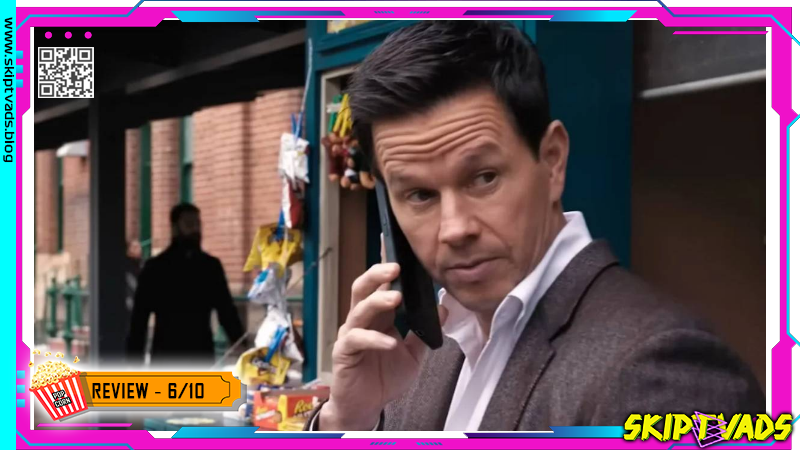

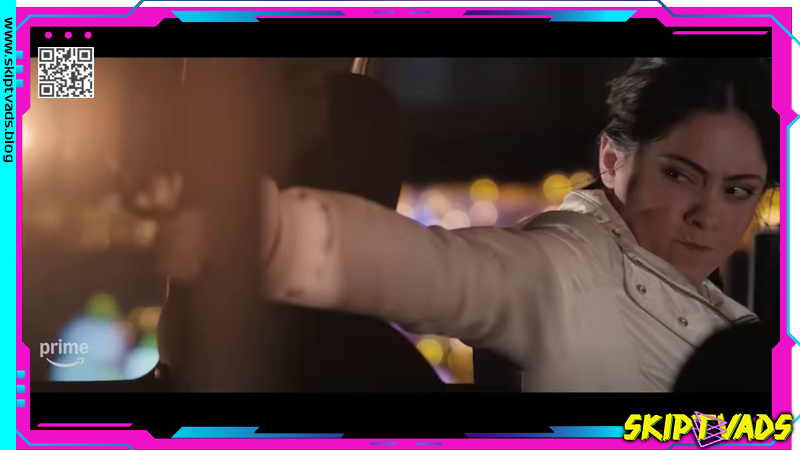
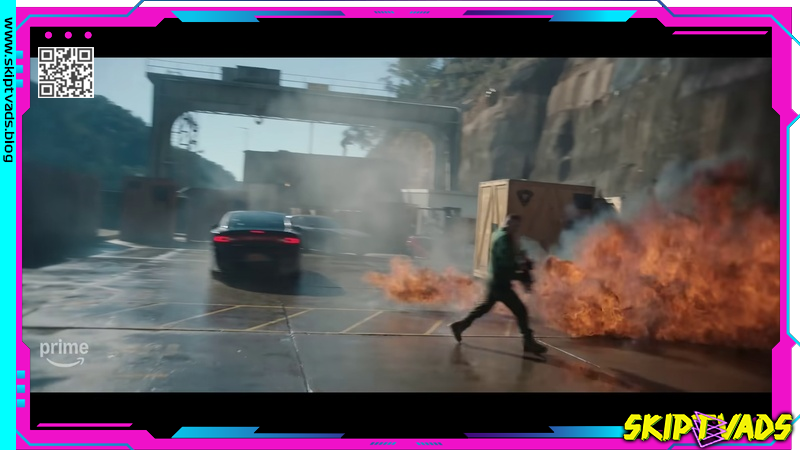
 Play Dirty (2025) is one of those movies where you sit down expecting something decent because Shane Black is behind the camera, the guy who directed The Nice Guys which was incredible, and then you get whatever the hell Play Dirty ended up being. Mark Wahlberg plays Parker, this professional thief character that's based on those Donald Westlake novels that have been adapted quite a few times but the problem here is Wahlberg looks like he would rather be anywhere else on planet Earth than on this set. Zero energy, zero charm, just this blank stare going through every single scene like he was reading off cue cards for a commercial he doesnt even want to do. The setup actually sounds pretty cool with Parker and his crew pull off a job at the beginning and then Rosa Salazar who plays this new member named Zen just murders everybody except him, takes all the money and disappear, in some way reminds me about "The Italian Job", then she comes back later with this even bigger job involving some sunken treasure off the coast of some made up South American country and they gotta rob it before the corrupt president gets his hands on it. Sounds exciting except the execution is so damn boring and lifeless that you stop caring about 20 minutes in, the effects look cheap as hell too, everything has this weird fake quality to it like an old video game cut scene, that opening sequence at the racetrack where horses are jumping over cars should be this big wow moment but it just looks bad and weightless and fake.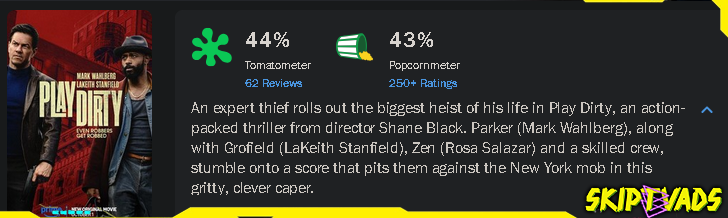

 [Source](https://tinyurl.com/5ys5ez5s)
 [Source](https://tinyurl.com/5ys5ez5s)
 [Source](https://tinyurl.com/5ys5ez5s)
I honestly dont understand what happen with Shane Black here, the same guy who wrote Lethal Weapon, the guy who understands action and dialogue and character better than most people working today but this feels like he had zero control over the final product or maybe he just stopped caring, latter after looking up the budget for this movie I find out that Robert Downey Jr was originally supposed to play Parker and hes one of the producers on this, he backed out and I think he probably read the script and knew this wasn't going to work, Downey has that charisma that can elevate weak material, same with Ryan Gosling, those guys can take a character off the page and make it something special through sheer force of personality, Wahlberg cant do that, he is good when hes doing comedy like The Other Guys with Will Ferrell or the Ted movies where he playing off someone funnier than him but when hes trying to be the serious tough guy with no sense of humor he just comes off as dull, its almost like he was born to stay funny and young, because age on his character is another problem for him. His performance here is the same from start to finish, no growth, no journey, just Mark Wahlberg doing his Mark Wahlberg thing and expecting that to be enough, his character has no personality or charm beyond being good at stealing stuff and wanting revenge, you dont root for him, you dont care if he succeeds or fails, he is just there taking up space while the movie drags on for over two hours.
[Source](https://tinyurl.com/5ys5ez5s)
I honestly dont understand what happen with Shane Black here, the same guy who wrote Lethal Weapon, the guy who understands action and dialogue and character better than most people working today but this feels like he had zero control over the final product or maybe he just stopped caring, latter after looking up the budget for this movie I find out that Robert Downey Jr was originally supposed to play Parker and hes one of the producers on this, he backed out and I think he probably read the script and knew this wasn't going to work, Downey has that charisma that can elevate weak material, same with Ryan Gosling, those guys can take a character off the page and make it something special through sheer force of personality, Wahlberg cant do that, he is good when hes doing comedy like The Other Guys with Will Ferrell or the Ted movies where he playing off someone funnier than him but when hes trying to be the serious tough guy with no sense of humor he just comes off as dull, its almost like he was born to stay funny and young, because age on his character is another problem for him. His performance here is the same from start to finish, no growth, no journey, just Mark Wahlberg doing his Mark Wahlberg thing and expecting that to be enough, his character has no personality or charm beyond being good at stealing stuff and wanting revenge, you dont root for him, you dont care if he succeeds or fails, he is just there taking up space while the movie drags on for over two hours.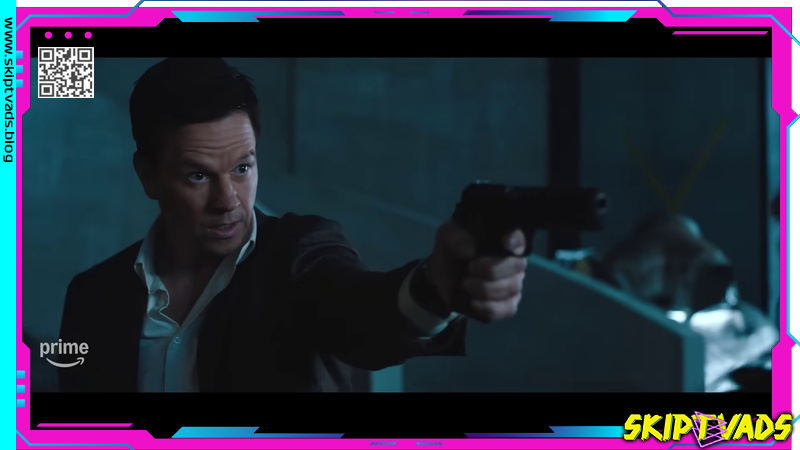 [Source](https://tinyurl.com/5ys5ez5s)
 [Source](https://tinyurl.com/5ys5ez5s)








 [Source](https://tinyurl.com/3ns3vzw2)
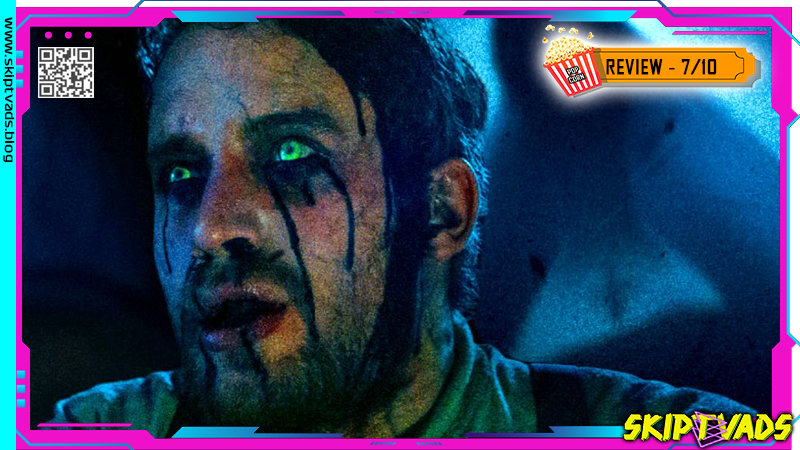
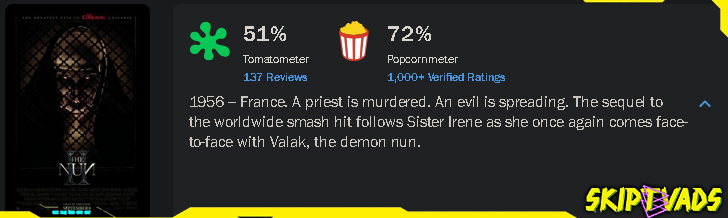
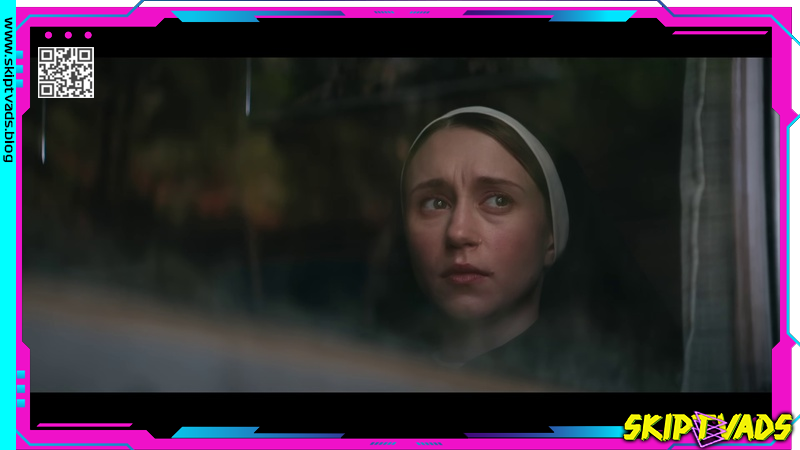
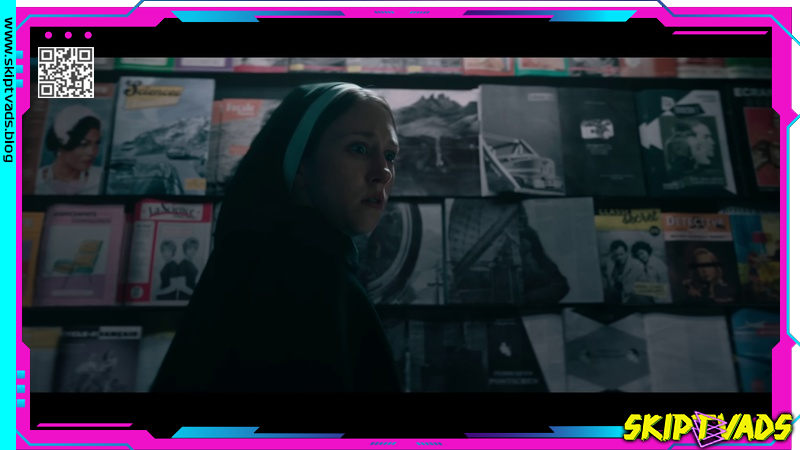
Maurice who everyone called Frenchie in the first movie is back and he was the one possessed by Valak this whole time, which we find out pretty early but the movie still pretends its some big mystery even tho we literally see him twitching in mirrors and snapping peoples necks left and right, he was getting all this work in the background, what I like the most about the movie is that even though I was aware of everything it was still interesting, there was buildup into it. But the whole possession thing gets confusing because at the end of the first movie we saw Valak go into him but that same movie also showed Valak still attacking Irene seperately, so how the hell does that work did the demon just make a copy of itself or is it pulling some multiverse nonsense that nobody bothered to explain??!!. Storm Reid plays this young nun Deborah whos losing her faith and they try to make it this big character but it falls completely flat, she was just there to ask dumb questions and be scared until the climax when she suddenly believes in God again. The demon is searching for Saint Lucys eyes which are burred somewhere in the boarding school and apprently these eyes are super powerfull, but the movie never really explains why a demon would even be able to use something holy like shouldnt God have some kind of protection on his saints relics to prevent exactly this kind of situation from happening, I mean this because we not talking about a bazooka that can be use by the good or bad guys, we talking about something holy unless Valak could some how infect this eyes and use them on his favor, idk this is just me making things up because the movie didnt gave any details on how that works.
[Source](https://tinyurl.com/3ns3vzw2)
Maurice who everyone called Frenchie in the first movie is back and he was the one possessed by Valak this whole time, which we find out pretty early but the movie still pretends its some big mystery even tho we literally see him twitching in mirrors and snapping peoples necks left and right, he was getting all this work in the background, what I like the most about the movie is that even though I was aware of everything it was still interesting, there was buildup into it. But the whole possession thing gets confusing because at the end of the first movie we saw Valak go into him but that same movie also showed Valak still attacking Irene seperately, so how the hell does that work did the demon just make a copy of itself or is it pulling some multiverse nonsense that nobody bothered to explain??!!. Storm Reid plays this young nun Deborah whos losing her faith and they try to make it this big character but it falls completely flat, she was just there to ask dumb questions and be scared until the climax when she suddenly believes in God again. The demon is searching for Saint Lucys eyes which are burred somewhere in the boarding school and apprently these eyes are super powerfull, but the movie never really explains why a demon would even be able to use something holy like shouldnt God have some kind of protection on his saints relics to prevent exactly this kind of situation from happening, I mean this because we not talking about a bazooka that can be use by the good or bad guys, we talking about something holy unless Valak could some how infect this eyes and use them on his favor, idk this is just me making things up because the movie didnt gave any details on how that works.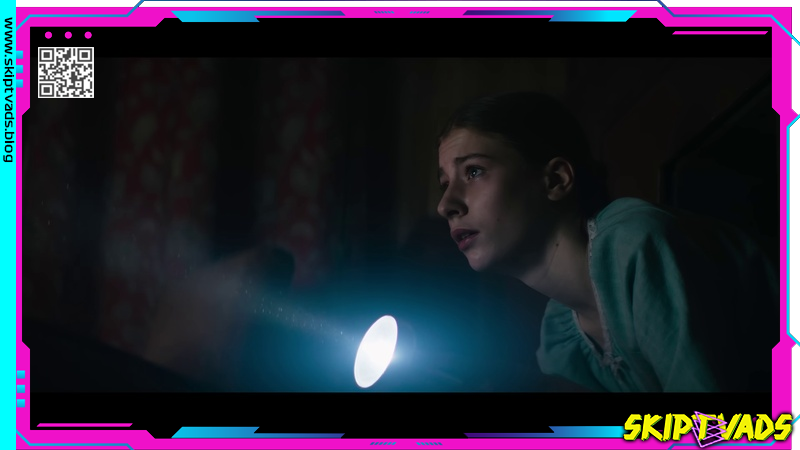 [Source](https://tinyurl.com/3ns3vzw2)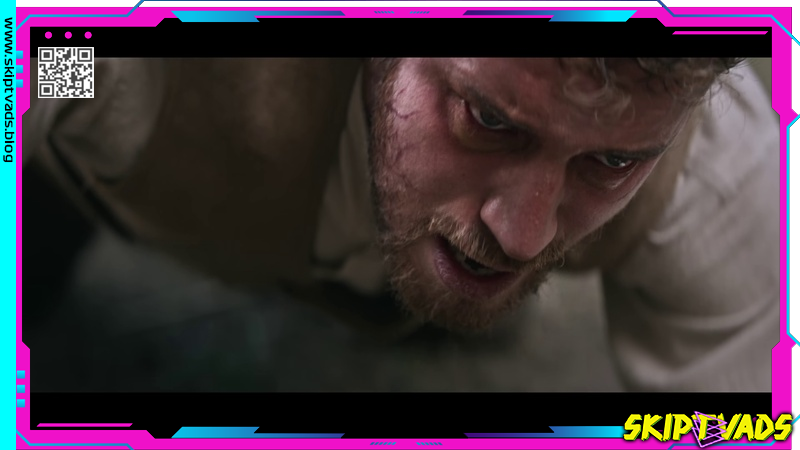
 [Source](https://tinyurl.com/3ns3vzw2)
 [Source](https://tinyurl.com/3ns3vzw2)
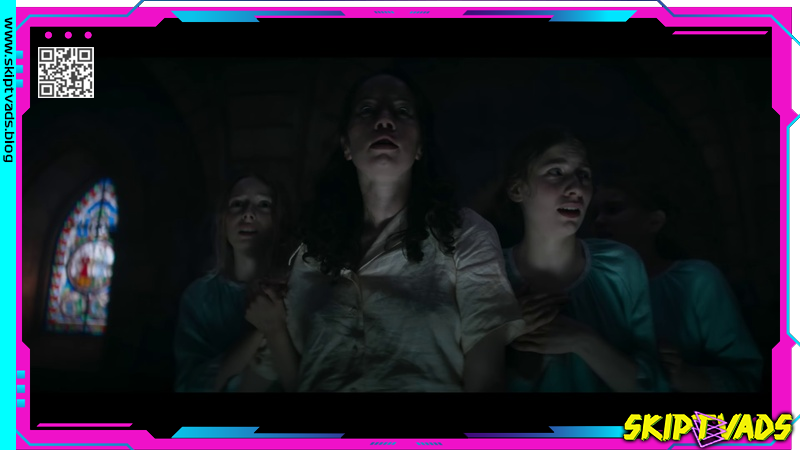
Its almost at the third part of the movie where things finally pick up but its also where the movie completely falls apart logic wise, Sophie the young girl finds the eyes first and they start glowing when she is holding them which is weird because Irene is actually related to Saint Lucy but the eyes dont do shit for her. They tie up Maurice in some random alcove instead of bringing him down to the chapel where they could actually watch him, then he obviously breaks free and starts chasing everyone because of course he does. The goat demon is still running around upstairs and instead of helping Valak find the eyes its just scaring children for no reason, like this is supposed to be the ultimate evil trying to gain unimaginable power but it keeps getting distracted by side quests, although the scenes still look scary so for me all start falling apart after I watch the movie when I actually start to break it down, so in resume those where cool scenes though just leave your brain at the door. Its when Valak finally gets the eyes the movie acts like its game over and the nun becomes super powerful floating around and lifting Irene into the air to burn her alive, except we literally saw Valak do the exact same thing to that priest at the beginning of the movie before it even had the eyes so what exactly changed. Turns out Irene cant be burned because she was a descendant of Saint Lucy who was fireproof, well Im not so sure about it so its for the lols only, but yeah the fact that Irene cant get burn didnt have enough context for me.
[Source](https://tinyurl.com/3ns3vzw2)
Its almost at the third part of the movie where things finally pick up but its also where the movie completely falls apart logic wise, Sophie the young girl finds the eyes first and they start glowing when she is holding them which is weird because Irene is actually related to Saint Lucy but the eyes dont do shit for her. They tie up Maurice in some random alcove instead of bringing him down to the chapel where they could actually watch him, then he obviously breaks free and starts chasing everyone because of course he does. The goat demon is still running around upstairs and instead of helping Valak find the eyes its just scaring children for no reason, like this is supposed to be the ultimate evil trying to gain unimaginable power but it keeps getting distracted by side quests, although the scenes still look scary so for me all start falling apart after I watch the movie when I actually start to break it down, so in resume those where cool scenes though just leave your brain at the door. Its when Valak finally gets the eyes the movie acts like its game over and the nun becomes super powerful floating around and lifting Irene into the air to burn her alive, except we literally saw Valak do the exact same thing to that priest at the beginning of the movie before it even had the eyes so what exactly changed. Turns out Irene cant be burned because she was a descendant of Saint Lucy who was fireproof, well Im not so sure about it so its for the lols only, but yeah the fact that Irene cant get burn didnt have enough context for me.