Longform reviews of films, TV, anime, books, and audiobooks, written by the scrobble.life community and published to the Hive blockchain, so each one is owned by its author and can earn rewards from readers. 51,240 reviews and counting.
It honestly breaks my heart watching my favorite Hollywood actor, Liam Neeson, grow old on screen. I mean, I grew up seeing him chase down bad guys with that calm, commanding voice that could freeze blood mid-flow. But in this film, the years finally catch up, it’s not just in the story, but in reality too. The film doesn’t try to hide it either. It leans into it, portraying him as a man whose strength is now tempered by time, whose fight scenes are slower but somehow carry more weight.
The film follows Neeson as Thug, a hitman diagnosed with a rare form of dementia, who tries to reconnect with the only family he has left, his daughter and grandson but his past life as a criminal catches up with him, threatening to disrupt the familial bond he aimed to achieve.
The premise alone sets the tone for something dark, heavy and deeply emotional. What unfolds in here is less of a high-octane action flick and more of a reflection on mortality, on guilt, and on what it means to face the end with both dignity and regret.
Now, don’t get me wrong, the action is still there. If you’re a fan, you’ll know you can’t have a Neeson film without a few chases, gunfire, and growling threats that will make you sit up straight for a while. But this time, the punches aren’t just physical, they’re also emotional. You can see it in his eyes, that quiet weariness that says more than words ever could. It’s haunting, in a beautiful, tragic sort of way.
The direction keeps things gritty and grounded, and while the pacing sometimes feels uneven, it actually mirrors the confusion of a man losing his grip on reality. What this film nails, though, is its emotional honesty. It doesn’t pretend Neeson is still the unstoppable force from the 2008 movie Taken; instead, it honors his evolution, a man battling time while also trying to make peace with his past.
By the time the credits rolled, I found myself just sitting there, staring into space. I didn’t zone out that way because the ending shocked me, but because it reminded me that even our heroes can’t outrun age. Watching Neeson grow old hurts a little, but it’s also humbling. It’s proof that his legacy isn’t merely about power and precision but it’s more of heart.
Rating: 8/10
If you’re a fan of Liam Neeson, one who appreciates depth over chaos and anyone who wants to see an action film that doubles as a meditation on aging, memory, and redemption, I would recommend this but if it’s the opposite for you, then you know what to do.
Hola mi gente buena, un gran abrazo para todos, en esta ediciòn tendremos una de las telenovelas mas conocidas de Venezuela y en latino america, con unos protagonistas increibles, espero disfruten de esta ediciòn.
Portada Realizada por mi.
INTRODUCCIÒN.
-
Natalia de 8 a 9 es una telenovela venezolana producida por RCTV en 1980, escrita por José Ignacio Cabrujas, con adaptaciones y contribuciones de Julio César Mármol y Fausto Verdial. Destaca como una de las telenovelas de corte más realista de su autoría, con una mirada a la vida cotidiana de parejas de clase media, sus conflictos y desafíos emocionales.
Protagonizada por Marina Baura como Natalia Márquez De Guzmán, y Gustavo Rodríguez como Juan Carlos Guzmán Barreto, con participación antagónica de María Conchita Alonso como Mariana.
-Título: Natalia de 8 a 9.
-Canal & Productora: RCTV.
-Año de emisión: 1980, desde el 12 de abril hasta el 7 de agosto.
-Número de episodios: 60 capítulos.
-Protagonistas: Marina Baura (Natalia) y Gustavo Rodríguez (Juan Carlos).
-Antagonista principal: María Conchita Alonso (Mariana).
-Tema musical: Natalia, perdóname por Hugo Carregal.
Natalia y Juan Carlos son un matrimonio aparentemente cómodo, con hijos, vida de clase media. Sin embargo, su relación empieza a resquebrajarse por la rutina: sólo se ven una hora al día, de 8 a 9 de la mañana, momento que simboliza el poco tiempo de calidad que tienen.
Juan Carlos comienza a sentirse atraído por Mariana, una joven estudiante universitaria que trabaja con él o que es su alumna; esa nueva relación empieza a tensar aún más la vida matrimonial de Natalia.
Natalia, al descubrir la infidelidad, enfrenta una crisis emocional, personal y familiar. Surgen otros conflictos: su hija adolescente toma anticonceptivos, deja de ser virgen, y además hay situaciones que la llevan a involucrarse en algo riesgoso durante la noche.
Tras una serie de rupturas, engaños y traiciones, Natalia decide reconstruir su vida: comienza a trabajar cocinando para restaurantes, desarrollando una carrera como chef desde casa, retoma dignidad, y al mismo tiempo enfrenta al entorno que la despreció. Juan Carlos atraviesa su propio camino de arrepentimiento, romance fallido tras romance, hasta quizá reconocer que Natalia merece algo más que “migajas de amor”.
Lo que hace Natalia de 8 a 9 especial es que rompe con muchas fórmulas típicas de telenovela rosa. José Ignacio Cabrujas introduce la cotidianidad como motor dramático, es decir, los conflictos reales de parejas: la falta de comunicación, las presiones laborales, los malentendidos, y lo que ocurre cuando esa “rutinaria normalidad” se vuelve pesada.
Marina Baura realiza una actuación muy sentida: Natalia es personaje de gran fortaleza interior. No se trata solo de sufrir, sino de levantarse, de reconstruirse, de encontrar un valor propio. Gustavo Rodríguez, como Juan Carlos, también ofrece matices: no solo villano, sino alguien atrapado en sus propias decisiones equivocadas.
El guion es cuidadoso con los detalles de la vida cotidiana: los momentos de pareja, el café de la mañana, los silencios, los hijos, los errores pequeños que van dañando la convivencia. Esa “hora de 8 a 9” no es solo un título, es el espacio simbólico que representa lo que se ha perdido en la relación.
También es relevante que durante su emisión tuvo buena recepción por parte de la audiencia, especialmente porque muchas personas la encontraron identificable: ver en pantalla lo que muchos vivían (horarios exigentes, distanciamiento emocional, familia con tensiones ocultas) le dio un impacto emocional fuerte.
Natalia de 8 a 9 es una telenovela que trasciende el melodrama romántico tradicional al incorporar elementos intimistas y realistas. No solo cuenta una historia de amor, infidelidad o traición, sino que reflexiona sobre el valor del tiempo, de la comunicación, de la autenticidad en las relaciones humanas.
Es un ejemplo de cómo la telenovela venezolana puede abordar situaciones contemporáneas con sensibilidad, dramatismo pero también con esperanza. Demuestra que los conflictos internos de los personajes pueden generar muy buenas narrativas cuando se combinan con buen guion, actuaciones sólidas y sensibilidad social.
Bueno mi gente hasta aqui la ediciòn del dia de hoy con esta gran telenovela y una increible obra dramatica de la tv en Venezuela, su gran aceptaciòn se dio para que vinieran otras versiones en el transcurso del tiempo las cuales en su momento traere por este medio. Bendiciones.
Black Rabbit landed on Netflix this year and I had no clue but as usually from been online seen reviews start to pop out I had to watch, there was too much noise around it but its not my type of release method since I prefer the more traditional one episode a week, from the jump it is all anxiety and raw family drama but A LOT of anxiety because this guys get in the worst problems you can imagine but honestly its some crazy brother love, it is like a fkn weeklong headache that never ends and seem thirsty for the worst problem possible you could imagine and everytime they kinda hitting rock bottom it just seems like they manage to come up with a crazier idea, one of those shows that keeps you on the edge and sometimes you kinda wish you could step out for air but then the next scene drags you right back in. The whole thing spins around two brothers in New York, Jake played by Jude Law, looking stressed like he is five bills behind on rent and Vince played by Jason Bateman, in full professional screw up mode, they run a restaurant called the Black Rabbit, sounds cool, looks cool but Trust me the only thing chill in there is the food and even that is usually surrounded by drama, booze, drugs and straight up chaos.
[Source](https://tinyurl.com/nhkmx5nd)
So these brothers do have a history, supposed to be close, even used to be in a band together and now Jake tries so damn hard to keep things put together but when Vince stumbles back into his life, dragging debts, mob trouble and all types of bad luck, at first it even looks Jake is in rehabilitation but his drug is his brother and he just wants to stay away from him as far as possible but once after the first hit its over for him, it is like someone opened the door to every bit of trouble you can have in New York, all at once. Vince is the kind of guy you root for until he pisses it all away, cool guy, brilliant but in the very bad way, runs a scam, gets beat up, then falls under eight more problems before payday, I mean Jason Bateman does that broken willpower thing so well, you wonder if the guy even knows what peace feels like or if he even want it. Jake on the other hand, is kinda the glue, got the business, got a kid, tries to keep everybody happy but deep down he is just as lost, obsessed with keeping his brother safe, even if it costs him every damn thing he built, makes you want to shout “bro step off save yourself” but you know he wont.
[Source](https://tinyurl.com/nhkmx5nd)
[Source](https://tinyurl.com/nhkmx5nd)
Now the city itself is a character and I really like that, this is the ugliest, grimiest New York they could come up with, I am talking about sticky floors, never enough light and it all just looks like you can smell the old beer through the screen, specially when everyone is at the Black Rabbit, they nailed the vibe, after they start to tell and show others people experience in that restaurant the only good thing about it is the food because everything else is like opening a different door to hell every night with the worst possible outcome until they start getting very close to death itself. The Black Rabbit is like some twisted symbol, what started as a dream for these guys becomes a trouble magnet, one disaster after another, you wind up seeing these two just circle each other, each episode feeling heavier, more mistakes, more people getting hurt, more chances for everything to blow up, to be honest at times I had to pause and walk away, it got that thick. The show does not mess around with side stories much, lot of the supporting cast are just gas on the fire, everyone brings some extra trouble, Roxy the chef is tough as nails but no one listens to her, Estelle is there to mess with everybody’s head, then you got Wes, Tony and that sad line of investors and goons who would rather burn the place down than step foot in your living room, most of them give “bad news walking” vibes and it totally works. You want to see some of them lose and others just get a break, but the writers do not hand out wins for free, hell no, even the so called good guys got their own nasty backstory, every person you think is going to do the right thing finds a way to mess it up and the funniest part is that they all started together from the ground up, they had nothing and the Rabbit was a haunted house until the dream came true and everyone flourish together.
Probably the biggest gut punch is how the show leans into the dark side of family, you want to think Jake is holding it together for his people but dude keeps gambling with lives not just money and Vince always thinking he is one step away from fixing everything, always a step away from a clean start but always tripping right into another pile of crap. Now not everything is good but when you put in a balance is more good than bad but its like you swap the restaurant for a rundown car, you got the plot of a million dollar hustle gone wrong. Even worse is how they handle trauma, like who gets to forgive who and why, and no one ever comes out clean. The show drags you through dead ends, betrayals, ugly fights, messed up friendships and the kind of payback that ends up hurting more people than it helps, sometimes I wanted to smack both brothers for how damn blind they are. There some heavy stuff too, domestic stuff, stuff with the mob, drugs, even the way the show handles Anna and her story when she gets rapped and nobody knew about it, they did a good job at hidding it from the start, it is rough, not for the weak stomach and honestly it made me mad more than once seeing how little justice comes out by the end. Still you do get these crazy moments of humor from nowhere, like grown men getting chewed out in the kitchen or the chaos of a party where everyone is one drink away from trashing the place, the show has that odd mean streak that makes you laugh right before you get hit with another mess. It is not just “bad things happen,” it is the bad choices make everything worse and the world does not care if you are crying or winning, that is what Black Rabbit really says underneath the dirty dishes and empty bottles.
The ending is a very shocking one that I honeslty didnt expect, you got family dead, careers gone and the only people left are more broken than they started and they did such a great job at keeping in secret how it all started but the last two episodes put up like commercial breaks of all this in between all the chaos, Vince plan was not stick around for his lesson, takes the fast exit and Jake kind of floats back to bartending, which is pretty much his way of starting over on a very basic plan, AA for everyone, start over, maybe learn something this time, keep it simple and minimalism. As I mention the series drags hard sometimes but probably for the first half only until things start to get saucy specially after Vince loose AGAIN!!! more than he owe the mob, sometimes the pacing will bust your brain, a few storylines could have been tighter, but the acting is on point, the city feels like jail and the stress is real, no way could you call it a comfort binge but if you like your drama with a good push of “damn how could it go more wrong,” this is your kind of show. Solid 7.5/10 for me, a series that I would recommed to anyone.
Is it possible for a disaster movie from 20 years ago to have become more real and terrifying over time? In "The Day After Tomorrow", yesterday's speculative fiction now reads as a climatic warning. This special effects spectacle pits humanity against the force of nature, in a race against a deadly cold capable of even reversing human migration.
Saludos, comunidad!
¿Es posible que una película de catástrofes de hace 20 años se haya vuelto más real y aterradora con el tiempo? En "El día después de mañana", la ficción especulativa de ayer se lee hoy como una advertencia climática. Este espectáculo de efectos especiales nos enfrenta a la humanidad contra la fuerza de la naturaleza, en una carrera contra un frío mortal capaz incluso de invertir la migración humana.
The plot introduces us to Jack Hall, a paleoclimatologist who discovers that global warming could trigger a new Ice Age. His warnings are ignored, until a series of meteorological phenomena – devastating tornadoes, giant hail, and a terrifying storm – trap the northern hemisphere in total winter. Amid the chaos, Jack embarks on a mission: to traverse the frozen United States to rescue his son Sam, who is trapped in a New York City buried under ice with a small group of survivors.
La trama nos presenta a Jack Hall, un paleoclimatólogo que descubre que el calentamiento global podría desencadenar una nueva Era de Hielo. Sus alertas son ignoradas, hasta que una serie de fenómenos meteorológicos –tornados devastadores, granizo gigante y una tormenta espeluznante– atrapan al hemisferio norte en un invierno total. En medio del caos, Jack emprende una misión: atravesar los Estados Unidos congelados para rescatar a su hijo Sam, quien está atrapado en una Nueva York sepultada por el hielo junto a un pequeño grupo de supervivientes.
Although the film takes some liberties in its depiction of the climatic events, it remains a kind of warning. One could even say prophetic, if we consider the extremes to which many weather phenomena reach today. It is, at its core, a reflection on the consequences of complacency and inaction in the face of climate change.
Aunque la película tiene cierta fantasía en el desarrollo de los eventos climáticos, no deja de ser una especie de advertencia. Se podría decir que incluso profética, si tomamos en cuenta los extremos a los que llegan hoy día muchos fenómenos meteorológicos. Es, en el fondo, una reflexión sobre las consecuencias de la indolencia y la falta de acción ante el cambio climático.
Over two decades after its release, "The Day After Tomorrow" remains a film capable of entertaining with its cataclysmic spectacle, and its images continue to become more relevant than ever, reminding us that fiction is sometimes just a mirror of the future that awaits us if we fail to act.
A más de dos décadas de su estreno, "El día después de mañana" se mantiene como una propuesta capaz de entretener con su espectáculo cataclísmico, y sus imágenes siguen adquiriendo mas vigencia que antaño, recordándonos que la ficción a veces es solo un espejo del futuro que nos espera si no actuamos.
Como cada cierto tiempo sale una que otra película de superhéroes, pero en este caso “Superman” se supone como un relanzamiento del universo de DC, así que las expectativas estaban altas. Dirigida por James Gunn, estrenada hace poco.
Every so often, a superhero movie comes out, but in this case, “Superman” is supposed to be a relaunch of the DC universe, so expectations were high. Directed by James Gunn, it was released recently.
Sinopsis: Superman se encuentra ante un gran desafío, Lex Luthor y sus secuaces tratan de ensuciar la percepción del público, esto mientras llevan a cabo una variedad de planes que debiliten al superhéroe, incluido el mostrar un secreto de sus padres de Krypton. Para enfrentar tales problemas, Superman contará con la ayuda del grupo Justice Gang y de un perro con poderes, Krypto.
Synopsis: Superman faces a great challenge as Lex Luthor and his henchmen try to tarnish the public's perception of him while carrying out a variety of plans to weaken the superhero, including revealing a secret about his parents from Krypton. To face these problems, Superman will have the help of the Justice Gang and a dog with powers, Krypto.
A lo dicho, se trata de mezclar una batalla de países, incluido uno que quiere anexionar otro a la fuerza, dándole un toque político a la trama. Dicho eso, la cantidad de cosas que ocurren y el dinamismo en como es contado, es un gran acierto. Se evita volver a contar el origen, ya visto en varias películas anteriores, enfocándose en una batalla en donde Luthor, tratara de golpear por todos los frentes a Superman.
That said, it's about mixing a battle between countries, including one that wants to annex another by force, giving the plot a political twist. That said, the amount of things that happen and the dynamism in how it is told is a great success. It avoids retelling the origin, already seen in several previous films, focusing on a battle where Luthor tries to strike Superman on all fronts.
Por el lado de Clark Kent, veremos también su relación con Lois Lane, y como varios de sus compañeros de trabajo, le apoyaran para desbaratar los planes de Luthor. Sin duda, el tono positivo que te deja la película, es fuerte, en especial la escena final, que tocara la fibra emocional a muchos. También dejan una sorpresa por las escenas finales, anticipando el futuro de DC.
On Clark Kent's side, we also see his relationship with Lois Lane and how several of his co-workers support him in thwarting Luthor's plans. Without a doubt, the film leaves you with a strong positive tone, especially the final scene, which will strike an emotional chord with many. The final scenes also leave a surprise, anticipating the future of DC.
Hay mucha acción, comedia y ciertos momentos de drama. La producción me parece excelente, pero no deja de tener momentos mejorables, es difícil la perfección con tanto CGI. La selección de canciones es excelsa, y la canción final se ha sumado a mi lista de canciones a escuchar repetidamente este año: Punkrocker de Teddybears. La actuación de la mayoría es más que aceptable, destacó a Nicholas Hoult como Lex Luthor, tiene varios momentos en que destaca. Michael Holt como Mr. Terrific desarrolla a un personaje que se roba la pantalla, gran introducción.
There is a lot of action, comedy, and some moments of drama. I think the production is excellent, but there are still areas for improvement; perfection is difficult to achieve with so much CGI. The song selection is superb, and the final song has been added to my list of songs to listen to repeatedly this year: Punkrocker by Teddybears. Most of the acting is more than acceptable, with Nicholas Hoult standing out as Lex Luthor, who has several moments where he shines. Michael Holt as Mr. Terrific develops a character who steals the show, a great introduction.
Creo que esta será la mejor película del género que vea este año, lo disfruté bastante. Recomendable.
I think this will be the best film of its genre that I see this year, I enjoyed it quite a bit. Recommended.
It's been like 12 hours since I finished the last episode of this series and I still can't get most of the scenes out of my head, I keep wanting to re-watch some scenes over and over. It's surprising and different for me because this one is a thriller, not my favourite genres (romance and comedy). How can a thriller be this thrilling? My thoughts.
It was recommended to me by a friend who doesn't see much of kdrama, I thought it must have been very interesting for him to have seen it and want to recommend it to me. Even though I don't choose to see thriller drama on my own, I love to take good recommendations, it's how I got to see series like "Red Swan" and "Trigger".
"Trigger" is a short thriller series of 10 episodes, released in 2025 starring Kim Young-kwang and Kim Nam-gil as main leads, one is a cop who was once in a military working as a sniper and the other is cunning gun dealer with a carefree cancer patient disguise. Both meets in a gun-free country that's slowly getting flooded with guns.
The thrilling story goes like... A cop during a case regarding real guns and bullets, meets a carefree man who has a pathetic story of cancer and wanting to die by a gun. At first, both somehow became friends and work on more cases together but as a smart cop, he slowly learns that his new friend is actually the one giving out these free guns to mistreated and desperate civilians.
It's my first seeing Kim Nam-gil who starred as the cop, in a series. He may have worked as a military man in the past and killed so many but his keen interest in the people he has helped and how calculative he is, was quite addictive to see.
I've seen Kim Young-kwang in a few other series but I didn't think I needed one where he's a villain with an unnerving presence. I knew from beginning that he was the monster himself but I couldn't find any proof until he showed it.
Somehow, I would have appreciated more of their duo before he revealed himself as the villain of the story but I also enjoyed how things turned out when they go head on, one to stop the guns from being circulated and another making sure every civilian gets a gun. I think they do have a perfect presence for the roles they played in the story.
The side characters were quite surprising, especially the first civilian revealed to own a gun and fired at so many in the Gisowon he lives in. A psychologically ill student who feels he's always being ignored but got all the attention after his first trigger. His facial expressions and confidence with a gun in hand were quite a view.
The series actually gave me a scare as I thought of how a society in the real world will become if guns were circulated so freely around, even college students got loaded guns, causing chaos in school premises. Every side character has a back story with each one having their own ending, it's rare to find this in short time series.
As much as I don't support the thought and reasons the villain gave to flood the country with guns, I must say he did a good job in showing that he's sick with a terminal illness (cancer) while he was actively working to make his dream come true. His end wasn't satisfying but it was indeed a good thriller series. I'll rate it 9.5/10.
So tell me, will you see this thriller? I recommend.
Hello everyone, lovers of good stories, dear friends of Movies and TV Shows, I hope you're all doing great. This time I want to talk to you about the series: Locke & Key. Look, seriously, I was browsing Netflix, looking for something new, you know, with mystery, a little bit of fantasy. This series hit the nail on the head, well, almost... it's one of those series that, once it hooks you, you're done. Let's see, things start off really strong, with a situation that, oh my God!, breaks your heart. We meet the Locke family: their mom, Nina, and her three kids: Tyler, the oldest; Kinsey, the middle child; and little Bode, who is a sweetheart and super adventurous... well, their lives go down the drain, just like that, when their dad, Rendell, is murdered... right in front of them, by one of their students... imagine, starting like that, what a trauma!
So, to try to leave all that horror behind and start over, Nina takes the family across the country to a town called Matheson... and where do they end up? Well, to the family home in Rendell, a place called Keyhouse. And when I say "house," don't imagine anything, okay! It's a GIANT, ancient mansion that gives you the creeps, but honestly, it's beautiful... it feels like it has a lot of history and, as you'll quickly realize, a ton of secrets. From the moment you arrive, you already feel that this isn't going to be your typical "clean slate." The atmosphere that is created is... wow! the house is another character, that's clear... here, here is where things get GOOD, the little one, Bode, who is super curious, starts exploring the house almost instantly, and it doesn't take long for him to start hearing whispers... yes, whispers... that lead him to find magic keys hidden everywhere.
But be careful, they are not the typical keys to open the door of your house, each one is unique and has a super special power, it's crazy... for example, there is one that lets you travel wherever you want in the world in a second: imagine a door, use the key and BOOM!, you're there. There is another one that changes your face, you can see yourself as another person, and listen to this one, there is a key that lets you LITERALLY GET inside your own head! I mean, you explore your mind as if it were a real place. Can you believe it? The series does it well in that every time they find a new key, it feels original and it blows your mind... I was always like, "Let's see, what crazy thing is this going to do?" It awakens that little feeling in you as a child, when you discover something new, some keys are a gem, super useful, others have their danger, and some, well, you use them once and you're left thinking, "Wow, all the things you could do with that!"
Hola a todos, amantes de las buenas historias, queridos amigos de Movies and TV Shows, espero que estén super genial, en esta ocasión les quiero hablar de la serie: Locke & Key, miren, en serio, andaba ahí navegando en Netflix, buscando algo nuevo, ya saben, con misterio, un poquito de fantasía, esta serie me dio justo en el clavo, bueno, casi casi.. es de esas series que, cuando te engancha, ya valiste, a ver, la cosa empieza súper fuerte, con una situación que, ¡ay, Dios mío!, te rompe el corazón. Conocemos a la familia Locke: la mamá, Nina, y sus tres hijos: Tyler, el mayor; Kinsey, la del medio; y el pequeño Bode, que es un amor y súper aventurero.. bueno, sus vidas se van al caño, así de golpe, cuando al papá, Rendell, lo asesinan.. delante de ellos, un alumno suyo.. imagínense, empezar así, ¡qué trauma!
Entonces, para tratar de dejar atrás todo ese horror y empezar de cero, Nina se lleva a la familia al otro lado del país, a un pueblo llamado Matheson.. y dónde caen? Pues en la casa familiar de Rendell, un lugar que se llama Keyhouse, o sea, la Casa de las Llaves. Y cuando digo "casa", no se imaginen cualquier cosa, ¡eh! Es una mansión GIGANTE, viejísima, que te da un poquito de escalofríos, pero la verdad, es bonita.. se siente que tiene muchísima historia y, como se van a dar cuenta rapidito, un montón de secretos, desde que llegan, uno ya siente que esto no va a ser el típico "borrón y cuenta nueva". El ambiente que se arma es... ¡wow! la casa es un personaje más, así de claro.. aquí, aquí es donde la cosa se pone BUENA, el chiquitín, Bode, que es súper curioso, se pone a explorar esa casa casi al instante, y no tarda nada en empezar a escuchar unos susurros... sí, susurros... que lo llevan a encontrar unas llaves mágicas escondidas por todos lados.
Pero ojo, no son las llaves típicas para abrir la puerta de tu casa, cada una es única y tiene un poder súper especial, una cosa de locos.. por ejemplo, hay una que te deja viajar a donde se te antoje del mundo en un segundo: imagínate una puerta, usas la llave y ¡PUM!, ya estás ahí. Hay otra que te cambia la cara, te puedes ver como otra persona, y escuchen esta, ¡hay una llave que te deja METERTE LITERALMENTE en tu propia cabeza! O sea, exploras tu mente como si fuera un lugar real. ¿Se lo pueden creer? La serie lo hace bien en que cada vez que encuentran una llave nueva, se siente original y te vuela la cabeza.. yo estaba todo el tiempo: "A ver, ¿y esta qué locura va a hacer?". Te despierta esa cosita de niño, de cuando descubrías algo nuevo, algunas llaves son una joya, súper útiles, otras tienen su peligro, y algunas, bueno, las usan una vez y te quedas pensando "¡wow, todo lo que se podría hacer con eso!".
But OBVIOUSLY, you can’t have so much incredible magic out there without causing a little problem, because of course, when you find these keys, you also wake up something… dark, dark! A bad, bad bug, some kind of demon that can change shape and that, obviously!, wants these keys for its evil plans… this being, who often appears as a woman named Dodge, is a great villain, one of those that will make your hair stand on end. She’s not your typical villain of pure brute force, not at all! She’s cunning, manipulative, and always, but ALWAYS, she seems to be three steps ahead of the Locke brothers… this creates a tension, a game of cat and mouse because, think about it, the kids are just teenagers and a little boy trying to figure out what’s going on, dealing with his grief, with school dramas… ALL this while they face this ancient and super powerful evil!
The actress who plays Dodge in the first season, Laysla De Oliveira, wow, what a performance! She's brilliant, she has a presence that draws you in and intimidates you at the same time, she really sells the danger... this brings me to something else I loved a lot: the mystery and intrigue. The series is great at weaving together these super-complex puzzles... from minute one you're wondering about the Locke family's past, especially the father's. What was his deal with Keyhouse and these keys? Why did they kill him? How do the keys really work? And where the hell did this demon come from? The writers are geniuses because they plant these questions in you and then, little by little, with bait, they reveal the answers as the series progresses. It's not one of those shows that leaves you frustrated with a thousand unanswered questions for too long; here things ARE explained, and often in ways that make you say "Aaaah, no wonder!" and everything clicks perfectly. I particularly loved the flashbacks that show us the dad, Rendell, as a young man, and his own antics with the keys with his friends... it adds a layer of depth to the whole mythology that you have no idea!
Pero OBVIO, no puedes tener tanta magia increíble por ahí sin que haya un problemita, porque claro, al encontrar estas llaves, también se despierta algo… ¡oscuro, oscuro! Un bicho malo, malísimo, una especie de demonio que puede cambiar de forma y que, ¡obvio!, quiere estas llaves para sus planes malévolos.. este ser, que muchas veces se presenta como una mujer llamada Dodge, es una villana genial, de esas que te ponen los pelos de punta. No es la típica villana de pura fuerza bruta, ¡para nada! Es astuta, manipuladora, y siempre, pero SIEMPRE, parece que va tres pasos adelante de los hermanos Locke.. esto crea una tensión, un juego del gato y el ratón porque, pónganse a pensar, los chicos son solo adolescentes y un niño chiquito tratando de entender qué onda, lidiando con su duelo, con los dramas de la escuela.. TODO esto mientras se enfrentan a este mal antiguo y súper poderoso!
La actriz que hace de Dodge en la primera temporada, Laysla De Oliveira, ¡uff, qué actuación! Es brillante, tiene una presencia que te atrapa y te intimida al mismo tiempo, de verdad te vende el peligro.. esto me lleva a otra cosa que me gustó con locura: el misterio y la intriga, la serie es genial para ir tejiendo estos rompecabezas súper complejos.. desde el minuto uno te estás preguntando por el pasado de la familia Locke, especialmente el del papá. ¿Cuál era su rollo con Keyhouse y estas llaves? ¿Por qué lo mataron? ¿Cómo funcionan realmente las llaves? ¿Y de dónde diablos salió este demonio? Los guionistas son unos genios, porque te van sembrando estas preguntas y luego, poquito a poquito, con carnada, te van revelando las respuestas conforme avanza la serie, no es de esas series que te dejan frustrado con mil preguntas sin respuesta por demasiado tiempo; aquí las cosas SÍ se explican, y muchas veces de formas que dices "¡Aaaah, con razón!" y todo hace clic perfectamente. Me encantaron particularmente los flashbacks que nos muestran al papá, Rendell, de joven, y sus propias movidas con las llaves junto a sus amigos.. eso le añade una capa de profundidad a toda la mitología que ¡no tienen idea!
Look, in general, the series has a super cool family adventure vibe, but BE CAREFUL, with its good touches of mystery and even a little bit of light horror... it's not that you'll die of fear, okay? But it does have you on edge, with that suspense, imagine those classic Amblin-type movies, but with a more modern touch, a teenage drama, a little darker, you know? The kids are dealing with the typical teenage things - new school, friends, crushes, trying to fit in - and ALSO, well, you know, saving the world from a demon! A little detail, that balance, it really works quite well, especially in the first season, you get hooked on their personal problems as well as the whole main magical vibe.
Kinsey, for example, has a really interesting story where, literally, she gets rid of her fear, and that makes her more daring, but it also leads her to make some kind of... strange decisions, let's say. And the mother, Nina, poor thing! She’s having a hard time because the adults can’t remember the magic… so she lives in anguish without understanding what’s happening and knowing that her children are hiding things from her, that creates a very strong emotional drama for her… Now, a curious fact that I found out later, and that is super cool, is that the series is based on some super famous comics by Joe Hill and drawn by Gabriel Rodríguez. And if the name Joe Hill sounds familiar… it’s because he’s the son of STEPHEN KING! How about that! Like father, like son, talent runs in the family, clearly!
I haven’t read the comics, but I’ve heard that the series is like an adaptation, a little more… light, let’s say, maybe they toned down the darker and more graphic parts of the original so that more people would see it, maybe more young people… some fans of the comic maybe might not like that as much, but I, who came in without knowing anything, felt that the story stands up super well on its own. Although now I'm curious to check out the comics to see what the original idea was... the first season, for me, wow!, was FANTASTIC. The pacing was fantastic! Each episode threw a new wrench in the works or offered a major plot twist, and that ending? I really liked it; there was a twist I didn't see coming at all.
Miren, en general, la serie tiene como una vibra súper chévere de aventura familiar, pero OJO, con sus buenos toques de misterio y hasta un poquito de terror light.. no es que te mueras de miedo, ¿eh?, pero sí te tiene ahí como en vilo, con ese suspenso, imagínense esas pelis clásicas tipo Amblin, pero con un toque más moderno, un drama adolescente, un poquito más oscuro, ¿saben? Los chicos están lidiando con las cosas típicas de la adolescencia – nueva escuela, amigos, el amorcito, tratar de encajar – y ADEMÁS, pues, ya saben, ¡salvar al mundo de un demonio! Un detallito, ese balance, la verdad, funciona bastante bien, sobre todo en la primera temporada, te enganchas con sus problemas personales como con toda la onda mágica principal.
Kinsey, por ejemplo, tiene una historia bien interesante donde, literal, se quita el miedo de encima, y eso la vuelve más atrevida, pero también la lleva a tomar decisiones medio… raras, digamos. Y la mamá, Nina, ¡pobrecita!, la está pasando mal porque los adultos no pueden recordar la magia.. así que vive angustiada sin entender qué pasa y sabiendo que sus hijos le esconden cosas, eso le mete un drama emocional bien fuerte.. ahora, un dato curioso que me enteré después, y que está súper cool, es que la serie está basada en unos cómics súper famosos de Joe Hill y dibujados por Gabriel Rodríguez. Y si el nombre Joe Hill les suena… ¡es porque es el hijo de STEPHEN KING! ¡Qué tal! De tal palo, tal astilla, el talento es de familia, clarísimo!
Yo, la verdad, no he leído los cómics, pero he escuchado que la serie es como una adaptación, un poquito más… light, digamos, quizás le bajaron a las partes más oscuras y gráficas del original para que la viera más gente, chance más chavos.. algunos fans del cómic tal vez y no les guste tanto eso, pero yo, que llegué sin saber nada, sentí que la historia se defiende súper bien solita. Aunque ahora SÍ me picó la curiosidad de echarle un ojo a los cómics, para ver cómo era la idea original.. la primera temporada, para mí, ¡uff!, fue FANTÁSTICA. El ritmo, ¡buenísimo! Cada episodio te soltaba una llave nueva o un giro en la trama importante, ¿y ese final? Me gustó mucho, hubo un giro que no me lo vi venir para nada.
BUT, and this is where things kind of brought my hype down a little bit, I have to be honest, the second season didn't really grab me as much, I felt like they stuck TOO hard into the teen drama, and some of the twists in the story, especially with the villain, felt kind of... weird, I don't know, for example, there was this whole thing where the villain, with a different face, suddenly starts to like someone else, and it didn't quite fit, I mean, in the first season he was this heartless jerk, and suddenly this... It felt like an excuse to hold him back, rather than something that actually made sense for the character, also, the actor who plays the main villain in the second season didn't scare me as much as Laysla De Oliveira's Dodge did... when he got angry, he looked more like he was throwing a tantrum than someone who was going to kill you, to be honest, and it's a shame, because the stakes were supposed to be higher, but it didn't always feel that way... there were also like some gaps in the story, or characters whose plots suddenly disappeared, and that did throw me off a bit... but hey, even with my gripes with the second season, I still think the series is still totally worth it.
The basic idea is simply GREAT, how they build the whole world around the keys is fascinating, and when it picks up speed, wow!, it hooks you... the visual effects are also pretty cool, especially when they show the magic of the keys or when they get inside someone's head; those scenes are super original and creative. So, if I had to give it a rating... I'd give it maybe a 7.5/10... if you like shows like Stranger Things (although this one isn't as intense) or if you're a fan of fantasy adventures with their good dose of mystery and family drama, then you should give it a chance, it's entertaining, it has heart, and those keys... just maybe, go away with your expectations a little more calm... and well, that's all for today, we'll see you in the next reviews, take care! See you soon! Bye!
PERO, y aquí es donde la cosa como que me bajó un poquito el hype, tengo que serles sincero, la segunda temporada como que no me atrapó igual, sentí que se clavaron DEMASIADO en el drama adolescente, y algunos giros de la historia, sobre todo con el villano, se sintieron medio… raros, no sé, por ejemplo, hubo toda una onda donde el villano, con otra cara, de repente le empieza a gustar alguien de verdad, y como que no cuadraba, o sea, en la primera temporada era un desgraciado sin corazón, y de repente esto… Se sintió como una excusa para frenarlo, más que algo que de verdad tuviera sentido para el personaje, además, el actor que hace del villano principal en la segunda temporada, no me dio el mismo miedo que la Dodge de Laysla De Oliveira.. cuando se enojaba, se veía más como berrinchudo que como alguien que te fuera a matar, la verdad, y es una lástima, porque se supone que había más en juego, pero no siempre se sintió así.. también hubo como unos huecos en la historia, o personajes que de repente sus tramas desaparecieron, y eso sí me sacó un poco de onda.. pero bueno, incluso con mis peros de la segunda temporada, sigo pensando que la serie vale muchísimo la pena.
La idea base es simplemente GENIAL, cómo construyen todo el mundo alrededor de las llaves es fascinante, y cuando agarra ritmo, ¡uf!, te engancha.. los efectos visuales también están bastante chidos, sobre todo cuando muestran la magia de las llaves o cuando se meten dentro de la cabeza de alguien; esas escenas son súper originales y creativas. Así que, si tuviera que ponerle una calificación… le daría tal vez un 7.5/10.. si les laten series como Stranger Things (aunque esta no es tan intensa) o si son fans de las aventuras de fantasía con su buena dosis de misterio y drama familiar, entonces deberian darle una oportunidad, es entretenida, tiene corazón, y esas llaves… solo quizás, váyanse con las expectativas un poquito más tranquilas.. y bueno, hasta aquí todo por hoy, nos veremos en las próximas reseñas, cuidense mucho! Nos veremos pronto! Byebye!
Tell me... have you seen this series? Has it caught your attention? Tell me what you thought of this review with my opinion, and tell me if it has made you want to watch this series. You can leave me in the comments your recommendations for future publications! 😊
Cuéntame.. ¿Has visto esta serie? Te ha llamado un poquito la atención? Dime que te pareció esta reseña con mi opinión, y dime si te han dado ganas de ver esta series. Puedes dejarme en los comentarios tus recomendaciones para las próximas publicaciones!! 😊
📲 My social media:
See you next time! 👀🎞💗
Traduced with DeepL
Banners y separadores hechos con Canva Pro. Banners and dividers made with Canva Pro.
The fourth season of The Wire, hailed as television’s most unflinching autopsy of urban decay, dedicates itself to the crucible of Baltimore’s public education system. Yet, remarkably, it takes until the fourth episode, Refugees, for the camera to truly settle within the creaking corridors of a school. This deliberate pacing serves a critical purpose: by the time we enter Edward J. Tilghman Middle School, the narrative has already established that the profound dysfunction plaguing Baltimore’s youth stems not merely from the crushing weight of their impoverished backgrounds, but from the actively corrosive machinery of the education system itself. Refugees masterfully pivots the season’s focus, revealing that the institution ostensibly designed to uplift these children is, in fact, a primary agent of their disenfranchisement – a system so bureaucratically ossified and politically compromised that it often functions against the very students it purports to serve. The episode dismantles the comforting myth that individual grit or tragic backstories alone explain the crisis, instead laying bare the systemic rot that renders even well-intentioned efforts futile.
Within this broken edifice, flickers of genuine humanity persist, embodied by figures like Principal Donnelly and the reformed cop-turned-teacher, Roland "Prez" Pryzbylewski. Donnelly operates with weary pragmatism, acutely aware of the political landmines surrounding her but striving to maintain some semblance of order and care. Prez, meanwhile, represents the poignant struggle of the earnest outsider. His palpable discomfort and evident lack of classroom control – starkly illustrated when his students ignore his attempts to discuss the horrifying face-slashing incident from the previous episode – underscore a fundamental truth: good intentions are woefully insufficient against institutional inertia. Prez’s inability to command attention, despite grappling with genuinely traumatic subject matter, highlights the disconnect between individual desire to educate and the systemic failure to equip teachers with the necessary tools, authority, or support.
This is the crushing reality confronted by Howard "Bunny" Colvin and Dr. David Parenti as they navigate the Kafkaesque bureaucracy of the Baltimore City Public Schools administration. Their modest pilot programme, aimed at identifying and nurturing academically capable but disadvantaged students like Namond Brice, immediately collides with a wall of institutional self-preservation. School official demand non-disclosure agreements and issue stark warnings: keep quiet about anything that might reflect poorly on the district. The sheer volume of potentially damaging information they implicitly acknowledge speaks volumes about the district’s endemic rot. This theme is brutally reinforced through Cutty Wise’s grim discovery during his stint as a truancy officer. He learns the horrifying truth that many children are only required to attend school one day per month; this minimal presence is sufficient for the district to collect full state funding, while bureaucrats remain utterly indifferent to the children’s welfare or education for the remaining twenty-nine days. The system isn’t merely failing; it is actively designed to exploit the children it serves for financial gain, reducing human potential to a line item in a budget.
Amidst this institutional vacuum, the streets exert their relentless pull, nowhere more tragically than in the life of Michael Lee. His burgeoning talent for survival makes him a coveted prize, caught in an undeclared war between Cutty, who sees genuine potential and offers refuge in his boxing gym, and the chillingly ambitious Marlo Stanfield, who recognises a future lieutenant of cold-blooded efficiency. Marlo’s operatives, Snoop and Chris Partlow, shadow Michael with predatory patience, gathering intimate details of his fractured home life. Michael’s reluctance to embrace Cutty’s offer stems partly from this deep-seated trauma; trust is a luxury he cannot afford, and the streets, however brutal, offer a perverse sense of predictable control absent in his home. His story exemplifies how systemic neglect in education and social services creates fertile ground for predatory forces like Marlo’s to harvest vulnerable youth.
Marlo’s undisputed hegemony over West Baltimore’s drug trade continues its remorseless expansion in this episode. The fate of Bodie Broadus, once defiant, now bending the knee and accepting Marlo’s terms, underscores the sheer inevitability of Stanfield’s rule. Resistance is not merely futile; it is suicidal. This truth is horrifically demonstrated in the fate of the unnamed convenience store security guard, portrayed by Philip Burgesss. His minor act of confronting Marlo over stealing a worthless lollipop – a trivial assertion of basic rules – becomes an unforgivable affront to Marlo’s meticulously cultivated aura of absolute, unquestionable power. The confrontation itself is mundane, yielding no immediate consequence, yet for Marlo, the mere act of defiance is intolerable. This pathological need for absolute submission, this fragility masquerading as strength, drives him to order the guard’s execution. Snoop and Partlow efficiently add him to the growing list of victims hidden in the city’s derelict rowhouses.
This killing stands as the least justifiable, least strategically sensible murder depicted in The Wire up to this point. It serves no territorial, financial, or operational purpose; it is pure, petulant assertion of dominance. Its roots lie in Marlo’s hidden vulnerability: his recent, humiliating loss of a massive sum at a high-stakes poker game. Desperate to reassert his self-perception as an invincible force, he seeks any opportunity to demonstrate absolute control, however petty. His decision to return to the poker table is a critical miscalculation, one Proposition Joe shrewdly exploits. Recognising Marlo’s arrogance and isolation, Joe bypasses direct recruitment and instead feeds information to Omar Little, knowing Omar’s thirst for retribution against Marlo. Omar’s subsequent, audacious robbery of Marlo’s poker winnings is a profound humiliation, stripping Marlo of his ill-gotten gains and, more importantly, his aura of invincibility. This sets the stage for an inevitable, bloody escalation, demonstrating how Marlo’s internal fragility fuels cycles of external violence.
The episode deftly mirrors this street-level power play within the rarefied air of Baltimore politics. Mayor Clarence Royce, like Marlo, plays his own high-stakes game, using poker not for recreation but as a cynical conduit for illicit campaign finance, where wealthy donors "lose" deliberately. Royce’s hubris, believing his political dominance is unassailable, leads him to dismiss pragmatic advice, such as adopting Black Nationalist rhetoric to shore up his base. His rival, Tommy Carcetti, acutely aware of his vulnerabilities, takes a seemingly desperate gamble: addressing a gathering of influential Black ministers. What appears a futile gesture – a white politician pleading his case in a room of sceptical Black leaders – ultimately wins him crucial respect. This moment possesses an eerie prescience; a decade later, Donald Trump’s similarly counterintuitive outreach to Black ministers in Detroit during the 2016 presidential campaign, dismissed by many as performative or doomed, contributed to his narrow victory in the pivotal state of Michigan. The Wire understood the volatile alchemy of political authenticity and strategic outreach long before real-world events echoed its insights. Royce compounds his errors by recklessly endorsing Eunetta Perkins against Marla Daniels, despite promising Watkins, Daniels’ key ally, he would remain neutral – a betrayal guaranteeing fractured support.
This political interference seeps directly into the precinct house. Lieutenant Charles Marimow’s takeover of the Major Crimes Unit (MCU) brings the abrasive Dozerman and the newly promoted, politically connected Sergeant "Herc" Hauk. Simultaneously, Colonel Raymond Foerster, head of Homicide (in Richard De Angelis’s final performance), faces a direct order from Commissioner Ervin Burrell: the murder of a potential witness, a key issue in Carcetti’s campaign, must not be solved before the primary election. To ensure this politically inconvenient case stalls, Foerster removes the experienced Detective Norris and replaces her with the rookie, Kima Greggs – a baptism by fire designed to fail.
Written by the formidable Dennis Lehane, a cornerstone of David Simon’s crime-writing brain trust, Refugees maintains the season’s exceptional narrative rigour. The dialogue crackles with authenticity, the plotting remains intricate yet clear, and the thematic depth is profound. Jamie Hector’s performance as Marlo reaches new heights of chilling minimalism; his near-total absence of overt emotion, conveyed through micro-expressions and stillness, makes him the series’ most genuinely terrifying antagonist. The menace radiates from his utter conviction in his own supremacy and his capacity for violence triggered by the slightest perceived challenge to it.
However, the episode is not without its minor flaws, particularly in execution. Director Jim McKay, renowned for the sensitive indie drama Girls Town, occasionally struggles with the dense, multi-stranded narrative demands of The Wire. The subplot involving Sherrod, Bubbles’ young charge, becomes slightly muddled. Sherrod’s pathetic attempt to lie about attending school – presenting a French textbook as evidence of studying maths due to his illiteracy – is a poignant detail but feels underdeveloped for viewers less attuned to the nuances of the character’s struggle. A touch more clarity in staging or dialogue could have made this heartbreaking moment resonate more universally without sacrificing subtlety.
Furthermore, the episode’s title, "Refugees," feels somewhat uninspired, referring obliquely to Lester Freamon and Kima Greggs as the MCU "refugees" newly transferred to Homicide – a detail requiring significant audience attention to grasp. Similarly, the epigraph – Prez quoting Gene Hackman’s line from Night Moves to his wife – serves primarily as an obscure cinephile nod, likely lost on all but the most dedicated New Hollywood aficionados. While The Wire often revelled in such deep cuts, here it feels slightly gratuitous, a minor stumble in an otherwise flawless season.
Refugees is the pivotal moment where Season Four’s thesis crystallises. It forces the audience to confront an uncomfortable truth: the tragedy of Baltimore’s children is not solely written in the ink of poverty and trauma, but in the cold, deliberate calculus of a system that prioritises funding streams, political survival, and bureaucratic inertia over the lives entrusted to its care. The well-meaning individuals within it are ultimately cogs in a machine designed for failure, their efforts systematically undermined. Meanwhile, predators like Marlo thrive in the vacuum created by this institutional collapse, harvesting the abandoned. The episode’s genius lies in its refusal to offer easy villains or saviours; the true antagonist is the system itself, a self-perpetuating engine of neglect where the only "refugees" are those trying, against impossible odds, to find sanctuary within its crumbling walls.
Task is probably my second favorite tv series atm now that Peacemaker is over because there is not much too watch like a few months ago and it has been in a parabolic the past three episodes, episode 6 just went absolutely crazy from the first second, we got shootouts, deaths and a whole bunch of messed up situations, the episode starts exactly where we left off last week with Tom and Robbie pointing guns at each other while the Dark Hearts and the task force are watching from diferent spots in the woods, Perry wanted to pull back but Jason being the impulsive idiot he is decides to open fire on Robbie, everything goes to hell real quick after that. The rest of the episode is so intense with people getting shot, run over, ears blown, everything in between makes this episode action packed, we got Kathleen taking a bullet to the shoulder, Robbie getting stabbed by Jason after almost strangling him to death and worst of all Lizzie getting run over by Jason and Perrys truck on that bridge because she could not hear it comming due to the shell shock from earlier when Grasso open fire next to her, watching Lizzie die in Grasso arms was brutal specially knowing he was the one who basically set all this up by being the mole, its like Fabien Frankel does suit the asshole roles just like in HOTD Sr Cristone Cole, seeing Robbie die in Toms arms while thinking about his kids and Billy swimming in the river made me a bit sad because it honestly sux, yeah revenge was not the right choice specially when you have kids that depend on you and Robbie literally went all in but before that made sure that if he went lights out at least Maeve would have enough cash to take care of things at the house until she figure out her own life.
The whole Lizzie situation really pissed me off more than anything else in this episode, she finaly had her moment where she did not freeze up, she actually shot that Dark Hearts guy who was about to kill her, Grasso even told her she did good today which makes her death even more tragic, he got her killed with his bullshit double agent situation and there is no way around that. The way they edited that scene with the sound cutting out to show us what Lizzie was experiencing with her hearing loss was a nice touch, you could feel how vulnerable she was standing there, not knowing a truck was about to hit her at full speed but she didnt care because she was trying to help others no matter the cost, this time she decided not to freeze. Aaliyah and Grasso were trying to warn her but she just could not hear them and boom truck hits her and all kind of supplies from the medic bag fly over the place, gone just like that. I think Grasso had real feelings for Lizzie from that night they ""spend"" together when nothing happen in the bed but still he was not faking any of it, you can see the devastation on his face when shes dying in his arms, he knows hes responsible for this, no ammount of confession or prayer is going to fix what he did to her. The moment where he tells her she did good today right before she runs to the bridge bellisimo, this was supposed to be her big moment proving herself as a field agent, she actually delivered when it mattered most but Grasso lies and betrayal got her killed anyway, very fucked up and tragic as hell. The scene later with Tom confronting Grasso at his house was perfection giving proper follow up not only to his liying ass but the fact he got Lizzie killed, the acting from both Mark Ruffalo and Fabian Frankel was top tier specially how Grasso didnt back down and own it, the writing with that whole confession talk about how its a human practice not for Gods sake was really damn good, I actually never stop to think about it, not really someone who do confessions.
Now Robbie situation, that was heartbreaking to watch even though we all knew he was not making it out alive, Robbie actually saved Toms life during the shootout when a Dark Hearts member was about to kill him, he could have let Tom die right there but instead he shoots the guy and helps Tom up, they both good guys in different sides of the fence, then he leads Tom to Billys old cabin while Perry and Jason are chasing them down through the woods. Tom ends up getting into a fist fight with Perry inside the cabin which was silly at first because Perry seems invincible most of the time, but I guess Tom had enough rage built up that he managed to knock Perry out cold, meanwhile Robbie and Jason are going at it in the woods, Robbie is trying to strangle Jason and you could see it in his eyes that he thought he finally got justice for Billy, I think its fair to say it was sweet revenge moment for Robbie so badly but then Jason stabs him deep in the stomach and would have finished him off completly if Tom had not showed up, not that it help that much though. Robbie bleed out in the back of that cop car while remembering his kids I guess most of us have that last moment of memories about our family, loves one, it was very sad. Tom Pelfreys performance this whole season has been incredible, those eyes when he had Jason by the neck alone told an entire story without him needing to say a single word, pure rage. The reveal at the end that Robbie actually had a plan all along with Shelly was so satisfying to see and they never reveal if they did come to an agreement that day at her house, he sold the real drugs to Freddys supplier and got the money to Maeve through Shelly, which means he threw a bag full of Canada brochures in the river just to trick Jason and the Dark Hearts, seeing Maeve get that money was probably as sweet if Robbie had killed Jason, at least he did right by his family before dying.
The middle part of this episode really dragged though but it cant be all dopamine rush, the episode had to settle down at some poing and unfold the reason for the investigation and how far treason went down, its been the weakest part of the whole episode, all the stuff with Tom bringing Sam home and the scenes with Emily and Sarah just feel like a completely different show but its Tom's side story. I get what they are trying to do here showing Toms family life and how hes trying to be a father again by fostering Sam, but every time we cut to those scenes it feels like a commercial break in the middle of an action movie its not as smooth of a transition even though its directly related to everything going on. The magic show invitation from Emilys coworker was nice I guess, that moment where he ran to the wrong side of the car was pretty funny, Sarah going through her divorce is sad and all but I just want to get back to the main story with Tom hunting down Grasso and Jason. Tom had that funny line about does anyone else want a peanut butter and jelly sandwhich which lightened the mood a bit even though he was mad AF and realize he is just trying to do what is right for Sam even though it might not be the best for himself and daughters, but I would rather spend more time on the investigation, although one thing I want to get over with is Tom's son at prison, get over with it.
The ending of this episode put everything in place perfectly and I am so damn excited to see how this wraps up but there is something telling me like we just got the best episode of the series right here. Tom goes to Kathleen at the hospital and finds out that Grasso had a complaint filed against him back in 2021, some officer thought he was tipping off gangs during raids, every time the strike force showed up to raid a house the drugs were already gone, to make things worst it was the Dark Hearts obviously who they were investigating. Then Tom goes to Grasso house and confronts him with all the evidence, he brings up the different park name that Mave told him about, shows him footage from the park with Cliffs car at the wrong location, Grasso tries to deflect by talking about confession and forgiveness but Tom is not having any of it, for a minute I thought he did but even Grasso recognize how good of an agent is Tom. The writing in that scene was really really good, especially that line from Tom about confession being a human practice to help us deal with shame, not for Gods sake, even Grasso admits youre good Tom because he knows Tom is pulling at him trying to get a confession. Meanwhile there is a fish frying very slowly, Jason and Perry find the bag in the river and open it only to discover its just magazines and brochures about Canada, not the drugs they were expecting, Jason is already stressed about Aryn dissapearing and now he does not have the drugs either, everything is falling apart for him and what he doesnt know yet is that Jason killed his wife Aryn, I mean there is still a lot sawing here. Only real complaint I have is the pacing in the middle slowed down way too much with all the family stuff but the opening shootout was intense as hell and the ending was strong enough that I can forgive it, this was still a solid 8 out of 10 episode for me.
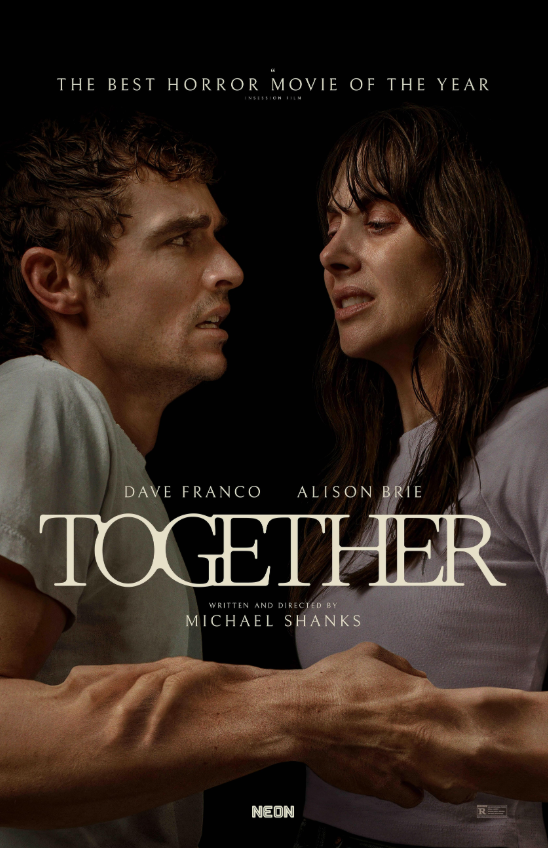
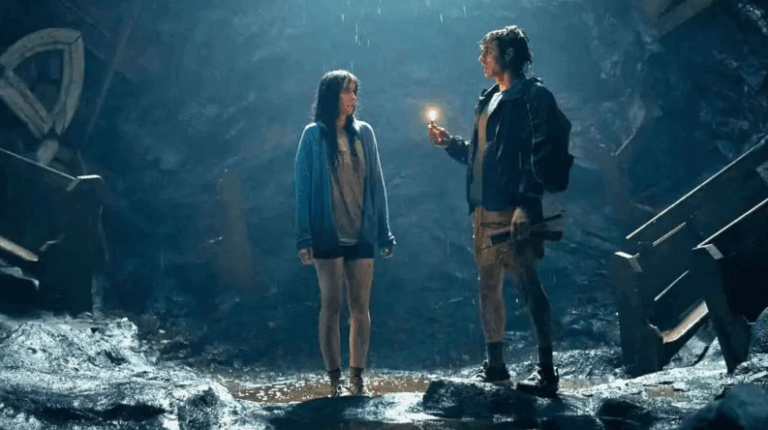
Together del 2025 no es una película para todo el mundo, es una mezcla rara de terror corporal con romance y momentos de comedia que aparecen en de vez en cuando, la verdad yo no sabía que esperar pero terminé enganchada, debe ser por lo rara que es que genera ese efecto. Dave Franco y Alison Brie interpretan a Tim y Millie que son una pareja que lleva como 10 años juntos y están en ese punto donde la relación se estanca y se ponde aburrida, deciden mudarse al campo porue Millie consiguió trabajo como maestra en un pueblo pequeño y Tim es un músico frustrado de 35 años que todavía persigue ese sueño de ser estrela de rock pero la realidad es que no le va nada bien. Desde el inicio uno se da cuenta que esa relación tiene problemas serios, no han tenido sexo en meses y hay mucho resentimiento más que todo de parte de Tim quien siente que esta atrapado en esta vida mientras Millie toma todas las decisiones importantes sin consultarlo casi nunca. Un día salen por el bosque y se pierden y consiguen unas campanas raras colgando de los árboles y se caen en un hollo gigante, terminan en una cueva subterranea bien extraña que tiene cosas raras y se ve que ahi pasaba algo muy raro hace años. Tim bebe agua de un charco en la cueva y se contagia con lo que sea que tenga esa agua y cuando se despiertan tienen las piernas pegadas entre si y tienen que arrancarse la piel para separarse. Regresan a su casa pensando que fue solo algo raro del moho de la cueva pero de ahi en adelante sus cuerpos empiezan a fusionarse cada vez que están juntos.
Tim empieza a sentirse mal y va al doctor pero el medico solo le dice que tome algo para dormir porque piensa que son ataques de pánico y no le cree nada de lo que le cuenta sobre la cueva y el agua contaminada. Mientras tanto Millie conoce a su vecino Jamie quien también es maestro y aunque parece amigable hay algo raro en este tipo, más adelante es que uno se da cuenta que el es parte de todo esto. La atraccion entre Tim y Millie se vuelve incontrolable y terminan teniendo sexo en el baño de la escuela donde trabaja Millie y el rollo es que después del sexo no se pueden separar y tienen que arrancarse el uno del otro esto me hizo sentir frío en el estomafgo. Tim va de regreso a la cueva buscando respuestas sobre que carajo le esta pasando y encuentra a una pareja que está desaparecida que les pasó lo mismo, son una masa deforme de carne porque uno de ellos se mató entonces la novia tuvo que seguir viviendo fusionada con su novio muerto y esta es la escena más perturbadora de toda la película. Resulta que el vecino era parte de un culto religioso de esa zona y ellos descubrieron que el agua de la cueva tiene propiedades que fusionan a las personas en un solo ser como símbolo de amor eterno o alguna pendejada asi de loca, la iglesia se derrumbó y quedó enterrada bajo tierra pero el culto hacia ceremonias donde las parejas bebían el agua y se cortaban los brazos para fusionarse voluntariamente, Jamie esta fusionado con su esposo y ahora es como una mezcla de ambos hombres en un solo cuerpo que se ve super perturbador pero el trata de convencer a Millie de que la fusion es algo hermoso y que es la conexion mas profunda que dos personas pueden tener.
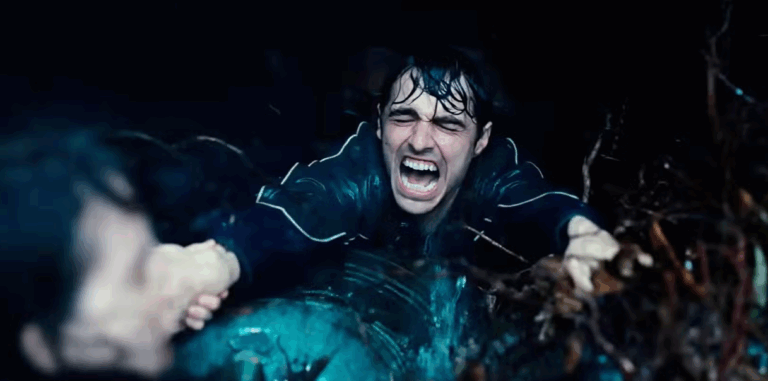
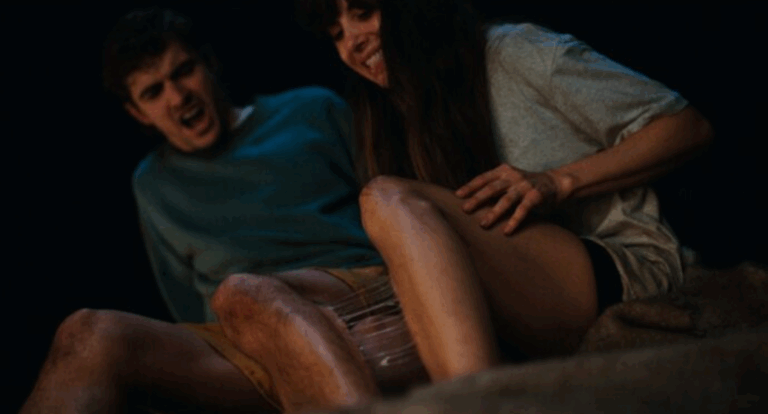
Las escenas de terror corporal están muy bien hechas con efectos prácticos que se ven bastante reales más en la parte donde los cuerpos se tuercen tratando de alcanzarse e mientras duermen, hay una escena en el pasillo donde se arrastran por el piso con los huesos quebrandose y la piel estirándose hasta que se tocan y sus manos empiezan a derretirse juntas en una sola masa de carne que se ve asquerosa pero real. Tienen que usar una sierra eléctrica para separar sus brazos que ya están fusionados y aunque no muestran el corte directamente es una escena bien intensa porque sabes lo que está pasando y puedes escuchar todo el ruido de la sierra y los gritos de dolor, Millie toma whiskey para el dolor pero como están conectados ella también siente cuando le pega a el. Al final Tim se da cuenta de que la única forma de salvar a Millie es matodose pero vuelven a conectarse y ambos deciden rendirse y aceptar la fusión en lugar de seguir luchando contra algo que no pueden controlar. Esa escena final de la fusion es perturbadora sus brazos desaparecen dentro de la piel del otro y los huesos crujen y se rompen mientras se convierten en una sola persona. Al día siguiente los padres de Millie llegan a visitarlos y cuando abren la puerta ven a esta criatura que es mitad Tim mitad Millie y ahi termina la película dejándolo a uno con esa imagen tan perturbadora que se queda en la cabeza por días.
Dave Franco y Alison Brie hacen un buen trabajo los ayuda que tienen bastante química, hay momentos donde la tensión entre ellos parece real como cuando pelean, el hecho de que sean pareja en la vida real también hizo más fácil filmar las escenas donde tienen que estar pegados por horas. Esa relación que muestran de la pareja es interesante porque al principio Tim parece ser el que quiere escapar y se siente atrapado pero cuando avanza la película uno se va dando cuenta que el es el que depende de Millie y ella más bien está cansada de cargar con el todo el tiempo, es como si la película volteara las expectativas sobre quien necesita a quien en esta relación toxica. Michael Shanks dirigió esta película y es su debut y me parece impresionante lo que logró con poco presupuesto, en las escenas de la cueva se siente esa claustrofobia, hay una escena donde Tim tiene una pesadilla y la cueva parece que respira al mismo ritmo que el y las paredes se mueven lo cual es perturbador visualmente hablando. Para mí esta peli tiene influencias de The Thing de John Carpenter más por esa escena al pricnipio donde los perros beben el agua y se fusionan entre ellos creando una masa de carne y pelo. Tambien tiene una vibras de Invasion of the Body Snatchers en algunas partes y te hace pensar en The Substance por el terror corporal aunque son películas muy diferentes en tono y mensaje que quieren dar.
Together es una película de terror sobre codependencia, por allí leí que hay un alboroto sobre que hay otra peli igual y se robaron la idea pero no sé quizás pueden existir dos películas sobre el mismo concepto porque la fusión de personas no es una idea única en el cine de terror. La película funciona en muchos niveles como metáfora sobre relaciones toxicas y codependencia que mucha gente vive, la forma en que no pueden separarse físicamente muestra eso de que hay veces que las personas se quedan en relaciones que no funcionan porque tienen miedo de estar solos o porque no saben como existir sin la otra persona. Jamie lo dice claramente cuando cuenta que se alejó de su pareja y tuvo toda la libertad del mundo pero no sabía que hacer porque no era el mismo sin su pareja al lado, esa es una realidad para muchas personas que pierden su identidad dentro de una relación y cuando tienen la oportunidad de irse se dan cuenta de que no saben quienes son fuera de ese cícruclo toxica. El final no me gustó mucho porque aunque sea roma´ticno eso de estar juntos para siempre me parece algo extremo porque es un relación tóxica y quizás debieron separarse hace años, yo le doy un 7/10 porque aunque algunas decisiones que toman los personajes son gafas y sin sentido, la película logra mezclar el terror corporal con un comentario sobre relaciones y codependencia de una manera que te mantiene enganchado.
Together from 2025 isn't a movie for everyone, it's a weird mix of body horror with romance and comedy moments that pop up every now and then, truth is I didn't know what to expect but I ended up hooked, must be because of how weird it is that it generates that effect. Dave Franco and Alison Brie play Tim and Millie who are a couple that's been together for like 10 years and they're at that point where the relationship stagnates and gets boring, they decide to move to the countryside because Millie got a job as a teacher in a small town and Tim is a frustrated 35-year-old musician who's still chasing that dream of being a rock star but reality is things aren't going well for him at all. From the start you realize that relationship has serious problems, they haven't had sex in months and there's a lot of resentment mostly from Tim's side who feels he's trapped in this life while Millie makes all the important decisions without consulting him almost ever. One day they go out into the forest and get lost and find some weird bells hanging from trees and fall into a giant hole, they end up in a really strange underground cave that has weird stuff and you can tell something really weird was happening there years ago. Tim drinks water from a puddle in the cave and gets infected with whatever that water has and when they wake up their legs are stuck together and they have to tear their skin off to separate. They go back home thinking it was just something weird from the mold in the cave but from there on their bodies start fusing every time they're together.
Tim starts feeling sick and goes to the doctor but the doctor just tells him to take something to sleep because he thinks they're panic attacks and doesn't believe anything he tells him about the cave and the contaminated water. Meanwhile Millie meets her neighbor Jamie who's also a teacher and although he seems friendly there's something weird about this guy, later on is when you realize he's part of all this. The attraction between Tim and Millie becomes uncontrollable and they end up having sex in the bathroom of the school where Millie works and the thing is after sex they can't separate and have to tear themselves from each other this made me feel cold in my stomach. Tim goes back to the cave looking for answers about what the hell is happening to him and finds a missing couple that the same thing happened to, they're a deformed mass of flesh because one of them killed himself so the girlfriend had to keep living fused with her dead boyfriend and this is the most disturbing scene of the entire movie. Turns out the neighbor was part of a religious cult from that area and they discovered that the water in the cave has properties that fuse people into a single being as a symbol of eternal love or some crazy bullshit like that, the church collapsed and was buried underground but the cult did ceremonies where couples drank the water and cut their arms to fuse voluntarily, Jamie is fused with his husband and now is like a mix of both men in a single body that looks super disturbing but he tries to convince Millie that fusion is something beautiful and that it's the deepest connection two people can have.
The body horror scenes are very well done with practical effects that look pretty real especially in the part where their bodies twist trying to reach each other while they sleep, there's a scene in the hallway where they crawl on the floor with bones breaking and skin stretching until they touch and their hands start melting together into a single mass of flesh that looks disgusting but real. They have to use an electric saw to separate their arms that are already fused and although they don't show the cut directly it's a really intense scene because you know what's happening and you can hear all the noise from the saw and the screams of pain, Millie drinks whiskey for the pain but since they're connected she also feels when it hits him. In the end Tim realizes that the only way to save Millie is killing himself but they connect again and both decide to give up and accept the fusion instead of keep fighting against something they can't control. That final fusion scene is disturbing their arms disappear inside each other's skin and bones crunch and break while they become a single person. The next day Millie's parents arrive to visit them and when they open the door they see this creature that's half Tim half Millie and that's where the movie ends leaving you with that disturbing image that stays in your head for days.
Dave Franco and Alison Brie do a good job it helps that they have pretty good chemistry, there are moments where the tension between them seems real like when they fight, the fact that they're a couple in real life also made it easier to film the scenes where they have to be stuck together for hours. That relationship they show of the couple is interesting because at first Tim seems to be the one who wants to escape and feels trapped but as the movie progresses you start realizing that he's the one who depends on Millie and she's actually tired of carrying him all the time, it's like the movie flips the expectations about who needs who in this toxic relationship. Michael Shanks directed this movie and it's his debut and I think it's impressive what he achieved with a small budget, in the cave scenes you feel that claustrophobia, there's a scene where Tim has a nightmare and the cave seems to breathe at the same rhythm as him and the walls move which is visually disturbing. For me this movie has influences from The Thing by John Carpenter more because of that scene at the beginning where the dogs drink the water and fuse with each other creating a mass of flesh and fur. It also has vibes of Invasion of the Body Snatchers in some parts and makes you think of The Substance because of the body horror although they're very different movies in tone and message they want to give.
Together is a horror movie about codependency, somewhere I read there's a fuss about another movie being the same and they stole the idea but I don't know maybe two movies can exist about the same concept because fusion of people isn't a unique idea in horror cinema. The movie works on many levels as a metaphor about toxic relationships and codependency that many people live, the way they can't separate physically shows that sometimes people stay in relationships that don't work because they're afraid of being alone or because they don't know how to exist without the other person. Jamie says it clearly when he tells how he walked away from his partner and had all the freedom in the world but didn't know what to do because he wasn't the same without his partner by his side, that's a reality for many people who lose their identity within a relationship and when they have the chance to leave they realize they don't know who they are outside of that toxic circle. The ending I didn't like much because even if it's romantic that thing about being together forever seems extreme to me because it's a toxic relationship and maybe they should've separated years ago, I give it a 7/10 because although some decisions the characters make are dumb and senseless, the movie manages to mix body horror with a commentary about relationships and codependency in a way that keeps you hooked.
American independent cinema is among the best in the world. It may seem ironic or contradictory, but I prefer to see it as a matter of balance. That the same country that produces an astronomical amount of throwaway films made by multimillion-dollar studios also produces—thanks to some of its local artists—honest, low-budget films with disruptive, courageous, and memorable writing may be a way to keep cinema alive as an art form in the very birthplace of cinema as entertainment.
El cine independiente de EEUU es de los mejores del mundo. Puede parecer irónico o contradictorio, pero me gusta más verlo como una cuestión de balance. Que el mismo país que produce una cantidad astronómica de films desechables realizados en estudios multimillonarios también produzca - gracias a una parte de sus artistas locales - cintas honestas, de bajo presupuesto, pero con una escritura disruptiva, valiente y memorable, puede ser una forma de mantener vivo el cine como arte en la mismísima cuna del cine como entretenimiento.
There are many names that have made history in this world, cult film directors who have made the leap to worldwide fame, or those who, by remaining in the most private spheres, have managed to leave notable works for posterity. And to that exclusive list, I want to add a new name: Eva Victor. This woman, barely thirty years old, is in charge of writing, directing, and starring in one of the best films of 2025 and one of the best I've seen in recent years: Sorry, Baby. It tells the story of Agnes (Eva Victor), a literature professor living in New England, where her friend Lydie (Naomi Ackie), who now lives in New York, comes to visit her. Together they attend a reunion with some former classmates with whom they studied their doctorates years before. Up to this point, one would think the film has something to do with adulthood, the life changes of each of the characters, or that it's some kind of drama about life and its surroundings. And yes, there's some of that, but Sorry, Baby hides more than one secret at the beginning. As the film progresses and we see Agnes interact with other people, we get to know her better and piece together her profile and her story. Agnes still lives in the same house she lived in years ago, she teaches at the university where she completed her graduate studies, she hasn't married, she doesn't have children, she doesn't seem to have any major ambitions, but her simplicity doesn't strike us as entirely natural. I mean, she seems like an honest woman, with the potential to lead a more dynamic life than the one she's leading. Why doesn't she do it? The truth behind that question hides something disturbing.
Son muchos los nombres que han hecho historia en ese mundo, directores de cine de culto que han hecho el salto a la fama mundial, o aquellos que manteniéndose en las esferas más privadas han logrado dejar para la posteridad obras notables. Y en ese exclusivo listado yo quiero agregar un nuevo nombre: Eva Victor. Esta mujer, de apenas treinta años, es la encargada de escribir, dirigir y protagonizar una de las mejores películas de este 2025 y una de las mejores que he visto en los últimos años: Sorry, baby. En ella se cuenta la historia de Agnes (Eva Victor), una profesora de literatura que vive en New England a donde va a visitarla su amiga Lydie (Naomi Ackie), quien ahora vive en Nueva York. Juntas van a una reunión con algunos ex compañeros de clases con quienes estudiaron su doctorado años atrás. Hasta allí, uno creería que la película tiene un poco que ver con la adultez, los cambios de vida de cada uno de los personajes, o que se trata de algún drama sobre la vida y sus alrededores. Y sí, hay algo de eso, pero Sorry, baby esconde más de un secreto al inicio. A medida que la película va avanzando y vemos interactuar a Agnes con otras personas, la vamos conociendo mejor y nos vamos armando su perfil y su historia. Agnes aún vive en la misma casa en la que vivía hace años, da clases en la universidad en la que estudió el posgrado, no se ha casado, no tiene hijos, no parece tener mayores ambiciones, pero su sencillez no nos resulta del todo natural. Es decir, nos parece una mujer honesta, con posibilidades de llevar una vida más dinámica que la que lleva, ¿por qué no lo hace? La verdad detrás de esa pregunta esconde algo perturbador.
One of Victor's successes when writing the film's script was choosing a non-linear timeline. Sorry, Baby is divided into several chapters presented like some Tarantino films and revealed in chronological order, without mentioning dates, but with enough clues for the viewer to organize the events according to their time. This keeps viewers engaged with each chapter and also lends itself to the director's ability to play with when and how to reveal certain things.
Uno de los aciertos de Victor a la hora de hacer el guion de la película fue escoger el tiempo no lineal. Sorry, baby está dividida en varios capítulos que son presentados como en algunas cintas de Tarantino y que además nos son reveladas en desorden cronológico, sin mencionar fechas, pero con las suficientes pistas como para que el espectador pueda organizar los eventos de acuerdo al momento en que ocurrieron. Esto hace que las personas se mantengan atentas a cada capítulo y además se presta para que la directora juegue con cuándo y de qué forma revelar ciertas cosas.
The film's photography is also beautiful, and the performances of the leads are among the best and in keeping with Victor's beautifully written characters. Lydie is one of the best friends a woman can have, on and off screen. And Agnes is a brilliant woman, with a great sense of humor and a kind heart, somewhat naive at times, and yes, a little strange, like some of Greta Gerwig's characters, but it's impossible not to grow fond of her. Her honesty, her kindness, and her story completely disarm us. In Sorry, Baby there are moments to laugh, others to cry, to feel helplessness, frustration, anger, gratitude, hope. This film is as complex and as complete as life itself. One of my favorite scenes is at the end—I don't wanna mention the context—with that monologue Agnes delivers that gives the film its name. You have to have a very deep, sharp eye and great narrative and interpretive talent to conceive that scene, write it, and then reflect it on screen with that emotion and that nakedness. It feels like you're watching the work of someone with more experience. Eva Victor's directorial debut is one of the best films of the year, without a doubt, and so, without much fanfare, without large sums of money to promote her film—which was distributed by A24—she firmly entered the cinematic universe, winning the award for Best Screenplay at the Sundance Film Festival and also being nominated at the Valladolid Film Festival.
La fotografía de la película también es hermosa y las actuaciones de los protagonistas están a la altura de las mejores y en consonancia con unos personajes muy bien escritos por Victor. Lydie es de las mejores amigas que una mujer puede tener, dentro y fuera de la pantalla. Y Agnes es una mujer brillante, con un gran sentido del humor, un corazón noble, algo ingenua a veces, y sí, un poco rara, como algunos personajes de Greta Gerwig, pero es imposible no encariñarse con ella. Su honestidad, su bondad y su historia nos desarman completamente. En Sorry, baby hay momentos para reír, otros para llorar, algunos para sentir impotencia, frustración, rabia, agradecimiento, esperanza. Esta película es tan compleja y tan completa como la vida misma. Una de mis escenas favoritas está al final - no quiero mencionar el contexto - con ese monólogo que tiene Agnes y que da nombre a la película. Hay que tener una mirada muy profunda, aguda y un gran talento narrativo e interpretativo para concebir esa escena, escribirla y luego reflejarla en la pantalla con esa emoción y esa desnudez. Da la sensación de que se está viendo el trabajo de alguien con más experiencia. El debut como directora de Eva Victor es de las mejores películas del año, sin duda y así, sin mucho ruido, sin grandes sumas de dinero para promocionar su película - que fue distribuida por A24 - entró con pie firme en el universo cinematográfico ganando el premio a Mejor Guion en el Festival de Sundance y siendo nominada además en el Festival de Valladolid.
Sorry, Baby is a film that makes you wanna watch it multiple times. The first time to discover it. The second time to pay attention to how well it's done from the start. The third time to immerse yourself in its emotional depth and Agnes's journey, both up and down. And from there, watch it as many times as you want to experience it, not as you enjoy those romantic, happy stories like Pride & Prejudice, but as you suffer those other stories that break us, but that we love and can't help but return to, like Past Lives or Aftersun.
Sorry, baby es una película que provoca ver varias veces. La primera para descubrirla. La segunda para prestar atención a lo bien hecha que está desde el principio. La tercera para sumergirse en su aspecto emocional y en el viaje, de ascenso y descenso, de Agnes. Y a partir de allí, verla todas las veces que uno quiera para vivirla, no como se disfrutan esas historias románticas y felices del estilo de Pride & Prejudice sino como se sufren esas otras historias que nos rompen, pero que amamos y no podemos evitar volver a ellas, como Past Lives o Aftersun.
I really liked Victor's work, even more than other names that had caught my attention, also because they were very young people charged with writing, directing, and starring in their debut films. Kit Zauhar, for example, born in Philadelphia to a Chinese mother, is the same age as Victor, but at the time of her debut as a director, writer, and actress in Actual People she was 26yo. And, seriously, she killed it in that film (where I fell in love with Audrey Kang) and also with her second film This Closeness. Her style is different from Victor's, but both feel fresh in their perspective that analyzes human relationships in modern times. Before Zauhar, I had also enjoyed Cooper Raiff's two films, Shithouse and, above all, Cha Cha Real Smooth, starring a hypnotic Dakota Johnson. Now, Raiff has just released a miniseries in which he once again writes, directs, and stars, this time alongside Lili Reinhart and Mark Ruffalo. It's called Hal & Harper and will be available in Latin America on MUBI starting October 19th. In the meantime, you can check out the films I mentioned, and I especially recommend Sorry, Baby. I also suggest you keep an eye out for Eva Victor, a talented woman who I hope will continue to bring us profound, emotional, and honest stories in the future. Have you seen any of these films? Did you know any of these names? I'll read you in the comments.
El trabajo de Victor me gustó muchísimo, más incluso que otros nombres que habían llamado mi atención también por ser personas muy jóvenes encargados de escribir, dirigir y protagonizar sus óperas primas. Kit Zauhar, por ejemplo, nacida en Philadelphia de madre China, tiene la misma edad de Victor, pero para el momento de su debut como directora, escritora y actriz en Actual People tenía apenas 26. Y, en serio, la rompió en esa película (en donde me enamoré de Audrey Kang) y también con su segundo film This closeness. Su estilo es diferente al de Eva Victor, pero ambas resultan frescas en su mirada que analiza las relaciones humanas en los tiempos actuales. Antes de Zauhar también había disfrutado las dos películas de Cooper Raiff, Shithouse y sobre todo Cha Cha Real Smooth con una Dakota Johnson hipnótica. Ahora, Raiff acaba de estrenar una mini serie en donde vuelve a escribir, dirigir y protagonizar, esta vez junto a Lili Reinhart y Mark Ruffalo. Se llama Hal & Harper y estará disponible para América Latina en MUBI a partir del 19 de Octubre. Mientras tanto pueden ir revisando estas películas que les mencioné y en especial les recomiendo Sorry, baby y les sugiero que sigan atentos al nombre de Eva Victor, una mujer talentosa que espero nos siga brindando historias profundas, emotivas y honestas en el futuro, ¿han visto alguna de estas películas? ¿conocían algunos de estos nombres? Los leo en los comentarios.
Reviewed by | Reseñado por @cristiancaicedo
Other posts that may interest you | Otros posts que pueden interesarte:
Other posts that may interest you | Otros posts que pueden interesarte:
The early 1930s represent arguably the most fascinating period in Hollywood's history, primarily due to the revolutionary introduction of sound technology that established much of the cinematic language we recognise today. This era was equally remarkable for the relative creative freedom filmmakers enjoyed in the absence of the oppressive Production Code that would later constrain Hollywood output. This brief window of artistic liberty resulted in the rapid development of what are now perceived as quintessentially American film genres – most notably musicals, and to a lesser extent, gangster films. Another genre that emerged during this period, often overlooked in historical discussions but equally significant, is the prison film. Within this context, The Big House (1930), directed by George Hill, stands as a seminal work that provided the foundational template for prison narratives that would, in one way or another, be followed for decades to come. Despite its age, this pre-Code masterpiece remains remarkably fresh and relevant, offering insights into both cinematic history and enduring social issues.
Written by Frances Marion, George Hill's wife and one of the most influential and successful women in Hollywood's early decades, the script delivers a deceptively simple story that belies its thematic complexity. Kent (played by Robert Montgomery), a young man who kills another during a drunken driving incident, receives a ten-year sentence for manslaughter. The warden (Lewis Stone) laments that due to severe overcrowding, this privileged youth must share a cell with hardened criminals like Butch (Wallace Beery) and Morgan (Chester Morris). The film cleverly establishes contrasting relationships – Butch proves intimidating while Morgan surprisingly tries to help Kent, particularly after falling in love with Anne (Leila Hyams), Kent's beautiful sister whom he notices during a prison visit. The narrative takes an unexpected turn when Kent, rather than the noble protagonist audiences might expect, wrecks Morgan's parole opportunity by hiding Butch's knife in Morgan's bed during a routine check. Morgan subsequently escapes by hiding in a morgue truck, seeking vague vengeance against Kent, only to be surprised when Anne refuses to turn him in. Their brief romance is interrupted by his recapture, but this experience transforms Morgan's resolve to go straight – a decision complicated when Butch and other prisoners plan a mass escape and threaten Morgan with death if he betrays them. The film culminates in an extremely violent riot that claims dozens of lives, including both Butch and Kent. During the chaos, Morgan saves numerous guards' lives and earns a gubernatorial pardon, reuniting with Anne in the film's concluding scene.
Made only a few years after the introduction of sound to Hollywood, The Big House holds the distinction of being the first film to win the Oscar for Best Sound, an award accepted by Douglas Shearer who would later win twelve more Oscars across different categories. While contemporary audiences might find the sound quality somewhat rough around the edges, it's sufficiently competent not to hinder George W. Hill's assured direction, which demonstrates a filmmaker who had already mastered the considerable challenges of sound cinema. Though the production occasionally cuts corners – most notably using cheap matte paintings to depict the prison in early scenes – the film maintains an excellent pace throughout and even features some surprisingly modern-looking zoom shots that hint at cinematic techniques that wouldn't become commonplace for years.
MGM produced the film at Hill's initiative, inspired directly by the series of spectacular prison riots that occurred in 1929. His wife Frances Marion approached the project with remarkable dedication, visiting various prisons including San Quentin to authentically capture life behind bars. These efforts paid substantial dividends, resulting in a film that maintains remarkable freshness and relevance despite being produced nearly a century ago. Marion's commitment to authenticity was recognised with the Academy Award for Best Writing Achievement, a testament to her skill in translating real-world observations into compelling cinema.
Marion's script proves exceptionally efficient in its simplicity while simultaneously subverting audience expectations. When Kent, portrayed by the matinee idol Robert Montgomery, arrives at prison, conventional narrative wisdom suggests he should serve as the protagonist – the "ordinary" person thrust among "animals" who learns important life lessons and ultimately triumphs. Yet throughout the film, Kent reveals himself as a cowardly weakling, willing to betray others merely to secure his own release. This narrative choice was remarkably bold for its time, challenging the audience's natural identification with the good-looking white male lead.
The true protagonist emerges as Morgan, played with remarkable efficiency by Chester Morris, who undergoes a genuine transformation from hardened criminal to responsible citizen willing to do the right thing. Marion employs the unlikely romance with Anne as the catalyst for this transformation – a segment that represents the film's weakest element, conceding to melodramatic tropes common in early Hollywood. Mercifully brief, this romantic interlude doesn't significantly detract from the film's overall impact. More significantly, The Big House returns to gritty realism in its conclusion with a surprisingly spectacular and violent confrontation between prisoners and guards where both sides employ automatic weapons, ultimately requiring military intervention. This sequence would delight early armour enthusiasts, featuring WW1-era Renault FT-17 tanks borrowed from the California National Guard – making The Big House the only prison film in history to incorporate this particular military equipment.
The film also serves as the breakout role for Wallace Beery, who would become one of the most iconic character actors of early 1930s Hollywood. Beery assumed the role of Butch as a replacement for Lon Chaney, who had died of cancer shortly before production began. Beery delivered a masterful performance, crafting a multi-dimensional character – simultaneously a violent, intimidating killer yet capable of winning audience sympathy when discussing his mother. This complexity in characterisation was particularly noteworthy for the era, demonstrating how even the most hardened criminals could possess relatable human qualities.
Lewis Stone, one of the most recognisable character actors of Classic Hollywood, delivers an equally strong performance as the warden, portrayed as kind-hearted and supportive of prison reform. This detail proves remarkably prescient, highlighting how certain situations, character archetypes, and narrative tropes remain unchanged across decades – much like the real-life issues that continue to inspire the prison genre. T
Despite being somewhat underrated in comparisons with more iconic films of its era, The Big House was a significant commercial success. MGM capitalised on its popularity by producing multiple versions for different language markets – Menschen hinter Gittern in German, El Presidio in Spanish, and Révolte dans la prison in French, the latter starring a young Charles Boyer. This international distribution strategy reflected Hollywood's growing global ambitions during this period and demonstrated the universal appeal of well-crafted genre storytelling.
What makes The Big House particularly significant in film history is its position within the brief pre-Code era – that fleeting moment before the strict enforcement of the Hays Production Code in 1934. During this window, filmmakers enjoyed unprecedented creative freedom to explore complex social issues and moral ambiguities without the constraints that would soon dominate Hollywood. The film's willingness to portray prison life with such unflinching realism, its complex characterisations that refused to reduce criminals to simple villains, and its exploration of systemic issues like overcrowding and rehabilitation all reflect this unique historical moment.
In conclusion, The Big House stands as far more than merely an early example of the prison genre – it represents a crucial moment in Hollywood's evolution, capturing the industry's transition to sound while simultaneously pushing the boundaries of what cinema could achieve in terms of social commentary and narrative complexity. Its influence echoes through subsequent prison films from Brute Force (1947) to Cool Hand Luke (1967) and beyond, yet few have matched its raw power and authenticity. Nearly a century after its release, The Big House is a testament to Hollywood's brief period of unbridled creativity before the constraints of the Production Code reshaped American cinema, offering modern audiences a glimpse into both the origins of a beloved genre and the enduring human stories that continue to resonate across generations.





 [Source](https://tinyurl.com/nhkmx5nd)
So these brothers do have a history, supposed to be close, even used to be in a band together and now Jake tries so damn hard to keep things put together but when Vince stumbles back into his life, dragging debts, mob trouble and all types of bad luck, at first it even looks Jake is in rehabilitation but his drug is his brother and he just wants to stay away from him as far as possible but once after the first hit its over for him, it is like someone opened the door to every bit of trouble you can have in New York, all at once. Vince is the kind of guy you root for until he pisses it all away, cool guy, brilliant but in the very bad way, runs a scam, gets beat up, then falls under eight more problems before payday, I mean Jason Bateman does that broken willpower thing so well, you wonder if the guy even knows what peace feels like or if he even want it. Jake on the other hand, is kinda the glue, got the business, got a kid, tries to keep everybody happy but deep down he is just as lost, obsessed with keeping his brother safe, even if it costs him every damn thing he built, makes you want to shout “bro step off save yourself” but you know he wont.
[Source](https://tinyurl.com/nhkmx5nd)
So these brothers do have a history, supposed to be close, even used to be in a band together and now Jake tries so damn hard to keep things put together but when Vince stumbles back into his life, dragging debts, mob trouble and all types of bad luck, at first it even looks Jake is in rehabilitation but his drug is his brother and he just wants to stay away from him as far as possible but once after the first hit its over for him, it is like someone opened the door to every bit of trouble you can have in New York, all at once. Vince is the kind of guy you root for until he pisses it all away, cool guy, brilliant but in the very bad way, runs a scam, gets beat up, then falls under eight more problems before payday, I mean Jason Bateman does that broken willpower thing so well, you wonder if the guy even knows what peace feels like or if he even want it. Jake on the other hand, is kinda the glue, got the business, got a kid, tries to keep everybody happy but deep down he is just as lost, obsessed with keeping his brother safe, even if it costs him every damn thing he built, makes you want to shout “bro step off save yourself” but you know he wont. [Source](https://tinyurl.com/nhkmx5nd)
 [Source](https://tinyurl.com/nhkmx5nd)
 [Source](https://tinyurl.com/nhkmx5nd)
 [Source](https://tinyurl.com/nhkmx5nd)










 [Source](https://tinyurl.com/2wvw97p9)
 [Source](https://tinyurl.com/2wvw97p9)
 [Source](https://tinyurl.com/2wvw97p9)
 [Source](https://tinyurl.com/2wvw97p9)
 [Source](https://tinyurl.com/2wvw97p9)