Longform reviews of films, TV, anime, books, and audiobooks, written by the scrobble.life community and published to the Hive blockchain, so each one is owned by its author and can earn rewards from readers. 51,253 reviews and counting.


Images captured from IMDb. Cover designed in CANVA. Text translated in Google translated.


FACEBOOK / INSTAGRAM / TWITTER


Las imágenes fueron capturadas de la página IMDb. Portada diseñada en CANVA. Texto traducido en Google Translated.


FACEBOOK / INSTAGRAM / TWITTER

Eddie Murphy is not just an actor who acts in movies but an entertainer. Most of the time when I want to watch a movie, I need to first check out the cast to know if it will be an interesting movie or not, but once I see some set of actors in a movie, I can read exactly what I am expecting to get from the movie even without watching at all. The combination of Eddie Murphy and Travis really makes this movie an intriguing watch, and at first I was doubting if the combination of these two guys was going to work, but they surprised me.
The Pickup is an action comedy movie in which Eddie Murphy and Pete Davidson acted as the lead roles. They both showed funny moments throughout the movie, and you will constantly laugh out your sorrow. The Pickup is about two guys, Eddie Murphy and Pete Davidson, who do a cash pickup daily as their routine, and they get ambushed by criminals. They got entangled in the midst of their nightmare, and they must ensure they get out alive, going through a lot of high-risk danger as they continue to have a very bad day.
Pete Davidson dreams of becoming a police officer because he believes he has the skill set, while Eddie Murphy is a trained person who was able to help them navigate through the whole situation. This movie was directed by Tim Story and starring Eddie Murphy, Pete Davidson, Keke Palmer, and many more. The film was released on the 6th of August, 2025, by Amazon MGM Studios via Amazon Prime Video. This movie falls under the movie genres of action, comedy, crime, drama, and emotion.

Talking about the cinematography, there is one thing I love so much when I am watching a movie, and I can hear different soundtracks from the background. Another thing is seeing lovely movie effects and watching a movie that has good graphics. It will surely get you attracted to watch because watching a movie with a nice view is the goal.

What I love about the movie.

What do I not like?
Rating: I would rate this movie 7 out of 10 because of the comedy and action.
In conclusion, the pickup movie is a very entertaining movie and an interesting one because it carries the audience along right from the start of the movie till the end. Every part of the movie is always passing a message to the audience, making it a must-watch. Well, to some people this movie might not really be an interesting one, but to those who really love action movies and comedy, Eddie Murphy is the right guy for you to watch because you will surely laugh out your sorrow and get satisfied.
Posted Using INLEO
The second movie of 'The Maze Runner' series was pretty awesome! Full of action, non-stop action frankly. Like seriously if you're ever in the mood for pure action these are the movies to watch.
These movies are really interesting. They're not too simple, not overly complex. Slick and clever in it's own way. There's a few cringe moments here and there but honestly I kind of like that, it has heart and any good movie with a central hero like this should have its share of cheesiness.
The movies feel confident and I think it's because they stick to the books fairly well. I mean, as far as I can remember anyway. It's been a LONG time since I read the books but from what I can recall the movies stayed on track for the most part to the books. That's how books to movies SHOULD BE. Film makers should treat book to movie adaptions as if it were a biography or something like that. Have faith in the book and just copy the thing! The book became famous for a reason... If you're gonna change things up from the books at least be honest and tell the audience that things will be different.
But yes 'Maze Runner: The Scorch Trials' offers some of the most fun and awesome action I've seen in awhile. The scene in the mountains looked like a legit war zone. So cool. The action was non stop without being absurdly graphic/gorey whatsoever. The Cranks were AWESOME looking! I was like actually creeped out on several occasions. It was fun, realistic and just epic. I was simply thoroughly entertained.
The 'Maze Runner' story is a lot cooler than I remembered. I sense that it's sort of simulating life in a grand, gritty way. The whole 'whose side are you on' question is quite deep. The challenge of the maze, and now journeying to a rumored better place, and paradise being mentioned. Greater good, versus like day in and day out battles. I sense they're seemingly connected. There's a lot to break down but every detail may take all day. But I appreciate how it's constructed for sure. Each moment seems very much like it mirrors life. I feel like this story expresses how it's hard to trust many if anyone, try to avoid being manipulated, sometimes good and bad isn't very simple all the time. Good stories are pretty powerful for sure. The Maze Runner definitely offers more than meets the eye I'd say.
Hmmm. I forget a lot of the bigger story lines from the book and I look forward to experiencing how it all ends. I'm sure it will come back to me once I finish the last movie. Thomas is a really likeable good guy. Very loyal dude. Dylan O'Brien was a good choice.
Also, in general, the CGI and landscapes were pretty nice and how I pictured the scenery in my head which again goes to show that the filmmakers didn't fix what wasn't broken! These movies offer a ton of CGI but it's pretty clear they put a lot of effort into their CGI. It's not like mind-blowingly excellent but well above average CGI.
All in all this was nice, I liked it just as much as the last. So far I just find these films super well rounded, and super fun.

Greetings, movie and series lovers! 🎥
¡Saludos, amantes del cine y las series! 🎥

Created with Canva Pro. Image source
Hello everyone, my fellow movie fans, great community of Movies and TV Shows, I hope you're all doing great today. Today I want to share a new review with you. I'll give you my personal opinions on a family-friendly movie. Let's talk a little about: Arthur the King. You know when you go to the movies without expecting much, almost thinking "oh, let's see what this is like?" Well, that's exactly what I was going to say... and it's Mark Wahlberg, adventure racing, a stray dog... it sounds like that mix where you say "okay, either this is super cheesy or it hits you right in the heart," right? And yes, because it's like... both, and the truth is, I came out feeling a lot more than I thought... to begin with, it's a true story, and that already adds points to it for me. It's about this guy, Michael Light (Wahlberg), who is obsessed with winning an adventure race that's totally crazy... it's not your average Sunday race, huh?
It’s over 700 km in 10 days, crossing jungles, mountains, rivers... something super serious, it’s called “adventure raid”, apparently, a team sport where they have to navigate, run, bike, row, climb... well, push themselves to the MAXIMUM limit... their team is a mix of everything, there’s Simu Liu (who is always a pleasure to watch, really) and Nathalie Emmanuel. So there they are, in the middle of the super-killer competition in the Dominican Republic (although be careful, the real story was in Ecuador, I think they filmed somewhere else), already dealing with the friction of the team and the physical hell that it is, and suddenly... they meet Arthur... oh, let me tell you, Arthur –this stray dog, covered in wounds, who obviously has been hit hard– steals the WHOLE movie.
Seriously, you're going to fall in love with this dog. There's a moment when Wahlberg shares some meatballs with him, just like that, a nice gesture in the middle of nowhere, and voila! Arthur just starts following them... through the mud, crossing rivers, keeping up with them as best he can, it's incredible... the movie does it really well, I think, showing that loyalty and nobility of a dog without it feeling forced. You quickly start rooting for him, caring for him, you get really attached... he's not your typical talking Disney dog, it feels organic, you see his struggle before he finds them and you just want him to do better. If you love dogs, seriously, prepare your hearts... I ended up much more invested in Arthur's story than almost anything else.
Hola a todos, amigos fanáticos de las buenas películas, gran comunidad de Movies and TV Shows, espero que hoy estén super bien, hoy les quiero compartir una nueva reseña, les daré mis opiniones personales de una película para toda la familia, hablemos un poco de: Arthur the King. Ubican cuando van al cine sin esperar mucho, casi que pensando "ay, a ver qué tal esta cosa", pues justo así iba yo.. y es que Mark Wahlberg, carreras de aventura, un perrito callejero… suena a esa mezcla que dices "okey, o esto es súper cursi o te pega en el cora", ¿no? Y si, porque es como… las dos cosas, y la verdad, salí sintiendo un montón más de lo que creí.. pa' empezar, es una historia real, y eso para mí ya le suma puntos, va de este tipo, Michael Light (Wahlberg), que está obsesionado con ganar una carrera de aventura que es una locura total.. no es la carrerita del domingo, ¿eh?
Son más de 700 km en 10 días, cruzando selvas, montañas, ríos... algo super serio, se llama "raid de aventura", al parecer, un deporte en equipos donde tienen que navegar, correr, darle a la bici, remar, escalar... vamos, llevarse al límite MÁXIMO.. su equipo es una mezcla de todo, ahí anda Simu Liu (que siempre es un gusto verlo, la verdad) y Nathalie Emmanuel. Total que ahí están, en medio de la competencia súper matadora en República Dominicana (aunque ojo, la historia real fue en Ecuador, creo que filmaron en otro lado), ya lidiando con los roces del equipo y el infierno físico que es eso, y de repente… conocen a Arthur.. ay, déjenme decirles, Arthur –este perrito callejero, lleno de heridas, que se ve que le ha tocado duro– se roba TODA la película.
En serio, te vas a enamorar de este perro, hay un momento en que Wahlberg le comparte unas albóndigas, así nomás, un gesto buena onda en medio de la nada, y ¡listo! Arthur simplemente empieza a seguirlos.. por el lodo, cruzando ríos, aguantándoles el paso como puede, es increíble.. la peli lo hace súper bien, creo, mostrando esa lealtad y nobleza tan perruna sin que se sienta forzado. Rápidamente empiezas a animarlo, a preocuparte por él, te encariñas un montón.. no es el típico perro de Disney que habla, se siente orgánico, ves su lucha antes de encontrarlos y solo quieres que le vaya mejor. Si aman a los perros, en serio, preparen el corazón.. terminé mucho más metido en la historia de Arthur que en casi cualquier otra cosa.

Hey, and now, Mark Wahlberg... it's a funny thing because opinions are so divided, there are people who say he did great, that he put in an intensity and energy that we rarely see from him... and yes, sometimes Wahlberg puts on a face of "what's up?", but here, especially in the race parts, I did see that desire, that passion that they say he put in, he's the leader, the one who pushes the team, you know? But then... others say "meh", that he did his job and that's it, and they blame the script... and the truth is I also understand why they say that, that brings me to what I think is the WORST problem with the movie: the script. And it's that especially at the beginning, before the race really starts, the dialogues feel super fake, unnatural, it's as if everyone is speaking in soap opera phrases, super constructed and dramatic... the film tries to be intense from minute one by force, and it just doesn't work... that's why it's so hard to connect with the characters at the beginning, because they don't speak like we do!
It's the typical "movie dialogue" that maybe reads well, but when the actors say it, it sounds strange, like stiff, honestly, it didn't help Wahlberg or the others at all in those parts. It even made me feel a little sorry for them at times, thinking "really, who talks like that?"... it's a shame, because they're supposed to be real people, but with that dialogue they seem like textbook characters, the typical clichés of a sports movie... while we're at it, yes! This film overuses clichés, mixing the whole "sports drama that inspires you" thing—you know, the team no one supports, the leader seeking redemption, overcoming problems—with the "story of the little animal that touches your heart." It follows the recipe for both genres, step by step; you can pretty much imagine where this is going, even if you don't know the real story. It's predictable, really... don't expect any big surprises in how it all plays out.
Oigan, y ahora, Mark Wahlberg… es que está curioso el asunto.. porque las opiniones están súper divididas, hay gente que dice que lo hizo genial, que le metió una intensidad y una energía que pocas veces le vemos.. y pues sí, a veces Wahlberg pone cara de "¿qué onda?", pero aquí, sobre todo en las partes de la carrera, sí le vi esas ganas, esa pasión que dicen que le metió, es el líder, el que empuja al equipo, ¿saben? Pero luego... otros dicen que "meh", que cumplió y ya, y le echan la culpa al guion.. y la verdad también entiendo por qué dicen eso, eso me lleva al que creo que es el PEOR problema de la peli: el guion. Y es que sobre todo al principio, antes de que empiece la carrera en serio, los diálogos se sienten súper falsos, nada naturales, es como si todos hablaran en frases de telenovela, súper armadas y dramáticas.. la peli quiere ser intensa desde el minuto uno a la fuerza, y nomás no le sale.. por eso cuesta un montón conectar con los personajes al principio, ¡porque no hablan como hablamos nosotros!
Es el típico "diálogo de película" que tal vez se lee bien, pero cuando lo dicen los actores, suena raro, como tieso, la verdad, no le ayudó nada ni a Wahlberg ni a los demás en esas partes. Hasta me dio un poquito de pena ajena a ratos, pensando "de verdad, ¿quién habla así?".. es una lástima, porque se supone que son personas reales, pero con esos diálogos parecen personajes de manual, los típicos clichés de película de deportes.. ya que estamos en eso, ¡sí! Esta película abusa un montón de los clichés, mezcla todo el rollo del "drama deportivo que te inspira" – ya saben, el equipo que nadie apoya, el líder que busca reivindicarse, superar los problemas – con la "historia del animalito que te llega al corazón".. sigue la recetita de los dos géneros, paso por paso, te puedes imaginar bastante bien por dónde va la cosa, aunque no sepas la historia real. Es predecible, la verdad.. no esperen grandes sorpresas en cómo se desarrolla todo

Now, as for how the film looks... well, there's everything: the scenery, the jungle, the race itself—that's really cool, it looks fantastic. There are some sequences in the race that are quite entertaining, really, the action, the sporting aspect, that's where the film kind of picks up speed. Once they're out there, fighting against nature and even each other, things improve a lot. Remember how the beginning was kind of slow, like a TV movie they say? Well, that quickly fades when the action and adrenaline starts. There's one scene in particular, I think it's when they cross a ravine on a rope, a zip line, or something like that, that was super intense. They really convey the roughness, the strenuousness of the race in those parts, and it's appreciated, especially because it certainly wasn't a multi-million dollar production.
But… oh yeah, the visual effects in other parts… oh, some parts with green screen are TOO noticeable, seriously, especially towards the end… there’s one scene in particular where the CGI is… bad, really bad! So bad that it’s distracting, it’s supposed to be a tense, important moment, and I was just thinking “this looks so fake”.. it really threw me off, it took me out of the movie, which is the last thing you want to happen with effects, sometimes less is more, don’t you think? And I know, you’re probably thinking: “Hey, but then it sounds really bad”.. but here’s the weird part, because despite the stiff dialogue, the fact that you already know what’s going to happen, and those kind of crappy effects… the truth is that it did entertain me quite a bit… once the race starts, the movie picks up a good pace, things are always happening and, like I said, Arthur is the cool thing, it draws you in! It's definitely a movie to watch with the family. It's not boring, it has its moments that really touch your heart, and it really has heart.
Ahora, de cómo se ve la peli... pues hay de todo, lo que son los paisajes, la selva, la carrera como tal – eso sí está bastante chido, se ve genial.. hay unas secuencias en la carrera que te entretienen bastante, en serio, la acción, lo deportivo, ahí es donde la peli como que ¡pum!, agarra ritmo. Ya que andan ahí afuera, peleando contra la naturaleza y hasta entre ellos, la cosa mejora un montón. ¿Se acuerdan que el principio era medio lento, como de peli para la tele que dicen por ahí? Pues eso se le quita de volada cuando empieza la acción y la adrenalina, hay una escena en particular, creo que es cuando cruzan un barranco con una cuerda, una tirolesa o algo así, que estuvo súper intensa, sí te transmiten lo rudo, lo pesado de la carrera en esas partes, y se agradece, sobre todo porque seguro no era una producción con millones y millones.
Pero… ayayay, los efectos visuales en otras partes... ay, algunas partes con pantalla verde se notan DEMASIADO, en serio, sobre todo ya para el final.. hay una escena en específico donde el CGI es... malo, ¡malo con ganas! Tan malo que te distrae, se supone que es un momento tenso, importante, y yo nomás estaba pensando "qué falso se ve esto".. de verdad me sacó de onda, me sacó de la peli, que es lo último que quieres que pase con los efectos, a veces menos es más, ¿no creen? Y ya sé, seguro están pensando: "Oye, pero entonces suena a que está malísima".. pero aquí viene lo raro, porque a pesar de los diálogos tiesos, de que ya sabes qué va a pasar, y de esos efectos medio chafas... la verdad es que sí me entretuvo bastante.. ya que arranca la carrera, la peli agarra buen ritmo, siempre están pasando cosas y, como les dije, ¡Arthur es la onda, te atrapa! Definitivamente es una peli para ver en familia, no aburre, tiene sus momentos que sí te tocan la fibra y tiene corazón, de verdad.

That beautiful vibe of the film comes more than anything from Arthur and the messages in it, with him and the team, it touches on things like sacrificing yourself, pushing your limits, what it truly means to be a team instead of just seeking glory, and, of course, that incredible loyalty... for anyone who loves dogs, who understands that connection, the film will reach them, for sure! It manages to move something inside you –yes, maybe I shed a few tears, don't judge me! Hahaha– but it doesn't feel like cheap or forced blackmail, it seeks to leave you feeling good, encouraged, not just make you cry for the sake of it... and so, what do I think at the end of Arthur the King? It's complicated, it has its flaws, of course it does... the script lacked a good polish, the effects needed more work and well, no, it's not going to win awards for being super original. BUT… the main story is incredible because it really happened, Arthur, the little dog, is the best… the racing parts often do move you… there’s a warmth, something genuine, that makes you forget the weaker parts a little. If I had to give it a grade, I think I’d give it a 7/10.
I’d take points off for the weak script and the cheesy effects, but it makes up for it for Arthur, the exciting moments of the race and that good feeling it leaves you with, especially if you love animals… it’s not a wow! movie, but it’s a good story, and sometimes that’s enough to have a nice time… to watch it on a Sunday with the family, it’s perfect, it’s one of those movies that, even though it has its things, it leaves you with a smile… and well, that’s all for today, I’ll leave the trailer here, take care, bye.
Esa onda bonita de la peli, viene más que nada de Arthur y de los mensajes que hay ahí, con él y el equipo, toca cosas como sacrificarse, ir más allá de tus límites, lo que de verdad significa ser un equipo en lugar de buscar la gloria tú solito y, obvio, esa lealtad increíble.. para cualquiera que ame a los perros, que entienda esa conexión, la peli le va a llegar, ¡seguro! Logra moverte algo por dentro –sí, tal vez se me salieron un par de lagrimitas, ¡no me anden juzgando! Jajaja– pero no se siente como chantaje barato o forzado, busca dejarte sintiéndote bien, con ánimo, no nomás hacerte llorar porque sí.. y entonces, ¿qué pienso al final de Arthur the King? Está complicado, tiene sus fallos, claro que sí.. al guion le faltó una buena pulida, los efectos necesitaban más trabajo y pues no, no va a ganar premios por ser súper original. PERO… la historia principal es increíble porque pasó de verdad, Arthur, el perrito, es lo máximo.. las partes de la carrera muchas veces sí te emocionan.. tiene una calidez, algo genuino, que hace que se te olviden un poco las partes más flojas. Si le tuviera que poner una nota, yo creo que le daría un 7/10.
Le bajo puntos por lo tieso del guion y los efectos chafas, pero los recupera por Arthur, los momentos emocionantes de la carrera y esa sensación buena que te deja, sobre todo si te encantan los animales.. no es una película ¡wow!, pero es una buena historia, y a veces con eso basta para pasar un rato agradable.. para verla un domingo en familia, está perfecta, es de esas pelis que, aunque tengan sus cosas, te dejan con una sonrisa.. y bueno, esto es todo por hoy, les dejaré el tráiler por aquí, cuidense, byebye.


Cuéntame.. ¿Has visto esta serie? Te ha llamado un poquito la atención? Dime que te pareció esta reseña con mi opinión, y dime si te han dado ganas de ver esta series. Puedes dejarme en los comentarios tus recomendaciones para las próximas publicaciones!! 😊


🎞️official trailer/ tráiler oficial
Fifty years later, it remains a unique experience. It hasn't lost its power. It hasn't aged. "The Exorcist" isn't just a movie. It's a ritual. A descent into the depths of fear. And like every ritual, it leaves its mark. Literally. It shook the world. And it still does.
Cincuenta años después, sigue siendo una experiencia única. No ha perdido fuerza. No ha envejecido. "El Exorcista" no es solo una película. Es un ritual. Un descenso a lo más profundo del miedo. Y como todo ritual, deja marcas. Literal. Estremeció al mundo. Y lo sigue haciendo.

With this review, I conclude my #hive blog, "Ten Films That Shook the World." I hope I've contributed at least a grain of salt to ensure this platform continues to be a repository for inquiries and enjoyment, both today and in the future.
Con esta reseña cierro mi bitácora en #hive "Diez películas que estremecieron al mundo". Espero haber contribuido, al menos, con un granito de arena, para que esta plataforma siga siendo un reservorio de consultas y disfrute, hoy y en el en futuro.

As a cinephile, I've seen how genres evolve, how tricks wear thin, how what frightened one generation becomes laughable to the next. But with "The Exorcist," time hasn't taken its toll. It's an anomaly. A work that refuses to be relegated to the "classic but no longer scary" shelf. No. It stands as disturbing today as it was in 1973.
Como cinéfilo he visto cómo los géneros evolucionan, cómo los trucos se desgastan, cómo lo que asustaba una generación se vuelve risible para la siguiente. Pero con "El Exorcista", el tiempo no ha hecho mella. Es una anomalía. Una obra que se niega a quedar relegada al estante de los "clásicos pero ya no aterradores". No. Se yergue, tan perturbadora, hoy, como en 1973.

The truth of this film lies, for me, in its realism. It doesn't appeal to the sudden jump scares, monsters, or gore that plagues much of modern horror. No. "The Exorcist" strips away your defenses layer by layer. It begins as a drama. We see doctors, neurologists, psychiatrists parading around, unable to diagnose, cure, or understand. Science, our anchor, fails. And that's where horror becomes existential.
La verdad de esta película reside, para mí, en su realismo. No apela a los sobresaltos repentinos, a los monstruos o a la sangre que inunda gran parte del terror moderno. No. "El Exorcista" te despoja de tus defensas capa por capa. Empieza como un drama. Vemos a médicos, neurólogos, psiquiatras, desfilando, incapaces de diagnosticar, de curar, de entender. La ciencia, nuestra ancla, falla. Y es ahí donde el terror se vuelve existencial.

Neither the makeup nor the effects are impressive for the time, and even less so for today, of course. But it was the atmosphere. William Friedkin's direction is a feat. He created a sense of oppression, of doom. The cold in Regan's room, the visible breath of the actors, the attention to detail in every expression, every gesture. It all contributes to the viewer not only observing, but feeling the weight. And then the priests. Father Karras (Jason Miller), a man of faith, tormented by guilt. Father Merrin (Max von Sydow), the exorcist, who carries in his eyes the burden of a thousand battles. They are human figures, with their own demons, facing a horror that defies all logic. Their struggles are not only against the entity, but against their own faith, their humanity. That is the heart.
Ni el maquillaje ni los efectos, son impresionantes para la época y aún menos, para hoy, por supuesto. Pero fue la atmósfera. La dirección de William Friedkin es una proeza. Creó una sensación de opresión, de fatalidad. El frío en la habitación de Regan, el aliento visible de los actores, la atención al detalle en cada expresión, cada gesto. Todo contribuye a que el espectador no solo observe, sino que sienta el peso. Y luego los sacerdotes. El Padre Karras (Jason Miller), un hombre de fe, atormentado por la culpa. El Padre Merrin (Max von Sydow), el exorcista, que lleva en sus ojos la carga de mil batallas. Son figuras, humanas, con sus propios demonios, que se enfrentan a un horror que desafía toda lógica. Sus luchas no son solo contra la entidad, sino contra su propia fe, su humanidad. Ese es el corazón.

Because, and this is key, "The Exorcist" is, in essence, a ritual. Friedkin researched the rites. The film doesn't trivialize the process; it presents it with seriousness. The Rituale Romanum, the prayers, the objects, the struggle with the invisible. You feel like a witness in a battle. It's not just the possession that's terrifying, but the process of trying to expel it. Every word, every convulsion, every gesture is loaded with a meaning that transcends the screen. It captivates you. It submits you to its cadence.
Porque, y esto es clave, "El Exorcista" es, en esencia, un ritual. Friedkin se documentó sobre los ritos. La película no trivializa el proceso; lo presenta con una seriedad. El Rituale Romanum, las oraciones, los objetos, la lucha con lo invisible. Te sientes un testigo en una batalla. No es solo la posesión lo que aterra, sino el proceso para intentar expulsarla. Cada palabra, cada convulsión, cada gesto, está cargado de un significado que trasciende la pantalla. Te atrapa. Te somete a su cadencia.

Sound is another pillar that makes this film stand the test of time. I'm not just talking about Mike Oldfield's melody, which is used with exasperating parsimony. I'm talking about the noises, the whispers, the creaking, the tearing. Friedkin experimented with effects in a way no other director had before. It's not just what you see, it's what you hear. Sounds that get under your skin, that stay etched in your mind long after the credits roll.
El sonido es otro de los pilares que hacen que esta película no envejezca. No hablo solo de la melodía de Mike Oldfield, que se usa con una parsimonia desesperante Hablo de los ruidos, los susurros, el crujido, el desgarro. Friedkin experimentó con efectos de una manera que ningún otro director había hecho antes. No es solo lo que ves, es lo que oyes. Sonidos los que se te meten bajo la piel, que se quedan grabados en tu mente mucho después de que los créditos terminan.

It's a soundtrack, designed to penetrate. And yes, it leaves marks. Literally. I know people who refuse to watch it again. People who, after watching it, had to rethink their beliefs. The film generated panic, fainting in theaters, vomiting. But beyond those reactions, its impact is deeper. It changed cinema forever. It showed that the genre could be serious, could be respected, could address themes like faith, evil, and the nature of suffering. It opened the door to a more psychological, more cerebral horror, less dependent on the visible and more on the suggested.
Es una banda sonora, diseñada para penetrar. Y sí, deja marcas. Literalmente. Conozco a personas que se niegan a volver a verla. Personas que, tras su visionado, tuvieron que replantearse sus creencias. La película generó pánico, desmayos en las salas, vómitos. Pero más allá de esas reacciones, su impacto es más profundo. Cambió el cine para siempre. Demostró que el género podía ser serio, podía ser respetado, podía abordar temas como la fe, el mal y la naturaleza del sufrimiento. Abrió la puerta a un terror más psicológico, más cerebral, menos dependiente de lo visible y más de lo sugerido.

La escena en que Regan baja las escaleras, o la crucifixión, son imágenes que se incrustan en el subconsciente. Son parte de un lenguaje del horror. Pero, para mí, las verdaderas marcas las dejan los momentos. La voz de Chris MacNeil, la lucha de Karras, la convicción del Padre Merrin. Son esos momentos los que te recuerdan que detrás de la parafernalia, hay una historia de dolor, sacrificio y la batalla entre la luz y la oscuridad.

"El Exorcista" te exige algo, te exige atención, te exige confrontación. Y al hacerlo, inevitablemente, deja su huella. Literal. Estremeció. Y lo sigue haciendo. No como un truco, sino como un martillo que golpea directamente en el epicentro de nuestros terrores. Un monumento, y a la vez, una exploración del alma.

🎞️ © Copyright 2025 Argenis Osorio. Todos los derechos reservados/© Copyright 2025 Argenis Osorio. All rights reserved
🎞️ Imágenes
🎞️ Mi idioma nativo es el español, traduzco al inglés con Google Translation /My native language is Spanish, I translate to English with Google Translation


Consider following our trail on HIVEVOTE by clicking on the image below. We thank all our supporters.
To all of you artists out here at HIVE! If you ever are lost, please join Bokura No Digital World at our Discord chat.


🌿✍️🌿

The Last Outpost (S01E05)
Airdate: October 12th 1987
Written by: Herb Wright Directed by: Richard Colla
Running Time: 22 minutes
One of the enduring strengths of Star Trek as a franchise lies not merely in its visionary ideals, but in the demonstrable capacity of its creators to learn from stumbles, transforming early missteps into foundational lessons. The inaugural season of Star Trek: The Next Generation (TNG), whilst noble in ambition, provided ample opportunity for such refinement. Nowhere is this more evident than in The Last Outpost, the fifth episode, which, despite possessing more than valid arguments for classification as a failure—derivative plotting, unconvincing production values, and a disastrous introduction of a key alien race—ultimately served as a crucial, albeit painful, building block. Its shortcomings were not merely forgiven but actively dissected, informing the show’s subsequent evolution towards the legendary status it would eventually secure. This episode stands as a stark reminder that even the most revered institutions must sometimes falter publicly before they can truly soar.
The plot revolves around the Federation’s first significant encounter with the Ferengi, a mysterious and ostensibly hostile species previously only hinted at in the series premiere, Encounter at Farpoint. Set in 2364 AD, the USS Enterprise-D pursues a Ferengi vessel suspected of stealing a T-9 energy converter from the Gamma Tauri IV outpost. The chase culminates in the Delphi Ardu system, near its fourth planet, where both ships suffer a sudden, inexplicable total power failure, leaving the Enterprise utterly vulnerable. Captain Picard, facing annihilation, has no recourse but to offer unconditional surrender. His hail, however, yields two profound shocks: the bizarre, never-before-seen physiology of the Ferengi, and the even more bewildering sight of the Ferengi Daimon (effectively their captain), Tar (played by Mike Gomez), also offering surrender. It transpires both vessels have been disabled by an ancient energy field emanating from the planet—a relic of the long-extinct, galaxy-spanning Tkon Empire. An away team led by Commander Riker descends to investigate, encounters a group of Ferengi, and a skirmish ensues. This is abruptly halted by the appearance of Portal 63 (Darryl Henriques), a powerful entity once the guardian of the Tkon Empire. Portal 63 subjects Riker to a test of character; upon passing, it restores both ships’ power, compelling the Ferengi to return the stolen converter before departing.
Whilst the opening trio of episodes (or quartet, considering Encounter at Farpoint as a two-parter) were largely unremarkable but serviceable introductions, The Last Outpost represented a noticeable and concerning downgrade in quality. It signalled, with uncomfortable clarity, the significant hurdles TNG faced in attaining the cultural resonance of its predecessor. The core issue lies squarely with Herb Wright’s script, which feels strikingly unoriginal. The central premise—two warring factions rendered helpless and subjected to a morality test by an ancient, omnipotent guardian—is lifted from the iconic Original Series (TOS) episode Arena. The lack of meaningful innovation here was particularly damning for a show striving to establish its own identity; instead of forging new narrative ground, it stumbled over well-trodden paths, failing to justify its existence beyond a pale imitation.
Furthermore, the episode marks TNG’s first significant foray onto the surface of a desolate, uninhabited planet—a setting that would become a staple. Regrettably, the execution was lamentable. The alien landscape was reconstructed on studio sets, but the results were utterly unconvincing. Even by the modest visual effects standards of mid-1980s syndicated television, the matte paintings and physical sets appeared cheap, static, and profoundly artificial. The overall aesthetic felt not merely dated, but actively worse than the often-championed practical effects of TOS, lacking even that series’ occasional sense of tangible scale or mystery.
Pacing compounded these problems. The sudden, total power failure aboard the Enterprise should have generated intense, sustained melodramatic tension—a genuine "ship in a bottle" scenario. Instead, the peril is handled with clumsy brevity. The crisis aboard the flagship feels abbreviated and underdeveloped, sacrificed to an overemphasis on the relatively mundane events unfolding on the planet’s surface. The transition between ship and planet lacks urgency, diffusing the narrative momentum and making the central threat feel less immediate than it ought to have been.
However, the episode’s most profound and enduring failure lies in its introduction of the Ferengi. Gene Roddenberry, keen to avoid recycling Klingons or Romulans, had mandated that TNG discover new recurring antagonists. The Ferengi were intended to fill this void. Yet, Andrew Probert’s design rendered them visually grotesque—short, bulbous-nosed, with oversized ears and snaggle teeth—whilst Wright’s script reduced them to one-dimensional caricatures: obsessively greedy, materialistic, and profit-obsessed to the point of absurdity. While one might interpret this as a satirical jab at the ultra-materialism of Reagan’s America, the execution was catastrophically heavy-handed. The Ferengi’s diminutive stature, bizarre vocal patterns (reminiscent of poorly conceived comic relief), and overtly cartoonish behaviour made them utterly implausible as a serious threat to the Federation. They evoked laughter, not dread. Mike Gomez’s Daimon Tar, despite earnest effort, came across as a buffoon rather than a cunning adversary.
Roddenberry himself swiftly recognised the experiment’s failure. Within the season, the Ferengi were largely sidelined as credible villains, their role as the Federation’s primary nemesis ultimately usurped by the terrifying Borg. Armin Shimerman, playing the Ferengi Letek in this episode, later concurred, acknowledging the race’s initial unsuitability for serious antagonism. Roddenberry pragmatically repositioned them as sources of comic relief—a role they would inhabit for several seasons. Yet, this "mistake" was spectacularly redeemed years later in Star Trek: Deep Space Nine. DS9, without contradicting TNG’s established Ferengi traits, meticulously developed their complex, misogynistic, yet fascinatingly structured capitalist society. Shimmerman, now cast as the iconic Quark, transformed the species from a joke into one of Star Trek’s most compelling and enduring elements, proving the initial concept had latent potential tragically squandered in The Last Outpost.
Finally, the episode holds a minor but notable place in Trek history for breaching a longstanding content barrier. Benefiting from the comparatively lax censorship of 1980s syndication compared to network television, Captain Picard was permitted to authentically reference his French heritage. He utters the French word "merde"—a direct, unexpurgated reference to excrement. This seemingly small moment, impossible under the stricter NBC standards governing TOS, signalled TNG’s potential for slightly grittier, more human characterisation, a subtle but significant step towards the franchise’s gradual maturation.
Ultimately, The Last Outpost remains a deeply flawed entry. Its unoriginal script, shoddy production design, poor pacing, and disastrous handling of the Ferengi collectively mark it as one of TNG’s weakest early outings. It starkly revealed the gulf between Roddenberry’s vision and the production’s initial capabilities. Yet, its true significance lies precisely in its failure. The lessons learned were absorbed and actively corrected. The Ferengi’s journey from laughable menace to nuanced society, the shift towards more original storytelling that culminated in the Borg saga, and even the willingness to allow Picard a touch of earthy humanity—all stem, in part, from the hard-won wisdom gleaned from this misfire. It is a testament to Star Trek’s enduring philosophy that even its stumbles, when honestly confronted, become stepping stones towards a more perfect future. Without the cautionary tale of The Last Outpost, the heights TNG later achieved might never have been scaled. It is, therefore, not merely a failure, but a necessary and ultimately valuable misstep on the long road to boldly going.
RATING: 4/10 (+)
Blog in Croatian https://draxblog.com Blog in English https://draxreview.wordpress.com/ InLeo blog https://inleo.io/@drax.leo
InLeo: https://inleo.io/signup?referral=drax.leo Leodex: https://leodex.io/?ref=drax Hiveonboard: https://hiveonboard.com?ref=drax Rising Star game: https://www.risingstargame.com?referrer=drax 1Inch: https://1inch.exchange/#/r/0x83823d8CCB74F828148258BB4457642124b1328e
BTC donations: 1EWxiMiP6iiG9rger3NuUSd6HByaxQWafG ETH donations: 0xB305F144323b99e6f8b1d66f5D7DE78B498C32A7 BCH donations: qpvxw0jax79lhmvlgcldkzpqanf03r9cjv8y6gtmk9
[Source](https://screenrant.com/)
At the beginning I feel confused, I never consider myself an expert on anything but I try my best to enjoy this one and let me tell you that I did enjoy it, as always sci fi involve robots, AI and a disrupted future but the premise of this movie is a little bit different let me give you context, we got humans fighting against AI robots after some nuclear incident in Los Angeles and John David Washington plays this soldier named Joshua who's supposed to hunt down this secret weapon that turns out to be a little kid, classic stuff right there but the execution is what makes this thing special, like the visuals are absolutely insane and the world building feels so real that you forget you are watching a movie sometimes. The movie shows a future Asian setting where humans and AI live peacefully but everything can´t be always good because there is a country that is already trying to erase all the AI from the planet and that country is United States, yeah!!, at that point you start questioning well who are the real bad guys here and that makes this movie more interesting because it's not just about robots versus humans, it's about what makes us human in the first place.

Rottentomatoes Rating

[Source](https://screenrant.com/)
[Source](https://screenrant.com/)
When I saw this movie I was glad for the work made by the director Gareth Edwards, you can see the heart he put in this movie and how he achieved to give us a good movie even though he didn't have those huge budged as other franchises. Some scenes look very real even though you know its not, makes it feel natural plus the CGI into it, the way Edwards present the robots is way closer to humans, contradictory but necessary and the relationship between humans and the AI, all working together without feel it was force, also you can notice the influence from some movies like Blade Runner, District 9 and even the anime Akira, all those vibes you can see them mixed and working in a way that the Edwards took the best parts of each one and didn´t made a copy, you notice that that influence made him create his own story and is unique, after watching the movie I ask myself from where he got all this inspiration and yes in fact he did from Akira and some others similar, good things are worth imitating. The center of the story is Joshua and the AI kid named Alfie, Joshua needed Alfie to find his wife and in that journey the create a bond that never will be broken. John David Washington plays Joshua in this movie and the son of the goat Denzel Washington is making his own path and here he did a great job. Madeleine Yuna Voyles plays Alfie, this kid is surprisingly good too, the supporting cast including Gemma Chan and Allison Janney give an extra impulse to the story, Gemma Chan plays Maya, Joshua´s wife who has an importance in all this war and Allison Janney plays Colonel Howell a cold military leader who sees AI as nothing more than machines to be turned off, she is basically the embodiment of American military thinking in this world and she is terrifying in the best way possible
[Source](https://screenrant.com/)
[Source](https://screenrant.com/)Is true that when you have passion and give your 100% everything can result in something positive and this movie is the case. The Creator didn´t have a big budget, well talking about the amount of money that a movie can waste in the production because shit at the end millions are millions but this wasn´t so expensive in contrast with Marvel or DC Movies, that´s why this movie is impressive, starting with the cinematography that is gorgeous and Edwards shot most of this on locations that gives this authentic feel that you just can't get with green screen environments, the contrast between the robots and the Asia landscape was a touch to this movie that make you think, this could be our future?, just imagine see a robot stand in the middle of a rice plantation or in beautiful mountains. The design of the robots was something that I never see before and I do appreciate that they really though in the way the robots should look and don´t copy something from other movies. Something else that I like was the main ship of America called U.S.S. Nomad, the design really make me remember the scene of Independence Day not for the design because are totally different, is for it massive destruction.
[Source](https://screenrant.com/)
[Source](https://screenrant.com/)Probably you could think that the topics in discussion in this movie is something to talk about only in the future but that future is right now because what is discuss is if in certain point the machines are getting more humans and if they have a soul, I know that we don´t have robots walking side by side with us in our daily life but is something that could happen and here is where the director make his statement about prejudice and fear about the unknown and present two different societies, one who accept and work with the AI, taking advantage of their capacity and strength with no fear and peace but on the other hand we have America with the idea that AI is useless, only want to destroy humanity and must be destroy and the military force is the muscle that is working and hunting all the robots despite not posing a threat. The movie doesn't always hit every thematic note perfectly, some ideas feel a bit underdeveloped and could have used more screen time but overall it succeeds in making you think about these issues without being preachy about it.


I have to admit the movie is not perfect, especially getting close to the end where things get pretty complicated, feels kind of abrupt and could have used a few more minutes to really stick the landing but despite these issues I found myself really enjoying this movie. All the action scenes have good choreography, the different scenarios work perfectly and the connection created between Joshua and Alfie is the core of this movie because that AI was created under the image of her mother who was Maya, Joshua Wife. This is the kind of sci fi movies that reminds you that is not a dead genre, a movie I would probably watch again no doubt eventually when I remember it, in a way a very similar movie to Elysium (2013) another sci fi movie that I like very much. The end in someway gets you because Alfie raise as the principal AI because of her power but you can see the pain she is carrying for the lost of a beloved one, yeah probably true that she is an Ai but what about other robots, I wonder if we get to that point humans would be the ones to turn robots sentimental or will they ever simulate feelings?. The Creator is definitely a good time watch, it's got heart, awesome visuals and something meaningful to say about the world we are living in right now, makes you to think if this future arrived will there be a war or we could really live in peace with the AI?, well that is something that is only in our imagination right know but what I do know is that you need to watch this movie because deserve your time.


#skiptvads, #inleo, #hive, #creator, #movie, #film, #scifi, #robots, #artificial, #intelligence, #gareth, #edwards, #john, #david, #washington, #budget, #visuals, #original, #hollywood, #action, #futuristic, #alfie, #joshua, #blockbuster, #cinema, #review, #effects, #entertainment
Posted Using INLEO

In this season episode 1 We pick up the angst right where Season 1 left off—Nevermore Academy reopens, but Wednesday has changed. She’s forced into the spotlight as a reluctant celebrity, teasing both irony and dread. She's swarmed by attention (and autograph-seekers), and the world is handing her a place she doesn’t want. It stung watching her navigate that. Her off-handed remark—“I liked it better when I was feared and hated”—hit me because sometimes, being seen is scarier than being overlooked.

And that unsettling moment in the crypt with her gloved hand inching toward a family heirloom? It wasn’t just gothic aesthetic—it felt like the weight of legacy pressing down on her shoulders. Made me remember times I carried expectations I never asked for.
Episode 2: "The Devil You Woe"

Wednesday's black tears occur - a little but chilling detail that acts as a window into her silent unraveling. She conceals it from Morticia, leaning into her stoic bravery, but you feel how everything, every vision, every psychic tremor is rewiring her inside. Throw that in with the cryptic, cryptic conversation with Grandmama Frump and I was whispering Don't let them break you. It was like being inside her head, seeing her armour crack.

In episode 4, this is where emotional expectations may grow stronger. We get to know Morticia better, including the origins of Wednesday's psychic abilities - and the generational trauma they've been carrying. When Morticia attempts to come out of her shell, it's everything that Wednesday will fight. And what was the look on Anna's face in the flash of memory? I felt it in my chest, that sickening, faltering love between mother and daughter couched beneath years of fear.
**In the final episode **

This episode tore me open. Wednesday, Uncle Fester, and Enid learn that "Lois" isn't a person, but an agency. A program: L.O.I.S - Horrifying experiments on outcasts. When that reveal makes its way into Wednesday's eyes, the show turns from mystery into heartbreak. It wasn't psychological horror itself - it was telling you how institutional violence corrupts identity.

Then Judi is revealed as the true puppet master of the crows-a sickening moment when you realize that your nemesis isn't just the villain you expected him to be, but someone you know well enough to be walking around you. I had an audible gasp when Wednesday was tossed out the window. I swallowed harshly, for the main character - our Wednesday, has collapsed in unconsciousness, exposing her as completely vulnerable. That part was uncomfortable and needed.

I’m still thinking about the friendship between Wednesday and Enid. That silent loyalty beneath Enid’s bubbly facade cuts deeper than any threat. When Wednesday guards herself, Enid keeps stepping into the void, trusting that Wednesday won’t fall. It reminds me of the people who’ve caught me when I was drifting, in ways I never asked for. That kind of selfless love sticks.

And then there’s Wednesday’s constant grappling with identity. Her visions, her power, they are generational, and yet, she’s resisting becoming the monster her family warns her she’ll be. That tension between destiny and will it’s universal. It made me think of all the expectations I carry just for surviving in the world I inherited. And how painful it can feel to carve your own path.

So yeah, Wednesday Season 2 isn’t just gothic suspense. It’s a mirror to the gaps in ourselves we leave unspoken: trauma, legacy, trust, and the cost of being seen. That’s why I laughed, jerked forward, broke down, and stared at the ceiling after each episode. It’s not just fiction—it’s raw humanity dressed in gothic splendor.
#cinetv #film #entertainment #whattowatch #moviereview #cinema #horror #wednesday #season2 #hiveposh #movies #mystery #adventure


Saludos cinéfilos, tengan todos un excelente último domingo de mes, ya se nos viene encima el 2026, básicamente nos está respirando en la nuca. El tiempo ha pasado bastante rápido, y con ellos muchas cosas han pasado, entre eso, pues, que estoy por quedarme sin suscripción de netflix ya que mi tarjeta Zinli se desvinculó de algún modo y ahora no puedo usarlo.
En fin, que tengo hasta el 4 de septiembre y pues como estoy enfermo estoy aprovechando de ver algunas películas y series que tenía en la lista antes de que se me pierda.
Entre ellos ayer por el insomnio prácticamente he logrado dormir a eso de las 4:00 am, pero antes de eso estaba todo lleno de suspenso con la miniserie "Hostage" que se ambienta en el sistema político corrupto y manipulador.

Es una serie bastante corta pero de esas que me gusta bastante porque está completa y cada capítulo te va dejando con el gusto y deseo de ver el siguiente hasta llegar al final, pues el suspenso está desde el primer momento hasta la última puesta en escena.
Como les comente estaba ambientada en situaciones políticas, netamente en las relaciones entre Francia y los Británicos quienes de cierto modo unes sus intereses individuales en ciertas negociaciones que para ambos lados tiene un pro y contra.
Lo interesante de esta serie es que los lideres en cuestión son mujeres ambas, lo que da una sensación de poder femenino bastante agradable. A pesar de que hay cierta rudeza en cada contienda se percibe también ese sexto sentido de "entendimiento" la una a la otra como si se tratara de dos madres defendiendo a sus hijos pero a la vez siendo empáticos.
Esto hasta cierto punto cuando una de las partes empieza a tener desventaja en las negociaciones sobre el sistema de salud de su país, debido al secuestro de una persona cercana e importante de la primera ministra Británica.

Tomándose primeramente como algo personal contra la ministra, el gobierno contrario en su intento de ayudar a dicho país, se ven de manos atadas ante el chantaje por secretos que pueden ser desvelados y por ende afectar la carrera política de la líder Francesa.
Esto hace que se crea por supuesto una barrera en la importante negociación que también forma parte del objetivo principal de la carrera de la primera ministra británica cuyo pueblo se consolida con ella bajo la promesa de una mejoría en los servicios públicos específicamente el de salud.
Esto sin duda alguna sería el eslabón para ganar la confianza del pueblo en próximas elecciones o quedar como una más del monto cuyas promesas quedarían solo en las palabras.
Entre el caos de personas muriendo por la falta de medicina, grupos extremistas usan esto como una vía para dar un mensaje de rebeldía en contra de la primera ministra cuya vida corre peligro luego de negarse ante las peticiones de los terroristas.

El final de esta serie deja en claro que en el mundo político la toma de decisiones en cuanto a guerras siempre van a dejar secuales y muchas vidas se pierden en el camino.
Algo que da un empuje a que se establezcan estos grupos rebeldes en búsqueda de venganza, en un escenario bastante crítico para los líderes quienes están en toda desventaja.
Si bien es una miniserie, no se dejan cabos sueltos, está relativamente completa. Llena de mucha acción, suspenso y algunos mensajes reales sobre el manejo de la política en el mundo real.
En cuanto a los actores de reparto, magnífica elección, sobre todo la parte femenina que se caracterizó por mostrar esa entereza y dureza por demostrar que pueden cuidar los intereses de sus naciones pero también minimizar el daño colateral personal. Siendo esto un ejemplo de que la mujer también tiene voz, voto y poder en el mundo político.
Greetings, movie lovers! Have a great last Sunday of the month. 2026 is fast approaching; it's basically breathing down our necks. Time has passed quite quickly, and with it, many things have happened. Among them, I'm about to lose my Netflix subscription because my Zinli card somehow got disconnected, and now I can't use it.
Anyway, I have until September 4, and since I'm sick, I'm taking advantage of the opportunity to watch some movies and series that were on my list before I lose it.
Among them, yesterday, due to insomnia, I finally managed to fall asleep at around 4:00 a.m., but before that, I was completely absorbed in the suspense of the miniseries “Hostage,” which is set in a corrupt and manipulative political system.

It's a fairly short series, but one that I really like because it's complete and each episode leaves you wanting to see the next one until you reach the end, as the suspense lasts from the first moment to the last scene.
As I mentioned, it was set in political situations, specifically in the relations between France and the British, who in a way unite their individual interests in certain negotiations that have pros and cons for both sides.
The interesting thing about this series is that the leaders in question are both women, which gives a rather pleasant feeling of female power. Although there is a certain harshness in each contest, there is also a sixth sense of “understanding” between them, as if they were two mothers defending their children but at the same time being empathetic.
This is true to a certain extent when one of the parties begins to be at a disadvantage in the negotiations on her country's healthcare system due to the kidnapping of someone close and important to the British Prime Minister.

Taking it initially as something personal against the minister, the opposing government, in its attempt to help that country, finds its hands tied in the face of blackmail over secrets that could be revealed and thus affect the French leader's political career.
This, of course, creates a barrier in the important negotiations that are also part of the main objective of the British prime minister's career, whose people are rallying behind her under the promise of improved public services, specifically healthcare.
This would undoubtedly be the key to winning the trust of the people in the upcoming elections or becoming just another politician whose promises remain nothing but words.
Amid the chaos of people dying due to a lack of medicine, extremist groups are using this as a way to send a message of rebellion against the prime minister, whose life is in danger after refusing the terrorists' demands.

The end of this series makes it clear that in the political world, decisions about wars will always leave scars and many lives will be lost along the way.
This encourages the establishment of rebel groups seeking revenge, in a rather critical scenario for leaders who are at a disadvantage.
Although it is a miniseries, no loose ends are left untied; it is relatively complete. It is full of action, suspense, and some real messages about the handling of politics in the real world.
As for the supporting cast, they are a magnificent choice, especially the female characters, who are characterized by their fortitude and toughness in demonstrating that they can look after the interests of their nations while also minimizing personal collateral damage. This is an example of how women also have a voice, a vote, and power in the political world.
Translated with Deepl.com
This publication was also writen in SPANISH and PORTUGUESE.

Synopsis: Robert Dupea is a former pianist who renounced his privileged life to pursue his own path. But when confronted with an unexpected return to his roots, far from the city where he currently lives, he ends up being "seduced" by the past he left behind when revisiting his family.
The 1970s are undoubtedly one of the greatest decades in cinema. Basically, because it was a time of great narrative experimentation, and one of them is reflected in this movie, where the plot is "enveloped" by sensitive, organic dramas that unfold without haste or grandiose gimmicks. Literally, it's life unfolding over the consequences of the choices of an individual who, in pursuit of freedom, ended up becoming "hostage" to what he didn't want. A good "case study" that has the power to make the audience reflect on the weight of their own choices, especially when the repercussions are felt beyond our own borders, also affecting others.


The script, though deliberately slow (so that everything being constructed on screen gains more weight and shape over time), is effective. After rejecting a life full of potential privileges, a former pianist finds himself unhappy with the path he's chosen. Working in a place he doesn't want to be, with friends he doesn't value, and experiencing a failed romantic relationship (full of betrayal), everything changes in Robert Dupea's life when he must revisit his past and return to his hometown. This is where a journey begins that felt like a constant escape, where the path is a large, repetitive "circle".
Once there, he is faced with situations beyond his control (such as his father's failing health, with whom he has not spoken for years, a sister who lacks attention and has lost her purpose as a professional, as well as a confrontation with his abandoned choices from the past and the birth of a new, troubled love), and the whirlwind of emotions that this ends up awakening is what lays the foundations of this movie, which is an interesting and intimate drama about the consequences of our actions and how we deal with them when we are put under pressure in situations that challenge our own nature (no matter how messy it may be for us or for others).


Paying close attention to the script, it's clear that the protagonist (who, incidentally, is a man built under a stupid bubble in which, as a human being, he manages to reject even himself as a person, as well as his own sexual adventures, potential new loves, and especially his family roots) is a difficult person. Far from being someone who cultivates bonds (however fleeting), Dupea seeks a unique way of life on his journey away from his commitments, but what he finds is only the emptiness of routine and the strength of that absence. There's a somewhat antagonistic approach here, but it's justifiable given the drama presented.
On the other hand, it's interesting to see how this seemingly accidental "road movie" manages to reinforce, within its own monotony (yes, there are some very boring moments in this movie... but they still don't completely ruin it), the damage that successive wrong choices (even without major consequences) can cause in people's lives, to the point of making them reflect on everything that isn't working in the process of maturation as the years and people pass before their eyes. The feeling of having no place in the world is quite latent, heightening the sense of emptiness that dwells within someone who disbelieves in moral values, even the simplest ones.


Given this scenario, Dupea could be seen as a bitter man (and indeed he is), but it's important to note that this "raw" portrayal in the movie reflects the very nature of someone who, in truth, has no aspirations, much less someone seeking redemption by returning to his roots (despite the movie trying to sell this idea... more specifically in its second half and third act, especially in the dialogue he has with his father, who is in a wheelchair). The problem here is the somewhat "soap opera" approach that frustrated me, because even the characters' lines, at times, seem to have been designed with this narrative bias in mind.
The script's weight is almost nonexistent, the plot is weak, but it's the cold nature of things that ends up becoming the center of attention in each event that unfolds. Almost as if it were an "intimate study," where the camera follows the path taken by a seemingly aimless person, but hoping to get somewhere. Jack Nicholson is the most prominent name in the cast, and at the beginning of his career, he ended up becoming the movie's showcase for his strong performance (alongside Karen Black). However, we're faced with boring characters with no good synergy between them, and they're not even seen as an essential part of the plot (they just come and go).


Five Easy Pieces is like an "old printed photograph" that's nice to look at sometimes, but doesn't bring back many memories beyond its "blurred" image. Literally, this movie begins with nothing, continues that way throughout its run, and ends with a completely open-ended tone. Bob Rafelson did a decent job as director (and also as co-writer), even with a technically underwhelming production, and delivered a very sad ending, full of existential crises, as well as the essence of the protagonist himself (who, even surrounded by people, still saw himself as an even more empty person in his most personal moments). In a way, it's a somewhat distressing movie.
[ OFFICIAL TRAILER ]
CRÍTICA DE PELÍCULA: “Mi vida es mi vida” (1970)
Sinopsis: Robert Dupea es un expianista que renunció a su vida privilegiada para seguir su propio camino. Pero al enfrentarse a un inesperado regreso a sus raíces, lejos de la ciudad donde reside actualmente, termina siendo "seducido" por el pasado que dejó atrás al reencontrarse con su familia.
La década de 1970 es, sin duda, una de las mejores del cine. Básicamente, porque fue una época de gran experimentación narrativa, y una de ellas se refleja en esta película, donde la trama se ve envuelta por dramas sensibles y orgánicos que se desarrollan sin prisas ni artificios grandilocuentes. Literalmente, es la vida que se desenvuelve sobre las consecuencias de las decisiones de un individuo que, en busca de la libertad, terminó convirtiéndose en "rehén" de lo que no quería. Un buen caso práctico que tiene el poder de hacer reflexionar al público sobre el peso de sus propias decisiones, especialmente cuando las repercusiones se sienten más allá de nuestras fronteras, afectando también a otros.
El guion, aunque deliberadamente lento (para que todo lo que se construye en pantalla cobre más fuerza y forma con el tiempo), es efectivo. Tras rechazar una vida llena de posibles privilegios, un ex pianista se siente insatisfecho con el camino que ha elegido. Trabajando en un lugar donde no quiere estar, con amigos que no valora y experimentando una relación romántica fallida (llena de traiciones), todo cambia en la vida de Robert Dupea cuando debe revivir su pasado y regresar a su ciudad natal. Aquí comienza un viaje que se siente como una huida constante, donde el camino es un gran "círculo" repetitivo.
Una vez allí, se enfrenta a situaciones que escapan a su control (como la frágil salud de su padre, con quien no habla desde hace años, una hermana que carece de atención y ha perdido su propósito como profesional, así como una confrontación con sus elecciones abandonadas del pasado y el nacimiento de un nuevo amor atribulado), y el torbellino de emociones que esto acaba despertando es lo que sienta las bases de esta película, que es un drama interesante e íntimo sobre las consecuencias de nuestros actos y cómo lidiamos con ellos cuando nos vemos sometidos a presión en situaciones que desafían nuestra propia naturaleza (por muy desordenadas que sean para nosotros o para los demás).
Al observar con atención el guion, queda claro que el protagonista (quien, por cierto, es un hombre construido bajo una burbuja de estupidez en la que, como ser humano, logra rechazarse incluso a sí mismo como persona, así como sus propias aventuras sexuales, posibles nuevos amores y, sobre todo, sus raíces familiares) es una persona difícil. Lejos de cultivar vínculos (por fugaces que sean), Dupea busca una forma de vida única en su viaje lejos de sus compromisos, pero lo que encuentra es solo el vacío de la rutina y la fuerza de esa ausencia. Hay un enfoque algo antagónico, pero justificable dado el drama que presenta.
Por otro lado, es interesante ver cómo esta "road movie" aparentemente accidental logra reforzar, dentro de su propia monotonía (sí, hay momentos muy aburridos en esta película... pero aun así no la arruinan por completo), el daño que las sucesivas decisiones erróneas (incluso sin consecuencias importantes) pueden causar en la vida de las personas, hasta el punto de hacerles reflexionar sobre todo lo que no funciona en el proceso de maduración a medida que los años y las personas pasan ante sus ojos. La sensación de no tener un lugar en el mundo es bastante latente, acentuando la sensación de vacío que habita en quien no cree en los valores morales, ni siquiera en los más simples.
Ante este escenario, Dupea podría ser visto como un hombre amargado (y de hecho lo es), pero es importante destacar que esta cruda representación en la película refleja la naturaleza misma de alguien que, en realidad, no tiene aspiraciones, y mucho menos busca la redención volviendo a sus raíces (a pesar de que la película intenta vender esta idea... más específicamente en la segunda mitad y el tercer acto, sobre todo en el diálogo que mantiene con su padre, quien está en silla de ruedas). El problema aquí es el enfoque, casi de telenovela, que me frustró, porque incluso los diálogos de los personajes, a veces, parecen haber sido diseñados con este sesgo narrativo en mente.
El guion es casi inexistente, la trama es floja, pero es la frialdad de las cosas la que acaba convirtiéndose en el centro de atención en cada suceso. Casi como un "estudio íntimo", donde la cámara sigue el camino de una persona aparentemente sin rumbo, pero con la esperanza de llegar a alguna parte. Jack Nicholson es el nombre más destacado del reparto y, al principio de su carrera, se convirtió en el escaparate de la película gracias a su sólida actuación (junto a Karen Black). Sin embargo, nos encontramos con personajes aburridos, sin buena sinergia entre ellos, y ni siquiera se consideran una parte esencial de la trama (simplemente aparecen y desaparecen).
Mi vida es mi vida es como una "vieja fotografía impresa" que a veces resulta agradable de ver, pero que no evoca muchos recuerdos más allá de su imagen "borrosa". Literalmente, esta película empieza sin nada, continúa así a lo largo de su recorrido y termina con un tono completamente abierto. Bob Rafelson hizo un buen trabajo como director (y también como coguionista), incluso con una producción técnicamente decepcionante, y ofreció un final muy triste, lleno de crisis existenciales, así como de la esencia del propio protagonista (quien, incluso rodeado de gente, se veía aún más vacío en sus momentos más íntimos). En cierto modo, es una película un tanto angustiosa.
CRÍTICA DE FILME: “Cada um Vive como Quer” (1970)
Sinopse: Robert Dupea é um ex-pianista que renunciou à sua vida privilegiada para seguir o seu próprio caminho, mas ao ser confrontado com um inesperado retorno às suas origens, longe da cidade onde vive atualmente, ele acaba sendo “seduzido” pelo passado que deixou para trás ao revisitar sua família.
A década de 70 é, sem dúvidas, uma das melhores décadas cinematográficas. Basicamente, porque foi uma época de grandes experimentações narrativas, e uma delas é traduzida por este filme, onde a trama é “envelopada” por dramas sensíveis, orgânicos e que são desenvolvidos sem pressa ou grandes truques. Literalmente, é à vida acontecendo sobre as consequências das escolhas de um indivíduo que, buscando pela liberdade, acabou se tornando “refém” do que não queria. Um bom “estudo de caso”, que tem o poder de fazer a audiência pensar sobre o peso das suas próprias escolhas, principalmente quando o reflexo disso é sentido para além das nossas próprias fronteiras, afetando também os outros.
O roteiro, ainda que seja propositalmente lento (para que tudo o que esteja sendo construído na tela ganhe mais peso e mais forma ao longo da sua projeção), é eficiente. Na trama, após rejeitar uma vida repleta possíveis privilégios, um ex-pianista se encontra infeliz com os rumos que ele mesmo escolheu. Trabalhando em um local onde ele não quer, ao lado de amigos aos quais ele não valoriza e vivendo um relacionamento amoroso fracassado (e cheio de traições), tudo acaba mudando na vida de Robert Dupea quando ele precisa revisitar todo seu passado voltando até sua cidade natal. Aqui se inicia uma jornada que me pareceu ser uma constante fuga, onde o caminho é um grande e repetitivo “círculo”.
Uma vez chegando lá, ele se depara com situações alheias às suas escolhas (como a saúde debilitada do seu pai; com quem já não falava há anos, uma irmã carente de atenção e perdida no seu propósito enquanto profissional, além de um confronto com suas escolhas abandonadas do passado e o nascimento um novo amor conturbado), e o turbilhão de emoções que isso acaba despertando é o que fundamenta os alicerces deste filme, que é um drama interessante e intimista sobre as consequências das nossas ações e como nós lidamos com isso quando somos colocados sob pressão diante de situações que desafiam nossa própria natureza (por mais bagunçada que ela seja para nós ou para os outros).
Prestando bem atenção no roteiro, é possível perceber que o protagonista (que por sinal, é um homem construído sob uma redoma estúpida na qual, enquanto ser humano ele consegue rejeitar até a si mesmo enquanto pessoa, além das suas próprias aventuras sexuais, possíveis novos amores e principalmente as suas raízes familiares) é uma pessoa difícil. Longe de ser alguém que cultiva laços (por mais fugazes que eles sejam), Dupea busca na sua jornada ausente dos seus compromissos um modo próprio de viver, mas o que consegue encontrar é só o vazio da rotina e a força dessa ausência. Existe aqui uma abordagem um tanto quanto antagônica, mas que é justificável mediante ao drama que é apresentado.
Por outro lado, é interessante ver como esse “road movie” aparentemente acidental consegue reforçar, dentro da sua própria monotonia (sim, há momentos muito chatos neste filme... mas que ainda sim não o prejudicam por completo), os danos que sucessivas escolhas erradas (ainda que sem maiores consequências) podem causar na vida das pessoas, a ponto de fazê-las refletir sobre tudo o que não está funcionando no processo de amadurecimento enquanto os anos e pessoas vão passando diante dos seus olhos. A sensação de não ter lugar no mundo é bastante latente, aumentando a sensação de vazio que habita dentro de alguém que é descrente de valores morais, até mesmo os mais simples dele.
Diante desse cenário, Dupea pode ser visto como um homem amargurado (e de fato ele seja), mas é preciso observar que esse retrato “cru” trazido no filme seja o reflexo da própria natureza de alguém que, na verdade, não tem nenhuma aspiração, e muito menos alguém que busca redenção ao retornar às suas origens (apesar do filme tentar vender essa ideia... mais precisamente na sua segunda parte e no seu terceiro ato, em especial, no diálogo que ele tem com o seu pai, que está em uma cadeira de rodas). O problema aqui é a abordagem um tanto quanto “novelesca” que me frustrou, porque até mesmo as falas dos personagens, em certos momentos, parecem ter sido pensadas com este viés narrativo.
O peso do roteiro é quase inexistente, a trama é fraca, mas é a natureza fria das coisas que acaba se tornando o centro das atenções em cada evento que acontece. Quase como se fosse um “estudo intimista”, onde a câmera vai seguindo o caminho trilhado por uma pessoa aparentemente sem rumo, mas que espera chegar em algum lugar. Jack Nicholson é o nome mais relevante do elenco, e estando em início de carreira, ele acabou se tornando a vitrine do filme pela grande atuação que entregou (ao lado de Karen Black). No entanto, estamos diante de personagens entediantes e sem uma boa sinergia entre eles, além deles nem serem vistos como uma parte essencial da trama (eles apenas vêm e vão).
Cada um Vive como Quer é como uma “fotografia velha impressa” que é legal de ver às vezes, mas que não traz muitas recordações além da sua imagem “fosca”. Literalmente, esse filme começa do nada, segue assim durante à sua projeção e termina de uma maneira totalmente aberta. Bob Rafelson fez um trabalho decente como diretor (e também como o co-roteirista), mesmo com uma produção técnica de potencial reduzido, e entregou ao público um desfecho bem triste e repleto de crises existenciais, como à essência do próprio protagonista (que mesmo cercado de pessoas, ainda se via como uma pessoa ainda mais vazia nos seus momentos mais pessoais). De certa maneira, é um filme meio angustiante.
Posted Using INLEO

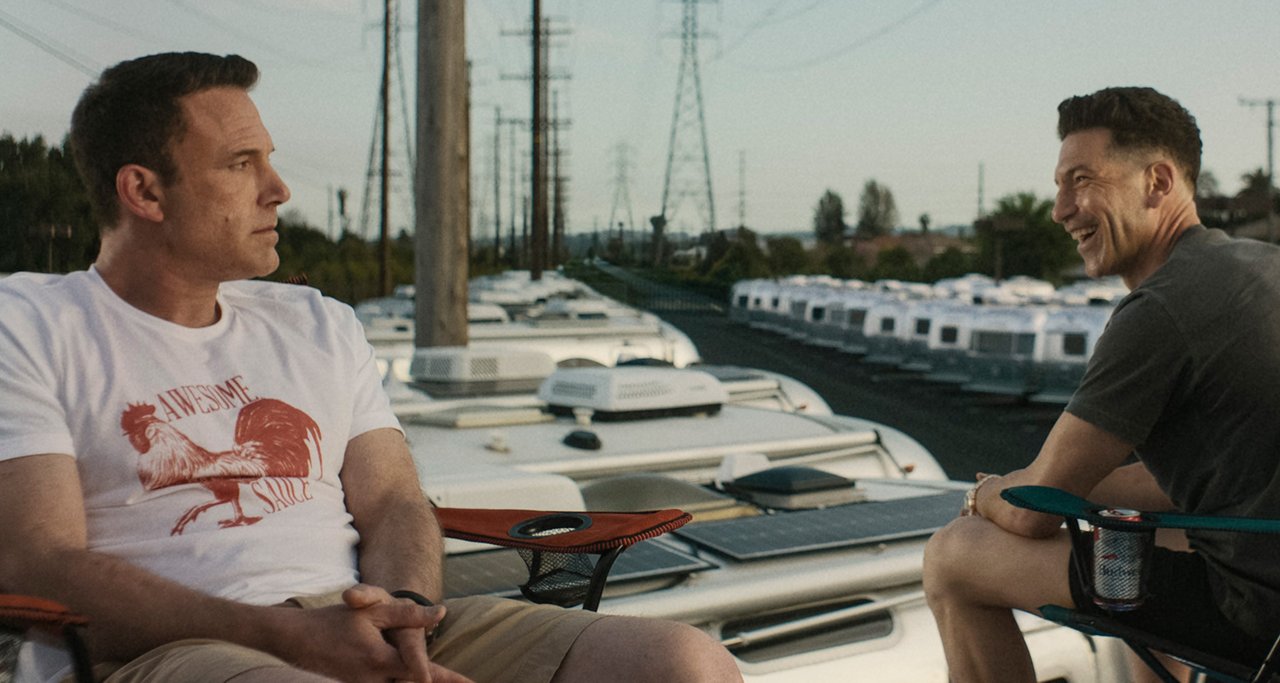
I am a movie fan but I am also a special education teacher so I have two different takes on The Accountant 2.

First, as an action movie, it was pretty entertaining. Although there was nothing very original about it, the action sequences were still pretty exciting. If you have not seen the first movie, they both star Ben Affleck as a former member of the special forces who has now become a very highly paid professional hit man. The gimmick of both movies is that Affleck's character, Christian Wolff, is on the Autism spectrum. As a result, he has a lot of the cliche abilities that Hollywood thinks all people with Autism have. Fort example, he is great with numbers... hence him also being an accountant.
Instead of just running back the exact same plot from the first movie, they decided to add Wolff's brother to the mix. Wolff's brother Braxton is played by Jon Berthnal who does an absolutely awesome job as both an action hero and straight man for some of the jokes in the movie. It was especially great to see Berthnal get to flex his action muscles considering the last movie I saw him in, The Amateur, completely wasted his talents. In addition to being a great sidekick, he also gets to help the audience understand a little bit about how Autism affects Chris.
So from purely and action movie perspective, The Accountant 2 is not great, but it is entertaining.

Now on to the second part. I am a special education teacher. As a result, I have a soft spot in my heart for people on the Autism spectrum. Any time I can see them represented as strong, smart and capable, I love it. This is one of the reasons that Drax for the Guardians of the Galaxy is one of my favorite Marvel characters. the Accountant 2 really tried to portray people with Autism in a realistic way. They worked in some scenes between Chris and his brother where they discuss how Chris's emotional responses are limited by his concrete and practical view of the world. I honestly think it could help someone understand people with Autism a little bit better. But I could also see why people with Autism and those who love them could be offended by the portrayal in this movie. But that is not the writer's or director's fault. Ben Affleck is simply a terrible actor. I am not saying he is not charming or entertaining, but he is objectively one of the worst actors who keeps getting work. As a result, his portrayal of a person with Autism comes off as hokey and almost comical.
Where the movie redeems itself is through the recasting of Chris's handler. Their is a British woman who Chris speaks to on the phone to set up jobs and get intel. But now we know it isn't a British woman at all. It is the text to speech device that his handler, who is on the Autism spectrum, uses to communicate with him. Allison Robertson, who is an actor who also happens to be on the spectrum, does and amazing job of portraying Chris's handler Justine. Instead of constant stimming for no reason the character stims in high pressure situations. Affleck might not be the best role model for people with Autism, but Robertson is... as long as you overlook the fact she is using her brains to set up hits. But this is an R-rated action movie, not an after school special so the audience should know what they are getting.
Its a pretty mindless and fun action movie so it is not a complete waste of time if you are into that... and I am.