Longform reviews of films, TV, anime, books, and audiobooks, written by the scrobble.life community and published to the Hive blockchain, so each one is owned by its author and can earn rewards from readers. 51,260 reviews and counting.
Imagine being able to turn back and fix the things that went wrong? What would you do if you could travel back? Would you change how things were or leave them the way there are.
Blue Birthday is a thought-provoking K-drama that had me reeling after watching. The main characters are Oh Ha-Rin (Yeri, a member of the K-pop group 'Red Velvet') and Ji Seo-Jun (Hongseok, a member of the K-pop group 'Pentagon').
The Plot
Oh Ha-Rin, a young woman figures out a way to travel back in time to the day of her 18th birthday, to discover the truth behind her best friend/first love's death and tries to bring him back to life in the future.
Ji Seo-Jun is Ha-Rin's best friend/first love who was murdered on her 18th birthday - the day he was going to profess his love to her. Now ten years passed by, and though it was painful for Ha-Rin, she tried to live her life. Until she discovers photos which were taken by Seo-Jun during highschool, which allows her to travel back in time the date the photo was taken.
Ha-Rin's first discovery of the photo was a shock to her...and me. She was staring at the photos Ji Seo-Jun took with tears in her eyes, so she burnt a photo. She wanted to get rid of the memory. And boom, she was back to highschool.
Ji Seo-Jun's death was ruled as a suicide, and during Ha-Rin's time travel, she discovers that his death was actually a murder. There were many suspects running through Ha-Rin's mind (and mine, lol).
The main purpose for her going back was to discover the killer and also prevent Ji Seo-Jun's death from happening. This was where the suspense came in, I have a thing for movies which always have me guessing and cracking my mind for who it might be. This series built up a lot of suspense and climax.
My Thoughts
Blue Birthday is a really good K-drama. The chemistry between the main characters was wow, you really feel for them. It's like being you're on something of the past and you wish you could go back and change it.
What I love about Blue Birthday is that it has a really good pace, it's not too slow or too fast, it just keeps you guessing. The theme of friendship and love is portrayed, it's like you can relate to it all.
I'd rate this movie a 8/10 and would recommend it if you're deeply into K-dramas. It's really worth watching.
Hola mi gente bella de internet y de toda esta plataforma increible a la cual todos hacemos vida, Hoy mi gente esta ediciòn sera sobre la trama de la telenovela SACRIFICIO DE MUJER.
PORTADA REALIZADA POR MI.
INTRODUCCIÒN.
-
Sacrificio de mujer es una telenovela venezolana realizada en 1972 por RCTV, protagonizada por Doris Wells y Raúl Amundaray. Se trata de una adaptación de la radionovela homónima de Inés Rodena. El libretista Carlos Romero, bajo el seudónimo Celia Alonso, introdujo elementos de una segunda radionovela titulada Sergio Velásquez, acusa, escrita por Iris Dávila, lo que enriqueció y extendió la trama principal.
-Título: Sacrificio de mujer.
-Canal: RCTV.
-Año de emisión: 1972.
-Protagonistas: Doris Wells como Irene & Raúl Amundaray como Arturo / Horacio (gemelo).
-Origen / Guion: Radionovela original de Inés Rodena; adaptación y extensión por Carlos Romero, incorporando la trama adicional de Iris Dávila.
-Género: Melodrama / Drama psicológico.
-País: Venezuela.
La historia comienza con Irene y Arturo, una pareja feliz con un hijo. La tragedia los golpea cuando su hijo muere en un accidente. Irene queda devastada y pierde la razón, por lo que es internada en un manicomio. Arturo, desconsolado, entabla una relación con Silvia, la enfermera que cuida a Irene. Tras recuperarse, Irene descubre que Arturo se ha casado con Silvia y decide fingir que sigue loca para no perturbar la felicidad ajena.
Más adelante, Silvia y su hijo mueren en un trágico incidente, lo que conmueve profundamente a Arturo. Irene, con amnesia, llega a la casa de un médico viudo que la acoge. Ella recupera la memoria y se reencuentra con Arturo, solo para descubrir que un misterioso personaje entra en escena: Horacio, el hermano gemelo de Arturo, con quien ella tuvo un hijo que fue arrebatado al nacer y crecido por una mendiga. Tras superar este último conflicto, Irene encuentra a su hijo y finalmente alcanza la felicidad junto a Arturo.
Sacrificio de mujer fue un melodrama fuerte y emocionalmente complejo que consolidó aún más el legado de Doris Wells y Raúl Amundaray como figuras icónicas de la telenovela venezolana. Doris encarnó a Irene con una sensibilidad desgarradora, y Raúl dio vida a dos personajes distintos y profundamente contrastantes como los gemelos Arturo y Horacio.
La estructuración del guion por parte de Carlos Romero al fusionar dos radionovelas clásicas enriqueció la narrativa, dotándola de múltiples capas emocionales: tragedia, redención, identidad y sacrificio.
Por su impacto, es considerada una de las producciones más recordadas de RCTV en esa época, destacándose por su intensidad dramática y capacidad de emocionar al público con giros sentimentales y conflictos profundos.
Sacrificio de mujer (1972) es una obra emblemática del melodrama venezolano. Su narrativa intensa, su doble trama original y la interpretación magistral de Doris Wells y Raúl Amundaray la convierten en un clásico imprescindible. No solo retrata el dolor y la resiliencia femenina, sino que también evidencia cómo la fusión creativa de fuentes radiales pudo dar origen a historias televisivas con profundidad emocional y perdurabilidad cultural.
Bueno mi gente hasta aqui la ediciòn del dia de hoy, espero les guste este trabajo, no consegui muchas imagnes originales de la telenovela por eso estan esas de diferente epocas de los protagonitas. Disfruten de este articulo y nos vemos en otra ediciòn mas de esta revista digital. Bendiciones.
Living in Boa Vista, Roraima, I became interested in Brazilian cinema and, when looking for something to watch, I decided on the iconic film City of God (Cidade de Deus). I was able to watch it from the comfort of my apartment, and the experience was powerful. The film impressed me with its semiotics and the realism with which it portrays life in the favela of the same name, located in the western part of Rio de Janeiro.
From the very beginning, I feel the harshness of an environment where football is intertwined with violence and death. Human misery is an everyday occurrence, and hope seems to be absent in a scenario of constant war between children and teenagers, as shown in the film.
Released in 2002, the film was directed by Fernando Meirelles and Kátia Lund, with a screenplay by Bráulio Mantovani based on the novel by Paulo Lins, who grew up in the favela where the story takes place.
The title, City of God, creates a brutal contrast: the name evokes a sacred and heavenly place, but the film shows the opposite, a hell on earth where violence, crime and hopelessness are the norm. This film captivated me because it is a vivid reflection of the social reality of Rio de Janeiro, where violence and drugs take over every corner.
I was captivated by seeing it in Portuguese, and I found it fascinating that the actors seemed to come from the favela itself. Their authenticity gives the film a special touch, very different from what you see with actors from theatre schools.
The semiotics in City of God are rich and complex, and are manifested in the way images, sounds, dialogue, editing and the setting of the favela itself are combined. For me, the film achieves such a raw construction of reality that it completely immerses you in the lives of its characters. Semiotics are mainly addressed through three elements: violence, identity and urban space.
Violence as a sign of identity and social control. Violence in the film is not just an action, but a language, a sign of power and status. Weapons, shootings, and murders are symbols of the struggle for control and survival. The film presents violence as something everyday, almost normal. Seeing children getting involved in crime at a very young age and death as part of everyday life is a brutal representation of social decay.
The favela as a labyrinth with no way out. The film conveys a feeling of suffocation, of the characters being trapped in a cycle of violence from which it is almost impossible to escape. The opening scene of the chicken running away but ultimately being caught can be interpreted as a sign of this endless cycle and the difficulty of finding a way out. In this sense, the film's semiotics highlight the dehumanisation and struggle for survival in Brazil's urban peripheries.
The realism of the set design and atmosphere. The film was shot on location in the favelas of Rio de Janeiro to capture the essence of life in these neighbourhoods. The directors, Fernando Meirelles and Kátia Lund, wanted the settings to be another character in the story, reflecting social deterioration over time. To achieve this authenticity, many of the actors were non-professionals who lived in the favelas themselves, which contributed to a faithful representation of the context.
The role of costumes, make-up and music. The costumes show the social evolution of the favela. The clothes imitate Rio's street fashion trends, and gang members are distinguished by their clothing, which reflects their adaptation to an environment of heat and constant conflict.
Music, meanwhile, is fundamental. The soundtrack encompasses genres such as samba, which connects with cultural roots, and bossa nova, which provides historical context. In addition, an original score is used that mixes traditional percussion with electronic rhythms to generate a sense of chaos and tension, which characterises the most dramatic moments.
The colour palette and its narrative. The colour palette is one of the film's most powerful tools for narrating the passage of time and social degradation. The film evolves from warm tones (yellows, browns and oranges) in the early scenes, which evoke a sense of innocence and community, to cold, desaturated tones (blues, greys) at the climax, reflecting hopelessness and a lack of future. Each change in tone is a visual cue that intensifies the viewer's emotions and signals the worsening social and moral situation in the favela.
The acting: an exceptional achievement.
One of the film's greatest successes was its use of non-professional actors, many of whom lived in the favelas. Their lack of previous experience gave them a striking naturalness. Their reactions and dialogue feel genuine, as many were portraying realities they knew first-hand. The improvisation in many scenes gave the film a unique dynamism and energy.
City of God transcends the boundaries of traditional cinema, offering a raw and moving window into a reality that it manages to capture with impressive creativity.
To conclude the narrative of this piece, City of God is a masterpiece of Brazilian cinema that has left an indelible mark on the history of world cinema. Through a raw and uncompromising narrative, the film immerses me in the complex reality of the favelas of Rio de Janeiro, exploring themes such as violence, poverty and the struggle for survival.
The film stands out for its authenticity, achieved through the use of real locations, the participation of non-professional actors and a script based on real events. The film's semiotics, visible in the colour palette, music and depiction of violence, enrich the narrative and allow for a profound reflection on dehumanisation and the cycle of crime.
The development of film production in the favela is a monumental creative event in Brazil.
The film made me reflect on my own experience in Boa Vista and led me to ask myself:
What is a favela really? How does it differ from neighbourhoods in other Latin American countries? It is a work that not only entertains, but also leaves me thinking, analysing social reality with a more critical and empathetic eye.
Grateful for being and living in the favela of God.
Language: Post written in Spanish and then translated into English through DeepL|| Idioma: Post escrito en español y traducido al inglés con la ayuda de DeepL
Conocedor de Futbol y las MMA pero malo practicando deportes, me gusta las peliculas y series por eso ahora..."Soy critico de Cine". Viviendo en Venezuela
Por varios años, "Pixar" era sinónimo no solamente de calidad, sino de éxito en taquilla, lamentablemente ese éxito ha disminuido en los últimos tres años en dónde solamente "Inside Out 2" obtuvo una grandiosa recaudación de taquilla, pero nuevamente ese gran estudio de animación vuelve a notar como ha caído en aceptación del público al ver como el único film a estrenar en este año, "Elio", fue uno de los peores estrenos en las salas cine a nivel mundial; lamentablemente algo que era de esperar por la poca y errónea promoción a un film que une los géneros del coming-of-age, así como la ciencia ficción y aventura al relatar la historia de un niño de 11 años quien es abducido por extraterrestres y es nombrado como Embajador de La Tierra.
For several years, Pixar was synonymous not only with quality, but also with box office success. Unfortunately, that success has declined in the last three years, with only Inside Out 2 achieving significant box office success. However, this major animation studio is once again noticing a decline in public acceptance, as the only film released this year, Elio, was one of the worst releases in cinemas worldwide. unfortunately, something that was to be expected given the poor and misguided promotion of a film that combines the genres of coming-of-age, science fiction, and adventure, telling the story of an 11-year-old boy who is abducted by aliens and named Ambassador of Earth.
En el momento que se dio la noticia de la producción de este film, captó mi atención por el potencial de su historia la cual me generó expectativas al seguramente tener una gran carga emocional un buen mensaje así como ocurre en muchas de las películas de Pixar, pero ciertas decisiones en cambios en la dirección y la nula promoción del film hicieron que mis expectativas bajarán, aunque de igual manera era de las películas que más quería ver en este año. "Elio" es un film que como dije anteriormente usa muchos géneros para relatar la historia de un niño que a causa de un duro evento traumático, se aísla del mundo teniendo como único motivo contactar con alguna señal de vida fuera de este mundo, esa base de la historia en dónde la soledad que padece el protagonista lo impulsa a querer tener una aventura espacial es algo que me fascinó porque a pesar de ser un film con un ritmo muy rápido, ese aspecto de tristeza y la soledad es muy presente en el primer acto del film que posiblemente haga ver a "Elio" como un personaje egoísta, pero al ser una persona en la etapa final de su niñez, creo que se hizo una correcta representación con respecto a la transición que vive Elio hacia la adolescencia después de experimentar la soledad a tan temprana edad.
Los dos actos siguientes del film, es donde se fortalece el aspecto de la ciencia-ficción y la aventura; mi opinión sobre la animación usada en las escenografías y en los personajes varían, por ejemplo el diseño de las escenografías (que son pocas), son más que adecuadas para la historia, pero el diseño de muchos de los personajes alienígenas me pareció para nada original, lo cual es mi única crítica negativa hacia el film, pero creo que entre tantos cambios en producción posiblemente decidieron usar diseños vistos en otras producciones teniendo en cuenta el poco tiempo en escena; justamente lo referente a la animación, diseño y demás del film creo que al no ser considerados de gran escala, pudo ser lo que causó el nulo apoyo a su promoción y lamento que haya sucedido porque "Elio" tienen una historia maravillosa sobre la necesidad de generar conexión, entendimiento y apoyo familiar.
When the news of this film's production broke, it caught my attention because of the potential of its story, which raised my expectations as it was sure to be emotionally charged and convey a good message, as is the case with many Pixar films. However, certain decisions regarding changes in direction and the lack of promotion for the film caused my expectations to drop, even though it was still one of the films I most wanted to see this year. " Elio" is a film that, as I said before, uses many genres to tell the story of a boy who, due to a traumatic event, isolates himself from the world with the sole motive of contacting some sign of life outside this world. That basis of the story, where the loneliness suffered by the protagonist drives him to want to have a space adventure, is something that fascinated me because, despite being a very fast-paced film, that aspect of sadness and loneliness is very present in the first act of the film, which may make Elio seem like a selfish character. However, as he is a person in the final stage of childhood, I think it was a correct representation of Elio's transition to adolescence after experiencing loneliness at such an early age.
The next two acts of the film are where the science fiction and adventure aspects are strengthened. My opinion on the animation used in the sets and characters varies. For example, the set design (which is sparse) is more than adequate for the story, but I found the design of many of the alien characters to be completely unoriginal, which is my only negative criticism of the film. However, I think that with so many changes in production, they may have decided to use designs seen in other productions, given the limited screen time. Precisely because the animation, design, and other aspects of the film were not considered large-scale, this may have been what caused the lack of support for its promotion, and I regret that this happened because "Elio" has a wonderful story about the need to generate connection, understanding, and family support.
Existe un aspecto o características del film que me pareció excelente y es la influencia de muchas producciones en dónde existe el contacto de seres de otros mundos con los humanos; por ejemplo se me hizo imposible no ver referencias a películas de Steven Spielberg como son "Close Encounters of the Third Kind" y "E.T. the Extra-Terrestrial", ambas películas muy acordes a lo que es "Elio", ya que ambas tratan temas sobre la respuesta a la pregunta de su estamos solos en el universo, pero también hace referencia a la amistad y la necesidad de conectar con otros y por supuesto a la aventura que más que nada se observa en "E.T."; eso fue sin ninguna duda lo que más me gustó de esta película, así como también el uso de la música que también genera un ambiente correcto en ciertos momentos del film.
There is one aspect or characteristic of the film that I found excellent, and that is the influence of many productions in which beings from other worlds come into contact with humans. For example, it was impossible for me not to see references to films by Steven Spielberg such as Close Encounters of the Third Kind and E. T. the Extra-Terrestrial," both films very much in line with what "Elio" is, as both deal with themes about the answer to the question of whether we are alone in the universe, but also refer to friendship and the need to connect with others and, of course, to adventure, which is most evident in "E.T."; that was undoubtedly what I liked most about this film, as well as the use of music, which also creates the right atmosphere at certain moments in the film.
"Elio" no es un film perfecto, en realidad está lejos de serlo por muchas cosas que son notorias y que puede hacer disminuir la calidad, pero de igual manera es un film con una historia que me pareció excelente y por supuesto superó mis expectativas; es un film bastante rápido que por momentos pareciera estar dividido en dos partes y eso es a causa de los pocos momentos de pausa en el segundo acto que al final no afecta el relato del protagonista, pero si puede afectar a otros personajes al no profundizar en el desarrollo y eso los convierte en algo genérico y repito, son características evidentes, pero en mi opinión no afecta del todo al film, ya que tiene un buen cierre que es bastante divertido, entretenido y perfecto para cerrar la historia de Elio con respecto a la soledad y aislamiento que padece; ojalá que en su próximo estreno por Disney Plus puede tener la aceptación que no consiguió en las salas de cine.
"Elio" is not a perfect film; in fact, it is far from it due to many noticeable aspects that may diminish its quality. However, it is a film with a story that I found excellent and, of course, exceeded my expectations. It is a fairly fast-paced film that at times seems to be divided into two parts, due to the few moments of pause in the second act, which ultimately does not affect the protagonist's story. but it can affect other characters by not delving deeper into their development, which makes them somewhat generic. I repeat, these are obvious characteristics, but in my opinion, they do not affect the film as a whole, since it has a good ending that is quite funny, entertaining, and perfect for closing Elio's story regarding the loneliness and isolation he suffers. Hopefully, in its upcoming release on Disney Plus, it will achieve the acceptance it did not get in theaters.
Hey mi amigos, un saludo a todos! Les comparto una pequeña reseña de la serie Ragnarok, ésta serie la ví en Netflix hace unas semanas, esta serie Noruega salió al público en el año 2020, se trata de una trama que engloba la mitología nórdica, dirigida por Mogens Hagedorm y Jannik Johansen.
Según la serie, Edda que es un pueblo Noruego actualmente quedado en el olvido, fue el protagonista de una batalla entre Dioses y Gigantes en la mitología Nórdica hace muchos años atrás, y a este pueblo se Muda Magne con su familia (Madre y hermano), Magne es un adolescente con dislexia, con un gran corazón pero de comportamiento difícil, y algunos problemas de ira. Su hermano Lorits es más independiente, muy inteligente y perspicaz, y ambos entran juntos a clases.
En su primer día de clases, Mange conoce a Isolde quien tiene un interés particular por el medio ambiente y los glaciares, por lo que se hacen amigos. Aún así, una serie de eventos lleva a Magne a experimentar cosas nuevas, tiene más fuerza física, ya no necesita lentes para leer porque su vista se agudiza, entre otras cosas. Inesperadamente Isolde muere, pero esa pérdida marca a Magne de por vida, generando una herida difícil de sanar y dispuesto a llegar al fondo de su fallecimiento, se desencadenan una serie de sucesos inexplicables, dónde se hace presente la imagen de Thor (el Dios trueno), representando a Magne, pero ¿Podrá magne manejar la responsabilidad de ser el Dios trueno?, ¿Sus problemas de ira influirán positiva o negativamente en sus decisiones?
En mi opinión, sin hacer spoiler, es una serie que siento que le faltó algo de chispa, sentí que estaba esperando un poco más de acción, Magne se presenta como un chico con cambios de humor, un tanto problemático, muy parecido a la inestabilidad y el temperamento del Thor real, el antiguo Thor de la Mitología Nórdica, aún así la serie está enfocada en la actualidad y le da otro punto de vista, quiza por eso no era lo que esperaba, existen otros personajes pero lo ideal es que con el desarrollo de la trama los vayan descubriendo, aún así me gustó y el final pues te deja un poco loco.
Si la viste o gustas verla pues acá te dejo mi pequeña reseña y mi opinión, y puedes dejar con gusto un comentario ❤️ nos leemos pronto por ésta comunidad con la próxima serie, película o programa, un abrazo 🤗
Hey, my friends, greetings to all! I'd like to share a short review of the series Ragnarok, which I watched on Netflix a few weeks ago. This Norwegian series was released in 2020 and is based on Norse mythology, directed by Mogens Hagedorm and Jannik Johansen.
According to the series, Edda, a Norwegian town that has now been forgotten, was the site of a battle between gods and giants in Norse mythology many years ago. Magne moves to this town with his family (mother and brother). Magne is a teenager with dyslexia, a big heart, but difficult behavior and some anger issues. His brother Lorits is more independent, very intelligent, and perceptive, and the two attend classes together.
On his first day of school, Magne meets Isolde, who has a particular interest in the environment and glaciers, and they become friends. However, a series of events leads Magne to experience new things. He has more physical strength and no longer needs glasses to read because his eyesight has improved, among other things. Unexpectedly, Isolde dies, but that loss marks Magne for life, creating a wound that is difficult to heal. Determined to get to the bottom of her death, a series of inexplicable events are triggered, where the image of Thor (the God of Thunder) appears, representing Magne. But can Magne handle the responsibility of being the God of Thunder? Will his anger issues influence his decisions positively or negatively?
In my opinion, without giving away any spoilers, it's a series that I feel lacked a certain spark. I felt like I was waiting for a little more action. Magne is presented as a boy with mood swings, somewhat problematic, very similar to the instability and temperament of the real Thor, the ancient Thor of Norse mythology. Still, the series is focused on the present and gives another point of view, which is perhaps why it wasn't what I expected. There are other characters, but ideally, they will be revealed as the plot develops. Even so, I liked it, and the ending leaves you a little crazy.
If you've seen it or would like to see it, here's my little review and opinion, and feel free to leave a comment ❤️ See you soon in this community with the next series, movie, or show. Hugs 🤗
🔹 Traducción con [DeepL](www.DeepL.com/Translator)🔹
🔹Banner realizado en Canva🔹
🔹[Logo de hive aquí SVGREPO](https://www.svgrepo.com/svg/330634/hive-blockchain?edit=true)🔹
🔹Separador realizados en [Photoshop](https://www.adobe.com/la/products/photoshop.html)🔹
David Simon’s The Wire stands as a monument to televisual realism, its narrative architecture deliberately eschewing the heightened melodrama endemic to crime drama in favour of a chilling, almost clinical matter-of-factness. Nowhere is this commitment more pronounced, or more narratively potent, than in its depiction of seminal, traumatic events. Simon consistently refuses the easy catharsis of direct spectacle; instead, he presents pivotal moments with a banal casualness, or, more radically, not at all, forcing the audience to experience them precisely as the inhabitants of his meticulously constructed Baltimore would – filtered through the fog of hearsay, arriving long after the fact, stripped of immediate emotional context. This profound narrative strategy, a defining characteristic of the series’ unflinching gaze, finds one of its most compelling and disturbing expressions in the sixth episode of the first season, aptly titled The Wire.
The episode’s title itself resonates with potent symbolism, marking the precise, almost anti-climactic moment when the central investigative engine of the season – the wiretap operation against the Barksdale Organisation – truly commences. Occurring roughly midway through the first season, this belated activation underscores the glacial, often obstructed pace of institutional machinery within Baltimore’s dysfunctional systems. References scattered throughout the series hint that months have already bled away since Detective Jimmy McNulty first conceived the investigation, a timeline rendered starkly visible here. The simple act of finally flipping the switch on the wiretap isn’t a triumphant victory; it’s a weary acknowledgment of bureaucratic inertia finally yielding, however slightly, illustrating how the wheels of justice grind with agonising slowness, burdened by politics and procedure rather than driven by urgency.
Yet, even this hard-won, nascent progress teeters on the brink of annihilation before it can yield meaningful results. Lieutenant Cedric Daniels’ fragile task force faces immediate existential threat, ironically triggered by McNulty’s own actions. While assisting his partner Bunk Moreland in revisiting the cold Kresson murder case, McNulty inadvertently uncovers links suggesting D'Angelo Barksdale’s involvement in that killing and two others. This tenuous connection, flimsy as evidence but politically potent, is seized upon by the ambitious and cynical Major William Rawls. Rawls sees an opportunity to boost his homicide clearance rate – a key metric for career advancement – regardless of the case’s inherent weakness or likelihood of conviction. His solution is brutal in its simplicity: order Bunk to charge D'Angelo immediately. McNulty, recognising the catastrophic implications, argues vehemently that this premature arrest will shatter the delicate wiretap operation. Avon Barksdale, upon learning of his nephew’s detention, will inevitably alter communication patterns, rendering the expensive, painstakingly secured surveillance useless. Daniels, grasping the stakes, attempts to reason with Rawls, but the Major remains unmoved by operational logic, prioritising statistics over substance. Faced with this bureaucratic brick wall, Daniels is forced into a desperate plea to Deputy Commissioner Ervin Burrell, ultimately negotiating a precarious, month-long reprieve for his investigation.
This episode masterfully exemplifies Simon’s core narrative technique regarding traumatic events. The most significant occurrence from the previous episode – the brutal murder and torture of Omar Little’s partner and lover, Brandon Wright – is never shown. We do not witness the act itself, the violence obscured by narrative distance, presented solely through the fragmented, delayed reports that would reach the characters. Director Ed Bianchi, however, bookends this episode with the horrifying aftermath. It opens with the stark, unflinching image of Brandon’s corpse, displayed with cold deliberation on the hood of an abandoned car, the signs of torture brutally evident – a grim fulfilment of Avon Barksdale’s earlier threat. This visual is not sensationalised; it is presented with the same detached observation as a traffic accident report. Omar, learning of Brandon’s fate not through direct witness but through the streets, is consumed by a grief so profound it shatters his usual street code. His subsequent arrival at the task force’s basement, delivering a crucial intelligence windfall – most notably identifying Marquis "Bird" Hilton (Fredro Starr) as the killer of witness William Gant – is driven entirely by this delayed, devastating knowledge.
Bianchi, a veteran of Homicide: Life on the Street, crafts an opening sequence of profound symbolic and socioeconomic weight. The lingering shot of Brandon’s body on the car hood gradually reveals the desolate landscape of a Baltimore neighbourhood choked with abandoned row houses, many illegally occupied. The title’s metaphor becomes horrifyingly literal: the "wire" refers not just to surveillance, but to the improvised, dangerous electrical connections snaking from poles to these squats, a visceral symbol of systemic neglect. This environment, far from a mere backdrop, is the fertile, poisoned ground from which the drug trade and its attendant violence organically sprout. In a masterstroke of character revelation, we discover Wallace, a young soldier in the D'Angelo Barksdale's crew, living within one such squat. His role transcends simple thug; he is a dedicated, albeit compromised, caregiver, desperately trying to feed and shepherd younger siblings towards school – a poignant counterpoint to the surrounding decay. Wallace embodies The Wire’s refusal of moral binaries. Despite his involvement in the ruthless drug hierarchy, his visible distress at Brandon’s corpse, and his palpable guilt over his own unwitting role in the events leading to it (a burden he shares with D'Angelo in a tense, morally complex conversation), paints him as a deeply conflicted individual, neither hero nor villain.
Similarly, D'Angelo Barksdale continues his nuanced portrayal. Upon discovering subordinates at "The Pit" have stolen drugs, his instinct isn't to escalate violence by reporting them upwards to Avon or Stringer Bell – a move that would likely result in death. Instead, he opts for a pragmatic, almost paternal demotion, removing them from the corner. This act, small yet significant, demonstrates a flicker of conscience and a desire to mitigate bloodshed within the confines of the only system he knows, further enriching the show’s tapestry of morally grey characters navigating impossible choices.
Even McNulty, for all his dogged detective instincts, is revealed as profoundly flawed in his personal life. His reckless decision to allow his two young sons to ride along during his tense meeting with Omar Little, culminating in the deeply inappropriate exposure of the children to the grim reality of the city morgue, underscores a persistent irresponsibility. It’s a moment that starkly contrasts his professional dedication with his personal failings, reminding us that heroism, in Simon’s Baltimore, is always qualified and compromised.
The Wire, the episode, is thus a microcosm of the series’ revolutionary power. By denying the audience the visceral thrill of witnessing key violence directly, by focusing instead on the bureaucratic quagmire that strangles justice, by populating its world with characters who defy simplistic categorisation, and by grounding every frame in the crushing socioeconomic reality of a neglected city, Simon and his team forge a narrative that is not merely observed, but felt in its unsettling, unvarnished truth. This is realism not as a stylistic choice, but as a moral imperative, holding a mirror up to a broken system with unflinching, indispensable clarity.
The horror genre is always generating buzz whenever a film comes out and becomes part of people's conversations. There are two currently, Weapons and Together. Today I'll talk about the latter because I haven't had the chance to go to the theater. Horror is controversial because I feel there are no gray areas in it; you either like it or you don't, it's that simple. And if we add to that the fact that there are several branches within it, it gets even more complicated. The one that almost always works is body horror, as long as it's well done, meaning its effects convince the viewer. Together falls into this category, and while it has some gaps in its plot, I think the result was decent.
El género del terror siempre está dando de que hablar cada vez que sale una película y esta se vuelve parte de la conversación de las personas. En estos momentos hay dos, Weapons y Together. Hoy hablaré de la segunda porque al cine no he tenido oportunidad de ir. El terror es polémico porque siento que en él no hay grises, o te gusta o no te gusta, es así de simple, y si a eso le sumamos que hay varias ramas dentro de él pues más complicado todavía. El que casi siempre funciona es el terror corporal, siempre y cuando esté bien logrado, es decir, que sus efectos convenzan al espectador. Together entra en esta categoría y aunque tenga algunos vacíos en su trama creo que el resultado fue decente.
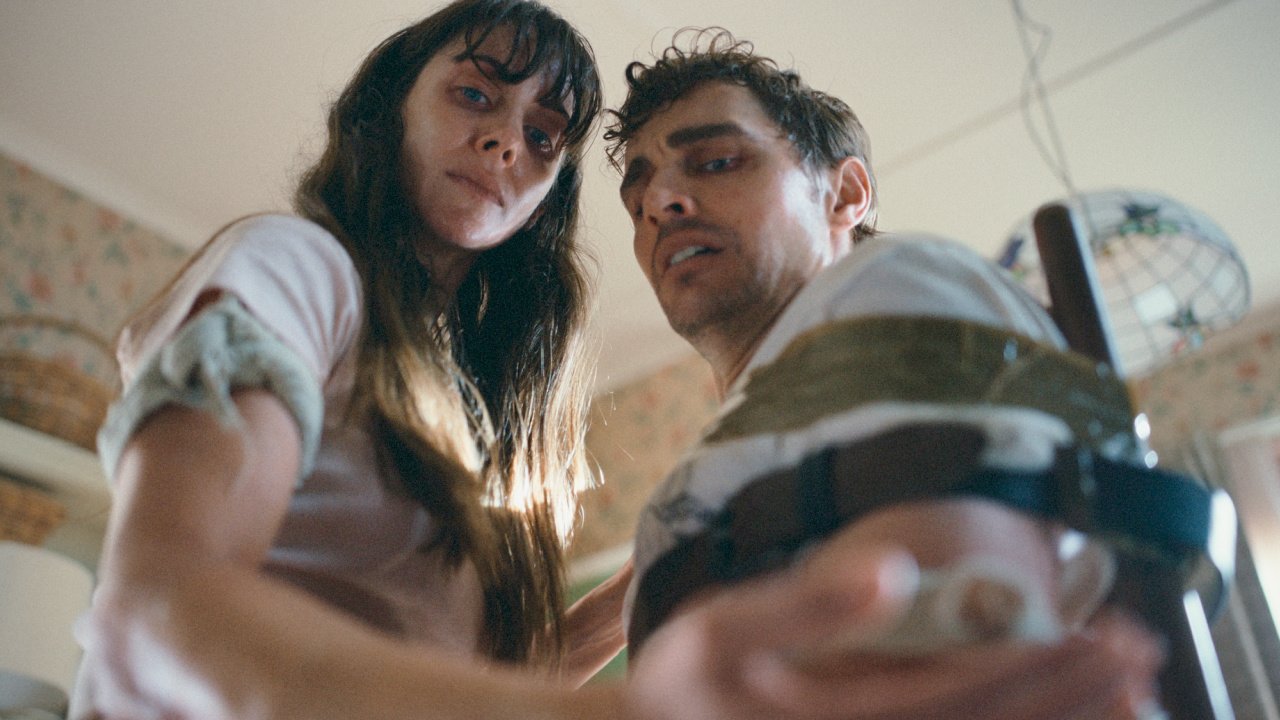
A couple, or two people who are together because the term "couple" isn't very clear, made up of Dave Franco and Alison Brie, decide to leave their city life behind to go to the countryside to try to connect and make things flow better. They stay in a very typical rural house where everything seems to be in order, but in reality it isn't. That place hides a secret that they will soon discover. Taking a walk through the forest near the house, they begin to realize that there are things that don't fit, bells everywhere that clash with the environment; this, instead of scaring them, only caught their attention.
Una pareja, o dos personas que están juntas porque eso de pareja no queda muy claro, conformada por Dave Franco y Alison Brie deciden dejar su vida en la ciudad para irse al campo a tratar de conectar y que todo fluya de una mejor manera. Se quedan una casa rural muy típica en donde todo pareciera estar en orden pero en realidad no, aquel lugar esconde un secreto el cual ellos pronto descubrirán. Haciendo un paseo por el bosque cercano a la casa se comienzan a dar cuenta de que hay cosas que no cuadran, campanas por todos lados las cuales desentonan con el ambiente; esto en vez de asustarlos lo que hizo fue llamarles más la atención.
They pay a high price for that curiosity, as they end up falling to the bottom of a cave, which isn't really a cave at all, but something more. They spend some time there due to a storm, and during that time, strange things begin to happen to their bodies, things that would have been far from gone once they left. The plot actually begins when they leave the cave. What we see beforehand is a bit of context to understand who they are, which makes the film a bit slow at first. But after that experience, we can say that this couple's lives change forever. If you ask me what was in that cave, I honestly don't know, but it unleashes a wave of strange "supernatural" activities.
Esa curiosidad la pagarán caro porque terminan cayendo al fondo de una cueva, que en realidad no es una cueva sino algo más. En ella pasan un tiempo debido a una tormenta y en ese transcurso de tiempo les comienzan a suceder cosa extrañas a su cuerpo, cosas que al salir de allí estarían lejos de desaparecer. La trama en realidad comienza cuando ellos salen de la cueva, lo que vemos antes es un poco de contexto para saber quienes son lo que hace que al principio el film sea un poco lento. Pero después de aquella experiencia si podemos decir que la vida de esta pareja cambia para siempre. Si me preguntan que había en esa cueva la verdad no lo se pero desata una ola de actividades "sobrenaturales" extrañas.
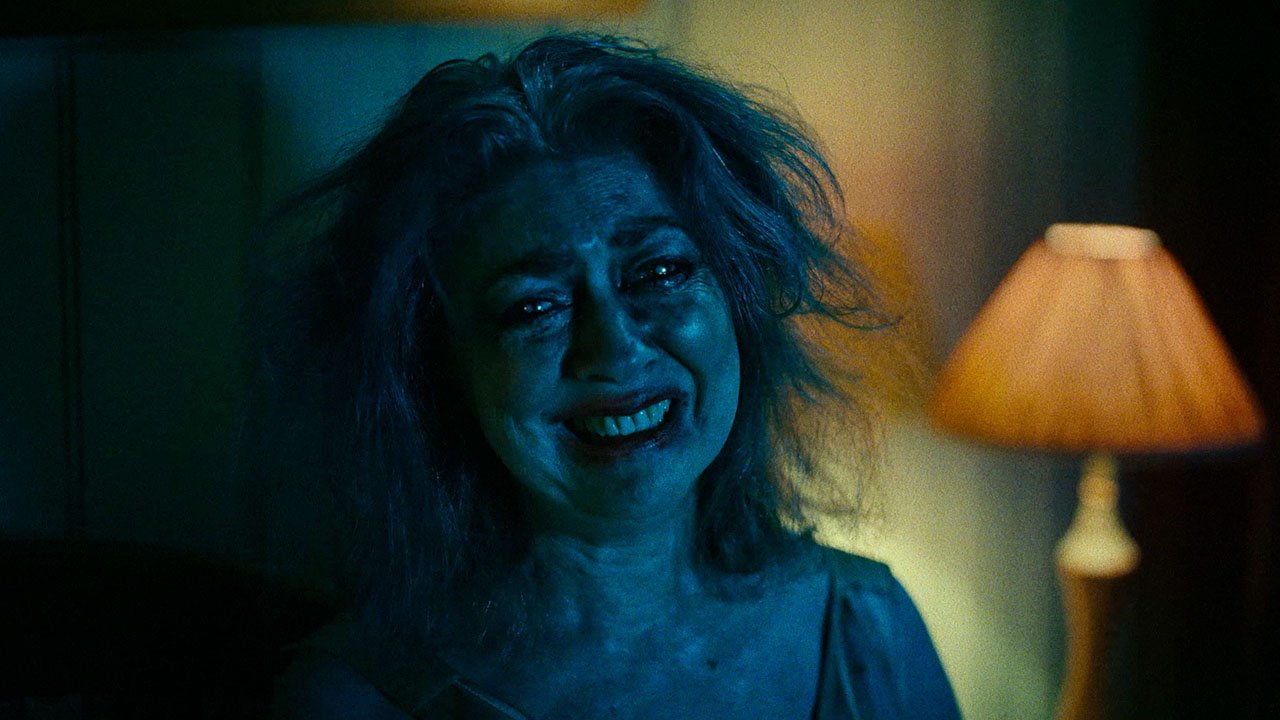
The beauty of body horror is that it's creepy, that it makes you uncomfortable to watch, and fortunately we see that here, thanks to the good visual effects. Given the kind of things that happen, I think it was very difficult to do and make it look good, but the truth is that if it's done well, I can guarantee that at some point, with a scene, you'll squirm. Add to that a couple of very interesting and unexpected jump scares. It's not a ghost story, but adding something like that adds a lot. The film isn't boring; as I said, it may be a bit slow at first, but then the intrigue slowly grows due to the need to know what's really going on.
La gracia del terror corporal es que de grima, que te incomode de ver y eso acá afortunadamente lo vemos y es gracias a los buenos efectos visuales que tiene. Por la clase de cosas que pasan creo que era muy complicado hacerlo y que quedara bien a la vista pero la verdad es que si está muy bien logrado, te puedo garantizar que en algún momento con una escena te vas a retorcer. A esto hay que sumarle que hay un par de jumpscare bien interesantes e inesperados, no es una historia de fantasmas pero que añadieran algo así suma mucho. La película no aburre, como dije puede que al inicio sea un poco lenta pero después la intriga crece poco a poco por la necesidad de saber que es lo que realmente pasa.
For me, the only bad thing was the lack of context for why everything happens. There's a reason, a very murky one, to be sure, behind everything that happens to this couple, but the film doesn't bother to explain it, and that creates a kind of emptiness, as if everything just happens and that's it. A little more depth about all that would have been really cool, but it didn't happen. I'm not saying the film was about that, but I do want us to at least learn a little more, or at least about one of the characters involved in the film.
Para mi, que fue lo unico malo? - la falta de contexto del por que pasa todo. Hay una razón, muy turbia por cierto, detrás de todo lo que les sucede a esta pareja pero en el film no se molestan en explicarla y eso lo que origina es que se sienta una especie de vacío, de que todo pasa porque sí y ya está. Hubiese estado muy cool un poco más de profundidad acerca de todo aquello pero no pasó, no digo que la película se tratase de eso pero si que por lo menos conozcamos un poco más o por lo menos acerca de uno de los personajes que involucra el film al respecto.
Ultimately, this film is about love, the dependence we can create on another person to the point where it all becomes a toxic topic within a relationship, and unresolved past traumas. All of this serves as glue, never better said, for what ultimately happens. Both actors perform very well. Dave and Alison have excellent chemistry, and they nailed it when it comes to showing off their best skills in the horror scenes. I give it a 7.5/10. It's a good horror film, entertaining, different, with very good effects, and the acting was up to par. I'll leave the trailer below.
En fin, este film va acerca del amor, la dependencia que podemos crear hacia otra persona al punto de que todo se convierta en un tema tóxico a nivel de pareja y traumas del pasado no superados. Todo esto sirve de pegamento, nunca mejor dicho, para que les termina pasando lo que al final sucede. Muy buenas actuaciones de ambos actores, Dave y Alison tienen muy buena química y a la hora de mostrar sus mejores dotes con las escenas de terror lo hicieron. Le doy un 7.5/10, Es un buen terror, entretiene, es diferente, muy buenos efectos y las actuaciones estuvieron a la altura. Les dejo el tráiler por acá abajo.
Arthur Curry (Jason Momoa), connu sous le nom d'Aquaman, est devenu le Roi de l'Atlantide il y a 4 ans. Il s'est marié avec Mera (Amber Heard) et ils ont eu un fils Arthur Jr. Ils vivent à la surface, dans un phare, avec le père d'Aquaman.
Aquaman souhaite pacifier les peuples de l'Océan, mais il voudrait aussi avoir de bonnes relations avec les "surfaciens". Un Haut Conseil se réunit régulièrement, au sein de l'Atlantide, ce qu'Aquaman ignorait jusqu'à maintenant, et ce Haut Conseil refuse catégoriquement de s'allier à des surfaciens.
Un soir qu'il discutait avec son père, ils remarquent tous les 2 que le petit Arthur Junior parvient à discuter avec les poissons de leur aquarium et à les comprendre, ce qui est un des dons d'Aquaman également.
Le Haut Conseil convoque en urgence Aquaman et son épouse. Quelque chose menace des vestiges atlantes, en Antarctique. Le Haut Conseil suggère qu'Aquaman n'y aille pas seul, il lui désigne même la personne qui devra l'accompagner, même si cette personne n'est pas en très grande forme pour le moment. Il lui suffira de quelques secondes dans l'eau pour être regonflé à bloc.
De plus, le petit Arthur a été enlevé et le phare incendié. Et si tout était lié ?
Mon avis et petites infos :
Nous préférons l'Univers Marvel à celui de DC, mais ça se laisse regarder.
Jason Momoa fait quelques clins d'œil à ses origines néo-zélandaises et on a vraiment l'impression qu'il est dans son élément.
Pour le reste du casting, on retrouve Nicole Kidman (reine Atlanna, mère d'Aquaman), Patrick Wilson (Orm Marius, frère d'Aquaman), Yahya Abdul-Mateen II (David Kane, Black Manta), Dolph Lundgren (le Roi Nérée), Randall Park (Dr Stephen Shin), Pilou Asbaek (le Roi Kordax), ..
James Wan est à la réalisation, comme il l'était déjà pour le film Aquaman de 2018.
J'ai toujours un peu peur qu'on tourne en rond dans ces sagas, mais ça va, de bons effets spéciaux et un peu d'humour et ça passe crème !
Je vous le conseille pour passer une bonne soirée.
Bonnes soirées-tv, à bientôt !
Les grosses chaleurs se terminent, mais hydratez-vous quand même !
Watching Into the Badlands, the first time around, I did not have a clear idea on what the show entailed. The hint of deep battle, pain, and survival was already presented by the poster, and indeed, the series brought all these and much more.
The movie is not just like any ordinary films I have watched. It is a combination of martial arts, survival, betrayal and the everlasting pursuit of freedom within a world that feels broken and unrewarding in so many ways. When I was watching this as a Nigerian woman I identified with the aspect of fighting regardless of what you are going through in life.
The plot is that, in some weird future theres no guns, only knives, swords and martial arts. People live with strong rulers known as Barons and these Barons own land, money and the lives of ordinary people. The thing I found to be really heartwarming in the movie is the fact that only the strong survive and mercy is so seldom. The world is cruel and it is the fittest that survives. However, even in such a heartless world people strive to live in freedom, peace, and a better life.
The protagonist who is Sunny is a warrior who has fought numerous battles. His eyes reflected the weight with which he had to cope since the inauguration. He is faithful to his Baron, but deep inside him, he is bored of killing. He has a different life that he desires to have and brings to other people around him. I always admired his strength, but more than that, I admired his humanity. We may believe that such strong people never feel pain, but the Sunny story teaches us that even the strongest warriors are slaves of the invisible wounds.
There is one thing that I really adored about Into the Badlands and which is the fighting scenes. I have never witnessed such pretty action, as a kind of dance almost. The martial arts are quick, swift and stunning. All the fights entailed some emotion, not violence. Sometimes, I would be clapping as if I was in the theatre yet I was in my home. The dance, the slowness of the proceedings, the thud of swords being clashing against each other, it was art. It also taught me that fighting isn't only about being strong; it is also about being skillful, patient and being focused.
The deeper story that really tugged at my heart was the following one. It is not a simple battle against the enemies with swords in which Sunny runs around. It is destiny versus destiny He wants to get out of the Badlands and get some peace, but the world keeps pulling him right back into war. It brought images of how our lives are at times. We want to go forward, to become happy, but circumstances continually come to blow things up. Nevertheless, as with Sunny, we need to remain fighting to the end.
I also liked the theme of betrayal. In the badlands, trust is near to impossible. People change their affiliations in a matter of night and time and loyalty can be severed by avarice. This reminded me of the society we live in where people betray each other so that they can get higher. However, despite all the dark moments, there were still times of love, care and sacrifice. That kind of balance was real and cogent to the story.
The poster of the kneeling man with the sword puts it so well, it is not only about the war but also about giving up, suffering, and strength to stand back up. I could tell the burden of every choice that Sunny had to make. The expression Fight to the End never left me.
The other thing that I observed in the movie is that the movie intertwines culture and philosophy. The story contains a lot of lessons. As an illustration, absence of compassion destroys everything with power. Love can provide strength and at the same time weakness. There is a payment to be made after every decision and the payment can be greater than we anticipate. This made me really examine my life, and the choices I make.
The performance was good, the attire was to die for and the scenery was breathtaking. The Badland world appeared to be dangerous but at the same time attractive in some strange way. It demonstrated that there was such a thing as a beauty and cruelty that existed together. The music was so much more emotional as well. There were instances that I almost cried not through sadness, but because of how the story moved the soul.
Finally, Into the Badlands is not a mere serial with fighting elements. It is the tale of survival, liberty and the human spirit. It has taught us that no matter how bad life becomes we should continue to push on. The path that we see Sunny takes replicates our lives as well. We have battles within us but it only counts that we go on till the end.
As a Nigerian woman watching this I was inspired. Our lives may not be as rough as the Badlands but we struggle too on a daily basis. The lesson of inspiration to be courageous, persevere to the end and be hopeful is one that I will always remember. Indeed into the badlands is not just a mere show. It is a reminder that despite us living in a brutal world we can still uphold the hope of humanity and continue on until we have our breakthrough.
Hello everyone, I hope you're all doing well, friends of Movies and TV Shows. This time I want to talk about a movie that I recently rewatched. Today I'll give you my opinion on: Midsommar. When I first saw it, I didn't know how to feel. Is that good? Or terrible? Can you remember Ari Aster? The director of Hereditary, right? (The Devil's Legacy, for some). Well, this is the director, and after he blew my mind, well, I had sky-high expectations, you know what I mean? And Midsommar... let's see, it delivered, of course it delivered, but in a... different way, I don't know how to explain it... it removed the supernatural seal and focused on the culturally strange, the psychologically uncomfortable... Let's see, what's it about? Well, it's the story of a group of American friends, including our main character, Dani, and her boyfriend Christian (who are already kind of in bad shape, to be honest)... the fact is that they decide to go with their Swedish friend, Pelle, to his town for a super crazy summer festival, one of those they have every 90 years! Imagine... all this happens right after a family tragedy happens to Dani... but it's terrible!
I mean, the beginning of the movie hits you really hard, it leaves you frozen and it already shows you how her character is going to feel, and Florence Pugh, wow! The actress who plays Dani... She's incredible! She's spectacular, really, you don't believe all the anxiety, the depression, that need she has for someone to support her, she's the heart of the movie, her whole thing, her trauma and how she deals with it (or how she doesn't deal with it), is what keeps you glued to the screen, even when things get... really, really weird!
Hola a todos, espero que estén bien, amigos de Movies and TV Shows, en esta ocasión les quiero hablar de una película que volví a ver hace poco está película, hoy les daré mis opiniones de: Midsommar. Cuando la ví por primera vez, no sabía ni cómo sentirme, ¿y eso es bueno? ¿O malísimo? ¿Ubican a Ari Aster? El director de Hereditary, ¿no? (El Legado del Diablo para algunos). Bueno, este es el director, y luego de que me volará la cabeza, pues yo iba con las expectativas hasta el cielo, ¿me entienden? Y Midsommar... a ver, cumplió, claro que cumplió, pero de una forma... distinta, no sé cómo explicarlo.. quito el sello de lo sobrenatural , y se enfocó en lo raro culturalmente, lo incómodo psicológico.. A ver, ¿de qué va? Pues es la historia de un grupo de amigos gringos, ahí van nuestra prota, Dani, y su novio Christian (que ya andan medio mal, la verdad).. el caso es que deciden irse con su amigo sueco, Pelle, a su pueblo para un festival de verano súper loco, de esos que hacen cada ¡90 años! Imagínense.. todo esto pasa justo después de que a Dani le ocurre una tragedia familiar... pero ¡terrible!
O sea, el inicio de la peli te pega durísimo, te deja helado y ya te marca cómo va a estar el personaje de ella, y Florence Pugh, ¡wow! La actriz que hace de Dani... ¡Lo hace increíble! Está espectacular, de verdad, de crees toda la ansiedad, la depre, esa necesidad que tiene de que alguien la apoye, es que ella es el corazón de la película, todo su rollo, su trauma y cómo lidia con eso (o cómo no lidia), es lo que te mantiene ahí pegado a la pantalla, incluso cuando la cosa se pone... ¡bien, bien extraña!
And to say "weird" is an understatement, really! This place, Hårga... just imagine, it looks like something out of a fairy tale, but a twisted one, or as if an IKEA catalog had gone crazy. Everything is perfect: green fields, blue sky, people dressed in immaculate white with embroidery, flowers everywhere... a beauty that you won't believe, too beautiful to be true... that's what's brilliant and what scares you about the film. This director, Aster, manages to make you feel fear, terror! But in broad daylight... with the sun beating down so hard, forget about the darkness, the easy scares that make you jump out of your seat, here, daylight, the beauty, that's what's scary!
It's the weapon, it's strange and interesting to see a film that uses so much white to make your hair stand on end like that! It's that contrast that hits you all the time: the visually beautiful, almost poetic, against the increasingly murky things that happen, managing to make the beautiful and the horrible feel together in the same shot... that's genius, huh! What handling by the director! Now, the million-dollar question: is it horror? Hmm, that's where things get good, if you go in expecting the easy scare, the ghost that appears out of nowhere, or that super dense tension of Hereditary... maybe and you're a little disappointed, it's not that kind of horror, I, honestly, would say it's more like... a psychological drama, or a folkloric horror, but taken to a level that is no longer comfortable at all... it's super, super uncomfortable.
Well, yes, it does have its graphic moments. There are some scenes that, ugh!, are hard to watch, very strong, the kind that make your stomach turn. But the real terror comes from the atmosphere, from that growing feeling that something is very, very wrong! From the clash of cultures, from how they play with your mind... and with the characters' minds. The film disorients you almost from the beginning, it's incredible! You feel just as lost, just as alien, as Dani and his friends... all those strange rituals, the customs, those people who smile at you but who you feel are hiding something... it all creates a tension that cooks slowly, slowly! It's not so much that something jumps out at you, but that little by little you realize where the hell they got into. There were moments when I felt like... a crazy desire for them to leave! I wanted to get in front of the screen and yell at them: "Get out of there! Run! Go home!"... you feel trapped with them in that place that looks like paradise on the outside, but inside... something smells very bad!
Y decir "raro".. ¡se queda cortísimo, ¡en serio! Es que este lugar, Hårga... imagínense, parece salido de un cuento de hadas, pero uno medio retorcido, o como si un catálogo de IKEA se hubiera vuelto loco, todo es perfecto: campitos verdes, cielo azul, la gente vestida de blanco impecable con bordados, flores por todos lados.. una belleza que no te la crees, demasiado lindo para ser verdad.. eso es lo genial y lo que te asusta de la peli. Este director, Aster, logra que sientas un miedo, ¡un terror!, pero ¡a plena luz del día.. con el solazo pegando durísimo, olvídense de la oscuridad, de los sustos fáciles que te hacen saltar del asiento, aquí, la luz del día, lo bonito, ¡eso es lo que da miedo!
Es el arma, es raro e interesante ver una película que usa tanto el blanco para ponerte los pelos de punta de esa manera! Es ese contraste que te choca todo el tiempo: lo visualmente hermoso, casi poético, contra las cosas cada vez más turbias que van pasando, lograr que lo bonito y lo horrible se sientan juntos en la misma toma... ¡eso es de genio, eh! ¡Qué manejo del director! Ahora, la pregunta del millón: ¿es de terror? Mmm, ahí se pone buena la cosa, si vas esperando el susto fácil, el fantasma que aparece de la nada, o esa tensión súper densa de Hereditary... tal vez y te decepcionas un poquito, no es ese tipo de terror, yo, la verdad, le diría más como... un drama psicológico, o un terror folclórico, pero llevado a un nivel que ya no es nada cómodo.. es súper, súper incómodo.
A ver, sí tiene sus momentos gráficos, hay unas escenas que ¡uff!, te cuesta mirar, muy fuertes, de esas que te revuelven la panza, pero el verdadero terror viene de la atmósfera, de esa sensación que va creciendo de que ¡algo está muy, muy mal!, del choque de culturas, de cómo juegan con tu mente.. y con la de los personajes, la peli te desorienta casi desde el principio, ¡es increíble! Te sientes igual de perdido, de ajeno, que Dani y sus amigos.. todos esos rituales raros, las costumbres, esa gente que te sonríe pero que sientes que algo oculta... todo va creando una tensión que se cocina lento, lento! No es tanto que algo te salte encima, sino que poco a poco vas cayendo en cuenta de dónde carajos se metieron, hubo momentos, en que sentí como... ¡unas ganas locas de que se fueran! Quería meterme a la pantalla y gritarles: "¡Lárguense de ahí! ¡Corran! ¡A su casa!".. te sientes atrapado con ellos en ese lugar que parece un paraíso por fuera, pero que por dentro... ¡algo huele muy mal!
disconnected a little. But, for me, that slow pace feels intentional... it puts you right in the groove of these people from Hårga, it takes you to a kind of strange state, as if you were drugged (which is kind of what happens to the characters sometimes), and so, when something happens, boom!, it hits you harder... the point is to create that atmosphere, to let the fear creep in little by little, not to hit you all at once.
And beyond the easy scares, the film touches on some really interesting topics. Dani's relationship with Christian is... a perfect example of a toxic relationship: zero support, constantly blaming each other, not being able to talk things through. It speaks to that false idea of love, the pressure to fit in (with friends and even more so with the people of Hårga), that desperate search to find meaning in everything and feel like you belong after something ugly, and pure selfishness, too. And seeing those really strange rituals that freak you out... it even made me think about our own customs, how we criticize others without seeing the strange or even ugly things about our own culture or history... obviously, it doesn't justify anything that happens in the film, not at all! But it does leave you thinking about uncomfortable things. And well, the visuals and the sound... wow, on another level!
The photography is incredible, it captures that mix of beauty and the fear that's hidden there incredibly well... and the music, the sound? It's crazy, there are scenes where the music, what you see, how it's edited and how they act... it all comes together in a perfect way and it gives you goosebumps! They make you feel things that... are wrong, it's not just fear, it makes you feel nauseous, it confuses you, sometimes even a very strange euphoria that makes you ask yourself "why the hell am I feeling this?" There were moments, especially at the end, that were so strange, so over the top, that they almost made you laugh, but a nervous, dark laugh... and you're like... laughing but disgusted at the same time.
Y el ritmo, ayuda un montón a eso, les aviso: esta peli va con calma, eh.. dura casi dos horas y media, y sobre todo la primera mitad, tiene planos largos, escenas donde solo hablan, momentos donde parece que no pasa nada.. y la verdad, entiendo súper bien si a algunos se les hace lenta, hasta aburrida, hubo ratos, les soy sincero, que como que me desconecté un poquito. Pero, para mí, ese ritmo lento se siente a propósito.. te mete de lleno en la onda de esta gente de Hårga, te va llevando a un estado medio raro, como si estuvieras drogado (que es medio lo que les pasa a los personajes a veces), y así, cuando pasa algo, ¡pum!, te pega más duro.. la onda es ir creando esa atmósfera, que el miedito se te vaya metiendo de a poco, no dártelo de sopetón.
Y más allá del susto fácil, la peli toca unos temas bien, bien interesantes, la relación de Dani con Christian es... un ejemplo perfecto de relación tóxica: cero apoyo, echarle la culpa al otro todo el tiempo, no poder hablar las cosas, habla de esa idea falsa del amor, la presión de querer encajar (con los amigos y más todavía con la gente de Hårga), esa búsqueda desesperada de encontrarle un sentido a todo y sentir que perteneces después de algo feo, y el egoísmo puro y duro, también. Y ver esos rituales rarísimos y que te sacan de onda... hasta me dejó pensando en nuestras propias costumbres, cómo criticamos a otros sin ver las cosas raras o hasta feas de nuestra propia cultura o historia.. obvio, no justifica nada de lo que pasa en la peli, ¡para nada!, pero te deja pensando cosas incómodas. Y bueno, lo visual y el sonido... ¡wow, de otro nivel!
La fotografía está increíble, captura súper bien esa mezcla de belleza y el miedo que está ahí escondido.. y la música, el sonido? una locura, hay escenas donde la música, lo que ves, como está editado y cómo actúan... ¡todo se junta de una forma perfecta y que te pone los pelos de punta! Te hacen sentir cosas que.. están mal, no solo es miedo, te da como náuseas, te confunde, a veces hasta una euforia rarísima que te preguntas "¿por qué carajos estoy sintiendo esto?". Hubo momentos, sobre todo al final, que eran tan raros, tan pasados de rosca, que casi te daban risa, pero una risa nerviosa, oscura... y te quedas así como... riéndote pero con asco al mismo tiempo.
Okay, the other characters, except for Dani and maybe Christian and Pelle, feel kind of... flat, like they're just there to move the story forward or for something specific to happen, they were kind of "disposable," like you don't really connect with them that much, and that might take away from the power for some... but Dani's story, that's the main thing, and the ending... no, no, no! Don't worry, I'm not going to spoil it for you, but it's a BLOW! It leaves you in shock, it's like... liberating but in a super twisted way, it leaves you thinking a lot. And it connects perfectly – or rather, it scares you – with the whole Dani thing from the beginning, with her trauma... so, my final opinion? Look, this movie is NOT for everyone, not at all! If you're looking for high-octane action, fast pace or jump scares, forget it! You’re going to hate it, Midsommar is going to take you further...
It’s dense, it demands you, and it seriously disturbs you, in many ways, but, if you like terror that creates an atmosphere, the psychological, that it looks incredible and a movie that really makes you feel strong things (even if it’s pure discomfort!), then you have to see it! Yes or yes! It stayed with me, more than a lot of movies, it’s super well done, it leaves you really sick, and it’s different from almost everything I’ve seen lately... I give it a 9/10. I take away a point for the rhythm that sometimes feels strange and because the other characters are not as polished, but the general idea, the atmosphere... Florence Pugh who is spectacular!, and how brave the movie is... it’s quite a journey, seriously.. and well, that’s all for today, I’ll see you in the next reviews, take care! Bye!
A ver, los otros personajes, sacando a Dani y capaz a Christian y Pelle, como que se sienten medio... planos, como que están ahí nomás para que la historia avance o para que pase algo específico, eran como "descartables", como que no llegas a conectar tanto con ellos, y eso capaz le quita fuerza para algunos.. pero la historia de Dani, eso sí es lo principal, y el final... ¡no, no, no! Tranquilos, no les voy a spoilear, ¡pero es un GOLPE! Te deja en shock, es como... liberador pero de una forma súper retorcida, te deja pensando un montón. Y conecta perfecto – o de miedo, más bien – con todo el rollo de Dani desde el principio, con su trauma.. así que, ¿mi opinión final? Miren, esta peli NO es para todos, ¡para nada! si buscan acción a mil, ritmo rápido o sustos de brincar, ¡olvídenlo! La van a odiar, Midsommar los va a llevar más allá..
Es densa, te exige, y te perturba en serio, por muchos lados, pero, si les va el terror que te crea ambiente, lo psicológico, que se vea increíble y una peli que de verdad te haga sentir cosas fuertes (¡aunque sea incomodidad pura!), entonces ¡tienen que verla! ¡Sí o sí! A mí se me quedó grabada, más que un montón de pelis, está súper bien hecha, te deja re mal cuerpo, y es distinta a casi todo lo que he visto últimamente.. le doy un 9/10. Le quito un puntito por el ritmo que a veces se siente raro y porque los otros personajes no están tan pulidos, pero la idea general, la atmósfera.. Florence Pugh que está espectacular!, y lo valiente que es la peli... es todo un viaje, en serio.. y bueno, eso es todo por hoy, nos veremos en las próximas reseñas, cuidense! Byebye!
Tell me... have you seen this movie? Has it caught your attention? Tell me what you thought of this review with my opinion, and tell me if it has made you want to watch this movie. You can leave me in the comments your recommendations for future publications! 😊
📲 My social media:
See you next time! 👀🎞💗
Traduced with DeepL
Banners y separadores hechos con Canva Pro. Banners and dividers made with Canva Pro.
[...Those high-pitched, almost hysterical violins accompany the scene like a scream that doesn't come from the mouth, but from the depths of the mind. They are the echo of trauma, of unfolding, of inexplicable horror...]
Together again, film lovers in #hive
The screen shakes. The projector comes to life once more... this time to unveil the seventh film in my personal saga: "Ten Films That Shook the World".
Each frame is an earthquake. Each sequence, a turning point in the history of the seventh art. Prepare to dive into the abyss of visual narrative, where only the boldest, those that left an indelible scar on the collective consciousness, have their place.
The countdown has begun.
If you dare to cross over to the other side of the seat and discover which titles have earned a place in this film pantheon, the links at the end of this post are your ticket in.
The legend continues…
⏸️⏸️ INTRODUCTION ⏸️⏸️
There are films that move us. Not because of what they show, but because of what they imply. Psycho (1960) is one of them. It doesn't matter whether the viewer trembles or remains impassive: the film settles in some corner of the memory, like a shadow that can't be fully explained. And that, while not always moving, does shake us.
I arrived at Psycho with a heavy backpack. I had read about Hitchcock, about the shower scene, about the narrative shift that supposedly changed cinema. I expected vertigo, tension, fear. What I found was something else: a film that doesn't seek shock, but rather a slow slide toward the unsettling. And while that approach is powerful, it also demands a different disposition from the viewer. It's not about feeling, but about observing. It's not about trembling, but about thinking.
The story begins with Marion Crane, a woman on the run after committing a robbery. Her arrival at the Bates Motel seems like a pause, but soon becomes the center of a spiral that never stops. The film presents Marion as the protagonist, following her, accompanying her, framing her. And just when one begins to build empathy, Hitchcock eliminates her. There's no warning. No preparation. Just a shower, a knife, music that cuts through the air. And suddenly, the story shifts.
That twist, which was revolutionary at the time, may seem like a narrative trick today. But it must be understood in context: Hitchcock broke with the logic of the hero, with the security of the classic story. By killing Marion, he destabilized the viewer. He left them without a guide. He forced them to look elsewhere: toward Norman Bates.
Norman is the heart of the film. Not for what he says, but for what he doesn't say. Anthony Perkins plays him with a mixture of shyness and menace that never resolves. His smile, his gestures, his voice… everything seems normal, but something doesn't fit. And that "something" is what sustains the tension. There is no visible monster. There is no excess blood. Just a presence that unfolds, that hides, that observes.
His relationship with his mother, or with the idea of his mother, is the symbolic axis of the film. The house on the hill, the fixed shots, the silences… everything builds an atmosphere that doesn't scream, but that throbs. And that murmur is more disturbing than any scream. Because you don't know where it comes from, or where it goes.
The much-discussed shower scene is more technical than emotional. The editing, the music, the black and white... everything is calculated. But it's not going for a cheap scare. It's going for bewilderment. The viewer doesn't see the knife penetrate, doesn't see red blood, doesn't see the killer's face. Only fragments. And those fragments are enough to suggest what isn't shown. That's Hitchcock's strength: he doesn't need to show to unsettle.
Bernard Herrmann's music is another character. Those high-pitched, almost hysterical violins accompany the scene like a scream that doesn't come from the mouth, but from the depths of the mind. They are the echo of trauma, of unfolding, of unexplained horror. And although at times they seem too present, too insistent, they fulfill their function: sustaining a tension that isn't always present in the image.
The ending, with its psychiatric explanation, may seem long. Today, accustomed to more ambiguous, more open endings, that monologue may feel like an over-explanation. But at the time, it was necessary. The audience needed to understand. They needed an answer. And Hitchcock, though a lover of mystery, also knew when to offer certainties.
Now, why did Psycho shock the world?
⏸️⏸️ CONTEXT ⏸️⏸️
It wasn't the blood. It wasn't the fear. It was what it broke. What it inaugurated. What it insinuated. Hitchcock dismantled classical narrative, blurred the figure of the hero, and introduced psychological horror as a way of looking at the world. It was no longer about external monsters, but internal monsters. It was no longer about what you see, but what you imagine.
Psycho opened a door that cinema never closed again. After it, horror stopped being just screams and shadows. It became more complex, more intimate, more symbolic. Films like The Shining, The Silence of the Lambs, Hereditary… all draw from that source. They all understand that true fear isn't on the outside, but in what isn't said, in what is repressed, in what is hidden.
Seeing it today, after so many works have followed its path, can diminish its impact. Some narrative choices no longer surprise. The pace may seem slow. The tension, contained. But that doesn't diminish its merit. On the contrary: it reveals its elegance. Psycho doesn't need to scream to shock. It doesn't need blood to unsettle. Its horror is different. It's that of the splitting mind. That of a fragmented identity. That of repressed desire.
And while as a viewer, one may come away with a mixture of admiration and terror, the truth is that the film leaves a mark. Not because of what is felt, but because of what is thought. Not because of what is shown, but because of what is suggested. And that kind of shock, although more subtle, can be deeper. And it is.
⏸️⏸️ MY OPINION ⏸️⏸️
Recommending it comes with a warning: don't expect pure fear. Don't expect a story that grips you from the first minute. Psycho is something else. It's a film that you think more than you feel. And that, depending on the moment and the viewer, can be a virtue... or a barrier.
But if you manage to cross that barrier, if you accept the game, if you enter into the logic of the film, then yes: Psycho shakes you. Not like a thunderclap, but like a whisper. Not like a blow, but like a crack. And that crack, even if you can't see it, remains.
That's why it's on my list of Ten Films That Shook the World. Not for what it made you feel, but for what it made you think. Not for what it showed, but for what it changed. Because after Psycho, cinema was never the same. And that, even if it's not immediately apparent, is shocking.
en español
🎞️ Psicosis. Estremecedor
[...Esos violines agudos, casi histéricos, acompañan la escena como un grito que no viene de la boca, sino del fondo de la mente. Son el eco del trauma, del desdoblamiento, del horror que no se explica...]
Juntos otra vez, amantes del cine en #hive
La pantalla se agita. El proyector cobra vida una vez más..., esra vez para develar la cinta número 7 de mi saga personal: «Diez películas que estremecieron al mundo».
Cada fotograma, es un terremoto. Cada secuencia, un parteaguas en la historia del séptimo arte. Prepárense para sumergirse en el abismo de la narrativa visual, donde solo las más audaces, las que dejaron una cicatriz imborrable en la conciencia colectiva, tienen su lugar.
La cuenta regresiva ha empezado.
Si se atreven a cruzar al otro lado de la butaca y descubrir qué títulos han conquistado un lugar en este panteón fílmico, los enlaces al final de este Post son su boleto de acceso.
La leyenda sigue…
⏸️⏸️ INTRODUCCIÓN ⏸️⏸️
Hay películas que nos atraviesan. No por lo que muestran, sino por lo que insinúan. Psicosis (1960) es una de ellas. No importa si el espectador tiembla o permanece impasible: la película se instala en algún rincón de la memoria, como una sombra que no se explica del todo. Y eso, aunque no siempre conmueva, sí estremece.
Llegué a Psicosis con la mochila cargada. Había leído sobre Hitchcock, sobre la escena de la ducha, sobre el giro narrativo que supuestamente cambió el cine. Esperaba vértigo, tensión, miedo. Lo que encontré fue otra cosa: una película que no busca el sobresalto, sino el deslizamiento lento hacia lo inquietante. Y aunque esa apuesta tiene fuerza, también exige del espectador una disposición distinta. No se trata de sentir, sino de observar. No se trata de temblar, sino de pensar.
La historia comienza con Marion Crane, una mujer que huye tras cometer un robo. Su llegada al motel Bates parece una pausa, pero pronto se convierte en el centro de una espiral que no se detiene. La película presenta a Marion como la protagonista, la sigue, la acompaña, la enmarca. Y justo cuando uno empieza a construir empatía, Hitchcock la elimina. No hay aviso. No hay preparación. Solo una ducha, un cuchillo, una música que corta el aire. Y de pronto, el relato cambia de eje.
Ese giro, que en su momento fue revolucionario, hoy puede parecer un truco narrativo. Pero hay que entenderlo en su contexto: Hitchcock rompió con la lógica del héroe, con la seguridad del relato clásico. Al matar a Marion, desestabilizó al espectador. Lo dejó sin guía. Lo obligó a mirar hacia otro lado: hacia Norman Bates.
Norman es el corazón de la película. No por lo que dice, sino por lo que calla. Anthony Perkins lo interpreta con una mezcla de timidez y amenaza que nunca se resuelve. Su sonrisa, sus gestos, su voz… todo parece normal, pero algo no encaja. Y ese “algo” es lo que sostiene la tensión. No hay monstruo visible. No hay sangre en exceso. Solo una presencia que se desdobla, que se esconde, que observa.
La relación con su madre, o con la idea de su madre, es el eje simbólico del filme. La casa en la colina, los planos fijos, los silencios… todo construye una atmósfera que no grita, pero que late. Y ese murmullo es más perturbador que cualquier alarido. Porque no se sabe de dónde viene, ni hacia dónde va.
La escena de la ducha, tan comentada, es más técnica que emocional. El montaje, la música, el blanco y negro… todo está calculado. Pero no busca el susto fácil. Busca el desconcierto. El espectador no ve el cuchillo penetrar, no ve sangre roja, no ve el rostro del asesino. Solo fragmentos. Y esos fragmentos son suficientes para sugerir lo que no se muestra. Esa es la fuerza de Hitchcock: no necesita mostrar para inquietar.
La música de Bernard Herrmann es otro personaje. Esos violines agudos, casi histéricos, acompañan la escena como un grito que no viene de la boca, sino del fondo de la mente. Son el eco del trauma, del desdoblamiento, del horror que no se explica. Y aunque en algunos momentos parecen demasiado presentes, demasiado insistentes, cumplen su función: sostener una tensión que no siempre está en la imagen.
El final, con su explicación psiquiátrica, puede parecer largo. Hoy, acostumbrados a cierres más ambiguos, más abiertos, ese monólogo puede sentirse como una sobreexplicación. Pero en su momento fue necesario. El público necesitaba entender. Necesitaba una respuesta. Y Hitchcock, aunque amante del misterio, también sabía cuándo ofrecer certezas.
Ahora bien, ¿por qué Psicosis estremeció al mundo?
⏸️⏸️ CONTEXTO ⏸️⏸️
No fue por la sangre. No fue por el miedo. Fue por lo que rompió. Por lo que inauguró. Por lo que insinuó. Hitchcock desarmó la narrativa clásica, desdibujó la figura del héroe, introdujo el horror psicológico como una forma de mirar el mundo. Ya no se trataba de monstruos externos, sino de monstruos internos. Ya no se trataba de lo que se ve, sino de lo que se imagina.
Psicosis abrió una puerta que el cine no volvió a cerrar. Después de ella, el terror dejó de ser solo gritos y sombras. Se volvió más complejo, más íntimo, más simbólico. Películas como El resplandor, El silencio de los corderos, Hereditary… todas beben de esa fuente. Todas entienden que el verdadero miedo no está en el exterior, sino en lo que no se dice, en lo que se reprime, en lo que se oculta.
Verla hoy, después de tantas obras que han seguido su camino, puede restarle impacto. Algunas decisiones narrativas ya no sorprenden. El ritmo puede parecer lento. La tensión, contenida. Pero eso no le quita mérito. Al contrario: revela su elegancia. Psicosis no necesita gritar para estremecer. No necesita sangre para inquietar. Su horror es otro. Es el de la mente que se desdobla. El de la identidad que se fragmenta. El del deseo que se reprime.
Y aunque como espectador uno pueda salir con una mezcla de admiración y terror, pero lo cierto es que la película deja huella. No por lo que se siente, sino por lo que se piensa. No por lo que se muestra, sino por lo que se sugiere. Y ese tipo de estremecimiento, aunque más sutil, puede ser más profundo. Y lo es.
⏸️⏸️ MI OPINIÓN ⏸️⏸️
Recomendarla implica una advertencia: no esperes miedo puro. No esperes una historia que te atrape desde el primer minuto. Psicosis es otra cosa. Es una película que se piensa más que se siente. Y eso, dependiendo del momento y del espectador, puede ser una virtud… o una barrera.
Pero si se logra cruzar esa barrera, si se acepta el juego, si se entra en la lógica del filme, entonces sí: Psicosis estremece. No como un trueno, sino como un susurro. No como un golpe, sino como una grieta. Y esa grieta, aunque no se vea, se queda.
Por eso está en mi lista entre las Diez películas que estremecieron al mundo. No por lo que hizo sentir, sino por lo que hizo pensar. No por lo que mostró, sino por lo que cambió. Porque después de Psicosis, el cine ya no fue igual. Y eso, aunque no se note a simple vista, es estremecedor.
📌 Imágenes del sitio oficial de IMDb/Images from the official IMDb site
📌 Mi idioma nativo es el español, traduzco al inglés con Google Translation /My native language is Spanish, I translate to English with Google Translation
Soy autor de los libros de Narrativa: Convite de Cenizas (2002), Tras la piel (2004), En este lado de la muerte (2014), El orden natural de las cosas (2015), La Sangre del Marabú (2020), La Sexta Caballería de Kansas (2024) y La Nada Infinita (2024)
Consider following our trail on HIVEVOTE by clicking on the image below. We thank all our supporters.
To all of you artists out here at HIVE! If you ever are lost, please join Bokura No Digital World at our Discord chat.
source
I have never seen a Malaysian movie before now, in fact, I don't have a knowledge of how they acted in their movie, but the one I just finished watching is WOW.
The Blood Brothers is a movie I wouldn't forget in a rush and this is because of so many intrigues as brought forward by the movie through its character such as Sharnaaz Ahmad, who acted as Ghaz and a head or leader of a gangster group. Also, we have in the movie Shukri Yahaya who acted as Fadlan, a lawyer who is a son to the overall leader of the group, Dato.
Also we have in the movie Syafiq Kyle who acted as Ariff, a loyal boy to Ghaz in the movie. We also have other characters like Jaki, Sheila who was the wife of Ghaz and so many other actors who acted well in the movie.
The movie, Blood Brothers Syafiq Yusof and Abhilash Chandra and the main language used in the movie is the Malay language, but being subtitled into English language.
THE PLOT
The movie is a crime thriller action movie that was full of intrigue from the start to the finish.
The movie is about a young man called Arrif who was loyal to his brother, a man who brought him into the Naga brotherhood. His loyalty to his brother, Ghaz was put to test when he was wrongly alleged for the death of his mother's newly wedded wife Sheila by an unknown assailant.
In his effort to prove himself innocent of the allegation, he faced many trials which left him to be confused of what to do while searching for the video clips of the incident as recorded by his biological brother Jaki.
So, while looking for the video clips from his brother pen drive, Ghaz the husband of the deceased was busy looking for him to kill, thinking he, Ariff had betrayed, but it's in the process that the cat was let out of the bag and the secret of who killed the young and newly wedded bride, Sheila was revealed.
It's when he was on a revenge mission that he got to know that the security architecture of the old man, Dato, who handed over power to him by stepping down as the leader of the Naga group had been compromised by the killer of his wife who happened to be the brother of the wife and the son of the old man, Dato, in his effort to fight back and protect the man, he got shot and the man was also killed.
He was quickly rushed out of the scene and got treatment by Ariff's friend who happened to be a nurse.
However, he decided to take revenge on the perpetrators of the dastardly act, but Ariff this time around would not support that. He told him that he had involved the police, but when the police came, he had left.
Though the police was hellbent on handling the matter, but they were also attacked and this was what led to the final battle where the scores were being settled by the actors involved and the battle that started just because of Fadlan feeling betrayed for not being chosen as the head of the Naga group by his supposed father, was put to rest and normalcy was returned to the community. Though the police threatened fire and brimstone, it didn't hold water.
THEME AND ANALYSIS
The movie like I said earlier is an interesting one and it's also a crime thriller movie which is full of intrigue and suspense.
One major theme of the movie is betrayal. The evidence of betrayal can be seen written and acted all over the movie.
The act of betrayal in the movie started with the choice of Ghaz by Dato as his successor. His supposed son, Fadlan, would have thought he would be the one to be chosen by the father, but since the father could not really trust him, he chose an outsider to be his successor. Maybe if that had not happened in his choice of a successor, maybe the spilling of bloods and the killing that took place wouldn't have happened.
Also, Fadlan killing his sister just because of his revenge mission on what his father did to him was a wrong move on his part, though he had the right to protest, but not by killing his sister, Sheila. So, this act is an act of betrayal as well.
Furthermore, we can also see the theme of loyalty in the movie. The way Ariff stood by Ghaz is a show of loyalty. Also, the way one of the body guards stood his ground not to divulge where the video was even unto the point of his death is also an act of loyalty.
In addition, the theme of loyalty can be seen in the way Ghaz stood and took revenge of his dead wife and also his unflinching loyalty to his boss, Dato is another way loyalty was portrayed in the movie.
There are also other themes of love and revenge in the movie. The theme of love can be seen between Ghaz and Sheila. Both are lover birds who would not joke with each other. Also, the kind of love that existed between Ariff and his brother and nephew cannot be overemphasized in the movie.
What is the theme of revenge? This theme can be seen in the way Fadlan took the life of Sheila, his sister, to take revenge against the choice of his father. As if that's not enough, the killing of the body guards is also another kind of a revenge and Ghaz coming back to take the life of Fadlan and his cohort is another theme of revenge as acted out in the movie.
The theme of deceit is another theme I would be talking about in the movie. Ghaz saved Brother Sam out of his love for him, but him telling him to run when he was supposed to kill him as agreed upon is a form of deceit, but thank God he didn't kill him.as he was the one that came to his rescue at the end.
Lastly, the theme of murder where both innocent and those who were not innocent were killed in the movie can be seen clearly in the movie. It's very pathetic.
But one thing I didn't like so much about the movie is that of performing all these dastardly acts in the presence of a toddler. Those scenes of killing and gunshots in the presence of a toddler can serve as a trauma to that young kid. But overall, the movie is an interesting one and I would love to watch it over and over again.
One thing I love so much about the movie is its clear pictures and the way it's being subtitled for easy understanding.
RATING
I would rate the movie 7/10.
Thanks for reading.
Poster picture sourced.
All other images are from the movie's screenshots.