Longform reviews of films, TV, anime, books, and audiobooks, written by the scrobble.life community and published to the Hive blockchain, so each one is owned by its author and can earn rewards from readers. 60,115 reviews and counting.
Jak ten czas szybko mknie. 1 czerwca z okazji dnia dziecka byliśmy w kinie na Lilo & Stitch, a ja dopiero teraz zasiadam, aby odhaczyć tę pozycję na liście filmów i napisać parę zdań.
How quickly time flies. On June 1st, on the occasion of Children's Day, we went to the cinema to see Lilo & Stitch, and I'm only now sitting down to check this item off the list of films and write a few sentences.
Film wybraliśmy z Bomblem w okolicach kwietnia, bo już wtedy w Cinema wisiał plakat z zapowiedzią - premiera 23 maja bodajże. Umówiliśmy się już wtedy, że tak spędzimy dzień dziecka. Dotrzymałam słowa, zakupiłam bilety, gdy tylko było można. A potem odkryłam ze zdziwieniem - że to nie kolejna część bajki, tylko film na podstawie części pierwszej! Czteroletni Bombel jeszcze nigdy nie oglądał filmu z aktorami, miałam więc pewne obawy. Zupełnie nie potrzebnie. Nic się nie bał, zrozumiał, że film to taka bajka, tylko z aktorami, wszystko ok.
Bombel and I chose the film around April, because there was already a poster with the announcement hanging in the Cinema then - the premiere on May 23rd, I think. We had already agreed then that we would spend Children's Day this way. I kept my word, I bought tickets as soon as I could. And then I discovered with surprise - that it was not another part of the fairy tale, but a film based on the first part! Four-year-old Bombel had never watched a film with actors before, so I had some concerns. Completely unnecessary. He was not afraid of anything, he understood that the film was a fairy tale, only with actors, everything was fine.
A jak sam film? Przyznam szczerze, że fanką bajki to ja nie byłam. Bombel owszem obejrzał, ale mnie jakoś nie wciągnęło. A tymczasem film.... skradł moje serce! Ma wszystko to, co potrzebuje film familijny. Są wzruszenia i znaczenie rodziny - ohana znaczy rodzina <3. Są elementy komedii i można się ubawić. Są elementy grozy i walki. Wszystko jak należy.
And what about the movie itself? I'll admit that I wasn't a fan of the fairy tale. I did watch Bombel, but it didn't really grab me. And in the meantime, the movie... stole my heart! It has everything a family movie needs. There are emotions and the importance of family - ohana means family <3. There are elements of comedy and you can have fun. There are elements of horror and fighting. Everything as it should be.
Polubiłam bardzo tego małego niebieskiego stworka usilnie udającego, że jest psem. Lilo i jej siostrę też bardzo polubiłam. Wzruszyłam się do łez chyba ze cztery razy - ale ja taka wrażliwa jestem. ;) Bombel w pewnym momencie szepnął mi do ucha: a gdzie są ich rodzicie? No nie ma rodziców, odeszli, i przez to cały film miał wymiar właśnie taki wzruszający dla mnie.
I really liked that little blue creature trying so hard to pretend he was a dog. I also really liked Lilo and her sister. I was moved to tears about four times - but I'm so sensitive. ;) At one point Bombel whispered in my ear: where are their parents? Well, there are no parents, they left, and because of that the whole film had such a moving dimension for me.
Ale było to naprawdę fajne kino i jak patrzę sobie na te kadry, oczywiście zapożyczone z filmwebu, to już nie mogę się doczekać, aż pojawi się na Disney+ i sobie obejrzymy jeszcze raz.
But it was a really cool movie and when I look at these frames, of course borrowed from filmweb, I can't wait for it to appear on Disney+ so we can watch it again.
We have reached yet another Friday of the year, but this is not an ordinary Friday, but rather a Friday that is commonly seen by many people from a different perspective, so to speak. The combination of Friday with the number 13 has become well-known for fostering different types of superstitions about bad luck and supernatural events spread throughout many parts of the world, but it has also managed to gain a very captive space within the world of entertainment.
Whether in movies, music, photographs, books, paintings, sculptures, toys and many others that I could mention here, the use of this specific day has become something “iconic” within global pop culture due to the relevance of its essence and the magnitude of its potential reach. Today is “worshipped” by the capitalist market in order to obtain a “concession” to make even more money, and that is what usually happens.
It would not be an exaggeration to say that Friday the 13th has become, at least for some people, a kind of “folklore” that deserves to be remembered every day throughout history. It is precisely within this mindset that the date is commercialized with maximum force. This does not mean that profits happen precisely on this day, it is how this day is used within the entertainment industry to make money with projects released in the future.
One of the most classic examples (although not the only one) are the movies of the Friday the 13th saga, which features the masked killer Jason Voorhees, the personification of fear through what cannot be physically explained, and for this reason it has become a reference not only for this day, but also for cinema as a whole in the genre that works in a sublayer called slasher. Over the course of many sequels, the movie market made money.
The use of this day has followed a strong trend over the decades, and it is unlikely that this “devotion” will come to an end, because there is literally a lot of money at stake within this segment. Not everything is about money, because there is no way to make money (at least in this scenario) without this “raw material” of fear and fortunately, there are people who do not become “hostages” of this date for financial reasons, and simply enjoy it as a genuine way to have fun.
La mercantilización del viernes 13.
Hemos llegado a otro viernes del año, pero no es un viernes cualquiera, sino un viernes que muchas personas suelen ver desde una perspectiva diferente, por así decirlo. La combinación del viernes con el número 13 se ha hecho famosa por fomentar diversas supersticiones sobre la mala suerte y eventos sobrenaturales, extendidas por todo el mundo, pero también ha logrado consolidarse en el mundo del entretenimiento.
Ya sea en películas, música, fotografías, libros, pinturas, esculturas, juguetes y muchos otros que podría mencionar, el uso de este día específico se ha convertido en algo icónico dentro de la cultura pop global debido a la relevancia de su esencia y la magnitud de su potencial. Hoy en día, el mercado capitalista lo venera para obtener una concesión y ganar aún más dinero, y eso es lo que suele ocurrir.
No sería exagerado decir que el Viernes 13 se ha convertido, al menos para algunos, en una especie de "folclore" que merece ser recordado a diario a lo largo de la historia. Es precisamente con esta mentalidad que la fecha se comercializa con máxima fuerza. Esto no significa que se generen ganancias precisamente en este día, sino que es la forma en que la industria del entretenimiento lo utiliza para generar ingresos con proyectos futuros.
Uno de los ejemplos más clásicos (aunque no el único) son las películas de la saga Viernes 13, protagonizada por el asesino enmascarado Jason Voorhees, la personificación del miedo a través de lo inexplicable físicamente. Por ello, se ha convertido en una referencia no solo para este día, sino también para el cine en general, dentro del género que funciona en una subcapa llamada slasher. A lo largo de muchas secuelas, el mercado cinematográfico generó ingresos.
La celebración de este día ha seguido una fuerte tendencia a lo largo de las décadas, y es improbable que esta devoción llegue a su fin, ya que hay mucho dinero en juego en este sector. No todo es dinero, pues no hay forma de ganar dinero (al menos en este escenario) sin la materia prima del miedo. Afortunadamente, hay personas que no se convierten en rehenes de esta fecha por motivos económicos, y simplemente la disfrutan como una auténtica forma de divertirse.
A mercantilização da sexta-seira 13.
Chegamos a mais uma sexta-feira do ano, mas não se trata de uma sexta-feira comum e sim, de uma sexta-feira que é comumente vista por muitas pessoas por um outro prisma, por assim dizer. A combinação da sexta-feira com o número 13 se tornou bem conhecida por fomentar diferentes tipos de superstições de azar e eventos sobrenaturais espalhados por muitas partes do mundo, mas também conseguiu um espaço bastante cativo dentro do mundo do entretenimento.
Seja nos filmes, nas músicas, nas fotografias, nos livros, nas pinturas, nas esculturas, nos brinquedos e em outros tantos que eu poderia mencionar aqui, o uso desse dia em específico se tornou algo “icônico” dentro da cultura pop mundial pela relevância da sua essência e pela magnitude de todo o seu alcance em potencial. O dia de hoje é “cultuado” pelo mercado capitalista afim de conseguir uma “concessão” para fazer ainda mais dinheiro, e é o que geralmente acontece.
Não seria nenhum exagero dizer que a sexta-feira 13 se tornou, ao menos para uma parte das pessoas, uma espécie de “folclore” que merece ser lembrado todos os dias ao longo da história, é justamente dentro desse pensamento que a data é mercantilizada com força máxima. Isso não significa dizer que os lucros acontecem precisamente neste dia, é como esse dia é usado dentro da indústria do entretenimento para fazer dinheiro com projetos lançados futuramente.
Um dos exemplos mais clássicos (apesar de não ser o único) são os filmes da saga Sexta-Feira 13, que tem na figura do assassino mascarado Jason Voorhees, à personificação do medo através do que não pode ser fisicamente explicado, e por isso se tornou uma referência não apenas para este dia, mas também para o cinema como um todo no gênero que trabalha em uma subcamada chamada slasher. Ao longo de muitas sequências, o mercado do cinema ganhou dinheiro.
O uso desse dia segue uma tendência forte ao longo de décadas, e é pouco provável que essa “devoção” chegue a um final, porque literalmente, há muito dinheiro em jogo dentro desse segmento. Nem tudo é sobre dinheiro, porque não há como fazer dinheiro (ao menos neste cenário) sem essa “matéria-prima” do medo e felizmente, há pessoas que não se tornam “refém” dessa data pelo viés financeiro, e apenas a aproveitam como uma forma genuína de obter diversão.
Hello everyone, dear Otaku friends of Hive, a great community of The Anime Realm, I hope you are all doing well, and this time I want to share with you all a new review with my opinions on "Fate/Apocrypha" .. I know, I know, another Fate, right? Sometimes it seems like it's the same thing, but trust me, "Apocrypha" is a bit different .. I mean, you guys know how it goes in Fate, right? Seven Masters, seven Servants, the Holy Grail War, most people just come for the big fights, right? Well, forget about that! "Apocrypha" takes that whole formula and fucks it up, and it's greatly appreciated .. instead of seven Servants, WE HAVE FOURTEEN! Can you imagine the mess? And they’re not just out there doing nothing, they’re divided into two sides, Red and Black. Red has the backing of the Mage’s Association, the same old guys, and Black is a Romanian organization called Yggdmillennia.
They call it the Great Holy Grail War for a reason, and it really feels that way… from the start, from the very first episode, you realize that this isn’t your typical Fate… I was hooked from the very first episode just because of that idea… And get this, we’re in Romania, in a completely separate universe from Fate/stay night and Fate/Zero. Which is actually great because sometimes, as much as I love the main timeline, it can feel a little… like, overcrowded? Like, how many Holy Grail Wars can one city handle? "Apocrypha" being something separate, outside of all that already told story, makes it much easier to get into, especially if you're someone who was maybe a little intimidated by the Fate franchise before... you don't need to have seen everything else to understand what's going on. It's like starting from scratch, but with all the great Fate elements that we love... if you were curious about Fate but didn't know where to start, I'd even go so far as to say that "Apocrypha" is a good starting point.
Hola a todos, queridos amigos Otakus de Hive, gran comunidad de The Anime Realm, espero que estén súper bien, y en esta ocasión quiero compartir con todos, una nueva reseña con mis opiniones de "Fate/Apocrypha".. ya sé, ya sé, otro Fate, ¿verdad? A veces parece que es lo mismo, pero créanme, "Apocrypha" es algo distinta.. a ver, ustedes saben cómo va la onda en Fate, ¿no? Siete Masters, siete Servants, la Guerra del Santo Grial, la mayoría solo viene por las grandes peleas ¿cierto? ¡Pues olvídense de eso! "Apocrypha" agarra toda esa fórmula y la manda al carajo, y se agradece un montón.. en vez de siete Servants, ¡TENEMOS CATORCE! ¿Se imaginan el desmadre? Y no están ahí nomás a lo loco, están divididos en dos bandos, Rojo y Negro, el Rojo tiene el respaldo de la Asociación de Magos, los mismos de siempre, y el Negro es una organización rumana llamada Yggdmillennia.
Le dicen la Gran Guerra del Santo Grial por algo, y de verdad que se siente así.. desde el inicio, desde el primer capítulo, te das cuenta de que esto no es el típico Fate de siempre.. a mí me atrapó desde el primer episodio nada más por esa idea.. Y escuchen esto, estamos en Rumanía, en un universo completamente aparte de "Fate/stay night" y "Fate/Zero". Lo cual, la verdad, es genial, porque a veces, por más que me guste la línea temporal principal, puede sentirse un poquito... ¿como muy saturada? En plan, ¿cuántas Guerras del Santo Grial puede aguantar una ciudad? "Apocrypha" al ser algo aparte, fuera de toda esa historia ya contada, hace que sea mucho más fácil engancharse, sobre todo si eres alguien que quizás se sentía medio intimidado por la franquicia Fate antes.. no necesitas haberte visto todo lo demás para entender qué onda. Es como empezar desde cero, pero con todos los elementos geniales de Fate que nos encantan.. si les daba curiosidad Fate pero no sabían por dónde empezar, hasta me atrevería a decir que "Apocrypha" es un buen punto de partida.
Well, fourteen Servants, two sides... you're probably thinking, "Oh, okay, the Reds are the good guys and the Blacks are the bad guys?" Not at all... that's another thing that "Apocrypha" does brilliantly: it flips your expectations of who the "good guys" and the "bad guys" are... at first, you might think that Yggdmillennia, the Black guys, are the bad guys because they stole the Holy Grail, right? But then you remember, the Mage's Guild? Those guys are NEVER the heroes! So, from the start, you realize that there are no clear-cut good guys and bad guys here... it's not your typical heroes vs. villains story, and I loved that, it made me really think about why each side does what they do, instead of just rooting for one without giving it much thought.
It's much more complex and interesting than the simple good guys versus bad guys thing. With so many people, at first I was worried it would be a hassle, with everyone appearing on screen for two seconds and then disappearing, but the truth is that it handles its host of characters in a surprising way. Instead of trying to give each Servant and Master equal screen time, it cleverly focuses on a few key characters and develops them a ton. Yes, some Servants are more filler, and some are dispatched quickly, but the ones that really matter, REALLY MATTER... thanks to that, you end up connecting with them on an emotional level. It's quality over quantity, and it works perfectly.
Let's talk about Mordred. Oh, Mordred... This character... Let's see, Mordred is Saber from the Red side, and she's presented as the "illegitimate" daughter of King Arthur, Arturia... but here comes the good part: she's not illegitimate as one imagines, apparently, some wizard went and artificially created Mordred using Arturia's DNA... what moves Mordred is that Arturia recognizes her, that she sees her as her heir... that conflict, that deep desire is great.. And if you add to that Sisigou Kairi, Mordred's Master, their relationship is simply pure gold, Sisigou is this cynical and practical guy who just wants to make sure his family moves forward, and at first he sees Mordred as a tool to achieve that... but as the series progresses, their relationship changes in such a cute and unexpected way. Mordred starts to see Sisigou as a sort of father figure, and Sisigou... well, let's just say he starts to care about Mordred a lot more than he thought... their connection becomes one of the most emotional parts of the entire series... it really is one of the best Master-Servant pairings I've seen in Fate.
Y bueno, catorce Servants, dos bandos... seguro que están pensando, "Ah, ok, ¿los Rojos son los buenos y los Negros los malos?". Pues nada que ver.. eso es otra cosa que "Apocrypha" hace genial: te voltea las expectativas de quiénes son los "buenos" y los "malos".. al principio, uno podría pensar que Yggdmillennia, los del bando Negro, son los malos porque se robaron el Santo Grial, ¿no? Pero luego te acuerdas ¿La Asociación de Magos? ¡Esos tipos NUNCA son los héroes! Así que, desde el inicio, te das cuenta de que aquí no hay buenos y malos definidos.. no es la típica historia de héroes contra villanos, y eso me encantó, me puso a pensar en serio en por qué cada bando hace lo que hace, en vez de solo apoyar a uno sin pensarlo mucho.
s mucho más complejo e interesante que la cosa fácil de buenos y malos.. con tanta gente, al principio me preocupó que fuera un relajo, con todos saliendo dos segundos en pantalla y luego desapareciendo, pero la verdad que maneja a su montón de personajes de una forma sorprendente, en lugar de intentar darle a cada Servant y Master el mismo tiempo en pantalla, inteligentemente se enfoca en unos cuantos personajes clave y los desarrolla un montón. Sí, algunos Servants están más de relleno, y algunos los despachan rapidito, pero los que de verdad importan, IMPORTAN de verdad.. gracias a eso, uno termina conectando con ellos a nivel emocional. Es calidad antes que cantidad, y le sale perfecto..
Hablemos de Mordred. Ay, Mordred... Este personaje.. A ver, Mordred es Saber del bando Rojo, y se presenta como la hija "ilegítima" del Rey Arturo, Arturia.. ñero aquí viene lo bueno: no es ilegítima como uno se imagina, aparentemente, algún mago fue y creó artificialmente a Mordred usando el ADN de Arturia.. lo que mueve a Mordred es que Arturia la reconozca, que la vea como su heredera.. ese conflicto, ese deseo profundo es genial.. Y si a eso le sumas a Sisigou Kairi, el Master de Mordred, su relación es simplemente oro puro, Sisigou es este tipo cínico y práctico que solo quiere asegurar que su familia siga adelante, y al inicio ve a Mordred como una herramienta para lograrlo.. pero conforme avanza la serie, su relación cambia de una forma tan linda e inesperada. Mordred empieza a ver a Sisigou como una especie de figura paterna, y Sisigou... bueno, digamos que se empieza a preocupar por Mordred mucho más de lo que pensaba.. su conexión se vuelve una de las partes más emotivas de toda la serie.. de verdad que es de las mejores parejas Master-Servant que he visto en Fate.
Then we have Joan of Arc, the Ruler, she’s introduced to us as this perfect saint, the one who’s going to bring order to the Great Grail War… but “Apocrypha” really digs into how complicated her character is, she knows she’s not the blameless saint everyone imagines… she carries the weight of what she did in life, of the people who died because of her choices. They even throw in Jack the Ripper as an Assassin for the Black Side! And when Joan confronts Jack, and the dark truths about humanity come to light, it’s great… but aside from all that, her inner drama also has to do with how she starts to feel for Sieg, the homunculus. He's supposed to be impartial, to love everyone equally, but he can't deny what he feels... it's an internal struggle between what he must do and what his heart tells him, and it's incredibly well-told. His evolution throughout the series is incredible, one of the best I've seen in Fate. Seriously, I would watch an entire series just on Juana and her journey in Apocrypha.
Astolfo, the Rider of the Black faction, is another one who steals the show. At first, he seems like a clown, right? Super cheerful, half-aware, he doesn't even bother to hide who he is. He's presented to us as maybe not the strongest Servant, but he has a huge heart. He's loyal, cool, and genuinely cares about people. From the beginning he becomes very good friends with Sieg, and is key in helping him escape and find his own way. Throughout the series, everyone seems to underestimate Astolfo a little, but he's still there, fighting for what he believes in... it's an example of how great his character is and his spirit that never gives up.
Luego tenemos a Juana de Arco, la Ruler, nos la presentan como esta santa perfecta, la que va a poner orden en la Gran Guerra del Santo Grial.. pero "Apocrypha" se mete de lleno en lo complicado que es su personaje, ella sabe que no es esa santa intachable que todos se imaginan.. carga con el peso de lo que hizo en vida, con la gente que murió por sus decisiones. ¡Incluso meten a Jack el Destripador como Assassin del bando Negro! Y cuando Juana se enfrenta a Jack, y las verdades oscuras sobre la humanidad que salen a la luz, están geniales.. pero aparte de todo eso, su drama interno también tiene que ver con lo que empieza a sentir por Sieg, el homúnculo. Se supone que debe ser imparcial, amar a todos por igual, pero no puede negar lo que siente.. es una lucha interna entre lo que debe hacer y lo que le dicta el corazón, y está súper bien contada, su evolución a lo largo de la serie es increíble, de las mejores que he visto en Fate, en serio, yo me vería una serie entera solo de Juana y su viaje en Apocrypha.
Astolfo, el Rider del bando Negro, es otro que se roba el show, al principio, parece el payasito, ¿no? Súper alegre, medio despistado, ni se molesta en esconder quién es.. nos lo presentan como que quizás no es el Servant más fuerte, pero tiene un corazón enorme.. es leal, buena onda, y se preocupa de verdad por la gente. Desde el inicio se hace muy amigo de Sieg, y es clave para ayudarlo a escapar y a encontrar su propio camino, durante toda la serie, como que todos subestiman un poco a Astolfo, pero él sigue ahí, luchando por lo que cree.. es una muestra de lo genial que es su personaje y de su espíritu que no se rinde.
Speaking of Sieg, let's give the main character a hard time, the guy is a homunculus, that is, he was created as a magic battery, and out of nowhere, he becomes conscious... all he wants from the beginning is to live, to know the world he's only seen in dreams, his life is short, but he clings to it tooth and nail... he has to face many difficulties, from there on, Sieg's journey is about discovering what's up with being human, how much his life is worth, and what he's going to do with this second chance he's been given... he begins to question deep things about humanity, about good and evil, about sacrificing and wanting things. His relationship with Juana is key for him to mature, she guides him, challenges him, and helps him understand how complicated the human heart is. "Apocrypha" delivers on its promise to entertain, and it does so in spades.
There are a TON of fights in this series, it's insane, and while the animation might not be Ufotable level, and it shows sometimes when they recycle a bit to keep the action flowing, there are some battles that are pure gems, it's great to see the power displayed all around. Can you imagine if Ufotable had animated this? It would have been legendary, but even with the animation we got, the action is still super addictive and exciting...beyond the epic fights and the story of the Servants, what really got to me was the core message, it's not really about the Holy Grail... it's about the people, Servants and Masters alike, and what they truly desire. Throughout the war, they all realize that what they truly wanted, what truly mattered to them, was right there next to them, without needing a magical wish-granting device, and the path to achieving those wishes. that’s what the story is really about.
The Grail is just an excuse.. i think that’s a super powerful theme and one that makes you think.. so, bottom line? I give “Fate/Apocrypha” a solid 9/10. It’s not perfect, maybe the animation could have been a bit more consistent, and some of the villains are kind of... meh, but the characters, the story, the original idea, the emotional depth, all together creates a Fate experience that is truly fantastic. It surprised me, it excited me, and it definitely exceeded my expectations.. and the best part is that you can watch and enjoy it even if you’ve never seen any other Fate series before.. And so friends, I hope you liked this review, see you in the next ones, take care! Bye!
Hablando de Sieg, vamos a darle caña al prota, el tipo es un homúnculo, o sea, lo crearon como una pila mágica, y de la nada, se hace consciente.. lo único que quiere desde el inicio es vivir, conocer el mundo que solo ha visto en sueños, su vida es corta, pero se aferra a ella con uñas y dientes.. tiene que enfrentar muchas dificultades, a partir de ahí, el viaje de Sieg es sobre descubrir qué onda con ser humano, cuánto vale su vida y qué va a hacer con esta segunda oportunidad que le dieron.. empieza a cuestionarse cosas profundas sobre la humanidad, sobre el bien y el mal, sobre sacrificarse y desear cosas. Su relación con Juana es clave para que madure, ella lo guía, lo reta, y lo ayuda a entender lo complicado que es el corazón humano. "Apocrypha" cumple con entretenerte, y lo hace con con creces..
Hay un MONTÓN de peleas en esta serie, es una locura, y aunque la animación chance no sea nivel Ufotable, y a veces se nota cuando reciclan un poco para que la acción fluya, hay unas batallas que son una joya, es genial ver el despliegue de poder por todos lados.. ¿Se imaginan si Ufotable hubiera animado esto?Habría sido legendario, pero incluso con la animación que tuvimos, la acción sigue siendo súper adictiva y emocionante...mas allá de las peleas épicas y la historia de los Servants, lo que de verdad me llegó es su mensaje central, en realidad no se trata del Santo Grial.. se trata de la gente, Servants y Masters por igual, y lo que desean de corazón, durante toda la guerra, todos se dan cuenta de que lo que realmente querían, lo que de verdad les importaba, lo tenían ahí al lado todo el tiempo, sin necesidad de un artefacto mágico que conceda deseoss, y el camino para lograr esos deseos, de eso se trata realmente la historia.
El Grial es solo una excusa.. creo que ese es un tema súper potente y que te hace pensar.. así que, ¿en resumen? Le doy a "Fate/Apocrypha" un sólido un 9/10. No es perfecta, tal vez la animación pudo ser un poco más consistente, y algunos de los villanos son medio... meh, pero los personajes, la historia, la idea original, la profundidad emocional, todo junto crea una experiencia de Fate que es realmente fantástica. Me sorprendió, me emocionó, y definitivamente superó mis expectativas.. y lo mejor es que la puedes ver y disfrutar aunque no hayas visto ninguna otra serie de Fate antes.. Y bueno amigos, espero que les haya gustado esta reseña, nos veremos en las próximas, cuidense mucho! Byebye!
Tell me... have you seen this anime? Has it caught your attention? Tell me what you thought of this review with my opinion, and tell me if it has made you want to watch this anime. You can leave me in the comments your recommendations for future publications! 😊
Cuéntame.. ¿Has visto este anime? Te ha llamado un poquito la atención? Dime que te pareció esta reseña con mi opinión, y dime si te han dado ganas de ver este anime. Puedes dejarme en los comentarios tus recomendaciones para las próximas publicaciones!! 😊
📲 My social media:
See you next time! 👀🎞💗
Traduced with DeepL
Banners y separadores hechos con Canva Pro. Banners and dividers made with Canva Pro.
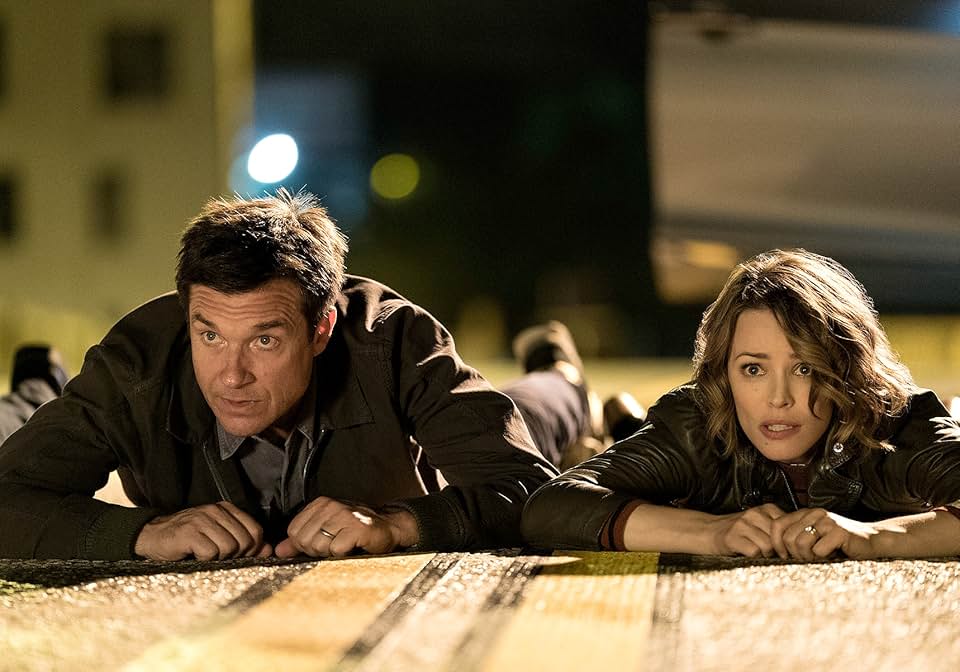
This is one film that stands out in the subgenre of action-comedies. The plot was well drafted and also really hilarious. It combined a perfect set of talented cast and not to mention the cleverness of the script. I remember watching this movie around my first year in school, that should be around 2018. The film tries its best to stay fresh and inventive even though at some points it was appearing to seem predictive.
The film revolves around Max, played by Jason Bateman and Annie, played by the iconic Rachel McAdams. They are a couple whose lives are organized around their regular and competitive game nights which they don't joke with. When I attend some events and I see some fun games played that have to do with thinking, it just reminds me of this film. Their normal and low-key existence is disrupted by the arrival of Max's brother, Brooks (Kyle Chandler). Brooks is the cool brother, and quite successful also.
Brooks attempts to spice up the whole game routine. He offers to host the next game night, in a somewhat usual way like they have ever played before. He suggests a murder mystery in such a way that the actual actors are playing roles. Things surprisingly and unexpectedly get out of hand when Brooks is kidnapped right in front of the group by masked men. This leaves the players of the game and me watching the film wondering if this is all part of Brooks's staged game, or if he is genuinely in mortal danger?
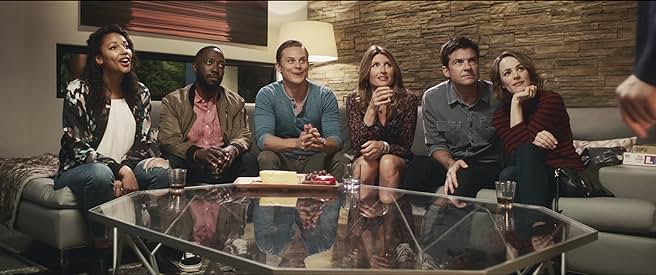
One of the things I found really genius in the film is how they managed to blur this line and left us clueless as to what is actually going on. As the night unfolds and reveals more surprises, not the good ones, Max, Annie, and their group of friends – including Ryan (Billy Magnussen) who is the ridiculous and unserious one, along with his dates, the married couple Kevin (Lamorne Morris) and Michelle (Kylie Bunbury), and the guy who steals the scene, Gary (Jesse Plemons) who is their next-door neighbor– struggle to discern if it is all reality or a dream. This confusion was a huge pillar to the film's humor which led to misunderstanding countless times.
I literally had lots of laugh-out-loud moments, from physical comedy to clever dialogue and even dark humor. The film maintained the kind of that made the viewers at the edge of their seat and not too comfortable with, just right before another comedic set piece comes up. It's the kind of film that keeps you engaged and just keeps on guessing and trying to figure out what is actually happening. The perfect combination of the cast just can't be overemphasized. It's like the Expendables, only the ones are set to give a comic show.
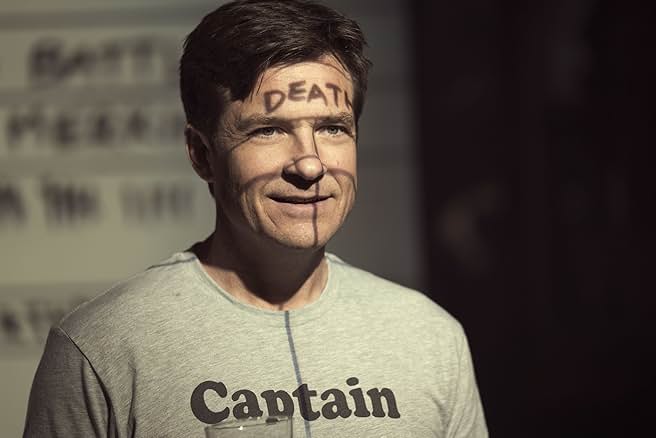
An aspect I like about Jason Bateman is that he doesn't need to act ridiculous to make a good delivery that leaves you laughing. He also acts as the one trying to keep things together amidst the chaos. Annie who plays the role of his wife brings her own unique style while matching his energy. Each cast had their own special force and vibes which they displayed in the film. Directors John Francis Daley collaborated with each other in actualizing the amazing movie Game Night. The camera work was top notch coupled with the creative transitions that enhance the comedic and action sequences.
The action sides of the film, while comedic, are also surprisingly well-staged and contribute to the overall excitement. While Game Night is considered a comedy movie, it can also be said to fit perfectly as a thriller, with genuine moments of suspense and danger. This blend of genres is well executed, preventing the film from becoming just another silly comedy.
I would totally recommend this film any time and any day, especially if one is looking for a night of laughter and unexpected thrills. The film possesses smart writing, strong performances, and energetic direction, helping it attain its position as one of the best action-comedies. I give Game Night a 9 out of 10 rating.
Written by: John Meredyth Lucas
Directed by: Herb Wallerstein
Running Time: 50 minutes
The Original Series of Star Trek, in its prime, was a testament to the show’s ability to transcend the creative and financial constraints that often bound 1960s science fiction television. Even within the frequently criticized third season—widely regarded as the series’ weakest—there were glimmers of the philosophical depth and speculative ambition that had made the franchise a cultural touchstone. That Which Survives initially appears poised to join these rare successes, blending existential mystery with a gripping survival narrative. However, despite its promising foundation and occasional brilliance, the episode ultimately falters, revealing the cracks in a production struggling to maintain relevance amid impending cancellation.
The episode opens with the USS Enterprise investigating a planet whose physical contradictions defy logic: it is the size of Earth’s moon but possesses Earth-like mass, atmosphere, and lush vegetation. This anomaly alone sets a tone of scientific curiosity, a hallmark of Star Trek’s best work. However, the crew’s exploration is abruptly disrupted by the arrival of a strikingly beautiful woman, Losira (Lee Meriwether), whose ethereal presence masks a lethal capability—she can kill individuals by touching them. The initial encounter, while tense, leans into the campy aesthetic that Season 3 sometimes embraced, particularly with Meriwether’s casting. Known for her role as Catwoman in the 1960s Batman series and her Miss America title, Meriwether’s casting might have primed viewers for a shallow, titillating performance. Instead, the script by John Meredyth Lucas subverts expectations, grounding the narrative in a sombre, even nihilistic atmosphere. Three crew members perish violently, their deaths framed not as dramatic flourishes but as stark reminders of the Enterprise team’s vulnerability. When an earthquake strands Captain Kirk, Spock, McCoy, and Sulu on the planet and hurls the Enterprise 1,000 light-years away, the stakes escalate. Onboard, Scotty races against time to prevent the ship’s warp engines from detonating—a subplot that could have been disjointed but instead mirrors the desperation of the landing party.
What elevates “That Which Survives” above the typical Season 3 fare is its refusal to indulge in the romantic or comedic tropes that had become a crutch for the series. Losira, though visually captivating, is not a seductress; her interactions with Kirk lack the flirtatious tension common in episodes featuring female guest stars. Similarly, Kirk’s usual charm offensive is absent, replaced by a grim determination to uncover the truth behind the planet’s artificial ecosystem and its deadly guardian. This restraint lends the episode a rare authenticity, aligning it with the “thinking man’s science fiction” ethos that defined earlier seasons. The climax, in which Losira is revealed not as a living being but as a holographic projection of a long-dead civilisation’s defence system, is particularly effective. The revelation that the planet’s creators were destroyed by their own hubris—a theme echoing the dangers of unchecked technological arrogance—closes the narrative with a tragic irony. Yet, this conclusion, while thematically resonant, feels rushed, undermining its emotional weight. The episode’s tone, oscillating between existential dread and procedural urgency, never fully coalesces, leaving the viewer with a sense of fragmentation rather than cohesion.
Herb Wallerstein’s direction deserves credit for maintaining a brisk tempo across the two parallel storylines—the stranded crew’s struggle on the planet and Scotty’s technical crisis in orbit. The decision to intercut these plots effectively sustains tension, though the planet’s artificial sets, while passable for the era, betray the production’s budgetary limitations. The studio-bound landscapes, reused from earlier episodes, strain credibility but are offset by atmospheric lighting and tight pacing. The special effects remain rudimentary yet serviceable. For late-1960s television, the episode’s visuals achieve a workmanlike adequacy, prioritising narrative momentum over aesthetic polish.
D.C. Fontana, the episode’s original story creator and a writer celebrated for episodes like Journey to Babel, distanced herself from the finished product by using the pseudonym “Michael Richards.” Her dissatisfaction stemmed from deviations in the script, particularly Spock’s uncharacteristic harshness as acting captain. In one jarring scene, Spock coldly dismisses Scotty’s concerns about the ship’s safety, a stark contrast to his usual logical but respectful demeanour. This tonal misstep feels less like a deliberate exploration of Spock’s leadership under stress and more like a narrative shortcut to heighten drama. Fontana’s critique is valid; Spock’s behaviour undermines the character’s integrity and introduces a dissonance that weakens the episode’s otherwise serious tone. However, this flaw does not wholly negate the episode’s merits. The subplot involving Sulu referencing the events of The Devil in the Dark is a rare nod to continuity in a series often criticised for its episodic isolation, suggesting a growing maturity in storytelling. Similarly, the core premise—a robotic guardian preserving an extinct civilisation’s legacy—while not revolutionary, is executed with enough nuance to avoid feeling derivative.
Yet, for all its strengths, That Which Survives remains a cautionary example of what the third season could not consistently achieve. The script’s philosophical aspirations are undercut by its structural inconsistencies, particularly the abrupt resolution of the Enterprise’s displacement and the underdeveloped exploration of Losira’s role as a spectral custodian. The episode’s failure to fully commit to its darker themes, coupled with its reliance on recycled sets and effects, highlights the show’s declining resources. By this point in the series, the cast and crew were aware of the show’s precarious future, and this anxiety seeps into the production’s uneven execution. While the episode hints at the potential for a more cerebral and emotionally grounded Star Trek, it ultimately lacks the narrative discipline and thematic depth required to elevate it to classic status.
In the broader context of Star Trek’s legacy, That Which Survives serves as a bittersweet reminder of what the Original Series might have achieved had it survived longer. Its willingness to confront mortality, explore alien psychology, and reject superficiality resonates with the franchise’s foundational ideals. However, the compromises of its era—both creative and financial—ensure that it remains a near-miss rather than a triumph. The episode’s dark tone and tragic ending may have been a deliberate attempt to signal the series’ capacity for evolution, but they arrived too late to reverse the network’s decision. That Which Survives is, in many ways, a microcosm of Season 3 itself: ambitious, flawed, and ultimately insufficient to save a show that had already begun to lose its battle against the void.
When I clicked “play,” I expected horror, didn't get that, but I got so much more.
From the title, The Haunted Palace, not gonna lie, I was expecting horror. To be fair, I didn’t watch the trailer, just skimmed a few online reviews and instantly knew it was a K-drama I’d enjoy.
What really sealed the deal for me, though, was the comparison to Alchemy of Souls. And if a drama is being mentioned in the same breath as Alchemy of Souls, then best believe it's GOOD GOOD.
Now, was it horror? Not really. It had a sprinkle of ghostly elements here and there, let’s call it white-hat horror. The kind with just enough paranormal activity to stir suspense but not enough to send you hiding under the covers. Basically, the ghosts came to intensify the plot, not terrify the viewer.
And let me tell you, this drama? Easily one of the best I’ve seen in a long time when it comes to storyline, on-screen chemistry, and top-tier casting. I love it when a show isn’t carried solely by the leads. Every character performed!. From protagonist to antagonist, The Haunted Palace had me in a chokehold!
Now, I need to confess, I’m very impatient when it comes to K-dramas. We all know the drill: episodes 13, 14, and 15 usually come with an overdose of sadness and tears. Normally, I just fast-forward through the emotional chaos. But this time? I stayed. I sat through the heartbreak, the tears, the jaw-dropping reveals, all of it. It was that good. So good that I’m watching it all over again.
The Storyline
The Haunted Palace is a historical K-drama that tells a gripping tale of celestial ambition, cursed fate, and unexpected bonds.
At its core is Gangcheori, an Imugi, a snake deity whose deepest desire is to ascend to the heavens and become a dragon. Gangcheori's ascension is tragically disrupted on the very day he was meant to rise to the heavens, he’s spotted by a human, a forbidden act that shatters the sacred process. As punishment, he crashes back to Earth, doomed to wait another hundred years for another chance. Unless, of course, he finds a human with pure spiritual energy to serve him as their patron deity.
Everything changes when he meets Yeo-ri, a woman born with the purest spiritual energy, hailing from Yongdam Village and descended from a line of powerful shamans.
Before meeting Yeo-ri, Gangcheori harbored a burning hatred for humans. He cursed their land, destroyed their crops, and gained a reputation as a ruthless, malevolent god. So imagine Yeo-ri and her grandmother’s shock when this very spirit starts tailing her everywhere.
Naturally, his reputation states that his very presence brings misfortune. So, whenever something bad happens in the village, all fingers point to Yeo-ri. She becomes an outcast, and even she starts to believe Gangcheori is the source of her cursed life.
Yeo-ri turns her back on her shamanic heritage, deciding to never serve or accept Gangcheori, and decides to carve out a quiet life as an eyeglass artisan instead. But fate has other plans.
The plot took a dramatic twist when Yoon Gap, her childhood friend and now palace scholar, arrives in disguise to summon Yeo-ri to the royal court, claiming her skills as an artisan are needed. What he doesn’t tell her is that the palace is overrun by restless ghosts and wicked villains, all plotting to destroy the kind king’s bloodline.
On the way to the palace, Yoon Gap is murdered by a corrupt palace official. But the story doesn’t end there, Gangcheori possesses Yoon Gap’s lifeless body and accompanies Yeo-ri to the palace, against her immense protest.
What follows is a whirlwind of royal intrigue, long-buried secrets, ancestral grudges, and spiritual battles. Together, Yeo-ri and Gangcheori navigate palace politics, family feuds, and an eight-foot ghost with a grudge deeper than anything you've ever known.
What I Loved and Hated
Honestly, I loved everything about this K-drama. No exaggeration. At first, I did have an issue with how limited the Imugi’s powers were. Like, if we’re calling him a deity, then make him deity-level powerful, right? But as the story unfolded, it actually made sense. Gangcheori wasn’t a fully ascended dragon, he was also trapped in a human body, and placing limits on his power kept the storyline grounded. If he’d been all-powerful from the jump, it would’ve completely undercut the tension and believability of the plot. So yeah… I understand.
That was probably my only initial gripe, and even that turned into appreciation by the end.
One of the things that really stood out for me was how seamlessly they blended in comedic elements. I mean, how do you have me gripping my chest in fear one minute, praying my favorite character doesn’t die, and the next minute, I’m gasping for air, wheezing from laughter? Comedy gold! And most of that came courtesy of Gangcheori played to perfection by Yook Sung-Jae. His timing, expressions, and sarcasm? Hilarious.
Now, let’s talk about that storyline coz wow! You know those dramas that randomly start stuffing in ridiculous subplots just to drag the series out? This is not one of those. In fact, I almost felt like the screen time wasn’t enough. Every episode was deep. Every scene served a purpose.
Another thing I absolutely loved? Justice. I live for K-dramas where the villains don’t just get exposed, they get the disgrace, punishment, or poetic ending they deserve. This drama did not hold back. Prepare your heart, though… because the tears? Oh, they will come.
And speaking of heartbreak, listen. I know they wanted to keep it realistic, but she didn’t have to die! I cried so much, then had to remind myself: “It’s just acting. It’s not real.” (And no, it wasn’t Yeo-ri. Who it was? I’ll let you find out.)
I keep circling back to the storyline because it’s genuinely that good. Imagine a kind, noble king, deeply in love with his queen, raising a young prince, being tormented by a vengeful ghost. Not because of something he did, but because of a sin buried deep in his bloodline, done by his ancestor. And the twist? The ghost wasn’t wrong. So… who’s really to blame?
Watch The Haunted Palace and decide for yourself 😉.
The Influence it has on me
Look, life is physical, but it’s just as much spiritual. And this K-drama captures that beautifully. Because let’s be honest, some of these things? They’re not just fiction. They reflect real-world spiritual dynamics. The hope and prayer is that we never experience anything close to what these characters went through.
One major takeaway for me was my newfound appreciation for both the male and female leads. I’d seen the male lead before in another kdrama,Doom at Your Service, but I didn’t quite enjoy the chemistry between him and the female lead in that drama. Back then, I thought he just didn’t do it for me as an actor.
But The Haunted Palace changed that completely. I see now, he was never the problem. In fact, he’s an excellent actor. What this drama taught me is that even the most talented actor can't carry a whole story alone. A good actor might get people to click play, but a great cast keeps them watching.
And this K-drama? It had a cast. Every single actor came with fire, precision, and depth. Everyone brought their A-game
Standout Performances
Listen… this is a tough one, because like I said earlier, everyone brought their A-game. But if I had to spotlight one standout, it would be the king, played by Kim Ji-Hoon.
Gosh. How do you express that much emotion without even saying a word? Every single feeling that role demanded, from internal conflict to disbelief, from quiet hope to gut-wrenching loss, and from paralyzing grief to searing anger, he delivered all of it, powerfully and wordlessly. He didn’t just act. He embodied the character.
Then there’s Yook Sung-Jae (Yoon Gap) and Bona (Yeo-ri). These two are exceptional, and not just because they played their main roles so well, they also played multiple personas, and nailed every single one.
Yook Sung-Jae had the near-impossible task of playing both Yoon Gap and Gangcheori. Two entirely different personalities, mannerisms, and energies, all switching back and forth effortlessly. Honestly, it felt like watching two completely different actors. The contrast was that sharp.
And let’s not forget Bona. She played Yeo-ri in her natural form and also Yeo-ri when possessed by various ghosts. The voice shifts, the posture changes, the mimicry? Absolutely applaudable. She carried each transformation like a pro, and it never felt forced.
Even the villains deserve their flowers. Because here’s the thing, I knew it was just acting. I knew it was fiction. But I still hated him. That’s how convincing he was. (Shoutout to his talent, though, I appreciate him in real life 😄.)
At the time of writing this, 10 chapters out of 13 of the fifth season of Kuroshitsuji have been aired, which is called “Emerald Witch Arc”, and well, as the name suggests, witchcraft is involved in the story. So far we had not seen any season of Kuroshitsuji in which witchcraft is involved, although evidently the supernatural and demonic elements have always been at the bottom of the barrel considering the nature of Sebastian Michaelis and some other characters. So, in theory, that centuries-old European practice would be a topic of conversation over the course of the season.
For those who don't know, Kuroshitsuji tells the story of Ciel Phantomhive and his butler Sebastian Michaelis, a demon who is in Ciel's service under contract. This anime is set in Victorian-era England, so dark and gloomy scenarios are normal. The aforementioned pair is dedicated to solve crimes or mysteries for the Queen, she does not hesitate to request their services for the most rare and inexplicable cases since the insight and teamwork of these two is remarkable and highly respected. This is how we see that they solve crimes of both human and supernatural nature.
Then, in “Emerald Witch Arc”, Ciel and company travel to Germany at the request of the queen to investigate some mysterious deaths, so they arrive at a small village that seems to be a bit isolated, there they are not received in a friendly manner, the villagers seem to be superstitious and in that sense they predict that the arrival of foreigners could bring bad consequences for the village. There is talk of a werewolf that appears with some frequency and those who see it suffer a terrible death, although it is not precisely at the hands of the werewolf, but as a result of a fog that generates negative effects on health.
In that village, Ciel and the others meet Sieglinde Sullivan, a girl who serves as the green witch whose job is to protect the village from werewolves. She is a naive girl who has never left the village and whose north is to be at the service of her people, however, upon meeting the newly arrived foreigners she is curious and invites them to spend the night in her mansion, a situation that generated discomfort in her butler and the villagers.
Kuroshitsuji: Midori no Majo Hen | OFFICIAL TRAILER
After the aforementioned, the real adventure to solve the mystery begins. I was very surprised that this time Ciel and Sebastian had more difficulties than usual, to the point that Ciel was taken to the limit and was affected psychologically, but that was very interesting because we could see a dynamic between him and Sebastian that we had rarely seen, the contract between them was about to break and we know that demonic contracts will not end well if you do not comply with what has been established before. On the other hand, I liked that this season gave some development to Finnian's character, a guy who has always been nice as a secondary character, so it was great to delve a little deeper into his past and have his moments of importance to the story.
This season feels a little different from the previous ones, but it doesn't miss a beat, so far the 10 chapters have been very good and have shown us a very interesting story which had a twist in the last chapters that I didn't expect, I won't tell you what it is about so as not to give you spoilers. The animation, as usual, remains very sober, as well as the soundtrack which has never disappointed in this anime, there are many openings and endings that are now part of my playlist. The truth is that this season of Kuroshitsuji came with everything, no doubt it is being much better than the previous one and there is still the closing of the story which promises to increase the level.
You have no idea how excited and thrilled I was to find out about this crossover. It really made my day.
No se dan una idea lo emocionado y entusiasmado que me puso enterarme qué existía este crossover. Realmente, me alegró el día
I think it's a real treat to see two titans of anime, such as Goku and Luffy, together in a collaboration.
Creo que es un verdadero lujo ver a dos titanes del anime, como lo son Goku y Luffy, juntos en una colaboración.
Capture made by me / Captura hecha por mí
The excuse to bring these characters together is a competition on an island. The international gastronomy association organized a tournament. Where the winner would get the legendary Juicatte meat. Which is extremely coveted for its great value and taste. Matter, among all the participants were several characters of these 3 series.
La excusa para reunir a estos personajes es una competición en una isla. La asociación internacional de gastronomía organizó un torneo. Donde el ganador obtendría la legendaria carne Juicatte. Que es extremadamente codiciada por su gran valor y sabor. Cuestión, entre todos los participantes se encontraban varios personajes de estas 3 series.
In my opinion, I think the premise was a great success. Considering that both Goku, Luffy and Toriko love food and are very gluttonous. Without a doubt, it was an excellent way to bring these characters together.
En mi opinión, creo que la premisa fue un gran acierto. Teniendo en cuenta tanto Goku como Luffy y Toriko aman la comida y son muy glotones. Sin dudas, fue una excelente forma de reunir a estos personajes.
Capture made by me / Captura hecha por mí
What I want to highlight about this crossover is the chemistry between the main characters. It felt very natural and not at all forced. Really, it was nice to see these characters interact with each other.
Lo que quiero destacar de este crossover es la química que hubo entre los protagonistas. Se me hizo muy natural y para nada forzada. Realmente, fue agradable ver estos personajes interactuar entre sí.
I felt this not only with the main characters, but also with the secondary and even tertiary characters. Everything feels so comfortable. They could even make a separate series and it would be fine.
Esto no solo lo sentí con los personajes principales, también con los secundarios y hasta terciarios. Se siente tan cómodo todo. Hasta podrían hacer una serie aparte y quedaría bien.
Capture made by me / Captura hecha por mí
I was very surprised by the number of characters they used for this special. They didn't skimp at all in this regard. For example, I was surprised to see Ox Satan (Chi-Chi's father) and Yajirobei. Which are very non-recurring Dragon Ball characters. Basically, they took full advantage of the cast of the series.
Me sorprendió muchísimo la cantidad de personajes que utilizaron para este especial. No escatimaron para nada en este sentido. Por ejemplo, a mí me llamó la atención ver a Ox Satán (el padre de Chi-Chi) y Yajirobei. Que son personajes muy poco recurrentes de Dragón Ball. Básicamente, aprovecharon al máximo el elenco de las series.
Capture made by me / Captura hecha por mí
As for the audiovisual aspects, I have no complaints. The animation is quite good, you can tell they put a lot of love into it. To the point that there are some shots that are tremendous. The music and the soundtrack are good. I think it lived up to the event. I can't complain at all.
En cuanto a los aspectos audiovisuales, no tengo ningún reclamo. La animación está bastante bien, se nota que le pusieron cariño. Al punto que hay algunos planos que son tremendos. La música y la banda sonora cumplen. Creo que estuvo a la altura del acontecimiento. No puedo quejarme de ninguna manera.
I especially want to appreciate the opening they did. Where they were able to perfectly combine the 3 series. Creating something beautiful and spectacular.
Sobre todo quiero apreciar el opening que hicieron. Donde fueron capaces de combinar perfectamente las 3 series. Creando algo hermoso y espectacular.
Capture made by me / Captura hecha por mí
I have to admit something that makes me cringe. Before watching this special, I didn't have the slightest idea of Toriko's existence. I don't know if it's a good series or if it has much popularity within this world, but this crossover I watched without knowing 1/3 of the characters. Toriko should probably be a great anime. I don't think just anyone can collaborate with Goku and Luffy 🤣.
Tengo que admitir algo que me da vergüenza. Antes de ver este especial, no tenía la más remota idea de la existencia de Toriko. No sé si es una buena serie o si tiene mucha popularidad dentro de este mundo, pero este crossover lo vi sin conocer 1/3 de los personajes. Probablemente, Toriko debe ser un gran anime. No creo que cualquiera pueda colaborar con Goku y Luffy 🤣
Capture made by me / Captura hecha por mí
In conclusion, this crossover is totally worth it and absolutely recommended. I'm sure that anyone who knows and/or has enjoyed these 3 series will really enjoy watching this special.
En conclusión, este crossover vale totalmente la pena y es absolutamente recomendable. Estoy seguro de que cualquiera que conozca y/o haya disfrutado de estas 3 series, va a gozar mucho viendo este especial.
It's fun, has a good dose of comedy and humor, the action is good and leaves you very satisfied at the end. My verdict for this special is an 8/10. It exceeded my expectations.
Es divertido, tiene una buena dosis de comedia y humor, la acción está bien y te deja muy satisfecho al terminar. Mi veredicto para este especial es un 8/10. Superó mis expectativas.
Capture made by me / Captura hecha por mí
Thank you very much for reading my review. It is a pleasure to share with you. I look forward to posting in this community in the future. I send you all a big hug and hope you are having a good day.🎞️🎬
Muchas gracias por leer mi reseña. Es un placer compartir con ustedes. Espero poder publicar en esta comunidad en un futuro. Les mando un fuerte abrazo a todos y espero que estén teniendo un buen día. 🎞️🎬
Translator Deepl.com
All images edited by me using Photoshop
Traductor Deepl.com
Todas las imágenes editadas por mí usando Photoshop
There are stories that I think raise very well the transition from adolescence and adulthood, a time of deep fears because you still do not have the experience of knowing the world and the way of being people, The Nutcracker manages to convey all of the above as a kind of metamorphosis that as a story is very entertaining to watch and adds a very nice learning or reflection throughout the adventure.
Greetings community of movies, in this case I want to recommend you to see especially with your children the good Barbie film inspired by The Nutcracker, it is the first time I see a full story of the Nutcracker, I did not even know the villain of this classic and I think that Barbie merges with the delicacy in the orchestral part of this story, I was very happy with what I saw because there is chemistry of franchises that merges between the main characters to raise very well varied positive values such as friendship, courage, duty and above all the courage to face the moments of change that everyone at some point in our lives will go through.
Hay historias que considero plantean muy bien la transición de la adolescencia y la adultez, un momento de profundos temores porque aun no se posee la experiencia de conocer al mundo y el modo de ser de las personas, El Cascanueces logra transmitir todo lo anterior como una especie de metamorfosis que como historia es muy entretenida de ver y añade un aprendizaje o reflexión muy bonita durante toda la aventura.
Saludos comunidad de movies, en este caso quiero recomendarles para ver sobre todo junto a sus hijos el buen film de Barbie inspirado en El Cascanueces, es la primera vez que veo a plenitud una historia de el cascanueces, ni siquiera conocía al villano de este clásico y pienso que Barbie se fusiona con la delicadeza en lo orquestal de esta historia, yo quede muy contento con lo que vi porque hay química de franquicias que se fusiona entre los personajes protagonistas para plantear muy bien variados valores positivos como la amistad, la valentía, el deber y sobre todo el coraje de afrontar los momentos de cambio por los que todos en algún momento de nuestras vidas vamos a pasar.
Barbie is characterized by being delicate, its aura as a franchise is more directed towards girls but by adding the nutcracker as an ingredient, the story becomes adult while still being precious in the reflections it wants to leave the audience, I had a great time as a child watching this movie, I happily entered into the conflicts of the characters and I had fun watching The Mouse King make disasters and mischief throughout the movie.
A personal detail I want to mention is that years ago I was a big fan of Adventure Time which I watched on Cartoon Network and there many characters had sweet names, the point is that I was very pleased to hear in this same story of the Nutcracker sweet names like Major Peppermint and Captain Candy, when I hear this kind of things I am transported to the sweetness of a child's world.
It is a plus that as a sensation I share so that you are encouraged to see it because I think you can also connect with these feelings of cake that the film has metaphorically speaking.
Barbie se caracteriza por ser delicada, su aura como franquicia va mas dirigida hacia las niñas pero al agregarle como ingrediente el cascanueces, la historia pasa a ser adulta sin dejar de ser preciosa en las reflexiones que quiere dejar a la audiencia, yo me la pase como un niño viendo esta película, entre felizmente en los conflictos de los personajes y me divertí viendo a El Rey Raton hacer desastres y maldades durante toda la película.
Un detalle personal que quiero nombrar es que hace años fui muy fan de hora de aventura la cual veía en cartoon network y allí muchos personajes tenían nombres dulces, el punto es que me fue muy grato escuchar en esta misma historia de el cascanueces nombres dulces como El Mayor Menta y El Capitán Caramelo, yo cuando escucho este tipo de cosas me traslada a lo dulce de un mundo infantil.
Es un plus que como sensación comparto para que te animes a ver porque pienso tu también puedes conectar con estos sentimientos de pastel que tiene la película metafóricamente hablando.
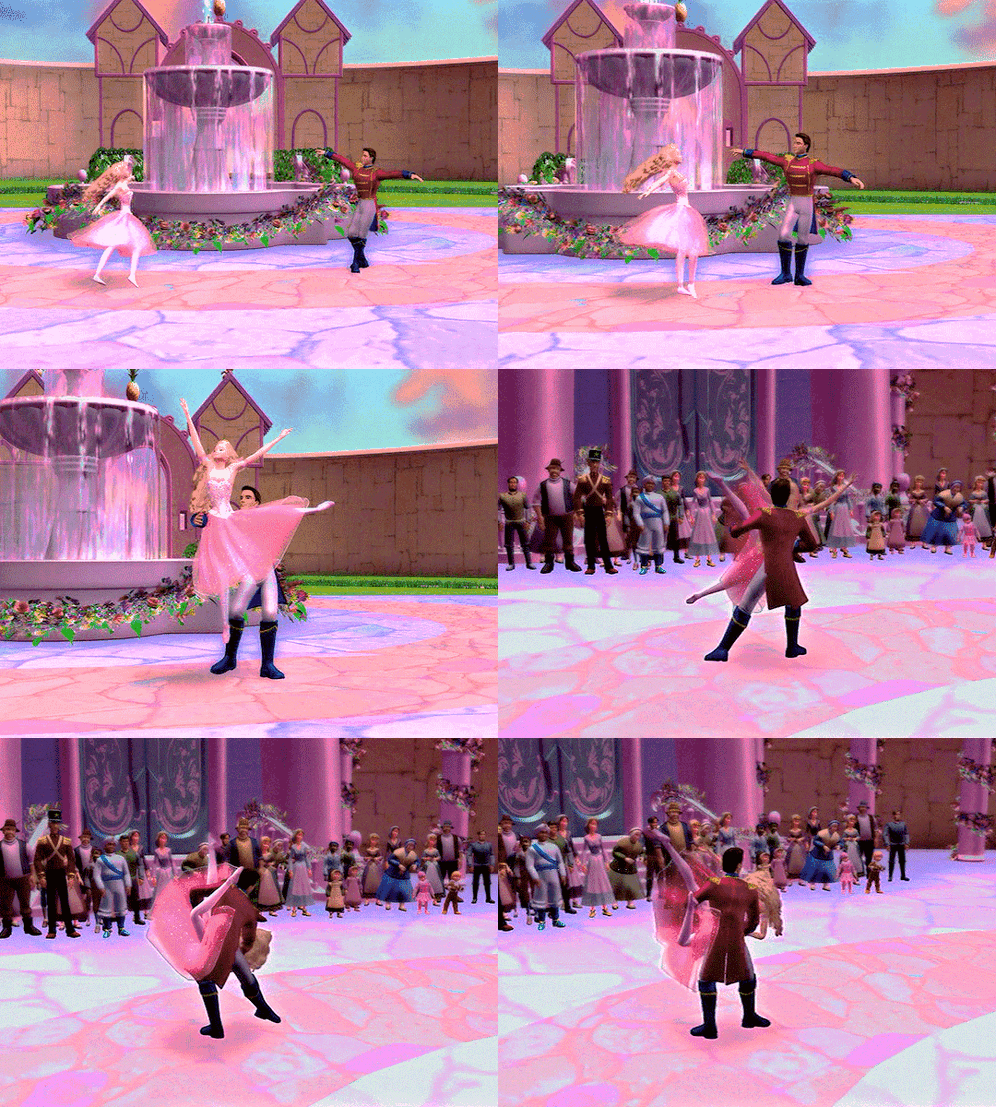
Just look at the image I share with you which summarizes all the feelings that the film transmits bathed in a pink tone that softens the maturity of the drama that both protagonists live, Barbie is a young girl who is afraid to leave the safety of her home but her soul tells her that she is already an adult and is ready to leave the nest.
The nutcracker goes through a conflict very similar to Barbie's that in my case I leave as a criticism that I would prefer to see it as a flashback the drama of her story to become a nutcracker, regardless of the above, the teaching of this character is that you can make mistakes but you can also make amends to correct those mistakes that we all make in the end.
It is the struggle of fears that I see in both protagonists and this reaches everyone because who is not afraid to fail when falling in love for the first time, who is not afraid of not being able to fulfill the role of father or mother, who is not afraid of failing as a couple.
These are things that make you think and make you fight because they are part of life to face them to move forward and be happy, the fear is not really failure, the fear is actually the natural progression of things in maturity.
Solo vean la imagen que les comparto la cual resume todas las sensaciones que el film transmite bañado en un tono rosa que suaviza la madurez del drama que viven ambos personajes protagonistas, Barbie es una joven que teme el dejar la seguridad de su hogar pero su alma le indica que ya es una adulta y esta lista para dejar el nido.
El cascanueces pasa por un conflicto muy parecido al de Barbie que en mi caso dejo como critica que fuese preferido verlo como flashback el drama de su historia al convertirse en cascanueces, independientemente de lo anterior, la enseñanza de este personaje es que te puedes equivocar pero también te puedes enmendar para corregir esos errores que todos a la final cometemos.
Es la lucha de los miedos lo que veo en ambos protagonistas y esto llega a todos porque quien no tiene miedo a fracasar cuando se enamora por primera vez, quien no teme el no poder cumplir con el rol de padre o madre, quien no teme el fracasar como pareja.
Son cosas que te hacen pensar y que te hacen luchar porque son parte de la vida afrontarlas para avanzar y ser feliz, el miedo en realidad no es al fracaso, el miedo en realidad es al avance natural de las cosas en la madurez.
I share with you the trailer of Barbie Nutcracker so that together with all the sensations and reflections that the film left me, which I have shared with you in this review, you will be encouraged to give it a chance, do not be guided only by the typical princesses and princes, that is there but taken to a very mature terrain raised with subtlety.
A detail is that this love of princess and prince if I believed it, usually the princes appear out of nowhere or are about to be but in this case the journey of both protagonists is very similar, one fails in his role as prince but Barbie arrives to save him from his inner darkness and in that process both gain life experience to move forward together, a couple that in feelings I saw them very true.
It is a musical with dances in the style of classical music and ballet, I think that's why both franchises combined very well because Barbie is easily associated with princesses.
For a moment I thought of Margot Robie playing Barbie and giving us the story of The Nutcracker, I would love to see her dancing ballet haha and although she is a natural at playing crazy characters, I would like to see her out of that madness and more focused and delicate in a story like this, these are crazy things I thought of and share haha because I think Babie is very good at classical classics.
Les comparto el trailer de Barbie Cascanueces para que junto con todas las sensaciones y reflexiones que me dejo el film las cuales les he compartido en esta reseña, se animen a darle una oportunidad, no se guíen solo por lo típico de princesas y príncipes, eso esta pero llevado a un terreno muy maduro planteado con sutileza.
Un detalle es que este amor de princesa y principe si me lo crei, generalmente los principes aparecen de la nada o estan por estar pero en este caso el recorrido de ambos protagonistas es muy similar, uno falla en su rol de principe pero llega Barbie para salvarlo de su oscuridad interna y en ese proceso ambos ganan experiencia de vida para seguir juntos hacia adelante, una pareja que en sentimientos los vi muy verdaderos.
Es un musical con bailes al estilo de la música clásica y el balet, pienso por eso ambas franquicias se combinaron muy bien porque de por si Barbie se asocia fácilmente a princesas.
Por un momento pensé en Margot Robie haciendo de Barbie y dándonos la historia de El Cascanuces, como me encantaría verla bailar balet jaja y aunque ella se le da de manera natural el hacer personajes alocados, me gustaría verla fuera de esa locura y mas centrada y delicada en una historia como esta, son locuras en las que pensé y comparto jaja porque a Babie pienso se le dan muy bien los clásicos de clásicos.
I dedicate each and every one of my posts and videos to my little dog named princess, we called her chiquito, she is no longer with us but from heaven she will see that her existence was valuable and the most beautiful thing that will exist in my heart and soul.
Resources used in The Thumbnail Edited with Paint:
There’s something quietly devastating about Sakamoto Days, though I didn’t expect it. I went in thinking I’d get a silly ex-hitman comedy with flashy kills and quirky side characters. And yes, the bullets fly, the punches land, and there are moments of absurd brilliance that made me genuinely laugh. But beneath all that noise, what I found was… grief. A man haunted by the echo of his own silence. I don’t mean trauma in the cheap, marketable way. I mean the kind that sits in the room with you while you fold laundry, while you ring up a customer, while you try to raise a child in a world that doesn’t forgive what you were. It’s in Sakamoto’s eyes—the kind that no longer beg for redemption, only rest.
Every time he smiles, it hurts a little. Not because it’s fake, but because you can feel how much effort it costs him. How much history is being held back behind that gentle nod, that quiet grunt. He used to be a monster. He chose not to be. And that’s the heart of this show—it’s not about redemption arcs or revenge fantasies. It’s about what happens after the myth ends. About the daily practice of choosing softness in a brutal world. The convenience store isn’t just a gimmick. It’s his sanctuary. His rebellion. His tiny, fragile peace. And the fact that it keeps getting invaded by ghosts of his past? That’s what makes every fight scene sting.
The action is clever, yes, but it’s also tragic. Sakamoto isn’t enjoying it. He’s just surviving. And yet, there’s humor, absurdity, even joy in how it’s choreographed. It’s an elegant contradiction—violence rendered with wit, speed, restraint. The kind of fights that say more in a single movement than some shows manage in ten episodes of exposition. And the supporting cast? They’re more than sidekicks. They’re mirrors. Shin, with all his noise and psychic anguish, feels like a younger version of a man still hoping to be understood. Lu is an entire subversion of what we expect from women in action anime—graceful, yes, but also brutal, decisive, and emotionally grounded.
Still, Sakamoto Days isn’t perfect. The pacing flirts with sluggishness. Some plot beats repeat themselves, and there are stretches where I caught myself checking the clock. But that’s the thing—this show isn’t trying to impress you with constant escalation. It breathes. It sits in its world. It trusts that you'll stay for the quiet in between, not just the spectacle. That alone earns my respect. It’s not desperate for your love. It knows what it is, and it lets you arrive on your own terms.
I didn’t expect to feel seen by an ex-hitman who communicates mostly in grunts and grocery bags. But here we are. And maybe that’s the magic of anime when it’s done right—it finds the part of you that you forgot existed. The part that’s tired, but still trying. The part that knows what it means to carry peace like it’s a weapon. Sakamoto Days isn’t loud. It doesn’t scream to be remembered. But it lingers. It stays. And sometimes, that’s all we need.
The 1980 film High Test Girls (original title: Sechs Schwedinnen von der Tankstelle), a sequel to Erwin C. Diettrich’s 1979 softcore comedy Six Swedish Girls in a Boarding School, exists in a peculiar liminal space within cinematic history. While sequels that surpass the quality of their predecessors are vanishingly rare, films with negligible artistic or narrative ambition often manage to replicate their own mediocrity with alarming consistency. This sequel, however, delivers a product that is technically proficient yet creatively inert. Its existence feels less like a continuation of its predecessor’s story and more like a contractual obligation fulfilled with minimal effort, a cynical exercise in brand recycling that nonetheless benefits from the charm of its performers and the director’s pragmatic understanding of his audience’s expectations.
The protagonists, six Swedish women portrayed with varying degrees of charisma and wit, return for this follow-up, though their transition from boarding school students to gas station attendants stretches credibility even by the loose standards of softcore cinema. Having either graduated or been expelled (the specifics are unimportant), the women inherit a chalet in a Swiss village and convert it into a “full service” petrol station—a euphemism that quickly becomes literal. Their overt sexuality, framed as both a business strategy and a lifestyle choice, provokes the ire of Marie, the mayor’s wife (Jane Baker), who campaigns relentlessly to shut them down. Her husband Hans (Karl Gysling), the mayor himself, is too preoccupied with political theatre to address her complaints effectively. Council meetings, ostensibly convened to discuss the station’s “scandalous” operations, are repeatedly delayed as Hans’s absence provides an alibi for his colleagues to pursue extramarital trysts with Marie. This absurd dynamic—where the very authority meant to uphold morality becomes complicit in its subversion—serves as the film’s flimsiest plot device, a satire so shallow it barely rises to the level of social commentary. Hans eventually capitulates, striking a deal that allows the town’s brass band to rehearse in the women’s chalet in exchange for turning a blind eye to their extracurricular activities. The transactional resolution is emblematic of the film’s broader ethos: a wink-and-nod compromise between vice and bureaucracy, where no one truly loses.
Diettrich, often dubbed the “Swiss Roger Corman” for his prolific output of low-budget genre fare, adheres rigidly to the formula that defined his earlier work. His films, including both Six Swedish Girls entries, are structured around a narrative skeleton so slight it functions almost as an afterthought. The plots exist solely to justify a series of set pieces in which the protagonists disrobe and engage in simulated sexual encounters. Yet, despite those limitations, Diettrich’s technical competence cannot be denied. The cinematography is crisp, the editing brisk, and the performances—particularly from the ensemble cast—manage a degree of warmth that elevates the material beyond the sterile mechanics of typical exploitation fare. The actors commit to the absurdity of their roles with a sincerity that borders on endearing, as though they are aware of the film’s limitations but choose to entertain regardless. The result is a film that is “satisfactory” only in the sense that it meets the bare minimum requirements of its genre, offering neither innovation nor embarrassment, but a predictable rhythm of titillation and slapstick.
The casting choices further underscore the film’s ambivalence toward originality. Brigitte Lahaie, a French actress renowned for her pionnering status as hardcore pornographic star, reprises her role as Greta, the group’s scheming instigator. Her presence injects a frisson of genuine star power, though her character’s arc is indistinguishable from her role in the first film. France Lomay returns as Kerstin, the tomboyish mechanic whose sexual escapades are intercut with her mechanical tinkering—a metaphor so blunt it might as well be hammered into the script. Elsa Maroussia, reprising her role as Selma, leans into the role of the maternal figure, offering a counterbalance to the chaos. However, three of the six leads are recast: Elodie Delage as the brunette Astrid, Nadine Pascal as Lil, and Flore Sollier as Inga, both blondes. The new actresses lack the chemistry of their predecessors, their performances feeling more like auditions for the next softcore vehicle than authentic contributions to the narrative. That said, the film does push marginally further into explicit territory than its predecessor, with fleeting moments of simulated intercourse supplementing the usual nudity. Yet even these scenes are sanitized enough to avoid classification as hardcore, ensuring the film remains accessible to mainstream audiences—or at least those willing to overlook its inherent sleaze.
The question of whether High Test Girls succeeds as a sequel hinges entirely on the viewer’s familiarity with Six Swedish Girls in a Boarding School. For those unacquainted with the original, this follow-up might appear as a harmless, if unremarkable, slice of Euro-sleaze: a group of sexually liberated women navigating small-town hypocrisy with humor and hijinks. However, for anyone who has seen the first film, the sequel’s derivative nature becomes glaringly apparent. Diettrich reuses entire jokes wholesale, most notably Kerstin’s “modified bicycle” gag—a clunky mechanical invention that allowed her to receive pleasure in the original. Here, it reappears with no explanation, as though the intervening year had erased all continuity. Her friends’ reactions to the device are equally baffling, their supposed amazement at Kerstin’s invention undercutting any logic that might connect this film to its predecessor. This recycling of material, combined with the near-identical character archetypes and plot beats, renders High Test Girls less a sequel and more a “special edition” of the first film, retread territory dressed up in marginally different locations.
Diettrich’s attempts to inject novelty into the sequel are both sporadic and uneven. The surreal interludes involving fictional television programmes—a recurring feature in his filmography—stand out as the most ambitious sequences. In them television character either comment on or actually interact with the audience. These sequences, while brief, showcase Diettrich’s willingness to experiment with form, albeit in a manner that feels more gimmicky than subversive. Unfortunately, their placement early in the film robs them of impact; the rest of the runtime is filled with increasingly uninspired gags and half-hearted innuendo. The narrative peters out abruptly, with no resolution for the mayor’s subplot or the town’s simmering moral panic. By the credits, the viewer is left not with a sense of catharsis but with the faint relief that the film’s interminable parade of contrived situations has finally ceased.
The film’s technical merits are undeniable, yet they highlight the inherent contradiction of Diettrich’s career. As a director specializing in exploitation genres, he mastered the art of creating polished, watchable content with minimal resources—a skill that earned him comparisons to Roger Corman, though without the latter’s occasional flair for cultish ingenuity. High Test Girls is competently shot, with a color palette that emphasizes the Swiss Alps’ picturesque setting, juxtaposed against the women’s increasingly risqué antics. The editing is fluid, ensuring that the softcore sequences flow without jarring cuts, while the scor complements the tone. These elements suggest a craftsman’s eye, but they also expose the hollowness at the film’s core. When every technical decision serves the sole purpose of facilitating the next nudity scene, the result is a work that feels more like a checklist of tropes than a cohesive story.
Comparisons to the subsequent sequels—Six Swedes in Ibiza (1981) and Six Swedish Girls in the Alps (1983)—reveal High Test Girls as a transitional piece. The former two abandoned softcore constraints in favor of explicit content, leaning fully into hardcore pornography. By contrast, Diettrich’s 1980 entry remains coyly within the bounds of mainstream acceptability, a choice that may have been pragmatic (to avoid stricter censorship) or artistic (to maintain a veneer of respectability). This middle-ground approach, however, leaves the film stranded. It lacks the unapologetic carnality of its successors while retaining the narrative deficiencies of its predecessor. The decision to retain Lahaie, a performer synonymous with hardcore, in a softcore role feels like a missed opportunity; her screen presence hints at the subversive potential of the genre, yet the film’s timid boundaries prevent her from fully exploiting it.
Ultimately, High Test Girls is a textbook example of how to produce a sequel that is neither offensive nor memorable. Its technical execution is sound, its performers game, and its premise sufficiently frivolous for viewers seeking escapism. Yet its refusal to evolve beyond the template of the first film—or to even acknowledge its own continuity—renders it a pale imitation of itself. The surreal TV segments, though clever in concept, are undermined by their isolation within the script, appearing as brief detours from the otherwise monotonous parade of softcore set pieces. For those seeking a “guilty pleasure,” the film delivers, but its pleasures are so perfunctory that guilt quickly curdles into indifference.
Apasionada del bienestar en la tercera edad. Comparto consejos sobre vida activa, HIIT, yoga y senderismo para ayudar a adultos mayores a vivir con energía.
Saludos cordiales para la comunidad amantes del cine y las buenas películas.
Harta es un término comúnmente utilizado para denotar cansancio, molestia, agotamiento, hastío. Decir: ¡Estoy harta! significa que ya no puedo más y mis emociones están al máximo nivel a punto de estallar.
Es posible que en algún momento de la vida hayamos estado hartos de alguna situación y que de este suceso se haya detonado algún conflicto interno o externo, ¿no es es cierto?
Bien, de eso trata precisamente esta historia de drama llamada HARTA. Janiyah, protagonista del film es una mujer a quien la tragedia la embarga y en un segundo el mundo se le viene encima. Su pequeña hija padece de una enfermedad y por ella hace todo para sacarla adelante. Aún así, nada en ese momento en la vida de Janiyah le sale bien y por el contrario, todo confabula en su contra.
Es triste asumir que la historia de Janiyah no escapa de la realidad. Son muchas mujeres que viven una vida llena de angustias, pesares e incertidumbres. Madres solteras haciendo literalmente de tripas corazones para sacar adelante a su familia y a veces el mundo, ni la sociedad parecen entender tanto dolor y sufrimiento.
Es común juzgar sin conocer, es común discriminar por no pertenecer a un estrato social alto o me dio alto, de clase, es común recibir rechazos y hacer sentir mal a los demás por simples pensamientos críticos. Pero, lo más complejo de entender es cómo no somos capaces de empatizar por un momento con los otros y tender la mano en momentos tan difíciles de la vida.
Aria, interpreta el personaje de la hija de Janiyah, es una niña con problema de salud a quien su madre, a pesar de sus precariedad le brinda toda su atención y cuidado. Aún así, la sociedad no la entiende pero si la atacan de manera brutal, sin piedad, sin dejarla respirar. Es de esperarse entonces que esta mujer se HARTE y pierda el control.
Janiyah genera un caos sin querer. Su estado depresivo la llevó a cometer errores que pudieron contarle más de lo que ella misma pensaba. La burocracia en un país sin límites y una sociedad cruel puede hartar a cualquiera y lamentablemente su vida da un giro inesperado.
Recomiendo esta película llena de tantas verdades. Creo que cualquier sociedad puede verse identificada. Aún, en pleno siglo XXI, ¿sigue siendo caro ser pobre, seguimos las mujeres siendo discriminadas?
La respuesta la darán cada una de las personas que vea este film. No considero la idea de hacer spoiler pero les adelanto que verán interpretaciones magistrales, naturales, auténticas, con fuerza y carácter. Sin duda, la película mueve toda fibra y sentimiento. De volver a verla volvería a llorar de emoción.
Lo que no revelaré son los giros finales de esta historia... No estaba loca sino rota
¡Cuánta fuerza tiene una madre! No me cabe la menor duda. Todas las estrellas del cine para esta cinta tan bien elaborada.
E N G L I S H
Warm greetings to the community of film and movie lovers.
Fed up is a term commonly used to denote tiredness, annoyance, exhaustion, weariness. To say: I'm fed up! means that I can't take it anymore and my emotions are at the highest level and about to explode.
It is possible that at some point in life we have been fed up with some situation and that this event has triggered some internal or external conflict, isn't it true?
Well, that's precisely what this drama story called SAD is all about. Janiyah, the protagonist of the film is a woman who is overwhelmed by tragedy and in a second the world comes crashing down on her. Her little daughter suffers from a disease and she does everything for her to bring her up. Even so, nothing in Janiyah's life works out well for her and, on the contrary, everything conspires against her.
It is sad to assume that the story of Janiyah does not escape reality. There are many women who live a life full of anguish, sorrow and uncertainty. Single mothers are literally trying their hardest to help their families and sometimes the world and society do not seem to understand so much pain and suffering.
It is common to judge without knowing, it is common to discriminate for not belonging to a high social class, it is common to receive rejection and make others feel bad for simple critical thoughts. But, the most complex thing to understand is how we are not able to empathize for a moment with others and reach out in such difficult moments of life.
Aria, who plays the character of Janiyah daughter, is a girl with a health problem to whom her mother, despite her precarious situation, gives her all her attention and care. Even so, society does not understand her but attacks her brutally, without mercy, without letting her breathe. It is to be expected then that this woman gets HARTE and loses control.
Janiyah unintentionally creates chaos. Her depressive state led her to make mistakes that could tell her more than she thought. Bureaucracy in a country without limits and a cruel society can harass anyone and unfortunately her life takes an unexpected turn.
I highly recommend this movie full of so many truths. I think any society can relate to it. Even in the 21st century, is it still expensive to be poor, are women still discriminated against?
The answer will be given by everyone who sees this film. I do not consider the idea of making spoilers but I anticipate that you will see masterful, natural, authentic interpretations, with strength and character. Undoubtedly, the film moves every fiber and feeling. If I were to see it again, I would cry with emotion.
What I will not reveal are the final twists in this story.... I was not crazy but broken.
**How much strength a mother has! I have no doubt about it. All the stars of cinema for this well-crafted film.