Longform reviews of films, TV, anime, books, and audiobooks, written by the scrobble.life community and published to the Hive blockchain, so each one is owned by its author and can earn rewards from readers. 59,998 reviews and counting.
Hola mi gente el dia de hoy presentamos en esta ediciòn de la telenovela PEREGRINA, una de las mejores producciones del pais.
Portada Realizada Por Mi.
INTRODUCCIÒN.
-
Peregrina es una telenovela venezolana producida por Venevisión en 1973, con creación de Delia Fiallo, dirigida por Grazio D'Angelo y producida por José Enrique Crousillat. Esta versión marcó un hito por su emotiva narrativa y su éxito popular, consolidándose como una de las adaptaciones más reconocidas del legado de Fiallo.
La historia inicia en un pueblo venezolano cuando Miriam, enferma de leucemia, muere al dar a luz. Su esposo, el Dr. Mirabal, fallece en accidente poco después. La niña recién nacida, Gisela, queda bajo el cuidado de su abuelo materno, el señor Mendoza. Sin embargo, la madrastra y cuñada ambiciosas logran que Gisela sea entregada a gitanos que llevan un circo itinerante.
Veinte años después, el circo regresa al pueblo: Mendoza y su hermana Yolanda reconocen en Gisela el rostro de Miriam y sospechan que es la heredera perdida. Al enterarse, el ambicioso Rolando gemelo de Juan Carlos se casa con ella con el único propósito de apropiarse de su fortuna. En la noche de bodas, Gisela descubre sus verdaderas intenciones y vuelve al circo. Rolando es asesinado y Gisela es acusada injustamente. Juan Carlos, creyendo su culpabilidad, planea vengarse haciéndose pasar por su hermano muerto.
Peregrina destaca por su carga dramática bien estructurada, con una protagonista fuerte atrapada entre el engaño y la búsqueda de identidad. Rebeca González, en los papeles duales de la madre y la hija, entregó una interpretación cargada de sensibilidad, mientras que José Bardina aportó profundidad al encarnar a los gemelos con matices claramente diferenciados.
El guion de Delia Fiallo conjuga elementos clásicos del melodrama (identidad secreta, traición familiar, venganza) incorporando además la atmósfera circense para intensificar la emoción. La telenovela obtuvo gran repercusión, convirtiéndose en referente de su género y sirviendo como base para adaptaciones internacionales posteriores.
Peregrina (1973) representa un clásico del melodrama venezolano, destacándose por su trama intensa, giros narrativos inesperados y actuaciones destacadas de Rebeca González y José Bardina. Su influencia se extiende más allá de Venezuela gracias a sus múltiples versiones en otros países y su impacto perdurable en la memoria colectiva del género.
Bueno mi gente, hasta aqui la ediciòn del dia de hoy, espero les guste y disfruten de este grato recuerdo, Peregrina es una de las telenovelas mas famosas y exitosas del pais, que marco y dejo una huella en la tv Venezolana que tambien fue inspiraciòn para otras historias parecidas, realizadas en los años siguientes. Bendiciones.
Few filmmakers have been fortunate enough to have their early careers defined by classic works as Ridley Scott has, the creator of cult sci-fi films Alien and Blade Runner. Although commercially successful and established as one of Hollywood’s most influential producers, Scott has struggled in recent years to deliver films of the same calibre to both audiences and critics. It is therefore somewhat understandable that he sought to return to his roots, and by circumstance, 2017 saw him release—either as director or producer—two films based on his greatest successes: Blade Runner 2049 and Alien: Covenant.
The latter serves as a prequel to Alien and a sequel to Scott’s 2012 film Prometheus, through which he attempted to connect the Alien film cycle with the two Alien vs. Predator movies. The plot begins 11 years after the events of Prometheus, following the doomed expedition aboard the ship of the same name. In 2104, the Covenant, a vessel carrying frozen colonists bound for planet Origae-6, suffers a malfunction that awakens its 14-member crew from cryosleep. During repairs, the crew detects an unusual signal originating from a nearby planet with conditions suitable for human life. Captain Oram (Billy Crudup) decides to divert the ship and send an expedition to the planet. Upon landing, the crew encounters what appears to be a paradisiacal world filled with lush vegetation, though it strikes them as odd that no animal life is present. The reason becomes clear when two crew members are infected by mysterious spores, from which small yet highly destructive creatures emerge, killing them and several others. Temporary salvation arrives in the form of David (Michael Fassbender), the android survivor of the Prometheus disaster, who leads the remaining members of the ill-fated Covenant expedition to a city built by the enigmatic humanoid Engineers. There, evidence of an unimaginably destructive catastrophe and genocide is visible. As they attempt to organise an evacuation to the orbiting ship, it becomes apparent that the answer to what destroyed the Engineers is far closer and darker than anyone anticipated.
Of all the films in the Alien saga (assuming, of course, that this includes the sequels), Covenant is the one whose plot and structure most closely resembles Scott’s original Alien. Sir Ridley clearly approached this new film as an opportunity to create something that would simultaneously serve as both homage and remake of his most famous work, with perhaps the clearest indicator being Benjamin Wallfisch’s score (co-composed with Hans Zimmer), which draws on motifs from Jerry Goldsmith’s original 1979 soundtrack. At the same time, it provided an excellent opportunity for Scott to demonstrate how special effects technology has advanced over the past forty years, featuring several genuinely striking and disturbingly explicit scenes of violence. Yet, as with many previous instances, all this availed Scott little, as he was once again unlucky with his screenwriter. John Logan simply isn’t in the same league as Dan O’Bannon, who provided Scott with the genius screenplays for Alien and Blade Runner.
This is most evident in the film’s utterly bland and easily forgettable characters. For instance, the nominal protagonist, Daniels (played by Katherine Waterston), simply cannot hold a candle to Ripley as portrayed by Sigourney Weaver. The only actor who might be said to have delivered a noteworthy performance is Michael Fassbender, though this is largely thanks to a script that assigned him a dual role—as David, the android from Prometheus, and Walter, the Covenant’s android, who happens to resemble David’s identical twin. Then there is the so-called “surprise” twist at the end, which any seasoned viewer could have predicted from several light-years away.
The script’s greatest flaw, however, lies in its violation of one of the rules insisted upon by Borivoj Jurković, former editor of the Croatian sci-fi magazine Sirius: “fools don’t travel in space.” This rule was already broken in Prometheus, but in Covenant it is violated even more explicitly, with characters behaving like idiotic teenagers from 1980s exploitation slasher films. Scott seems to have been aware of this, as Covenant includes a shower scene where two crew members act like randy teenagers, ending precisely how they would in Friday the 13th and similar films. Though well-directed, the scene feels utterly unconvincing and appears too late in the film for anyone to interpret it as anything other than cheap exploitation. Indeed, Covenant as a whole is a rather poor exploitation of something that once represented one of the greatest sci-fi films of all time, and the thought of an inevitable sequel causes far greater unease among fans than any scene Scott included in this film.
RATING: 4/10 (+)
(Note: The text in the original Croatian version was posted here
Blog in Croatian https://draxblog.com
Blog in English https://draxreview.wordpress.com/
InLeo blog https://inleo.io/@drax.leo
Let me tell you, that anime is not just a story—it’s an emotional journey. The first time I watched it, it didn’t even feel like I was just following characters on screen, it felt like I was living with them, carrying their burdens, laughing at their silly moments, and crying at their losses. You know how Naruto was just that loudmouthed kid in the original Naruto series? In Shippuden, you actually see him grow, and man, that growth hits deep.
The early parts really set the tone—Naruto comes back to the village after training with Jiraiya, and suddenly, everything feels different. He’s not that helpless little kid anymore, and yet, he’s still got this innocence about him. The Akatsuki start moving in the shadows, hunting tailed beasts, and the weight of responsibility slowly falls on Naruto’s shoulders. I’ll never forget when Gaara, who had turned his life around as Kazekage, got kidnapped. That scene where Naruto runs to save him, fighting Deidara and Sasori, gave me chills. It wasn’t just about the action—it was how personal it felt. Naruto understood Gaara’s loneliness, so he fought for him like a brother. When Gaara died and Chiyo gave her life to bring him back, I swear my chest tightened. That was the first of many emotional punches Shippuden throws.
Then the Akatsuki, who are villains, however, the more you watch them, the more you know that they are not all monsters. The stories each of them told made you sit down and think. Like Itachi. God, Itachi. Over the years, he was portrayed as the bad guy who killed his entire family, including his own clan,, and then the twist that he did it to avoid a civil war, to spare his little brother the pain of hating him, to live as a criminal, made me. I shed tears with Sasuke at that time when the truth was revealed. It got me to thinking about love, in its most purest, agonized incarnation: how sometimes it has nothing to do with smiles and comfort, but that of bearing untold burdens in the sake of loving a person.
The Invasion of Pain was one of the strongest arcs that I had. That fight was legendary. Suffering actually burnt Konoha down to the ground--or one swab wiped it out--and then Naruto appeared, full-grown and full-fledged. Fighting Pain at full strength, with Sage Mode, and his clones, and his brain--beautiful. And in the moment of that last dialogue with Nagato, Naruto did not decide to be hateful. He didn’t kill him. He heard, and he comprehended and he decided to stop the process of hate. That experience helped me to rise back and reflect on forgiveness in a new light. Such as, how do you forgive a person who burned your house, killed your people? But Naruto did, and in doing so, he made Nagato have hope once again, even in his death breath. There was no fight as strong as that.
There are, of course, the heartbreaking losses. The death of Jiraiya is one of those that do not fade away. And how he struggled to battle it single-handedly, how he wrote that last word on the back of the toad, and even smiled in his dying agony--it tore me asunder. When Naruto realized and wept, and then made a vow to carry on with the dream of his master- it also made me weep. How unfinished and so real was that student-teacher relationship. Jiraiya was not only a teacher, but he was more or less the father that Naruto never had, and to lose him was to lose family.
And then there is the fourth great ninja war. Throughout that saga, it seemed that the world was hanging by a thread. It was goosebump-inducing to see all the villages united, the foes turned into your friends, and Naruto standing in the very middle of it all. The fact that he is attached to Kurama, the Nine-Tails, is another thing that struck me. Initially, Kurama was such a personification of hate, trapped and enraged, but it took Naruto to never surrender to him, to keep seeing him even when he was ungrateful, and with time, he was eventually able to respect him, and even become a true friend. When Kurama finally fought with him and did so willingly, it was one of the most satisfying events of the series.
Naturally, the last test is the battle between Naruto and Sasuke. You had a feeling about it right at the beginning. Just being stronger was not even the point. It concerned their friendship with two boys who had lost everything and met. It was not only fists and jutsu that battled in the Valley of the End, but tears, memories, pain, and love. How they both lay there bloody and battered and without arms--it made me cry again. It meant that not everything is smooth when it comes to love. It can be quite sloppy and excruciating, but worth keeping.
Naruto: Shippuden isn’t perfect. It has filler episodes that can test your patience. But honestly, when you stick with it, what you get is something rare: a story about pain, hope, forgiveness, friendship, and never giving up. It’s not just an anime—it’s a life lesson. Watching Naruto go from that lonely, unwanted boy to the hero who saved the world, who became Hokage, and who inspired even his enemies—it left me feeling hopeful. Like maybe, no matter how broken life feels, if you keep pushing, if you keep believing, things can change.
So yeah, Shippuden made me laugh, made me scream, made me cry, and sometimes
It’s been a while since I sat down to watch a proper sitcom. You know, the kind of show that doesn’t take itself too seriously, yet somehow manages to keep you hooked with relatable characters, family drama, and plenty of laughs. When I stumbled upon The Upshaws, I honestly didn’t expect too much. I thought it might be just another sitcom trying to survive in today’s world of fast paced dramas and edgy thrillers. But to my surprise, this show turned out to be exactly what I didn’t know I needed ! a funny, heartfelt, and refreshing comedy.
At first, I’ll be real with you, it felt a little corny. The pilot didn’t immediately pull me in, and I wasn’t sure if I would even continue. But because I’ve seen plenty of shows where the first episode isn’t the best representation, I decided to give it another shot. And I’m glad I did. By the time I got into a few more episodes, I was laughing out loud much more than I expected. The jokes started to land, the chemistry between the characters started to shine, and soon enough, I found myself bingeing the series with my partner @yugadi over just a few nights.
What truly makes The Upshaws stand out is it’s cast. This isn’t just another sitcom with a bunch of unfamiliar faces trying too hard, this show brings together some comedy heavyweights and sitcom veterans who know exactly what they’re doing.
Mike Epps plays the role of Bennie Upshaw, the well meaning but often screwing things up type of dad. His character is messy, stubborn, and
sometimes clueless Always Clueless, but always with good intentions. This role feels tailor made for him because it lets him show off his natural comedic abilities. I’ve seen Epps in plenty of projects before, but The Upshaws really feels like the perfect vehicle to bring out his humor. Every sarcastic jab, every funny expression, it just works.
Then you have Wanda Sykes as Lucretia, Regina’s sister. Honestly, Wanda is just Wanda 😂 sharp, sassy, and absolutely hilarious. Her comedic timing is unmatched, and her constant back and forth with Mike Epps is what gives the show so much of its spark. Their quips and playful insults are pure gold 🤌🏼, and I often found myself laughing the hardest when the two of them were in the same scene.
And of course, Kim Fields. If you grew up watching sitcoms, you’ve probably seen her before, and she brings all that experience here. She plays Regina, Bennie’s wife, and is basically the glue that holds everything together. While Mike Epps brings the chaos and Wanda Sykes brings the sass, Kim Fields brings balance. She plays the grounded, level headed character who makes the family feel real. She also has such great chemistry with both Epps and Sykes, which makes their trio the heart of the show.
One of the strongest parts of The Upshaws is the way it portrays relationships. Sitcoms are often filled with couples who either fight constantly or never fight at all, but Regina and Bennie feel different. Yes, they argue sometimes loudly, sometimes over silly things but what makes them stand out is the way they always come back together. Their relationship feels authentic, built on love and acceptance, even when they’re driving each other crazy.
And then there’s Lucretia, who is always somewhere in the middle of their marriage. Because of her business involvement in the garage with Bennie, she’s constantly around, often overstepping and stirring the pot. But what I really liked is that she never actually comes between them. She might get on Bennie’s nerves, but deep down, she’s supportive of both him and Regina. That dynamic makes their interactions even funnier because you can tell there’s love under all the insults.
Even Bernard, who doesn’t have the biggest role, plays an important part in showing how the family functions. It’s little details like this that give The Upshaws more depth than just being a laugh track sitcom.
Let’s be honest, sitcom humour can be cheesy. And yes, The Upshaws does have it’s fair share of corny jokes. But here’s the thing: it works ! The humour feels natural to the characters, and there’s something very relatable about the way they argue, curse, and tease each other. In fact, the cursing is one of the reasons the show feels more modern and realistic. Families don’t always speak in clean, scripted lines, they argue, they joke, and sometimes, they let out words that sitcoms of the past never dared to include. And that’s part of what makes this show stand out in today’s TV landscape.
By the time I was midway through the series, I wasn’t even noticing the cheesy moments anymore because the comedy had settled into such a good rhythm. There were multiple times I caught myself genuinely laughing out loud, which doesn’t happen often with sitcoms these days 🥲
As much as I love The Upshaws, it’s not perfect. The biggest weakness for me has been the younger kids in the family. They’re not terrible, but they’re definitely not as strong as the adult cast. Their acting feels a little flat at times, and often their storylines don’t feel as engaging. I sometimes found myself wishing the show would focus more on the adults, similar to how Everybody Loves Raymond kept the kids more in the background while making the adult relationships the center of the comedy.
Still, it’s a minor complaint when compared to everything else that works so well.
There are a lot of comedies out there that try too hard, either being overly dramatic, too politically correct, or simply not funny. The Upshaws doesn’t fall into that trap. It’s not trying to be something it’s not. It’s a straightforward sitcom, but with a modern twist. It’s got the energy of old school sitcoms but updated with today’s sensibilities, real conversations, realistic family struggles, and humour that doesn’t feel outdated.
It’s also refreshing to see a sitcom led by Black actors who bring their unique voices, culture, and perspective to the screen. Representation matters, and The Upshaws is doing a fantastic job of delivering comedy while staying true to it’s roots.
Final Thoughts
If you’re like me and haven’t watched a sitcom in a long time, The Upshaws might just surprise you. It’s not perfect, the younger cast could be stronger, and some jokes might not land but overall, it’s funny, heartfelt, and relatable. The chemistry between Mike Epps, Wanda Sykes, and Kim Fields is what carries the show and makes it worth watching.
The way Regina and Bennie’s marriage is shown with all its ups and downs, Lucretia’s sass, and Bennie’s constant screw ups all add up to a show that feels both chaotic and comforting at the same time.
By the time I finished the series, I found myself not only enjoying it but also excited for what’s coming next. I can’t wait for season 7 to see where these characters go.
So, is The Upshaws worth watching ? Absolutely. If you want a sitcom that makes you laugh, gives you characters you can relate to, and reminds you that family no matter how messy is always at the center, this is the show for you.
It’s definitely a must watch comedy, and I have to give credit to the cast and crew for pulling it off. The Upshaws may not reinvent the sitcom wheel, but it does what it’s supposed to do which is make you laugh, make you care, and keep you coming back for more.
Questions About Photography Are Welcome!
Upvote, Comment, Reblog And Follow If You Like My Content!
Have A Great Day!
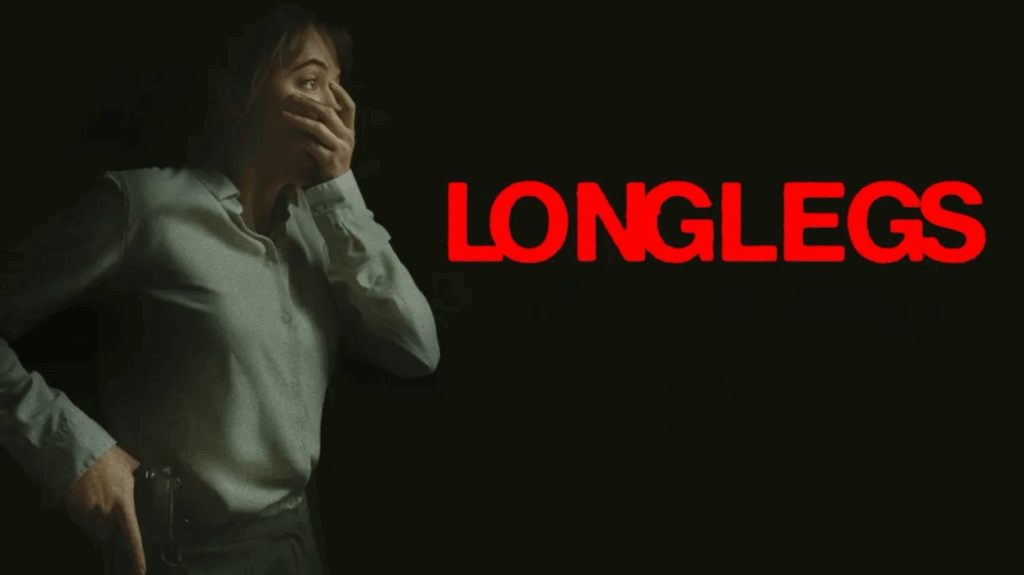
Longlegs is a movie that I heard a lot about before I saw it and I thought it was going to be some kind of horror masterpiece after all the hype about this thing but it wasn't exactly what I got, And I'm not talking bad because it's still a pretty solid movie but it's not the horror classic that many say it is and I think this is because my expectations were too high from the beginning, the thing is that when something is over promoted you always expect more than you should. Oz Perkins, the son of Anthony Perkins is the director of this interesting story about Longlegs, played by Nicolas Cage, a weird guy who goes around making dolls with human parts and metal balls that possess families to kill each other, which is something super disturbing when you think about it but at the same time kind of absurd. The movie also follows the story of Lee Harker played by Maika Monroe, an FBI agent who has like psychic powers that help her find clues that no one else can see, but for most of the movie it felt to me like she was lost in her own world, which works although at times it feels a bit disconnected because she seems to be on autopilot until finally everything explodes in the third part and you find out that she was also under the influence of the dolls the whole time.
Longlegs es una película de la que escuché mucho antes de verla y yo pensaba que iba a ser algún tipo de obra maestra de terror después de tanto bombo sobre esta cosa pero no fue exactamente lo que recibí, Y no estoy hablando mal porque sigue siendo una película bastante sólida pero no es el clásico del horror que muchos dicen que es y creo que esto se debe a que mis expectativas estaban demasiado altas desde el principio, la cosas es que cuando se le hace mucha promoción a algo uno siempre espera más de la cuenta. Oz Perkins, el hijo de Anthony Perkins es el director de esta historia interessante sobre Longlegs, interpretado por Nicolas Cage, un tipo raro que anda por ahí haciendo muñecas con partes humanas y bolas metálicas que poseen a las familias para que se maten entre ellos, lo cual es algo super inquietante cuando lo piensas bien pero al mismo tiempo medio absurdo. La película también sigue la historia de Lee Harker interpretada por Maika Monroe, una agente del FBI que tiene como poderes psíquicos que la ayudan a encontrar pistas que nadie más puede ver, pero que durante la mayor parte de la película me pareció como si estuviera perdida en su propio mundo, cosa que funciona aunque a veces se siente un poco desconectada porque parece que está en piloto automático hasta que finalmente todo explota en la tercera parte y se descubre que ella también estaba bajo la influencia de las muñecas todo el tiempo.
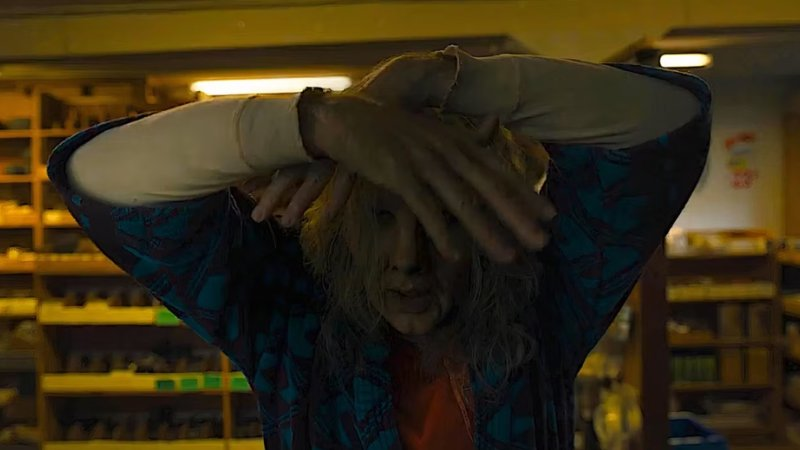
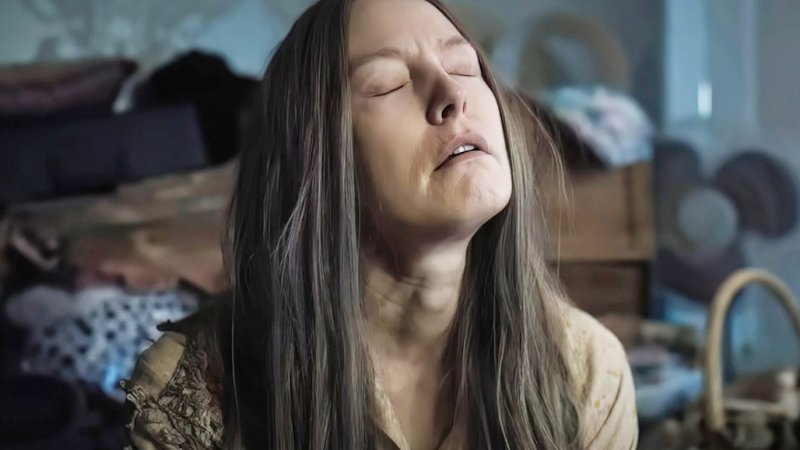
The performances overall were decent nothing too extraordinary as I was honestly expecting, Nicolas Cage gives a memorable performance as Longlegs but honestly it was like something I had seen from him before in other weird movies, there wasn't that total transformation you could tell it was Cage playing Cage with weird makeup and squeaky voice. Cage manages to convey that disturbing energy and intimidating presence that Longlegs must have had, more so in those scenes where he's singing and dancing like crazy, but I never felt like I was watching anything revolutionary or deserving of so much hype, he stayed at what you would expect from him so to speak. Maika Monroe on the other hand I found her quite limited by the script she was given, she never had a real chance to shine as an actress and that's frustrating she's a very capable actress when given adequate material to work with, here she stayed as a zombie doing the bare minimum to make the character work within the story. Alicia Witt was the one who really surprised me with her portrayal of Lee's mother, she managed to capture that essence of a religious woman hiding terrible secrets her performance was quite convincing and more so at that moment when it is revealed that she has been Longlegs accomplice for decades. Blair Underwood as the head of the FBI played his part but it wasn't a special performance, basically a typical supporting character that moves the plot along when needed.
Las actuaciones en general fueron decentes nada demasiado extraordinario como esperaba sinceramente, Nicolas Cage da una actuación memorable como Longlegs pero honestamente fue como algo que ya había visto de él antes en otras películas raras, no había esa transformación total se notaba que era Cage haciendo de Cage con maquillaje raro y voz chillona. Cage logra transmitir esa energía perturbadora y esa presencia intimidante que debía tener Longlegs, más en esas escenas donde está cantando y bailando como loco, pero nunca sentí que estaba viendo algo revolucionario o que mereciera tanto alboroto, se quedó en lo que uno esperaría de él por así decirlo. Maika Monroe por otro lado me pareció bastante limitada por el guión que le dieron, nunca tuvo la oportunidad real de brillar como actriz y eso es frustrante es una actriz muy capaz cuando le dan material adecuado para trabajar, aquí se quedó como zombi haciendo lo mínimo necesario para que el personaje funcionara dentro de la historia. Alicia Witt fue quien realmente me sorprendió con su interpretación de la madre de Lee, logró capturar esa esencia de mujer religiosa que oculta secretos terribles su actuación fue bastante convincente y más en ese momento cuando se revela que ella ha sido la cómplice de Longlegs durante décadas. Blair Underwood como el jefe del FBI cumplió su función pero no fue una actiacion especial, básicamente es el típico personaje de apoyo que mueve la trama cuando es necesario.
What really kept this movie working but at the same time limited it was the strange pacing and the writing that mixes supernatural horror with crime thriller, such as interesting moments like those flashbacks to Lee's childhood and the way they used to show how the dolls work with those metal balls inside, which was both clever and disturbing at the same time. The movie manages to show the contrast between the seemingly normal world of Oregon in the 90's versus the reality of what is going on with these families that end up murdering each other, those scenes where the parents kill their wives and children are very shocking and keep the tension going was something that didn't let me relax. But sometimes I got confused when they started to put so much religious symbolism and specific dates that are never fully explained, the story becomes a puzzle, the part about the birthdays on the 14th of each month and all the satanic symbology is interesting in theory but not easy to follow, it makes the movie seem more intellectual than it really is, which may make some people not like it because they just want to be scared without thinking so much. The idea of taking the mystery to the end works but not always, because when you find out that Lee's mother has been involved from the beginning and that Lee herself is a victim of the dolls, it's a big revelation but it could have been guessed if you paid enough attention to the clues.
Lo que realmente mantuvo esta película funcionando pero al mismo tiempo la limitó fue el ritmo extraño y la escritura que mezcla el horror sobrenatural con thriller policiaco, como por ejemplo momentos interesantes como esos flashbacks a la infancia de Lee y la forma que usaron para mostrar como las muñecas funcionan con esas bolas metálicas adentro, lo cual fue tanto ingenioso y perturbador al mismo tiempo. La película logra mostrar el contraste entre el mundo aparentemente normal de Oregon en los 90 contra la realidad de lo que está pasando con estas familias que terminan asesinándose, esas escenas donde los padres matan a sus esposas e hijos son muy impactantes y mantienem la tensión fue algo que no dejó que me relajara. Pero a veces me confundí cuando empezaron a meter tanto simbolismo religioso y fechas específicas que nunca se explican completamente, la historia se vuelve un rompecabezas, la parte de los cumpleaños en el 14 de cada mes y toda la simbología satánica está interesante en teoría pero no es nada fácil de seguir, hace que la película parezca más intelectual de lo que realmente es, lo cual puede hacer que a algunos no les guste porque solo quieren pasar miedo sin pensar tanto. La idea de llevar el misterio hasta el final funciona pero no siempre, porque cuando descubres que la madre de Lee ha estado involucrada desde el principio y que Lee misma es víctima de las muñecas, es una gran revelación pero se pudo haber adivinado si prestaste suficiente atención a las pistas.
In my personal opinion Oz Perkins' direction is pretty good but not the greatest, he shows his experience with some interesting shots and recreates very well that eerie atmosphere that the story needs with those cool colors. Perkins knew how to handle the suspense scenes perfectly, the one I liked the most was where Lee finally confronts Longlegs at the police station and he kills himself by hitting his head against the table, that's very well done to create enough discomfort but at the same time I felt he didn't manage to find the perfect balance between horror and absurdity. When you have Nicolas Cage playing such a strange character in a movie and you can't decide if you want people to be scared or laugh, that responsibility falls on the director because it's his job to set the tone and here it was left in a weird limbo between comedy and horror. The film looks good, sounds good, is well edited and keeps the flow but it lacks that special spark that separates the good horror flicks from the great ones, even though it looks very professional it falls short of being something memorable.
En mi opinión personal la dirección de Oz Perkins es bastante buena pero no lo máximo, muestra su experiencia con algunas tomas interesantes y recrea muy bien ese ambiente inquietante que necesita la historia con esos colores fríos. Perkins supo como manejar las escenas de suspenso perfectamente, la que más me gustó fue donde Lee finalmente confronta a Longlegs en la estación de policía y él se mata golpeándose la cabeza contra la mesa, eso está muy bien hecho para crear bastante incomodidad pero al mismo tiempo me pareció que no logró encontrar el balance perfecto entre el horror y lo absurdo. Cuando tienes a Nicolas Cage haciendo un personaje tan extraño en una película y no logras decidir si quieres que la gente se asuste o se ría, esa responsabilidad recae en el director porque su trabajo es establecer el tono y aquí quedó en un limbo raro entre comedia y terror. La película se ve bien, suena bien, está bien editada y se mantiene la fluidez pero le falta esa chispa especial que separa las buenas peli de horror de las grandes, aunque se vea como algo muy profesional no llega a ser algo memorable.
The truth is that I think Longlegs is one of those movies in which a lot of expectation was placed, when it was released more than a year ago I think it has already passed it was sold as if it was the scariest horror movie of the decade and simply did not reach those heights, although it is still entertaining and well done for what it really is. The story of this serial killer using black magic and possessed dolls is interesting and definitely deserved to be told, but I feel like this version stayed on the surface of what could have been something deeper on these themes and more so considering they mixed in so many different elements without fully developing any of them. Nicolas Cage does what he can with the character but never decides whether to be scary or ridiculous, falling somewhere in the middle that satisfies neither those looking for pure horror nor those looking for something more. The good thing is that the movie doesn't feel long or heavy at all and the pacing is pretty steady, there's always something going on that keeps your attention but those moments that leave you breathless or stick with you after it ends don't exist. My score is 6.5/10 I recommend it if you like supernatural horror movies and psychological thrillers in general and if you watch it with low expectations you will enjoy it much more than I did, the truth is a good movie that deserves to be seen but it is not the masterpiece I expected it to be from the beginning.
La verdad creo que Longlegs es de esas películas en las que se puso mucha expectativa, cuando se estreno hace más de un años creo que ya ha pasado la vendieron como si fuera la película de horror mas aterradora de la década y simplemente no llegó a esas alturas, aunque sigue siendo entretenida y bien hecha para lo que es realmente. La historia de este asesino serial que usa magia negra y muñecas poseídas es interesante y definitivamente merecía ser contada, pero siento que esta versión se quedó en la superficie de lo que pudo haber sido algo más profundo de estos temas y más tomando en cuenta que mezclaron tantos elementos diferentes sin desarrollar ninguno completamente. Nicolas Cage hace lo que puede con el personaje pero nunca decide si ser aterrador o ridículo, quedando en un punto medio que no satisface ni a los que buscan horror puro ni a los que buscan algo más. Lo bueno es que la película no se siente larga ni pesada para nada y el ritmo es bastante constante, siempre hay algo pasando que mantiene tu atención pero esos momentos que te dejan sin aliento o que se quedan grabados después de que termina no existen. Mi puntuación es 6.5/10 la recomiendo si te gustan las películas de horror sobrenatural y thriller psicológico en general y si la ves con las epxectativas bajas la vas a disfrutar mucho mas de lo que yo lo hice, la verdad es una buena película que merece ser vista pero no es la obra maestra que esperaba que fuera desde el principio.
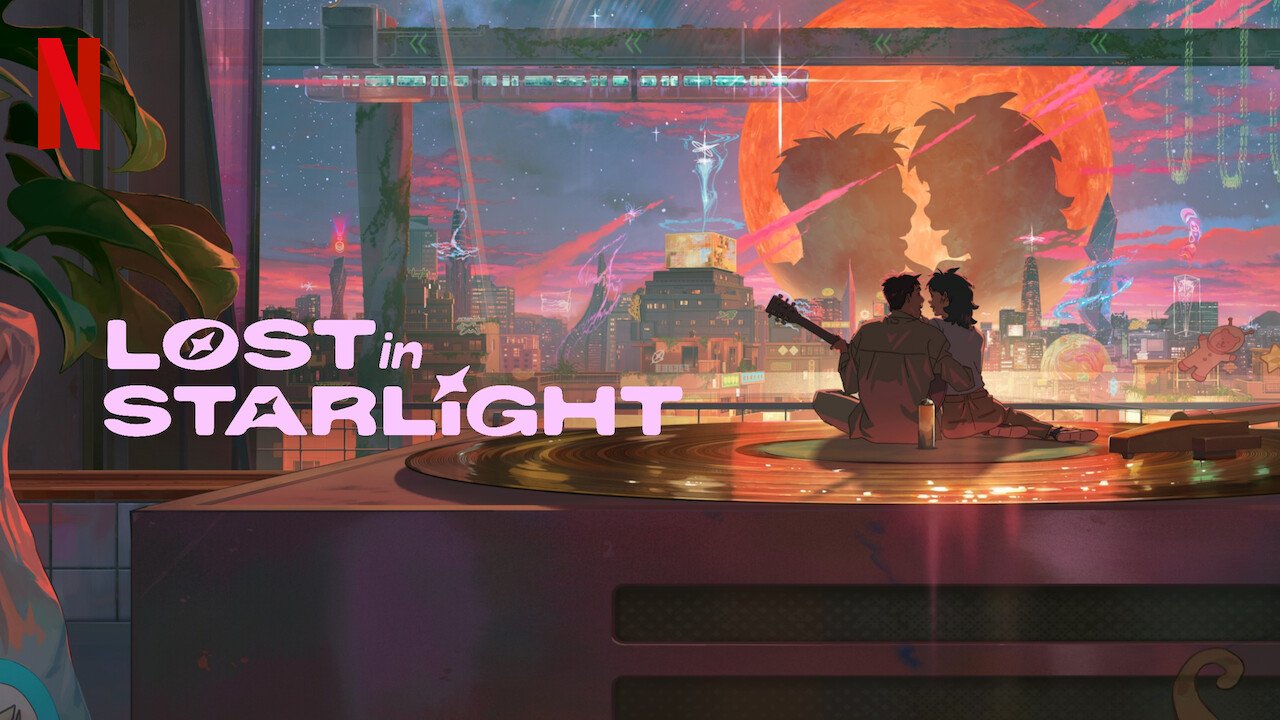
First South Korean animated film I've seen? - Yes, and it's brought to you by Netflix in conjunction with Climax Studio, the same companies responsible for making video games for different consoles. I'm not a huge fan of K-dramas, but since this film is animated, I wanted to give it a try, especially since it's a short watch. I was a bit hesitant to watch this, but I have to say it turned out to be a really cool film with exceptional animation. I think things like this don't come around often, so you have to appreciate them. This story is clearly about love, but also about achieving dreams and how powerful human connections can be when they're "meant."
Primera película surcoreana animada que veo? - pues sí y es traída de la mano de Netflix junto con Climax Studio, los mismos encargados de hacer videojuegos para diferentes consolas. Muy fanatico de K-Dramas no soy pero este film al ser algo animado quise darle la oportunidad además de que precisamente es algo corto de ver. Estaba algo renuente con ver esto pero hay que decir que resultó ser una película muy cool con una animación excepcional, creo que cosas como estas no se ven a menudo, de ahí a que habría que saber apreciarlas. Esta historia tiene que ver con el amor, claramente, pero también con la consecución de los sueños y lo poderosas que pueden ser las conexiones humanos cuando están "destinadas".
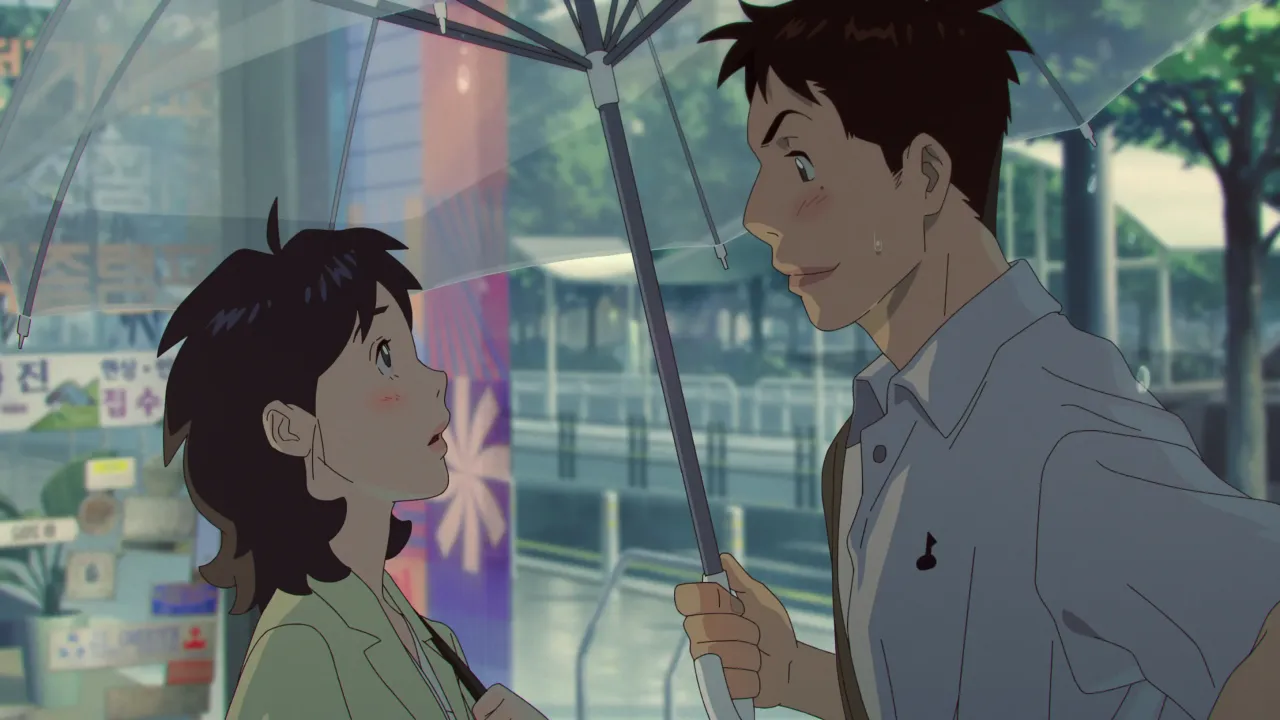
Nan-young is an astronaut, botanist, and space lover who dreams of one day following in her mother's footsteps on Mars. While on a mission to the red planet, her mother suffered an accident and was never heard from again, leaving Nan-young feeling a sense of emptiness and indebtedness throughout her life. While waiting to see if she can finally go to Mars on a future mission, she meets Jay, a young man who works as a repairer of vintage or retro objects. She brings him an old record player belonging to her mother to see if he can fix it, sparking their love story.
Nan-young es una astronauta, botánica y amante del espacio que sueña con un día ir a Marte siguiendo los pasos de su madre. La mamá estando en una misión en el planeta rojo sufrió un accidente y más nunca se supo de ella ocasionándole una especie de vacío y deuda a Nan-Young a lo largo de su vida. Mientras espera si finalmente puede ir a Marte en una próxima misión conoce a Jay, un joven que trabaja como reparador de objetos vintage o retro. Ella le lleva un antiguo tocadisco, perteneciente a su madre, para ver si él puede arreglarlo siendo esto el detonante de su historia de amor.
At first everything is rosy, the illusion of being together is something that is very noticeable but she always kept the secret of her intentions to go to space from Jay so when they find out that this mission is finally going to happen the relationship enters a kind of challenge and it will be seen if they are capable of putting it to the test. On the one hand there is the possibility of not returning but on the other hand there is pursuing the lifelong dream, that is Nan-young's dilemma while Jay's is accepting that this is the life his partner decided on and what corresponds to him is to support her without further ado even knowing that he would never be able to see her again. The plot is basically that, seeing how they deal with this whole situation.
Al principio todo es color rosa, la ilusión de estar juntos es algo que se les nota mucho pero ella siempre le guardó el secreto a Jay de sus intenciones de ir al espacio por lo que al enterarse que aquella misión por fin se va a dar la relación entra en una especie de desafío y se verá si son capaces de ponerla a prueba. Por un lado existe la posibilidad de no regresar pero por el otro está perseguir el sueño de toda la vida, ese es el dilema de Nan-young mientras que el de Jay está en aceptar que esa es la vida que decidió su pareja y lo que le corresponde a él es apoyarla sin más aún sabiendo que más nunca la podría ver. La trama básicamente es eso, ver cómo lidian con todo esa situación.
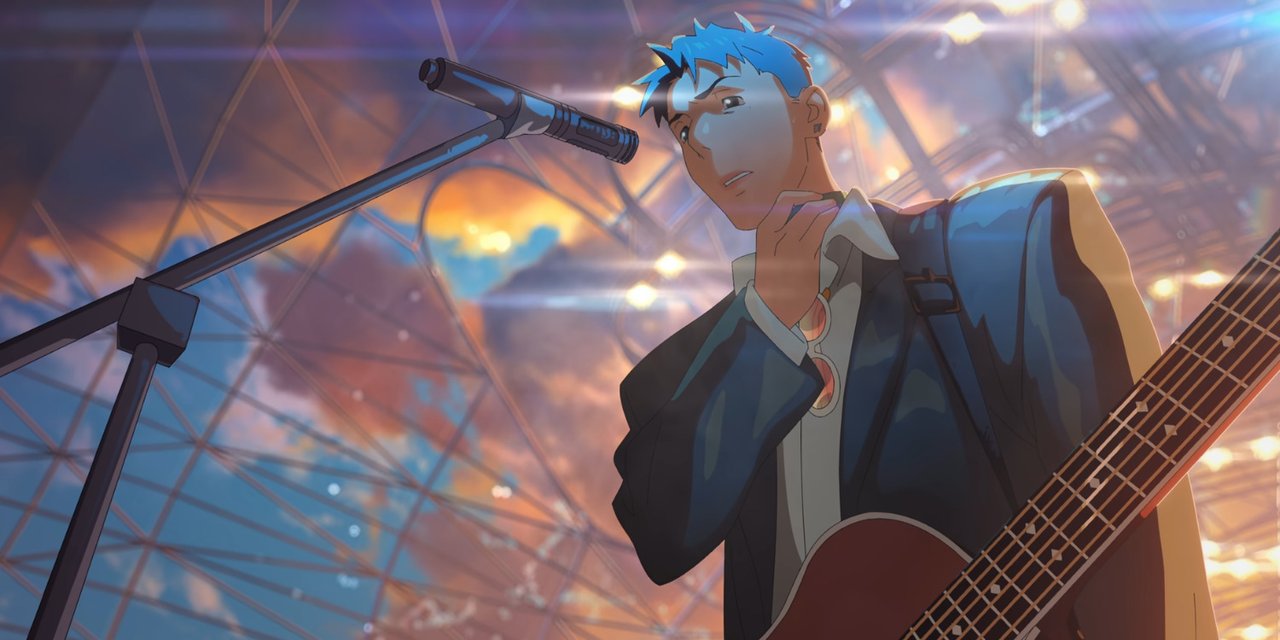
The cool thing about the story is that each one complements the other. Both were very unlucky in every way. She had never had so many doors open for her, despite being an extremely intelligent person, and he wasn't lucky either. Besides his profession, he's a musician, and something happens between them with music. I won't reveal it because the idea is for you to see the film. But I can tell you in advance that part of the central plot has to do with that record player and a certain song. Once again, it's proven that music can unite what many things haven't been able to in years. There's love, yes, but also towards the end, there's a significant tension, an intrigue about not knowing what will happen to them due to Nan-young's mission, during which things happen.
Lo cool de la historia es que cada uno complementa al otro, ambos eran muy desafortunados en todo; a ella nunca se le habían abierto tantas puertas a pesar de ser una persona extremadamente inteligente y a él pues la suerte tampoco lo acompañaba. Además de su oficio es músico y con la música ocurre algo entre ellos que no lo voy a decir porque la idea es que vean la película pero les adelanto que parte de la trama central tiene que ver con ese tocadisco y cierta canción. Una vez más queda demostrado que la música puede unir lo que muchas cosas en varios años no ha podido. Está el amor si, pero también hacia el final hay una tensión importante, una intriga del no saber qué va a pasar con ellos debido a la misión de Nan-young en la cual ocurren cosas.
The animation is incredible because it has many futuristic details (we're in a future Seoul), so we'll see plenty of cyberpunk-style elements. But there's also a great deal of subtlety and delicacy in certain scenes where everyday things are carefully curated and made very pleasing to the eye. It's that blend of the extraordinary and the ordinary that makes this film so enjoyable to watch. Another highlight is the voice actors' performances. I read somewhere that this wasn't their first time working together, so the chemistry they have in real life really shines through to the characters. The excellent work they did is very noticeable, especially with Nan-Young, since I feel she's the one with the most emotional and moving dialogue and behavior. Little is said about these actors, but here I truly feel they made a real difference for the better.
La animación es increíble porque tiene muchos detalles futuristas (estamos en un Seul del futuro) por lo que cosas de estilo cyberpunk veremos bastantes. Pero también hay mucha sutileza y delicadeza en ciertas escenas en donde las cosas cotidianas las cuidaron de una manera muy top y que sea muy agradable a la vista. Es esa mezcla entre lo extraordinario y lo ordinario que hace que este film sea tan disfrutable de ver. Otra de las cosas a destacar es la interpretación de los actores de voz. Leí por ahí que no era primera vez que trabajan juntos por lo que la química que hay entre ellos en la vida real se logra traspasar a los personajes. Si se nota mucho el buen trabajo que hicieron, sobretodo con Nan-Young ya que siento que ella es la que tiene más diálogos y comportamientos emotivos y emocionales. Poco se habla de estos actores pero acá la verdad siento que se marcaron mucho la diferencia para bien.
Ultimately, it's a love story whose ending you may or may not expect. It's a basic plot but it delivers; there's drama, suspense, and intrigue, accompanied by excellent animation and cinematography. It lasts an hour and a half and you can find it on Netflix. I've left the trailer below.
A fin de cuentas es una película de amor cuyo final puede o no que te lo esperes. Es una trama básica pero que cumple, hay drama, suspenso e intriga que está acompañada por una animación y cinematografía excelente. Dura hora y media ya la puedes encontrar en Netflix. Les dejo el tráiler por acá abajo.
And of course, what’s a Moana story without Maui? Moana was one of the animations I fell in love with. I couldn't wait for season 2 to drop to watch this brave girl.
You know that familiar feeling of seeing someone you already know but realizing they’ve changed a bit? That was how I felt when Moana appeared. She’s older, wiser, and more sure of herself, but she still has that spark, that stubborn bravery that made us fall in love with her in the first place.
The opening scene showed her on Motunui, but unlike before, she wasn’t just wandering and questioning herself — this time, she was carrying responsibility. The village had grown, there were new challenges, and people now looked to her naturally. I could literally feel the weight on her shoulders through the screen, and at one point I just sighed like, “Yup, adulthood doesn’t spare even Disney characters.” But then things shifted when she started hearing this strange call again, almost like the ocean was trying to whisper another secret to her. That moment gave me goosebumps, because it was like déjà vu but scarier — you just knew it wasn’t going to be a simple journey.
Next was the twist of the first twist, which was the ocean showing that there was more to the sight of the land than even Moana had before, places that were shrouded by shadows and protected by creatures not exactly friendly. And rather than an exploration, Moana was being appointed to bring balance once more, only this time not of Te Fiti or her folk but of the unification of islands that neither knew nor cared about the existence of islands elsewhere. I liked that the film connected it to legacy and leadership. I found myself thinking,; Wow, sometimes we are called to things that are far bigger than we are, and we are not even given a choice.
The first major action scene is now that Moana leaves again, and of course, the ocean is in a good mood with her and throws her boat around like in old times. However, then BAM — the initial monster attack occurs. The sea serpent is huge and ghastly, and suddenly emerges. The action that was done here was crazy, as though you were almost feeling the splash of water on your face. Moana did not panic, she stood up and even ordered the ocean to protect her. I sat there with my mouth open, since this was not our girl, this was a leader who had gained the trust of the ocean. But I was hurt, too, at the same time, with this achiness in my chest, because you know she was wearing courage even when she was frightened inside.
And of course, what’s a Moana story without Maui? When he reappeared, I swear I had the biggest grin. His entrance was hilarious as usual — shapeshifting gone wrong, jokes about being rusty, and teasing Moana about how much taller she’d grown. But beneath the humor, there was this bittersweet vibe. He wasn’t just the cocky demigod anymore, he was carrying his own scars from the past. One scene really hit me — he admitted to Moana that even though he’s powerful, he sometimes feels useless without people believing in him. That moment got me in my feelings, because haven’t we all been there? Feeling like our worth is tied to what others see in us.
In the second act of the film, there was a new aspect which
was introduced, the shadow islands and I can say, this scene was chilling. These were not the colorful and vibrant places such as Motunui. They were dark, cloudy, as though the sea were taking a breath. Moana and Maui met the tribes who had lost their sense of belonging to the sea due to their fear of it. One scene in particular made me shudder, when an elder was describing how darkness infiltrates when people lose memory of who they are - and I kept on remembering that line a long time after watching the movie. I was sitting there muttering to myself things like Damn, Disney, why are you hitting so deep?
The final showdown though? Whew. I was on the edge of my seat. It was not merely an unthinking monster of any kind that was the big villain but a living embodiment of all the fear and neglect of the people made flesh; a malevolent spirit of the sea itself. So put yourself in the position of Moana, who is not only struggling against waves and shadows, but is literally fighting doubt. It sent shivers through me that she cut that darkness with her voice and her song. And you know what broke me? In the moment that Maui relinquished the lead to Moana and demonstrated his total trust in her. He could not have grown that way.
The ending tied it all beautifully. Moana didn’t just save her people — she connected different islands, proving they were stronger together. The last shot of her standing at the edge of the boat, looking out at an endless horizon, gave me such a mix of hope and sadness. Hope because she was still chasing new horizons, sadness because it reminded me of how journeys never really end; there’s always another challenge waiting.
Honestly, Moana 2 didn’t just feel like a sequel. It felt like a life update from someone you love. It made me laugh, made me tense up, and even made me tear up in a few places. And the whole time, I kept thinking about how we all get those “calls” in life — scary, unexpected, but necessary. Watching her answer hers gave me the courage to think maybe I can answer mine too.
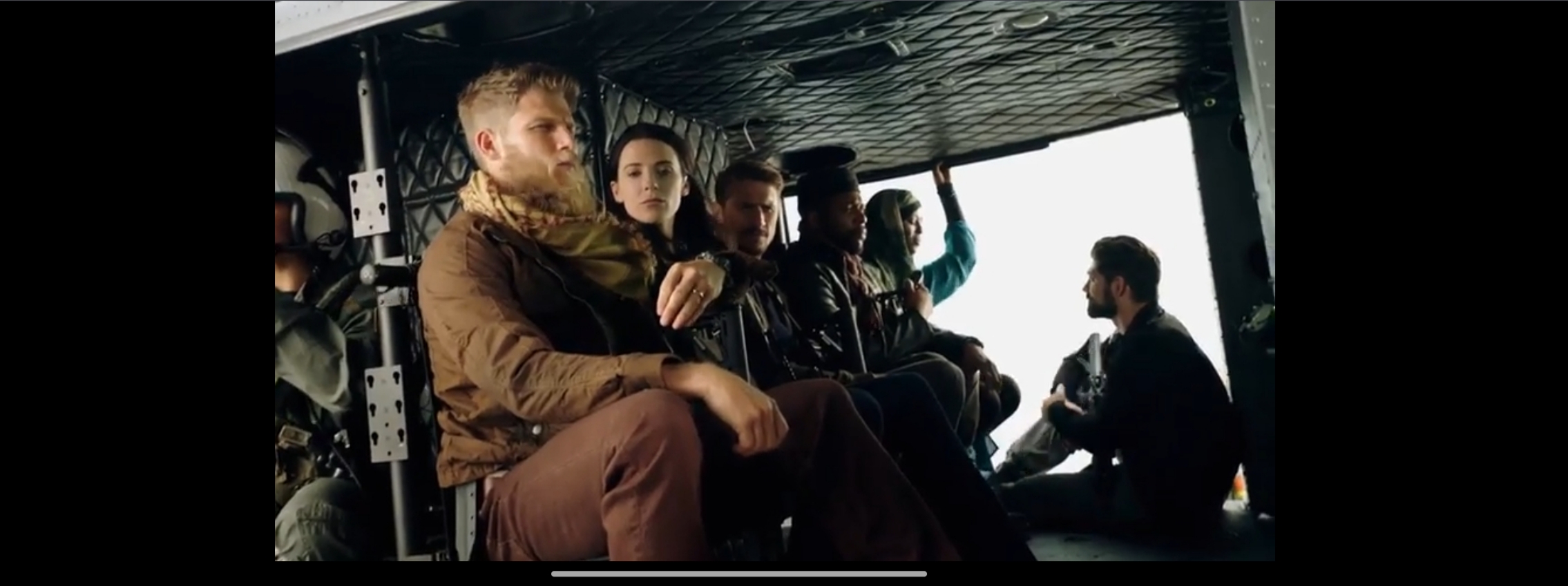
This movie has been the only movie on my SD card without me thinking of deleting it. I rewatch it when I think the storyline is evaporating from my mind. So many sources have claimed that it is from William Brinkley’s novel back then in the year 2018, which covers a lot of the global catastrophe that came to remind us of the time of the Covid-19 pandemic, just the same lockdown across all nations. This movie has it all, including a hybrid of action phases, which is the reason it is worth watching, despite being a seasonal movie.
It all begins with a man known as Nathan James, who was really a powerful USS personnel, alongside another being the commander of the ship, known as Captain Tom Chandler, also known as Eric Dane. There was also another pretty doctor, which makes the movies engaging. Along the way, something happened that kept Dr. Rachel Scott (Rhona Mitra) in my memory, who invests all she can in her effort in search of a cure for a deadly global virus, which results in a pandemic as the virus escalates. As a virologist, she kept up the fight even when the virus was now beyond control.
Season 1 was actually where there was a scientific quest in search of the cure just to arrest the situation before it got out of hand; at that time, that was what led Chandler and his crew member to spend day and night in the middle of the sea, doing all sorts of experiments with the help of the virological doctors with no solution to arrest the whole situation that started over ravaging the entire world.
As the movies keep on progressing in season 2 and also 3, Dr. Scott came up with a narrative to build up a vaccine, which now gave hope to humanity, but at that time the big challenge was actually political disagreement across all nations, which was the time that Dr. Scott, as a virological doctor, rose to become known across the world, showing dilemmas in assisting in restructuring the health situation across the nation despite the political disagreement across nations, which was piloted by the United Nations of America.
Despite all this struggle to quench the escalation of this virus, there are still antagonists who have opposed this just by being a real-time geographical threat, which now adds more tension, making this movie more interesting to watch. That was where the action thriller started surfacing, which now involves real-time battle, creating a one-on-one shooting with antagonists who have vowed to work against what the men of Chandler are up to with their sacrificial commitment, which really claimed a lot of life across where solutions were in search and to be administered.
The transition in season 4 was actually between North Africa and Europe, and I came to see that it was not the virus that was a problem but that there was a food scarcity, which now spread out to become a global crisis on its own, thereby keeping people in between hunger, the virus, and death. That was a critical condition with famine in the whole land, which led to season 5, which brought a sense of the theme of legacy alongside the cost of leadership, where Chandler was at the front of the battlefield piloting his crew in the ship, which left a lot of his crew dead, including Dr. Rachel Scott (Rhona Mitra), after a solution that was a sad one for me. But still yet I give this movie 9.9/10 just because it has it all. Try to watch it and see what I am talking
Movies are undoubtedly the way in which memories can be brought to life before us. On this occasion, I would like to share with you a movie I saw on TikTok, which I found quite funny and reminded me that I had seen it a long time ago on television.
Las películas sin duda son la manera en las que los recuerdos pueden estar establecidos ante nosotros en esta oportunidad quiero compartir con ustedes una película que vi viendo tik Tok lo cual me pareció bastante chistoso y me hizo recordar que la había visto hace muchísimo tiempo atrás en televisión.
The film surprises with some pretty crazy situations, which makes me compare this era with how things were in 2004, because back then I don't think I knew what was going on in the world, since I was only three or four years old. But I really liked seeing the crazy changes that arise, such as certain things that are current in a medieval film, and those aspects seem quite cliché and crazy to me. For example, the gossip magazine, something that wasn't used much in medieval times or was practically never used because something like that didn't exist. But I really liked those small details of current things in the movie because it reminded me a little of those parodies that exist out there but are quite necessary to see.
La película sorprende con ciertas situaciones bastante locas y lo cual me hace comparar esta época y como era 2004, ya que bueno en esos años no creo que supiera qué estaba ocurriendo en la actualidad del mundo ya que tenía como tres cuatro años, pero me gustó mucho ver los cambios bastante locos que surgen como ciertas cosas que son de la actualidad en una película medieval y esos aspectos me parecen bastante cliché y locos Como por ejemplo la revista que salía de chismes algo que no se utilizaba mucho en la época medieval o prácticamente no se utilizaba porque algo así no existió, pero esos detalles tan pequeños de cosas actuales me gustó mucho en la película porque me recordó un poco a esas parodias que existen por allí pero que son bastante necesarias de ver.
The interesting thing about this movie is that after doing a little research, I read that it had been a pretty bad movie in theaters. However, when I saw the level of comedy it brought, I was very surprised because it's quite good.
Lo interesante de esta película es que investigando un poco leí que había sido una película bastante mala en cine, sin embargo, cuando vi el nivel de comedia que traía me sorprendió muchísimo porque es bastante buena.
The film is told as a kind of Cinderella story, but in this case, to differentiate it a little from other characters, the fairy godmother casts a spell where the person has to obey. Nowadays, this could be extremely literal and could cause a lot of misfortune. In this film, it is told in a way where people manipulate a lot to achieve their own selfish goals.
En la película se relata como una especie de cuento de Cenicienta bueno en esta oportunidad para diferenciar un poco con otros personajes el hada madrina hace un encanto donde la persona tiene que obedecer hoy en día puede ser extremadamente todo de una manera tan literal podría ser el causante de muchas desgracias y en esta película se relata de una manera donde las personas manipulan muchísimo para lograr sus propios objetivos egoístas.
Watching the movie, I'm very surprised that you bring up certain things that are now considered controversial, because the movie is a bit open to certain situations, but I love how it uses humor, and I was very surprised that it didn't do so well at the box office. I imagine that at that time, people were more focused on the animation than on the live-action part of the movie.
Viendo la película me sorprende mucho que traigas ciertas cosas que ahorita se digan discurso porque la película es un poco abierta a cierta situación, pero me encanta cómo utilizar el humor y me sorprendió mucho que no haya tenido tanta recaudación en taquilla me imagino que en ese tiempo estaba más enfocados en la parte de animación que en la parte de película en live action.
The film has elements that, logically, have certain special effects that are very noticeable. For example, the snake, which logically looks like a snake in VTX, not to mention CGI, but I was very surprised by the achievements because the comedy element is what I like most about the film, the main focus that makes it quite enjoyable to watch.
La película tiene elementos por lógica vieja tiene ciertas rectas especiales que se le nota muchísimo Como por ejemplo la serpiente que por lógica se ve que es una serpiente en VTX para no decir CGI, pero me sorprendió muchísimo los logros que se dan porque el elemento de la comedia es lo que más me gusta la película el enfoque principal que la hace bastante saludable de ver.
I would like to take this opportunity to share with you that I had a very enjoyable time watching this film because it has quite comical characteristics and there are certainly moments to be enjoyed, not only because of the amount of laughter it provokes, but also because the story is quite interesting, considering that extreme obedience can even be dangerous when used against most people.
Creo en esta oportunidad me gustaría compartirles que la pasé bastante agradable viendo esta película porque tiene características bastante cómicas y sin duda hay que disfrutarla en ciertos momentos no solamente por la gran cantidad de risas que causa, sino que la historia es bastante interesante tomando en cuenta que la obediencia extrema puede ser incluso algo peligroso utilizado en contra las más personas.
This film reminds me a little of a female version of Shrek and, in a way, certain films from the same studio that created this film, since it is also a Disney film. However, the way you make it quite funny, I feel that time has not passed it by, since it can be enjoyed by new generations and the same people can laugh while watching this comedy film.
Esta película me recuerda un poco hacer prácticamente una especie de Shrek versión femenina y de una manera ciertas películas del mismo estudio en el cual esta película es creada, ya que la misma película es de Disney, pero la forma en la que lo haces bastante chistoso siento que el tiempo no le ha pasado mal ya que puede ponerse para Nueva generaciones y la misma persona podrán reírse mientras miran esta obra del cine de comedia.
Este documental para la televisión la verdad es que es sumamente interesante el tema que toca porque nos muestra mucho Cómo se maneja la producción de muchos proyectos audiovisuales en Hollywood pero a su vez nos muestra que relativamente si tiene una especie de beneficio el programa creándonos una ambigüedad de que también está hacer este tipo de programas, Y la verdad es que yo sé que rara vez hago review a documentales especialmente este tipo pero creo que este en particular tocó un tema bastante interesante.
I think it's one of those movies that if you're like me and not really a fan of cars, you might completely pass it by, but if you decide to give it a chance, you might be very surprised. It's one of those movies that, again, I didn't expect to like so much, but I highly recommend it. It's in the same vein as movies like Gran Turismo and Top Gun Maverick that I recommend with my eyes closed. It doesn't matter if you're a fan of this genre or not, in the case of Top Gun Maverick, but I really recommend watching them if you have the opportunity to see them with good speakers and good sound. I think you'll be even more amazed.
Para poner un poco contexto este show de televisión básicamente obliga a las personas a rebajar de peso en un tiempo acelerado en el cual varias personas compiten para ver quién rebaja más de peso y se lleva el premio al final pues típico programa de concurso la diferencia es que este programa de concurso así pierdas o ganes como tal el final literalmente vas a estar rebajando de peso y te da ciertas herramientas si es verdad que es de manera forzada hasta el punto de ser obligado y cosas que se vieron en pantalla de hecho dentro del documental te lo relatan de manera más profunda pero ese es el asunto que muchos programas de televisión la verdad es que no ofrecen nada ni siquiera ofrecen ninguna motivación al público más allá de venderte productos o literalmente engordarte más, pero este show por otro lado busca Hasta cierto punto motivarte para rebajar de peso pero la manera en que lo hacen es bastante destructiva la manera también a la cual se burlan de las personas con obesidad también a la cual se burlan de las personas con obesidad tampoco está bien entonces el problema cae como en un hueco ambiguo bastante fuerte que no termina sabiendo si es lo correcto o no transmitir este tipo de programas, y el mismo documental tiene ese efecto divisorio que tú no sabes entender Si okay Es bueno o es malo lo que estás viendo o sea si tuviste la oportunidad de ver el show en ese entonces en mi caso sí fue así no voy a negar que disfruté de ciertos episodios pero hoy en día se me hace algo incómodo porque si bien motiva Hasta cierto. Rebajar de peso si es verdad que parodia a las personas con obesidad de manera que hoy en día Ya no está tan bien visto.
To provide some context, this television show essentially compels individuals to lose weight in a short period of time, with several people competing to see who can lose the most weight and win the prize at the end. It is a typical game show, but the difference is that whether you win or lose, you will literally be losing weight, and it provides you with certain tools. It is true that it is forced to the point of being compulsory. and things that were seen on screen. In fact, in the documentary, they explain it in more depth, but the thing is that many television programs don't really offer anything, not even any motivation to the audience beyond selling you products or literally making you fatter. But this show, on the other hand, seeks to motivate you to lose weight to a certain extent, but the way they do it is quite destructive. The way they also make fun of obese people is not right either. So the problem falls into a rather strong ambiguous gap where you don't know if it's right or wrong to broadcast this type of program, and the documentary itself has this divisive effect that you don't know how to understand. Yes, OK. Is what you're watching good or bad? I mean, if you had the chance to watch the show back then, in my case, yes, I did. I won't deny that I enjoyed certain episodes, but nowadays I find it a bit uncomfortable because, although it motivates you to lose weight, it's true that it parodies people with obesity in a way that isn't so well regarded nowadays.
Entonces recomiendo mucho ver este documental analizarlo porque creo que cada persona según su estado físico según su estado emocional según familiares o amigos que tengan lo podrá ver de diferente manera y diferente perspectiva de hecho los mismos productores gente que participó en el programa tanto como concursante como guionistas como todo tiene diferentes opiniones y eso es muy curioso Porque todos decidieron participar en el reality y cada uno tiene una perspectiva muy distinta de lo que piensa que estuvo bien y lo que estuvo mal con respecto al show otros completamente destruyéndolo por completo el programa y otros alabando lo que logró, entonces bueno si le dan una oportunidad a este documental hágamelo saber porque me da bastante curiosidad la opinión que ustedes pueden tener del mismo o si tuvieron la oportunidad de ver el show de televisión hágame saber qué opinan hoy en día de este programa y ahora que han pasado bastantes años desde que salió, y claro algo curioso este
So I highly recommend watching this documentary and analyzing it because I think that each person, depending on their physical condition, their emotional state, and their family or friends, will see it in a different way and from a different perspective. In fact, the producers themselves, the people who participated in the program, both as contestants and as scriptwriters, all have different opinions, and that's very curious. Because they all decided to participate in the reality show, and each one has a very different perspective on what they think was good and what was bad about the show. Others completely destroying the program and others praising what it achieved. So, if you give this documentary a chance, let me know because I'm quite curious about your opinion of it. Or if you had the opportunity to watch the television show, let me know what you think of it today, now that several years have passed since it aired. And of course, something curious about this program, and now that quite a few years have passed since it came out, and of course something curious about this program is that it literally had versions in several countries, not just in the United States, which is why I'm curious about your perspective on this show.
Tougen: Anki grabbed my ribs and shook me. What struck me right away is how unapologetically real it is. It doesn’t hold your hand, doesn’t soften the edges, it just drops you into this war between humans and demons, and suddenly you’re face-to-face with Shiki, this boy who’s carrying way more weight than anyone his age should. And the thing is, you feel that weight.
There is this one scene-I will not spoil the set up but when Shiki is forced to learn the truth about his parentage, I tell you, someone punched the floor out of my footing. Not because it is some shocking anime twist (though it is), but because of how human his reaction was. Rage, sorrow, the almost infantile feeling of having been betrayed. I was sitting there thinking God, I have felt that before. Not in the half-demon sense of course, but in the way life blinds you and you realise that nothing is as safe or simple as you thought.
And then--because Tougen: Anki knows how to counteract the heavy with the light--there is this breath of humor, these almost awkward, human moments between the characters that made me laugh out loud. The show reminds you of this: the fate here is life and death, but these are still children on their way of self-discovery. The contrast helps to make the darker areas much more impactful tenfold
The animation? Gorgeous. The battle scenes are fluid, but the scenes that really stuck with me, were the quiet moments, the way that merely a look across the battlefield says more than a hundred strikes of a sword. Then there is the score. There is this creepy, thundering beat that runs under some of the most intense moments and it creeped under my skin.
However, the thing is that it has lingered in my head long after the credits were over not due to the battles, or even the world-building (though both are good), but because it made me question the issue of survival, identity, and feeling the burden of something that is not yours fully. The fight that Shiki is involved in is not only external, it is the type of internal battle that makes one pause and question what aspects of themselves they would fight to keep in the event that everything around them altered.
Thumbnail is designed by me on pixelLab and other images are screenshot from the movie
Written by: Diane Duane & Michael Reeves
Directed by: Rob Bowman
Running Time: 45 minutes
It is a truism of science fiction television that even the most revered series often require time to find their footing, and Star Trek: The Next Generation proved no exception to this rule. Much like its predecessor, The Original Series, which began with the somewhat lacklustre The Man Trap before delivering the groundbreaking Where No Man Has Gone Before as its second pilot, TNG experienced a similar trajectory. The initial episodes of the 1987 revival stumbled through uneven storytelling and character development that failed to capture the magic of Roddenberry's original vision. However, with the sixth episode of the first season, Where No One Has Gone Before, the series finally demonstrated its true potential. This instalment marked the moment when TNG ceased merely imitating its predecessor and began establishing its own identity, delivering the kind of ambitious, thought-provoking science fiction that would ultimately define the franchise's golden age.
Inevitably, comparisons between the two series arose, particularly given the similarity in titles between this episode and TOS's seminal second pilot. Both narratives feature an Enterprise venturing beyond the known boundaries of space, encountering phenomena that challenge the crew's understanding of reality. Yet Where No One Has Gone Before demonstrated how Star Trek in the 1980s could not only benefit from superior production values and technological advancements but also deliver more sophisticated storytelling. While TOS's episode relied heavily on dramatic tension between Kirk and his former friend Gary Mitchell (who gains godlike powers), TNG's offering explored more complex philosophical territory—examining the relationship between thought, reality, and consciousness itself. The episode proved that contemporary Star Trek could maintain the spirit of exploration while embracing more nuanced concepts, benefiting from both improved special effects budgets and a deeper understanding of what made the franchise resonate with audiences.
The plot commences with the USS Enterprise-D rendezvousing with the USS Fearless to collect Starfleet propulsion specialist Kosinski (Stanley Kamel), portrayed with delicious arrogance by the prolific character actor. Kosinski claims to have developed revolutionary warp drive improvements, though his quiet, enigmatic assistant (Eric Menyuk) immediately captures the attention of young Wesley Crusher. As they work on the Enterprise's engines, Wesley develops an intuitive rapport with the mysterious assistant. When the experimental warp drive is tested, it succeeds beyond expectations—propelling the ship to the M-33 galaxy, so distant that a return journey at maximum warp would require three centuries. In desperation, Captain Picard authorises another test, only for the assistant—revealed as "The Traveler" from the planet Tau Alpha C—to send them a billion light years further, to the very edge of the universe. There, crew members experience hallucinations and reality itself begins to unravel. The exhausted Traveler explains that they've reached a region where space, time, and thought converge, and Picard realises the crew must focus their collective consciousness on the Traveler's wellbeing to survive and return home.
Notably, this episode represents the first adaptation of a Star Trek novel for television, based on Diane Duane's 1983 work The Wounded Sky. Duane co-wrote the teleplay with Michael Reaves, though the original script underwent significant alterations by producers. The decision to adapt existing literary material demonstrated a willingness to draw from the expanding Star Trek universe beyond the television series, establishing a precedent that would influence future storytelling approaches within the franchise.
Where No One Has Gone Before stands as a remarkably fine piece of science fiction television, particularly impressive given its placement in TNG's notoriously uneven first season. The episode successfully integrates complex theoretical concepts—quantum physics, consciousness studies, and metaphysical exploration—within the constraints of a standard 45-minute television format. Particularly effective are the brief but revealing hallucination sequences that provide unexpected depth to regular characters. Worf's vision of childhood pet and Tasha Yar's childhood trauma offer glimpses into their psyches that would take entire episodes to develop through conventional storytelling. These moments demonstrate how the episode uses its central conceit not merely as spectacle but as a narrative tool for character revelation.
Visually, the episode represents a significant milestone for TNG, featuring the series' first extensive display of outer space beyond simple starfields. The depiction of the universe's edge—presented as a swirling, luminous boundary between existence and nothingness—remains striking even by contemporary standards. Special effects supervisor Robert Legato delivered visuals that were genuinely impressive for mid-1980s television production, creating an otherworldly aesthetic that conveyed both the beauty and terror of the cosmic unknown. These sequences established a visual language for depicting "the edge of reality" that would influence subsequent science fiction productions for decades.
The guest cast delivers uniformly strong performances that elevate the material. Stanley Kamel perfectly embodies the insufferable Kosinski, whose scientific pretensions mask profound insecurity. Eric Menyuk, who originally auditioned for the role of Data, proves ideally cast as the enigmatic Traveler, conveying ancient wisdom through subtle expressions and measured delivery. His scenes with Wil Wheaton possess an authentic, almost paternal quality that makes their connection believable. Veteran actress Helen Ware provides a poignant cameo as Picard's mother during his hallucination sequence, adding emotional depth to the captain's character.
Interestingly, the episode was originally scheduled to be directed by Donald Petrie, but scheduling conflicts led to his replacement with 27-year-old Rob Bowman. Despite his relative inexperience, Bowman handled the complex visual requirements with remarkable skill, demonstrating an intuitive understanding of both character moments and spectacle. His work here launched a prolific television career that would include eleven additional TNG episodes and numerous other genre productions. Bowman's direction avoids the staginess that plagued many early TNG instalments, instead embracing dynamic camera work that enhances the episode's sense of cosmic wonder.
However, the episode's most significant drawback centres on Wesley Crusher, who would become one of the most divisive characters in Star Trek history. The Traveler's insistence on Wesley's extraordinary potential—comparing him with Mozart—feels forced and unearned. Picard's subsequent decision to promote Wesley to "acting ensign" based on this single encounter establishes a pattern of unrealistic advancement that would plague the character throughout the series. While the character's prodigious intellect might theoretically justify his presence on the bridge, the execution lacks sufficient narrative justification, making his elevated status feel like an authorial imposition rather than organic character development.
In retrospect, Where No One Has Gone Before represents a crucial turning point for Star Trek: The Next Generation. It demonstrated that the series could deliver the kind of awe-inspiring cosmic exploration that defined the franchise's best moments, while simultaneously establishing narrative threads—the Traveler's interest in Wesley, the exploration of consciousness—that would resonate throughout the series' seven-season run. Despite its flaws, particularly regarding Wesley's character, the episode succeeded where previous instalments had faltered: it made viewers believe in this new Enterprise and its crew. More than three decades later, its exploration of the relationship between thought and reality remains philosophically intriguing, while its visual representation of cosmic wonder continues to inspire. For these reasons, Where No One Has Gone Before deserves recognition not merely as a good early TNG episode, but as the moment when the series finally stepped out of its predecessor's shadow and began charting its own course among the stars.





 [Source](https://www.comingsoon.net/guides/news/1644913-the-upshaws-season-5-episodes-1-6-release-date-time-on-netflix)
 [Source](https://www.whattowatch.com/watching-guides/the-upshaws-season-3-release-date-trailer-cast-and-everything-we-know-about-the-sitcom)
 [Source](https://www.yahoo.com/entertainment/upshaws-season-5-release-date-210559825.html)
 [Source](https://instinctmagazine.com/jermelle-simon-talks-the-upshaws-black-queer-representation/)
 [Source](https://screenrant.com/the-upshaws-part-7-explained/)
 [Source](https://www.intomore.com/entertainment/tv/upshaws-return-netflix-new-antics-family-love-upcoming-third-season/)









 was introduced, the shadow islands and I can say, this scene was chilling. These were not the colorful and vibrant places such as Motunui. They were dark, cloudy, as though the sea were taking a breath. Moana and Maui met the tribes who had lost their sense of belonging to the sea due to their fear of it. One scene in particular made me shudder, when an elder was describing how darkness infiltrates when people lose memory of who they are - and I kept on remembering that line a long time after watching the movie. I was sitting there muttering to myself things like Damn, Disney, why are you hitting so deep?